massaged kale salad

massaged kale salad

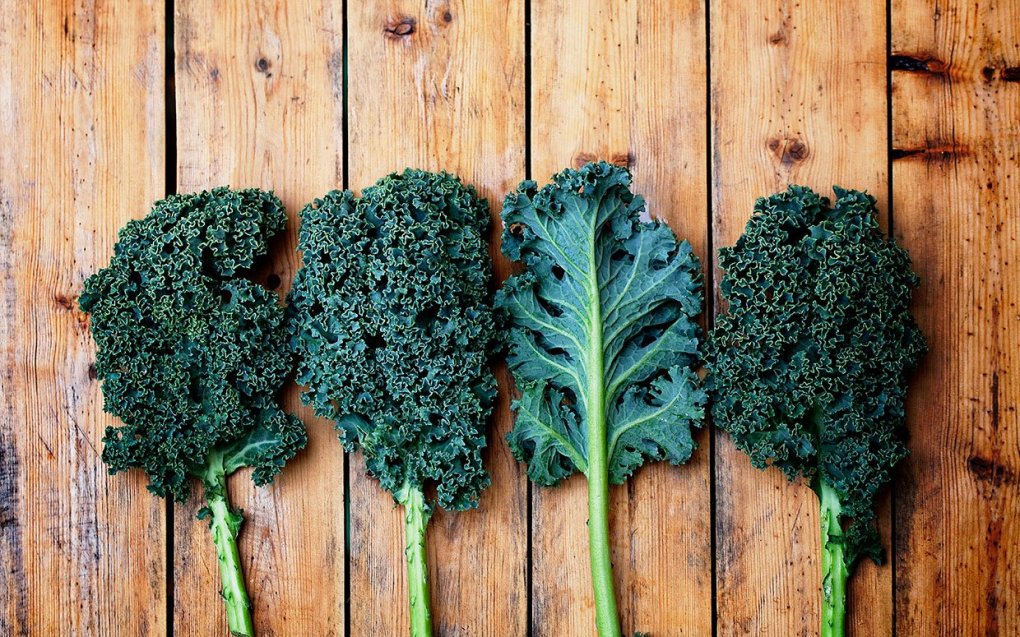
This Massaged Kale Salad is one of my favorites, especially when there are fresh strawberries in season at the market.  Fresh picked strawberries are a sweet addition to the earthy kale and the citrus dressing.  Kale is a superfood that deserves room on every plate.  Most recipes for massaged kale salads call for green apples or other fruit, but I think the strawberries are the best.  Massaging the kale in an olive oil, lemon and salt dressing has the effect of cooking the kale.  The lemon also makes the iron content in the kale far more bioavailable (that means you absorb more!).

I hope you enjoy this kale salad!

[box]

Massaged Kale Salad with Farm Fresh Strawberries

  • 1 bunch fresh kale, washed
  • 1-1/2 cups fresh organic strawberries (from the farmer’s market is the best)
  • 2 tablespoons olive oil (expeller pressed)
  • 1 teaspoon sea salt
  • 1/4 cup minced red onion
  • fresh juice of 1/2 lemon
  • optional : 1/2 cucumber, cut into small cubes
  • optional : 1/2 cup toasted sunflower seeds,  slivered almonds or pine nuts
  • optional: 3 teaspoons fresh oregano or marjoram finely chopped

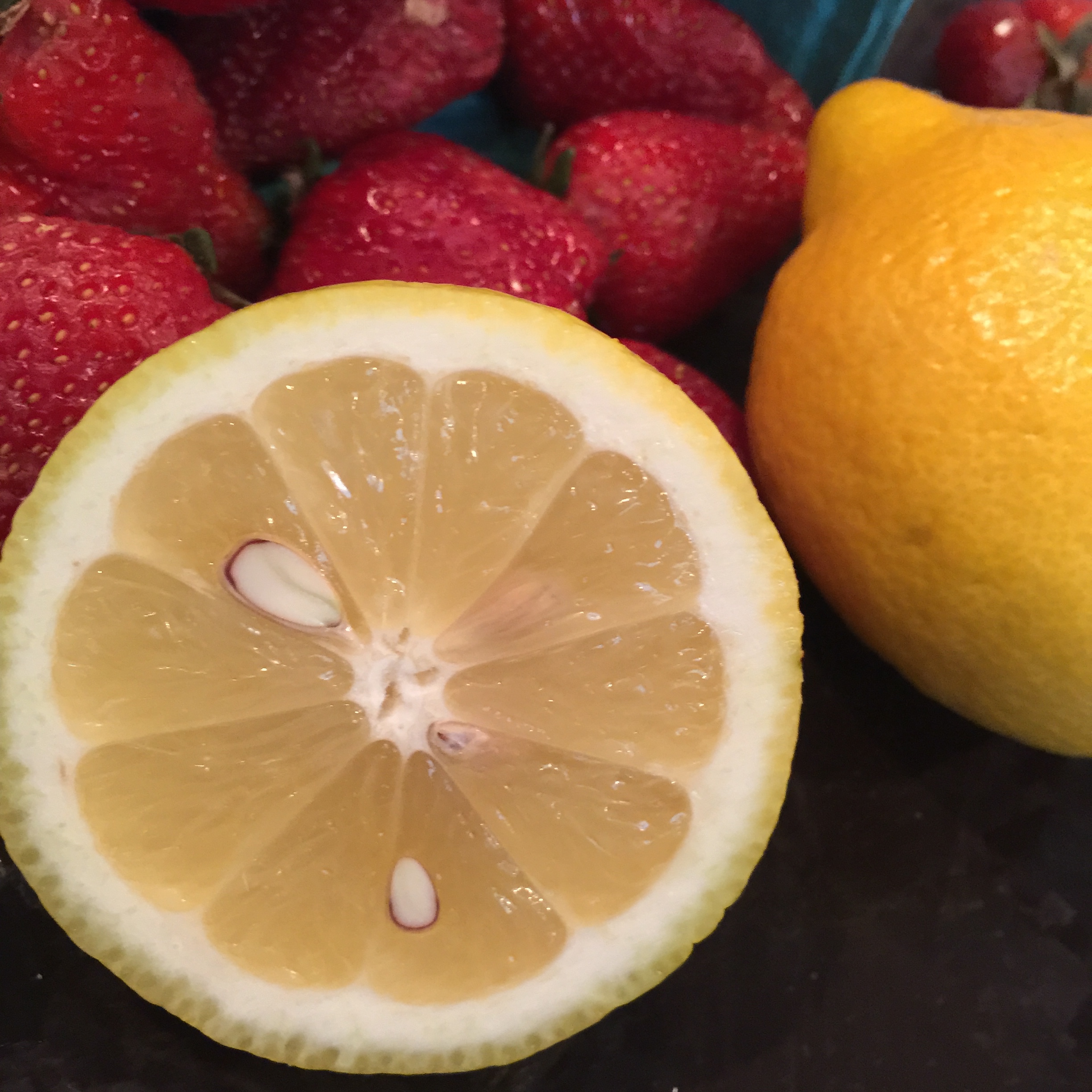
Gather your ingredients.

strawberries and lemon

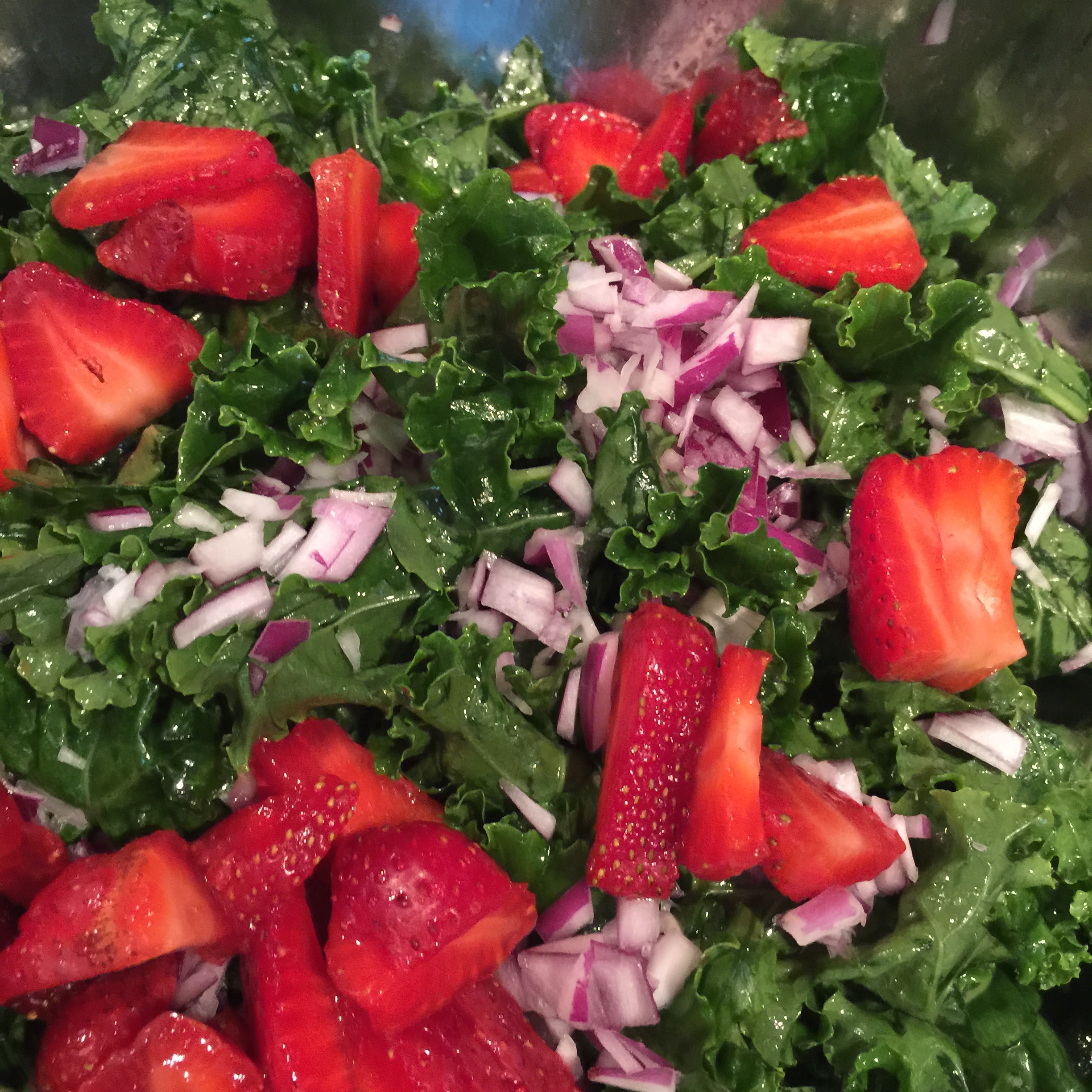
Stem and chop the kale.   Place in large bowl and drizzle with olive oil, lemon juice and salt.

Massage kale gently with your hands for five to ten minutes.

IMG_1092


Toss with the strawberries, onion and other optional ingredients  (if using).

[/box]

Enjoy!


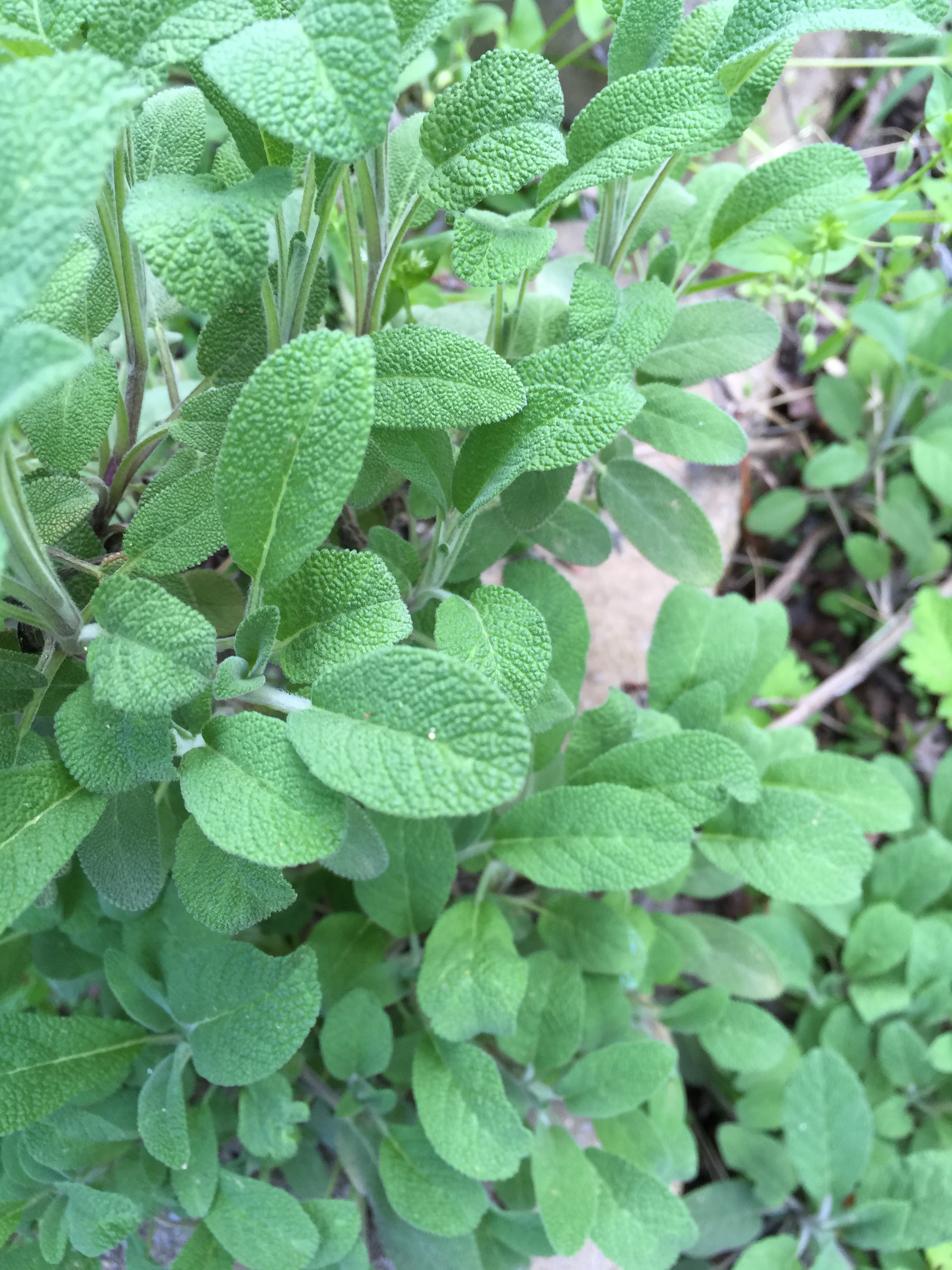
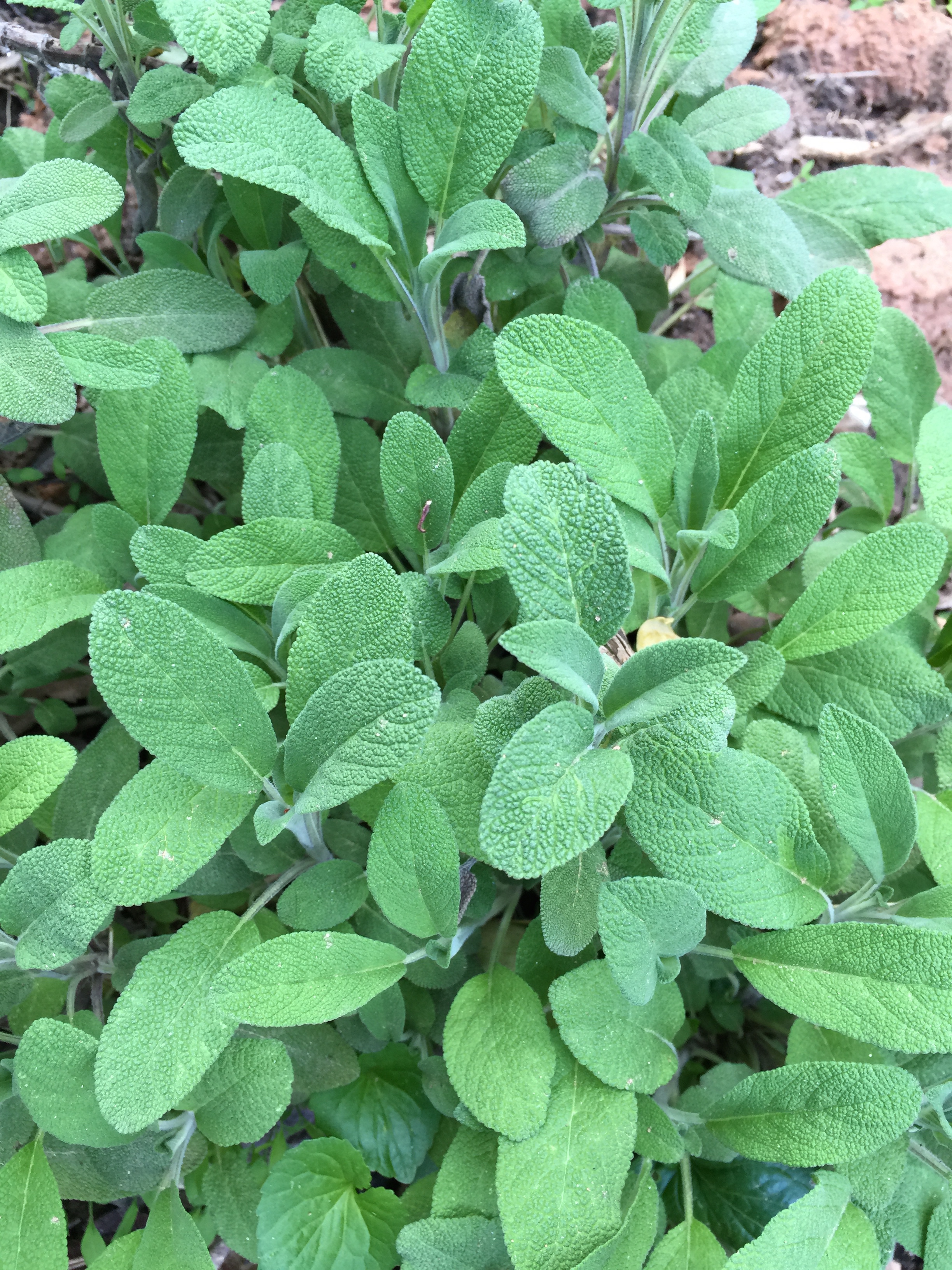
sage

garden sage 2015

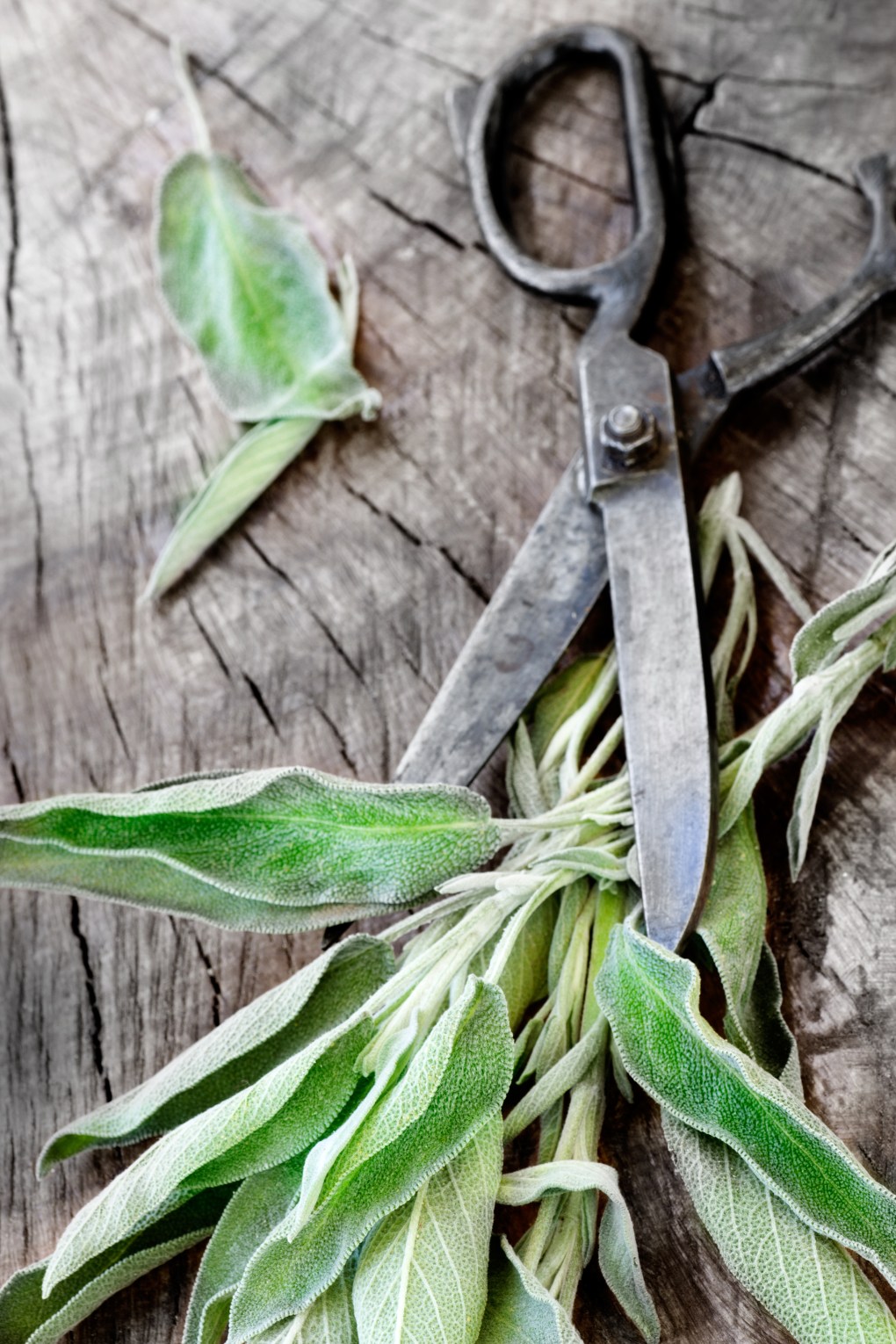
Like thyme, sage is a powerful herb.  It is native to the Mediterranean.  The Latin name for sage is “salvia” which means to save, but it is derived from salvere, which means “to be well”…  Sage saves many a dinner with it’s culinary flavors and throughout history -and makes many sore throats well with it’s antibacterial and healing properties, particularly for respiratory health.  Sage is marvelously simple to grow from seed or cuttings, and tolerates warm sunny climates very well, but cool ones too.  It prefers dry soil.  In our garden, sage has done well even into winter, but the leaves will get frost bite in extreme cold and shrivel up.   It is also deer resistant, unless the deer are very very hungry.

Sage has a pleasant earthy scent that pairs well with Thanksgiving but the uses of sage far outweigh it’s popularity as a flavor for stuffing ingredient at Thanksgiving, just look!

[box]

Healthy Benefits of Sage

  • Soothes and Relieves Sore Throats Research has shown that throat sprays made of sage and echinacea are as effective at relieving sore throats as commercial medication with anesthetic ingredients.
  • Relieves hot flashes Associated with Menopausal Symptoms  Sage has been used since ancient times to effectively treat hot flashes.  It has been licensed in Germany, and has also been used effectively in England, to treat night sweats.  A Scottish survey showed that sage tea or sage tincture reduced these symptoms by 85%, over a three month period.  A study was conducted of 71 women in Switzerland found that in women experiencing 5 or more hot flashes a day.  The treatment consisted of a daily sage capsule over a period of 8 weeks.   There was a 50% decrease in hot flashes in 4 weeks and a 64% reduction in symptoms by the eighth week.
  • May Benefit Asthma Sufferers  Sage has antispasmodic properties that can help relieve spasms in the respiratory tract.  In Greece wild sage is brewed into a respiratory tea.
  • Sage is a Food Preservative Ancient Romans and Greeks used sage to preserve meats, a tradition practiced until the beginning of refrigeration.  Sage has many powerful antioxidants which lends itself well to food preservation.  The ability of sage to protect oils from oxidation is why some companies are experimenting with sage as a natural antioxidant additive to extend the  shelf life of cooking oils and help avoid rancidity.
  • Sage is a Memory Enhancer  Similar to rosemary, sage improves brain function.   Sage has been used in cerebrovascular disease for over one thousand years and research has shown that certain varieties of sage contain active compounds similar to those developed into modern drugs used to treat Alzheimer’s Disease.

[/box]

There are many applications in the home for sage, from the soothing to the savory.  A few years ago, I was at the Weston A Price Conference in San Fransisco and I met an olive oil merchant who sold me dried wild Greek sage leaves, collected from the country side, with the anecdote that they are very good steeped in a tea sipped for respiratory issues and sore throats – and this before we ever began to research the qualities of sage!

sage from the kitchen herb garden 2015

[box]

Herbal Cough Syrup*

  • 3-4 teaspoons fresh or 1-1/2 teaspoons dried echinacea leaf, flower or root
  • 1-1/2-2 teaspoons fresh or 3/4 teaspoon dried licorice root
  • 2 heaping teaspoons fresh or  1 teaspoon dried marshmallow root
  • 3-4 teaspoons fresh or 1-1/2 teaspoons dried orange peel
  • 1-1/2 -2 teaspoons fresh or 3/4 teaspoons dried sage leaf
  • 3-4 teaspoons fresh or 1-1/2 teaspoons dried thyme herb
  • 5 cups purified water
  • 1/2 cup raw honey or more to taste
  • vitamin C powder

Dried herbs will work fine, but I prefer to work with fresh ones whenever possible.   Pulse herbs in a blender to crush them and release the essential oils.  Simmer echinacea, marshmallow licorice and orange peel in the water (uncovered) for 20 minutes.  Turn off heat, add sage and thyme.  Steep for an additional 20 minutes.  Drain the herbs.  They are great for the compost pile.

Return liquid to sauce pan and simmer until it is reduced to approximately one cup.

Let the temperature cool until it is warm and add honey and one half teaspoon vitamin C powder – the vitamin C will help it store.  Stir it.  Taste it.  You may add more but you don’t want it to be too sweet.

Place in dark colored bottle.  Store in refrigerator.

This syrup coats the throat and is helpful for persistent coughs.  Take one teaspoon two to three times daily as needed.

*The recipe has been adapted from the book Grow It, Heal It by Christopher Hobbs and Leslie Gardner

[/box]

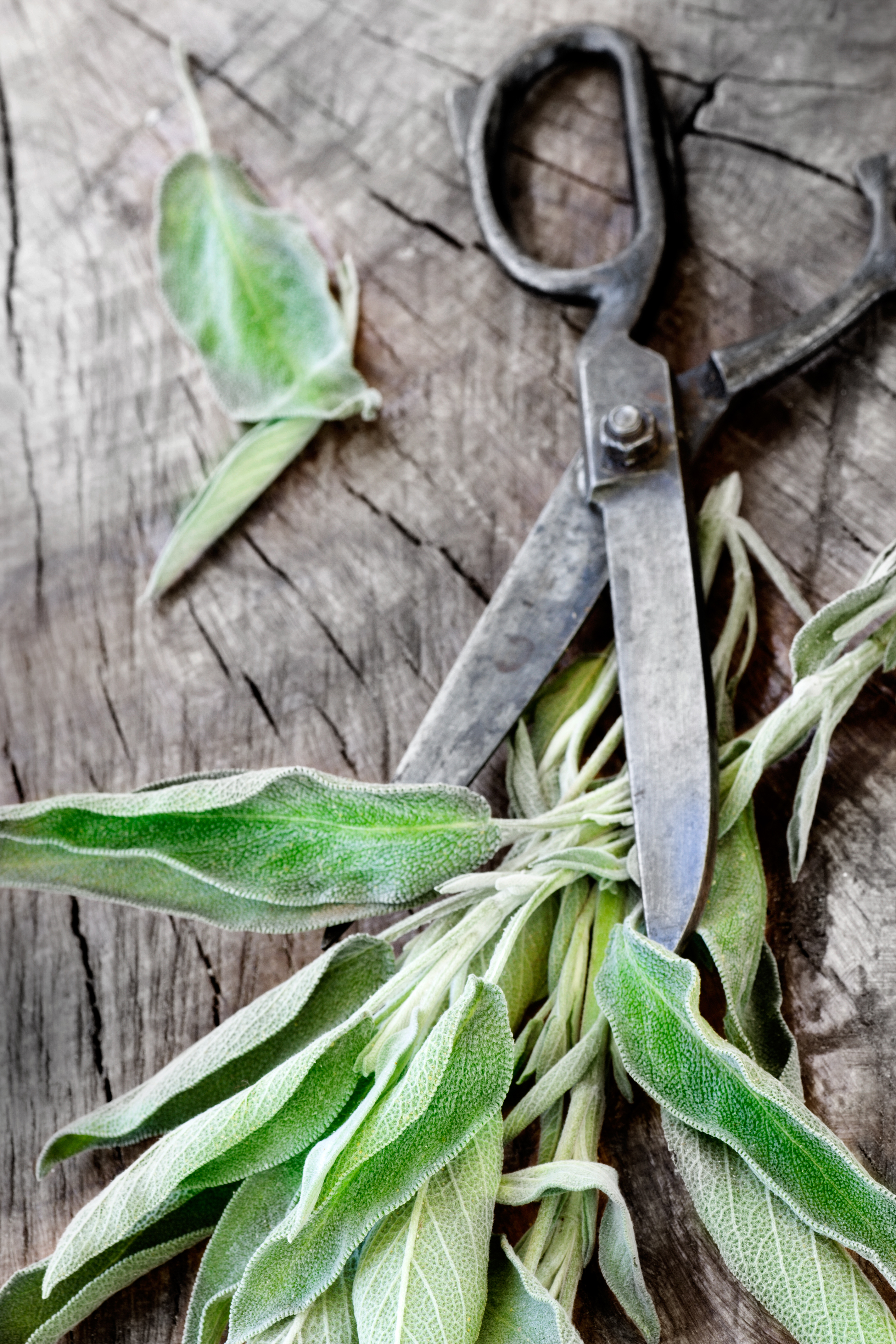
sage clipping

The following is an excerpt from Dr. Mindy A Curry’s blog, which offers the following remedy for oral disorders such as absecess and ulcers.  It is based on a based on a sage infusion.  You can find out more on sage from her blog post Saved By Sage.

[box]

Oral Care Tea

“Sage is a well-known, old-fashioned antiseptic remedy for disorders affecting the mouth and throat including dental abscesses, infected gums, mouth ulcers, sore/bleeding gums, loose teeth, cold sores, sore throat, and tonsil/larynx infections. Sage tea can be used as a mouthwash or gargle due to its antiseptic and astringent properties.   It is known to provide great relief for raw, painful and irritating conditions of the mouth and throat.”

  • 8 tsp. of dry or fresh sage leaves
  • 1 qt. of filtered water

Boil water.  Adde sage leaves.  Soak and let steep covered for 45 minutes.  Strain the infusion, add raw honey if desired and drink in 8 oz servings, repeating every few hours as needed.

[/box]

Sage is versatile -from perking up your meals, to fighting forgetfulness and reducing the discomfort of an irritated throat.  There are more ways to use it than can be listed in one blog post.  Europeans love sage, check out 45 Things To Do With Fresh Sage from Chocolate and Zucchini.  If you’re a purist, then you may just wish to fry up a batch of sage leaves and eat it las a snack (or sprinkle it on homemade popcorn).  To have fresh sage continuously on hand continuously, you can simply grow it in your own backyard victory garden.

Resources

http://www.herbwisdom.com/herb-sage.html

http://www.whfoods.com/genpage.php?tname=foodspice&dbid=76

http://foodfacts.mercola.com/sage.html

http://www.medicalnewstoday.com/articles/266480.php

http://www.healthy.net/Health/Essay/Natural_Solutions_To_Your_Hot_Flashes/631/2

http://www.ncbi.nlm.nih.gov/pubmed/21630133


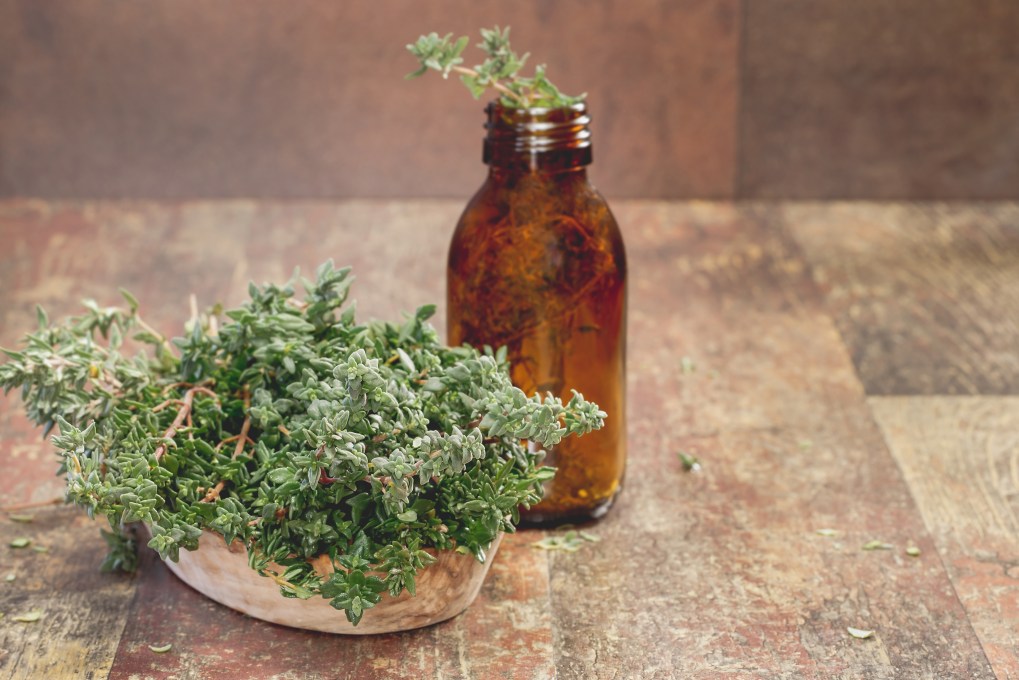
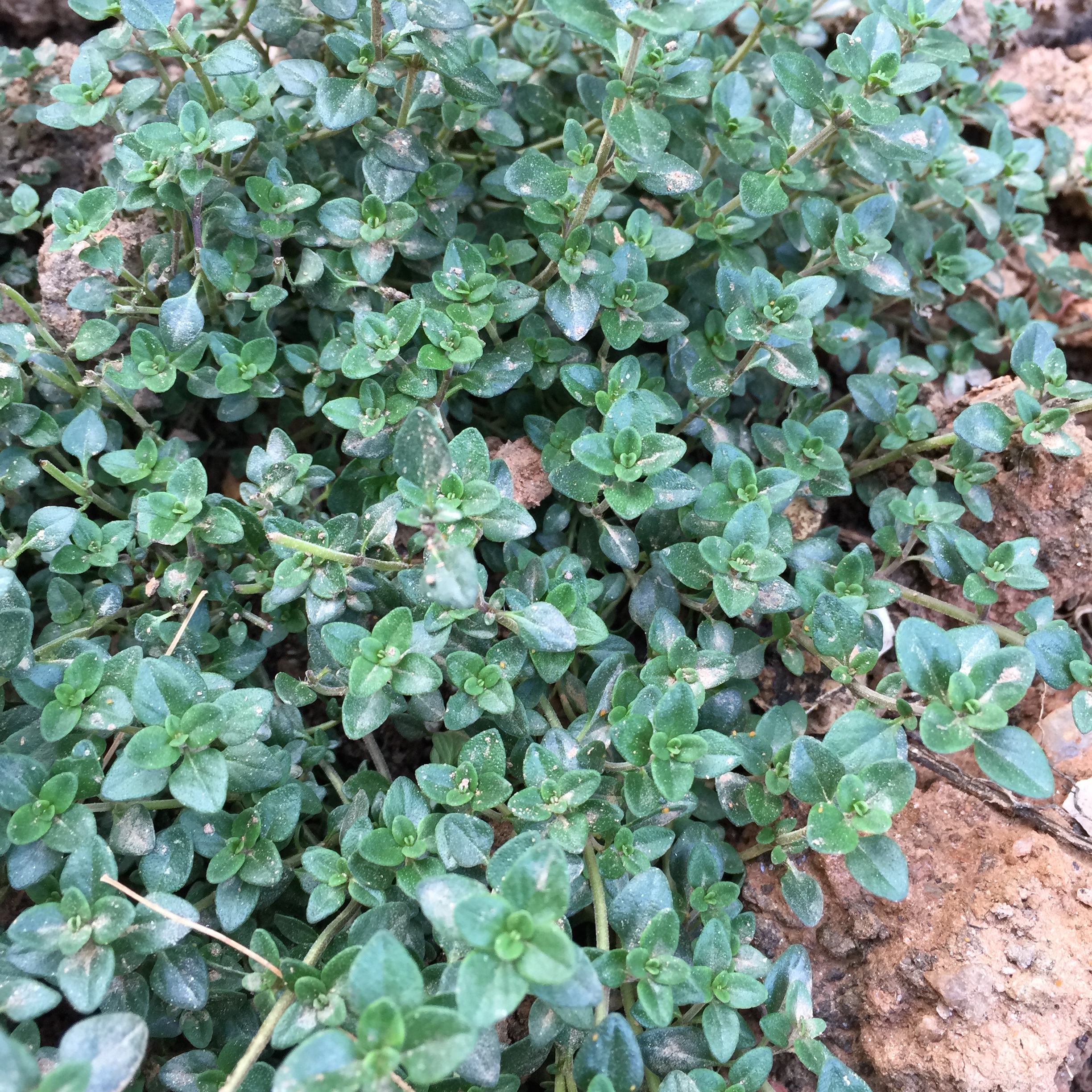
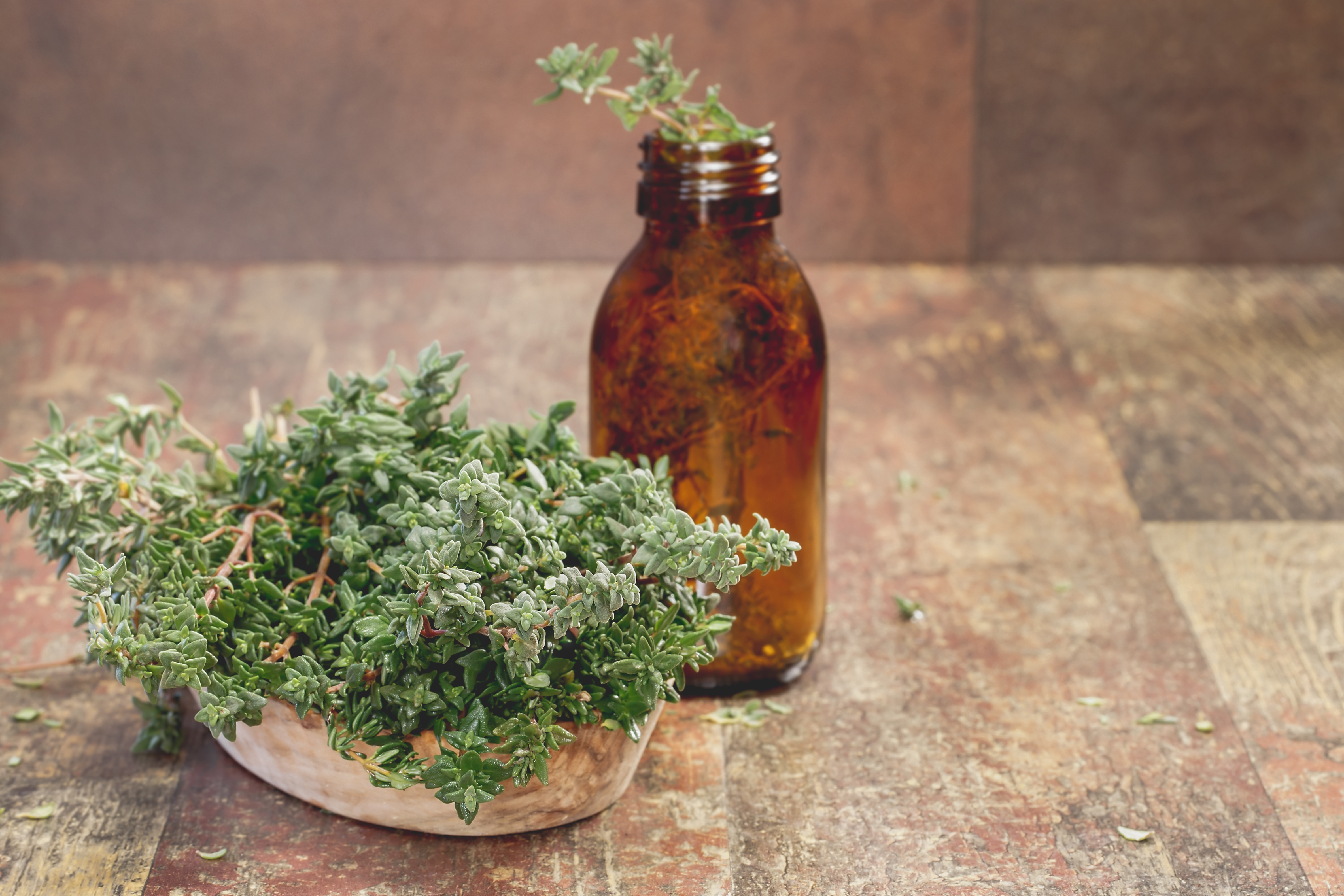
thyme

kitchen garden thyme 2015

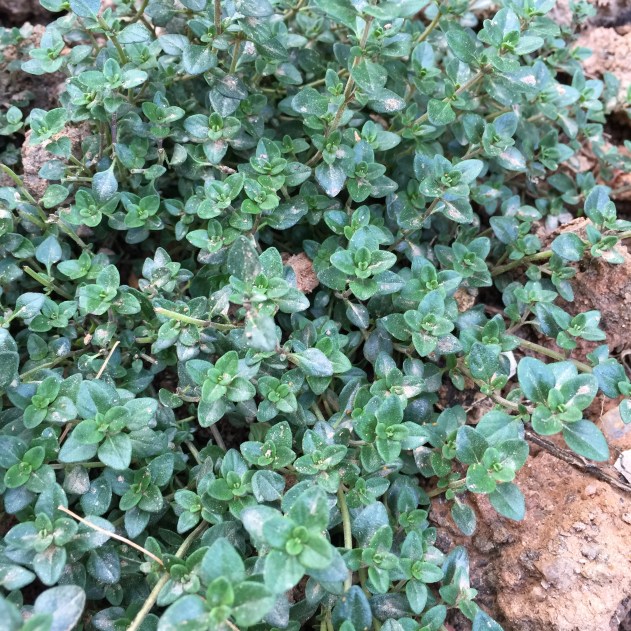
Thyme is an aromatic low growing perennial that can spread out and act like a ground cover.  It is beautifully fragrant and in the spring it blooms pretty white or purplish flowers, depending on the variety.

Bees are very attracted to thyme flowers.  Not lost on this beekeeper is that beekeepers are becoming more familiar with this herb.  One of the active ingredients in thyme is the essential oil thymol which  has shown to be a remarkably effective treatment against the varroa mite that has decimated many bee populations in recent years.

Like sage, rosemary and lavender,thyme is very easy to grow and cultivate in the garden. Common thyme has been a garden staple for centuries.  Ancient Greeks even used it as incense.  Thyme likes sun and well drained soil, but other than that, it requires little work, other than fertilizing and even then, it tends to do well if neglected.

Thyme comes in many varieties, from traditional to lemon thyme.

One of my favorite recipes with thyme is a thyme mushroom pasta, which is a favorite for fasting nights…

[box]

Healthy Benefits of Thyme

Powerful Disinfectant Thyme can be used internally or externally – as a wash – for infection.  Thyme oil demonstrated a good efficacy against antibiotic resistant strains of the following bacteria, Staphylococcus, Enterococcus, Escherichia and Pseudomonas genera.

Promotes Healing in Upper Respiratory Infections Thyme is antispasmodic and an expectorant.  It calms coughs and helps clear mucous.  In uncomplicated cases thyme has been used in healing drinks to treat upper respiratory tract infections, bronchitis, colds, and flu.  It can be used as a rinse to treat sore throats and clear out mucous.  The essential oil thymol is one of the ingredients in Vick’s Vapor Rub.

Rich in Antioxidants Studies show that thyme is a good source of antioxidants.

Anti fungal   Thyme essential oil possesses a wide range spectrum of fungicidal activity.  Studies have shown that thymol is potent against Candida, a common yeast implicated in many fungal infections including those of the toenail.  Research suggests that thyme can be effective against household mold.  Think organic natural cleaning products!

Bug Repellant  Hard to imagine something that tastes so good on sautéed mushrooms can also double as an insect repellent, but it’s true.  Thyme has shown to be undesirable to mosquitos…. move over citronella!

[/box]

This tea is a celebration of thymes expectorant qualities as well as it’s excellent mucous clearing capabilities.

[box]

Tea Thyme For Colds

This employs a basic decoction method for making the tea.  Making a decoction extracts all of the goodness from flowers or plant material.  To extract all of the properties of the plants, you want to bring the water to a boil.

Ingredients

  • 3 ounces thyme flowers or plant parts
  • 10 ounces purified water

Add all ingredients to sauce pot.  Stir to incorporate.  Bring to a boil.  Reduce the temperature, cover and let simmer for 20 minutes.  Turn off heat and let it continue to cool in pot for another 15 to 20 minutes.  Strain and place in storage jar.

Refrigerate.  Drink 1/2 cup one to three times a day.  You may add raw honey, minimally.  Also, you may squeeze fresh lemon into the brew for additional vitamin C which is vital during colds and flu as it escorts viruses out of the body.

[/box]

Another method for storing the decoction is to make homemade ice cubes out of the decoction.  This will allow to make a larger batch and store longer.

The following vapor tea is prepared so that the steamy vapors may be inhaled, not taken from a tea cup.  This traditionally based herbal steam will open your sinuses as well as discourage bacterial and fungal growth.

When I was younger, my mom had me do a similar steam to help my sinuses.
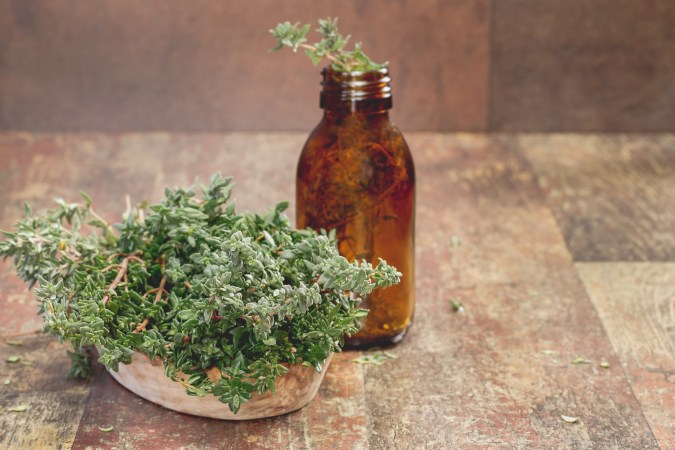
Thyme for Vapor Steam

[box]

Herbal Steam Treatment for Sinuses and Decongestion

One of the best methods to do this is place the tea in a crock pot, so that there is a continuous steam action and you need not be over the stove!

Ingredients:

  • 3 tablespoons fresh mint leaves
  • 3 tablespoons fresh thyme
  • 3 tablespoons fresh rosemary
  • 1 tablespoon fresh sage
  • 5-drops eucalyptus essential oil, peppermint oil, thyme oil (optional)
  • 3 cups purified water
  • 1 towel large enough to drape over your head.


Place all ingredients except essential oil, in large sauce pot and bring to a boil.  Transfer to crockpot and place on highest setting.  Let sit for about 10 minutes.

Place crockpot on counter if you are going to stand or on a table if you are sitting.  Add essential oil   You may leave the crock pot on, or turn it off.  If you do not have a crockpot, you will want to place your sauce pot on some towels so as not to ruin your table.  Also be careful of the hot sides. .

Drape towel over your head and the saucepan.  This allows the steam to be captured so that you may inhale it.  Inhale the steam deeply and do this for about 5 to 10 minutes.

[/box]

and last but not least, I have this around for my girls during cold and allergy season… mostly because I like the coconut oil on their skin rather than petroleum jelly.

[box]

Victoria’s Vapor Rub

 Ingredients

Over low heat melt the coconut oil.  Take off heat and let cool, it should still be clear.   Add essential oils. Stir.   Place in small jelly jar.  You can refrgerate, but it is not necessary.  All of the ingredients have antibacterial properties, including the coconut oil.

Rub on stuffy noses like regular VapoRub.  Inhale!

[/box]

There are endless ways to incorporate thyme into your cooking… Potatoes with lemon thyme, or for something completely different, try this Apple Omelette with Cheddar and Thyme,  Pizza with Lemon Thyme and Basil, and last but not least… with enough thyme, even dessert can add a little twist.  Check out this Blood Orange and Thyme Sorbet

Resources:

Gladstar, Rosemary (2012). Rosemary Gladstar’s Medicinal Herbs: A Beginner’s Guide: 33 Healing Herbs to Know, Grow, and Use (p. 93). Storey Publishing, LLC.

Althea Press (2014). The Practical Herbal Medicine Handbook: Your Quick Reference Guide to Healing Herbs & Remedies (Kindle Location 2553). Althea Press.

Bratianu, Patricia; Schwontkowski, Dr. Donna (2014). How to Benefit from Everyday Herbs – A Beginner’s Guide to Homemade Natural Herbal Remedies for Common Ailments & Good Health (Kindle Location 1551). Simple Media Works.

http://www.ncbi.nlm.nih.gov/pubmed/17209812

http://www.sciencedirect.com/science/article/pii/S0956713506002866

http://www.ncbi.nlm.nih.gov/pubmed/22313307


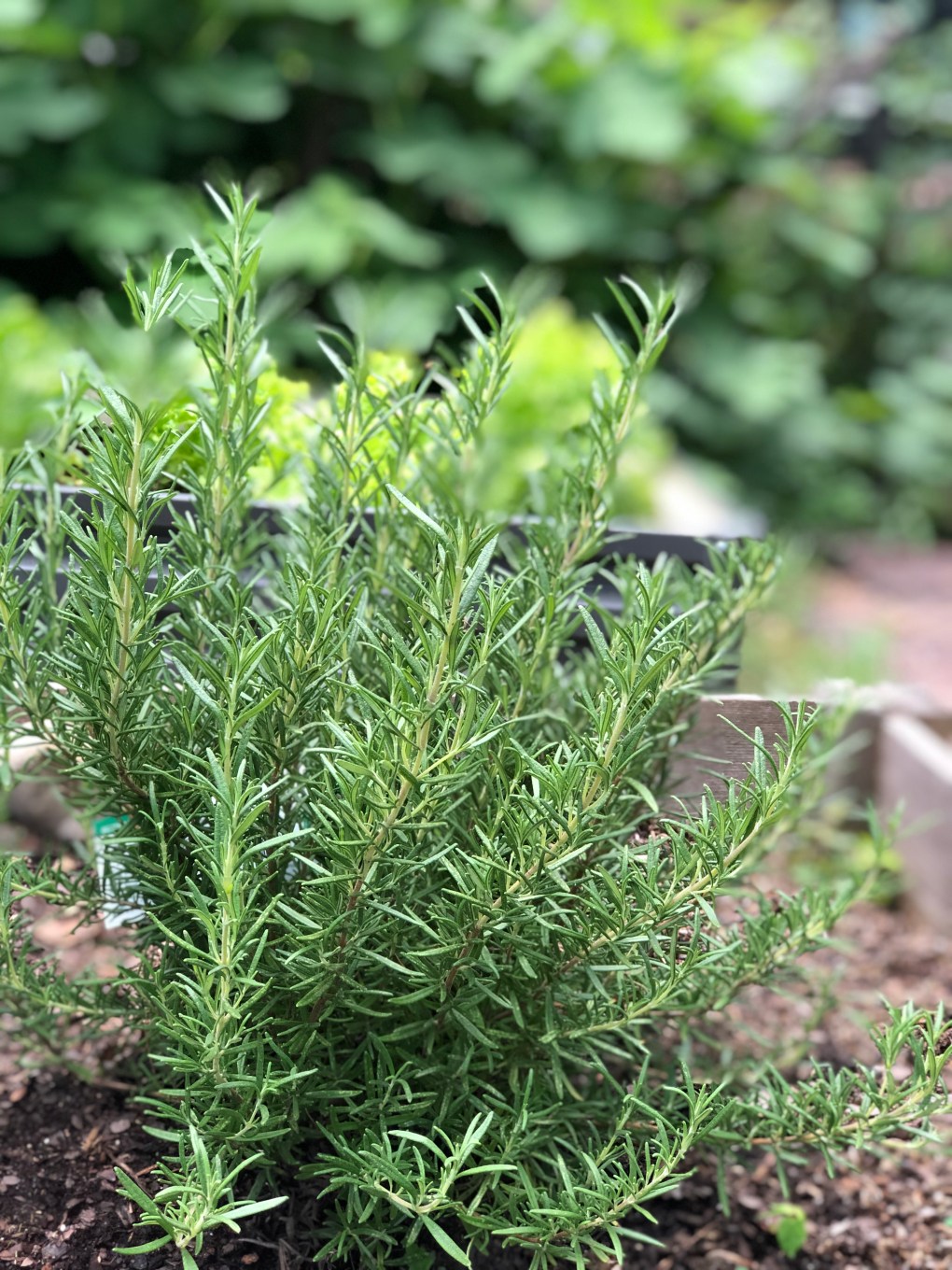
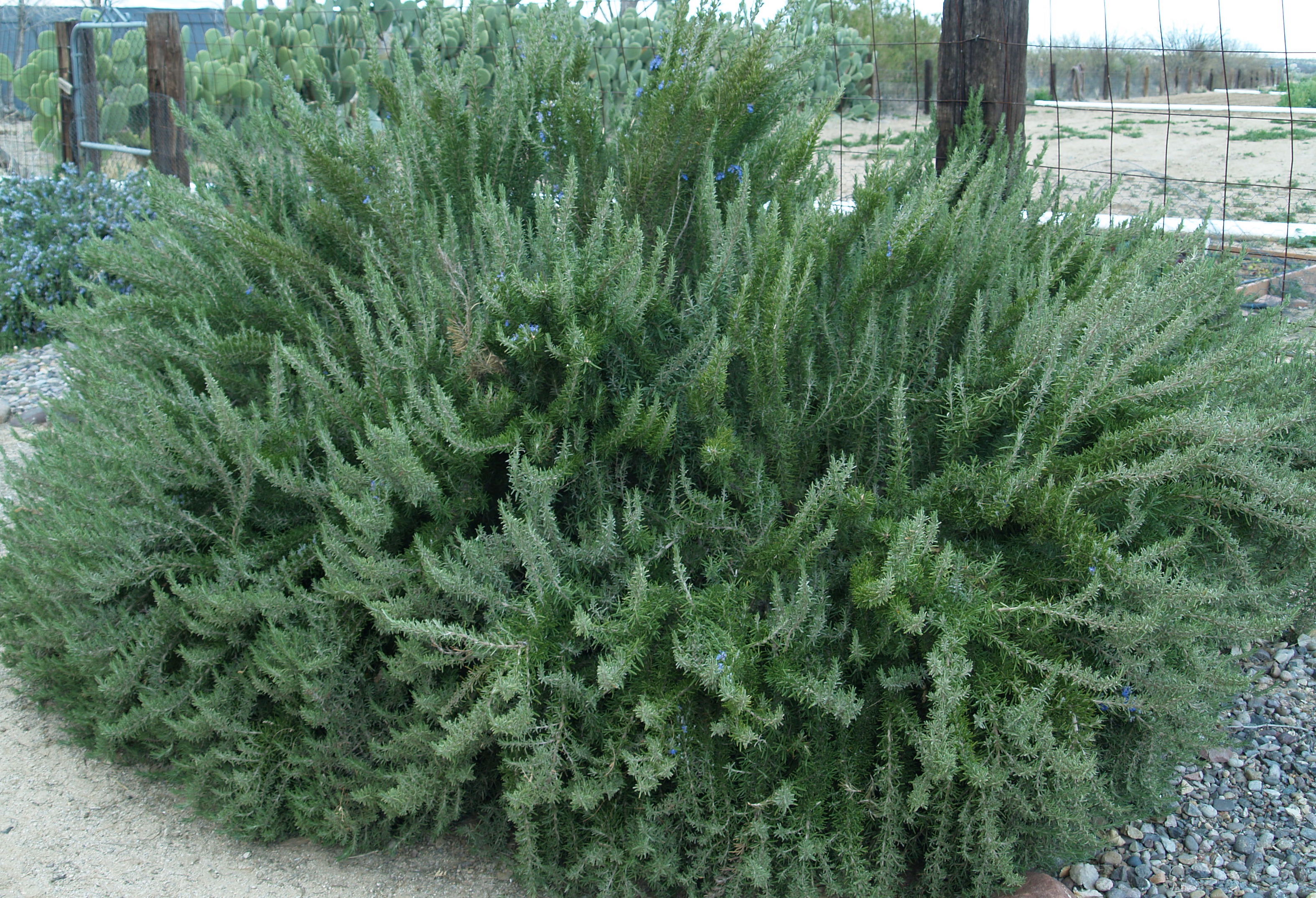
rosemary

rosemary Saint Basil Garden

“There’s rosemary, that’s for remembrance; pray, love, remember…

William Shakespeare

Rosemary is a most versatile hearty evergreen herb, which is deer resistant, resinous, aromatic and woody.  It is one of nature’s best antioxidants and preservatives and it’s safety is well established.  It serves multiple culinary purposes, and doubles as a beautiful shrub that can grow quite large.  It blooms the prettiest little purple flowers when mature (which of course, the bees love!).  The best tasting rosemary is that which is fresh, snipped from your garden.  It has a delicious piney fragrance and a pungent flavor that is delicious with root vegetables and lamb dishes.

Rosemary is tolerant in most climates, though it does like drier soils.  As we learned the past two winters, it does not do well when the weather stays in the 20’s for weeks at a time!

As William Shakespeare says, rosemary is for remembrance and that is a long held tradition.  Rosemary is best known throughout history as a brain tonic for it’s ability to invigorate the memory and brain function, as well as stimulate the nervous system.   Rosemary has been touted to improve test scores and it’s reputation hails back thousands of years…. the Ancient Greeks would place rosemary sprigs in their hair when studying for exams.

Monastery Rosemary
Monastery Rosemary in the Desert of Arizona

Rosemary is native to the mediterranean and it grows wild and freely in that region and most of southern europe.

As a healing herb, rosemary has a long history of use which is now being backed by science.  There are few reports of toxicity or side effects.  It should be noted however that the oil of rosemary may cause a rash in individuals with sensitive skin.  Pregnant women should not take medicinal doses of rosemary.  Rosemary essential oil should never be ingested orally.

The many health applications of rosemary:

  • Antioxidant Protection Rosemary has one of the highest antioxidant abilities of all spices.  It contains high levels of flavonoids and the phenolic compounds rosmanol, and rosmarinic acid.  Carnosol and carnosic acid account for over 90% of the antioxidant properties of rosemary extract.
  • Anti-Inflammatory Protection In mice, the rosmarinic acid was shown to be effective in reducing the progression of arthritis in mice.  Rosemary oil applied topically stimulates the circulation of blood and in as approved treatment for arthritic pain in Germany.
  • Antifungal Protection Rosemary has shown to have anti fungal effects against candida albicans (think yeast infection, and thrush)
  • Remove Food Born Pathogens  Studies have shown rosemary to be an effective inhibitor of Listeria monocytogenes, B. cereus, and S. aureus
  • Relieves Indigestion The use of rosemary has been approved to treat dyspepsia  (indigestion) by the German Commission E, which examines the safety and efficacy of herbs.
  • Relieves Menstrual Symptoms  Rosemary has a long history of use to regulate menstrual flow and ease cramping pain.  For it’s role in menstruation regularity, therapeutic doses of rosemary should not be used by pregnant women.
  • Detoxification Support The phytonutrients -particularly carnosol, in rosemary enhance the action of liver enzymes responsible for metabolizing and detoxifying chemicals.  It also has the promise to protect the liver and stomach from carcinogenic or toxic agents.
  • Rosemary is a Legendary Brain Tonic Historically rosemary has been known to enhance memory.  It stimulates the flow of oxygen rich blood to the brain and has been valued for it’s ability to ease headaches and relieve mild to moderate depression.  Research has now shown that aromatherapy with rosemary essential oils aides recall and increase alertness.  The use of rosemary and lavender oils have been shown to reduce stress related to test taking in graduate nursing students.
  • Applications Against Skin Cancer Research has shown that that carnosic and ursolic acids effectively prevent skin cancer in “a validated model of human skin cancer carcinogenesis.”  In particular, ursolic acid inhibits the replication of cancerous melanoma cells.  Furthermore, it also “inhibits reactive oxygen species in skin cells and prevents damage from the skin-aging effects of UV-A light”.
  • Stimulates Hair Growth  Rosemary has a history as a hair tonic.  In a study of 84 people suffering from lopecia areata (a disease where hair falls out in patches) rosemary essential oil was shown to increase hair regrowth.    Scientists have also shown that applying an extract made of rosemary leaves improves hair regrowth in animals affected by excess testosterone

The best way to prepare rosemary for nutrient retention is to wash under cold water and pat dry.  Pull the leaves from the stem and chop just prior to adding to meals.

Downtown Vienna Garden
rosemary makes a nice landscape shrub for any garden


Roasted Root Vegetables and Rosemary

This is an easy side dish for any weeknight meal.  The vegetables can roast while you prepare the rest of dinner.  You can vary the vegetables as you like, such as adding a potato or butternut squash.

  • 5 large carrots, chopped
  • 1 onion, rough chopped
  • 1 fennel bulb, sliced thick
  • 1 tablespoon chopped fresh rosemary
  • 3 tablespoons olive oil or melted butter
  • fresh ground pepper

Place all ingredients in large baking dish, toss to coat.  Place in 425 degree oven, stir occasionally and roast until tender.  (about 45 minutes to an hour).

salt to taste

Rosemary can easily be added to homemade teas for an herbal decoction.

Zesty Memory Tea

  • 1 part ginkgo
  • 1 part peppermint leaves
  • 1 part red clover tops
  • 1 part rosemary leaves
  • 1 part dried lemon peel
  • 1 part ginger root

Use 1 teaspoon of herbs per cup of water in a tea ball or bag, and put in your nicest or most favorite cup or mug , and cover with boiling water . Steep for 10 minutes. Remove tea ball or bag, and add raw honey to taste.

You can also use rosemary to rinse your hair or even scent your bath with it!

Fragrant Rosemary Hair Rinse

  • 1 quart water
  • 6 sprigs organic rosemary

This works well for all hair types.  Bring water to boil in medium pot  Turn off heat and add the rosemary springs.  Let steep for 20 minutes and allow to cool.

Pour into bottle or container for stage.  You can spritz this in your hair as a leave in tonic, or pour over your scalp, leave for 5-10 minutes and rinse.

The hair rinse keeps in the refrigerator for one week.

Rosemary Infused Oil makes a beautiful gift.  If you are gluten free, you might want to try these savory Rosemary Crackers.  Truly one of the most wonderful ways to eat rosemary, is with lamb or chicken.

Resources:

http://www.motherearthnews.com/organic-gardening/rosemary-plants-offer-many-benefits-zbcz1504.aspx

http://umm.edu/health/medical/altmed/herb/rosemary

http://pubs.acs.org/doi/full/10.1021/jf0715323

http://www.ncbi.nlm.nih.gov/pubmed/12784390

http://www.naturalhealthresearch.org/detoxification-supplements/

Huang MT, Ho CT, Wang ZY, et al. Inhibition of skin tumorigenesis by rosemary and its constituents carnosol and ursolic acid. Cancer Res. 1994 Feb 1;54(3):701-8.

Harmand PO, Duval R, Delage C, Simon A. Ursolic acid induces apoptosis through mitochondrial intrinsic pathway and caspase-3 activation in M4Beu melanoma cells. Int J Cancer. 2005 Mar 10;114(1):1-11

http://www.lifeextension.com/magazine/2006/6/report_sunscreen/Page-02?checked=1

Gladstar, Rosemary (2012). Rosemary Gladstar’s Medicinal Herbs: A Beginner’s Guide: 33 Healing Herbs to Know, Grow, and Use (p. 85). Storey Publishing, LLC.


onions

“The onion and its satin wrappings is among the most beautiful of vegetables and is the only one that represents the essence of things.   It can be said to have a soul.”

Charles Dudley Warner – ‘My Summer in a Garden’ (1871)

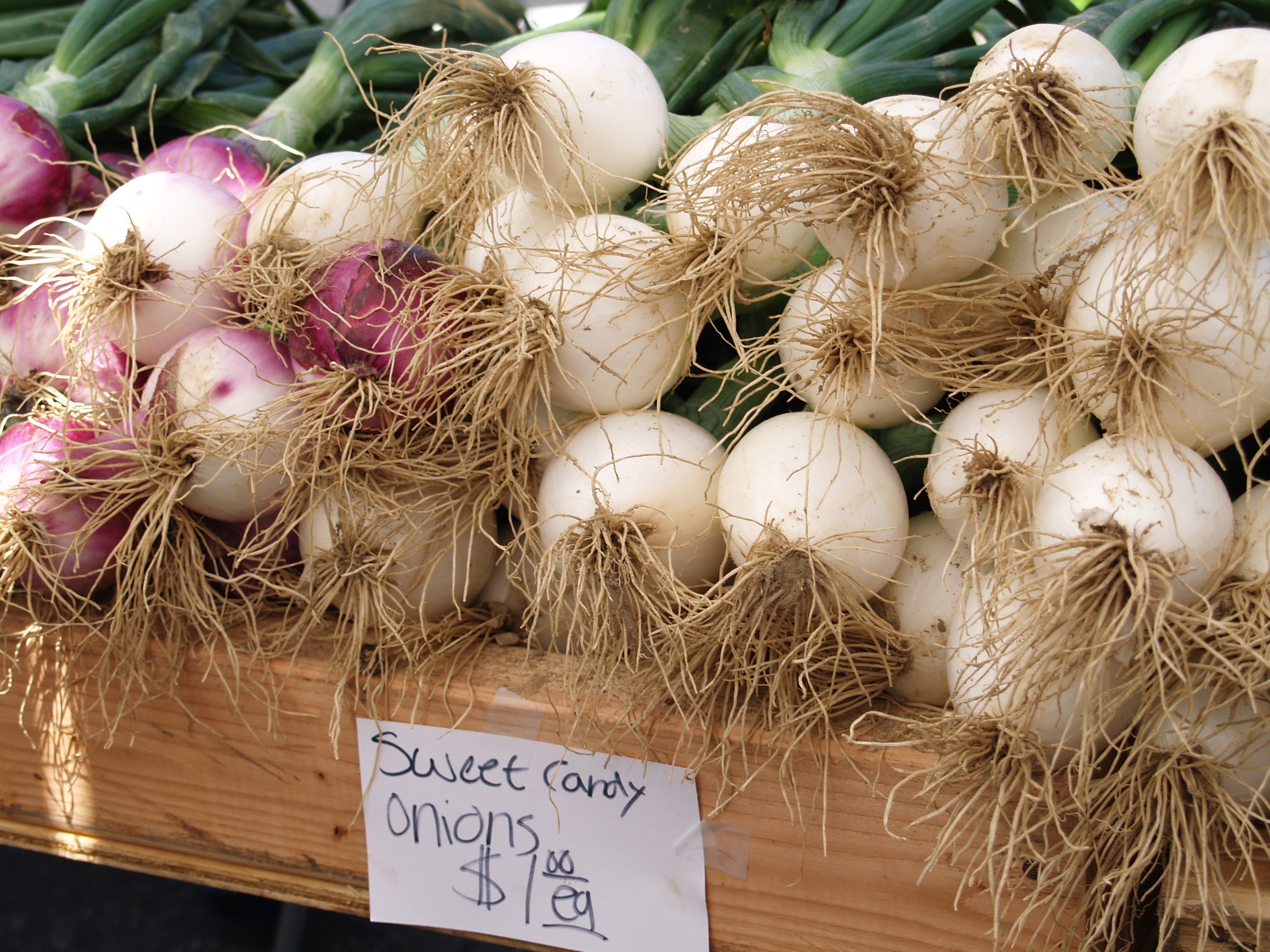
farmer's market onions

“Life is like an onion: You peel it off one layer at a time, and sometimes you weep.”

Carl Sandburg


I am not sure if an onion can be said to have a soul, however, there are times when I’ve definitely felt my heart was something of an onion and that I wept peeling back the layers!!  A trick to help with all of those tears is to keep a lit candle nearby.  It will interact with the fumes from the onion and diminish it’s teary effects!

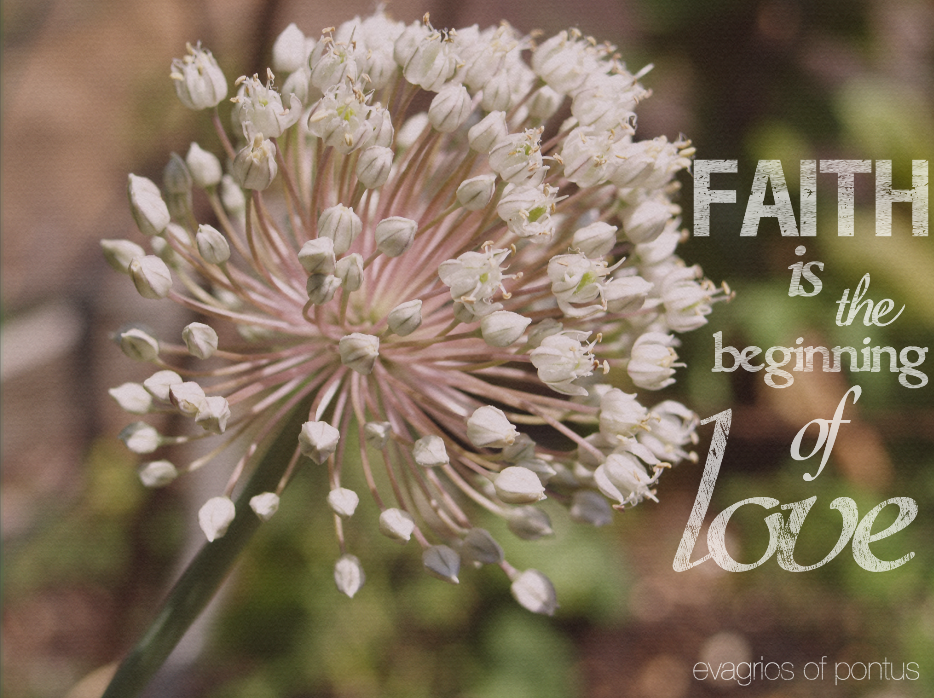
blooming onion

blooming onion

Onions bloom!   Did you know that the onion is actually a member of the lilly family?  Onions tend go to harvest prior to the bloom, because it makes the bulb tough and less tasty.  But if you’ve ever seen an onion flower, it’s something like snowflake.  Onions are also a member of the allium species and share many of the same medicinal qualities as garlic, scallions, leek, chives and shallots.  Allium vegetables are a staple in the base for any broth and also spice up anything from vegetables, stews and of course salsa!  Onions are delicious baked, fried, pickled or raw, but also are part of a healthy diet.

Onions originated in central Asia in the regions of Iran to Pakistan and northward into Russia and have been used widely throughout time for their culinary applications as well as therapeutic properties.

There are more than 500 species of onion, but the most familiar are red, yellow, sweet vidalias and of course those cute little cipollini & pearl onions and chives.


[box]

Health Boosting Qualities of Onions

  • Diminishes Growth of Cancer Cells Onions are one of the richest sources of the flavonoid – quercitin.  Quercetin, is an antioxidant that may be linked to preventing cancer –  inhibiting the growth of cancer cells in breast, colon, and ovarian cancers.  It also inhibits the growth of leukemia cancer cells.  Studies have shown the quercitin halts the growth of tumors in animals and protects colon cells from the damaging effects of certain cancer causing substances.
    • One human study evaluated onion consumption and stomach caner in more than 120,000 men and women who were between the ages of 55 and 69 years of age.  After a 3 year follow up, researchers found a strong inverse association between onion consumption and stomach cancer incidence, but no association with the use of leeks or garlic. (Textbook of Natural Medicine)
  • Promotes Heart Health Frequent or regular consumption of onions has been shown to lower high cholesterol levels as well as high blood pressure.  High

    after a long and super cold winter - 2015 spring onions at the market!

    after a long and super cold winter – 2015 spring onions at the market!

    blood pressure and high cholesterol are implicated in heart disease and atheriosclerosis.  Quercitin thins the blood and raises HDL cholesterol.

  • Boost Blood Sugar Stability Both experimental and clinical evidence reveals that there is a direct correlation between onion consumption and blood glucose levels.  In other words, the higher the consumption of onions, the lower the levels of blood glucose found during glucose tolerance tests.  This is due to the phytonutrient found in onions called allyl propyl disulfide.   Allyl propyl disulfide competes with insulin (also a  disulphide) to “occupy the sites in the liver where insulin is inactivated.  This results in an increase in the amount of insulin available to usher glucose into the cells, causing a lowering of blood sugar.”  (The World’s Healthiest Foods)
  • Chromium Aids in Blood Sugar Regulation Onions are a good source of chromium ( 1 cup – 21% of your daily value) and chromium is helps normalize blood sugar levels
  • Aids in Detoxification Onions contain a good variety of sulfur compounds and those provide health benefits, particularly for detoxification, as it facilitates the sulfation pathway of phase II detoxification.
    • The amino acids methionine and cystine promote detoxification of heavy metals.
    • The Vitamin C in onions promotes detoxification and also the phytochemicals in onions improve the working of Vitamin C in the body.  The aides detoxification and promotes enhanced immune function.
  • Onions are a good source of dietary fiber, vitamin B6, Vitamin C,  Chromium, Manganese, Molybdenum, Tryptophan, and folate.
  • Excellent Source of Polyphenols These are compounds that are disease preventing antioxidants.  Onions contain more polyphenols than garlic, tomatoes, leeks, carrots and red bell peppers.
  • Hair Tonic In patients with alopecia areata (a patchy, non scarring hair loss condition) topical application of crude onion juice compared with tap water was shown to generate regrowth of hair after 2 weeks of treatment.

[/box]

The modern pharmaceutical industry is shaped around dissecting and isolating the  beneficial components of nature and then packaging them in pill, liquid or powder form – and the properties of the “active ingredient” marketed for our health.  While there certainly are useful and therapeutic applications for this, it is important to note that within the healthful properties of any particular food there exists a synergy.   A synergy is the harmonious and even efficacy boosting interaction of all that comes prepackaged from Nature’s Pharmacy.

.

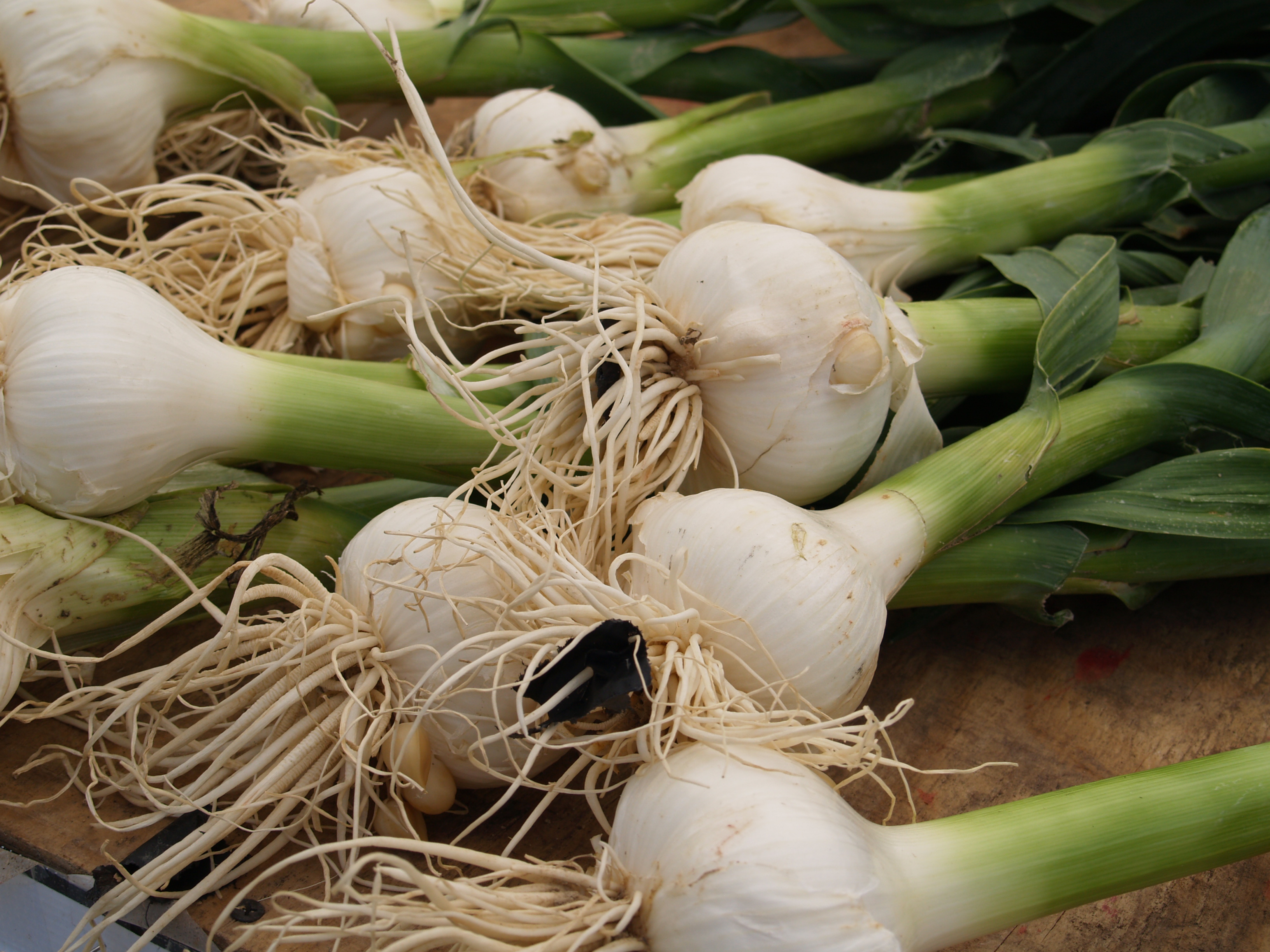
white farmer's market onions


There are so many uses of onions, and they are widely used as garnishes and the base for soups and stocks , where they add great flavor, but are not quite the highlight of the meal.  This potato onion galette highlights the onion as much as the potato and it is a delicious side dish!

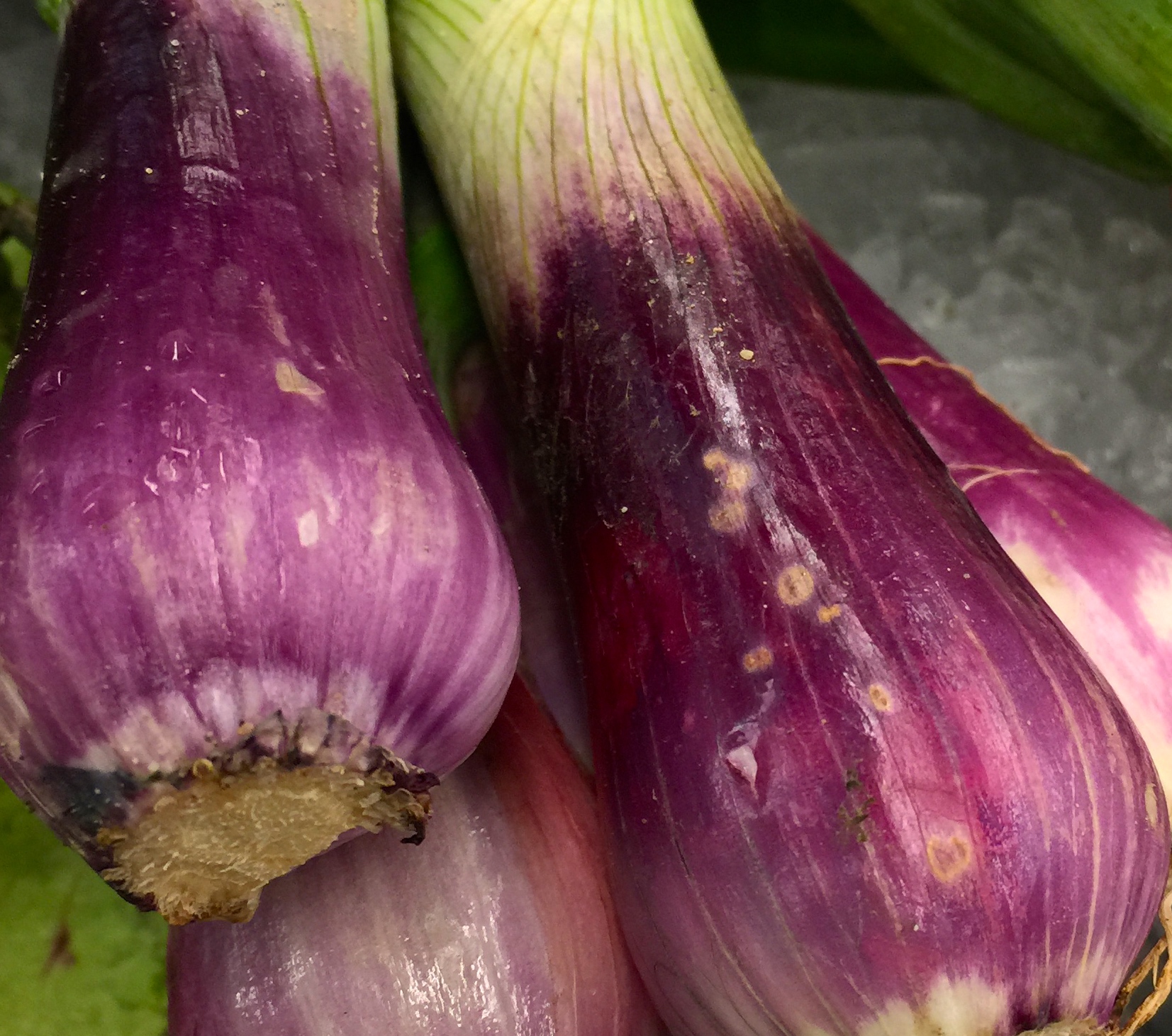
baby red onions

[box]

Potato Onion Galette

Ingredients

  • 2 vidalia onions, sliced thin and – lightly saute’d
  • 2 large yukon gold potatoes  (about 3/4 pound)  Parboil it for about 10 minutes.  Cool and then slice thin.  Do not peel the potato… that is where all the potassium and other valuable nutrients are found.
  • 1 teaspoon fresh chopped thyme or rosemary
  • 1 tablespoon fresh chopped sage
  • 3 tablespoons olive oil
  • salt and pepper to taste
  • 1/2 cup chicken broth
  • 2 eggs beaten, with 1/4 cup heavy cream
  • optional : 3 slices naturally cured bacon or pancetta sautéed and crumbled or cut into bite sized pieces

[/box]

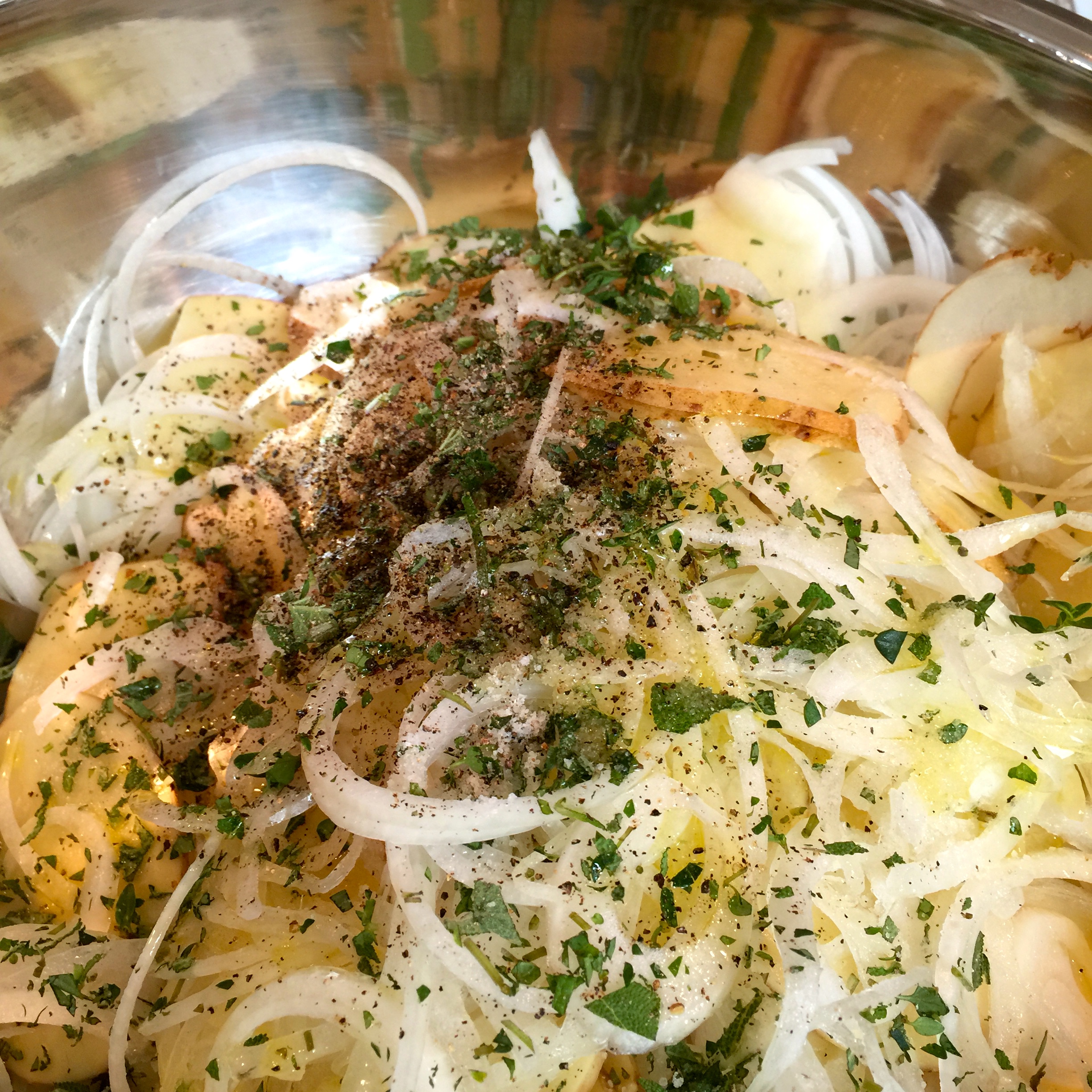
IMG_0928

[box]

Place all ingredients except chicken broth in bowl.  Toss to incorporate spices evenly.

Add contents of bowl to baking dish.  Pour chicken broth over.

Cook in a 350 oven for approximately 1 hour.  The chicken broth will absorb into the potatoes and onions, which will give this a heartier quality.

[/box]

Enjoy!

Looking for more ways to incorporate this allium veggie into your meal plan?  Saute a large onion until golden brown and add to hummus, garnish your Lemon Pasta with Tuna and Capers with a teaspoon or two of finely chopped red onions, chives or shallots!  Check out this Baked Whole Onion, or Rustic Onion Tart, Lebanese Roasted Stuffed Onions, Onion Tomato Pizza, and who can forget, French Onion Soup.

Onions are nothing to cry about  – include them in your diet!  For more on the benefits of onions, visit the National Onion Association where you can download their guide on the Phytochemical and Health Properties of this allium powerhouse.

_______________________________________________________________________________________________________________

Resources:

http://www.foods-healing-power.com/health-benefits-of-onions.html

Onion Health Research

http://articles.mercola.com/sites/articles/archive/2014/04/12/onion-health-benefits.aspx

Pizzorno, J., & Murray, M. (2006). The Textbook of Natural Medicine (3rd ed., Vol. 1). Saint Louis, Missouri: Churchill Livingstone.

Mateljan, G. (2006). The world’s healthiest foods: Essential guide for the healthiest way of eating. Seattle, Wash.: George Mateljan Foundation.


Lenten red lentil dahl

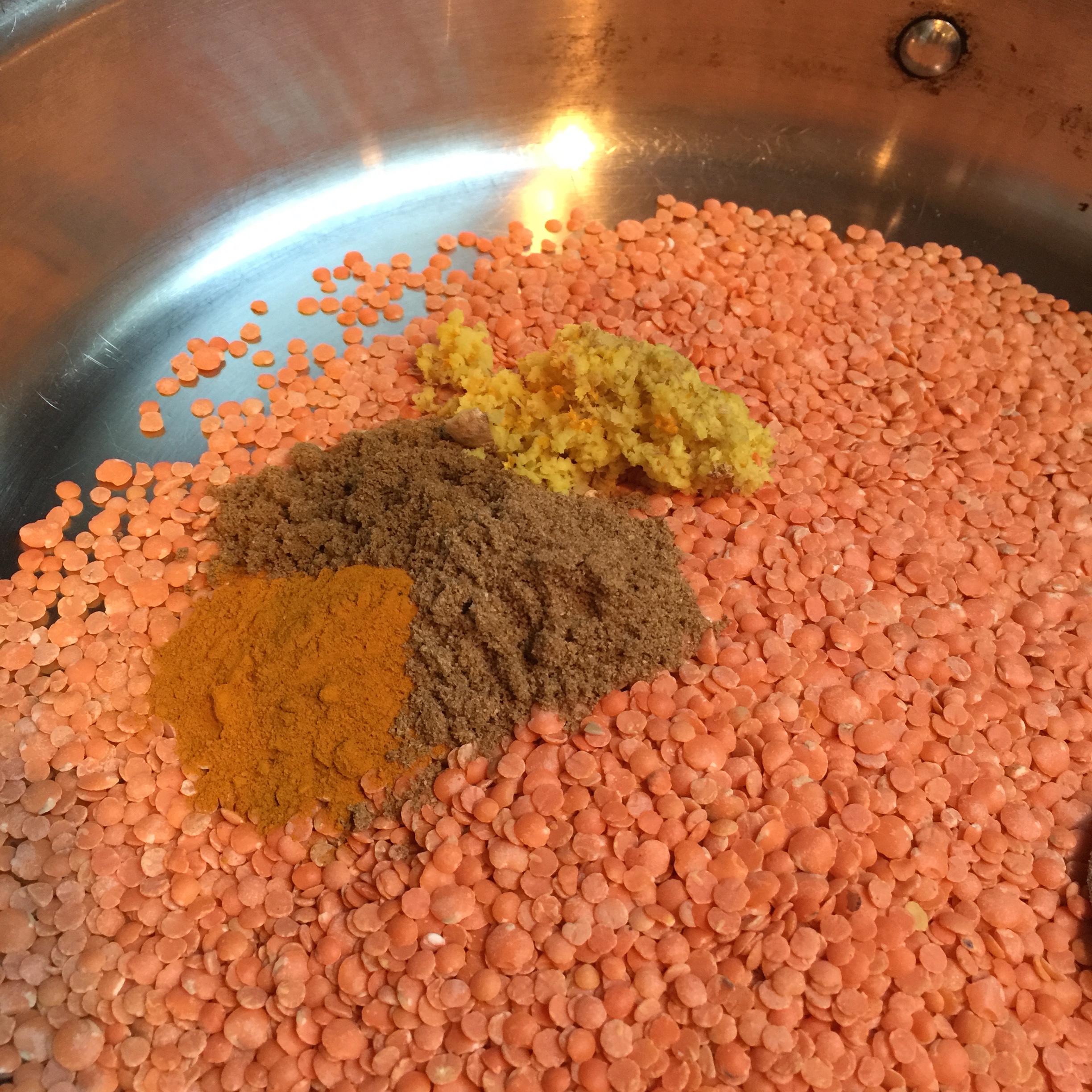
 red lentil prep

This is one of my favorite recipes, both during Lent and throughout the year.  It is simple to make, tastes great and everyone loves it.  Serve the red lentil dahl over brown rice, with some warmed whole wheat naan,  and you have an easy weeknight meal that only tastes better as a leftover.

Ginger is a spice which is very healthy for the stomach, and it has a peppery bite to it.  Try to use fresh ginger and grate it with a microplane grater if you have one, otherwise just mince it with a knife.  If you plant your ginger root in a pot and put it on a sunny window, you can grow more ginger root for free!

Red lentils are nutrient laden and restorative to our bodies.  The ginger and turmeric lend anti-inflammatory qualities to this soothing meal.  Although this is an Indian lentil dish, lentils in general  are a traditional meal during Lent.


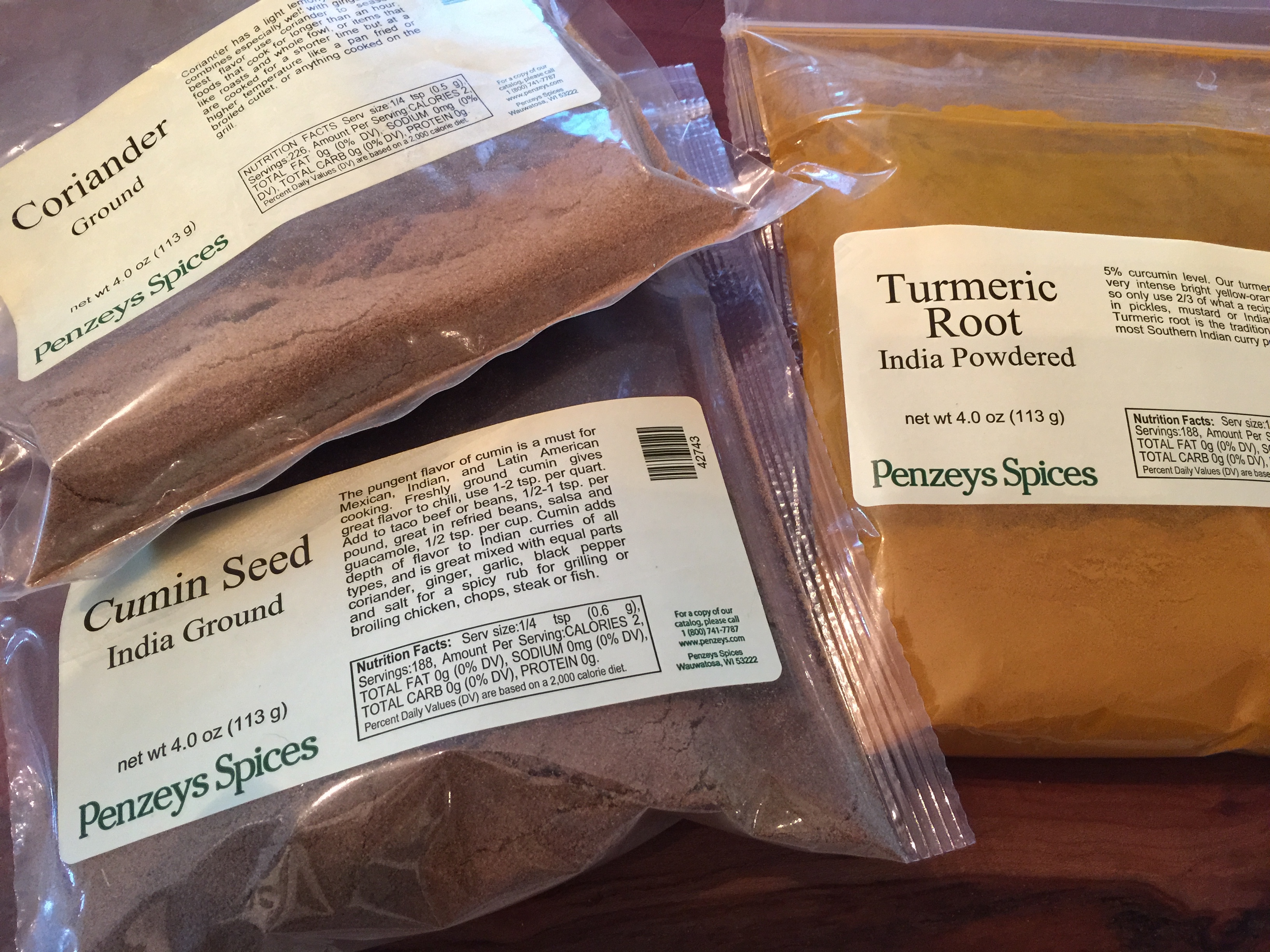
favorite spices

My favorite spices are from Penzey’s  They began as an online store and their spices are very flavorful, but more than that, very affordable.  4 ounces of most Penzey’s costs less than McCormick’s, Spice Hunter and other spice brands at the grocery stores.  So for example, at Walmart, McCormick’s ground cumin costs $4.48 for 1.5 ounces, whereas at Penzeys you’ll spend $5.69 for a 4 ounce bag of a better quality more flavorful cumin.

I have found this to be the same, across the board for all of Penzeys spices.

Lenten Red Lentil Dahl

[box]

Ingredients:

  • 1 cup red lentils (they are actually orange)
  • 4 cups water
  • 1 teaspoon salt
  • 1 teaspoon turmeric powder
  • 1–3 teaspoons grated fresh ginger
  • 2 tablespoons oil or butter or ghee or coconut oil (optional)
  • 1 teaspoon powdered cumin
  • 1 teaspoon powdered coriander
  • 2 medium sized carrots diced (about 1 cup)


Rinse red lentils and soak for 2–12 hours.  This step is not as critical with lentils as with larger beans, but it does help to neutralize any phytic acid present in beans and grains.  Phytic acid binds to the minerals in the beans and therefore makes your absorption of these minerals difficult.  Turns out our grandmothers knew what they were doing!  Traditional preparations are generally more nourishing…. even if they do take a little tiny bit more time.

Place all ingredients in a pot or large high rimmed pan.  Bring to simmer and cook for 45 minutes or until liquid has drained.

Serve over brown rice.  My favorite way to make rice for this dish is 2 cups brown rice, 3 cups water, 1 cup coconut milk.  It makes a tasty coconut-ty rice that goes really well with the dal.

[/box]

Enjoy.

red lentil dal dinner


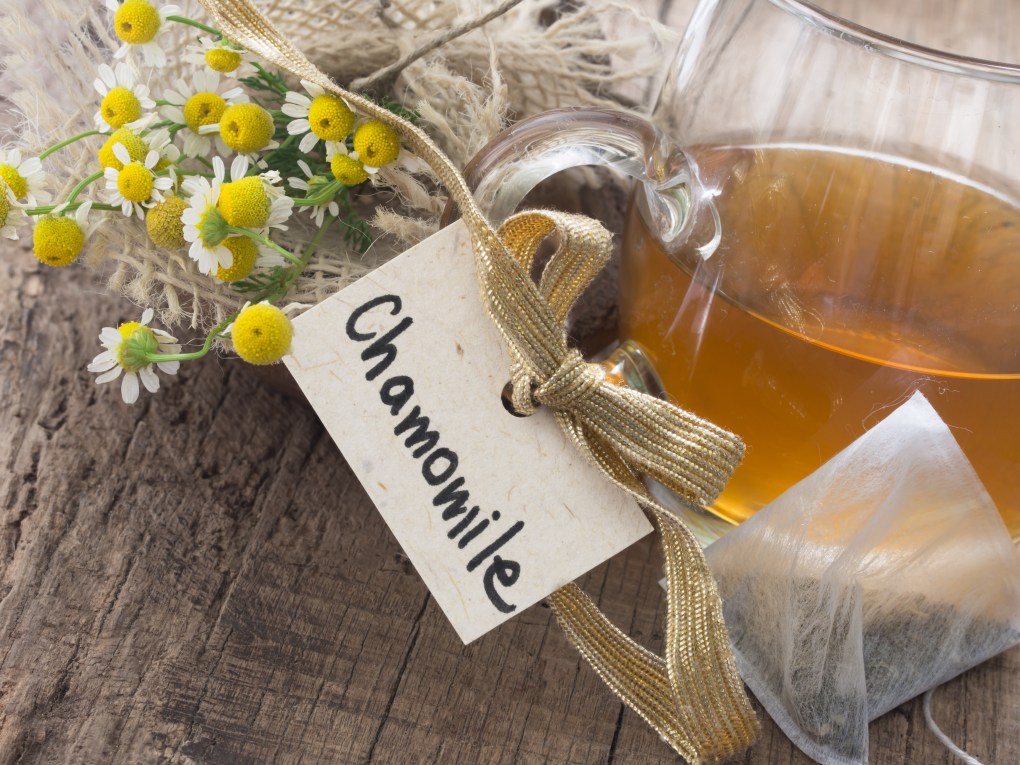
chamomile

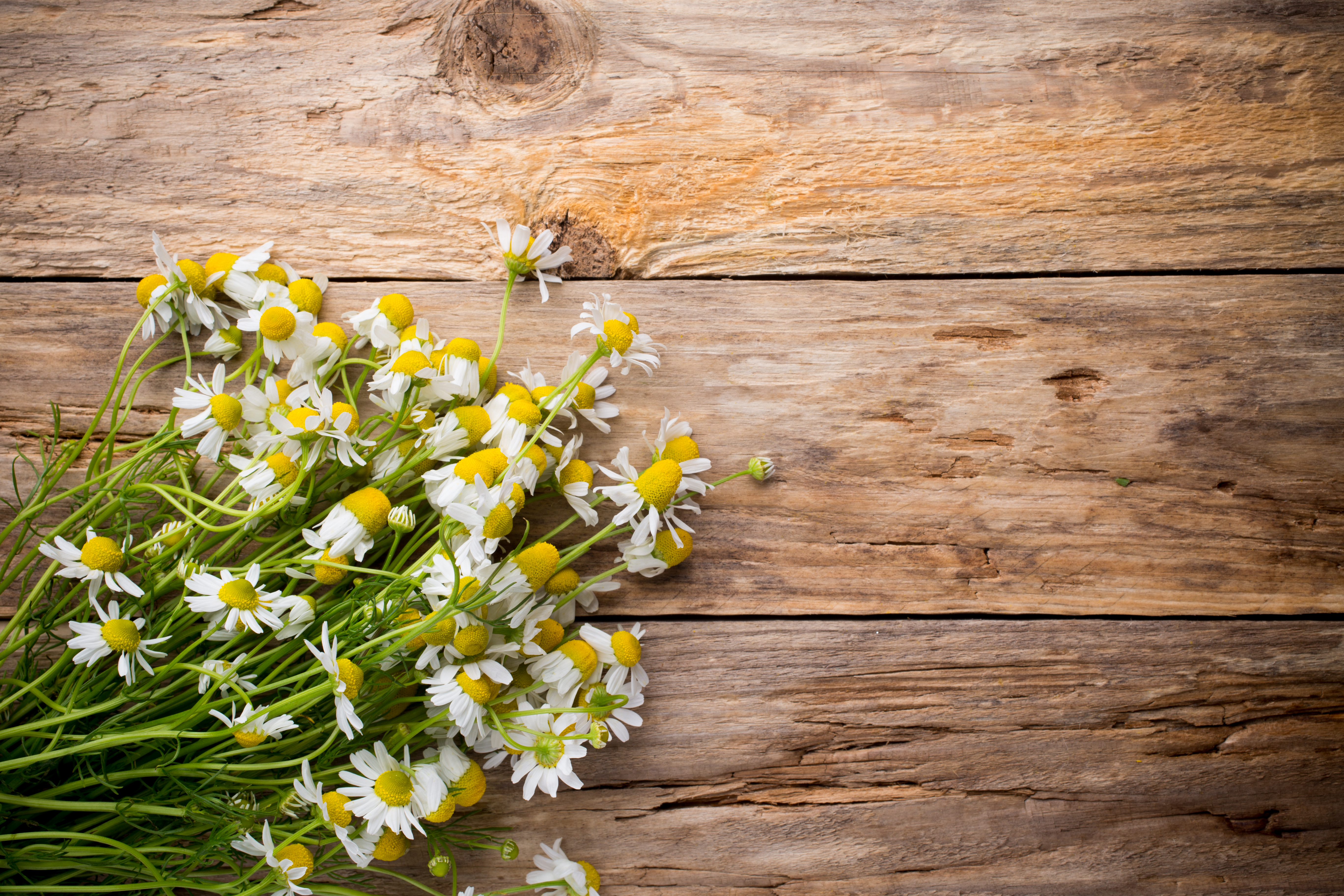
chamomile flowers

Chamomile is probably one of the most researched and nourishing herbs.  You may remember that Beatrix Potter gave her rambunctious son Peter one tablespoon before she sent him straight off to bed, after his escapades in farmer McGregor’s garden.   Chamomile is a simple down to earth herb with wide acclaim, in fact, most of us reach for a nice cup of chamomile tea to cozy up or relax.

There are two varieties of this pretty little flower, German chamomile and Roman chamomile.   It’s a charming daisy like flower with soothing and calming benefits.  The German variety is the most studied, and is better tasting than the Roman variety, which tends toward the bitter side of things.  The Roman variety is also less calming and is more often used for cosmetic purposes.

There is no chamomile in our current garden but we have had it in previous backyard gardens, grown from seed – and that is something magnificent because chamomile seeds are so tiny, among the tiniest we’ve planted.  And it inspires such a sense of wonder that something so positively small can grow to be so prolific and wonderful in the garden!

[box]

This nourishing herb chamomile has many soothing and calming benefits.

  • Chamomile is used in dozens of ways to treat inflammation and irritation of the skin

  • Chamomile soothes and calms a restless or teething child

  • Chamomile tea is recommended by herbalists for intestinal cramps and irritation, ulcers, and colic.  It is supportive of digestive health.

  • Chamomile tea is also recommended for insomnia

  • Chamomile is used widely in artisan salves and commercial creams for inflammation, burns and bites

  • German chamomile essential oil  has antibacterial and fungicidal properties.   It is also antispasmodic, anti-inflammatory, and anti-allergenic.

  • Chamomile, when combined with calendula makes a terrific natural hair rinse for blonde hair.

[/box]


If you grow your own, it is best to harvest the flowers early in the day when temperatures are still cool.  During the blooming cycle harvest every week.  Dry the flowers immediately as they degrade quickly.

There are so many easy applications for chamomile.  Most of these recipes are from the book How to Benefit from Everyday Herbs – A Beginner’s Guide to Homemade Natural Herbal Remedies for Common Ailments & Good Health.

[box]

Cozy Chamomile Tea

Ingredients

  • 1 quart water
  • 2-4 ounces of dried chamomile flowers
  • 1 teaspoon dried orange peel or fresh lemon juice
  • raw honey to taste

Preparation

Blend all ingredients and cover with boiling water.   Let steep for 20 minutes.  Enjoy this tea warm or iced.

[/box]


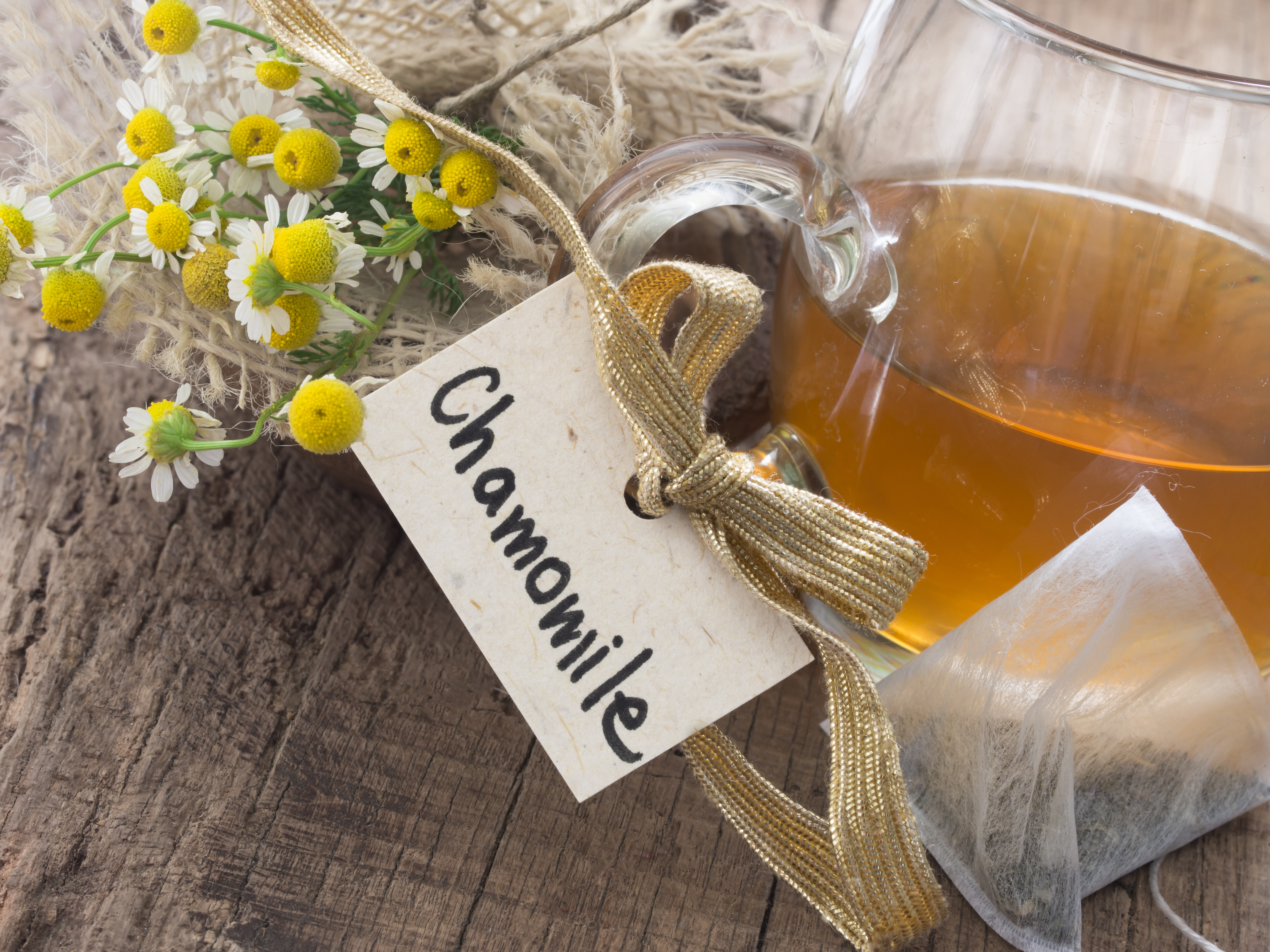
chamomile tea

[box]

Cool Chamomile Shampoo

Check the label before you buy any herbal shampoo. Chances are good that the amount of nourishing herbs is minimal. It’s incredibly simple to make your own herbal shampoo that has enough herbal power to improve the condition of your hair. Plus, if you double or triple the recipes, then you won’t find you have to make it so often.  The following recipe makes a shampoo that soothes your scalp and brings out your natural highlights.

Ingredients

1 cup distilled water

1 oz. dried chamomile flowers

3 oz. liquid castile soap

1/ 8 tsp. sesame seed oil (non-toasted) or olive oil

1/ 4 tsp. tea tree oil

Now for the fun part…. Instructions

Combine the water and chamomile in a saucepan. Cover. Simmer for 20 minutes. Strain the chamomile from the tea. Compost the used chamomile. Pour the remaining ingredients into the tea. Stir gently. Pour into a recycled or purchased shampoo bottle. Gently shake the ingredients in the bottle before applying to wet hair when shampooing. This is a low-suds, easy-to-rinse formula. If you want to use it for children, substitute a no-tears baby shampoo for the castile soap.

[/box]


More ideas for your chamomile:

Where to buy chamomile:  Baker Creek Heirloom Seed Co

Tips on growing chamomile:  Smart Gardener  (they have a really fun garden planning app too!)

Homemade Chamomile Hand and Body Lotion from My Green Family

I love this recipe…  Homemade Chamomile Lotion

Homemade Tincture of Chamomile

Chamomile Tincture


Resources:

Mann, C. and E.J. Staba. In Herbs, Spices, and Medicinal Plants: Recent Advances in Botany, Horticulture, and Pharmacology, edited by L.E. Craker       and  J.E. Simon, 1:235-280, Phoenix, Arizona, Oryx Press, 1986.

Der Marderosian, A. and L. Liberti. Natural Product Medicine: A Scientific Guide to Foods, Drugs, Cosmetics. Philadelphia, George F. Stickley Co, 1988.

Bratianu, Patricia; Schwontkowski, Dr. Donna (2014-04-18). How to Benefit from Everyday Herbs – A Beginner’s Guide to Homemade Natural Herbal Remedies for Common Ailments & Good Health


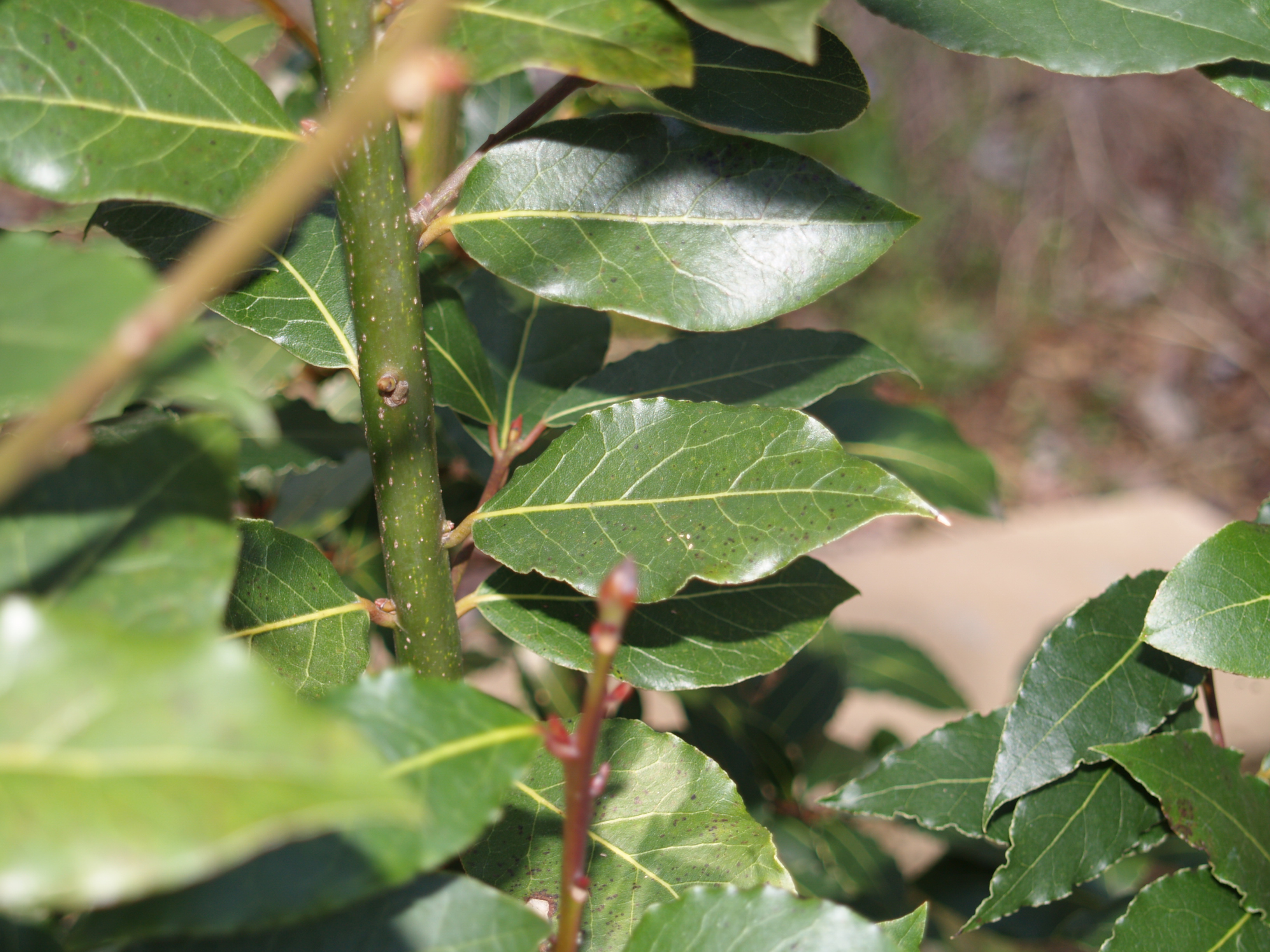
bay laurel

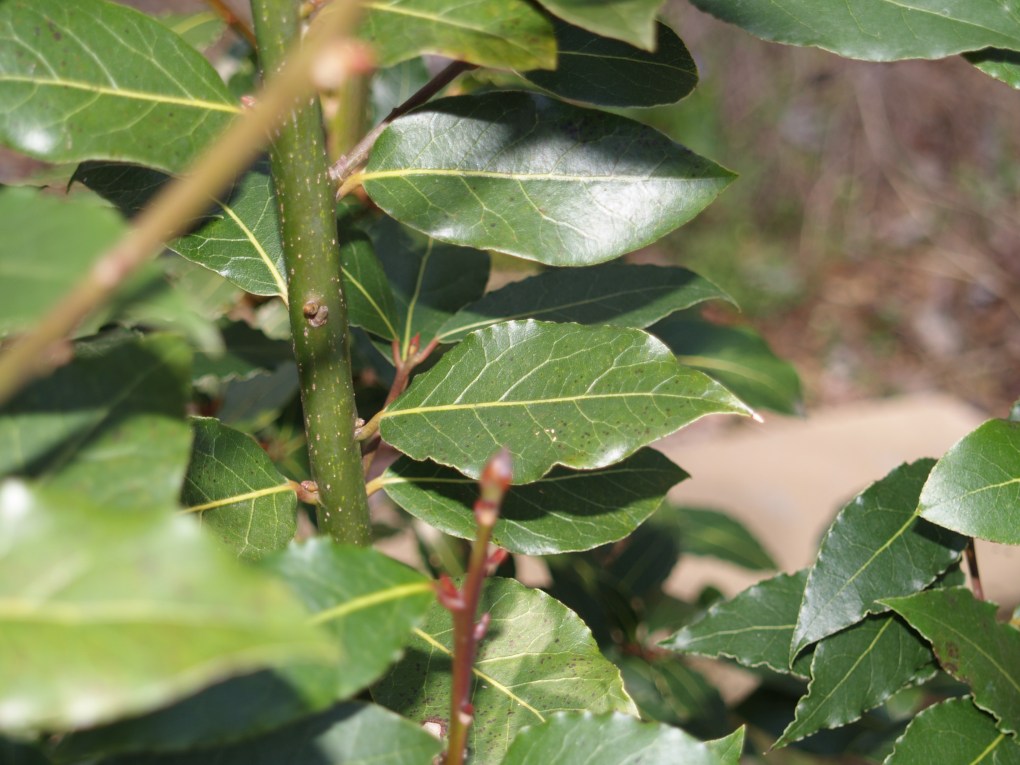
bay laurel 2014

In Biblical times, the bay laurel was symbolic of wealth.  It is a lovely tree , native to the Mediterranean, with soft branches and grows to about 10 -20  feet in height.

What is most notable about the bay leaf is the sweet aroma of the leaves – it has a mellow sweetness that smells a little bit like Christmas.  Ancient Greeks and Romans adorned their Olympic victors and heroic soldiers in wreathes fashioned and twined out of bay branches.  King David was so taken with the bay laurel that he used the aromatic bay wood for paneling his personal rooms.

Nowadays, the bay laurel is used mostly to season mediterranean dishes – from meats, fishes and poultry to vegetables, broths and soups, and stews.

We have a bay laurel tree in our herb garden, that was bought over a decade ago at the farmer’s market.  At the time, I didn’t know that you could grow your own bay tree, but my good friend bought one, and I followed her lead.  The young trees do not do well in cold weather, so it grew in our home by a sunny window for about 7 years before planting it outside.    Then last winter, we had such cold weather for our area – in the twenties for many many weeks.  The branches and leaves all got the equivalent of frost bite and dried up and died.  So in the spring we pruned our beautiful tree down to the stubs and hoped for the best.  Guess what, it grew right back!  The picture above is from the beginning of summer.

 

The bay leaves can be used in tea or as a culinary herb, but the bay has some other surprising properties.

[box]

Herbalists have known that bay laurel poultice or wash may help increase the healing of wounds.  Science has finally gotten around to confirm it.  A 2006 study in the “BMC Complementary and Alternative Medicine” journal found that rats treated with 200 mg of bay leaf extract per kilogram of body weight experienced accelerated wound closure and healing within 10 days.”

The essential oil from the bay laurel is bactericidal and fungicidal.  A 2011 study in the journal “Natural Product Research” discovered why — bay leaf extract was found to have antimicrobial activity against some of the most common pathogens, including Staphylococcus aureus, Streptococcus pyogenes, Aspergillus fumigatus and Candida albicans.

The oil from the bay laurel has been used for soap making and veterinary medicine.

The bay leaf is a primary ingredient in “gripe water” which is a natural remedy for colicky babies!  So it is no surprise that in Lebanon, bay leaves are extracted to relieve flatulence and act as a stomach tonic.

Also in Lebanon, bay leaves are steeped in brandy and let to sit in the sun for several days.  The residue, after distillation is used for arthritis and sprains.

[/box]

You don’t need to grow your own bay tree to enjoy this aromatic herb, but if you’d like to and are in Virginia – Monticello – home to President Thomas Jefferson sells them for a reasonable price, and you can tour the mansion while you are there too!   Another great place for anything plantable and edible is Edible Landscaping.  They also sell bay laurel.

If you’d prefer to buy it harvested, then my best recommendation for it is Penzey’s.  Their spices are super fresh and also very affordable.  I first heard about them in Cook’s Illustrated magazine.  My good friend, the one who originally encouraged me to buy that little bay tree, and I -when we were very young stay at home mom’s – used to buy our spices in bulk from Penzey’s and split them.

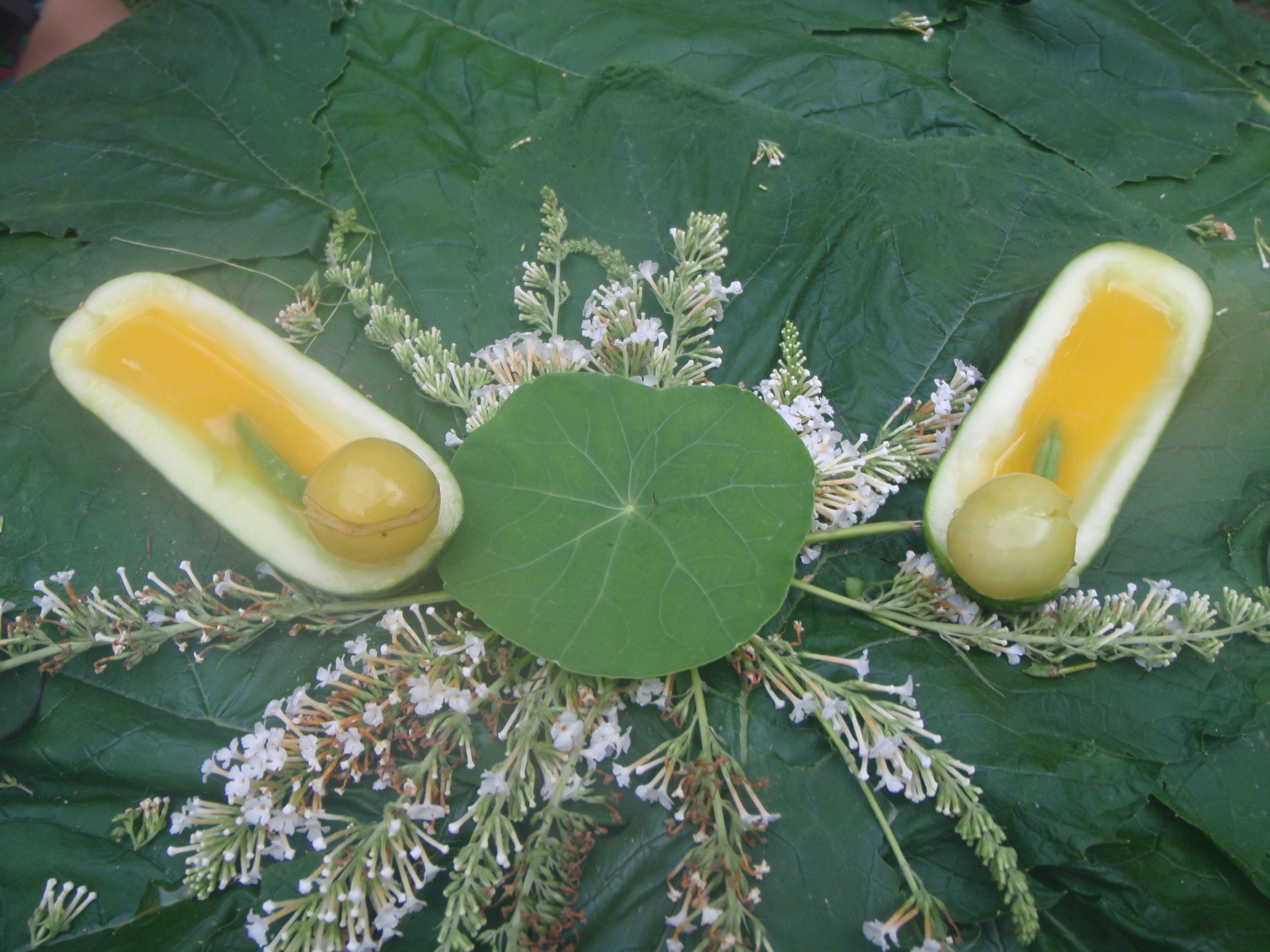
You can use fresh or dried bay laurel for tea.  My daughter, when she was younger loved to play in the garden.  She would make her own tea with bay leaves, lavender and thyme – sometimes it was VERY strong….but still delicious.  She also would take the most ordinary fruits and vegetables and make them into a piece of art.   Like this squash and orange juice platter of sorts that she came up with, served atop of a gigantic squash leaf and enjoyed by her and her sisters and friends.

garden art

This is a modification of my daughter’s playful tea.

[box]

Citrus and Cinnamon Bay Leaf Tea

Ingredients

  • 1 cinnamon stick
  • 4 bay leaves
  • juice of lemon to taste
  • 3 cups very hot water

Place all ingredients in a tea pot and allow to steep for five minutes or longer.  The longer it steeps the stronger the flavors.

Enjoy as is or add some raw honey for a little sweetener.

[/box]

Resources:

http://www.livestrong.com/article/480381-what-are-the-health-benefits-of-bay-leaves/

James A Duke, Ph.D. Herbs of the Bible: 2000 Years of Plant Medicine


garlic

Awesome Garlic


“Shallots are for babies; Onions are for men; garlic is for heroes.”

unknown

Garlic.  When we think of it, pungent and smelly come to mind.  So it might surprise you to know that garlic is a member of the lily family and is a perennial plant that is cultivated world-wide.

Garlic has earned it’s modern reputation mostly as a staple in Mediterranean cuisine, but it’s medicinal and therapeutic qualities have been known since  the most ancient times.  Even pre-dating written history, garlic has been used to treat a wide variety of illness and conditions.  In fact, the earliest documents describing the medicinal qualities of garlic are 5,000 year old Sanskrit writings.

Hippocrates, Aristotle and Pliny cite numerous therapeutic applications for garlic.  It’s health benefits were known throughout all of the ancient civilizations including the Greeks, Romans, Egyptians, Babylonians and Chinese.

It would seem truly, that God, in His abundant wisdom really created garlic to be both our food and our medicine, because even the Israelites grumbled at not having cucumbers, leeks or garlic during their 40 year sojourn  from Egypt to the Promised Land.

But, one of my favorite stories of garlic, is that in 1721 in Marseilles, France a terrible plague broke out.  Four condemned criminals were recruited to bury the dead (which in and of itself was a death sentence).  And so it was amazing that hese four men were immune to the plague.  Immune!  The reason – they had a secret concoction made of macerated garlic and wine.

This drink became known as “vineigre des quatre voleurs” or “four thieves vinegar” and it is still available in France today!  Not going to be in France any time soon?  You can make your own .  There are several recipes online, but make sure to use one that actually lists garlic as an ingredient…  some omit it.  Impressive, is that even WebMD has a recipe for it.

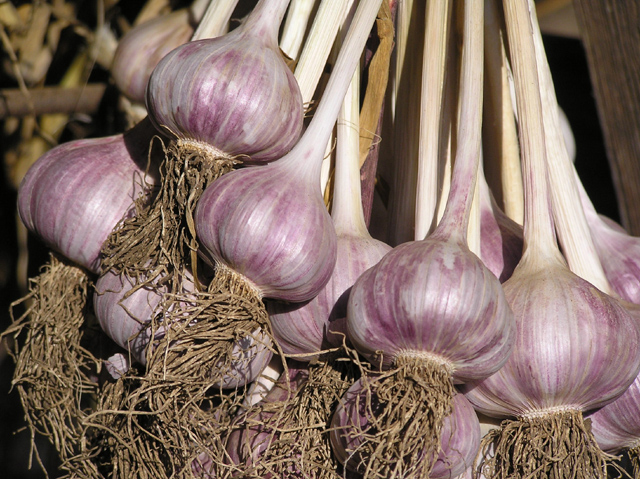
purple garlic


In our garden, garlic is a pleasure to grow – mostly because it needs little work.  We usually plant in the fall, and it’s a great winter crop.   The bugs don’t like it and the weeds don’t hinder it.

If you garden, then you already know that you can grow garlic at a fraction of what it costs at the farmer’s market or store.  It’s antimicrobial – that is antibiotic, anti fungal and antiviral.  These qualities make it a nutritional virtue and worthy of every meal.   But it is also immune enhancing, anti-cancer promoting, a protective factor against heart disease and also anti-inflammatory.


Below is a summary of the nourishing benefits of garlic.

[box]

  • Garlic has potent medicinal properties.  Most of garlics health benefits come from the sulfur compounds that are formed when a clove of garlic is chopped.  This compound is called allicin has powerful biological effects.

  • If you suffer from frequent colds, seriously consider adding garlic to your diet, or taking a supplement.  Garlic helps you fight the common cold, in part by boosting the immune system.  A daily garlic supplement can reduce the number of colds by more than 50%.

  • Even if you should come down with a cold, garlic can reduce the length of it by 70%.  In clinical studies, it reduced the duration of participants colds from 5 days to 1.5 days!

  • Garlic can improve cholesterol levels.  This is good news, because there is much talk these days about the long term dangers of statin use.

  • Garlic is very antioxidant.  Antioxidants support the bodies protective mechanisms against oxidative damage.

  • Garlic aids the bodies detoxification processes.  God created you with a built in detoxification ability, but those organs which include the liver, kidneys, skin and lymph need support of adequate minerals and nutrients to function properly.  At high doses the sulfur compounds in garlic (which support the liver pathways for heavy metal detox) have shown to protect the organs from heavy metals.

    • “Employees at a car battery plant, where there was excessive exposure to lead, found that garlic supplementation reduced the lead levels in the blood by 19%.  It also reduced the signs of clinical toxicity.”  Well Being Journal

  • Garlic has broad spectrum activity against many bacteria, viruses, worms, and fungi.  Garlics antibacterial properties have been shown effective against even bacteria that are resistant to one or more antibiotics.[/box]

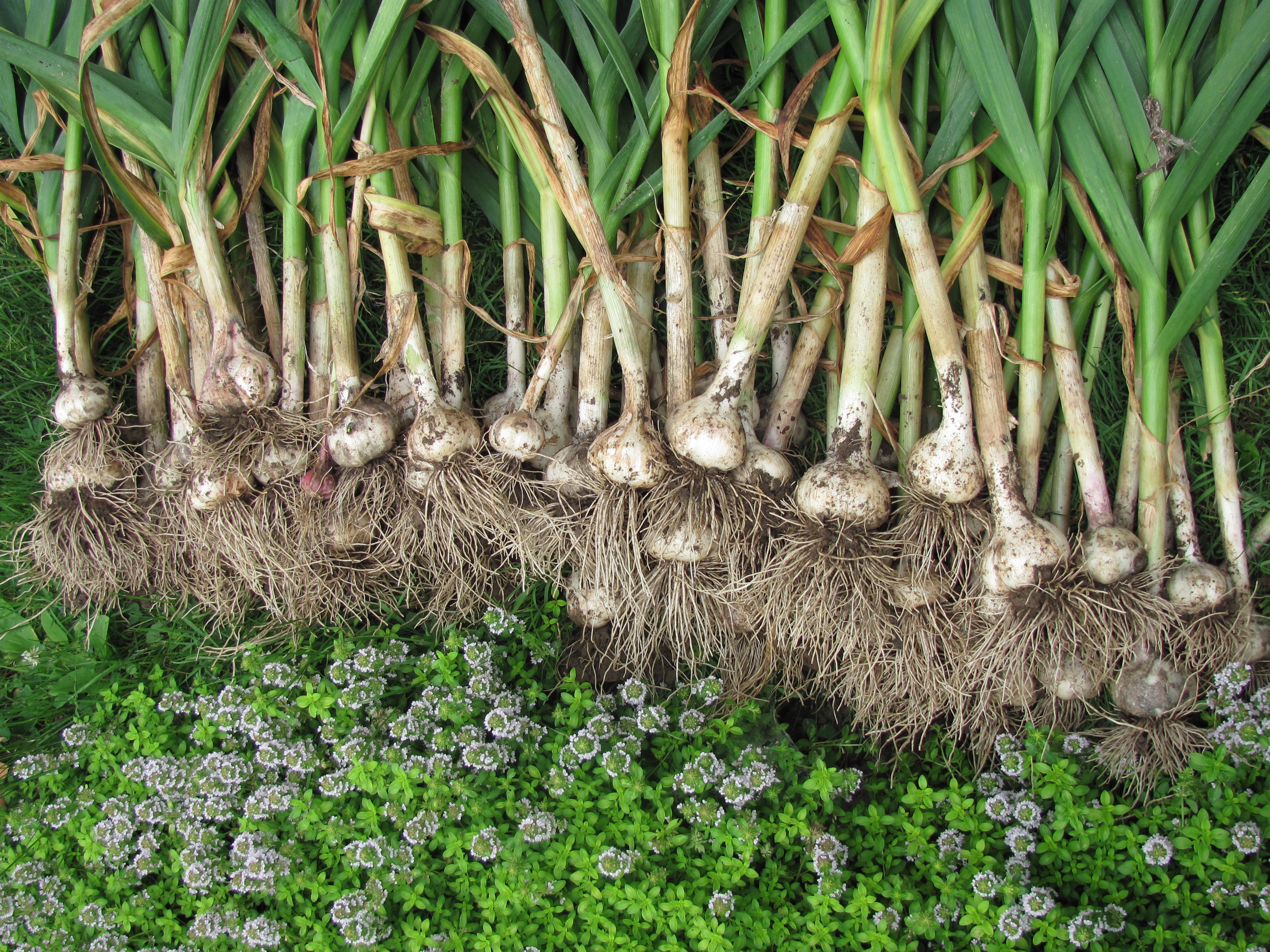
garlic

If you think you might like to grown your own garlic, I love Southern Exposure Seed Exchange varieties and Baker’s Creek Heirloom Seeds.  They are tried and tested favorites.  You can also grow your own, by simply taking any garlic cloves that have begun to show green sprouts on your counter.  Bury them in a pot or in your garden.  They will grow.

It’s good to have a planting guide for your region.  If you live in the mid-Atlantic,Southern Exposure Planting Guide is the planting guide that we use.  Baker’s Creek also has a planting guide.  Finally, the National Gardening Association also has some good information on planting for your area.

Garlic is really pungent when eaten raw but if you cook it, it’s delicious enough to eat it on it’s own.  If you think the Four Thieves Vinegar is a little too dicey, this is a great recipe highlighting the subtle flavors of baked garlic.

[box]

Roasted Garlic Recipe

Ingredients:

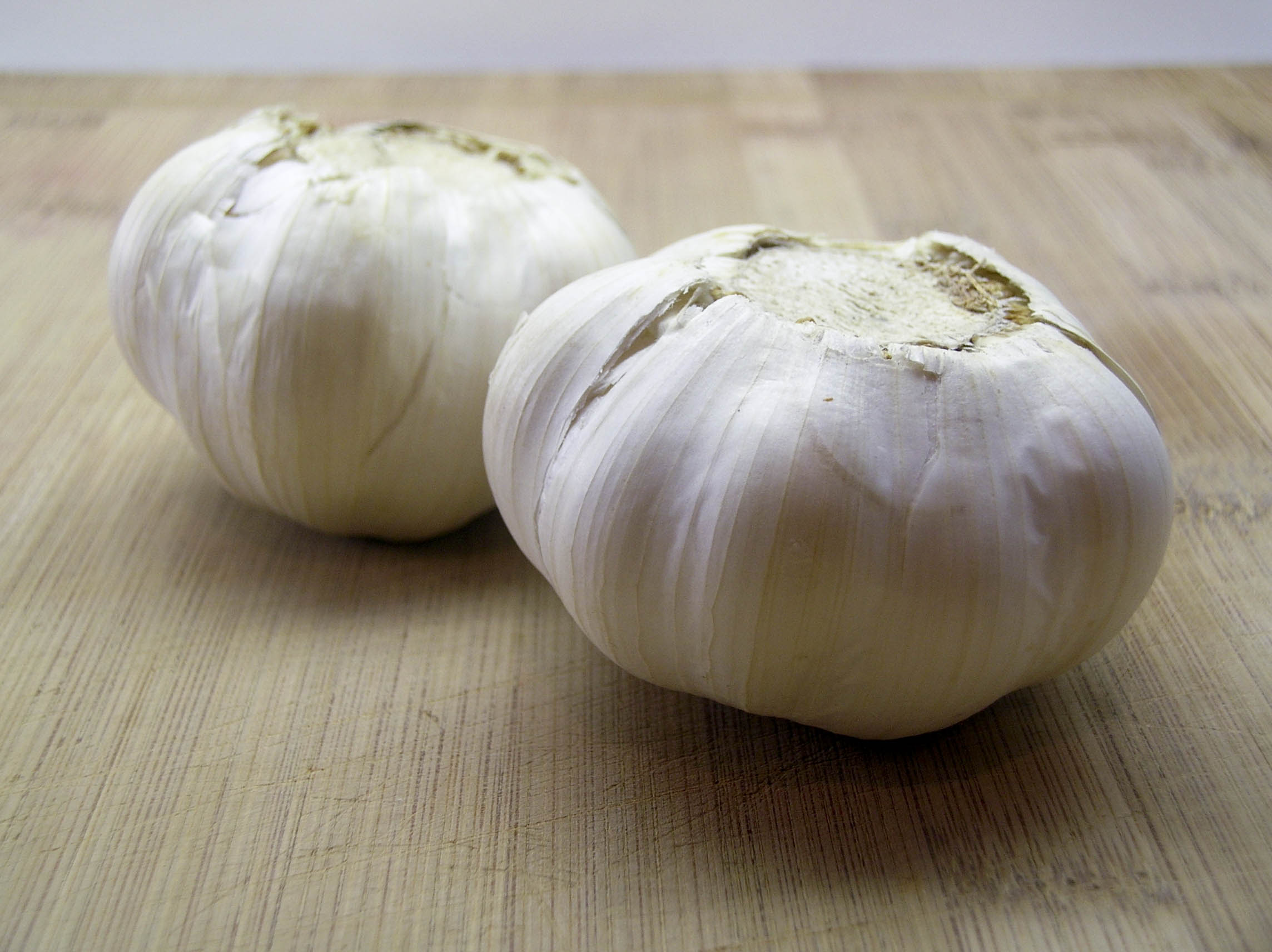
  • 2 heads garlic
  • baguette slices
  • olive oil
  • diced fresh tomatoes

Preheat the oven to 375 degrees F.

Slice off the top each head of garlic to expose some of the cloves inside. Place the heads on a piece of foil. Drizzle with olive oil and wrap in the foil. Roast until cloves are lightly browned and tender, about 30 minutes.

Enjoy it plain, or smear a clove atop a toasted baguette slice, drizzled with olive oil and sliced tomato.

[/box]

Resources:

Murray, M., & Pizzorno, J. (1998). Encyclopedia of natural medicine

The Powerful Health Benefits of Garlic.  Well Being Journal. Vol 24, No 1, January/ February 2015


echinacea

echinacea profile

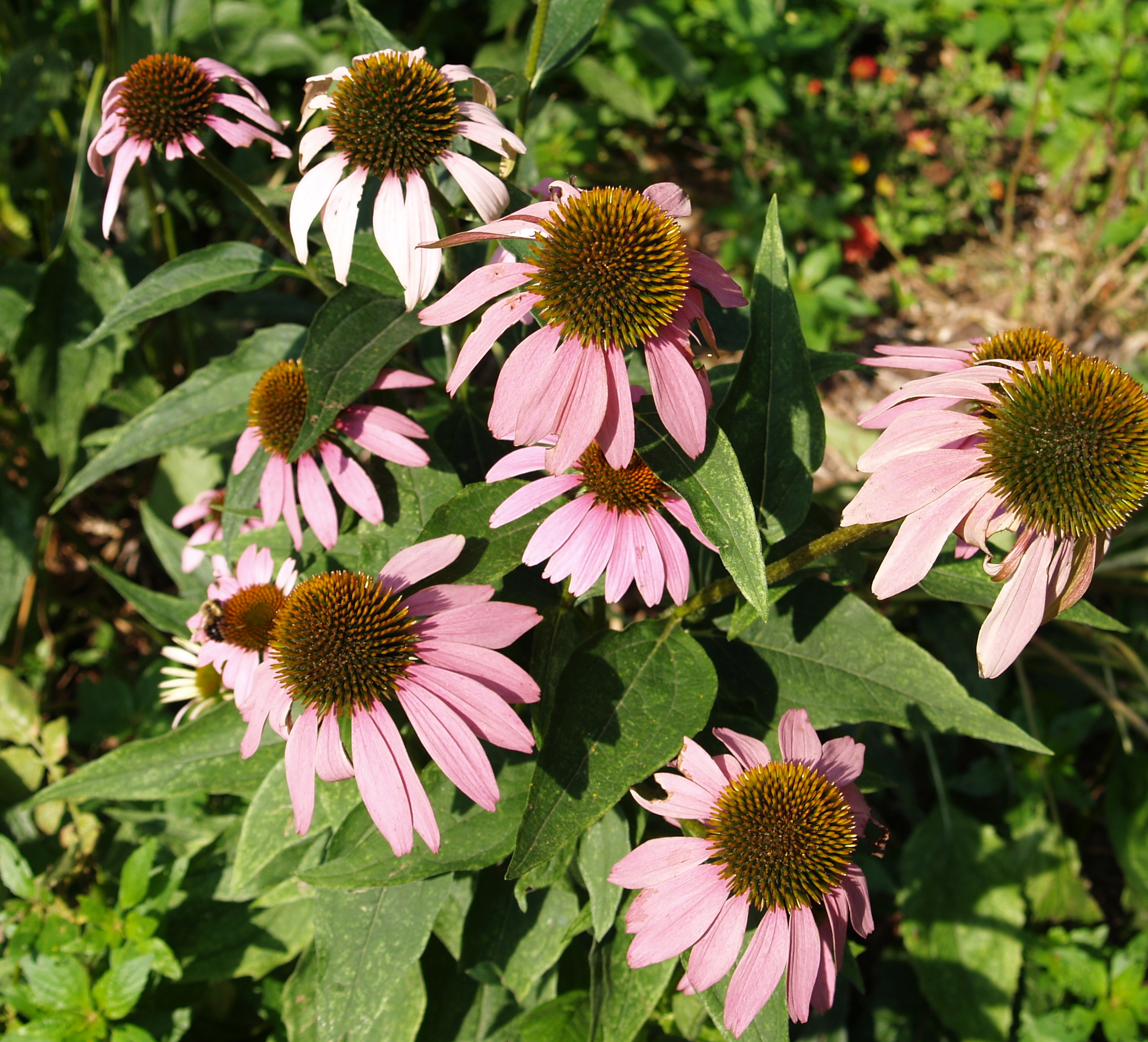
Echinacea, also known as coneflower, is a down to earth all american wildflower.  It’s natural habitat is the midwest plains, the open meadows and prairies of the United States, but now it’s such a popular perennial you can find it dotting the landscape in many gardens.

My own family has grown it for years, not for it’s medicinal qualities, but because it is hardy, drought resistant, comes back every year and most importantly, the deer that bed down in our yard won’t eat it.  In fact most of the herbs featured in this series are deer resistant, unless of course the deer are very very hungry.  We have also found (through sheer laziness-from not pruning back the dead summer growth) that the dried out summer flowers are a delight for the winter birds which are marvelously thankful for these pods of seeds left for them during the scarcity of winter.

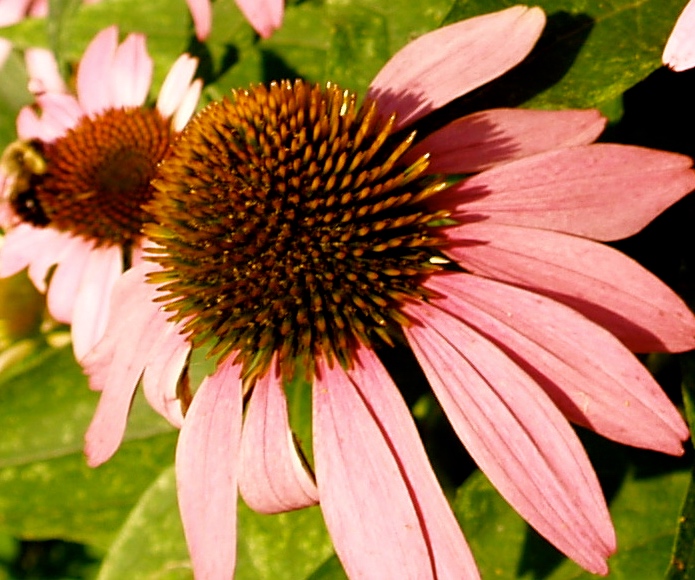
There are several different colors of echinacea cultivated today, but the traditional coneflower is a beautiful pinkish purple petaled flower with cone shaped spiny seed podded head in the center.

Echinacea in the Garden 2013

The root, flowers and leaves of echinacea were introduced to European settlers by the American Indians, who used it to treat more illnesses than any other plant.  Today, it is one of the most common herbs for immune system health and has been widely researched in that capacity, in more than 300 studies.

Echinacea is best known for the following qualities:

[box]

  • Treatment of the common cold.  This is one of the most popular uses of echinacea. Studies have shown that treatment with echinacea at the on set of a cold results in a significant reduction of symptoms.  In trials, the length of time between infections was 60% greater for those receiving echinacea than those given a placebo.  When infections did occur, the symptoms were less severe for those receiving the echinacea.  Patients having a weakened immune system benefitted the most from the echinacea.

  • Echinacea not only shortens the duration and lessens the severity of colds, but it can actually stop a cold that is just starting.  That is because echinacea has antibacterial and antiviral qualities, and in this way resists infections.

  • It is very supportive of lymphatic health.  The lymphatic system is part of your immune system consisting of a series of fluids and glands that sweep away toxins and byproducts of inflammation in order to keep you healthy.  In this way, echinacea aids in reducing congestion, swelling and also keeping your lymph moving.

  • In tincture form, the juice of the aerial portion has been shown to possess antiviral activity.[/box]


If you grow echinacea and want to harvest it, here are a few tips:

  • The leaves can be harvested the spring, when they are still growing.
  • The flowers can be harvested when they start to open but for maximum potency, harvest the cone whenit is mounding.
  • Dig up the root in the fall of the third or fourth year.

Echinacea is excellent in tinctures designed to boost both the immune and lymphatic health.  Herbalists favor tinctures because the most potent active compounds are likely more stable and preserved in an alcoholic solution.  Tinctures generally have a shelf life of at least 2-3 years, provided they are stored in a dark container our of direct sunlight or heat.

You can buy tinctures at most health food stores, or online.  Or you can venture to make your own.  Here  are some simple recipes from normal folks, like you and me : Making Echinacea Tincture from Fresh Root,  Homemade Tinctures 101 and How to Make Echinacea Tincture.  If you are using fresh echinacea, you’ll want to make sure that you have all of the plant is submerged below the alcohol.

Mother Earth News recommends the following recipe for fresh echinacea tincture.

[box]

Echinacea Tincture

1 cup fresh echinacea buds, flowers, leaves and stems rinsed chopped and pounded

1 cup 190 proof ethanol alcohol – that’s Everclear

1 cup distilled water.

Place herb in clean jar and cover with the alcohol and distilled water.  Store in a cool dark place and shake twice daily for 48 hours.  Filter the tincture through a food grade screen and pour tincture into a brown glass bottle and label with contents and date.  As an immune stimulant at the onset of a cold and during infection, take two dropperfuls of tincture three to four times daily in cycles of two weeks on and off.[/box]


Dried echinacea works well in teas, a great recipe can be found at How to Make Your Own Echinacea Tea.  Quality echinacea can be found here.  And ready made echinacea teas abound in the market, but Traditional Medicinals is a quality product and many stores carry it.

[box]

Anti-Inflammatory & Vitamin C Echinacea Tea

  • 2 cups boiling water
  • 1 teaspoon dried echinacea fresh edible flower (or roots)
  • 1/2 teaspoon finely chopped fresh ginger
  • 1 tablespoon freshly squeezed lemon juice
  • 1 teaspoon honey (or more to taste)
  1. In a teapot, pour the boiling water over the echinacea and chopped ginger.
  2. Cover and steep for 10-15 minutes.
  3. Add lemon juice and honey and stir to mix. Strain and pour into 2 mugs.
  4. Serve warm and enjoy![/box]

echinacea

Resources:

Joseph E Pizzorno and Michael T Murray : Textbook of Natural Medicine