Lemon Pasta with Tuna and Capers

tuna casserole rediscovered

Rethinking tuna casserole over here…  When I grew up, there was this tuna casserole dish that most mom’s in our neighborhood made.  It usually had spirally noodles, canned tuna, mayonnaise and topped with bread crumbs that got really crispy when it baked in the oven.  To be honest, I didn’t really like it – mostly because canned tuna doesn’t really taste that good when it has been cooked in an oven for 45 minutes and it always was dry.

IMG_0856

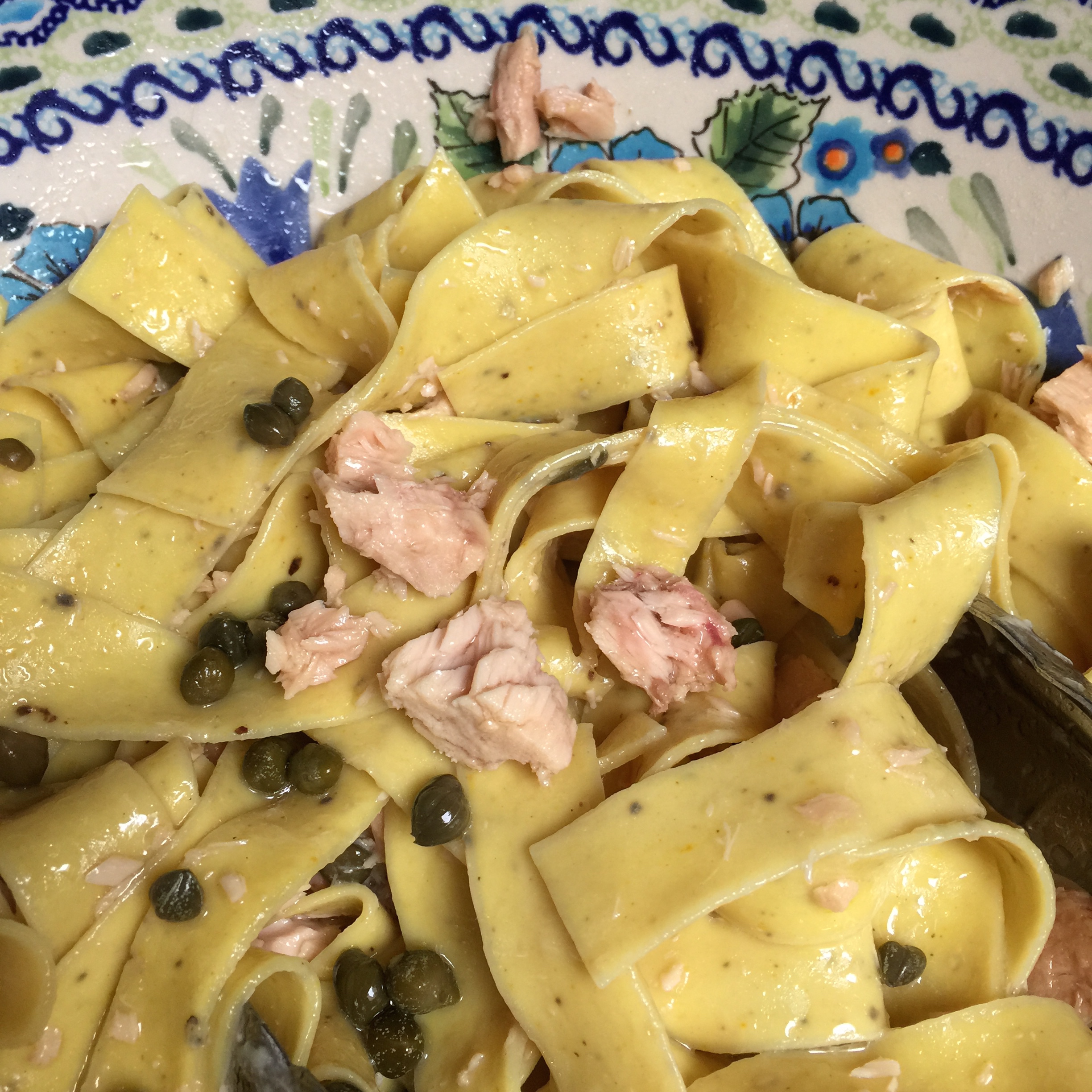
 This lemon tuna pasta is a modern twist on an old weeknight staple.  All that is cooked is the pasta.  The rest you just add to the bowl and toss.  Try it, I hope you like it.  This is also a great weeknight meal for those nights when you have very little time to spare.  Serve it with a large salad, and this is a healthy dinner.

My normal journey through the grocery store involves mostly the outer edges of the market.  That is where the perishable products are displayed, and I try as often as possible (most nights) to feed my family foods that are alive… because we are alive!  Those are nourishing and contain more nutrients.  With that in mind, there are some processed products that we buy, and so whenever applicable I will share the brand.  You’ll note in all cases that the ingredient list is short and contains ingredients that are pronounceable and also ingredients that you know what they are.

The tuna in this dish is really yummy, it is moist and the capers add this little zing to the already lemon zesty pasta.

[box]

Lemon Pasta with Tuna and Capers

Ingredients:

1 package Trader Joe’s Lemon Parappadale Pasta

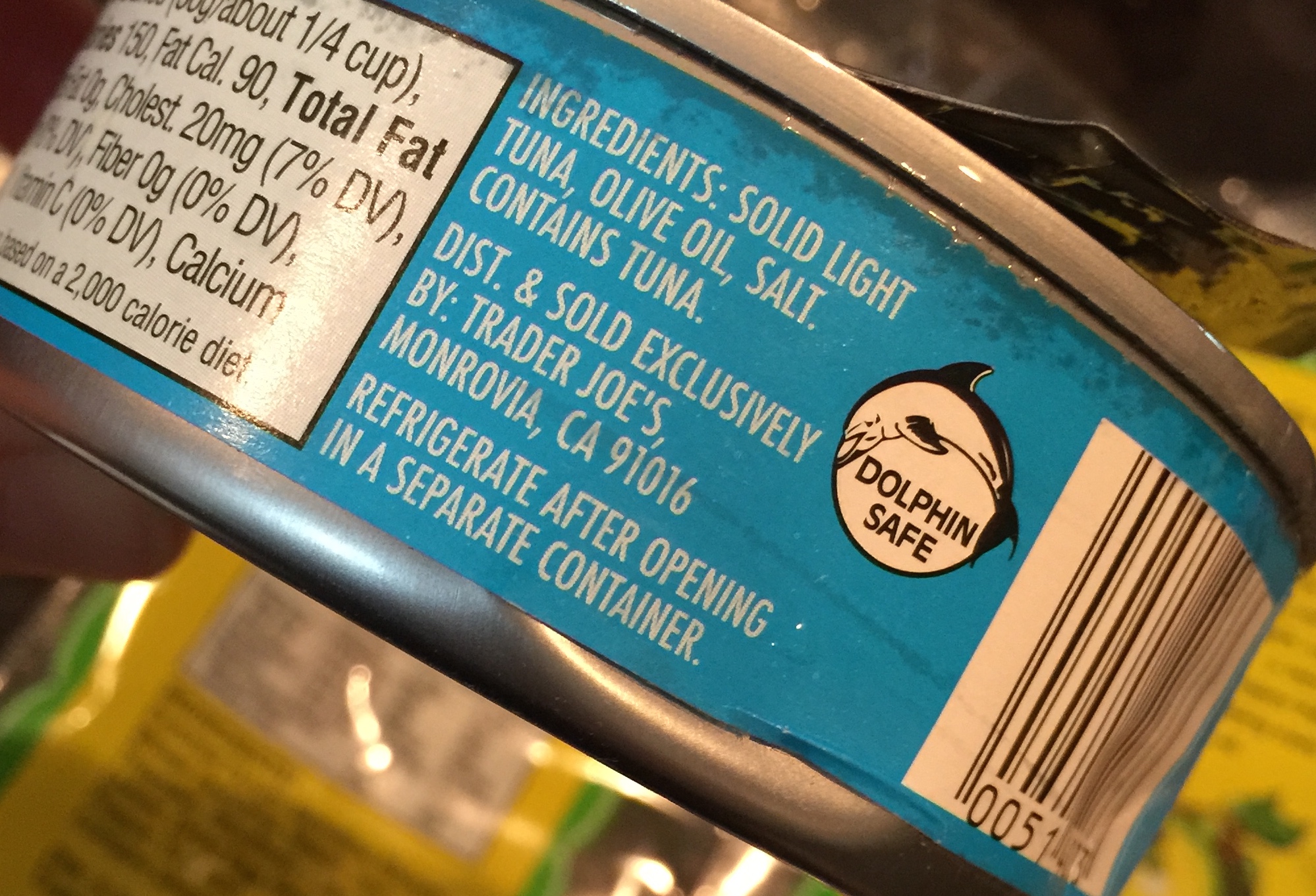
1 can tuna packed in olive oil

2 tablespoons capers

extra olive oil to drizzle

salt and pepper to taste

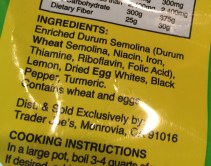
1.  Prepare pasta according to directions.  You need not use the lemon pasta, but it gives it a nice kick and goes really well with the capers (which are my hubby’s favorite!).  Trader Joe’s also has a plain parppardelle also or you can use spirally noodles.  Just look at the ingredients.  Make sure it is short and simple.

pappardelle

2. Open tuna and add tuna and oil into can (do not drain).  Separate the tuna with a fork.  Add capers.

IMG_0857

3.  When pasta is done cooking, strain and add to bowl.  Toss.  Add more olive oil, several tablespoons.  Salt and Pepper to taste.

[/box]

Enjoy!

tuna casserole rediscovered


panang curry Lenten soup

Tm Kha Gai

A very good tip for the fast, that we discovered some years back, is to make meals that were meant to be vegetarian or vegan in the first place.  We wanted to embrace the fast with joy, as we are taught… but each fake hamburger, or look a-like taco made us just wish we were eating meat.

My first visit to an Orthodox monastery was five or six years ago and it was during Great Lent.  The food on their table was simple and great.  The meals also seemed very traditional – recipes that were meant to be Lenten.  I had my four year old daughter with me.  She loved everything they served!  So the next year, we decided to eat fasting foods that were never intended to contain meat in the first place – a lot are asian or middle eastern or Ethiopian inspired.  We didn’t want fake cheese or burgers or other imitations.  We wanted real food.

Finding  recipes that are meat free to begin with has made a joyful difference at our table.

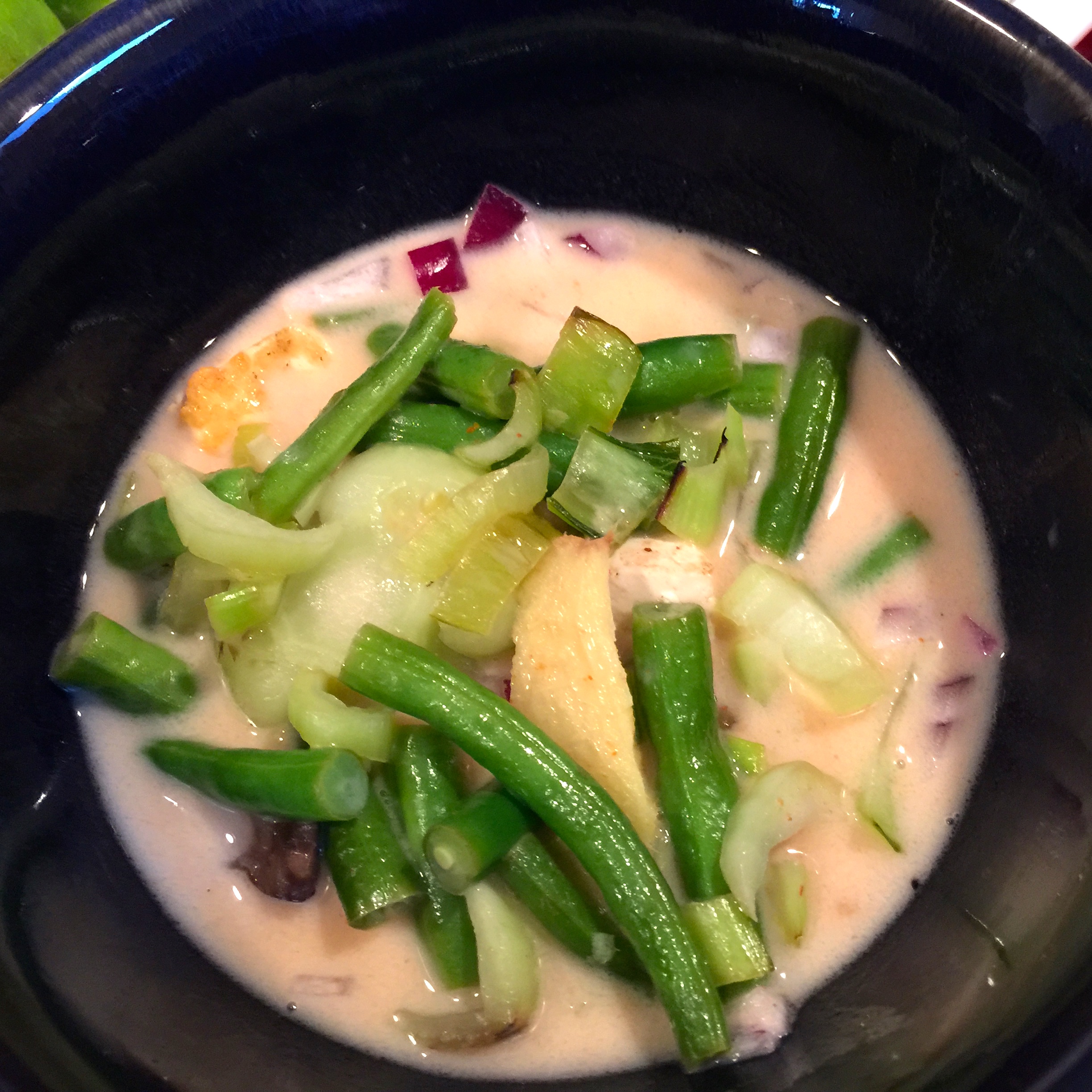
I hope you will like this delicious Thai coconut panang curry soup.  It is made from simple ingredients – and the vegetables can be rotated to what is in season in your area, or to include any specific varieties that you especially enjoy.

This is the way we like it, if it is too sour, just reduce the amount of lime.

[box]

Ingredients

  • 2 cans coconut milk – Native Forest is a great brand
  • 1/4 red onion diced
  • 1/4 cup lime juice
  • Thai red curry paste – to taste
  • one container firm organic tofu (very important to get organic.  Trader Joes has a fermented organic tofu)
  • 1 cup green beans, ends cut of and sliced into bite sized portions
  • 1 cup chopped portabello or other mushroom you like
  • 1 cup baby bok choy, chopped (about 4 small baby bok chops)
  • 2 inches ginger root peeled and sliced
  • 1 tablespoon sesame oil
  • 3 cups vegetable broth, plus a little extra to deglaze pan.

[/box]

Preparation

Open tofu package and cut into small squares.  Lay these flat on a thick layer of paper towels.  Cover with another thick layer of paper towels.  You can leave it like this, or place a cutting board on top of them.   This is to drain the excess water away.  Otherwise it just gets soggy.

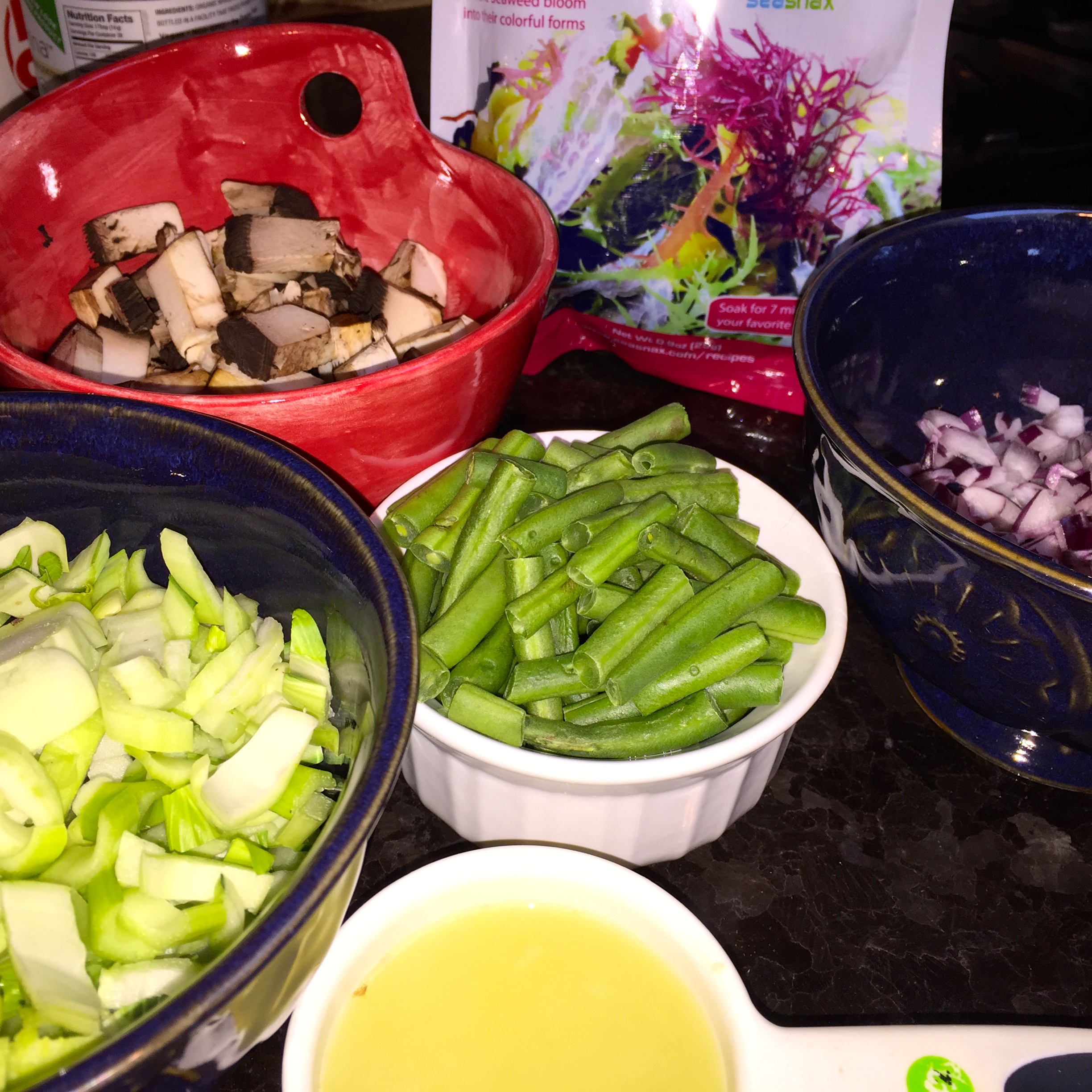
Prepare all of your remaining ingredients and have them by the stove.  This is the step that dramatically changed the results of our cooking.  Having the mis en place staged so that you can concentrate on cooking rather than cutting and watching the stove at the same time reduces the possibility that your dinner will burn.

mis en place

If you have a wok, then this is a good recipe for it.  If not, a large frying pan – well seasoned cast iron or non stick is good.

Over medium heat, add toasted sesame oil and coat the pan.  Add the tofu and cook until the sides are brown,   About five minutes.  Remove from pan and lay on paper towels so that it can drain.

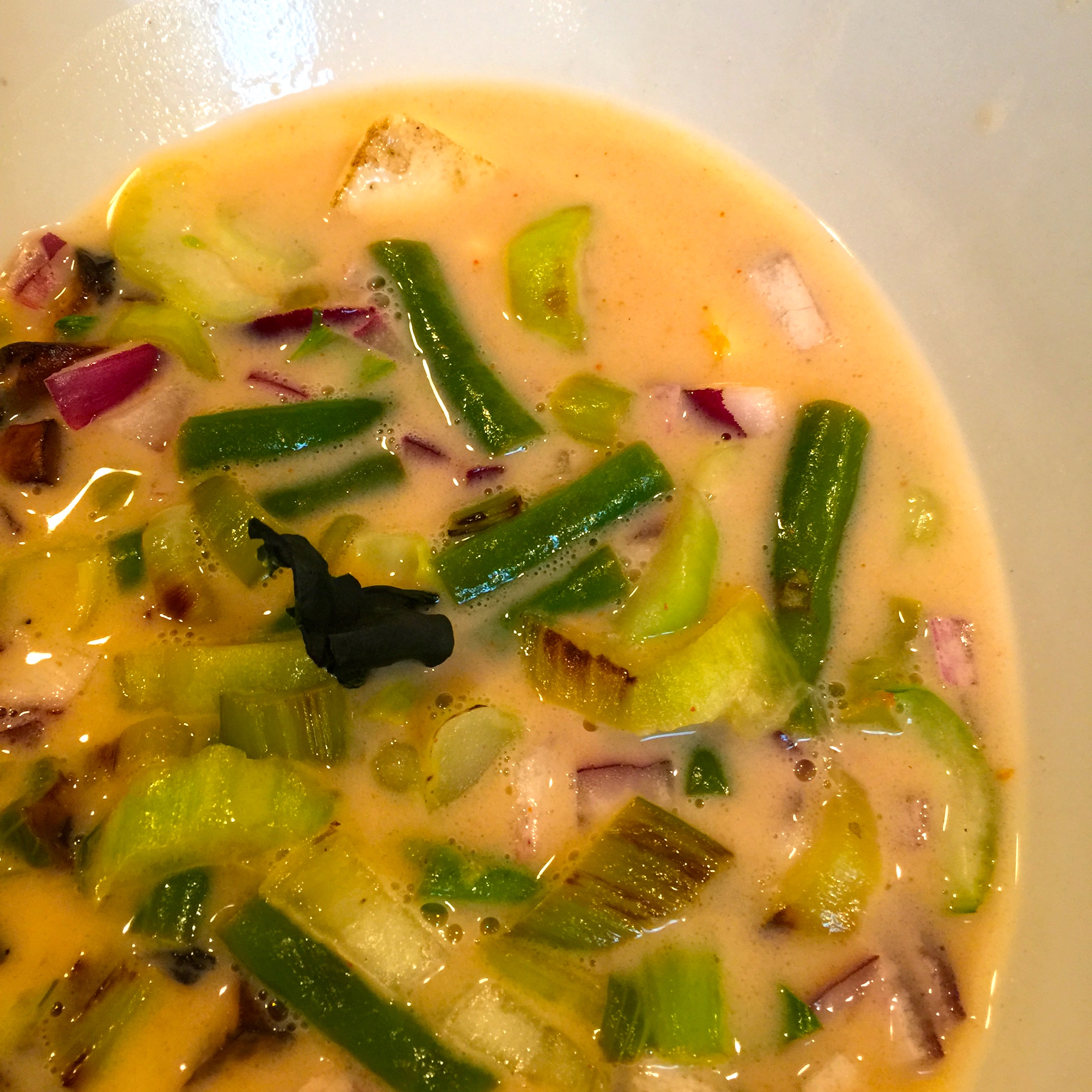
In a soup pot, pour coconut milk, vegetable broth, sliced ginger and lime juice.  Let simmer while you cook the vegetables.

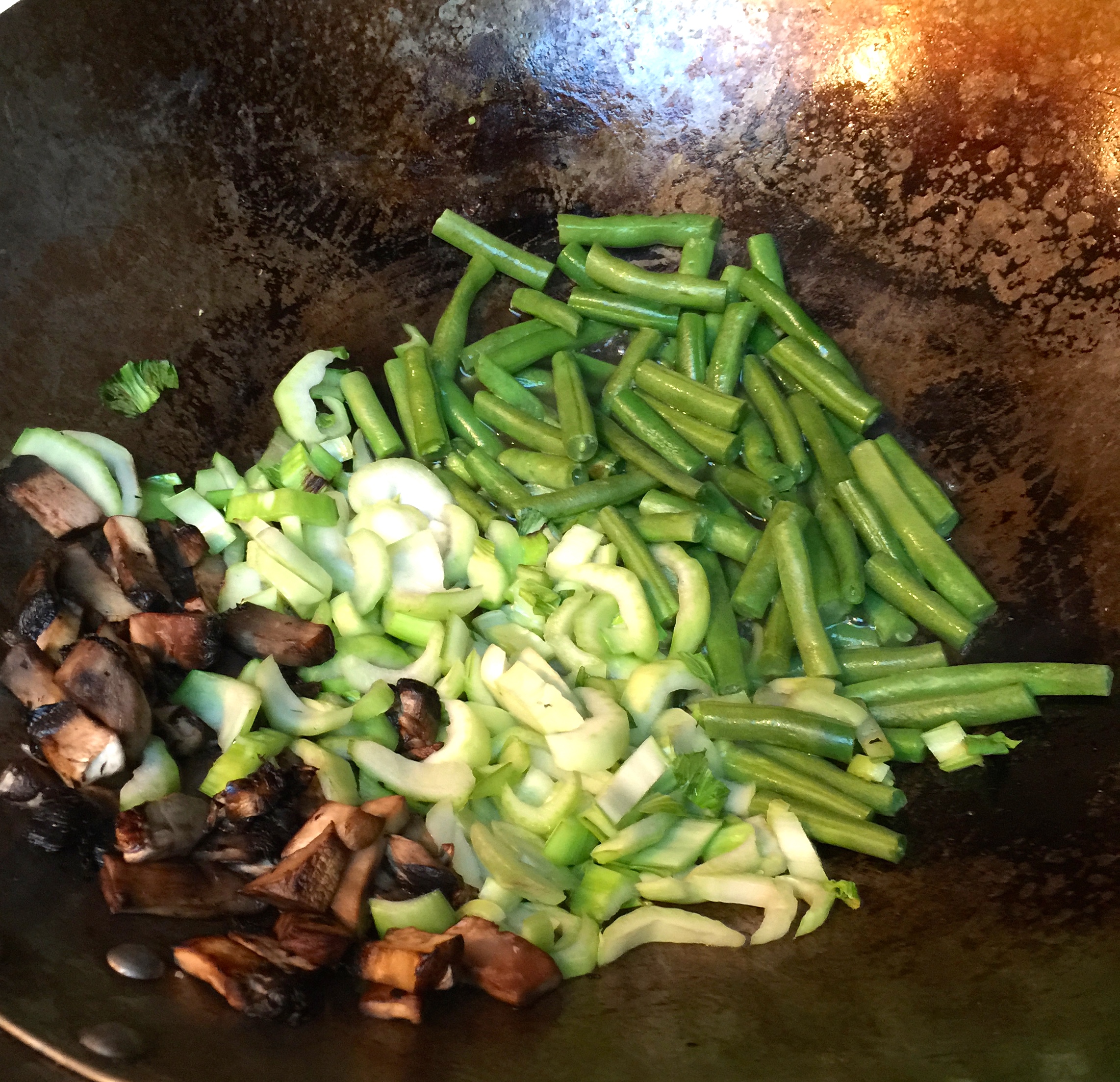
Add mushrooms to wok/frying pan.  Cook over medium heat.  If you are using a wok, move to the side and add the bok choy and green beans.  You’ll want the mushrooms well done, the bok choy and beans still a little crispy.  If it gets dry or if the veggies start to stick, add in some of the vegetable broth.

mushrooms bok choy and beans

With a strainer remove ginger from the broth.  Sample and add salt to taste.

Add one heaping teaspoon of panang curry paste and taste.  I purposely have not added a measurement for the curry, because frankly different brands vary widely in their flavor.  Make this tasty for you.  We actually add the curry straight to the soup bowls, the younger ones don’t want as much so they just get a hint of it.

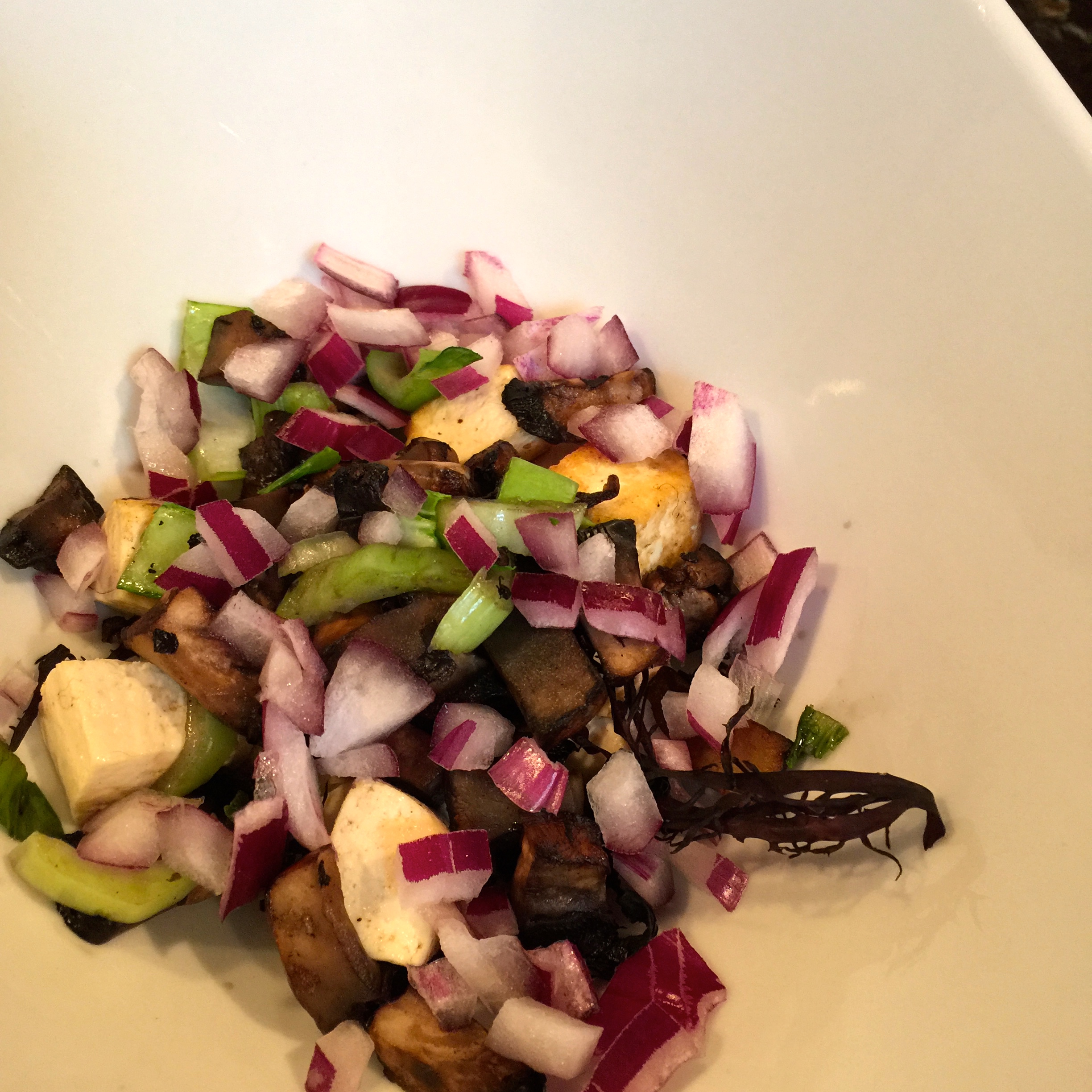
plating the vegetables

plating the vegetables and tofu

Now you can add all of the vegetables and tofu into the broth, or begin to plate the vegetables into the bowls separately – like we do – and add the broth on top of it.

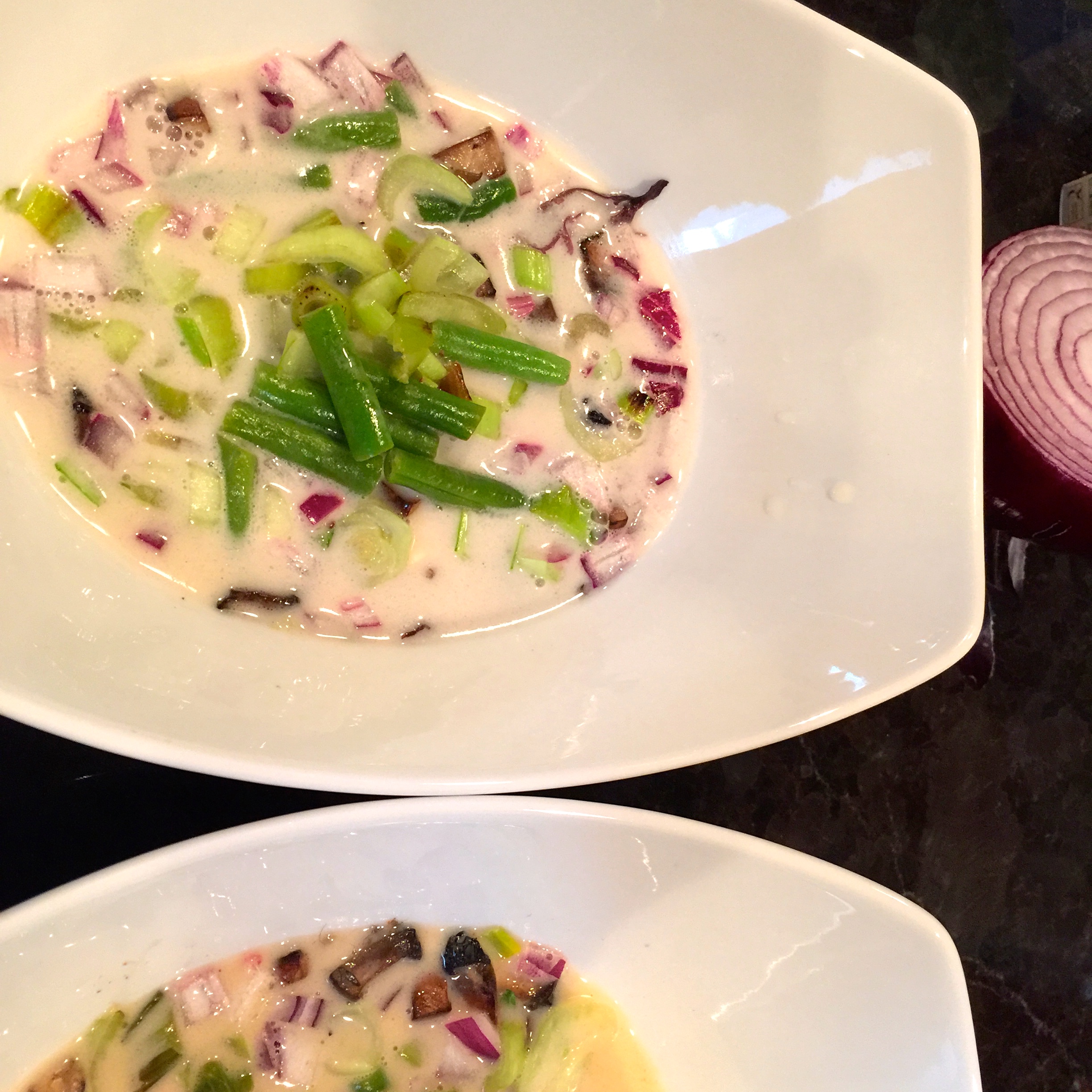
panning curry soup

Claudia and Kates soup

We plate  the veggies and tofu separately into the bowls because, in my family, we have three girls, some of who like mushrooms and onions and some who don’t.  The one who doesn’t like them, really really doesn’t like them.   So the mushrooms and onions go to the bowls in the measure of how well each one will enjoy it.    Though we have a general rule in our house that you have to try everything,  I have to admit that as a girl, I did not like mushrooms… not at all.

And  during the Fast, well, it just seems better to have mercy and give them what they will like, so that they too will embrace the Fast with joy.

the youngest ones bowl of soup

Erika’s Soup


zesty ginger elderberry kombucha

Fermented beverages have gained much popularity in recent years.   This is mostly due to the rediscovery of their amazing health benefits. The thing is that pre-made versions at the store shelves can be expensive


ready for second ferment

ready for second ferment


In this way, homemade versions are often easier, healthier, and more economical to make.

We began brewing our own kombucha about two years ago – mostly for monetary reasons,  We were already buying it from the store, and a 16 ounce bottle runs about $3.00… so it just became more feasible to make it at home for daily consumption.

With cold and flu season upon us, this has become one of our favorite flavors of kombucha.   Elderberry is a great remedy to prevent colds, and of course all the lemon lends a good dose of vitamin C!

Hopefully you will like it too!

[box]

Zesty Ginger Elderberry Kombucha

1 liter brewed kombucha (see recipe here)

1/2 – 1 cup dried elderberry

4 tablespoons ginger juice (if you have a juicer) or grated ginger

4 tablespoons fresh lemon juice

Place all ingredients into a clean mason jar and close the lid.  Because this is the second ferment, you will not need to worry that it will explode.  Let this sit for one to two days.

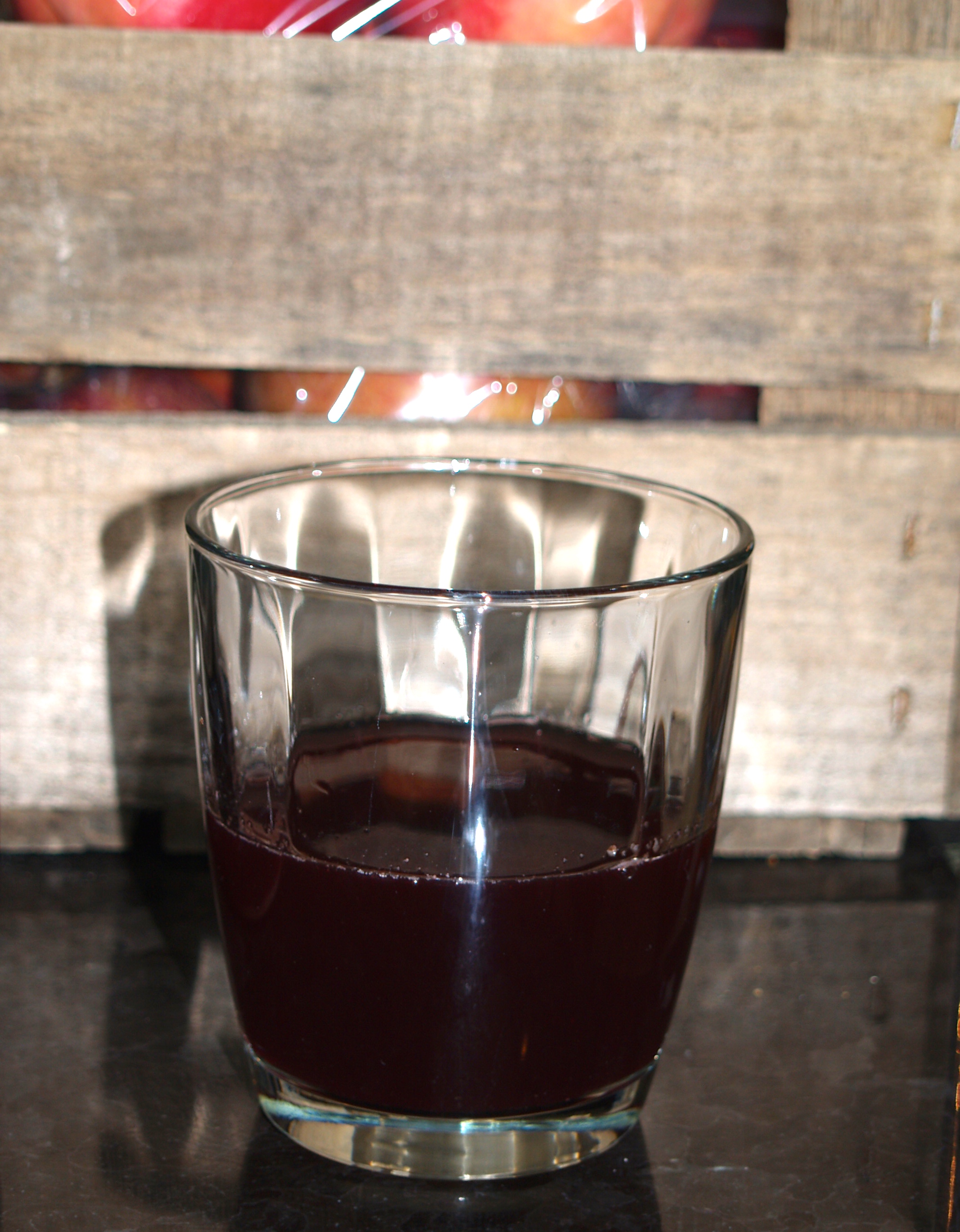
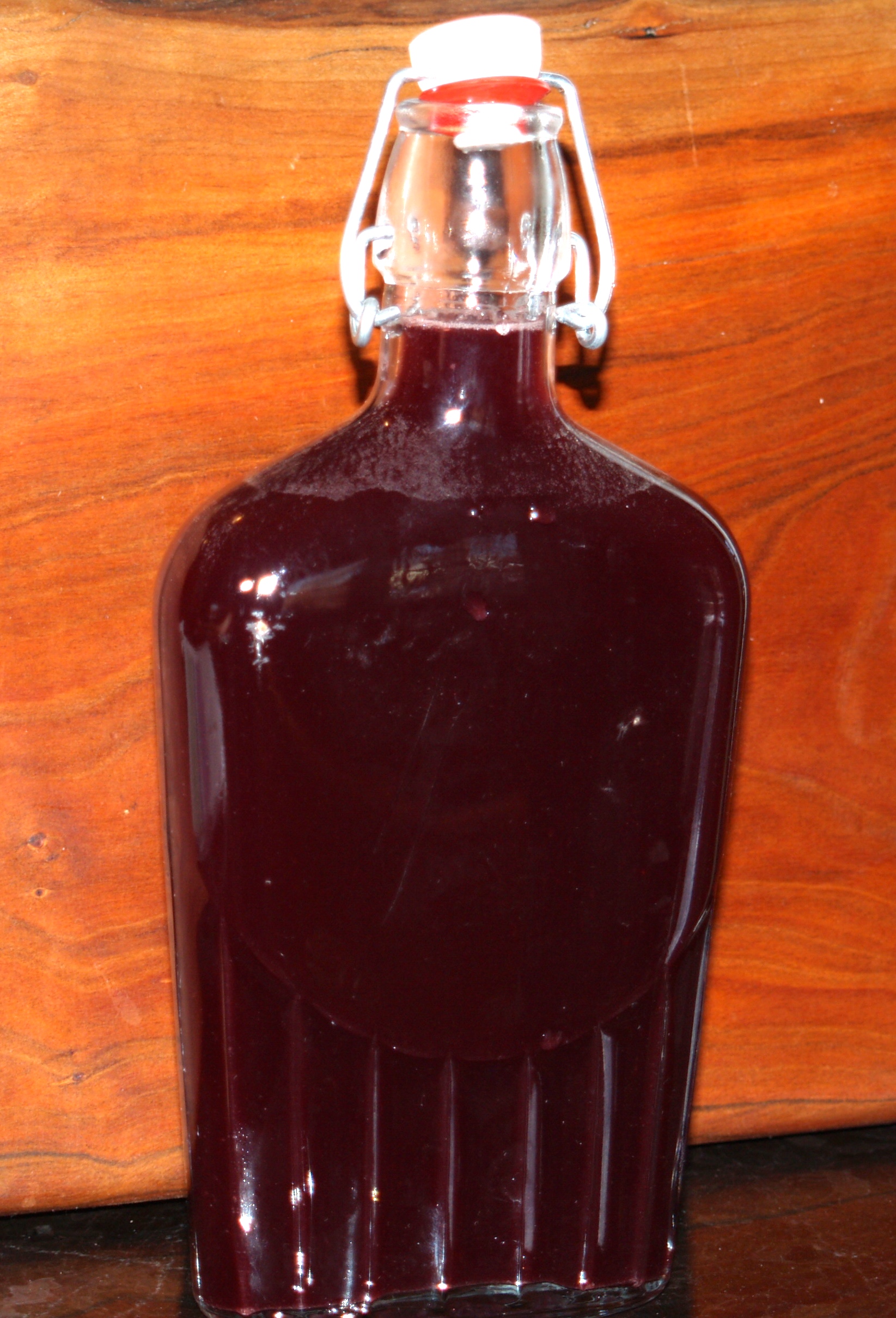
The color will change from tea-like to the deep purply blue of the elderberry.  Strain off the elderberry and ginger shavings and place into a bottle.

[/box]

 fresh elderberry kombucha

It should have the slightest little fizz to it.   We usually have a four to six ounce portion per day.  Sometimes I will even add a little water to it, to make it more of a kombucha-aide.

Enjoy.

OLYMPUS DIGITAL CAMERA


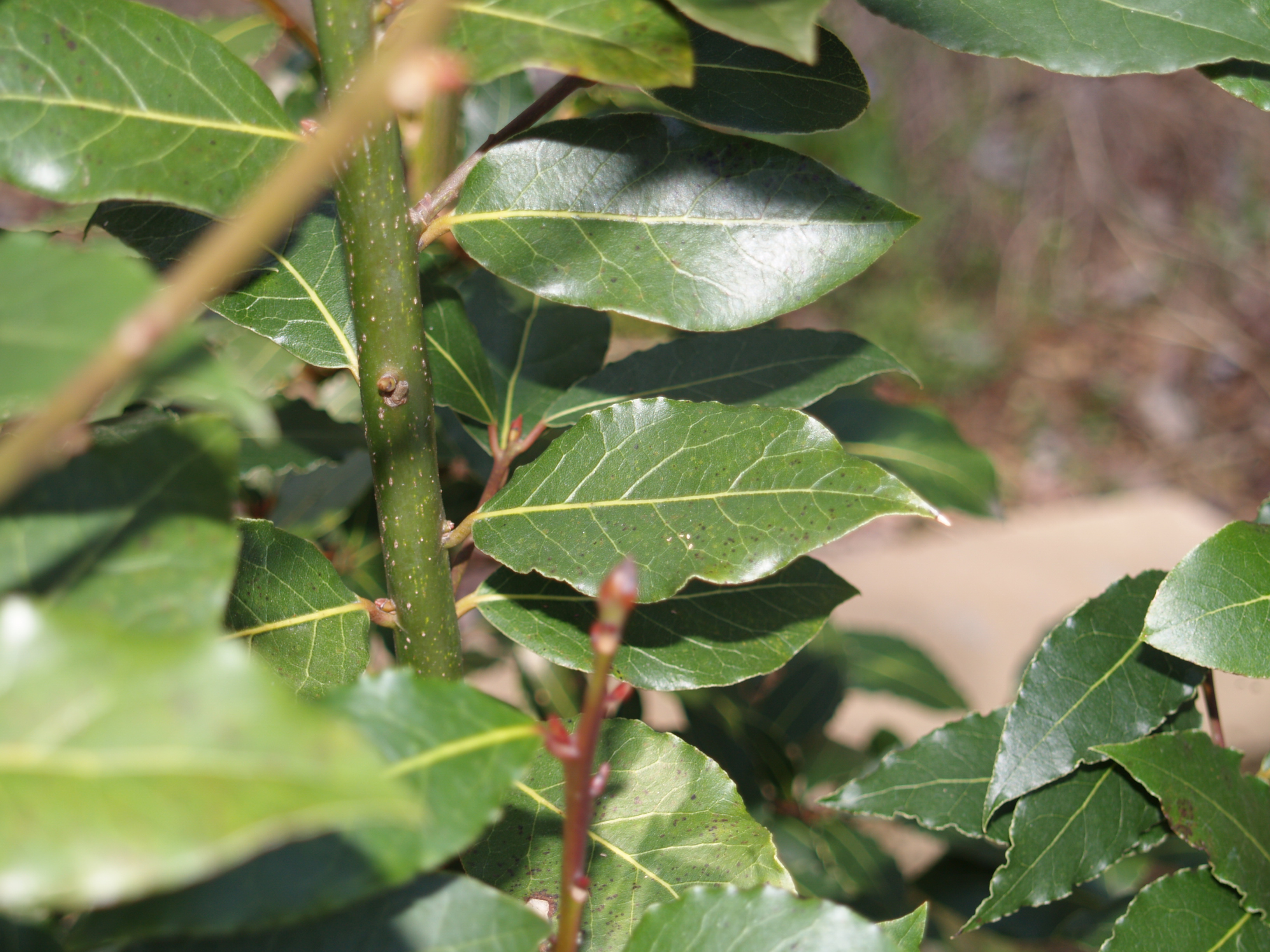
bay laurel

bay laurel 2014

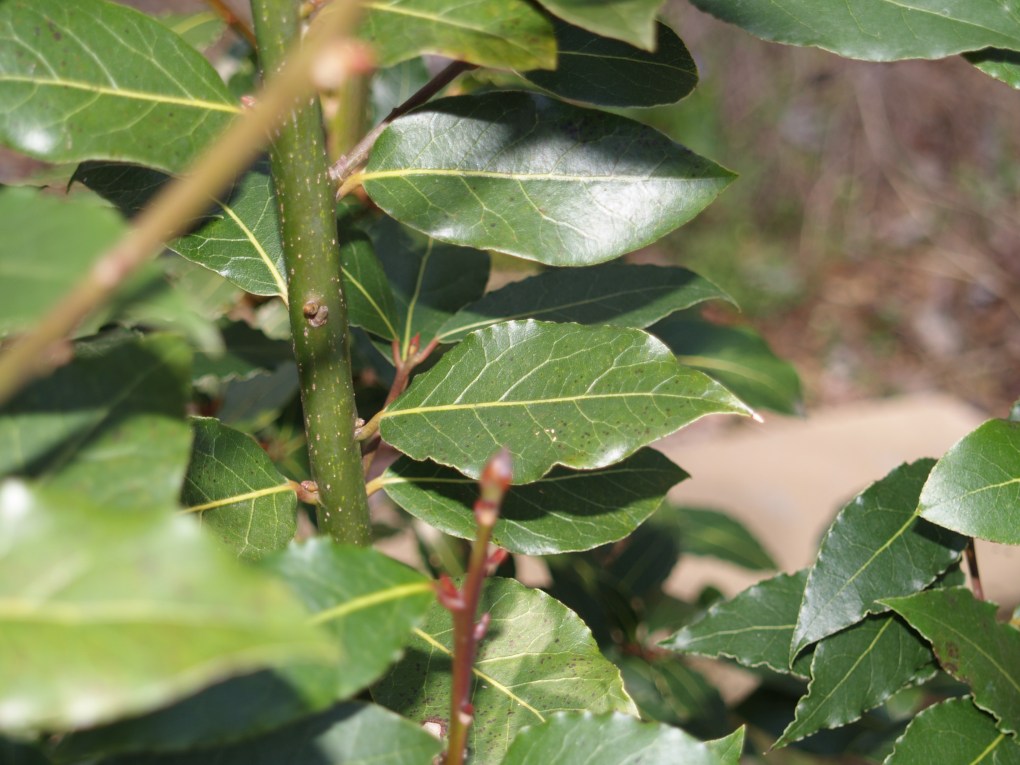
In Biblical times, the bay laurel was symbolic of wealth.  It is a lovely tree , native to the Mediterranean, with soft branches and grows to about 10 -20  feet in height.

What is most notable about the bay leaf is the sweet aroma of the leaves – it has a mellow sweetness that smells a little bit like Christmas.  Ancient Greeks and Romans adorned their Olympic victors and heroic soldiers in wreathes fashioned and twined out of bay branches.  King David was so taken with the bay laurel that he used the aromatic bay wood for paneling his personal rooms.

Nowadays, the bay laurel is used mostly to season mediterranean dishes – from meats, fishes and poultry to vegetables, broths and soups, and stews.

We have a bay laurel tree in our herb garden, that was bought over a decade ago at the farmer’s market.  At the time, I didn’t know that you could grow your own bay tree, but my good friend bought one, and I followed her lead.  The young trees do not do well in cold weather, so it grew in our home by a sunny window for about 7 years before planting it outside.    Then last winter, we had such cold weather for our area – in the twenties for many many weeks.  The branches and leaves all got the equivalent of frost bite and dried up and died.  So in the spring we pruned our beautiful tree down to the stubs and hoped for the best.  Guess what, it grew right back!  The picture above is from the beginning of summer.


The bay leaves can be used in tea or as a culinary herb, but the bay has some other surprising properties.

[box]

Herbalists have known that bay laurel poultice or wash may help increase the healing of wounds.  Science has finally gotten around to confirm it.  A 2006 study in the “BMC Complementary and Alternative Medicine” journal found that rats treated with 200 mg of bay leaf extract per kilogram of body weight experienced accelerated wound closure and healing within 10 days.”

The essential oil from the bay laurel is bactericidal and fungicidal.  A 2011 study in the journal “Natural Product Research” discovered why — bay leaf extract was found to have antimicrobial activity against some of the most common pathogens, including Staphylococcus aureus, Streptococcus pyogenes, Aspergillus fumigatus and Candida albicans.

The oil from the bay laurel has been used for soap making and veterinary medicine.

The bay leaf is a primary ingredient in “gripe water” which is a natural remedy for colicky babies!  So it is no surprise that in Lebanon, bay leaves are extracted to relieve flatulence and act as a stomach tonic.

Also in Lebanon, bay leaves are steeped in brandy and let to sit in the sun for several days.  The residue, after distillation is used for arthritis and sprains.

[/box]

You don’t need to grow your own bay tree to enjoy this aromatic herb, but if you’d like to and are in Virginia – Monticello – home to President Thomas Jefferson sells them for a reasonable price, and you can tour the mansion while you are there too!   Another great place for anything plantable and edible is Edible Landscaping.  They also sell bay laurel.

If you’d prefer to buy it harvested, then my best recommendation for it is Penzey’s.  Their spices are super fresh and also very affordable.  I first heard about them in Cook’s Illustrated magazine.  My good friend, the one who originally encouraged me to buy that little bay tree, and I -when we were very young stay at home mom’s – used to buy our spices in bulk from Penzey’s and split them.

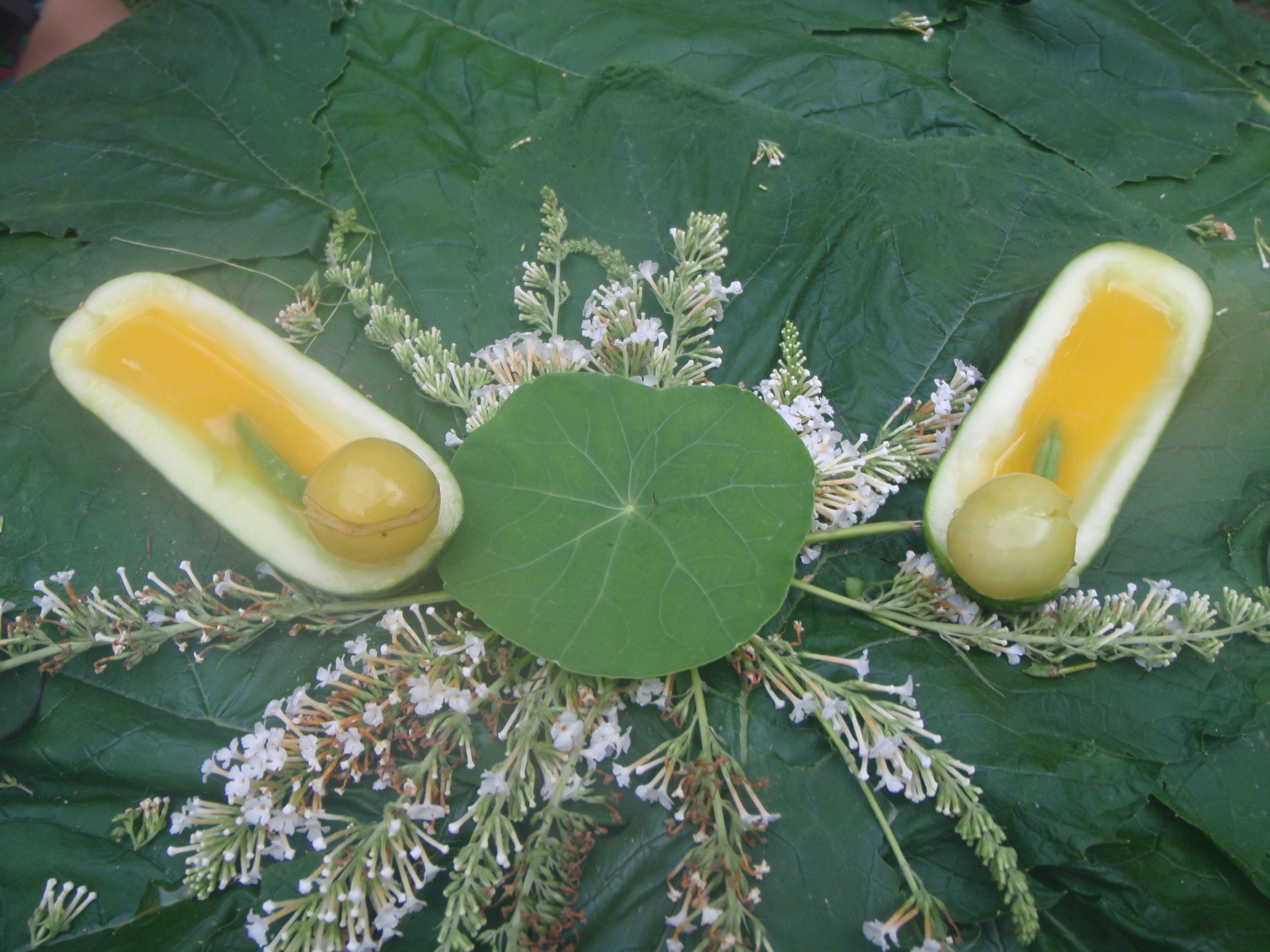
You can use fresh or dried bay laurel for tea.  My daughter, when she was younger loved to play in the garden.  She would make her own tea with bay leaves, lavender and thyme – sometimes it was VERY strong….but still delicious.  She also would take the most ordinary fruits and vegetables and make them into a piece of art.   Like this squash and orange juice platter of sorts that she came up with, served atop of a gigantic squash leaf and enjoyed by her and her sisters and friends.

garden art

This is a modification of my daughter’s playful tea.

[box]

Citrus and Cinnamon Bay Leaf Tea

Ingredients

  • 1 cinnamon stick
  • 4 bay leaves
  • juice of lemon to taste
  • 3 cups very hot water

Place all ingredients in a tea pot and allow to steep for five minutes or longer.  The longer it steeps the stronger the flavors.

Enjoy as is or add some raw honey for a little sweetener.

[/box]

Resources:

http://www.livestrong.com/article/480381-what-are-the-health-benefits-of-bay-leaves/

James A Duke, Ph.D. Herbs of the Bible: 2000 Years of Plant Medicine


garlic

Awesome Garlic


“Shallots are for babies; Onions are for men; garlic is for heroes.”

unknown

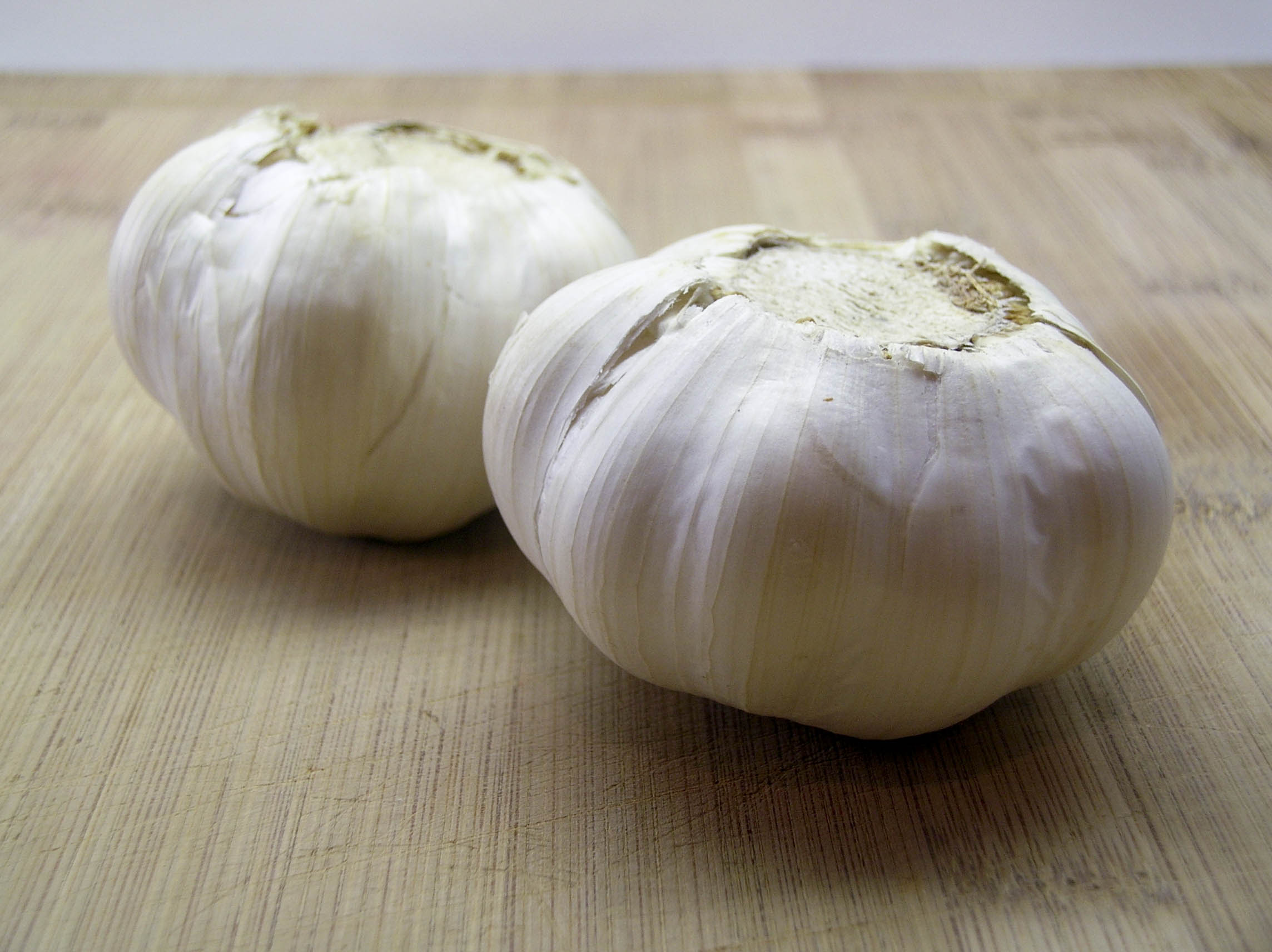
Garlic.  When we think of it, pungent and smelly come to mind.  So it might surprise you to know that garlic is a member of the lily family and is a perennial plant that is cultivated world-wide.

Garlic has earned it’s modern reputation mostly as a staple in Mediterranean cuisine, but it’s medicinal and therapeutic qualities have been known since  the most ancient times.  Even pre-dating written history, garlic has been used to treat a wide variety of illness and conditions.  In fact, the earliest documents describing the medicinal qualities of garlic are 5,000 year old Sanskrit writings.

Hippocrates, Aristotle and Pliny cite numerous therapeutic applications for garlic.  It’s health benefits were known throughout all of the ancient civilizations including the Greeks, Romans, Egyptians, Babylonians and Chinese.

It would seem truly, that God, in His abundant wisdom really created garlic to be both our food and our medicine, because even the Israelites grumbled at not having cucumbers, leeks or garlic during their 40 year sojourn  from Egypt to the Promised Land.

But, one of my favorite stories of garlic, is that in 1721 in Marseilles, France a terrible plague broke out.  Four condemned criminals were recruited to bury the dead (which in and of itself was a death sentence).  And so it was amazing that hese four men were immune to the plague.  Immune!  The reason – they had a secret concoction made of macerated garlic and wine.

This drink became known as “vineigre des quatre voleurs” or “four thieves vinegar” and it is still available in France today!  Not going to be in France any time soon?  You can make your own .  There are several recipes online, but make sure to use one that actually lists garlic as an ingredient…  some omit it.  Impressive, is that even WebMD has a recipe for it.

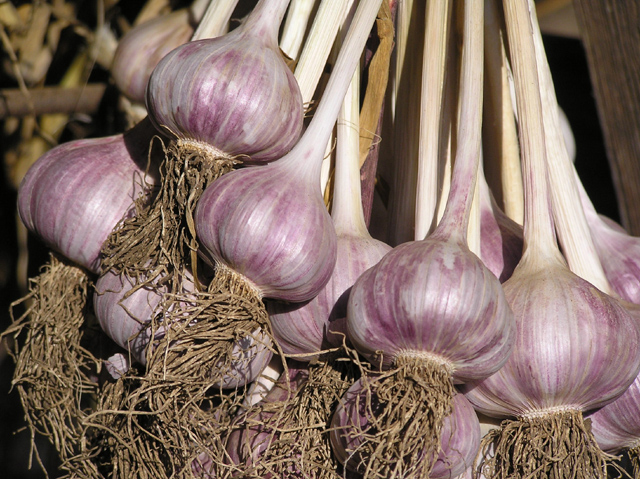
purple garlic


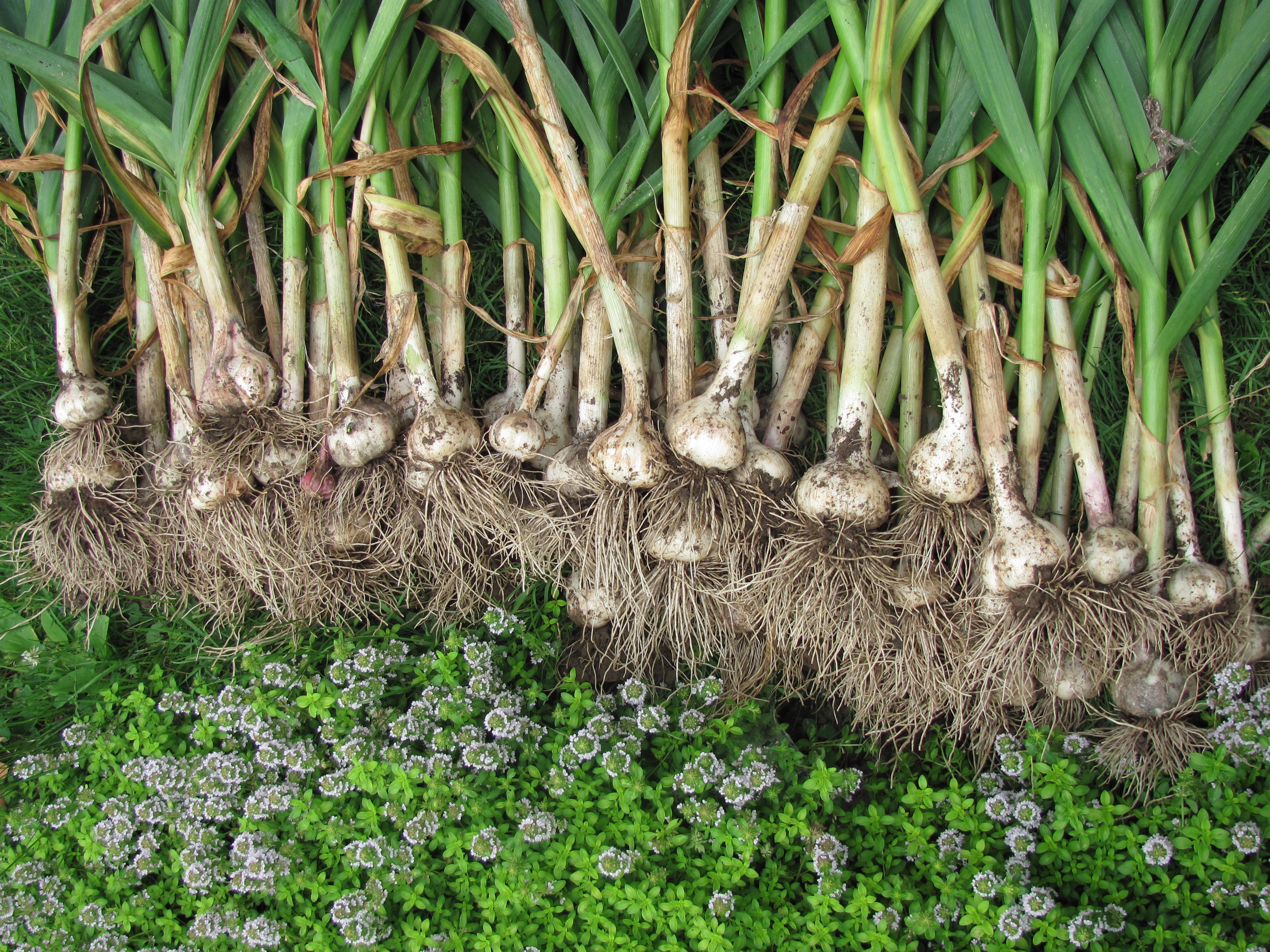
In our garden, garlic is a pleasure to grow – mostly because it needs little work.  We usually plant in the fall, and it’s a great winter crop.   The bugs don’t like it and the weeds don’t hinder it.

If you garden, then you already know that you can grow garlic at a fraction of what it costs at the farmer’s market or store.  It’s antimicrobial – that is antibiotic, anti fungal and antiviral.  These qualities make it a nutritional virtue and worthy of every meal.   But it is also immune enhancing, anti-cancer promoting, a protective factor against heart disease and also anti-inflammatory.


Below is a summary of the nourishing benefits of garlic.

[box]

  • Garlic has potent medicinal properties.  Most of garlics health benefits come from the sulfur compounds that are formed when a clove of garlic is chopped.  This compound is called allicin has powerful biological effects.

  • If you suffer from frequent colds, seriously consider adding garlic to your diet, or taking a supplement.  Garlic helps you fight the common cold, in part by boosting the immune system.  A daily garlic supplement can reduce the number of colds by more than 50%.

  • Even if you should come down with a cold, garlic can reduce the length of it by 70%.  In clinical studies, it reduced the duration of participants colds from 5 days to 1.5 days!

  • Garlic can improve cholesterol levels.  This is good news, because there is much talk these days about the long term dangers of statin use.

  • Garlic is very antioxidant.  Antioxidants support the bodies protective mechanisms against oxidative damage.

  • Garlic aids the bodies detoxification processes.  God created you with a built in detoxification ability, but those organs which include the liver, kidneys, skin and lymph need support of adequate minerals and nutrients to function properly.  At high doses the sulfur compounds in garlic (which support the liver pathways for heavy metal detox) have shown to protect the organs from heavy metals.

    • “Employees at a car battery plant, where there was excessive exposure to lead, found that garlic supplementation reduced the lead levels in the blood by 19%.  It also reduced the signs of clinical toxicity.”  Well Being Journal

  • Garlic has broad spectrum activity against many bacteria, viruses, worms, and fungi.  Garlics antibacterial properties have been shown effective against even bacteria that are resistant to one or more antibiotics.[/box]

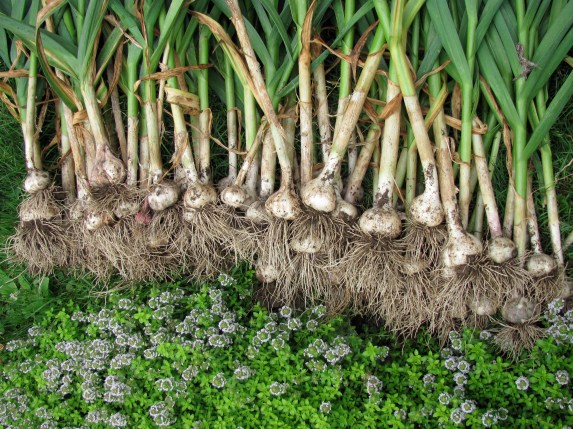
garlic

If you think you might like to grown your own garlic, I love Southern Exposure Seed Exchange varieties and Baker’s Creek Heirloom Seeds.  They are tried and tested favorites.  You can also grow your own, by simply taking any garlic cloves that have begun to show green sprouts on your counter.  Bury them in a pot or in your garden.  They will grow.

It’s good to have a planting guide for your region.  If you live in the mid-Atlantic,Southern Exposure Planting Guide is the planting guide that we use.  Baker’s Creek also has a planting guide.  Finally, the National Gardening Association also has some good information on planting for your area.

Garlic is really pungent when eaten raw but if you cook it, it’s delicious enough to eat it on it’s own.  If you think the Four Thieves Vinegar is a little too dicey, this is a great recipe highlighting the subtle flavors of baked garlic.

[box]

Roasted Garlic Recipe

Ingredients:

  • 2 heads garlic
  • baguette slices
  • olive oil
  • diced fresh tomatoes

Preheat the oven to 375 degrees F.

Slice off the top each head of garlic to expose some of the cloves inside. Place the heads on a piece of foil. Drizzle with olive oil and wrap in the foil. Roast until cloves are lightly browned and tender, about 30 minutes.

Enjoy it plain, or smear a clove atop a toasted baguette slice, drizzled with olive oil and sliced tomato.

[/box]

Resources:

Murray, M., & Pizzorno, J. (1998). Encyclopedia of natural medicine

The Powerful Health Benefits of Garlic.  Well Being Journal. Vol 24, No 1, January/ February 2015


echinacea

echinacea profile

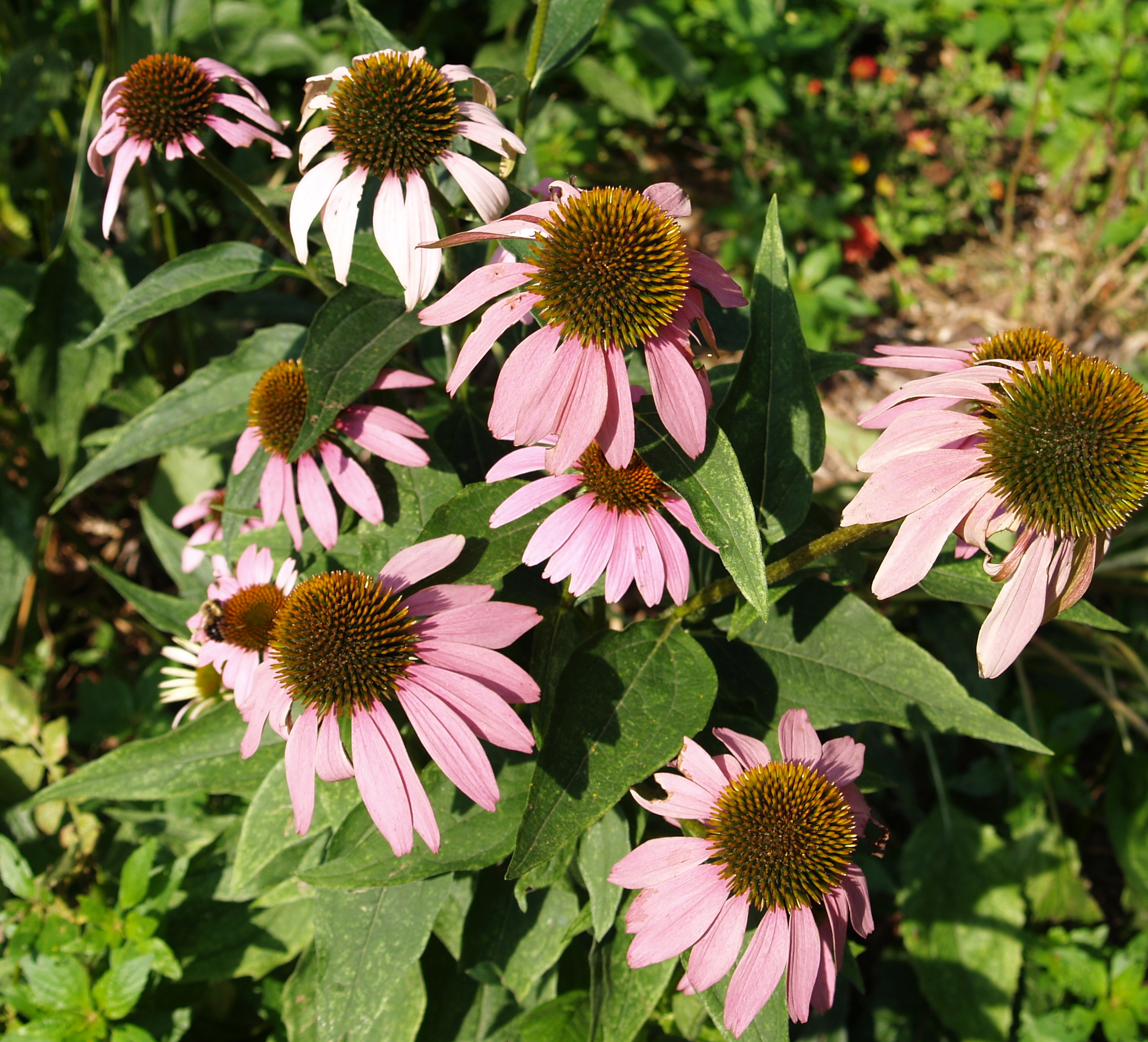
Echinacea, also known as coneflower, is a down to earth all american wildflower.  It’s natural habitat is the midwest plains, the open meadows and prairies of the United States, but now it’s such a popular perennial you can find it dotting the landscape in many gardens.

My own family has grown it for years, not for it’s medicinal qualities, but because it is hardy, drought resistant, comes back every year and most importantly, the deer that bed down in our yard won’t eat it.  In fact most of the herbs featured in this series are deer resistant, unless of course the deer are very very hungry.  We have also found (through sheer laziness-from not pruning back the dead summer growth) that the dried out summer flowers are a delight for the winter birds which are marvelously thankful for these pods of seeds left for them during the scarcity of winter.

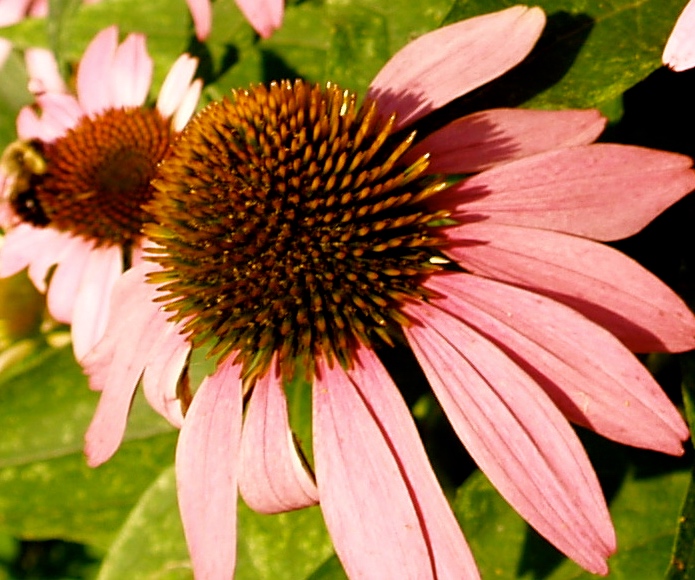
There are several different colors of echinacea cultivated today, but the traditional coneflower is a beautiful pinkish purple petaled flower with cone shaped spiny seed podded head in the center.

Echinacea in the Garden 2013

The root, flowers and leaves of echinacea were introduced to European settlers by the American Indians, who used it to treat more illnesses than any other plant.  Today, it is one of the most common herbs for immune system health and has been widely researched in that capacity, in more than 300 studies.

Echinacea is best known for the following qualities:

[box]

  • Treatment of the common cold.  This is one of the most popular uses of echinacea. Studies have shown that treatment with echinacea at the on set of a cold results in a significant reduction of symptoms.  In trials, the length of time between infections was 60% greater for those receiving echinacea than those given a placebo.  When infections did occur, the symptoms were less severe for those receiving the echinacea.  Patients having a weakened immune system benefitted the most from the echinacea.

  • Echinacea not only shortens the duration and lessens the severity of colds, but it can actually stop a cold that is just starting.  That is because echinacea has antibacterial and antiviral qualities, and in this way resists infections.

  • It is very supportive of lymphatic health.  The lymphatic system is part of your immune system consisting of a series of fluids and glands that sweep away toxins and byproducts of inflammation in order to keep you healthy.  In this way, echinacea aids in reducing congestion, swelling and also keeping your lymph moving.

  • In tincture form, the juice of the aerial portion has been shown to possess antiviral activity.[/box]


If you grow echinacea and want to harvest it, here are a few tips:

  • The leaves can be harvested the spring, when they are still growing.
  • The flowers can be harvested when they start to open but for maximum potency, harvest the cone whenit is mounding.
  • Dig up the root in the fall of the third or fourth year.

Echinacea is excellent in tinctures designed to boost both the immune and lymphatic health.  Herbalists favor tinctures because the most potent active compounds are likely more stable and preserved in an alcoholic solution.  Tinctures generally have a shelf life of at least 2-3 years, provided they are stored in a dark container our of direct sunlight or heat.

You can buy tinctures at most health food stores, or online.  Or you can venture to make your own.  Here  are some simple recipes from normal folks, like you and me : Making Echinacea Tincture from Fresh Root,  Homemade Tinctures 101 and How to Make Echinacea Tincture.  If you are using fresh echinacea, you’ll want to make sure that you have all of the plant is submerged below the alcohol.

Mother Earth News recommends the following recipe for fresh echinacea tincture.

[box]

Echinacea Tincture

1 cup fresh echinacea buds, flowers, leaves and stems rinsed chopped and pounded

1 cup 190 proof ethanol alcohol – that’s Everclear

1 cup distilled water.

Place herb in clean jar and cover with the alcohol and distilled water.  Store in a cool dark place and shake twice daily for 48 hours.  Filter the tincture through a food grade screen and pour tincture into a brown glass bottle and label with contents and date.  As an immune stimulant at the onset of a cold and during infection, take two dropperfuls of tincture three to four times daily in cycles of two weeks on and off.[/box]


Dried echinacea works well in teas, a great recipe can be found at How to Make Your Own Echinacea Tea.  Quality echinacea can be found here.  And ready made echinacea teas abound in the market, but Traditional Medicinals is a quality product and many stores carry it.

[box]

Anti-Inflammatory & Vitamin C Echinacea Tea

  • 2 cups boiling water
  • 1 teaspoon dried echinacea fresh edible flower (or roots)
  • 1/2 teaspoon finely chopped fresh ginger
  • 1 tablespoon freshly squeezed lemon juice
  • 1 teaspoon honey (or more to taste)
  1. In a teapot, pour the boiling water over the echinacea and chopped ginger.
  2. Cover and steep for 10-15 minutes.
  3. Add lemon juice and honey and stir to mix. Strain and pour into 2 mugs.
  4. Serve warm and enjoy![/box]

echinacea

Resources:

Joseph E Pizzorno and Michael T Murray : Textbook of Natural Medicine


winter bees part III

“One can no more approach people without love than one can approach bees without care. Such is the quality of bees…”   Leo Tolstoy

open pollination

happy bees

Bees are industrious, generous and fascinating.  You see this versatile little bee, who cools her hive in summer with coordinated flapping of wings between flanks of bees on either side of the hive now warms her hive in winter with those same wings.  Through a constant and simultaneous flapping of their wings, the bees will maintain the temperature of their hive to warmth mirroring the coming days of spring.  Now in the height of winter, they cluster together, on the central comb with the queen in the midst of them.  Row upon row of bees surround the sealed honeycomb flapping their wings.  When the weather gets extraordinarily cold, they can actually dislocate their wings allowing them to flap in a way that produces even more heat.  When the little bees on the outer edges feel the cold embracing them, they crawl over their sisters to take a turn in the middle.   The move gradually up the hive as each cell of honey is emptied of it’s store.  The bees nearest the warm cells of honey pass it onto their neighbors and thus their stores of fragrant floral sunshine is shared throughout the darkness of the hive.

Around January is when a beekeeper begins to wonder whether the bees have gone through their stores of honey.  It’s too cold open the hive, but it’s best to stay prepared.  We’d placed two liters of honey in some mason jars with punctured lids on the counter, waiting for any break in the weather.  If the bees are going to starve,  January is generally when it happens. The temperatures have been bitter here in Virginia, only in the 20’s and low 30’s, but just the other day we got into the forty’s and I placed the honey in for them.  It’s risky, because if the honey leaks everywhere you can kill a lot of bees – cold and being covered with honey don’t mix well when a bee needs to flap it’s wings for warmth.

The first hive went through about half of their honey overnight.  But, I found the second hive had devoured theirs, so we placed more in –  and just in time.  We are expecting some serious snow in the coming days.

Here we are approaching February.  Soon, the queen will begin laying more eggs, preparing for the longer days of spring and the abundance of nectar it promises.   The bees will begin to forage on the pollen and nectar of the budding trees.

celtic-patterns-1


“In the Orthodox Church we have recognized the importance of bees

for centuries and have prayers for both bees and beehives.”

Prayer for Bees


O God, who knows how to work benefits through human labor and irrational living things, You instructed us in your loving-kindness to employ the fruits and works of the bees for our needs.  Now humbly we beseech Your majesty: Be pleased to bless the bees and increase them for the profit of the human race, preserving them and making them abundant.  Let everyone hoping in Your majesty and Your boundless compassions, and laboring in the care of these living things, be counted worthy to receive abundant fruits of their labors and to be filled with heavenly blessings in Christ Jesus our Lord, to whom is due glory, honor and worship unto ages of ages. Amen.

from  Orthodox Prayer for Bees, in the article The Blessing of the Bees : fried.wordpress.com


Maybe you are interested in keeping bees too?  There are many resources to help you begin your journey.  The first of which is really to take a class.

Our local bee club offers them, and you can find out more here.  If you are not from the Virginia area, you should be able to find a bee club in your neck of the woods.  But, I just came across this web-based beekeeping class from the Ohio State Beekeepers and there is another one from the University of Montana.

You can find equipment and other resources (like books and protective gear and hives) herehere and here.

You can learn more about the vanishing of the bees here and here and here!


winter beekeeping part II

bee brood

“Like a bee one should extract from each of the virtues what is most profitable.  In this way, by taking a small amount from all of them, one builds up from the practice of the virtues a great honeycomb overflowing with the soul-delighting honey of wisdom.” 

(St. Gregory of Sinai – 14th Century)


Did you know that it takes nectar from about 2.6 million flowers to make one pound of honey?   And that it takes one thousand bees to make one ounce of honey?

The bee, from her industry in the summer, eats honey all the winter.
-Belgian Proverb

It was mid-June when we brought the bees back to our yard.  This was well  after the peak nectar flow of April and May.  With that in mind,  we did a lot of feeding to get them prepared for winter.  It was so late in the summer, there was no way they would be able store enough honey to survive the winter without a hand.

Now in the midst of the short winter days, this beekeeper is once again schooled in patience and faith.  The days are too cold to check on the health of the colony and the cold temperatures of winter bring a hush over the hive.  The normally bustling entrance is silent of all activity.

When you can’t bear it any longer you might take a chance and knock on the side of the hive, they will occasionally have mercy on you and send out a little sentinel to let you know that they are still alive and well.  Save for a warm enough day when the bees can get out of the hive for a potty break, the hive appears dormant and lifeless.

But, life in the hive has not ceased – it’s merely less active to the visible  –   and hidden from the world.


to bee continued


winter beekeeping

 OLYMPUS DIGITAL CAMERA

The closer we examine the honeybee, the more we realize the workings of a beehive encompass territories beyond our comprehension. – Leo Tolstoy

A little over a year ago, we a lot of our hives after the passing of two beloved members of our family.  Disappointed and feeling stretched thin, I gave the equipment for one entire hive to my local farmer – where we had been keeping a colony to help pollinate their fields.  We liked being part of the local food shed, but it was just too much to homeschool, get a master’s degree, do chores, teach Sunday School and take care of the bees in the garden and the bees on the farm.  Time to pair down.

We considered getting out of the bee business altogether but one factor motivating replacing the hives is the situation with the disappearing bees.  Last March, one of the nation’s largest beekeepers lost half of their hives.  This is pretty significant.  There are many who say that it is the hobbyist beekeepers that will save the bees.  The reason?  They are more likely to use sustainable organic methods, raise bees that stay in one place with seasonal local foraging possibilities.  All that combined will breed heartier less stressed bees.

So, last summer, we jumped back in and set up two young hives of Russian bees in the garden.

These came from  local beekeeper in Maryland.  His name is Charles Walter and he is part of a certified bee breeding program for our region.  You see, our local beekeeping community is working diligently to breed bees that thrive in our area.  Every region has it’s own climate and nectar flow patterns and pests… these awesome men and women are rearing queens that are well suited to our region- many of them do it organically too!

That means for a queen breeding program, that apiary is not allow to intervene on any of those hives.  The colonies need to be strong, and produce queens with hearty DNA that aren’t as susceptible to mites.

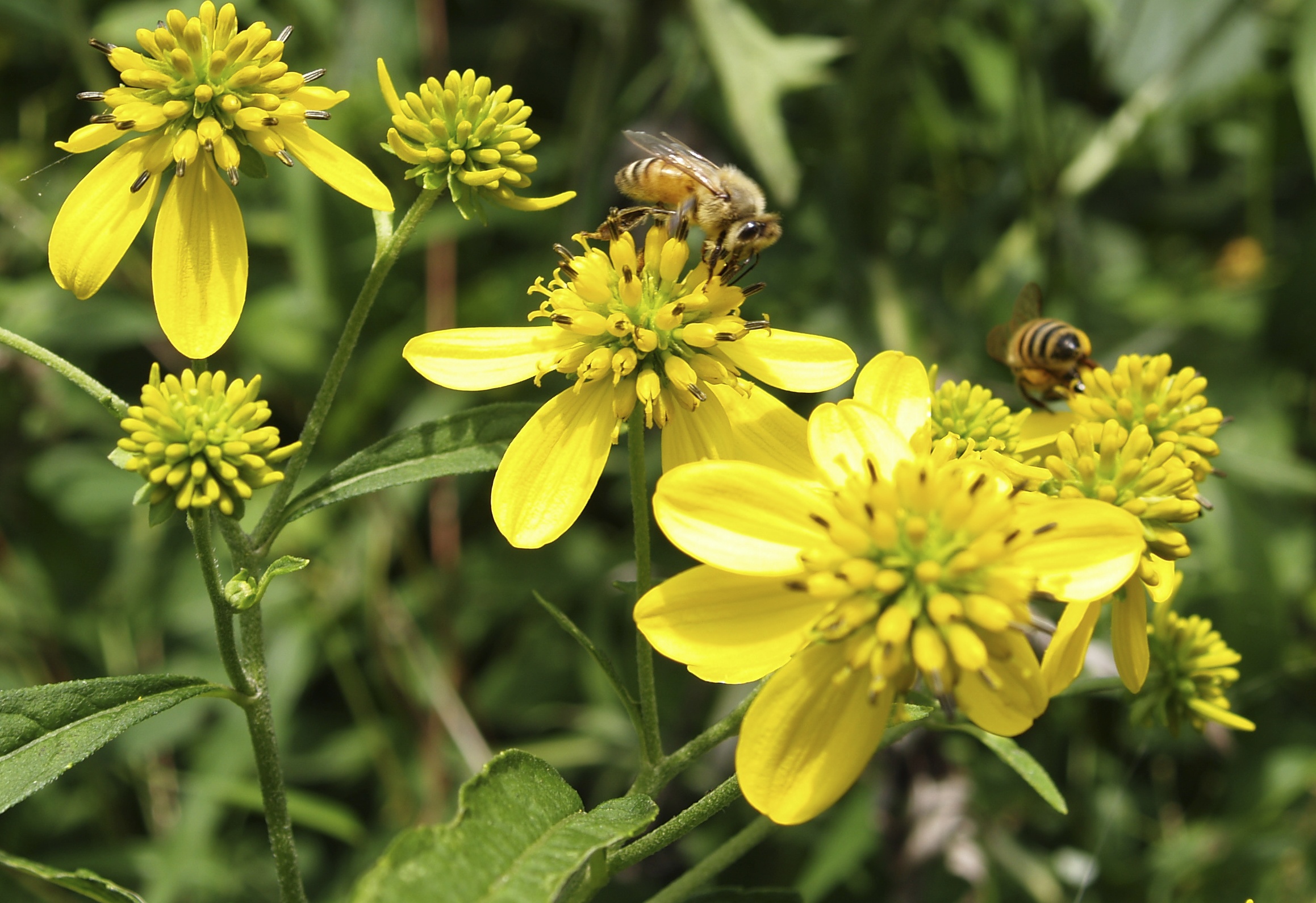
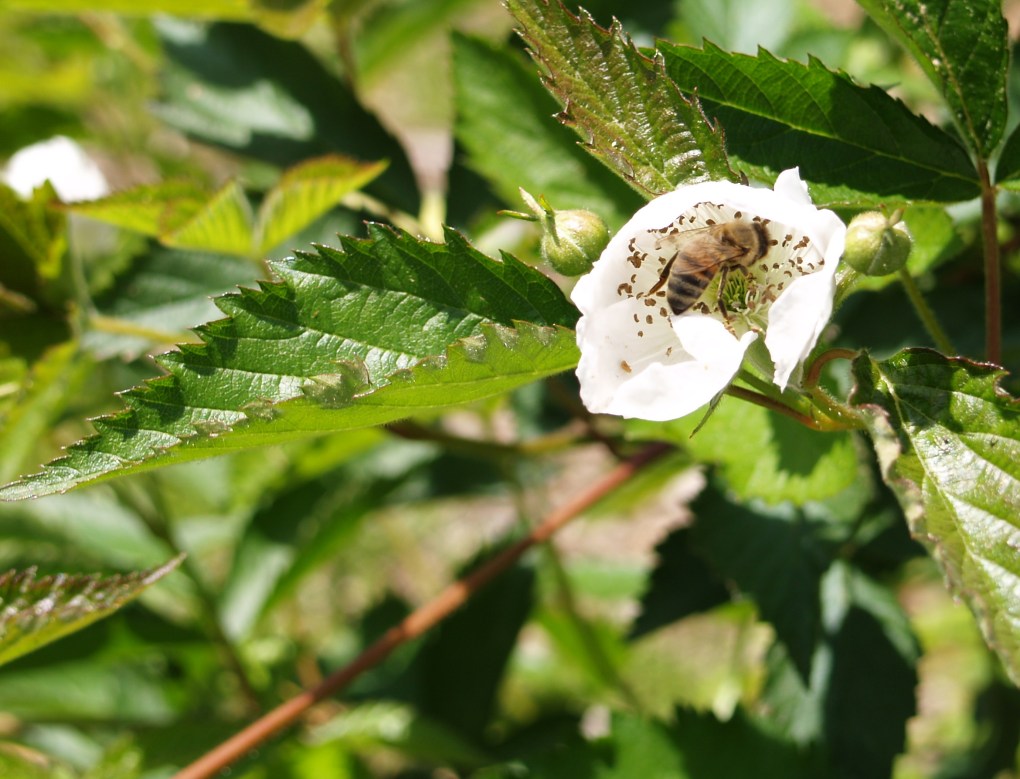
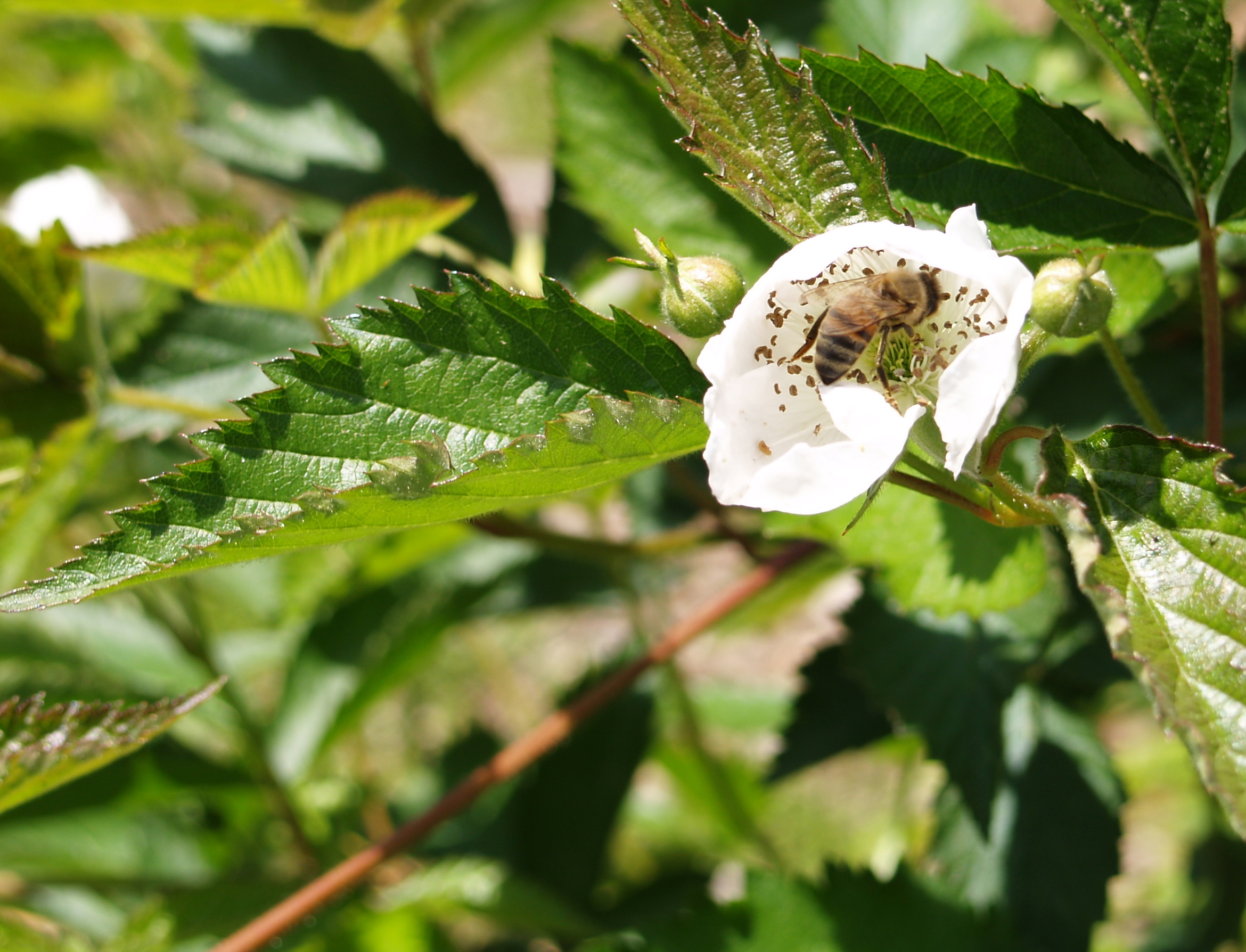
blackberry pollination

As it turned out, we picked up our bees from the apiary in person – which was awesome, because we got to see a master beekeeper open up his hives.  I learned more that day watching him then in all my beekeeping classes!  The result was a drive home with 30,000 bees in the car… give or take a few.  The kids joked and wondered whether we should put the “Bee Movie” on for the drive home.

to bee continued