On January 1, 2020 we commemorated Saint Basil the Great as well as the first day of 2020 • many will have opened the new year by celebration the Divine Liturgy • and the sharing of the Vasilopita. ⠀
Most every Liturgy celebrated in the Orthodox Church is the Liturgy of Saint John Chrysostom. • However the Church has apppointed that on certain days of the year we celebrate the Liturgy of Saint Basil • these days are ⠀
⠀
• the five Sunday’s of Great Lent ⠀
• Holy Thursday and Holy Saturday ⠀
• Eve of the Nativity ⠀
• Feast of the Nativity ⠀
• Eve of Theophany⠀
• Feast of Theophany⠀
• Feast Day of Saint Basil (Jan 1 / 14) ⠀
⠀
Unless you happen to know that it is Saint Basil’s Liturgy being celebrated you might not notice, because it differs very little from the Liturgy of Saint John Chrysostom. However, there are layers in the Liturgy and some of those layers are veiled within the altar – this was was highlighted by our priest yesterday. In Saint Basil’s Liturgy those prayers behind the altar are more penitential and yet also speak sublimely and clearly of God’s deep devotion and love for humanity and all of creation. A closer listen and this s clear, especially the prayers of the Anaphora which say that God created man,
⠀
“and fashioned him out of the dust of the earth and placed him in the midst of a bountiful paradise, promising him life eternal and the enjoyment of everlasting good things by keeping Your commandments” ⠀
Anaphora prayers of Saint Basil’s Liturgy
⠀
Saint Basil also prays beautifully in those same about how when humanity fell from Grace God has never stopped communicating, seeking, pursuing, loving, working and interacting incooperation among His people – not ever. Dynamis. But rather remembering always the work of His Hands – in His benevolent loving kindness, He visits us in different ways – through the tender compassion of His mercy sending forth Prophets and Saints in every generation. ⠀
Simplicity • God has set us within Paradise too, friends • at every Divine Liturgy • oh taste and see that the Lord is good. ⠀
⠀
O our Holy Father among the Saints • Saint Basil the Great • • pray to God for us•
⠀
You can read the Liturgy of Saint Basil by clicking his name below.
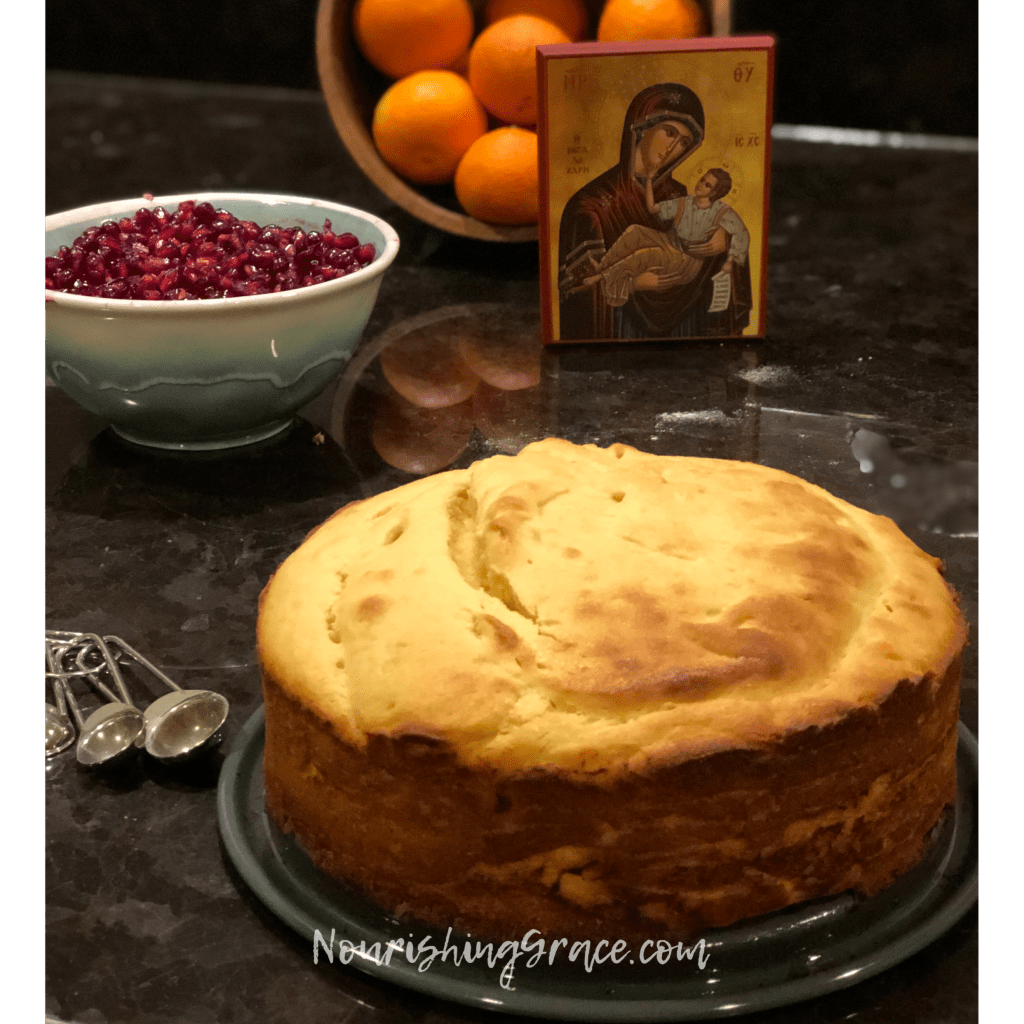
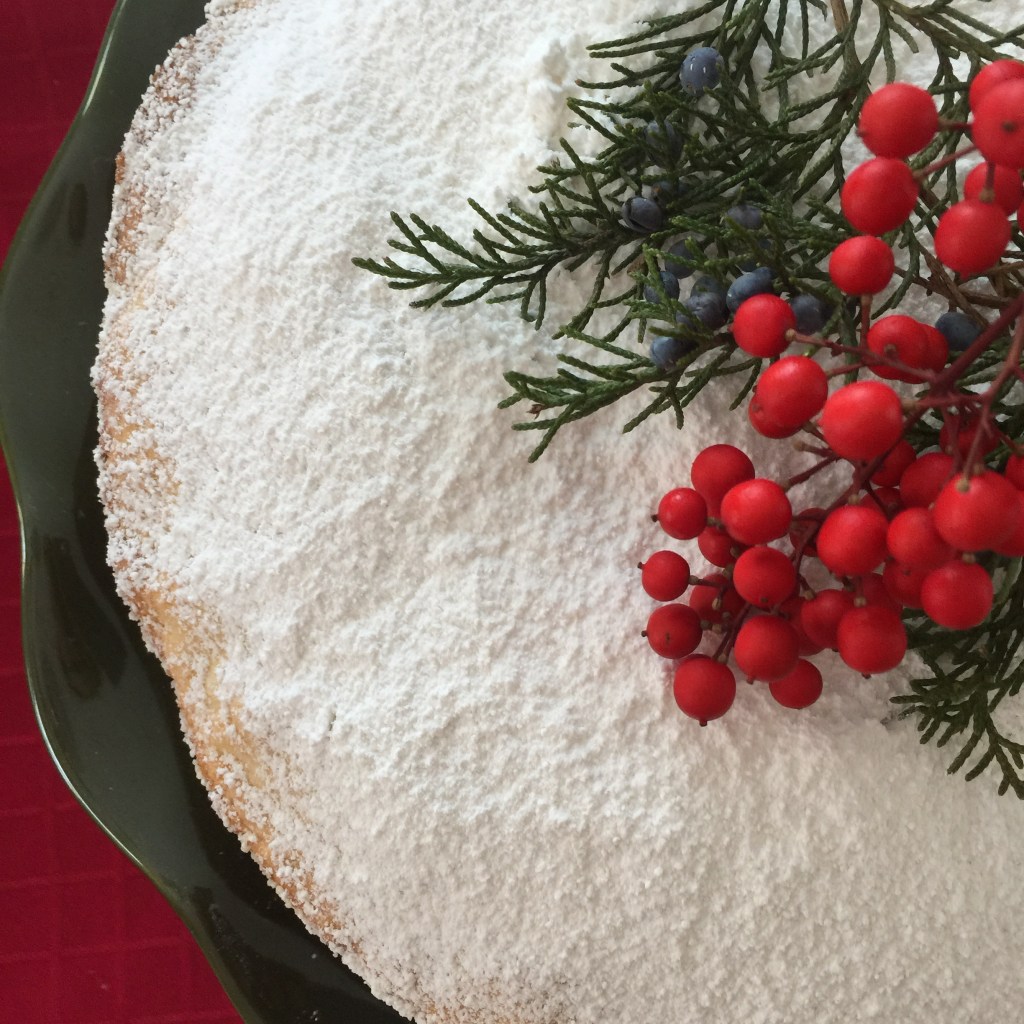
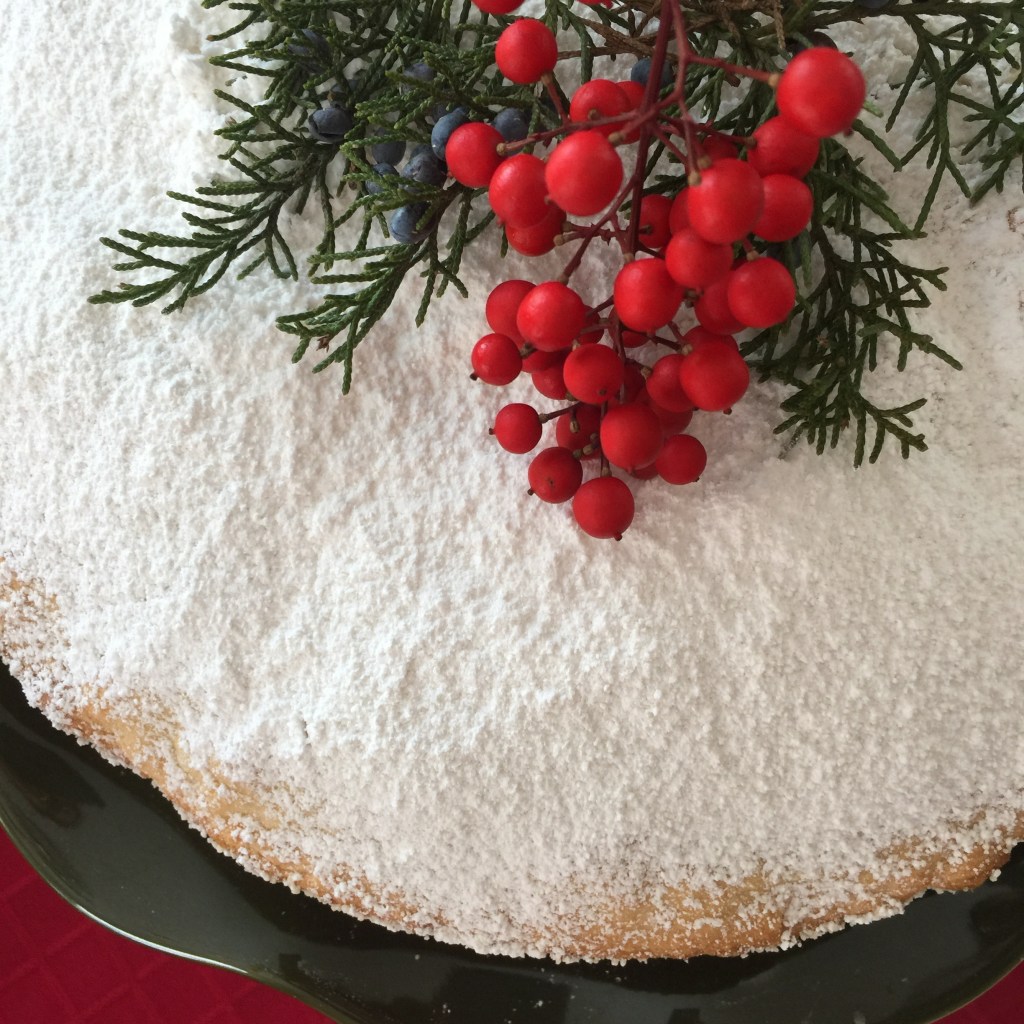
Baking the Vasilopita – or sweet bread of Saint Basil – is a wonderful tradition to usher in the New Year. It is a tradition all Orthodox Christians should weave into living liturgically. Though almost all Greek Orthodox Churches will bless and cut the Vasilopita in the parish after the New Years Liturgy of Saint Basil, it really is a tradition of the Little Church of the home. It is a wonderful way to bless the new year and like all Orthodox little “t” traditions, it orients the heart to Christ, remembrance of God and also reminds us that man shall not live by bread alone.
Especially in modern times – much of our lives involve planning and calendars. And we ask God to bless time and to bless our lives. We invite Father Son and Holy Spirit to live in our hearts as we re-commit ourselves to life in Christ through the Church. As we march through the marking of time of one year to the next, we seek to redeem the time – in this New Year of Grace. “και του χρόνου”
In baking and blessing the sweet bread of Basil, we seek the company of the communion of Saints. As each piece of the Vasilopita is cut and distributed we commemorate Christ, the Theotokos and Saint Basil (or your family or patron Saint) : in this small way we ask them to remember us in their prayers and we invite them to walk beside us in this New Year. And, lastly but not least-ly, the poor are remembered in the cutting of the last piece :: and the irony of a piece of cake on our plates in contrast to the empty plate of the poor is not lost on those gathering for the vasilopita.
It is possible that some Orthodox Christians even bake extra vasilopita with coins to distribute to the growing homeless population asking for change at all the stop lights in their town.
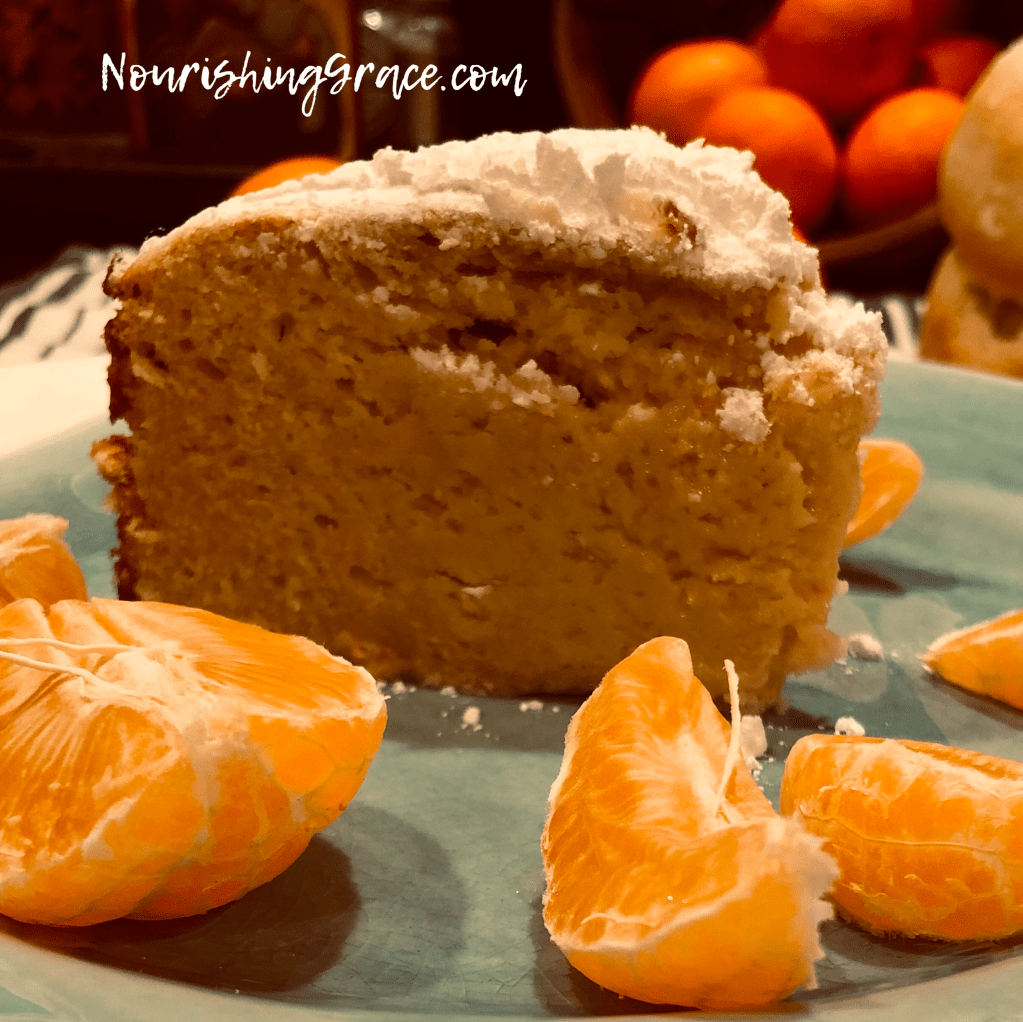
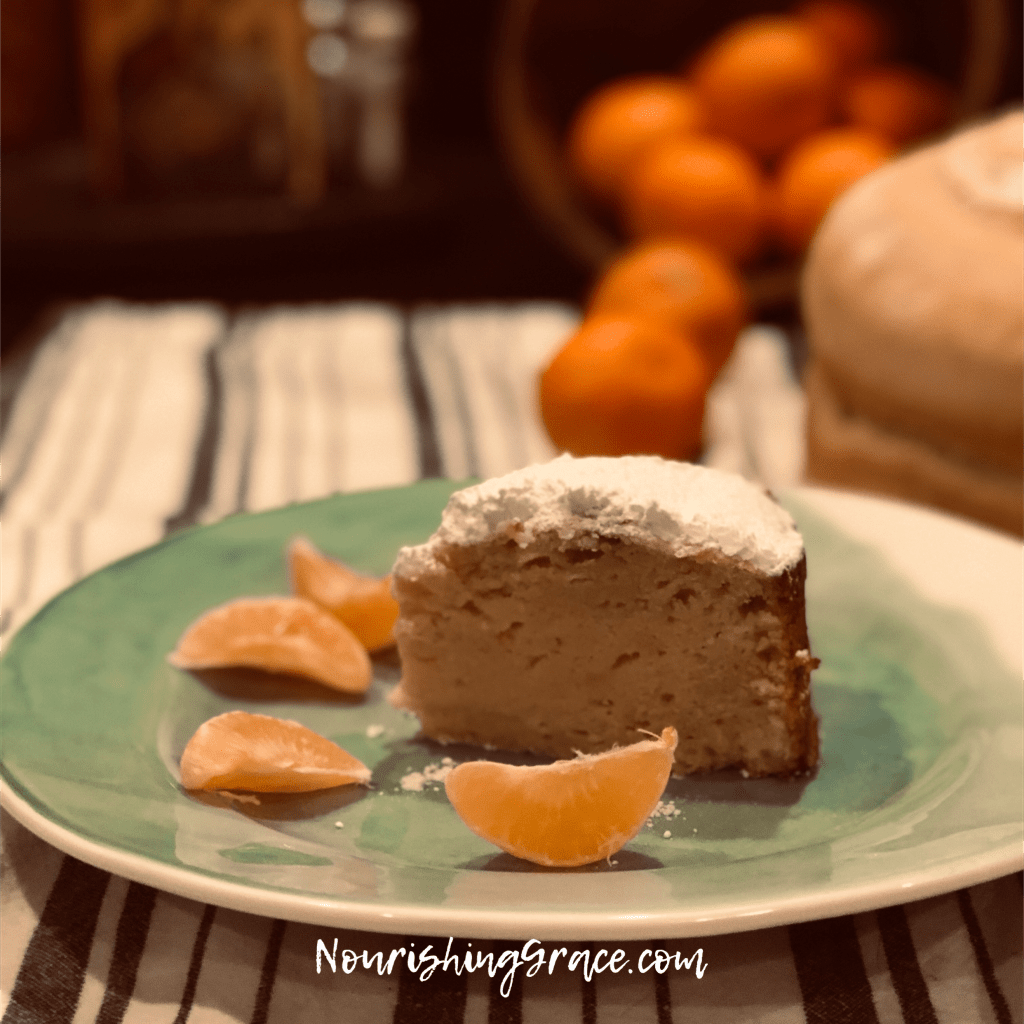
Gluten Free Vasilopita
Many people have a sensitivity to wheat. It is a real symptom of the stress of the times, industrial foods and over use of antibiotics etc. If you have a gluten intolerance, you know how it feels to be left out of a meal situtation and watch while everyone eats something delicious.
It is why I have taken to transform our recipes, especially the cultural and liturgical traditions, to be just as delicious gluten free as the regular. This particular recipe is almost exactly the same as the original one posted last year, just that it replaces all purpose flour with a gluten free blend. Honestly, King Arthur Gluten Free Measure for Measure Flour has become my favorite because it really is a cup for cup substitution.
Do you know the history of Vasilopita?
It dates all the way back to the fourth century. It’s namesake is a humble holy bishop Saint Basil the Great whose heart compelled him during a time of famine to help the poor. It was a time of merciless and unfair taxation. The Bishop confronted the emperor who had levied the tax, calling him to repentance for the harsh burden he placed upon the people.
Amazingly, the emperor did repent and he returned the gold and jewelry that had been taken from the townspeople. Basil and the villagers offered thanksgiving prayers after which the Holy Bishop commissioned women to bake and place the gold coins into a sweet bread which were then distributed. Miraculously each family found in their bread, their own valuables which had been collected as part of the taxation.
Today, the vasilopita is baked in memory of that miracle forged by God and Saint Basil’s faith, love and shepherding of his people. Each year on January 1st– the date on which St. Basil reposed in the Lord , Orthodox Christians observe the tradition of the Vasilopita. The recipient of the coin is considered especially blessed. There are many regional variations to the bread, yet a taster will find that all of the recipes are sweet and authentic!
Gluten Free VASILOPITA
Ingredients
4 large eggs, separated
1 cup sugar
12 tablespoons melted butter (1-1/2 sticks)
1-1/2 cups orange juice
1/2 cup brandy
4 cups King Arthur Measure for Measure Gluten Free Flour Mix
4 teaspoons baking powder
1/4 teaspoons baking soda
grated zest of two oranges and two lemons
whole blanched almonds and /or powdered sugar to decorate
Gluten Free Vasilopita Recipe
Preheat oven to 375F.
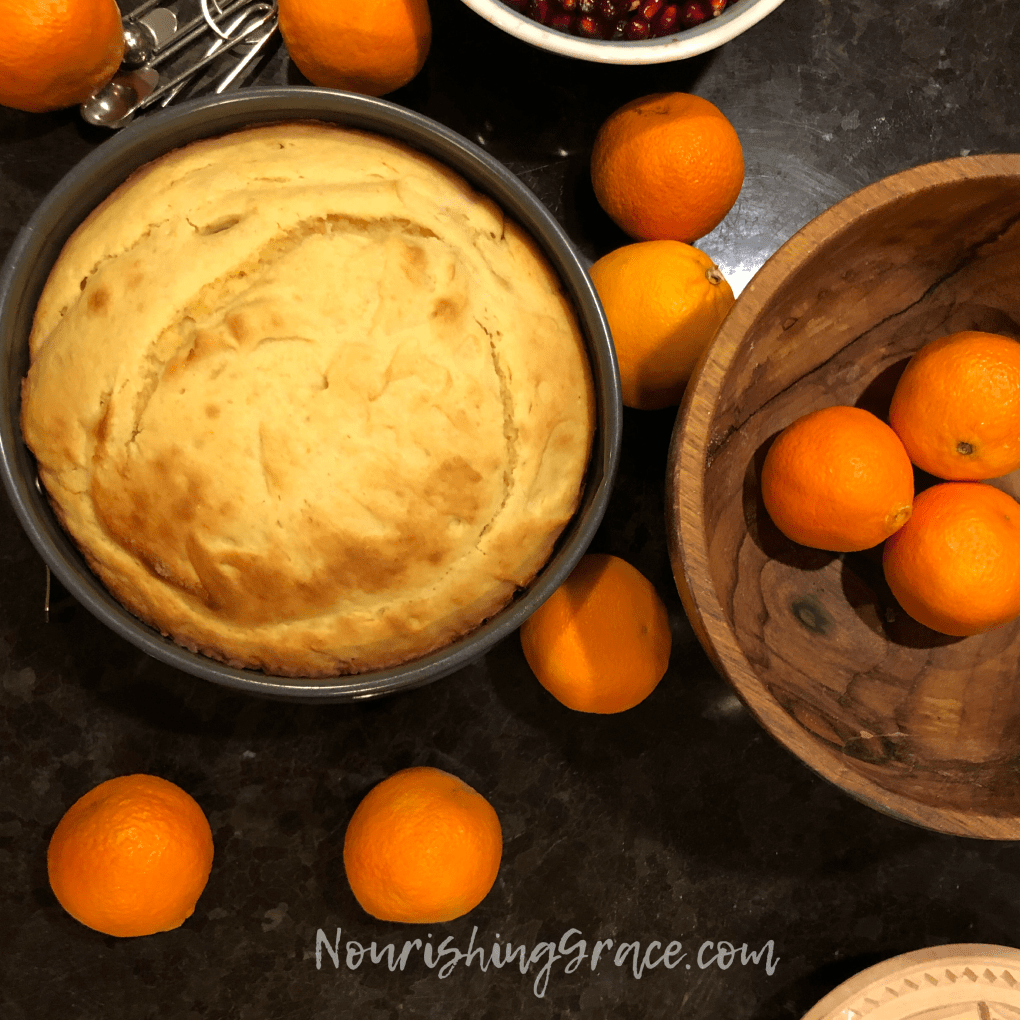
Grease a 10 – 12 inch springform pan
In a large bowl beat egg yolks, zest and sugar (this releases the essential oils from the zest) for about three minutes.
Add butter and beat for an additional minute
Add orange juice and brandy, beat until it is incorporated.
Whisk the flour, baking powder and baking soda in a separate bowl. This makes sure that you will not have any clumps of the baking powder and baking soda but that it will be totally distributed.
Add to the liquid mixture and stir until incorporated.
In separate bowl (I actually use a mason jar with a hand held electric stick mixer so that it does not splatter everywhere) whip the egg whites until soft peaks form.
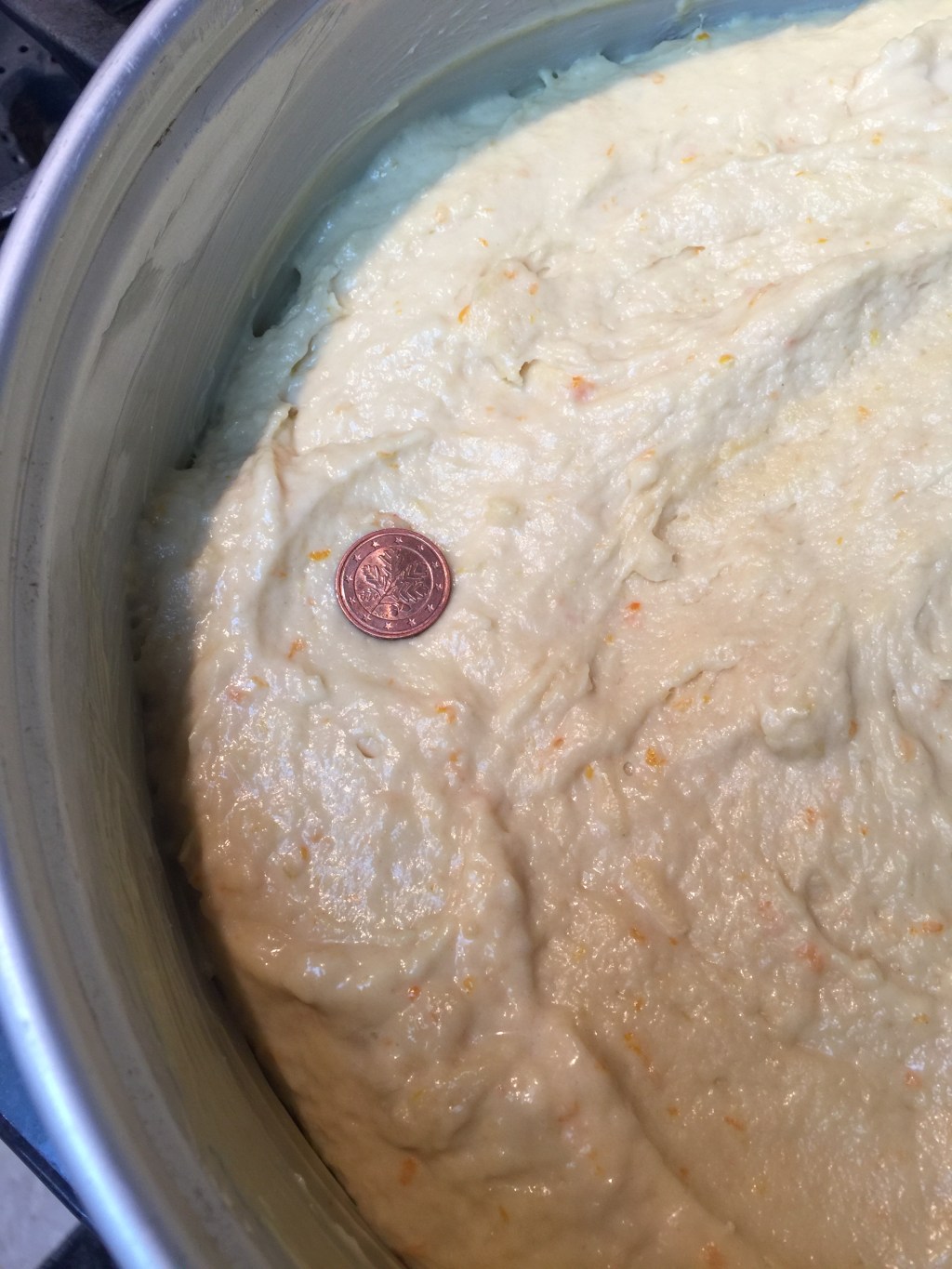
Fold the egg whites into the batter. Pour batter into the greased springform pan.
Don’t forget to place a clean coin (my daughter found a euro coin for one and a dime for another) in the batter before it’s cooked
Bake for 45 minutes to an hour until gold brown.
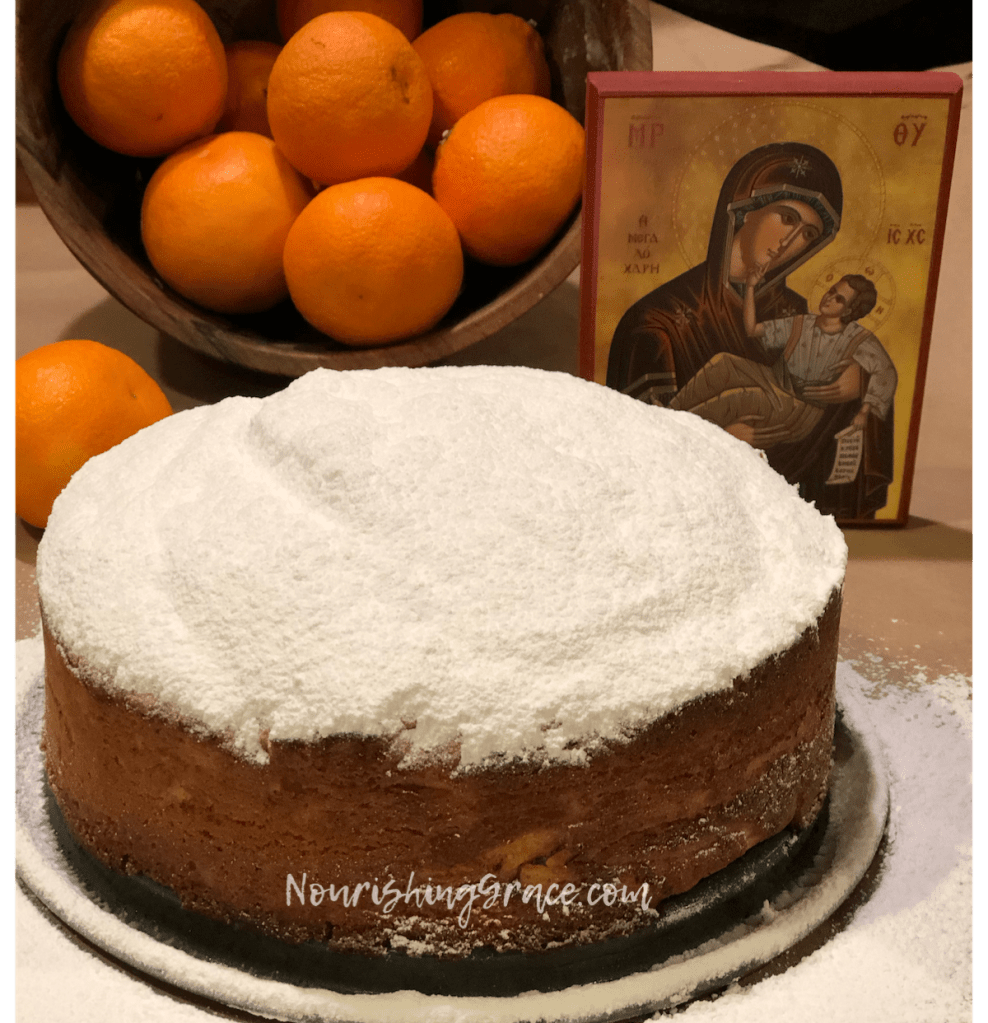
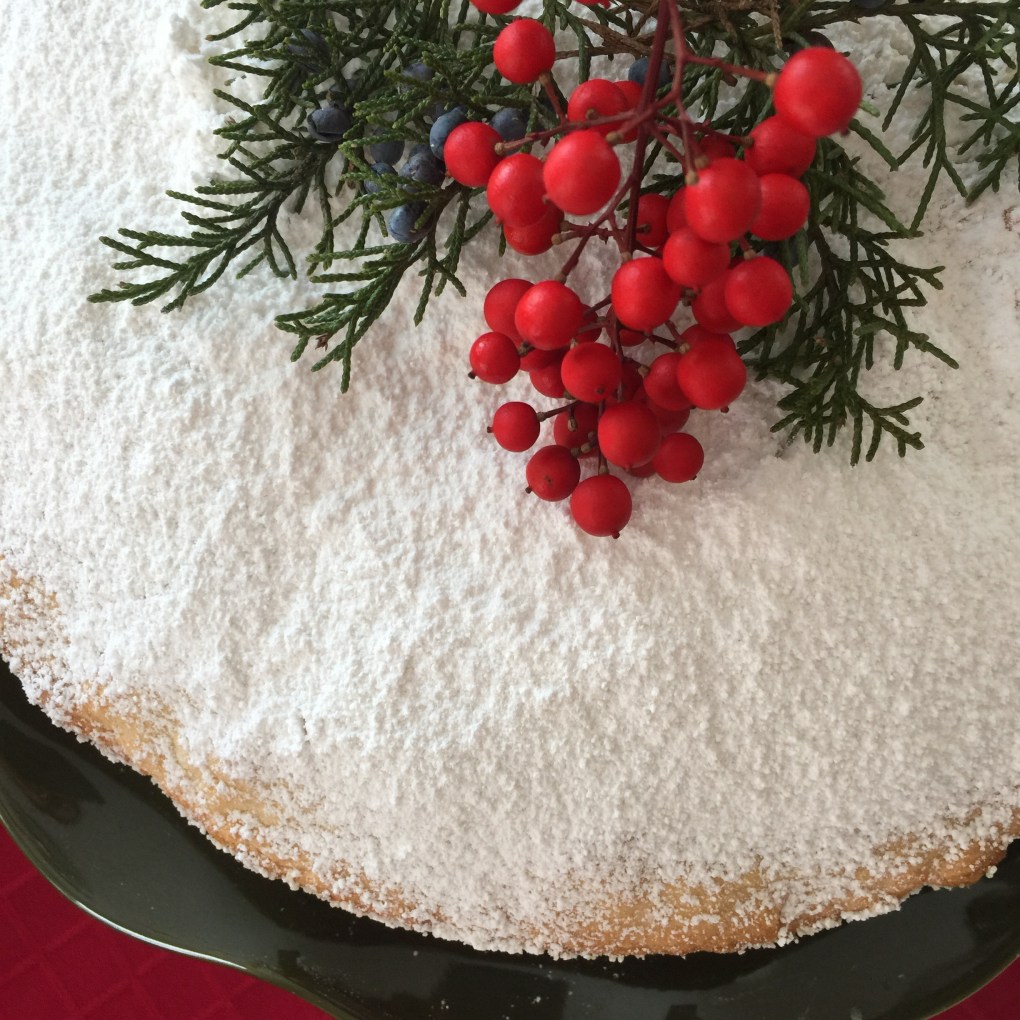
Decorate with almonds and/ or powdered sugar.
Blessing the New Year with Saint Basil
As with all customs Orthodox Christian : we bless and we pray. The following prayer is often recited when serving the Vasilopita in the home by whomever is going to serve the cake.
“Let us pray unto the Lord, have mercy. O Creator of all things, Lord and King of the ages, plenteous in mercy and bountiful in goodness, who didst accept the Magi’s gifts in Bethlehem, who art the Bread of Life that came down from heaven, who by Thine authority didst establish the seasons and the years and dost hold our life in Thy hands. Hear us who pray to Thee on this holy day upon our entrance into the new year of Thy Goodness and bless (+) this loaf/bread, which has been offered to Thy glory and in honor of our Father among the Saints Basil the Great, Archbishop of Caesarea in Cappadocia. Do Thou who art Benevolent, look down from Thy Holy Heaven and send down upon us, upon those who have offered these gifts and upon them that partake thereof, Thine heavenly gifts, for our hope is in Thee, the Living God, unto the ages. Bless this parish (home, school, foundation, etc.) and our entrances and exits; replenish our life with all good things and direct our footsteps that we may keep Thy Divine Commandments, for man shall not live by bread alone; Though the intercessions of Thy Most Pure Mother, of our Father among the Saints Basil the Great and of all Thy Saints who from all ages have been well pleasing to Thee. Amen.”
The sign of the Cross is then made over the Vasilopita with a knife while saying, “In the Name of the Father and of the Son and of the Holy Spirit. Amen.” Then pieces of the Vasilopita are cut in the following order:
The First piece is set aside for Christ,
the Second piece for our Theotokos,
the Third piece for Saint Basil,
and the Fourth piece for the poor.
Then pieces are given to all present, beginning with the eldest and ending with youngest. He or she who receives the piece containing the coin is traditionally considered to be especially blessed for the New Year.
Wishing you a Blessed New Year filled with joy, thanksgiving and Grace!!
Everyone as he is able, should try to heal (with kindness) anyone who has something against him.
Saint Basil the Great
The Fathers Speak (p. 55)
It is a cherished tradition bearing the leaven of hope toward the coming year and the further redemption of our time here, in Christ, that Orthodox Christians bake this sweet bread of orange and lemon to ring in the new year.
The bread is called vasilopita which means the sweet bread of basil. It’s namesake is a humble holy bishop Saint Basil the Great whose heart compelled him during a time of famine to help the poor. It was a time of merciless and unfair taxation. The Bishop confronted the emperor who had levied the tax, calling him to repentance for the harsh burden he placed upon the people.
Amazingly, the emperor did repent and he returned the gold and jewelry that had been taken from the townspeople. Basil and the villagers offered thanksgiving prayers after which the Holy Bishop commissioned women to bake and place the gold coins into a sweet bread which were then distributed. Miraculously each family found in their bread, their own valuables which had been collected as part of the taxation.
Today, the vasilopita is baked in memory of that miracle forged by God and Saint Basil’s faith, love and shepherding of his people. Each year on January 1st– the date on which St. Basil reposed in the Lord , Orthodox Christians observe the tradition of the Vasilopita. The recipient of the coin is considered especially blessed.
This is the first year our family has ever made the vasilopita. There are many regional variations to the bread, yet a taster will find that all of the recipes are sweet and authentic!
This particular recipe is adapted from my “go to” Greek Cookbook by Aglaia KremeziThe Foods of the Greek Islands. She gives a rich history of her recipes and I appreciate her anecdote that butter and eggs were luxuries in Greece during times past. What I love about the old way of Greek cooking is that by using the brandy the texture of the flour totally changes into a nice bread texture. There is no yeast in this bread, instead the brandy adds to the leaven quality of the dough.
Vassilopita
Ingredients
4 large eggs, separated
1 cup sugar
12 tablespoons melted butter (1-1/2 sticks)
1-1/2 cups orange juice
1/2 cup brandy
4 cups all purpose flour
4 teaspoons baking powder
1/4 teaspoons baking soda
grated zest of two oranges and two lemons
whole blanched almonds and /or powdered sugar to decorate
Recipe
Preheat oven to 375F.
Grease a 10 – 12 inch springform pan
In a large bowl beat egg yolks, zest and sugar (this releases the essential oils from the zest) for about three minutes.
Add butter and beat for an additional minute
Add orange juice and brandy, beat until it is incorporated.
Whisk the flour, baking powder and baking soda in a separate bowl. This makes sure that you will not have any clumps of the baking powder and baking soda but that it will be totally distributed.
Add to the liquid mixture and stir until incorporated.
In separate bowl (I actually use a mason jar with a hand held electric stick mixer so that it does not splatter everywhere) whip the egg whites until soft peaks form.
Fold the egg whites into the batter. Pour batter into the greased springform pan.
Place clean coin (my daughter found a euro coin for one and a dime for another)
Bake for 45 minutes to an hour until gold brown.
Decorate with almonds and/ or powdered sugar.
May we all be especially blessed in the coming New Year!
As impossible as it is to describe the sweetness of honey to one who has never tasted honey, so the goodness of God cannot be clearly communicated by way of teaching if we ourselves are not able to penetrate into the goodness of the Lord by our own experience.
The Orthodox Study Bible: Ancient Christianity Speaks to Today’s World
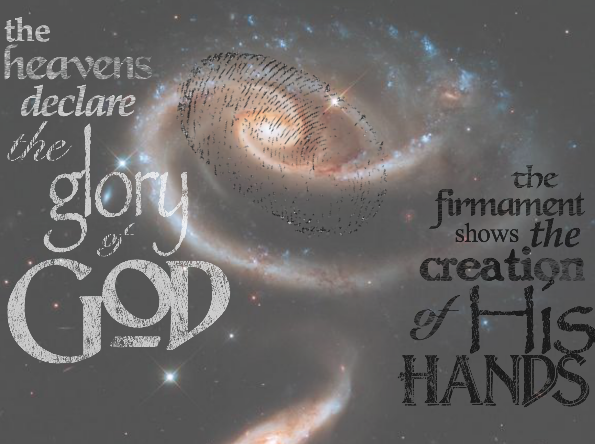
Psalm 19:1-3
In the beginning God created; that is to say, in the beginning of time.
St. Basil the Great
The world was not conceived by chance and without reason, but for an useful end and for the great advantage of all beings, since it is really the school where reasonable souls exercise themselves, the training ground where they learn to know God; since by the sight of visible and sensible things the mind is led, as by a hand, to the contemplation of invisible things. For, as the Apostle says, the invisible things of him from the creation of the world are clearly seen, being understood by the things that are made.




 gladsomelife.com