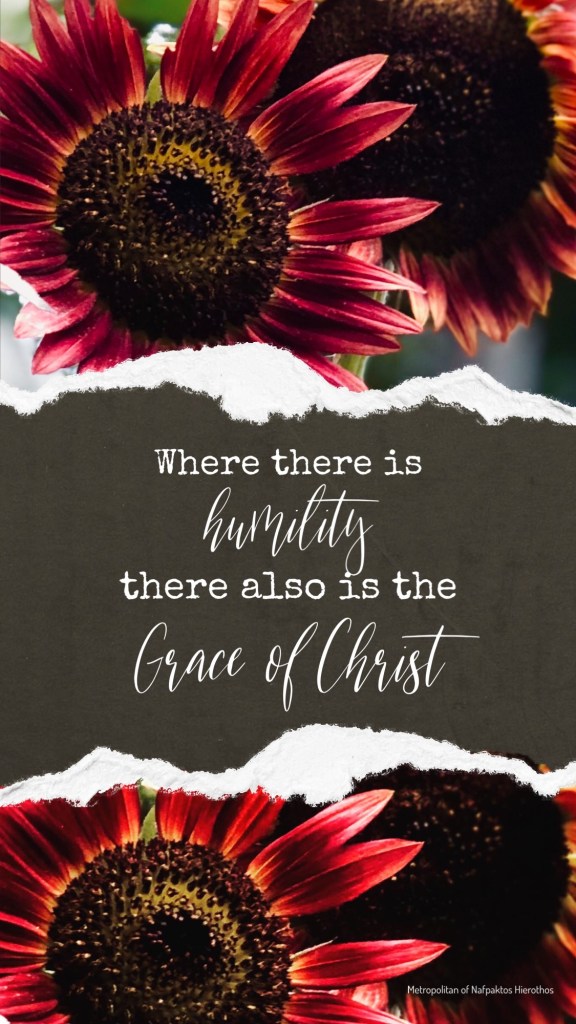
Let us make a good beginning so that God may grant us repentance (turning to God), because the person who has repentance does not have pride or egotism. May God grant us awareness of ourselves so that we may have humility. When we humble ourselves, saying, “Forgive me,” and “May it be blessed,” the will of God will be done. The last shall be first and the first shall be last; whoever goes to the back, God will bring to the front. Therefore we should love God abundantly, because we all depend on Him…
Let us be very careful. Be very careful of conversations, anger, harsh words, idle talk and grumbling, because all of these harm our soul. May your nous be Heaven and your heart the Throne of God, and your mouth a Church… let us struggle to have humility in our soul. Humility. Whoever humbles himself and becomes “dust and ashes”, is the one who will receive the majesty of God. He will receive the gifts of the All-Holy Spirit in his soul. Through humilty, our Christ was crucified. Everything was achieved through humility. Our Christ wants fervent love and immense faith. When we love Him, He will also love us. He will have compassion for us, have mercy on us and save us.
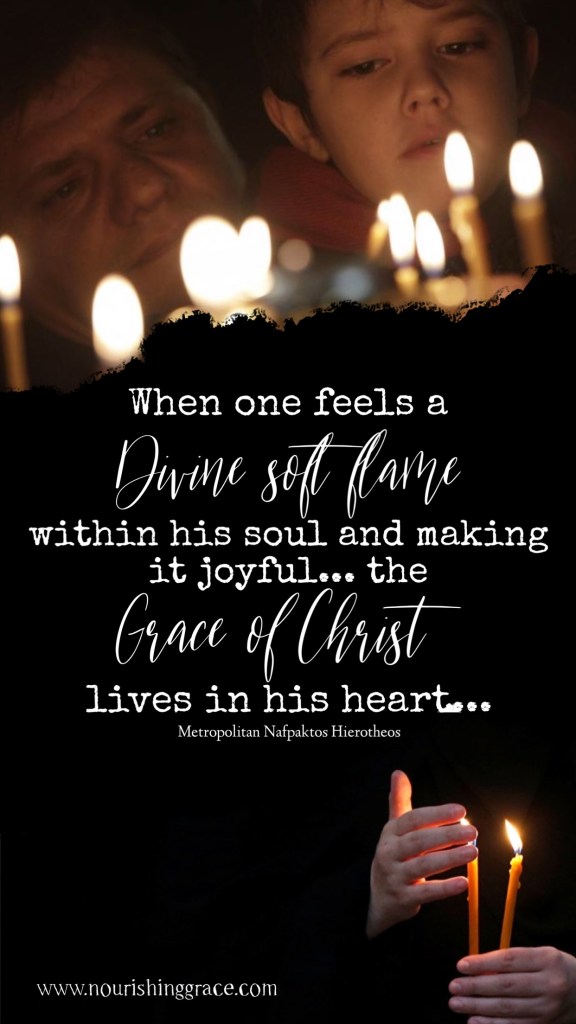
… What spiritual unity takes place when one communicates with another! This is how the grace of God is transmitted. One person has grace and he gives it to another. What grandeur! The spiritual person has so much joy at the moment he communicates with another that he can’t hold back; whatever he has, he transmits to the other. Does he have divine flame, heavenly consolation, fire, fragrance? Whatever he has, he will give. These are gifts from God.
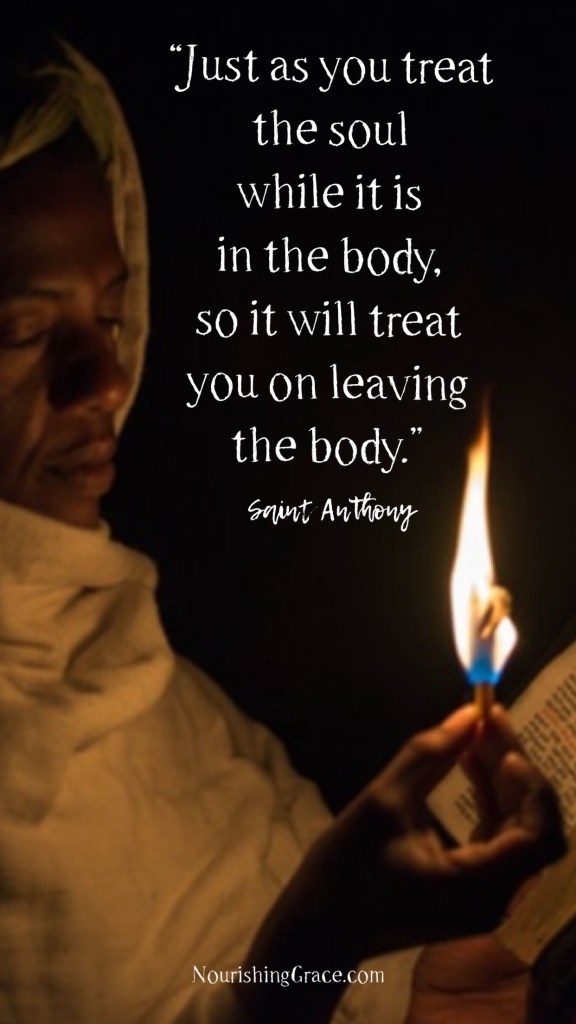
The relationship between soul and mind is formed over a lifetime by the nature of their interaction while in the body. St. Anthony makes an important and instructive observation. “Just as you treat the soul while it is in the body, so it will treat you on leaving the body.”
Stephen Muse : Treasure in Earthen Vessels
Through the lens of eternity :: this is needfully important
There was a man who was deprived of divine grace for thirty years, but he did not despair; he put his hope in Christ and would say, “My Christ, better late than never,” because Christ does not lie. He is not like us. As perfect God, He is all love, all affection, all joy and peace. Seeing us knocking persistently on the door, with much love and forbearance. Christ will open to us. When we go to a house and ring the doorbell, if they do not open to us, then we ring again and again, waiting because they may be somewhere inside. In the end they come and open to us. If we had left, we would have missed out.
Let us persistently knck on the door, and the Lord will open to us, because He loves us. He loves us so much!
“When we truly love Christ, we will cling to His neck; we will embrace His feet. If there is something troubling our soul, and as human beings we fall we should say, “Help me my Christ; strengthen me; enlighten me; bestow more faith upon me; grant me prudence; grant me obedience.” The soul will seek after these things because it desires salvation.”
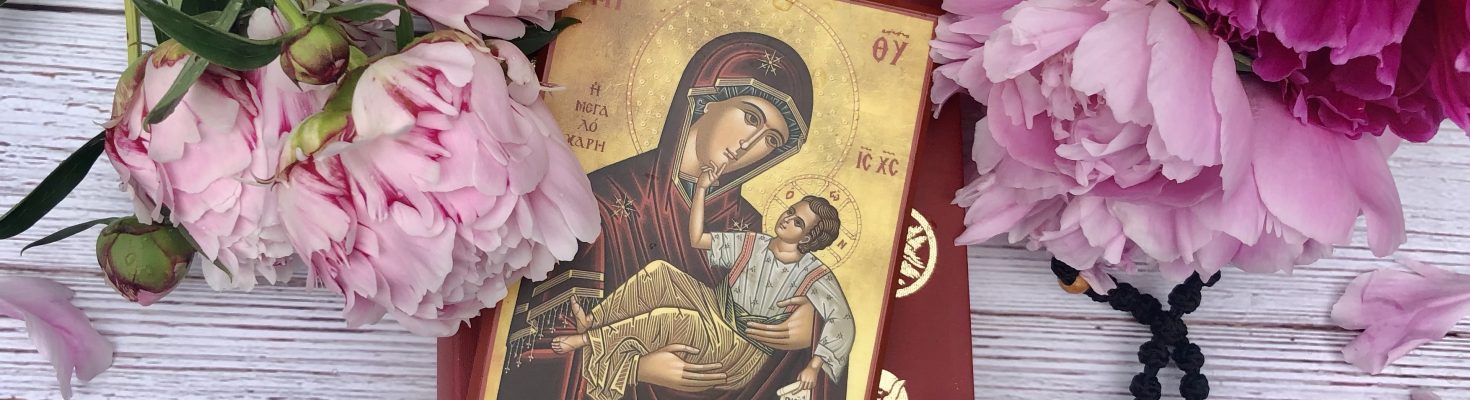
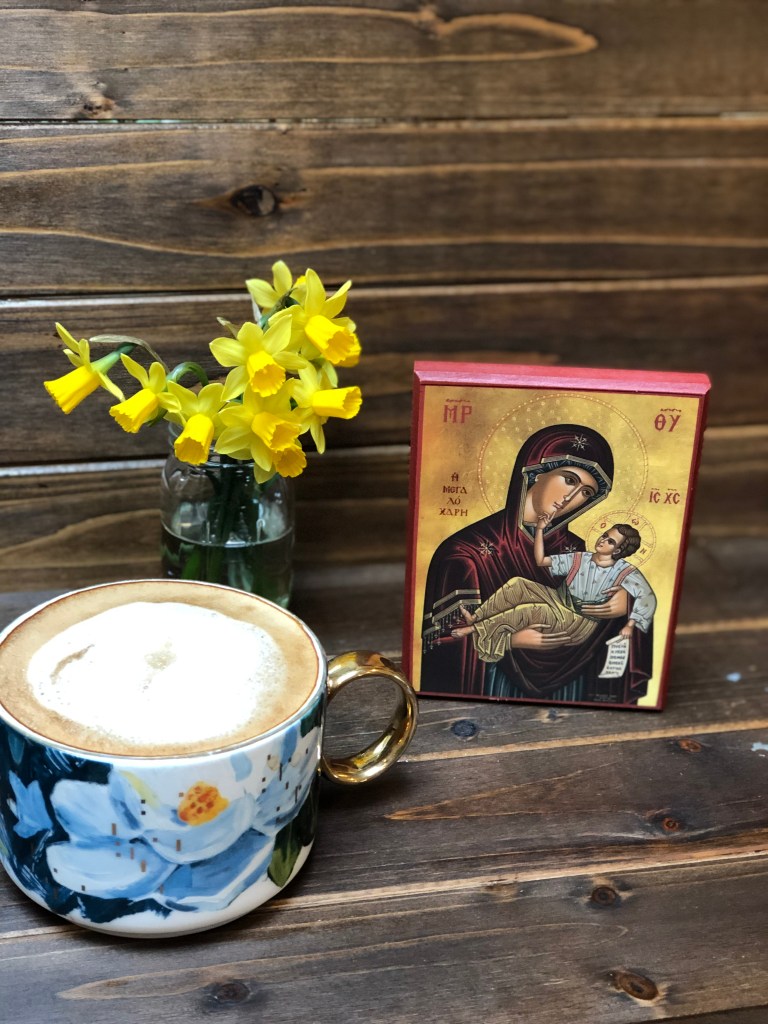
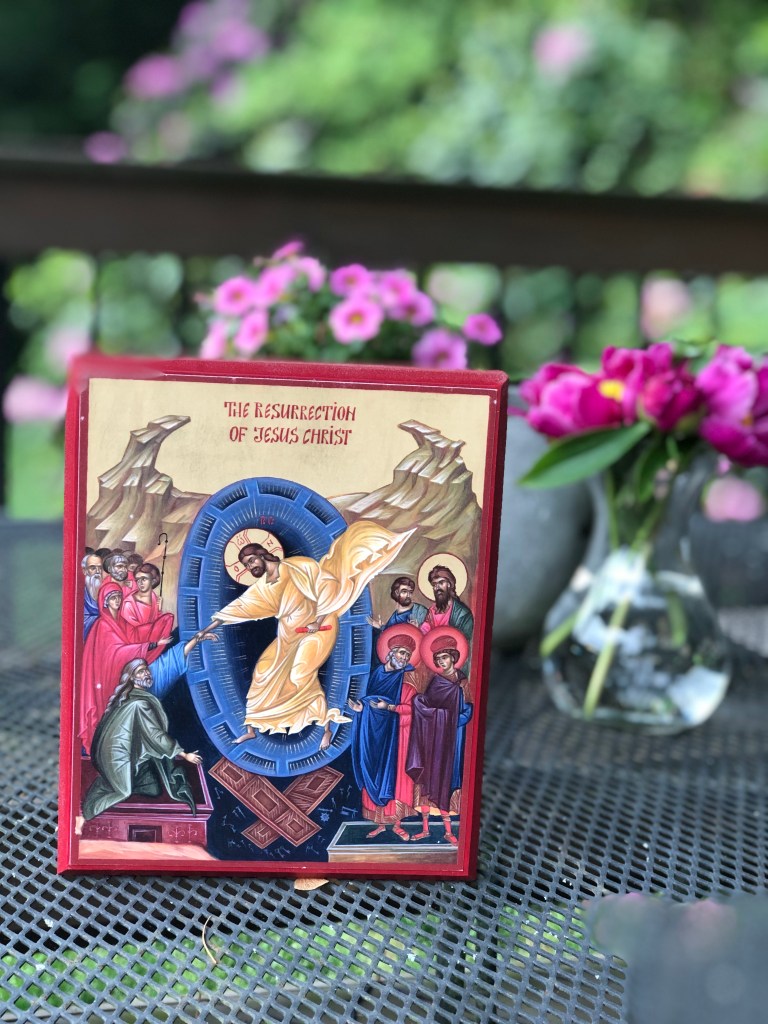
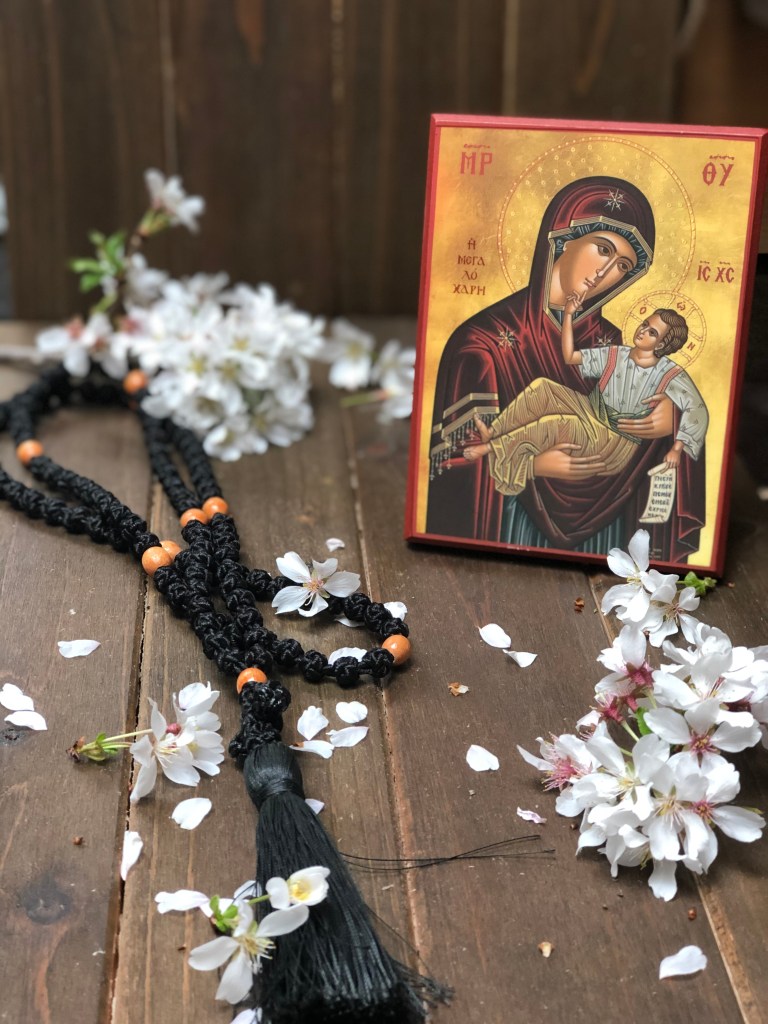
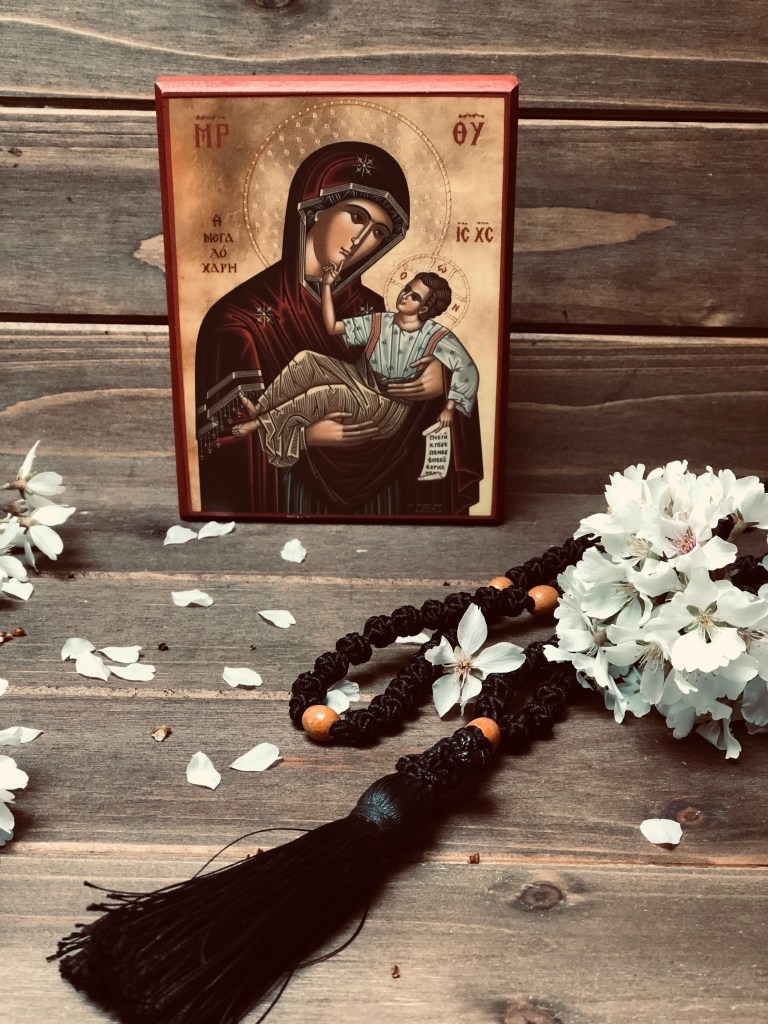
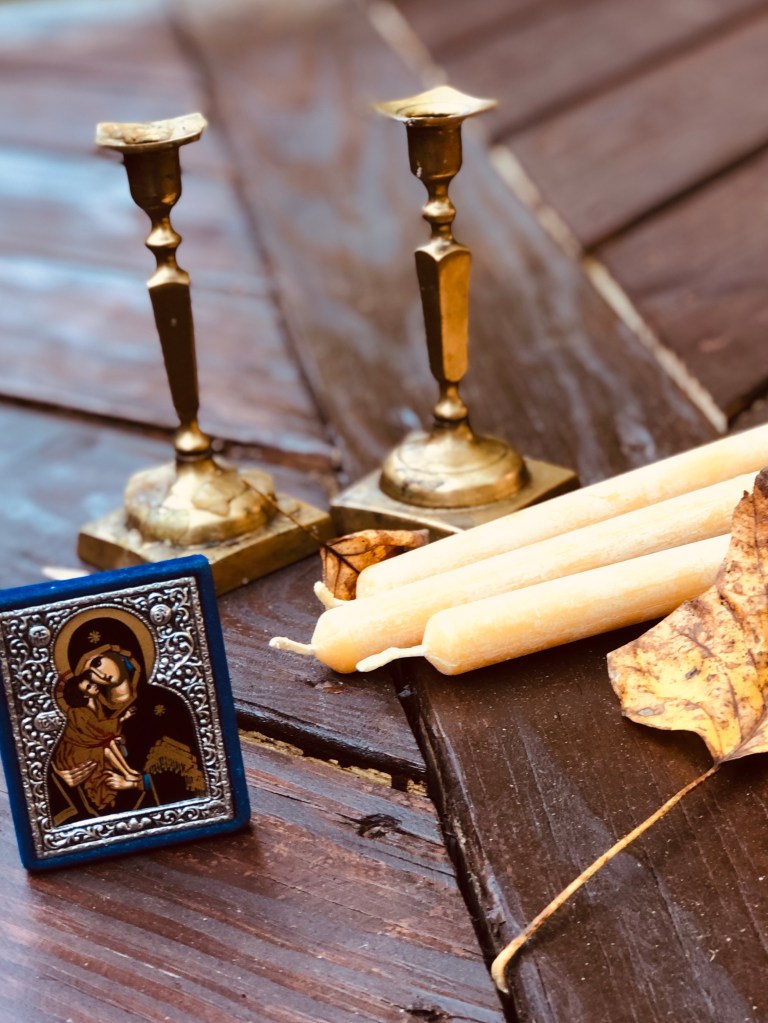
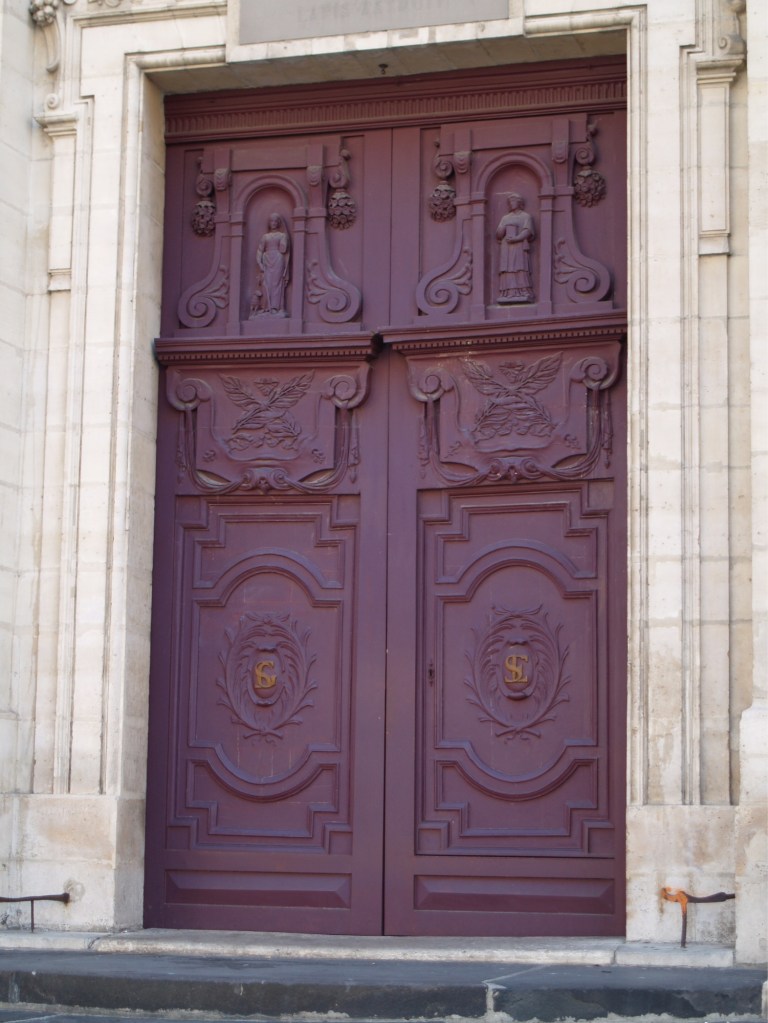
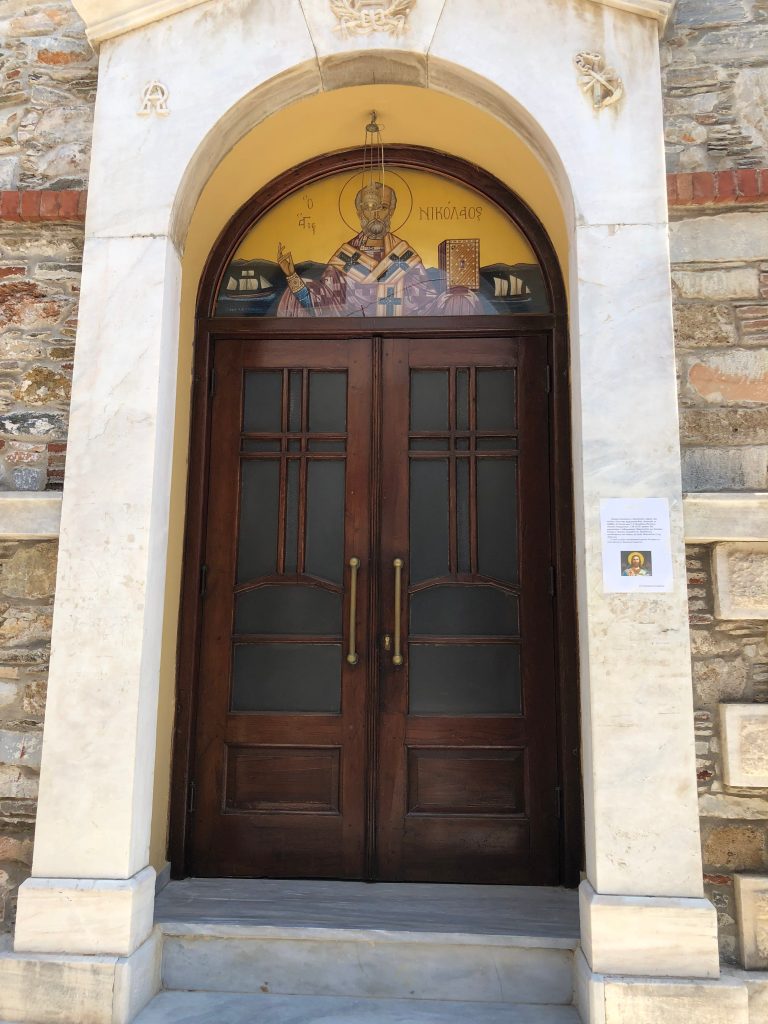
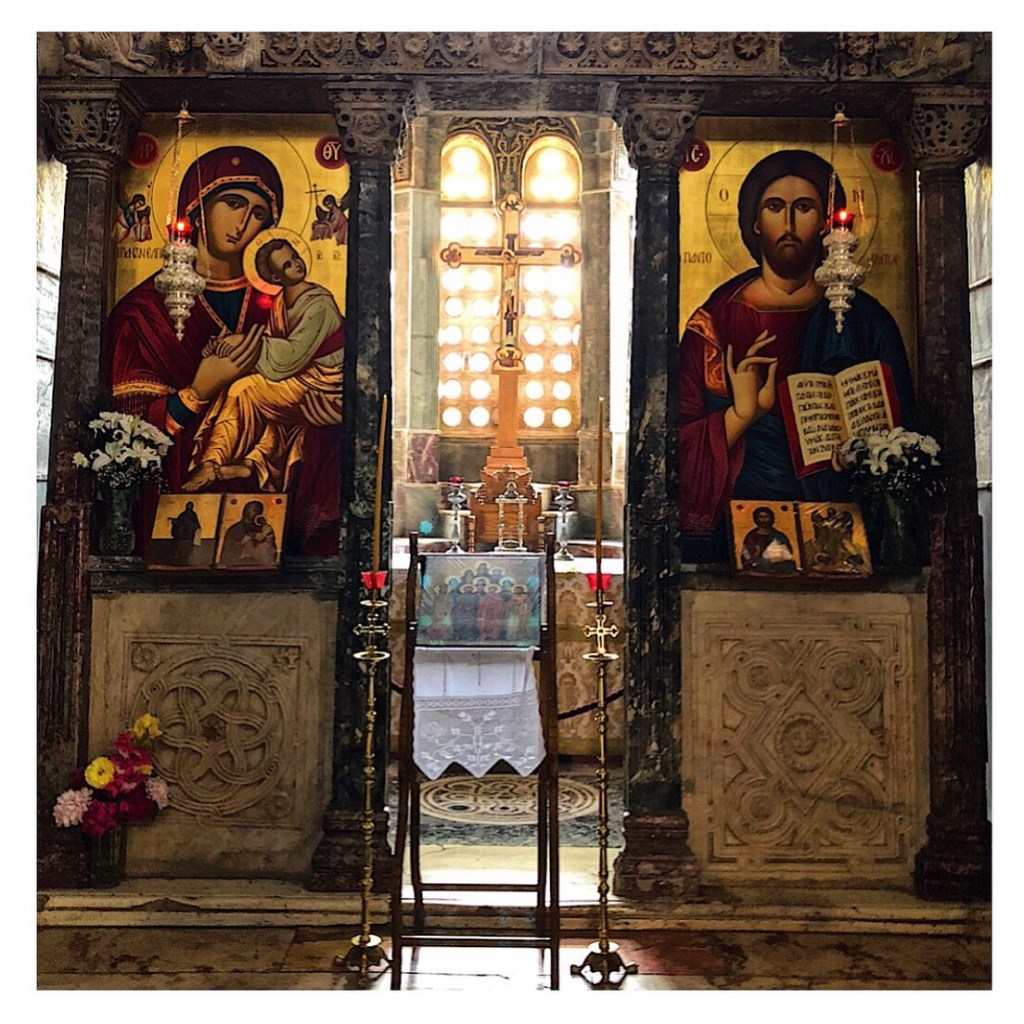
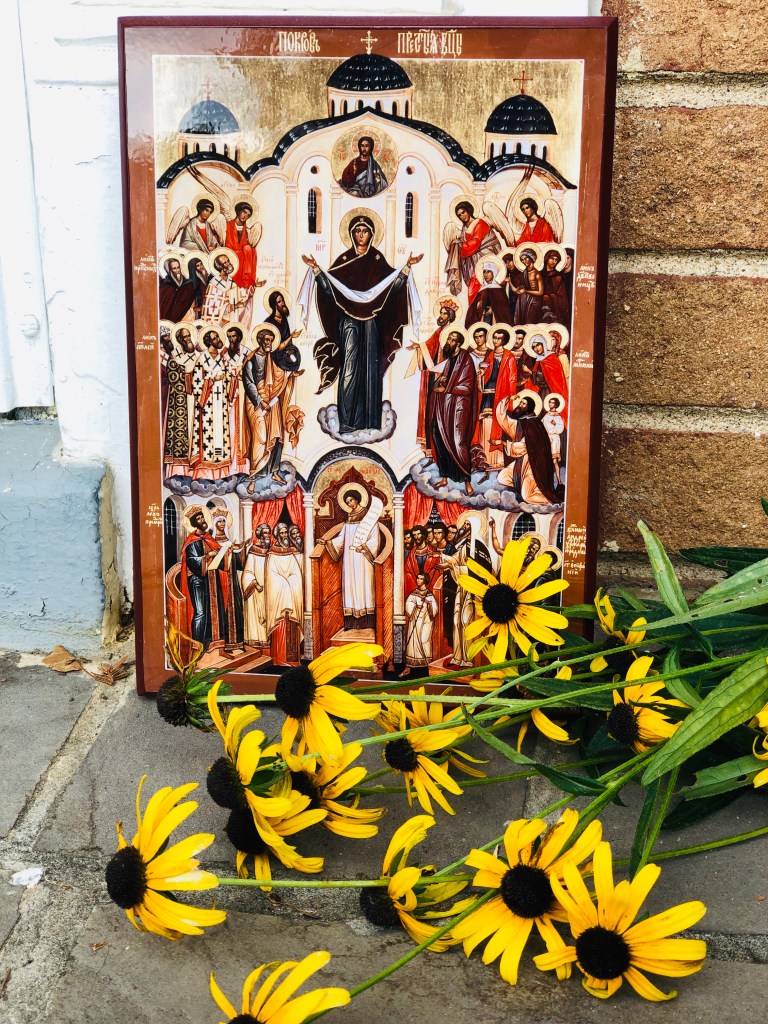
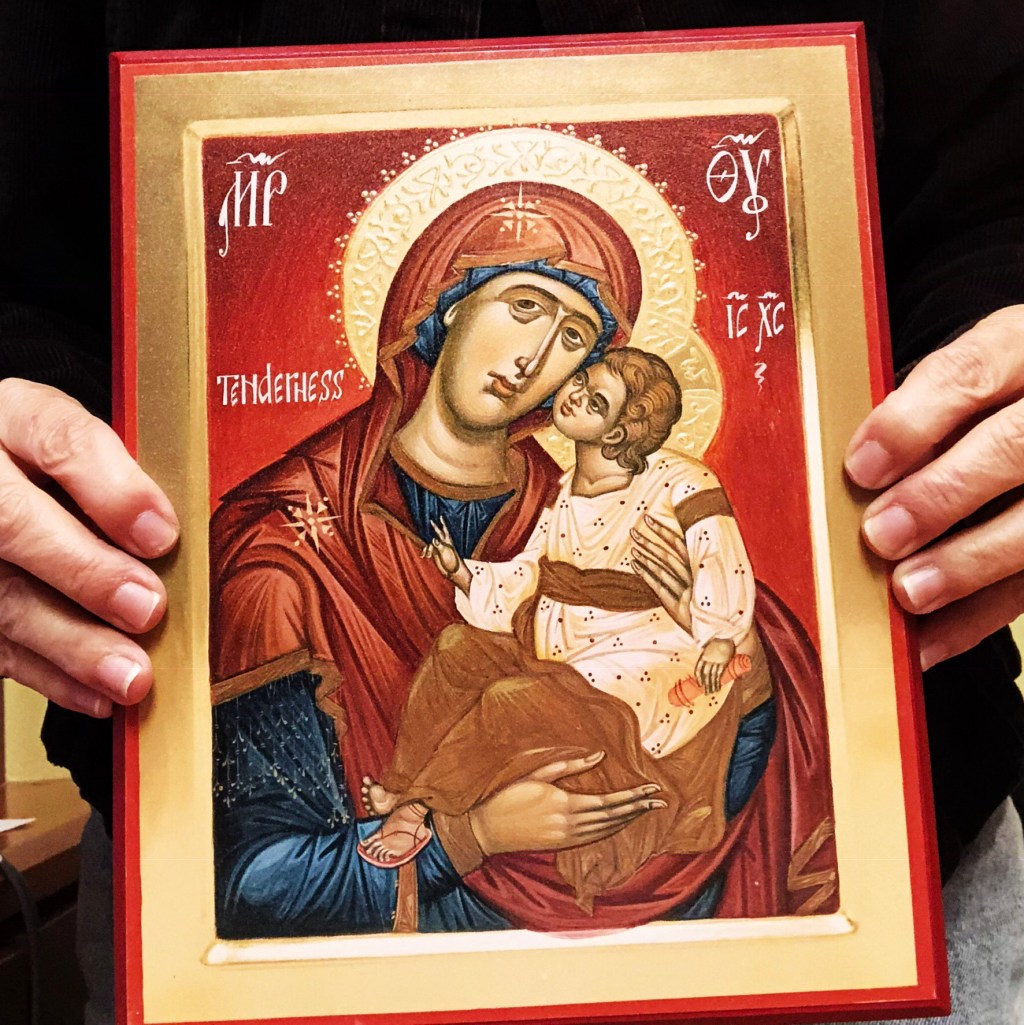
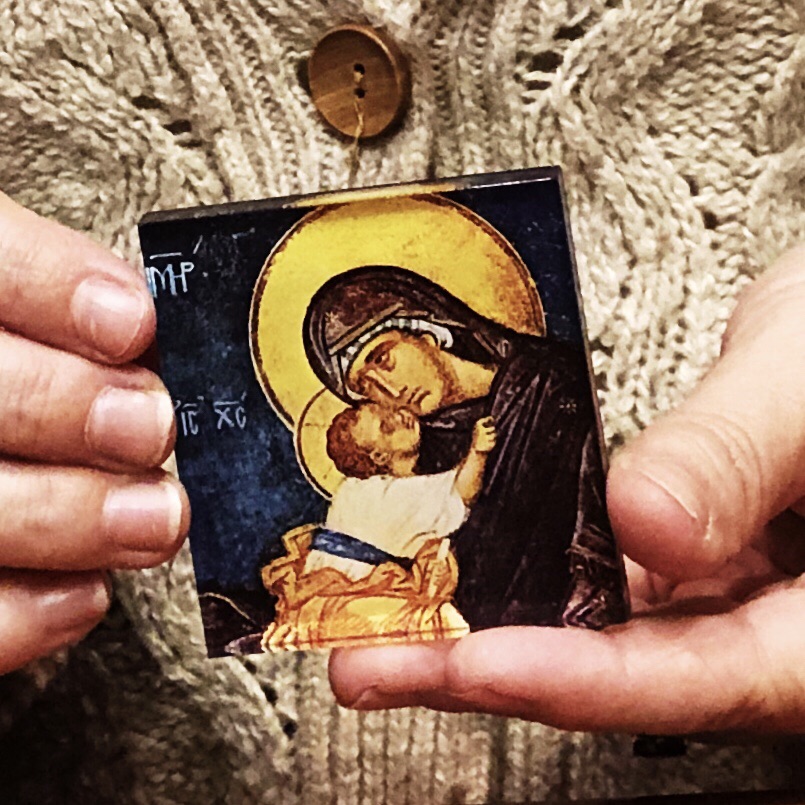
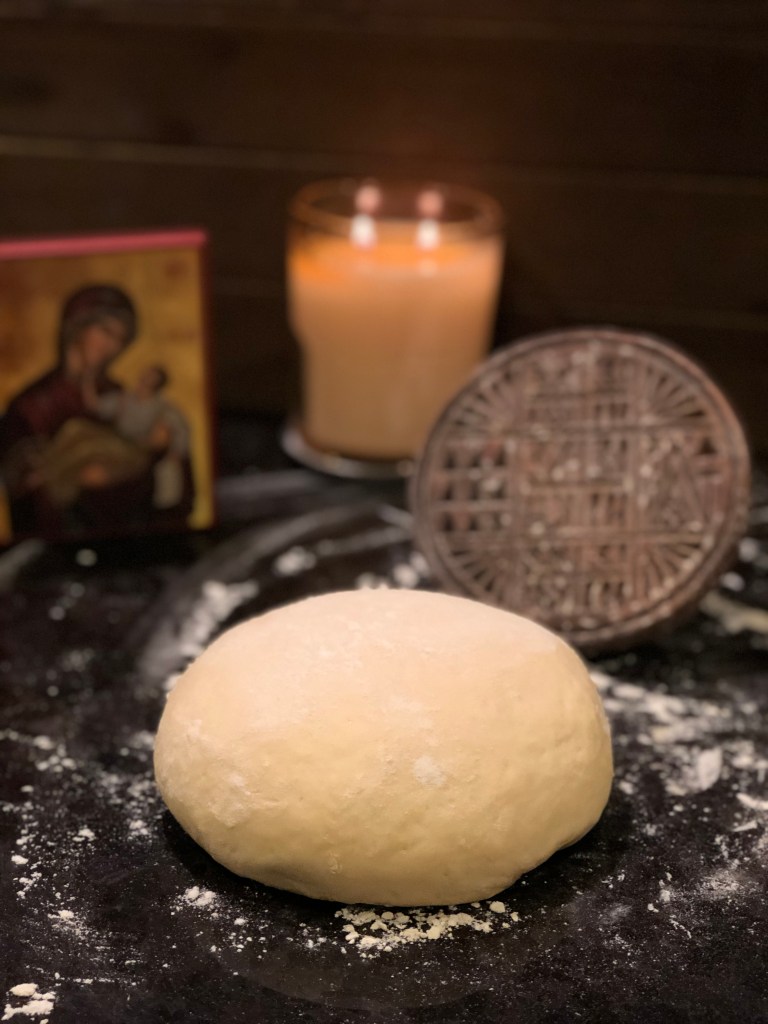
Did you know that September 1 is the beginning of the of the Orthodox Church liturgical year? It is customary in some traditions to place an icon on our doorstep on this day.
It is a beautiful tradition : the ushering in of the Gladsome Light of a new year of Grace.
Just as the sun rises each morning the faithful rise again in this new year to walk with Christ though a new “but same” Liturgical cycle. We walk through the Feasts of Christ, the Theotokos and the Saints, the daily cycle of readings and all of the Sacraments.
When people ask if we are born again, every Orthodox Christian should actually proclaim,” YES!! ” I am a born again Christian!!
Because, as we walk sacramentally through life, living Liturgically and sacramentally to the best of our ability, we are always being reborn at each step… with each Confession, Eucharist, celebration of a feast, and even as we place an icon of the Theotokos on our very doorstep. We invite Grace into our lives.
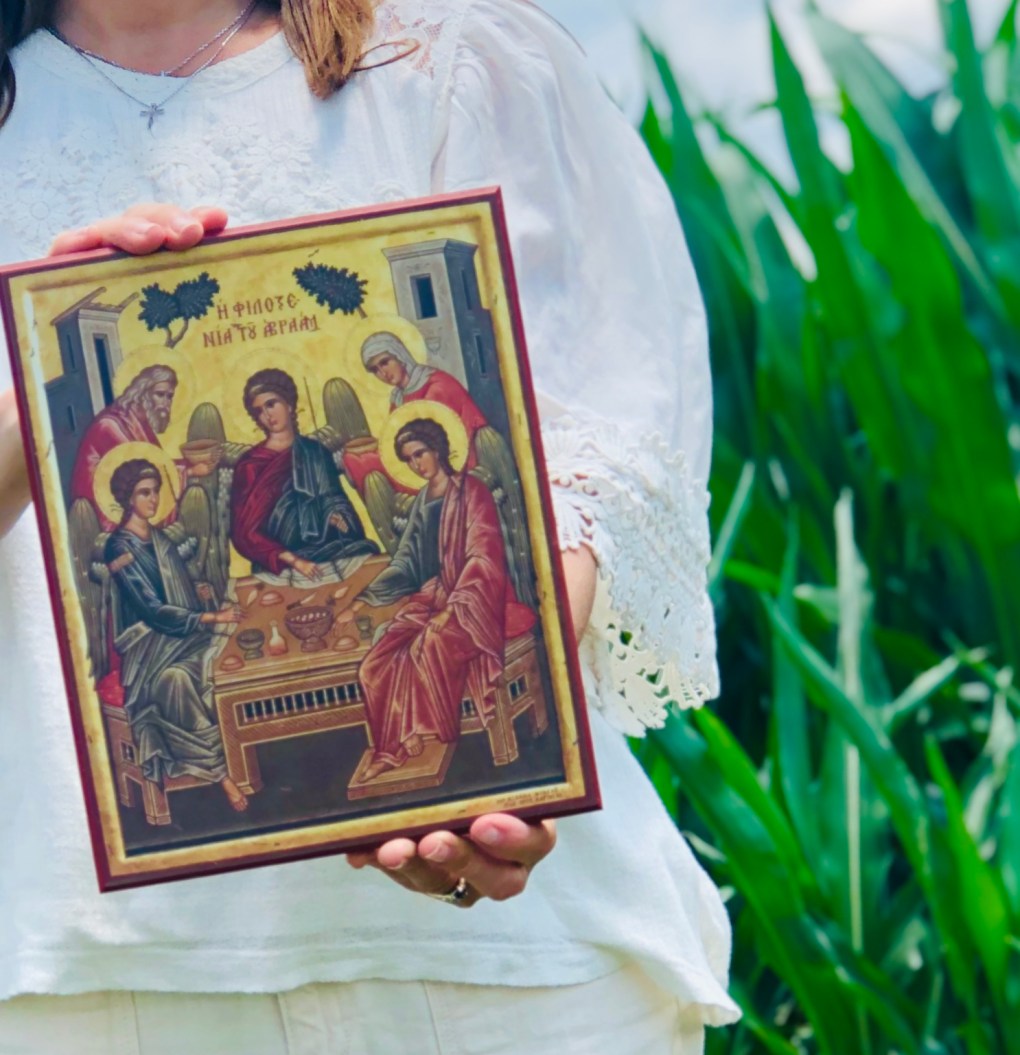
Placing an icon on the threshold of the home on this day reminds one of many things. For our family this year it is to recall always the intercessions and protection of the Theotokos. We also remember hospitality :: to love our brother as ourself; being “not forgetful to entertain strangers: for thereby some have entertained angels unawares.” (Hebrews 12:2)
Like breaking bread, our traditions unite us together. A recommitment to offer our lives to Christ and quite simply an physical manifestation of remembering Christ in our daily lives.
Monastics say, the soul follows the body.
They also say, Remember Thy First Love – that is Christ.
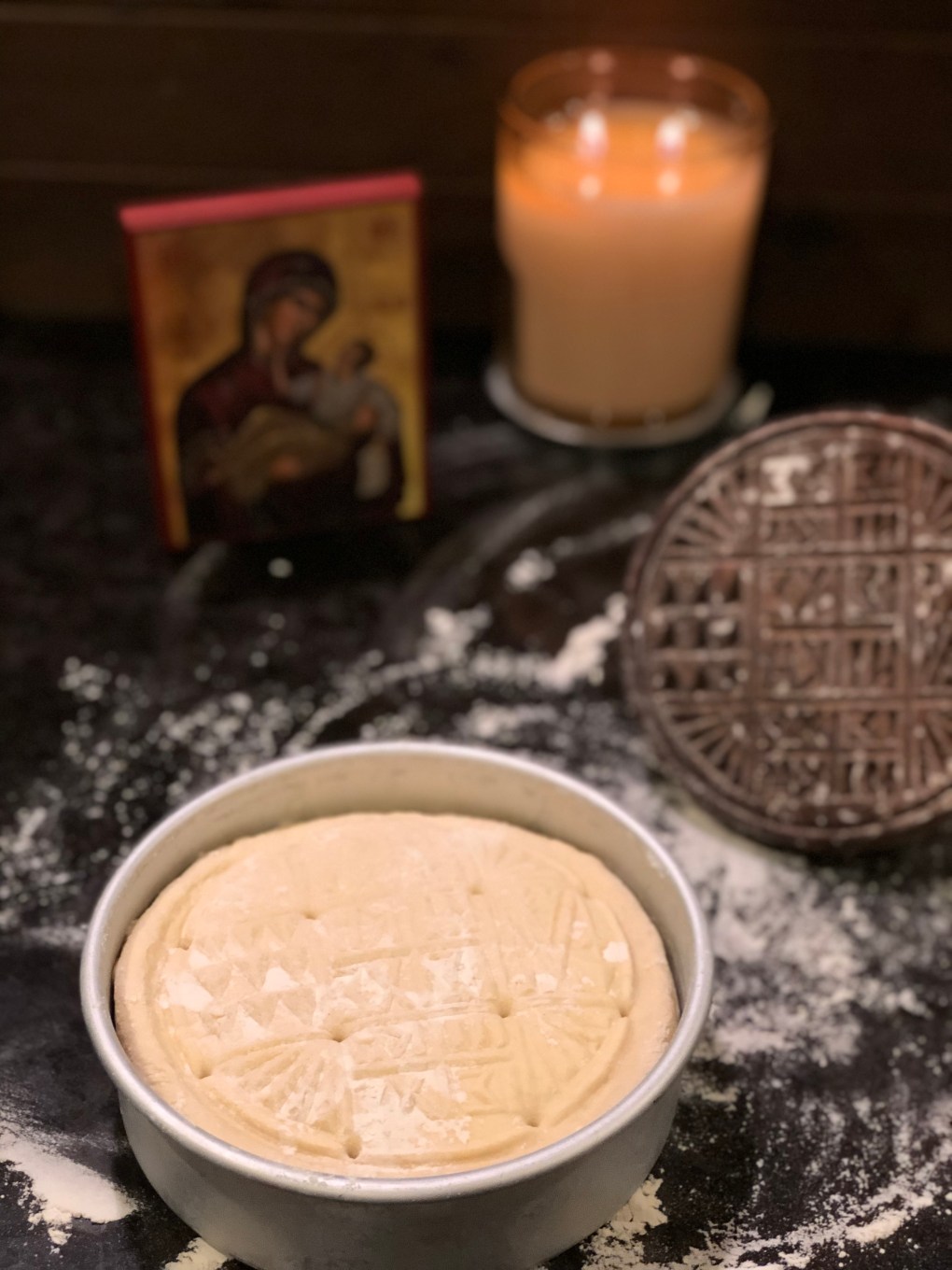
The secular world ties strings on their fingers to remember something important. The Orthodox faithful wear prayer ropes, place icons on our doors, sprinkle holy water through out our houses, anoint ourselves with Holy Oil and drink Holy Water along with prayer in time of crisis or need, we bake delicious faith based traditional breads and sweets that we share with family and friends and distribute to the poor.
We whisper the Jesus Prayer when we awake or can’t dleep at night, rather than count sheep.
And so, we might cross ourselves when we pass a Church, or cross ourselves when our children partake of the Eucharist and even when we yawn during a service – in this way- in some small measure we seek to remember Christ and offer all of ourselves to Him, and stand in the eternity of kairos, if but only for a second.
Of course, that happens most fully when we are in Church – partaking of the Eucharist, but when we leave we live in the Liturgy outside the Liturgy (Father Alexander Schmemman) and we bring Church into our lives. We bring our love of Christ into our every day lives, not just Sunday.
Recently I was struck in reading Deuteronomy
You shall love the Lord your God from your whole heart, from your whole soul, and from your whole power. So these words I command you today shall be in your heart and in your soul. You shall teach them to your sons, and shall talk of them when you sit in your house, when you walk by the way, when you lie down, and when you rise up. You shall bind them as a sign on your hand, and it shall be immovable before your eyes; and you shall write them on the doorposts of your houses and on your gates.”
Deuteronomy 6:5-8
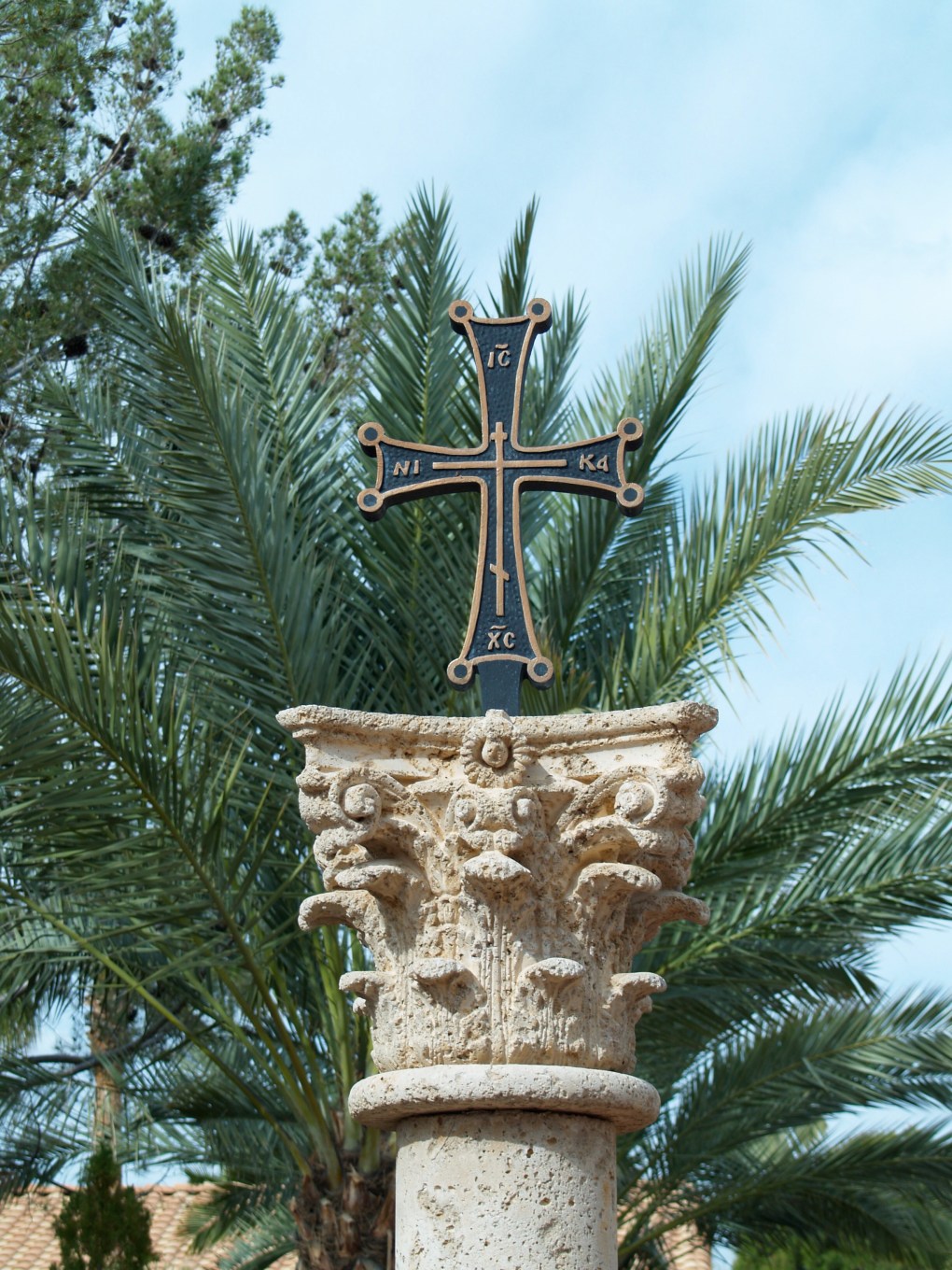
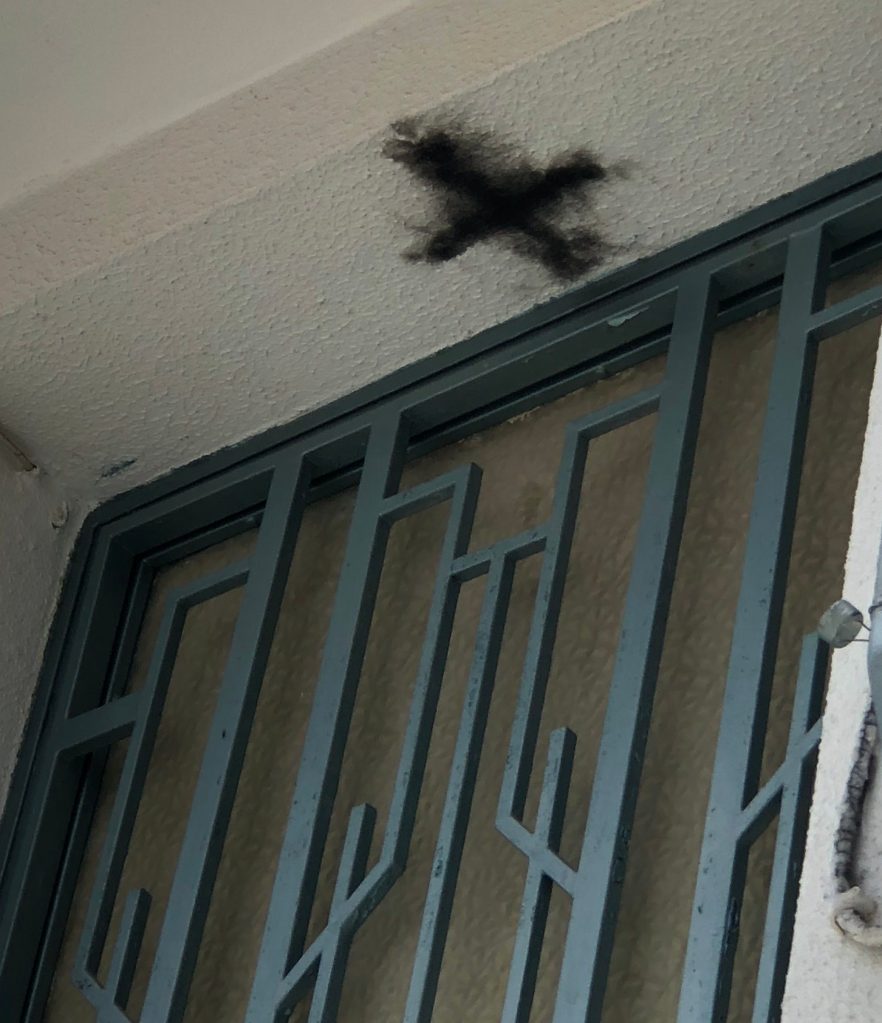
It reminded me of the Cross we burn onto our door thresholds at every house blessing.
Orthodox Christians express our faith in very tangible, open ways expressed our every day life. This will take many manifestations – certainly the most of which is that You shall love the Lord your God from your whole heart, from your whole soul, and from your whole power
Certainly, its also important to say that no tradition ever overshadows the Sacraments of our Faith. And one can live their whole life never practicing the little “t” traditions and honestly that is totally fine – or you totally forget some years, or just are overcome by events…. look – nothing bad is going to happen and so one has to be wary of superstition.
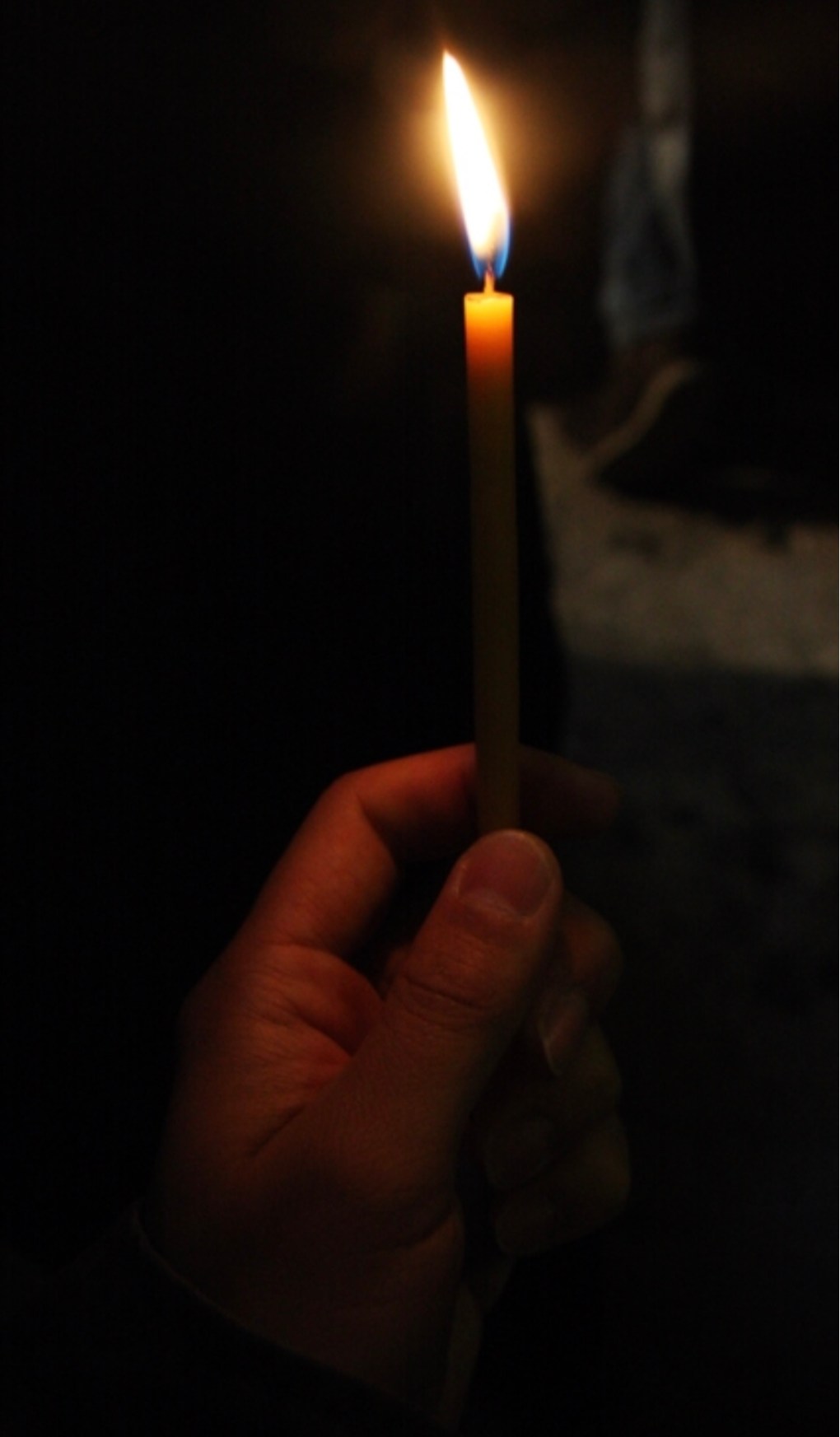
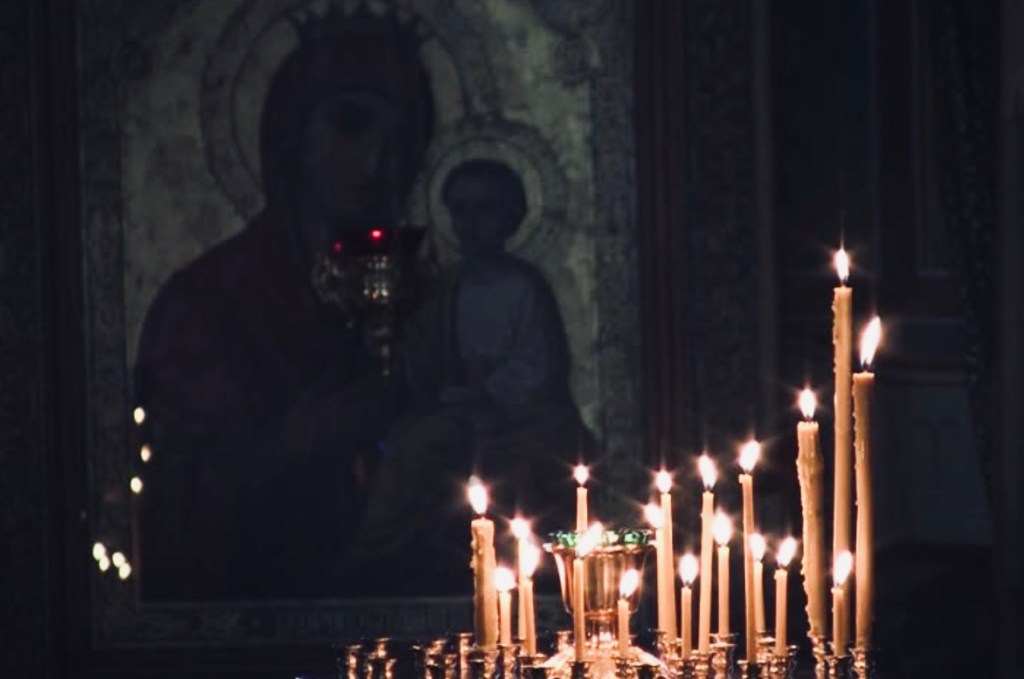
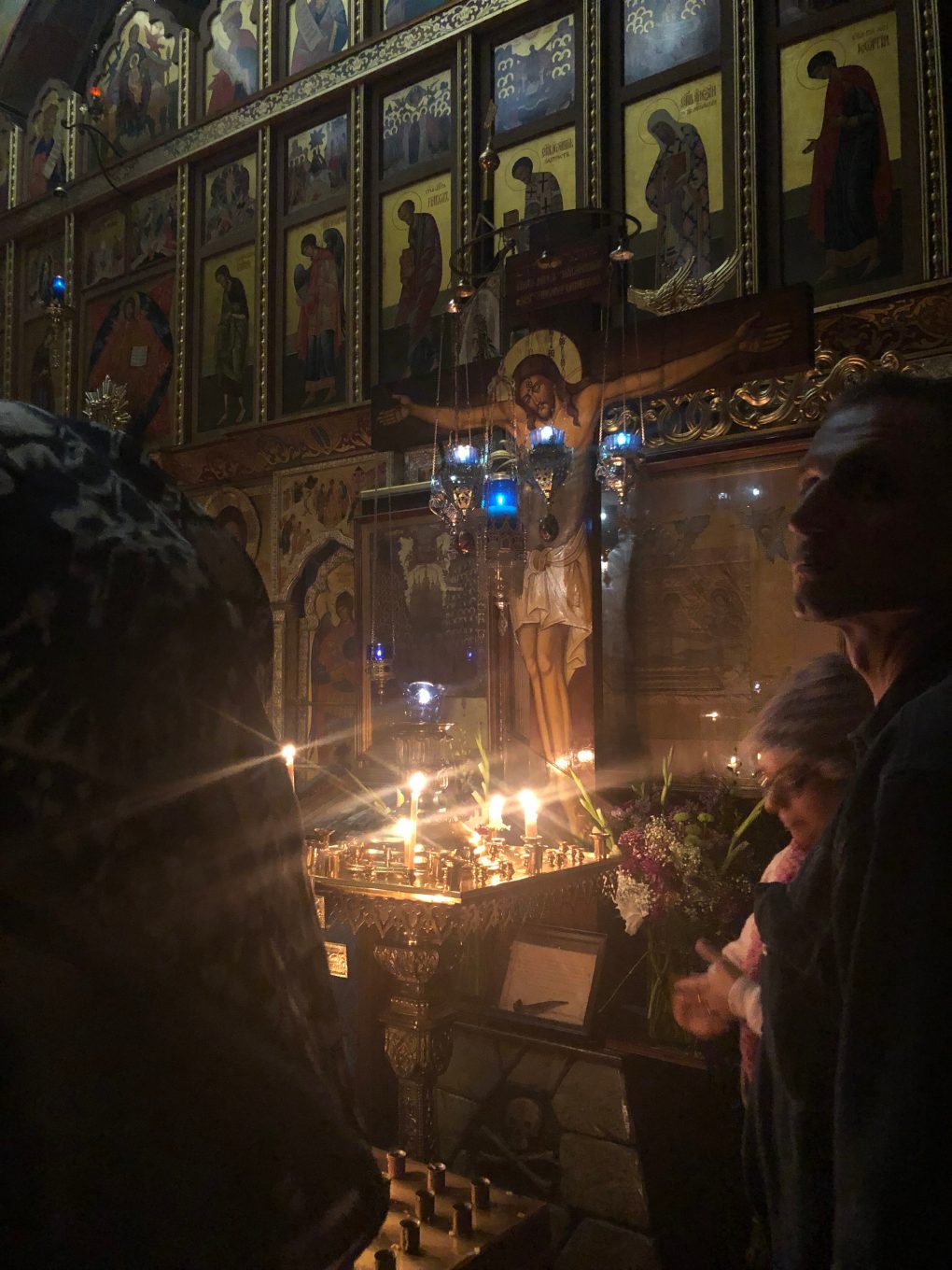
The point is our faith is real, tactile and sensory – Overflowing from the silent depth of the heart and lived openly – but quietly, like the silent vigil candle or the sweet smelling incense lighting sweet fragrance in our icon corners (a place set aside for prayer within our home).
These little ways, help us sanctify our days and time and together with one voice and one mind – as the body of Christ – we walk boldly and in humility through the seasons of the Church year. These ways quiet and calm the restless bombarded soul of the modern world. A balm of needfulness and moments set aside.
We remember the “yes” of the Theotokos as we seek our own “yes” to Gods Will throughout our own ordinary regular lives.
And so it is an absolultey beautiful tradition to place an icon of the Theotokos on our doorsteps today – ushering in the stable rhythm of the Church as we offer the bread of our hearts, the bread of our lives, as an anaphora – through the many the seasons of the Liturgy of our lives.
It’s also an invitation to Grace – an open door… like that popular Christian song on the radio by Francesca Battistell “Holy Spirit” you are welcome here.
Little “t” traditions are not rote or meaningless but a reflection and movement and outpouring of the heart.
There are times when it’s so easy to dwell my mind not on Goodness but many other things. Some years I don’t even remember to put my icon at the door till the end of the day… others I’ve forgotten all together. And honestly – that’s okay! The thing is that these little ways are little reminders.
Especially in our busy world- everyday brings a myriad of distractions and many of them entirely necessary and of course women have a million lists in their head – like what does this child need, how am I going to be in three different places at once, getting dinner ready, doctors appointments, back to school nights, youth group serving the soup kitchen, getting off time from work for my kids softball games, etc etc
One day in this country we will have incorporated these traditions and organically begun our own as an expression of our faith. My encouragement to all is to look beneath the surface of our traditions – my experience of them is that they orient us to dwell our mind on Christ in little ways – throughout the day, throughout the week, throughout the year and throughout our lives.
These little momentary ways of blessing are little ways of respite – moments directed to God.
We seek Eternity in the midst of the temporal. We seek to be mindful of not just what us important but what is needful, that there is a deeper fabric and thread to life than just what is on the surface.
We express that yearning in many ways – just one of which is to place an icon of the Theotokos on our footsteps inviting a new Season of Grace and you in.
Pure prayer is not the personal property of monks or a small group of individuals. It is for everyone, it is the one activity that is the most fitting to the human person. Every human being is called to the wedding feast of the Lord, and thus every human being lives in order to practice pure prayer. It is the most simple practice or activity that a person can undertake. Of course, it is another matter entirely if a person has become accustomed to allowing his mind to wander about and be tyrannized by thoughts, so that when he turns to prayer, he does so with a head filled with distractions and thus can not engage in pure prayer.
Elder Aimilianos of Simonopetra Monastery
The Mystical Marriage : Spiritual Life According to Saint Maximos the Confessor
There are moments in life when you are not able to make a wish, because speech ceases and then you feel the need to express yourself only through prayers and blessings.
A few brothers who had lay persons approached Abba Felix and begged him to say a word to them. But the old man kept silent. After they had asked for a long time he said to them “you wish to hear a word,” they said “yes Abba”. Then the old man said to them “there are no such words nowadays. When the brothers used to consult their elders, and when they did what was asked of them, God would show them how to speak. However now, because they ask without doing that which they hear , God has withdrawn the grace of His Word from the elders, and they do not find anything to say, because there is no longer anyone who carries out their words.” Hearing this the brothers groaned, saying “Pray for us Abba”
A word spoken from the heart of the hermit as from the Holy Spirit, in the language of the desert, is considered real and authentic; and the one who requests it, receives it as the fruit of Grace without elaborating on it in his mind. This “word” from the spiritual father is absolutely necessary for the one who asks. The “word” comes from a soul which is the friend of God, Wounded by the love of God, and is spoken in accordance with the measure of the “thirst” of the one who asks.



 gladsomelife.com