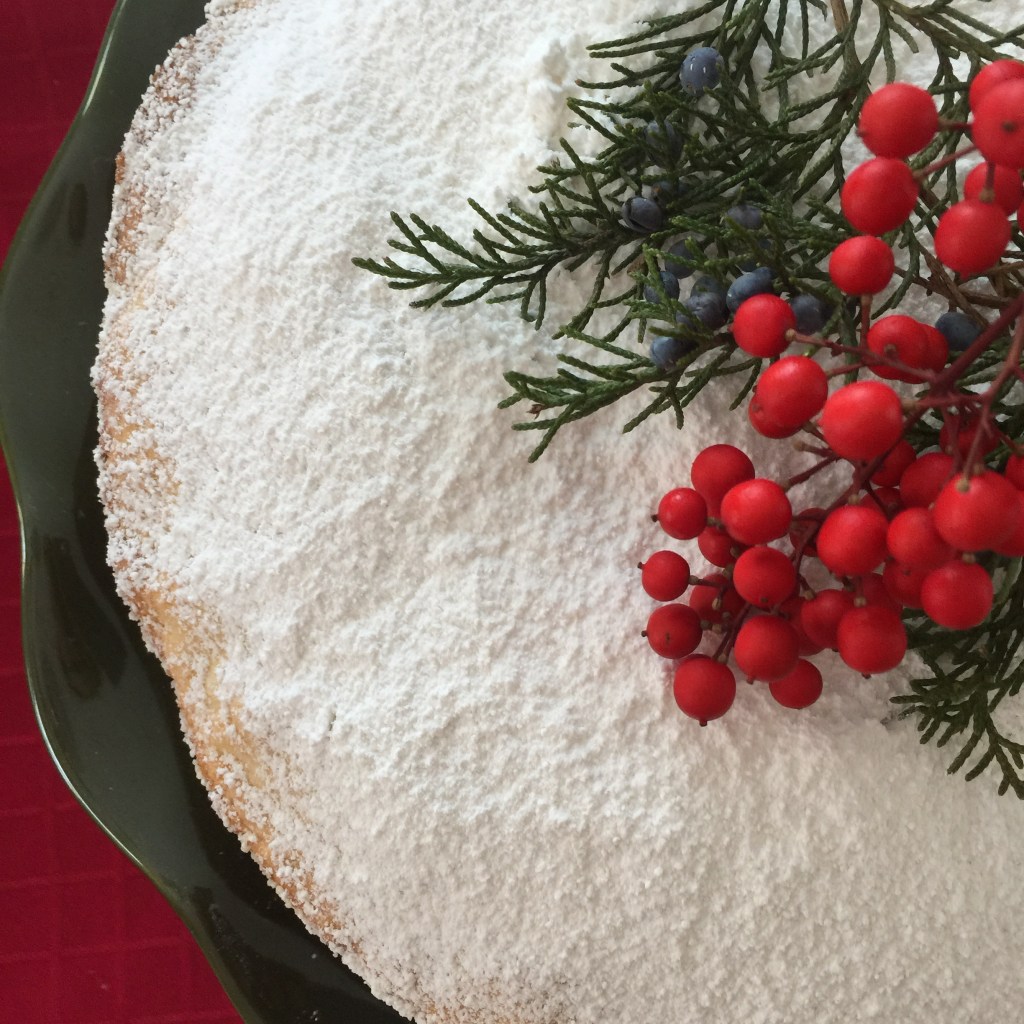

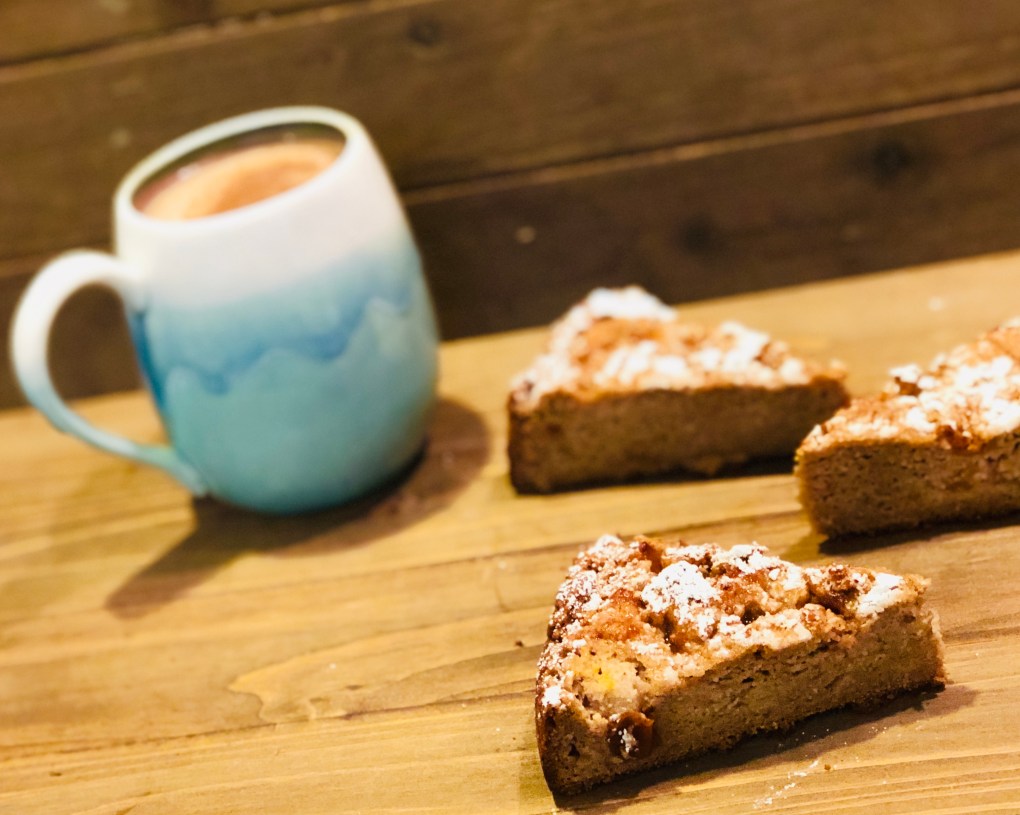
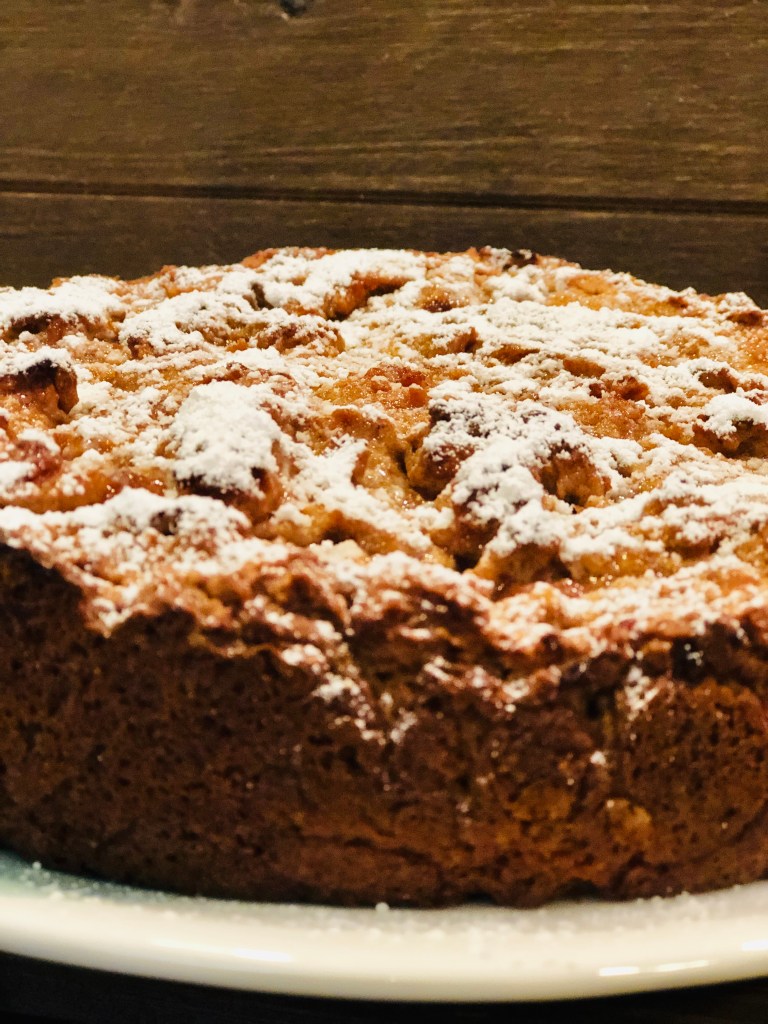
Phanouropita {gluten-free}

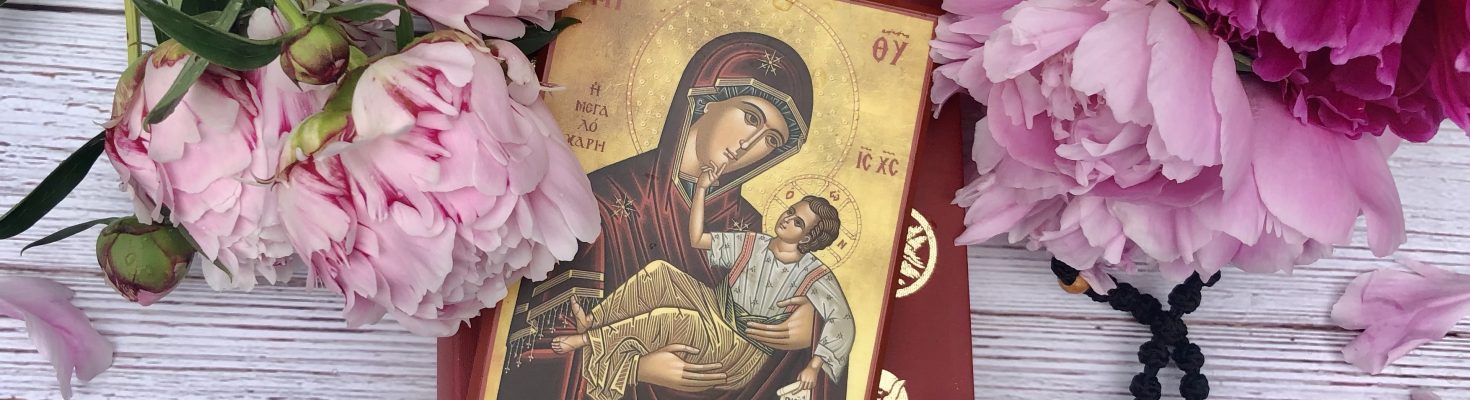
On August 27th we commemorated Saint Phanourious and it is customary in many parishes to bake a special cake to bring to Church for a blessing. Some traditions hold that we bake the Phanouropita and distribute it to the poor. Any time we ask his intercession and receive it is also an occasion to bake the bread and bring it for a blessing.

The name Phanrourios means “I reveal”. Through the centuries he has become an intercessor for lost and found things… and so some refer to him as the Saint of lost and found. So if the faithful ask for his intercession and their lost item appears, then it is custom to bake the sweet bread, bring it to Church for a blessing and distribute it to the poor.

Tradition holds that Saint Phanourios mother lived a terrible life and was not a Christian. When Saint Phanourios was martyred he also prayed for his mother. That it why, the faithful also pray for the mother of this beloved Saint… centuries after his repose and hers. And so we co-labor with this Saint in asking intercession for his mother, a woman whose name we do not know – “the mother of Phanourios”.

Several of us in this family have a gluten intolerance, and so I have begun the process of converting many of my traditional recipes, like this one, to a gluten free version. If you have a gluten sensitivity, then you know how bad you can feel after eating it. You also know how challenging it can be when you are in community settings and there is no option for you. Food forms community and social bonds – to break bread with one another binds us together. Having said that, I will say that my non-gluten endeavors do not apply to Prosphora – which I truly believe does not believe needs to be gluten free. The Eucharist is truly the Body and Blood of Christ. Alcoholics part-take without issue, and I have never heard of anyone partaking who has a gluten allergy that has an issue either…

So, here is the recipe….
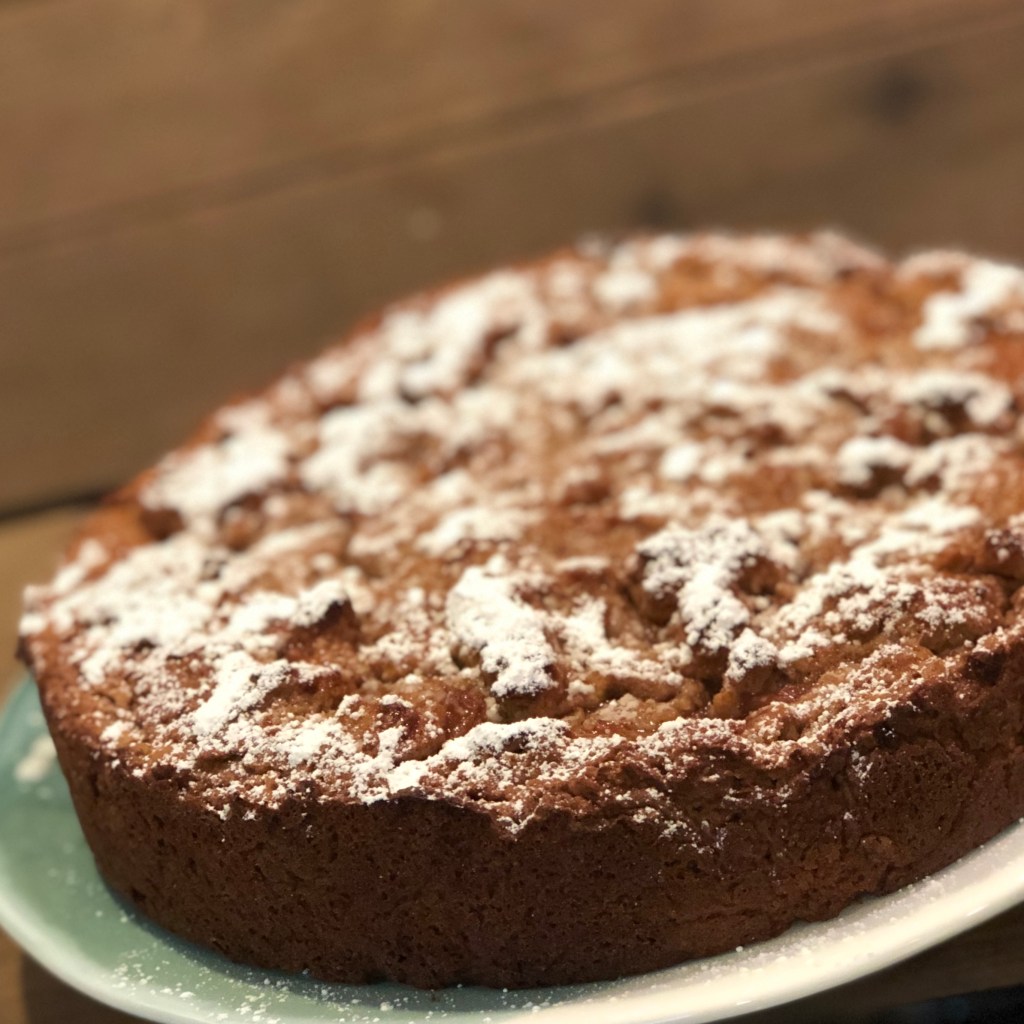
Recipe for Phanouropita

WET INGREDIENTS

  1. 1 can coconut milk (not cream of coconut)
  2. 1 1/2 tsp apple cider vinegar (or lemon juice)
  3. 1/2 cup unsweetened applesauce
  4. 1 tsp pure vanilla extract
  5. 1/4 cup honey

DRY INGREDIENTS

  1. 2-1/2 cups almond flour (I prefer Bob’s Red Mill)
  2. 1 cup gluten free flour : I prefer King Arthur or Bob’s Red Mill
  3. 1 scant cup arrowroot flour (Bob’s Red Mill is a good brand)
  4. 1 1/2 tsp baking powder
  5. 1 1/2 tsp baking soda
  6. 1/2 tsp salt (optional)
  7. 2 teaspoons cinnamon
  8. 1 teaspoon cloves
  9. zest of two oranges

Instructions

  1. Preheat oven to 350 degrees F (176 C) and lightly grease one standard 8-inch round cake pan, with butter or coconut oil and dust with gluten-free flour. Shake out excess and set aside.
  2. In a small bowl combine coconut milk and vinegar. Let set a few minutes. Then add applesauce and vanilla and honey. Whisk/stir to combine.
  3. Add dry ingredients to a large mixing bowl and whisk to combine and get out any lumps. Add wet ingredients to the dry ingredients and mix until well incorporated and no large lumps remain. The batter should be thick but pourable. Add more almond flour if too wet or dairy-free milk if too thick.
  4. Pour batter into the prepared pan and place in the oven for approximately 35-40 minutes or until a toothpick inserted into the center comes out clean and the edges and surface appear golden brown.
  5. Let cool 15 -20 minutes so the sides pull away from the pan. To remove, run a dull knive around the edges toloosen the cakes. Then place a plate or cooling rack on top and quickly invert.
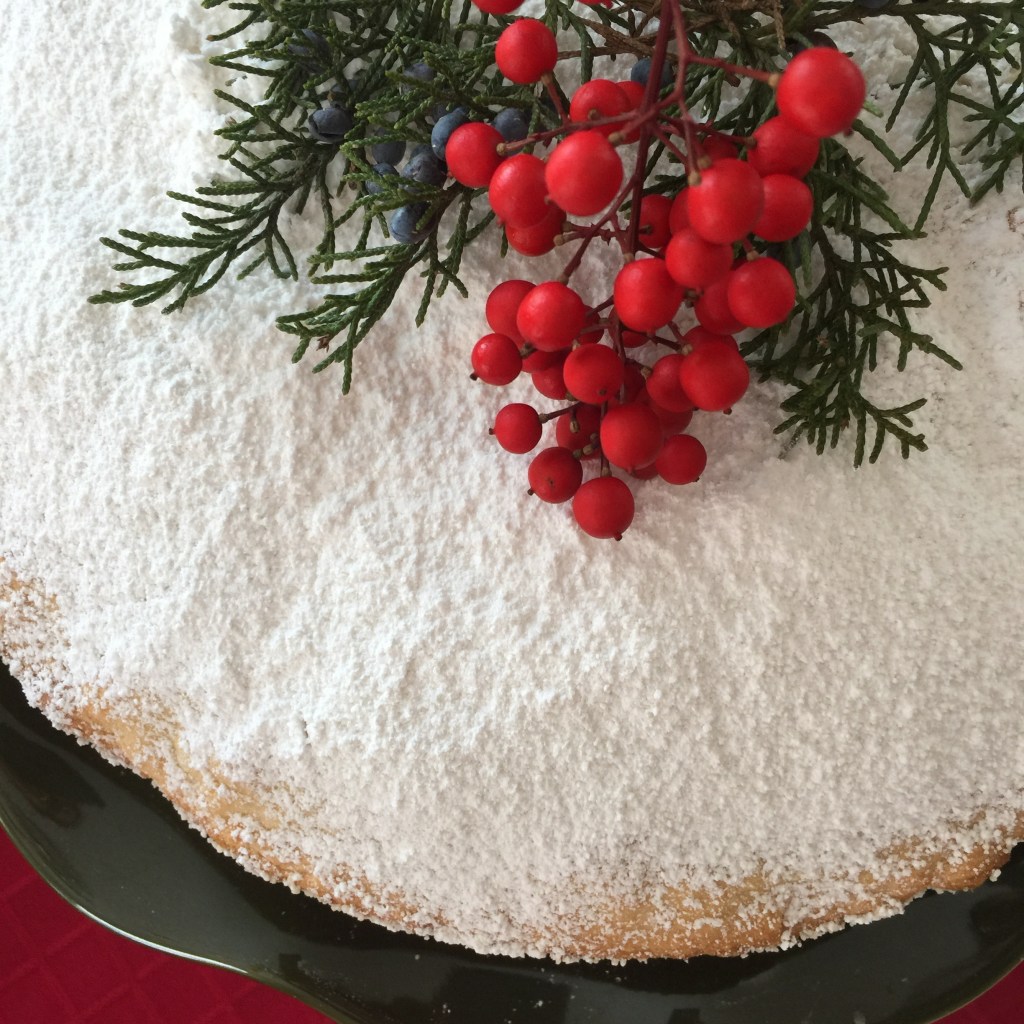
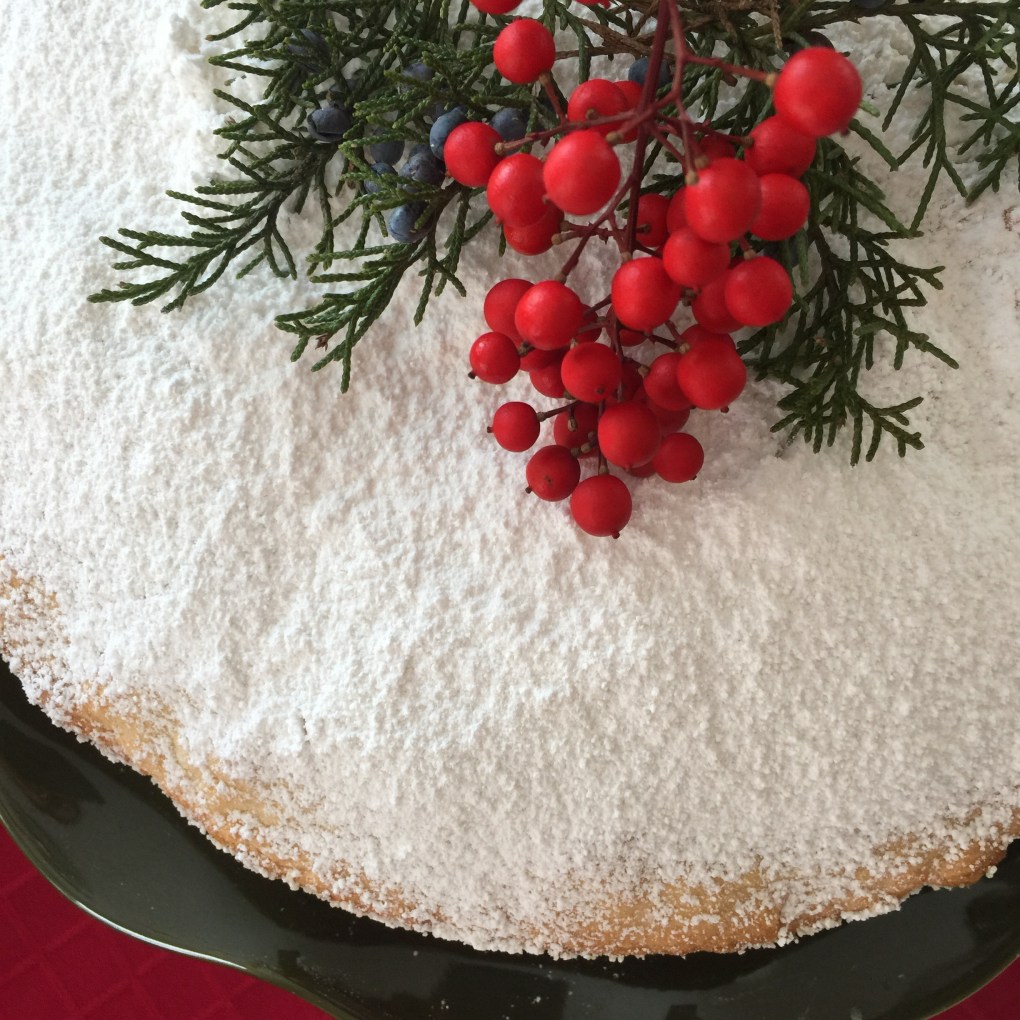
  6. Let cool completely and dust with powdered sugar.
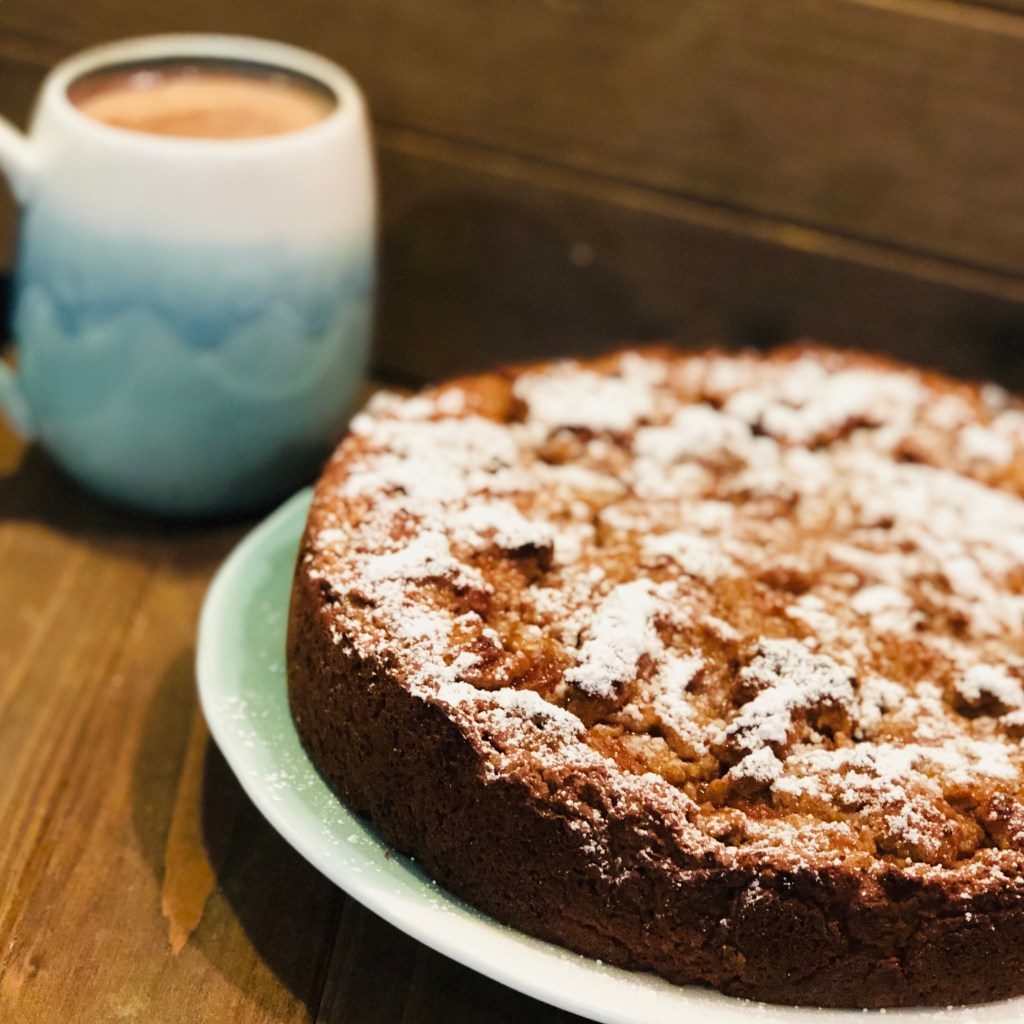
Additional reading about this beloved Saint may be found at the links below.

Homily by Father Josiah Trenham about Saint Phonorious and the Richman
The Life of Saint Phanrourios

Orthodox Church of America

Traditional Recipes for Phanouropita can be found in these links:

John Sanidopoulos

Saint Nicholas Russian Orthodox Church

Serious Eats


sweet bread of basil

IMG_9906

Everyone as he is able, should try to heal (with kindness) anyone who has something against him.

Saint Basil the Great

The Fathers Speak (p. 55)

It is a cherished tradition bearing the leaven of hope toward the coming year and the further redemption of our time here, in Christ, that Orthodox Christians bake this sweet bread of orange and lemon to ring in the new year.

The bread is called vasilopita which means the sweet bread of basil.  It’s namesake is a humble holy bishop Saint Basil the Great whose heart compelled him during a time of famine  to help the poor.  It was a time of merciless and unfair taxation.   The Bishop confronted the emperor who had levied the tax, calling him to repentance for the harsh burden he placed upon the people.

Amazingly, the emperor did repent and he returned the gold and jewelry that had been taken from the townspeople.  Basil and the villagers offered thanksgiving prayers after which the Holy Bishop  commissioned women to bake and place the gold coins into a sweet bread which were then distributed.  Miraculously each family found in their bread, their own valuables which had been collected as part of the taxation.

Today, the vasilopita is baked in memory of that miracle forged by God and Saint Basil’s faith, love and shepherding of his people.  Each year on January 1st– the date on which St. Basil reposed in the Lord , Orthodox Christians observe the tradition of the Vasilopita.   The recipient of the coin is considered especially blessed.

This is the first year our family has ever made the vasilopita.  There are many regional variations to the bread, yet a taster will find that all of the recipes are sweet and authentic!

This particular recipe is adapted from my “go to” Greek Cookbook by Aglaia Kremezi The Foods of the Greek Islands.  She gives a rich history of her recipes and I appreciate her anecdote that butter and eggs were luxuries in Greece during times past.   What I love about the old way of Greek cooking is that by using the brandy the texture of the flour totally changes into a nice bread texture.  There is no yeast in this bread, instead the brandy adds to the leaven quality of the dough.

Vassilopita

Ingredients

  • 4 large eggs, separated
  • 1 cup sugar
  • 12 tablespoons melted butter (1-1/2 sticks)
  • 1-1/2 cups orange juice
  • 1/2 cup brandy
  • 4 cups all purpose flour
  • 4 teaspoons baking powder
  • 1/4 teaspoons baking soda
  • grated zest of two oranges and two lemons
  • whole blanched almonds and /or powdered sugar to decorate

Recipe

Preheat oven to 375F.

Grease a 10 – 12 inch springform pan

In a large bowl beat egg yolks, zest and  sugar (this releases the essential oils from the zest) for about three minutes.

Add butter and beat for an additional minute

Add orange juice and brandy, beat until it is incorporated.

Whisk the flour, baking powder and baking soda in a separate bowl.  This makes sure that you will not have any clumps of the baking powder and baking soda but that it will be totally distributed.

Add to the liquid  mixture and stir until incorporated.

In separate bowl (I actually use a mason jar with a hand held electric stick mixer so that it does not splatter everywhere) whip the egg whites until soft peaks form.

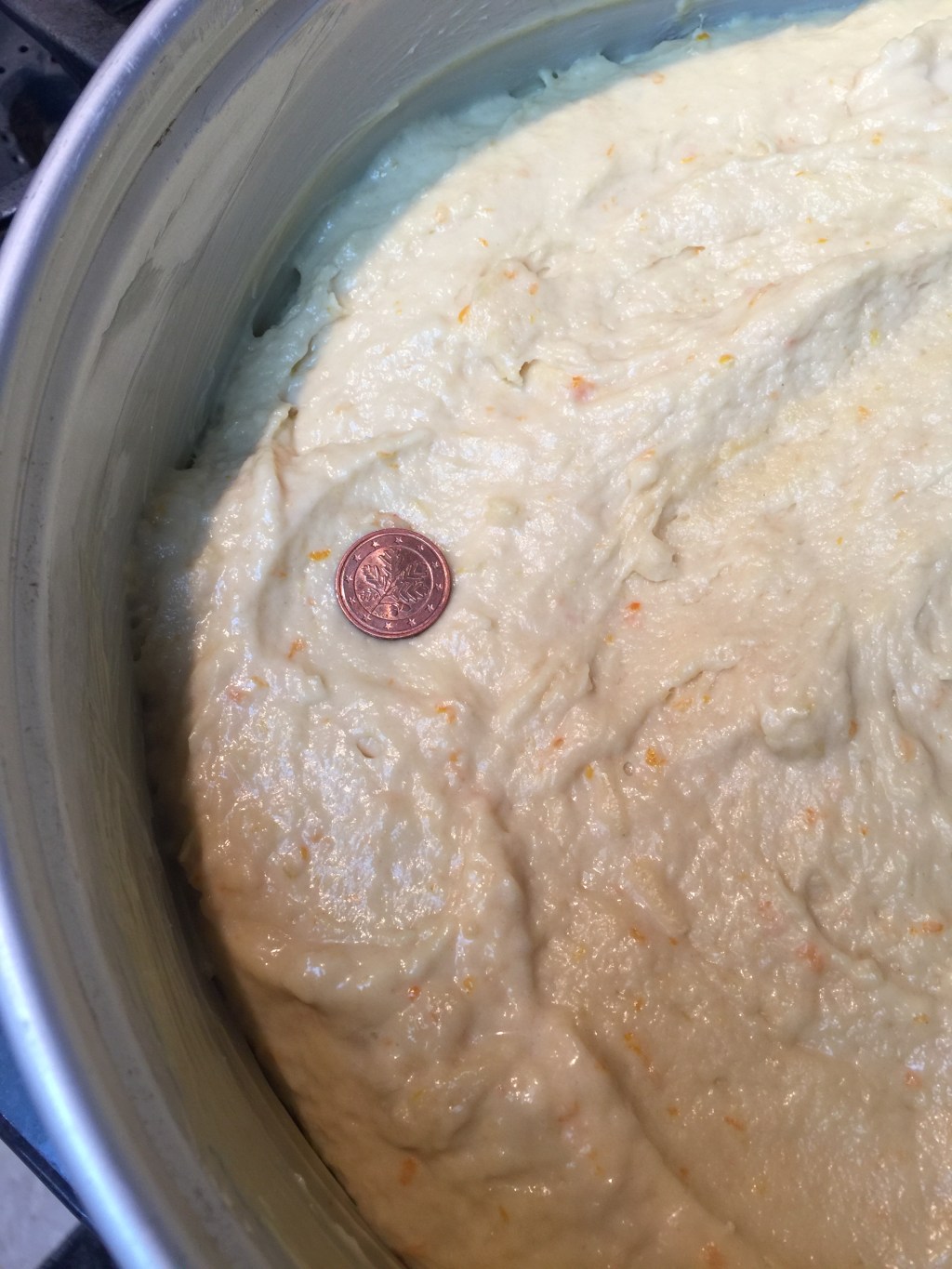
Fold the egg whites into the batter.  Pour batter into the greased springform pan.

Place clean coin (my daughter found a euro coin for one and a dime for another)

Bake for 45 minutes to an hour until gold brown.

Decorate with almonds and/ or powdered sugar.

IMG_9904
IMG_9907

May we all be especially blessed in the coming New Year!