seasonal eating

seasonal eating

It is a struggle in a prepackaged world with jets and ocean liners bringing everything we can possibly desire from the four corners of the globe right into our little community.  Whereas the local harvest is selected at the peak of ripeness, it’s conventional counterparts are picked well before maturity and prior to maximal development of nutrition and flavor.

Calorie per calorie seasonal local produce outmatches its conventional cousins in nutrient density – and that’s just for starters.  This nutrient density is essential for vibrant optimal health.

Seasonal eating is a subtle ~  and to be honest – difficult at times – asceticism yielding patience.  The satisfaction of what nourishes us presently, along with the patience of the anticipation of the delicious nourishing foods of the next season…It is the patience that a connectedness to our landscape fosters.  At the moment our table is laden with lots of squashes, broccoli, cabbages, cauliflower and beets.

Despite cool weather, winter gardens can yield a bounty!!   They are also a traditional way to add sustainability and some distance from the industrial food chain into ones diet!

Plotting a little Victory Garden in your back yard is easier than you might think!

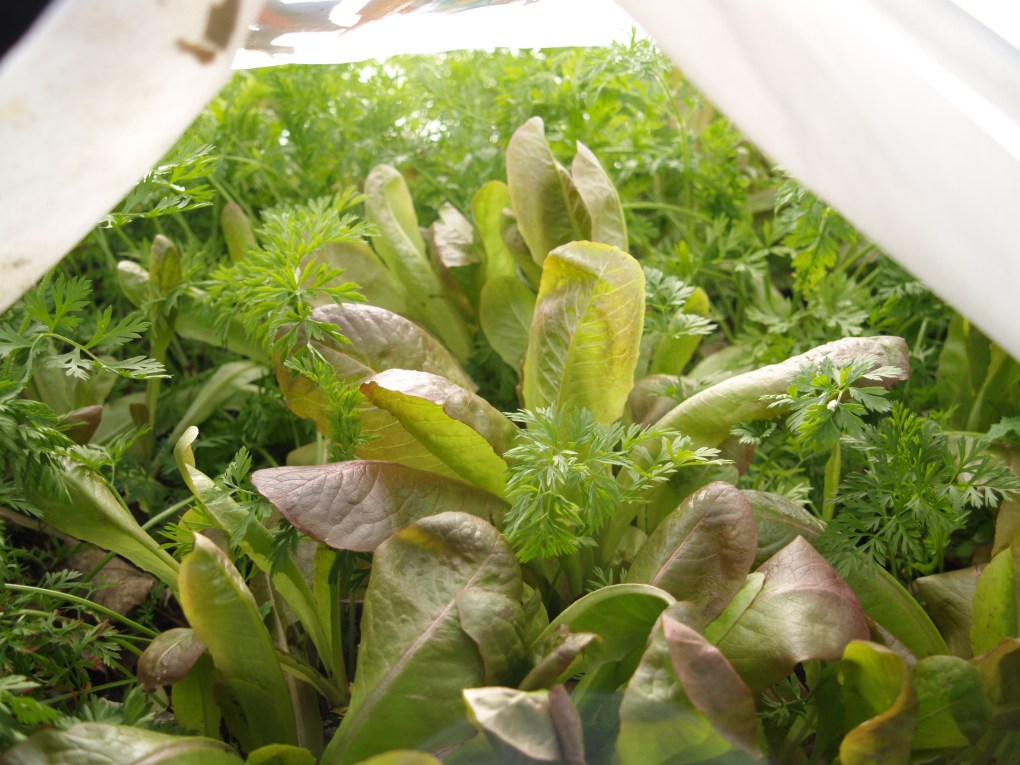
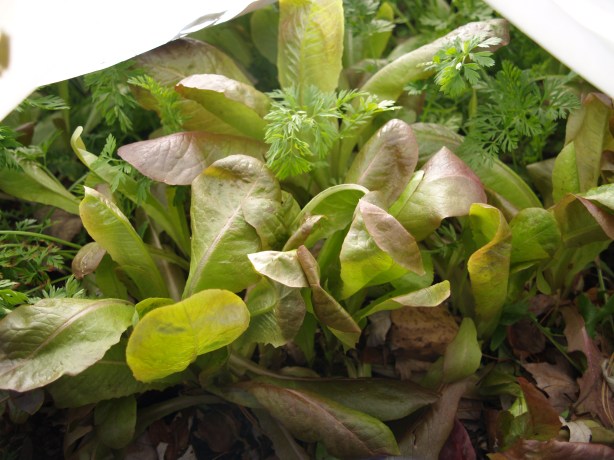
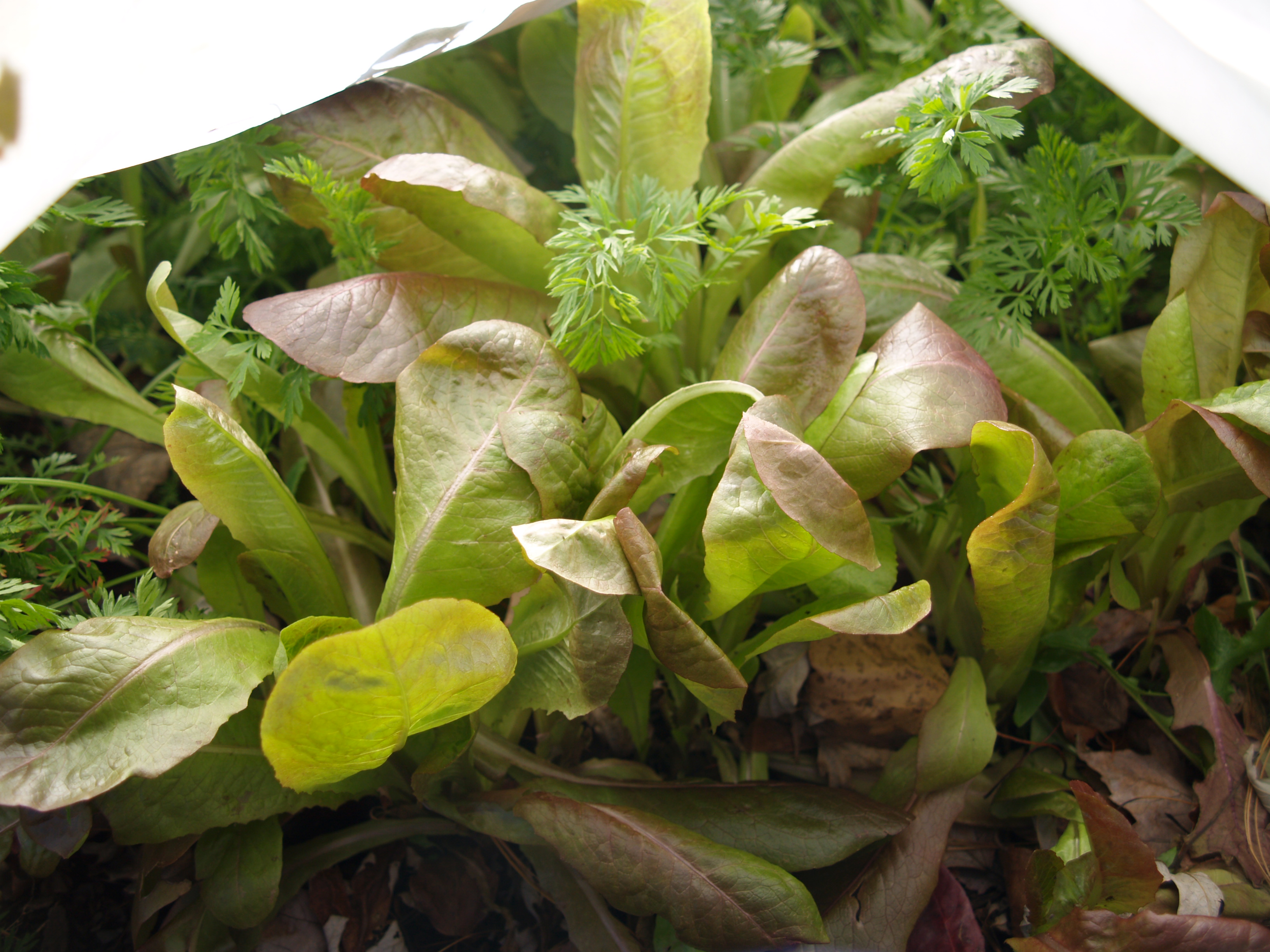
Although it is January in Virginia, there are kale, lettuces, carrots and fennel growing quite nicely in this Victory garden!  Not quite enough to feed the entire family, but a great supplement to our meals!

victory garden – under cover – winter carrots and lettuces

victory garden – under cover – winter carrots and lettuces

Our eggs, meat and dairy are local, all within 300 miles of home.  With the help of a little Victory Garden, local Winter CSA’s and our community market, enjoying the bounty of our local food shed despite winters chill, is a reality.

Depending where you live, winter is likely a time of scarcity.  When unable to find food from your own state, try to stay as close to your own geography as possible.  Our first choice is from our tri-state area, and we venture out from there, trying to stick with the eastern seaboard.  That said, if we want oranges, we chose those grown in Florida rather than California.

Once we tire of our winter vegetables which are remarkably sweet if you can rustle them up locally, the harvest will be over, and we will again begin to savor the first spring vegetables – which cleanse the body and coincide with the beginnings of Great Lent ~ which cleanses the body and the soul.

Whole foods and seasonal eating ~ good for the local farmers, our pastoral responsibilities to our land and the nourishment of our bodies…

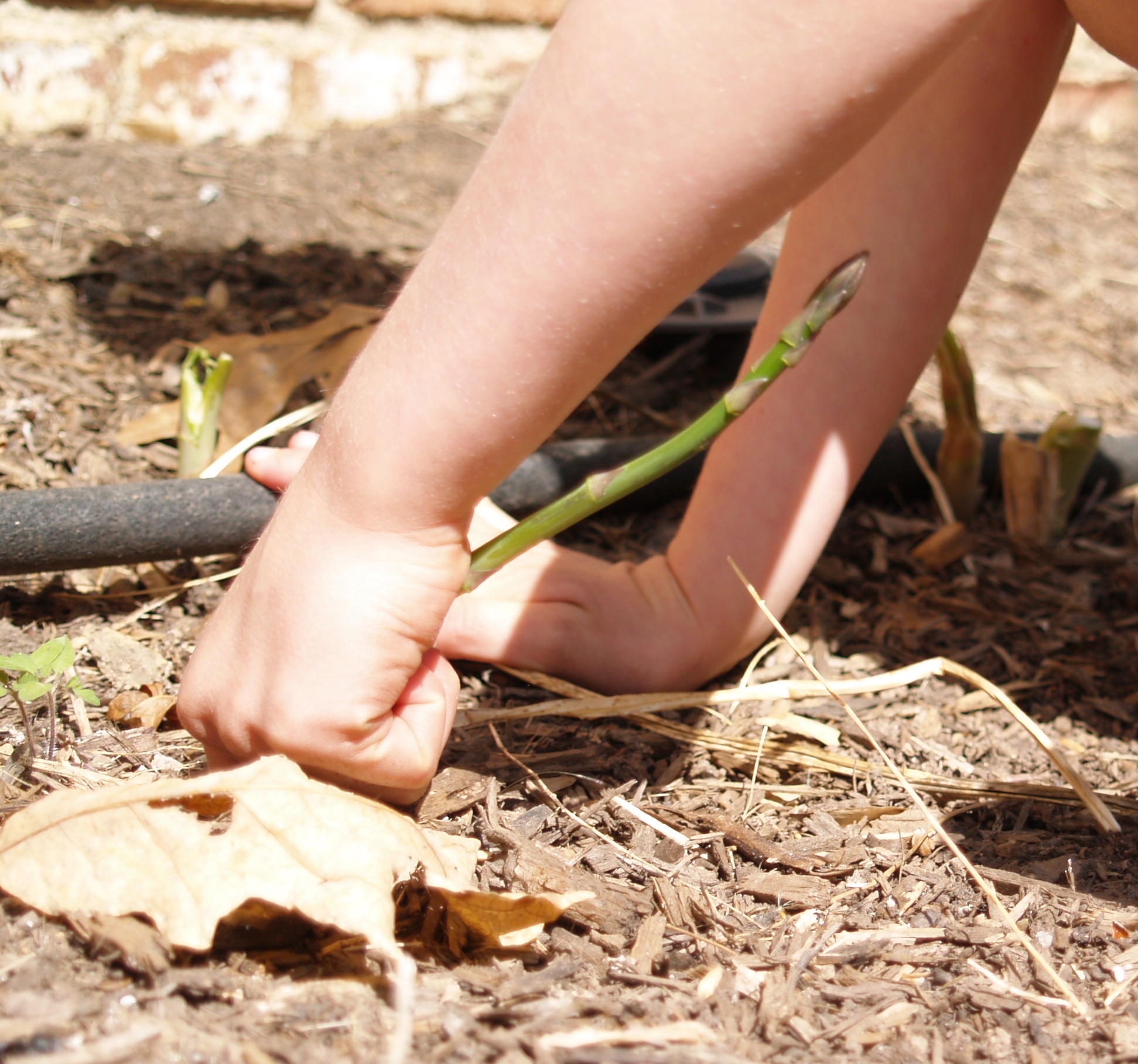
tiny hands with an asparagus snack

tiny hands with an asparagus snack


reprinted – originally posted January 2013


edible-fall

seasonal eating ~ edible-fall

Today there is a resurgence of folks trying to eat within the boundaries of their local geography and with good reason : local, seasonal food, prepared and eaten properly supports vibrant health and energy and is sustainable for the earth.  The thing is, it’s easier to accomplish during the long warm days of summer – when the harvest is plentiful and bringing it to the table is as simple as a trip to the farmer’s market, local market or your own backyard.

Seasonal cooking takes effort but with an adventuresome palette – a willingness to experiment – you can make your meals a seasonal thanksgiving of your landscapes harvest.  It’s simpler than you might think!

In our area of the mid-atlantic, the early days of September have already begun to melt away the lingering rays of a hot and lazy summer.  The fresh morning chill settles in overnight heralding the first days of autumn.  Waxing and waning…. it all blends together, these seasonal changes.  Those last warm days of summer are actually the first cool days of autumn. and with that our Indian Summer ushers in a whole new variety of possibilities at the farmers market.

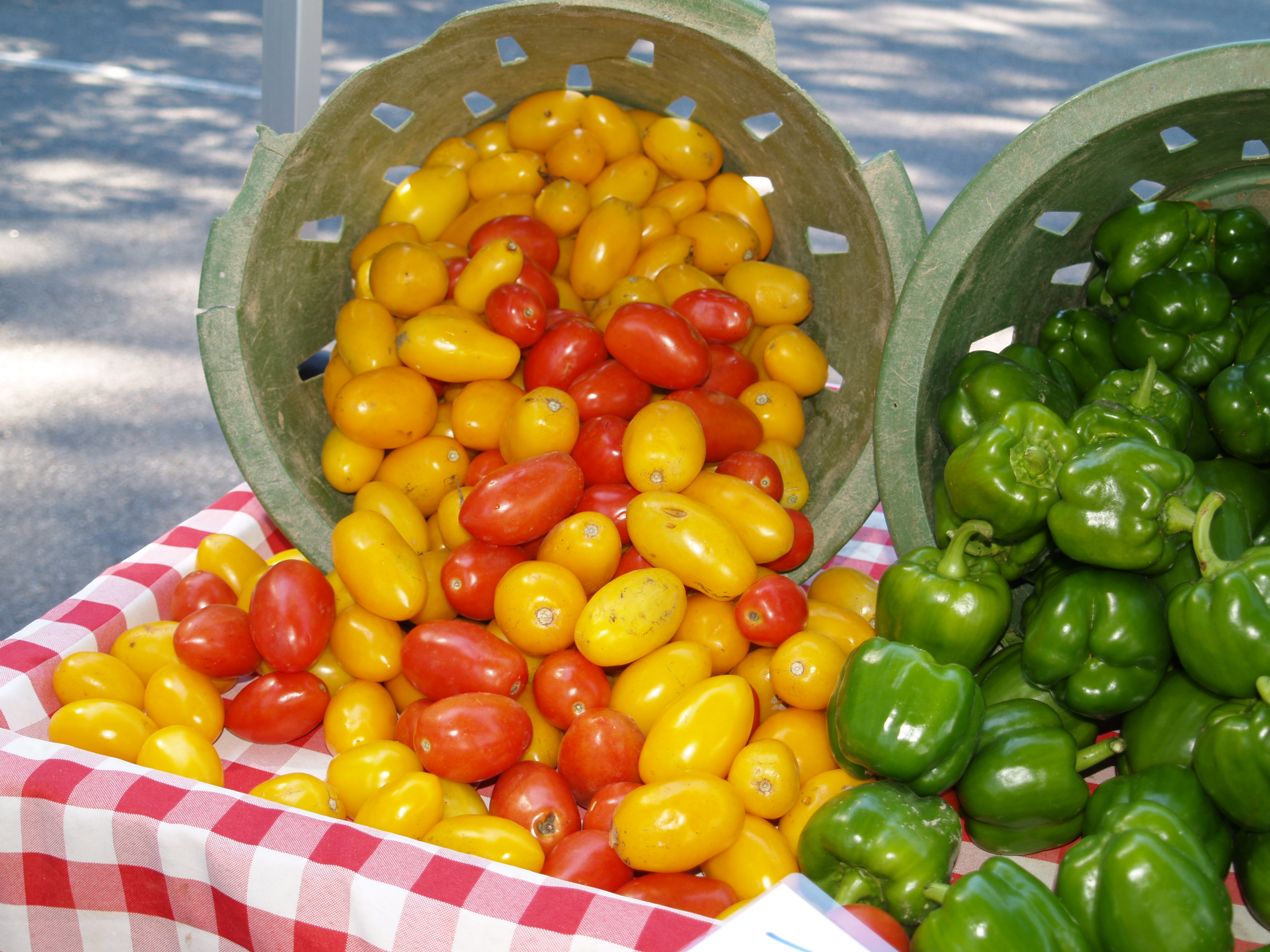
Garner's Produce 2013


In these past few weeks, hearty fall vegetables have made their annual debut, and their rich unpretentious earthy colors are a prelude to same colorful beauty our eastern forests display in their show of fall leaves –  just before they shed to adorn the forest floor.

Foods in your local season, tend to support your wellness in that season.  Fall foods are warming foods.  Produce that matures in cooler months generally contain more calories than their summer counter-parts, and come with their own complement of nutrients.  By helping our bodies acclimate to our regional weather, they perpetuate our health and may help prevent frequent seasonal ailments.

So here they are, the first butternut squashes, oddly colored and shaped gourds, beets and of course – the fall favorite – pumpkins,  all emerging at the farmer’s market.

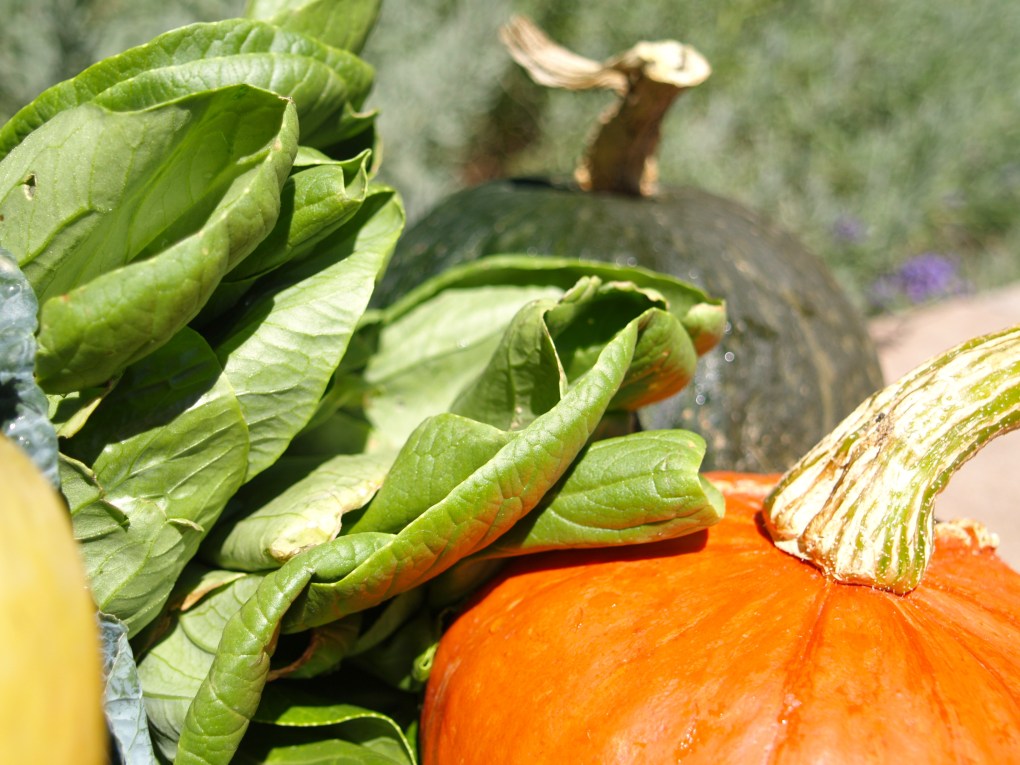
first fall 2013 squashes and gourds - Garners Produce

Virginia and West Virgnia is apple country, and those too are sure not to disappoint – especially not the heirloom varieties that farmers are lovingly resurrecting for locals hungry for real food!


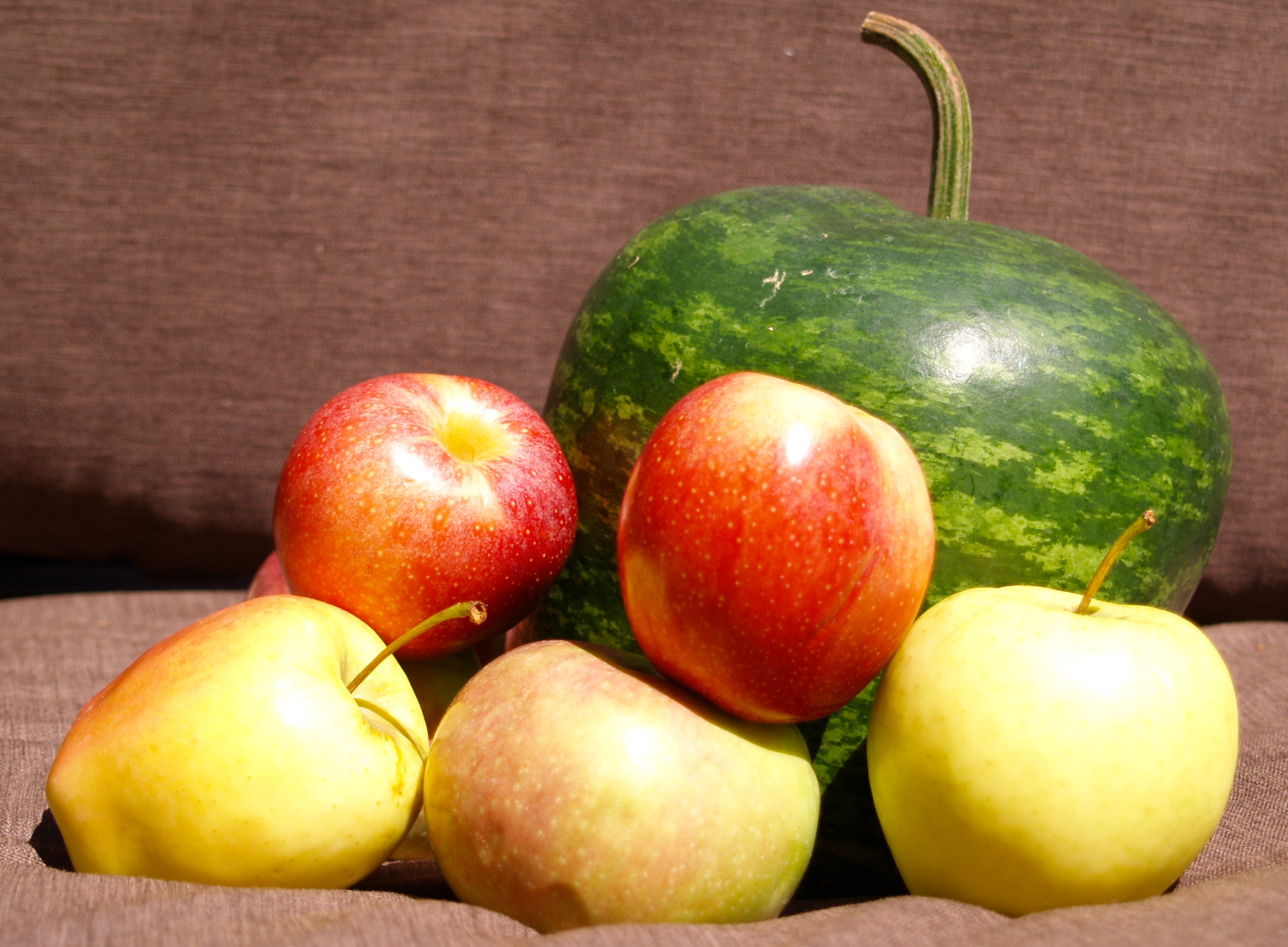
fall 2013 Virginia apples - except for the really big one which is an apple gourd...

fall 2013 Virginia apples – except for the really big one which is an apple gourd…


As the weather changes, so to does our pantry… and a well-stocked pantry is the only way we’ve found to cook with ease at home.  Posts in the upcoming weeks will include stocking our fall pantries with a few basics, to make this seasons cooking simple and easy.

Our favorite food of the season is soup… the backbone of which is broth and that simple humble and nourishing broth is the perfect canvas to highlight so many of the glorious foods of autumn.  And that is the feature future posts – broth and soups and stews!


polyface farm

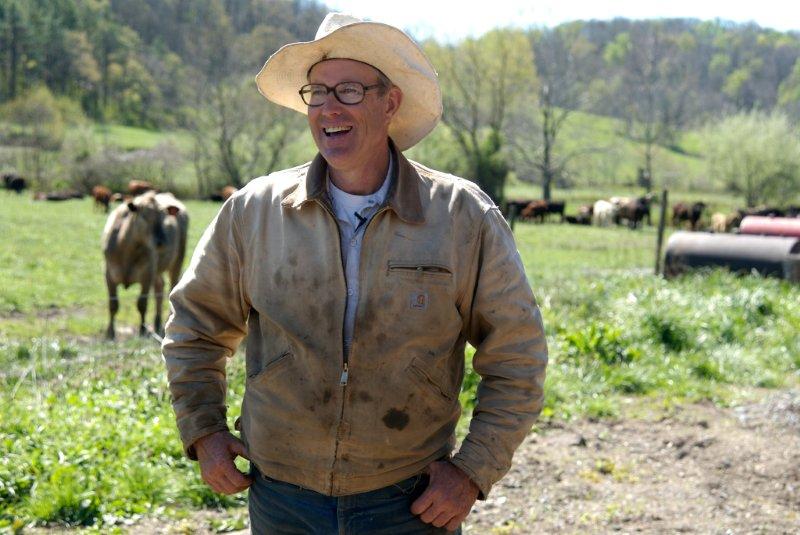
This is Joel Salatin, owner of Polyface Farm, located right here in Virginia.  He runs a transparent farm… that means he welcomes visitors!  He also keeps it local and won’t raise more animals than his land sustains and so therefore tends a vibrantly healthy livestock which require no daily cocktails of antibiotics or medicines.  They are raised in nature, roaming free ~ where they can forage on the very foods God intended, living peacefully in the very manner God intended, rather than penned up wing to wing without any access to daylight or fresh air.  He sells his food only to those within certain geographical limit of his farm – he says it’s good for the environment because, among other things, it saves fuel.

Thankfully there are farmers like Joel Salatin across this country (most of them sell at farmer’s markets or have local drop off points).  Due to his humane and sustainable method of farming, farmers from across this land come to apprentice on his farm and learn his techniques.  These farmers are feeding the future.

People call Joel Salatin a pioneer, but he just considers himself a lunatic farmer.


Why Food Matters

Improving Wellness with Holistic Nutrition

“Give the body discipline and you will see that the body is for Him who made it.”  

Amma Theodora – Sayings of the Desert Fathers

A holistic approach to nutrition focuses not only on a healthy diet, but considers that each person is unique, addressing them as a whole.  This includes emotional, and physical health.  In fact, the very word diet comes from the Greek word diata, which literally means “our manner of living”.

You can have the healthiest diet in the world but if you are not digesting and absorbing nutrients, it’s simply not nourishing you.  Holistic nutrition considers the stomach and digestive system the core of whole body health, because every system in the body relies upon it.

As Orthodox Christians we also believe that each person is unique, created in the image and likeness of God.  And…. we also believe that our spiritual life and health begins with our stomachs.  So, as we consider steps we can take to improve our health, let us first and foremost consider our Faith.  The Church gives us guidance, applicable throughout the ages, about the right role of food in our lives.  From an Orthodox perspective, “eating right, or eating well is also about eating for the right reasons”.

Our initial struggle must be to gain control of our stomachs… 

Food is to be taken in so far as it supports our life

(Father John Cassian – On Control of the Stomach – 4th century)


In other words, we should eat to live rather than live to eat!

So why is this generation so worried about diet and nutrition?  Some background is required.  While we might say “we are what we eat”,  there is a great irony that we, as a nation, eat quite poorly and deficiently.
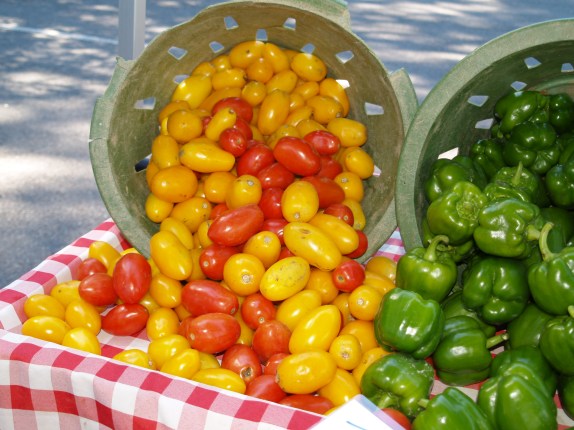
Oakton Farmers Market

How did we get in this situation?  For one thing, at no other time on the earth, have we been so disconnected from the sources of our food.  And from that perspective, it’s easy to be unaware of the the ill health of livestock within modern “industrial” animal husbandry, the unlabeled genetic modification of our seeds, and the pesticide and herbicide laden nature of our produce.

These issues, however, are worth our attention, because “we are what we eat”.  There is a complex and symbiotic relationship between the quality of our air, the health of our soil, the health of plants and animals, and our own health.

Nutritionally, we have traded in wisdom for knowledge and traditional foods for overly processed convenience foods.  Our ancestor’s cultural eating habits were determined by tradition and despite their varied ethnicities, their diets had one thing in common – they ate a whole foods diet, one that was local, seasonal and organic.

The last century has shown serious trends away from nourishing foods.  Now, there is much uncertainty about what even embodies a wholesome diet.  People are concerned, and justifiably so.
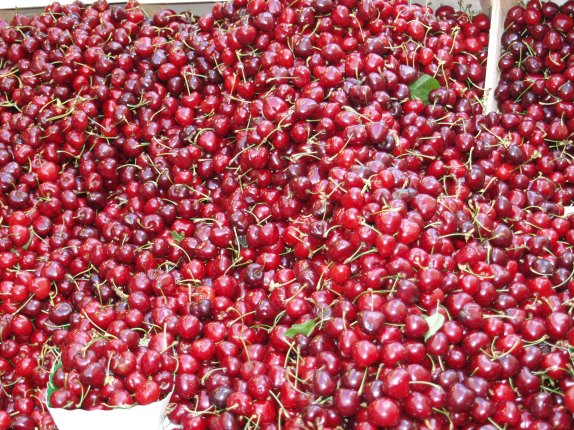
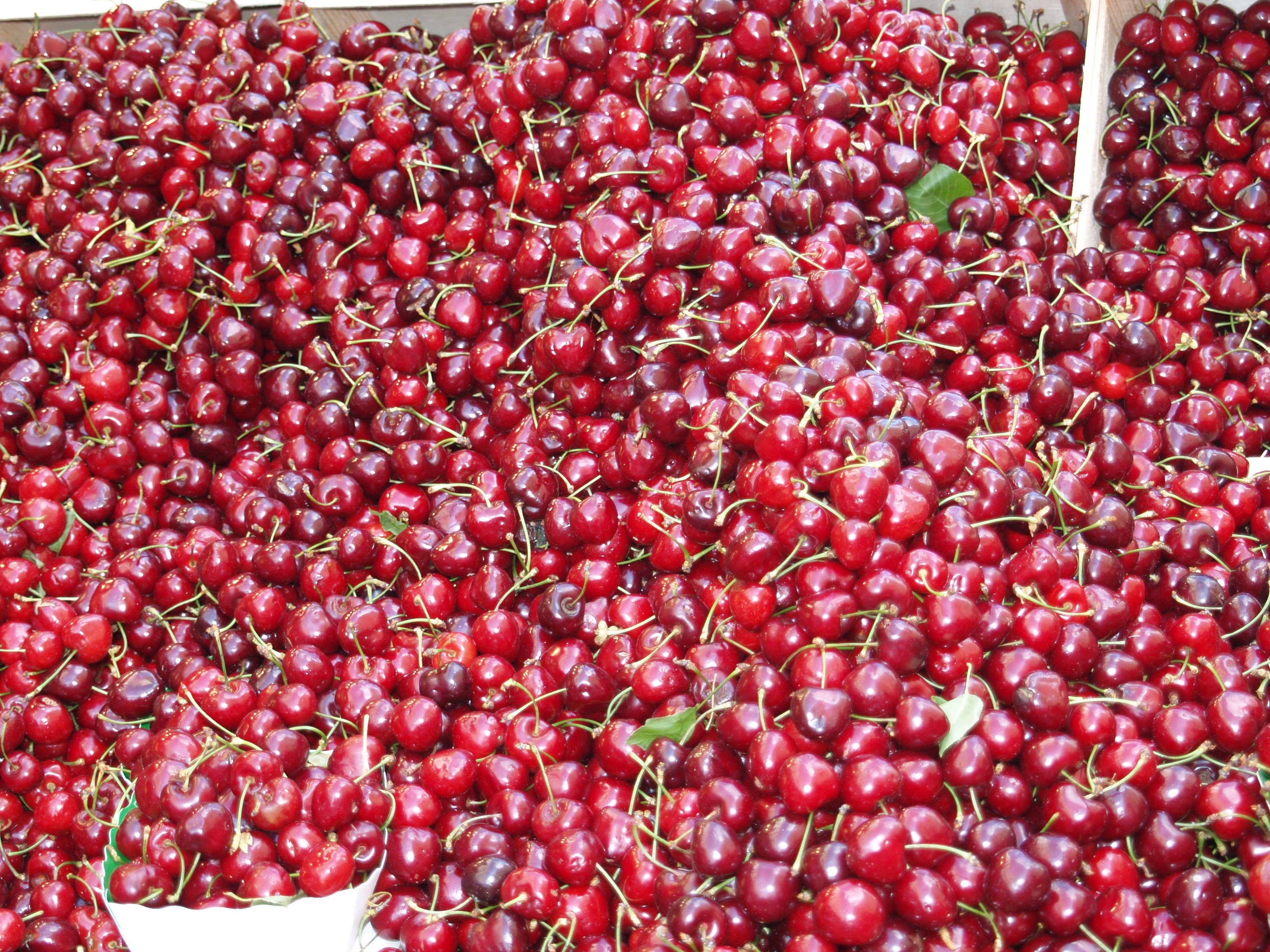
French Market Cherries

Humanity has an intimate relationship with food, for our food becomes our very bodies – flesh of our flesh and bone of our bone.   “Our genes make their day to day decisions based on the information they receive from the food we eat… in that sense, food is less like a fuel and more like a language conveying information… that information programs your genes, for better or worse.” (Shanahan MD,Catherine, 2011: p 7)

A calorie isn’t just a calorie and nutrient density and quality really do matter.  How you nourish yourself over the long run has either a negative or positive affect on your health.

We routinely eat ingredients in our foods which have been created in laboratories and are not even pronounceable, but how often do we question them?  The petroleum based preservative BHA, found in beer, butter and cereals, has been classified by the Department of Health and Human Services as  “reasonably anticipated to be a human carcinogen”.  Another is titanium dioxide found in your salad dressing, coffee creamers and icing… guess what – it’s also used in paints and sunscreens!

There are many processed things called “food”, but few that are worthy of keeping us vibrant and well!
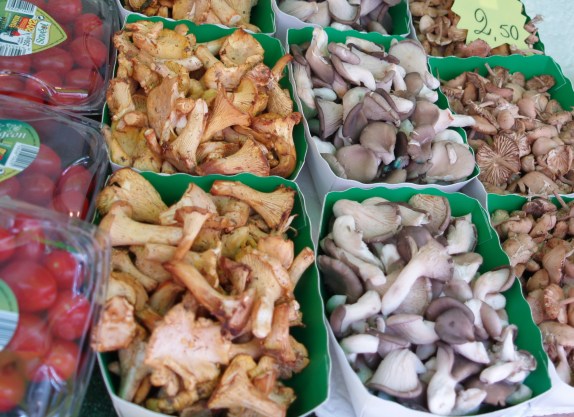
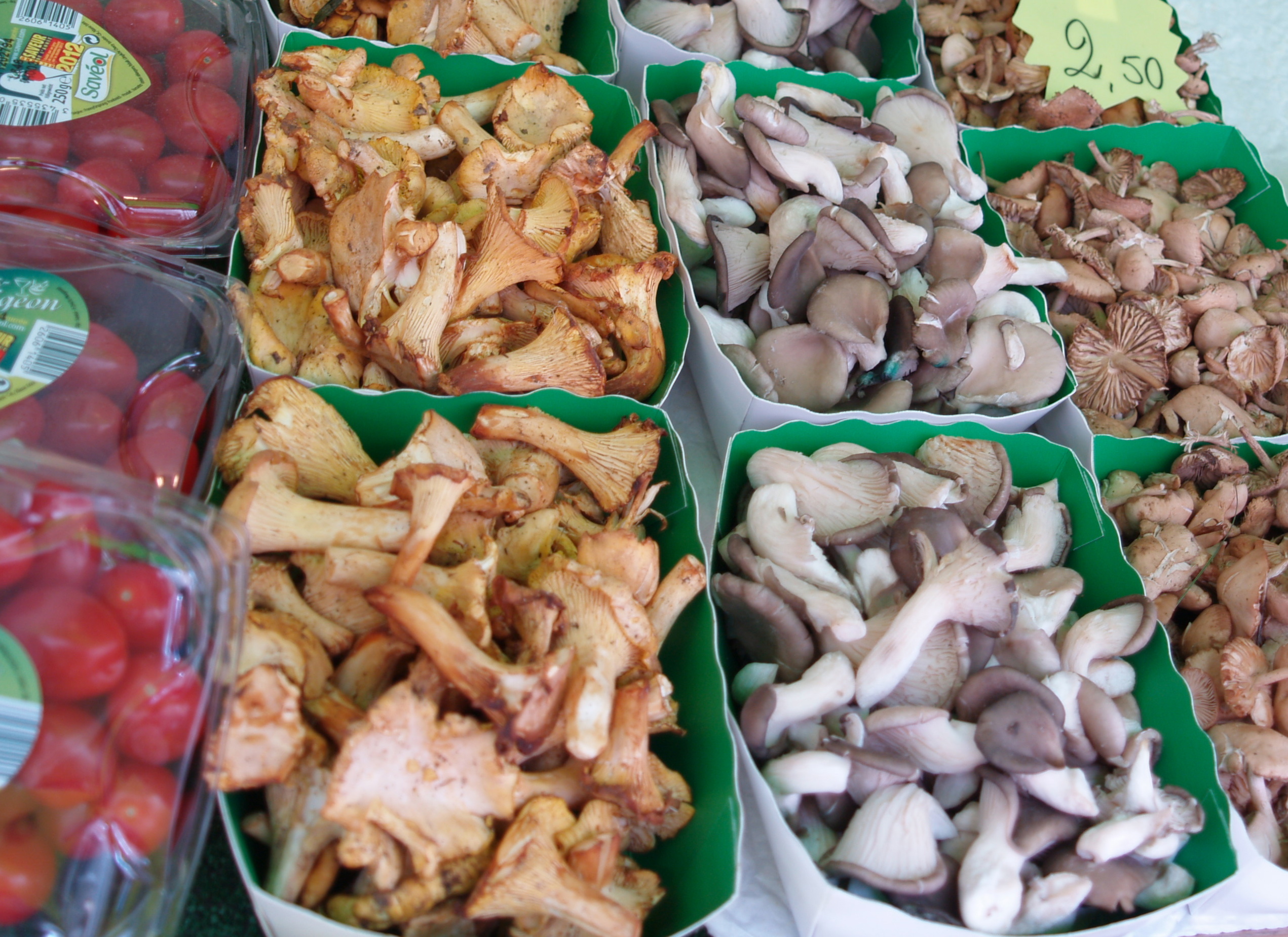
French Market Mushrooms

These are big issues, but the great news is that through education – organic foods, Slow Food and Buy Fresh Buy Local movements are popping up across the country and are very available.  People are learning about the wisdom and health benefits of traditional and ancestral food.  They are returning to Farmers Markets, buying shares in their local Community Supported Agriculture – CSA’sat heart,  connecting and investing, not only in their health, but also in their communities.

Even if you have really bad eating habits, it’s never too late to begin fresh again.  God created us with tremendous abilities to detoxify, heal, grow and regenerate!

Below are some easy steps you can incorporate over time to improve your overall wellness.   Remember –  healthy eating doesn’t mean eliminating the foods we love.  A healthy diet is about balance.  If 85% of our diet is healthy, then that baklava proves a guilt free pleasure!

And one last thing… as you begin steps toward wellness, embrace and enjoy the journey!  Don’t just eat healthy, eat well.  Take pleasure in your meals and dine with family and friends whenever possible… it’s just more delightful together!

Let’s eat to live and make every bite count ~ one morsel at a time!

[box] Make a Diversity of Whole and Plant Based Foods the foundation of your diet. That doesn’t mean you need to give up meat, but strive to make produce the foundation of your eating. Whole foods are those as close to their whole natural state as possible. They look like what they are like an apple or a carrot. Whole grains, and brown rice are also whole foods. They come perfectly packaged with the fiber and nutrients essential for their optimal absorption by our bodies. There is a synergy in the combination of nutrients found in each whole food, in other words, they are more effective in their whole food form.

Avoid refined and processed foods.  Reduce sugary snacks, sweets and sodas. Simply stated, refined and sugary foods are very depleting for the body. At the turn of the century, the average american consumed about 2 pounds of sugar per year; we now routinely consume upwards of 100 pounds per year. Last year 60 Minutes did a great expo titled “Is Sugar Toxic”.

Stay adequately hydrated! Good clean water is vital for life and involved in almost every function our bodies perform. Get at least 8 – 8 ounce servings/ day.

Exercise regularly. It reduces stress, increases circulation, releases those good feeling endorphins and promotes weight loss. Moderate your exercise to your ability.

Reduce and Manage Stress. Prayer, a positive outlook and exercise are most helpful in mitigating stress. Stress is a great challenge to our immune system, taxing nearly every organ in our body. It takes a high toll on health.

Add Probiotic rich foods to your diet: These foods are alive, and quite symbiotically, their life gives us life!  Probiotics work with our immune system to keep us healthy, but they need to be continually replenished. “Studies have shown that live-cultured foods containing probiotics help to prevent a whole range of allergic, autoimmune, and inflammatory diseases.” (Shanahan MD,Catherine, 2011:pp. 147-148) Click here for a list of probiotic rich foods.

Know thy fats! Essential fatty acids are an important part of a healthy diet and should be included. More about them can be found here and here. Also, learn more about the traditional fats which have nourished civilizations well.

Watch your portion sizes. Saint John of the Ladder sums it up well, “Master your stomach before it masters you.”[/box]


The ultimate goal is to Go organic, local and seasonal!  You can do it!  Buy free range -pastured meats, pastured eggs and dairy and produce as close to their source as possible.  Their nutrition is superior.  Looking for a farmers market near you?  Local Harvest has a nationwide list!

It’s taken our family over two years to dramatically change our diet and we have enjoyed the adventure and the journey ~  slowly making changes, one morsel at a time.

Above all, whatever your diata, keep the Feasting and Fasting cycles of the Church.  In her wisdom, she provides this rhythm for the nourishment of body and soul.  And in this life, our journey in Christ, through “prayer, daily Christian living, and worship, which ultimately lead to union with the divine uncreated Light” is the ultimate source of our wellness.


about the author

Victoria Cherpes is a wife, and homeschooling mother of three beautiful daughters and Sunday School teacher.  On their small urban family homestead, they enjoy tending their Victory Garden full of lettuces, berries and vegetables, weeds and bugs; raising figs for the local market and amateur beekeeping.  

She is currently pursuing her Master’s Degree in Holistic Nutrition at Hawthorn University and is a student member of the National Association of Nutrition Professionals (NANP).

If you have any questions, you can reach her at nourishinggrace@yahoo.com


[box] Sources:

Shanahan MD, Catherine (2011-04-22). Deep Nutrition: Why Your Genes Need Traditional Food. Big Box Books. Kindle Edition.

Ballentine M.D., Rudolph (2007-01-25). Diet and Nutrition: A Holistic Approach. National Book Network – A. Kindle Edition

Lipski PhD, Elizabeth (2012). Digestive Wellness: Strengthen the Immune System and Prevent Disease Through Healthy Digestion (4th Edition)

Mandell, Catherine (2005) When You Fast: Recipes for Lenten Seasons

Ward, Benedicta (1975). Sayings of the Desert Fathers. (http://www.scribd.com/doc/75385925/Apoftegma Fallon, Sally (2001).

Nourishing Traditions: The Cookbook That Challenges Politically Correct Nutrition and the Diet Dictocrats. (2nd ed)

http://www.nj.goarch.org/resources/spirituality.htm%5B/box%5D


This article was original posted at Orthodoxmom.com and has been slightly revised.

late summer bounty

This late summer time of year has left our Victory Garden looking a little more battered than victorious, but despite the waning summer growth we still managed to pick a great large bowl of summer cantaloupes, english and lemon cucumbers, beautiful tomatoes and some peppers.  And as it goes with the garden, the season of harvest blends with the season of planting.

At some point you make the decision rip out the plants that are not producing or that won’t have time to ripen (a great time to enjoy fried green tomatoes) and prepare the beds for fall planting.  We’ve added our freshly composted soil to the beds, turned them over and sowed several rows of beets and Russian Red Kale which are sure winter producers in Virginia – the kale is also an excellent edible winter cover crop that will become a valuable green manure in the spring.

Upcoming plantings are garlic and carrots.  The garlic is from Southern Exposure Seed Exchange, and their garlic always grows fabulous in our garden.

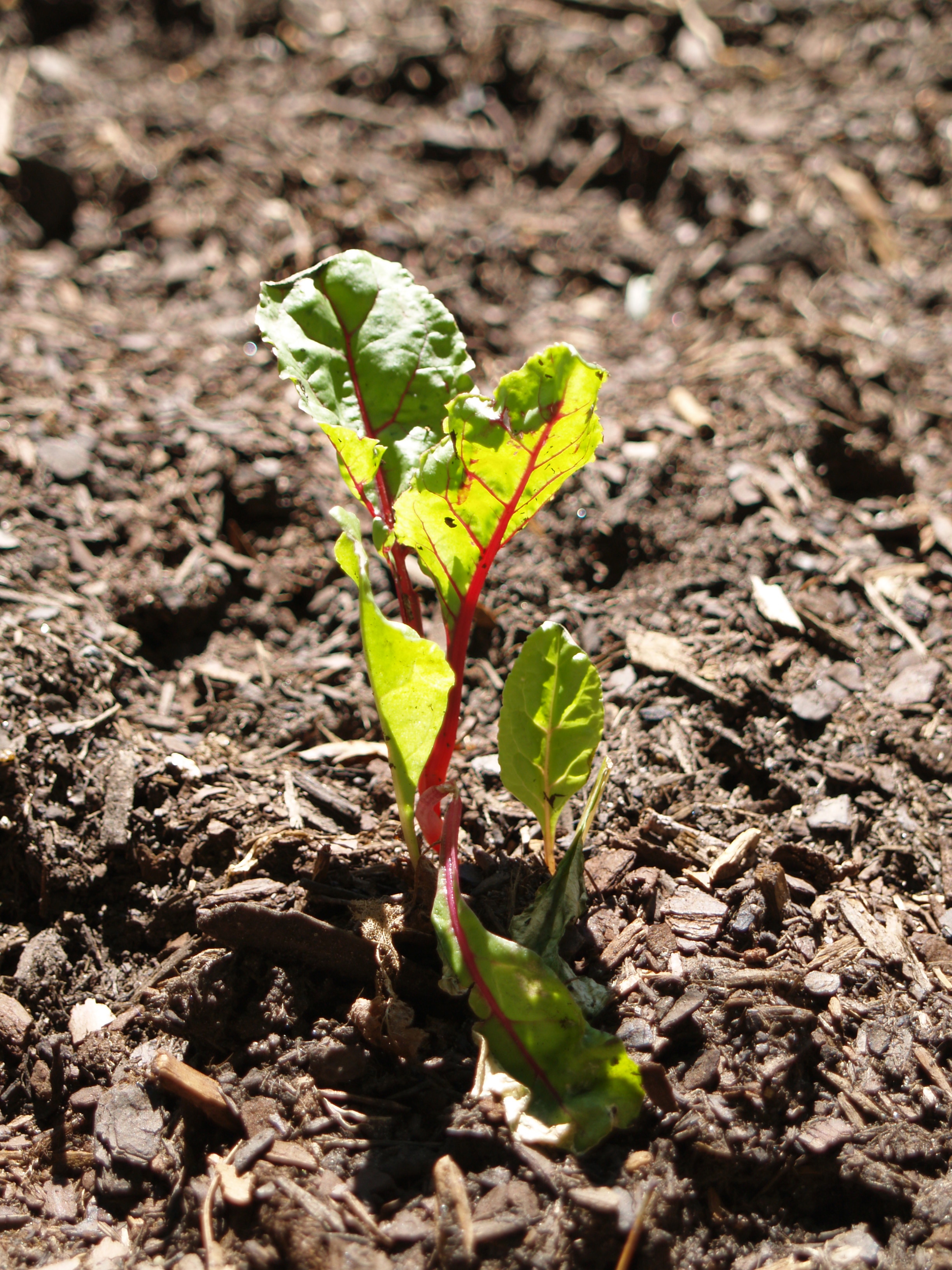
swiss chard

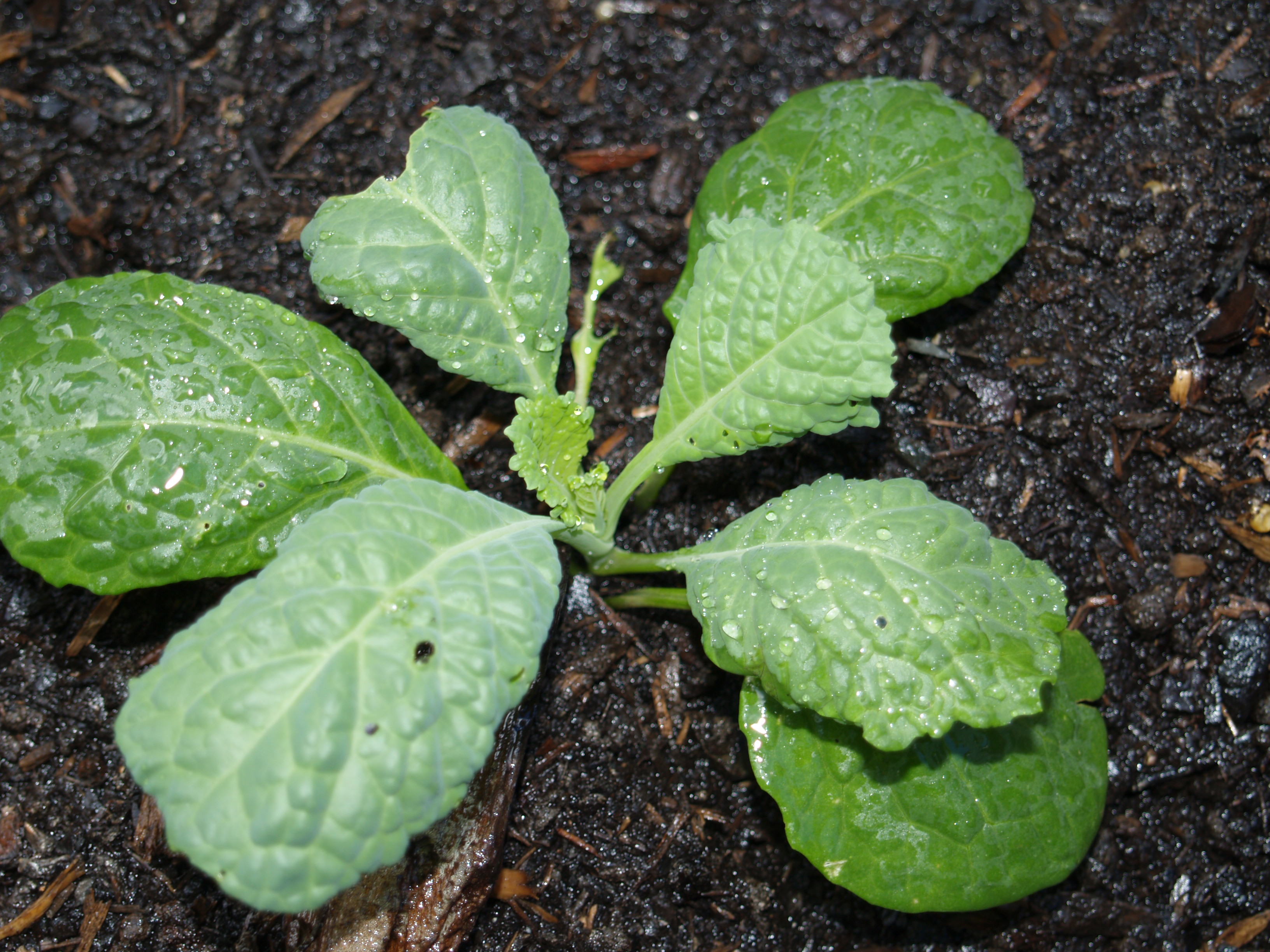
There are swiss chard and cabbages peaking their way through the dirt too..

cabbagees

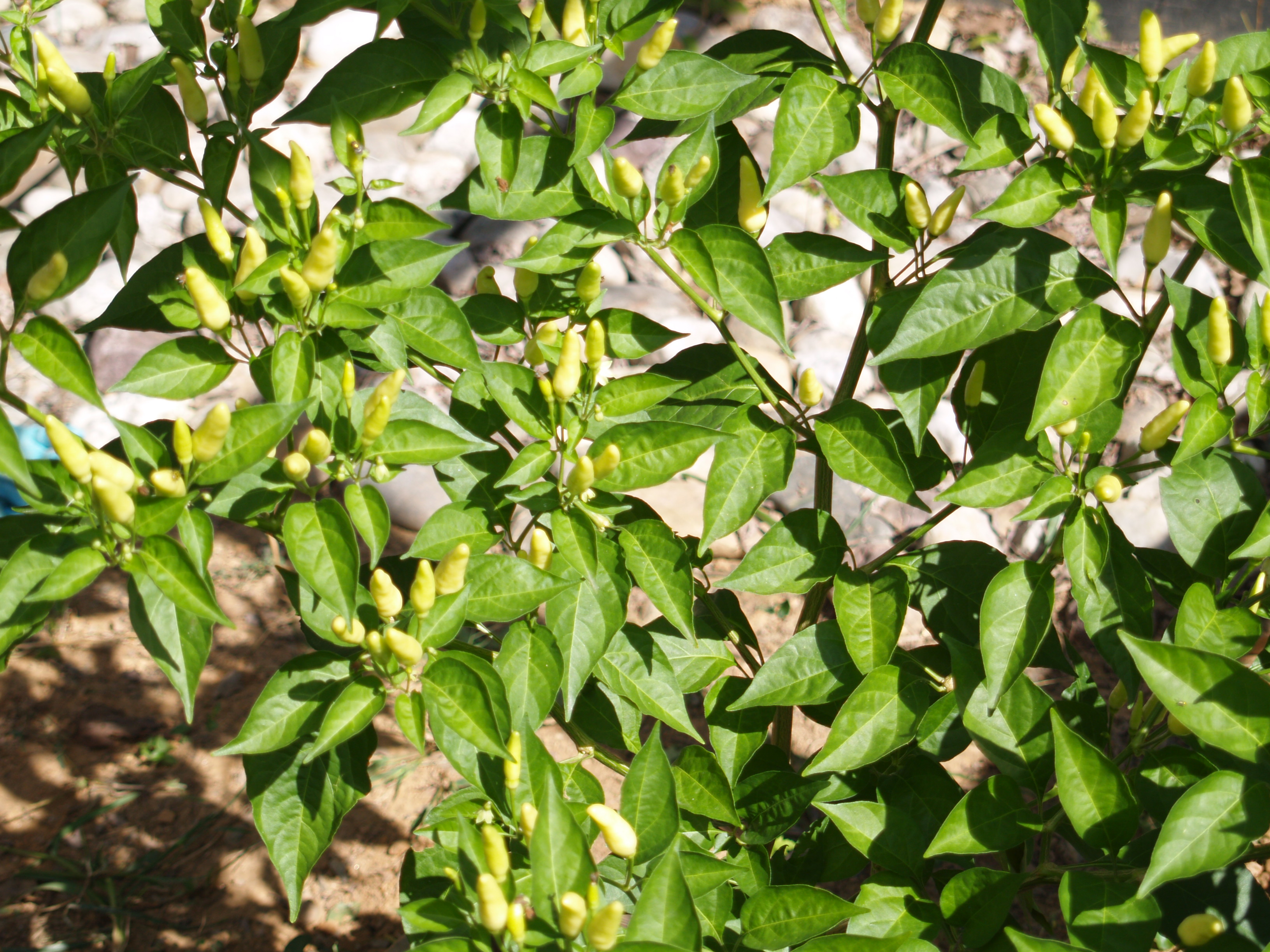
Thanks to the bees hard work, once these little guys below ripen, we will also have a plentiful tabasco pepper harvest and that means our first batch of Tabasco sauce!

ripening tabasco peppers


harmony of the harvest

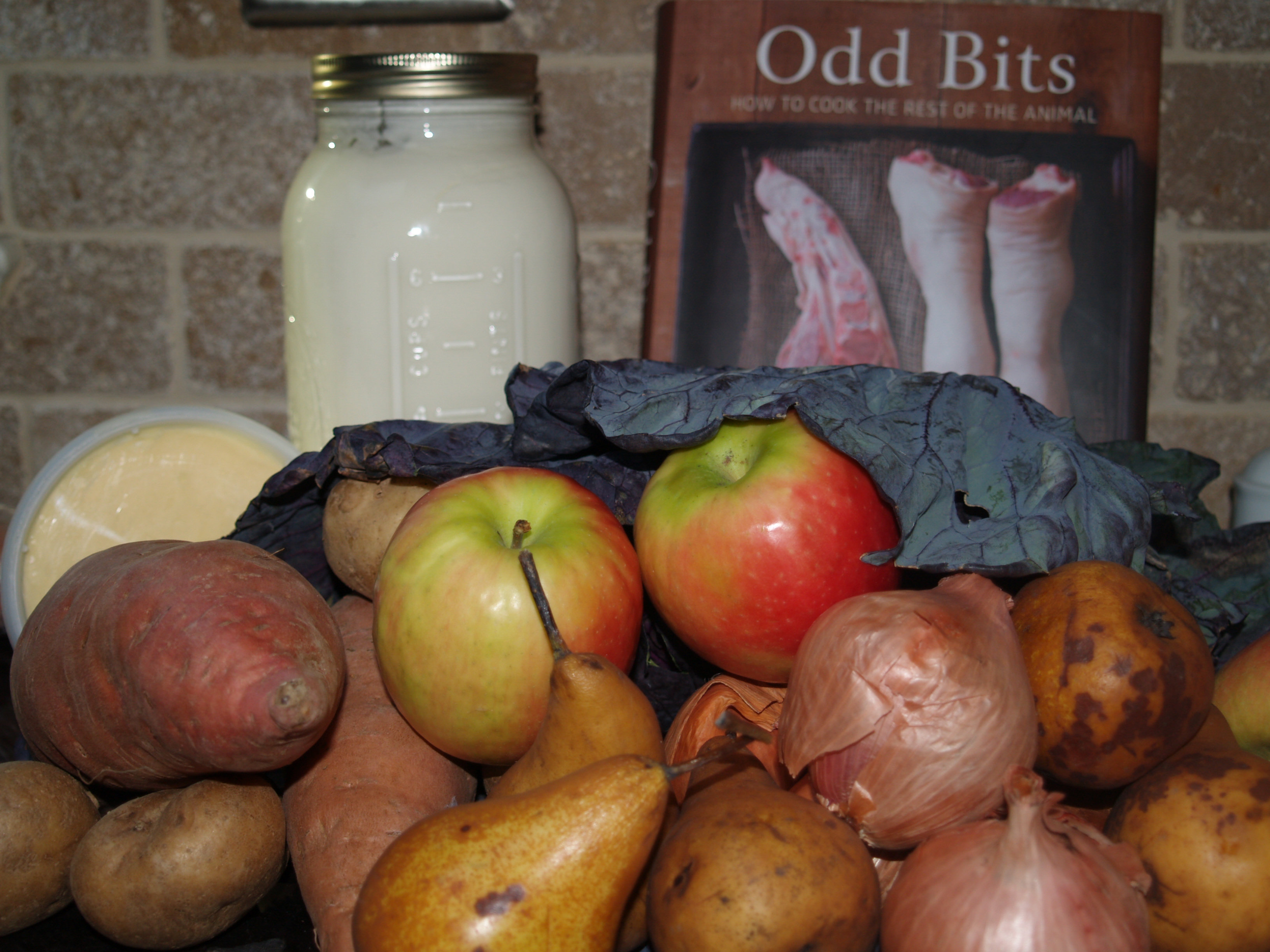
Eating with a conscience – stewardship eating – puts one between the industrial food chain, and the pastoral one.  Local heritage foods, in season, are surprisingly not always easy to come by.  Unfortunately, there exists also the misperception that it’s more expensive to eat this way, but it’s actually not .

Over time, within the industrial food web, somehow we lose our connection and appreciation to the goodness and diversity of creation, the fruits of our local land and in some ways, even our connectedness to the seasons.  What’s local right now in Virginia, is not what is local right now in California – and that is a very good thing!  Our bodies are linked with our environment, and therefore what is growing here locally provides me the local nutrients that my body needs and craves for the current season surrounding us.

In the winter we crave hearty soups and stews with root vegetables which provide rich nourishment for the winter chill.  However, with the beginnings of spring and the emergence of the first tender shoots of asparagus and lettuces, nature offers us the very foods which will cleanse our bodies from the winter bulk.  There is a wonderful synergy within the local environment but in our modern world an effort to make the connection, one that should be so natural, is required.

OLYMPUS DIGITAL CAMERA

It’s interesting that this local food movement is often called an alternative approach to eating, but those who eat local and seasonal are truly not pioneers, radical or attempting anything new.  It’s a return to traditional whole foods-the ones God created; grown humanely and sustainably, the way they were intended-and then trusting that they are good!  There’s a harmony in the local food chain, a harmony that the industrial one erodes.  Enjoy it for only a little while and the abnormality of eating ingredients, discovered and then isolated in a science lab ~ ingredients difficult to spell or pronounce ~ makes one pause.  If you can’t pronounce it, can you be sure your body knows what to do with it?

True, it can become difficult to find local foods in the winter – but the search can be fun!  In a fast paced city, local food helps us slow down in a way that brings the beauty of the local environment into view which our busyness blurs.  Will you find local olive oil in Virginia, probably not.  Thomas Jefferson tried to find a variety that would do well and was unsuccessful.  There are  also times your kids want to make fresh squeezed orange juice and those will never be local where you reside – so of course you make exceptions, because you want your family to enjoy the practice and those treats also give them a greater appreciation for what’s on the table and the reminder that our daily bread is always a blessing from the Lord.


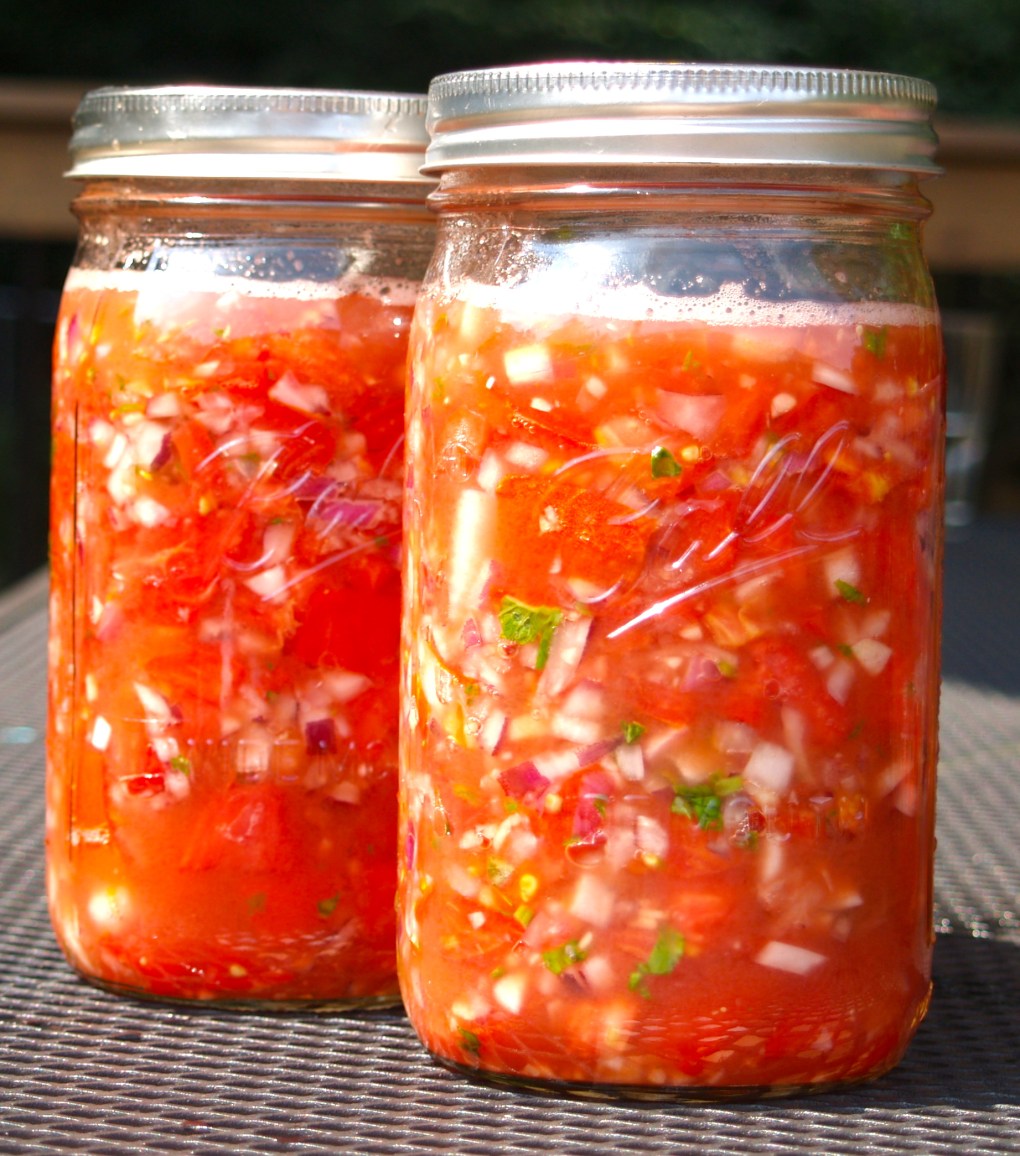
summer salsa

This time of year is all about preserving the freshness and bounty of the season… and that usually requires me to act fast, you know what I mean?  There comes a week, during the peak harvest, when the farmer’s market surplus of tomatoes reduces their cost  to $15 dollars for a 30 pound box – at least around here!  Tomatoes for 50 cents a pound!  It’s an irresistible sight I both long for and dread.  With so many tomatoes, one needs to act quickly or they will go bad – let them sit even overnight and you are guaranteed to loose a few to the compost.

So the season of harvest has me re-thinking our methods of preserving.  As a mom and student of holistic nutrition, I want foods teaming with life and nourishment for my very vibrant family.  A few years ago I learned about a different method of preservation… fermentation.

Unfamiliar with fermenation?

The art of fermentation is as old as humanity, but one that has largely disappeared from our western diets.  Fermentation is fairly simple because it preserves without the use of hot water baths and pressure cookers.  Conventional canning methods kill all bacteria; whereas fermentation is actually a cooperation with the bacteria (germs!) that are naturally available on the environment of the produce.  In fermentation, the naturally present bacteria feed on the sugar and starch in the food which creates lactic acid and that preserves the food, while also creating beneficial enzymes, b-vitamins, short-chain fatty acids, and various strains of probiotics.

Fermentation not only preserves produce, but also transforms ingredients into a more digestible state and creates more nutrition than it’s original vitamin content.

These foods nourish us deeply because through fermentation, nutrients become more absorbable – pregested like the lactase in yogurt which has been broken down and is why those with lactose intolerance may be able to handle yogurt or aged cheeses.
Ferments are laden with probiotics -which have numerous health benefits.   Historically, people would get a large portion of the healthy bacteria necessary for their digestive systems in the form of fermented foods.  Studies show that these good bacteria- probiotics are integral and critical to good health.  Our modern food industry, instead, has left us as a generation that turns to supplements to re-innoculate our digestive tract.  Yet with a traditional ferment, each morsel of can provide trillion of beneficial bacteria- far more that you can get from a probiotics supplements. (Mercola)  That’s pretty amazing!

Through the fermentation process, many foods accumulate increased levels of B vitamins, including thiamin (B1), riboflavin (B2) and niacin (B3) as compared with the nutrition of the raw ingredients prior to fermentation.

In a nourishing sense, fermentation is a virtue!

The finished product – through the slowness of time and the inner-working of a microbial community becomes greater than it’s original constituent ingredients.  And,  it lasts!  It’s true to say that ferments and the art of nourishment requires patience and time and nurturing.

In our day, that is a choice, one that more and more of us gladly make – for the very word nourish means to feed or cherish, to preserve, look after or suckle.  In that sense, nourishment means relationship… one involving care and love.

Fermented products can be an acquired taste, but some well known examples of fermentation include sauerkraut, kimchee and brined pickles.
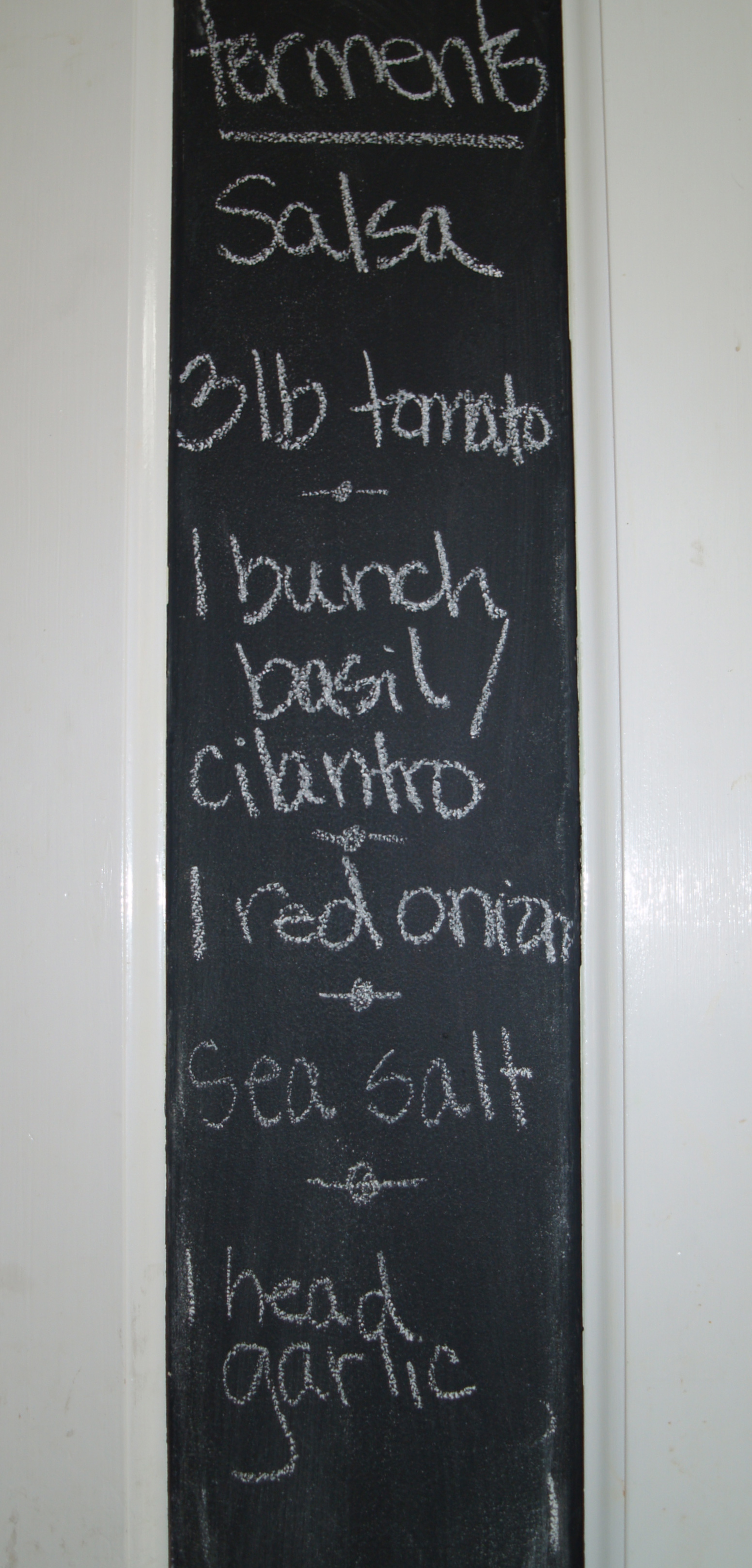
Ready to give ferments a try?  A great introduction to fermented foods is a fermented salsa that a friend shared with us.  It is delicious and a family favorite – even with the kids!  For a small batch, you’ll need:

OLYMPUS DIGITAL CAMERA

3 lbs of fresh tomatoes – chopped – do not discard the juice
1 bunch of cilantro or basil (our cilantro has died out, so we are using fresh basil)
1 small onion (about 3/4-1 cup)
3 tablespoons sea salt
1 head garlic – peeled and chopped finely
Optional – 1 jalapeño chopped – with or without seeds depending on your tastes
1 lime – I try to use only local ingredients in my ferments – so I usually skip this
2-3 clean mason jars
Clean bowl and spoon.
All your utensils, cutting boards and bowls should be clean.  It is not necessary to sterilize them.

Rinse tomatoes and wash your hands.

Chop ingredients to the salsa consistency you prefer.  It is not necessary to discard the juice as this becomes our brining liquid.  Mix all ingredients well in bowl.

Spoon into jars and either with a wooden spoon or your clean hands press the salsa below the liquid.
Seal tight and leave out of direct sunlight on the kitchen counter for 3-5 days.

Open the jars periodically as this will release some of the gases and also make sure to continue pressing your salsa below the brine line if necessary.  Frequent tasting – once the ferment has reached the taste consistency you love, enjoy some and then move it to the refridgerator.  The cooler temperature there slows down the fermentation process.


A taste of this salsa in winter will unleash the vibrant delicious flavors of summer!  It can be enjoyed with your favorite organic chips, with scrambled eggs, on a taco or anywhere that you normally would enjoy it.  One word of caution that I offer… if this is your very first ferment or your diet is generally spartan of probiotic rich foods, please start out with just a tablespoon per day for about a week to build up your internal probiotic community slowly.

Fermentation is making a niche comeback and one that has been recognized by culinary mega-giants like Williams Sonoma which now sells vessels for fermenting.  This is great news!


the value and challenges of eating locally and seasonally

While it’s true that it can be a challenge to eat seasonally, it is also a culinary delight rich in freshness, nutritional value and a renewing connection to one another and our land.  Real food is seasonal food and seasonal food is real.  There is something absolutely fabulous about waiting all summer for the tender sweetness of a ripe fig fresh off the tree – or –  the delicious juicy sweet crunch of a local apple in Fall.

Seasonal and local food is good nutritional economy – more vitamins and minerals for the dollar. Locally produced calories are also support local business in your area.  While local foods may or may not be “certified” organic,  the pleasure of the downright neighborliness of getting to know your local producers is one step in getting more involved with your food and local growers – the priceless act of reconnecting with our communities and building strong local bonds.

There are several key reasons to focus on a seasonal and local diet.

[box]diet the nutrient density of local foods : There is a direct correlation in foods harvested at the peak of ripeness and that foods nutrition profile, freshness and taste.  Most foods begin to loose nutrients immediately upon harvest, so the earlier food is harvested and the farther it is transported the lesser it’s nutrition profile. Fresh foods are alive and flourishing with nutrients and this is vital to our physical health.

taste matters : Just compare the flavor a color of a warm juicy tomato from your farmer’s market in July to one from your big chain grocery store. say no to gmo : Small farmers can focus on local and heirloom varieties of produce which reduces your exposure to genetically modified foods.

variety is the spice of life : From summer squash, tomatoes, cucumbers, peaches and beans to fall apples, corn, pumpkins, acorn squashes and into winter cabbages, beets, kales, radishes and leeks, you’ll enjoy the full spectrum of foods your area produces. To find what’s local in your town visit http://www.localharvest.org

environmental benefits : Local seasonal foods lend to reduced pollution as well as transportation costs.  Lower transportation costs translates to lower food costs – it’s just less expensive in the big picture to eat the locally abundant food available and to support the local farmers in our communities.

investing in your community and investing in yourself : Hipoocrates once said, “Let thy food be thy medicine and let thy medicine be thy food.“  Along with that goes eating a seasonally based diet with lots of variety throughout the year.  This is the “cornerstone of preventive medicine,” says Preston Maring, a doctor at Kaiser Permanente’s Oakland Medical Center in California. Inspired by study after study documenting the benefits of eating an in-season, plant-focused diet—reduced risks of cancer and heart disease, increased longevity, improved cholesterol, improved vascular health, increased bone density and weight loss, to name a few—Maring has actually written prescriptions for patients to buy fresh food from the hospital’s on-site farmers’ market, complete with suggestions about how they can prepare it.” (Mother Earth Living)   [/box]

There can be, however, challenges to local eating.  For many people – especially those working long hours or otherwise pressed for time, availability is key, and eating local can present hurdles, especially in areas with a long cold winter.

Many farmers markets close beginning in late October or November, so it takes some rooting around to locate the best sources to shop in winter.  However, now farm CSAs with local drop off points and even home delivery are becoming more accessible and prevalent. Persistence and a desire to make this wonderful lifestyle change is really the key.  Also, a willingness to try new, perhaps unfamiliar ingredients is a plus. My recommendation is always to take the plunge and go local, seasonal and organic – just a little bit at a time.

Despite the challenges, as you learn what’s available, you’ll become more comfortable planning for your regional food cycle.  You’ll develop a seasonal eating rhythm that is more nutritious, healthy and very enjoyable!