For the soul to repent it must first be awake. It is in this awakening that the miracle of repentance occurs. This is where human will plays a role. The awakening however is not something that rests solely with the man or the woman. The individual alone is not able to bring it about. God intervenes. Then Divine Grace comes. Without Grace a person can not repent. The love of God does everything. He may use something — an illness, or something else — it depends — in order to bring a person to repentance. Accordingly, repentance is achieved through divine grace. We simply make a move towards God and from then on Grace supervenes.
If we love Christ, all things will change in our lives. We do not love Him in order to receive some reward such as health. Rather we love Him out of gratitude, without thinking of anything, only of the love of God.
God has placed a power in man’s soul. But it is up to him how he channels it —- for good or for evil. If we imagine the good as a garden full of flowers, trees and plants and the evil as weeds and thorns and the power as water, then what can happen is as follows. When the water is directed towards the flower garden, then all the plants grow, blossom and bear fruit and at the same time the weeds and thorns, because they are not being watered, wither and die. And the opposite, of course, can also happen….
It is not necessary therefore to concern yourselves with the weeds. Don’t occupy yourself with rooting out evil. Christ does not wish us to occupy ourselves with he passions, but with the opposite. Channel the water, that isu, all the strength of your soul to the flowers, and you will enjoy their beauty, their fragrance and their freshness.
When the film of pride and the sleep of self-contentedness is wiped from the eye of my heart, I know I am but dust called by the Divine breath into life. Made in the Image of God, there is in me, the possibility of being born “from above” from beyond this world and entering into real life. Eternal life is a gift and a potential; never a certainty or a guarantee. God is ever offering Himself to us in hopes that we are willing to undergo the process of responding to the potentials that are opened up through Communion with Him. We cannot be saved without our consent. In Christ God has proposed marriage with humanity purely from love and waits for our response. We are unique creatures invited to taste the eternal Eucharistic joy of never being complete in and of ourselves alone, but only in response to breathing in the divine Grace and breathing out life and gratefulness beyond words. We are made for love and communion with God.
Repentance is the Mother of Life. It opens its door to us when we take flight from all things. By means of the intellects intuitions, repentance renews in ys the grace that we have lost after baptism by leading lax lives. By water and Spirit we have put on Christ, though we did not perceive His glory. Through repentance we enter into His delight by means of the knowledge of those extraordinary intuitions that replace causes to dawn within us.
He who is deprived of repentance is deprived of the delight to come. He who us close to all things is far from repentance. And he who is far from all with discernment repents in very truth.
The commanments are assimilation’s of God. They are things that have been uttered by God, and thus they are an extension of God Hinself; they come directly from Him, and to them my will must be united…
…the purpose of the commandments then, is rendering to God what belongs to to God. It is, we could say my self identification with God, my being found together with God, with what He thinks, and with what the Holy Trinity thinks together as one. The moral or ethical life which is the concrete application of God’s commandments, does not consist in, “I must do this, and not do that; this is forbidden, that is permitted.” To the contrary, morality is essentially a fullness of life in God, having as its basic element the assimilation of God’s will, and the rendering to God of all that belongs to Him, so that my work and activities are in accord with God who is still working.
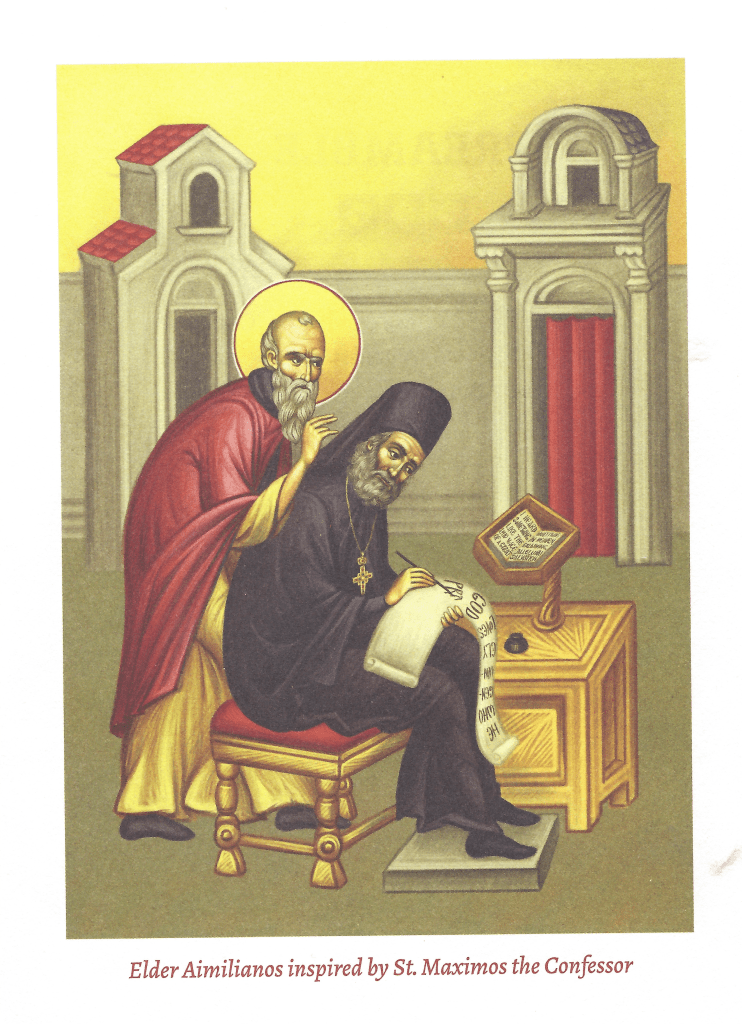
The Mystical Marriage : Spiritual Life According to Saint Maximos the Confessor
Quite naturally then, a person is led to a state of mind, that is purely eschatological; to a mind that looks beyond this life and thinks only of the next. When someone possesses divine love, he or she no longer wishes to live in this present state of existence, but is concerned only about the future. This is because they realize that whenever the mind is drawn away and becomes preoccupied with something — with its problems, its life, or with some material thing, good or bad — but does not love God and runs the risk of forgetting Him altogether.
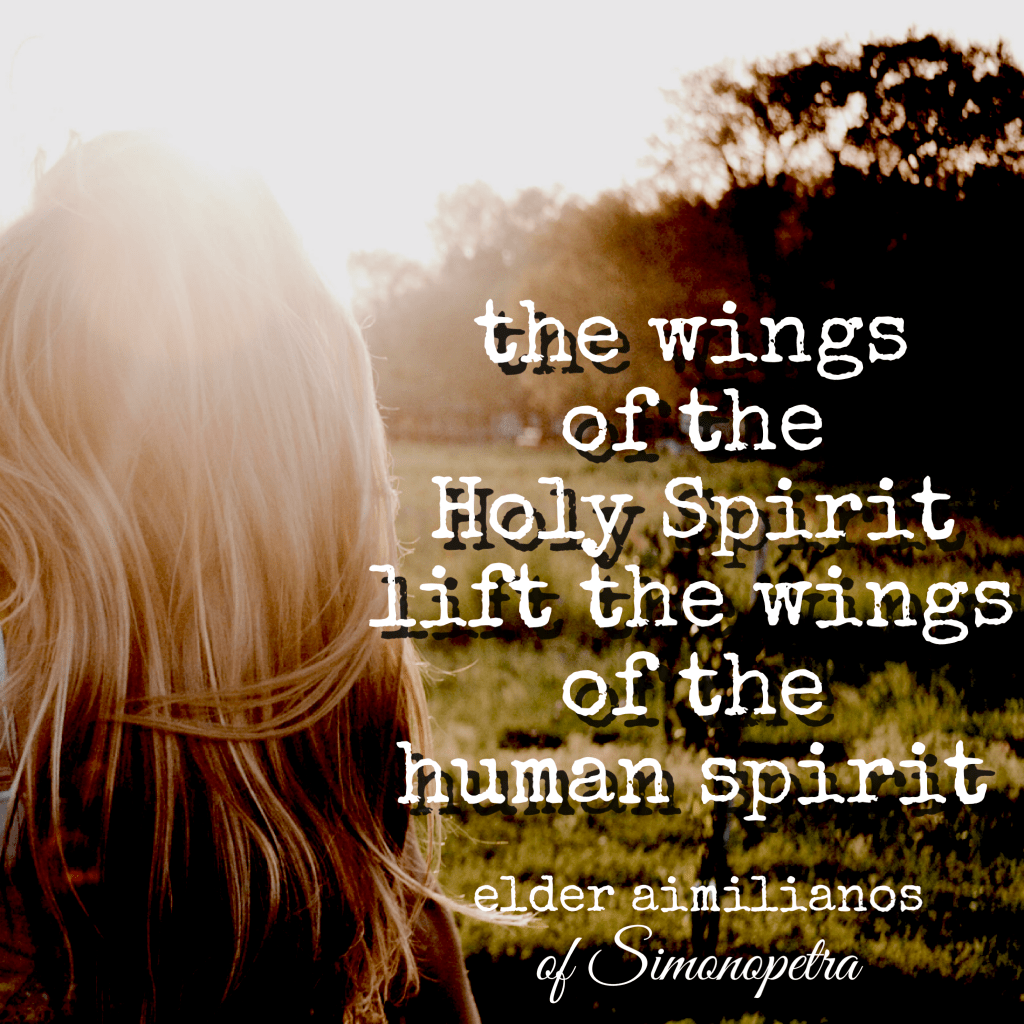
Saint Maximos seeks to life up the human spirit, and give it wings, so that it might soar to the heavens. This is why he uncovers for us the true meaning of life, namely that life is spiritual, it is upborne by the Holy Spirit. The wings of the Holy Spirit lift up the wings of the human spirit, freeing it from every weight and heaviness and enable it to rise upward.
Elder Aimilianos
The Mystical Marriage spiritual life according to Saint Maximos the Confessor
We shouldn’t blackmail God with our prayers. We shouldn’t ask God to release us from something, from an illness, for example, or to solve our problems, but we should ask for strength and support from Him to bear what we have to bear. Just as He knocks discretely at the door of our soul, so we should ask discretely for what we desire and if the Lord does not respond, we should cease to ask. When God does not give us something that we ask for insistently, then He has His reasons. God too, has His ‘secrets’. Since we believe in his good providence since we believe that He knows everything about our lives and that He always desires what is good, why should we not trust Him? Let us pray naturally and gently, without forcing ourself and without passion. We know that past, present and future are all known, “open and laid bare” before God. As Saint Paul says, “before Him no creature is hidden, but all are open and laid bare to His eyes.” We should not insist, such persistence does harm instead of good. We shouldn’t continue relentlessly in order to acquire what we want. Rather we should leave things to the will of God.
Because the more we pursue something, the more it runs away from us. So what is required is patience, faith and composure. And if we forget it, the Lord never forgets, and if it is for our good, He will give us what we require, when we require it.
Saint Porphyrios
Wounded by Love : The Life and Wisdom of Saint Porphyrios
When we have a relationship of absolute trust with Christ, we are happy and joyful. We possess the joy of Paradise. This is the secret. Then we can exclaim with Saint Paul, “for me to live is Christ and to die is gain and “it is no longer I who live, Christ lives in me.” Such marvelous words! Delightful! All things must be done simply and gently.
We must go on our own to God in simplicity and artlessness of heart. What does wise Solomon have to say? He says that we need simplicity. “Be mindful of the Lord in goodness and seek Him in simplicity of heart, for He is found with those who do not tempt Him.”
Simplicity is holy humility, that is absolute trust in Christ, when we give our whole life to Christ. In the Divine Liturgy we say, “we commend our whole life to Christ our God,” and at another point, ” To You, O Loving Master, we commend our whole life and hope, and we entreat you and pray and supplicate.”
Saint Porphyrios
Wounded by Love: The Life and Wisdom of Saint Porphyrios
Prayer is the transcendence of time and thus an enty into the timelessness, eternity, perfection and splendor of God. Prayer is our inclusion in the life of God, our perichoresis in God, and – if I may put it this way, our obliteration in God, so that we might become one with Him. This is what happens in prayer; this is what prayer is. And this is why love and prayer are so closely aligned that each can signify the other.
Elder Aimilianos of Simonopetra
of blessed memory
The Mystical Marriage : The Spiritual Life According to Saint Maximos the Confessor





 gladsomelife.com