bread of Life

prosphoro baked


And the Holy Spirit changes this offering (prosphoro) to the Body of Christ, to the Bread of Life, to living bread for all. Bread which heals hunger in a decisive manner. Bread which grants true learning and true freedom. The only true education is the learning of love. The only true freedom is the abolishment of Death, which also abolishes the fear of being deprived of everything material.

“I am the Bread of Life.” (John 6: 35)


Prosphoro and Artos- Communion Bread and Blessed Bread


fermentation and life

prosporo - an offering

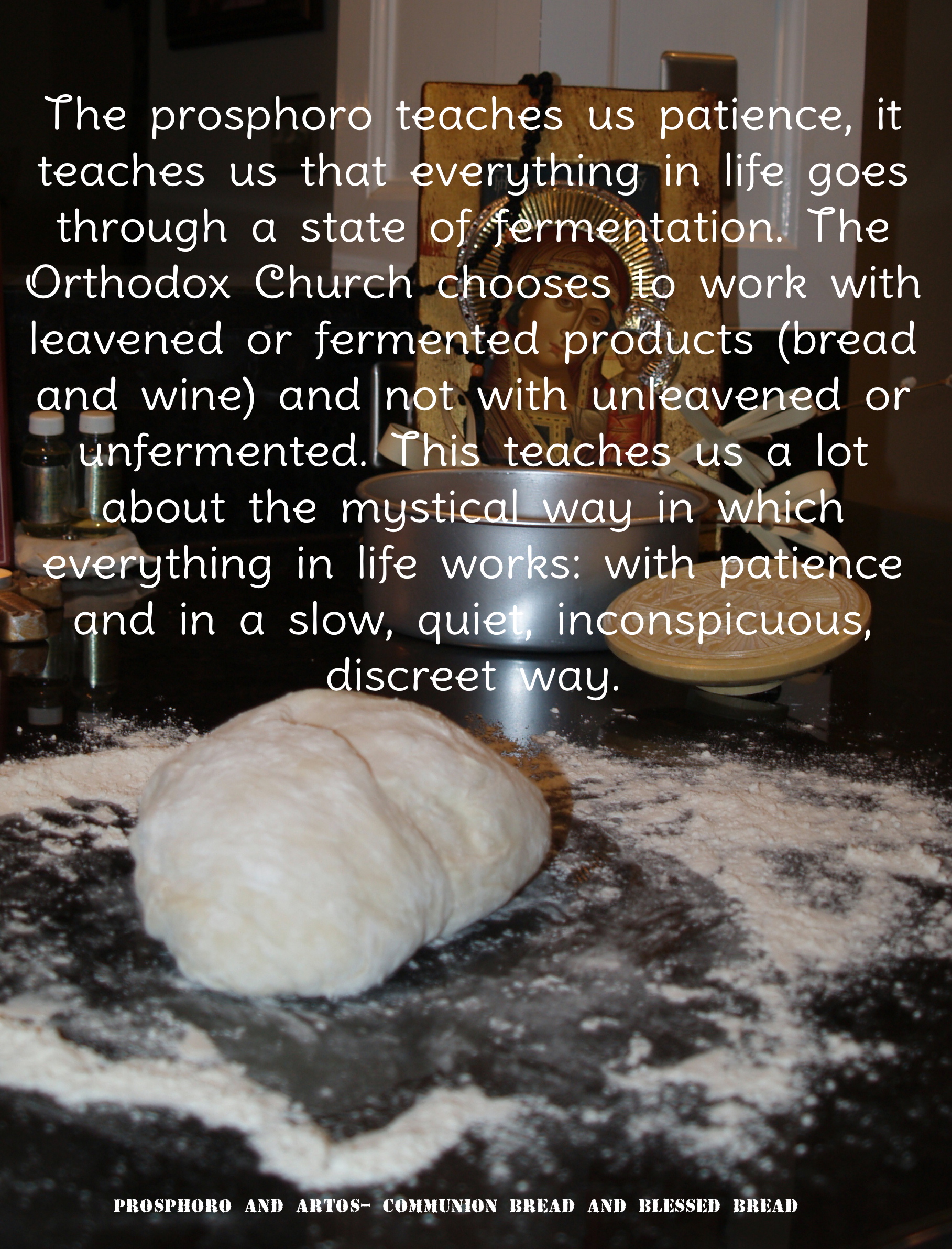
“The prosphoro teaches us patience.  It teaches us that everything in life goes through a state of fermentation.  The Orthodox Church chooses to work with fermented products – bread and wine – and not with unleavened or unfermented.  This teaches us a lot about the mystical way in which everything in life works : with patience and in a slow, quiet, inconspicuous,  discreet way.”

from the book : Prosphoro and Artos – Communion Bread and Blessed Bread


kombucha

Blessing “the “hands that feed me”…

To bless doesn’t just mean “think good thoughts” or “be nice.”   To bless is far more radical. It is to actually give life, to have one’s cup run over into the lives of others. To have one’s parents’ blessings is to have each of them send you off into life saying  “I see you. I know you are good. I believe in you. I trust you. I am proud of you. May you be fruitful and multiply…”   To bless is to speak from and for and to the divine, as a priest blesses a marriage or christens a baby. To bless is to respect the integrity and mystery of the life of another.”  (Vicki Robin – Blessing the Hands That Feed Us)

In case it’s new to you, kombucha is sugar sweetened tea that is fermented and cultured into a sour tonic drink  that can be double fermented to get a fizzy carbonation in the final beverage.

The fermentation occurs through the work of a community of microorganisms.  Kombucha is cultured into fermented tea through the SCOBY – a rubbery disk that floats atop of the tea and takes the shape of the fermentation vessel.  This is similar to the making of apple cider vinegar – which forms a similar by product known as mother of vinegar.  It’s pretty interesting stuff… and takes some getting used to, but it works!

kombucha_pilze


 Some Russians call kombucha tea kvass.

In recent years kombucha has gone from relative obscurity to top selling health tonic and is now available in most health food chains, including MOMS Organic Market and Whole Foods.

One point of note is that kombucha is not for everyone, and so if it doesn’t agree with you, don’t drink it.  It’s not meant to be guzzled like a tall glass of water.

We’ve started making ours, but in small batches.  Last summer we babysat a friends kombucha brew, which made more than a gallon per brew.  It was too much.

You can find lots of information on brewing kombucha as well as supplies and recipes here: Kombucha Kamp.

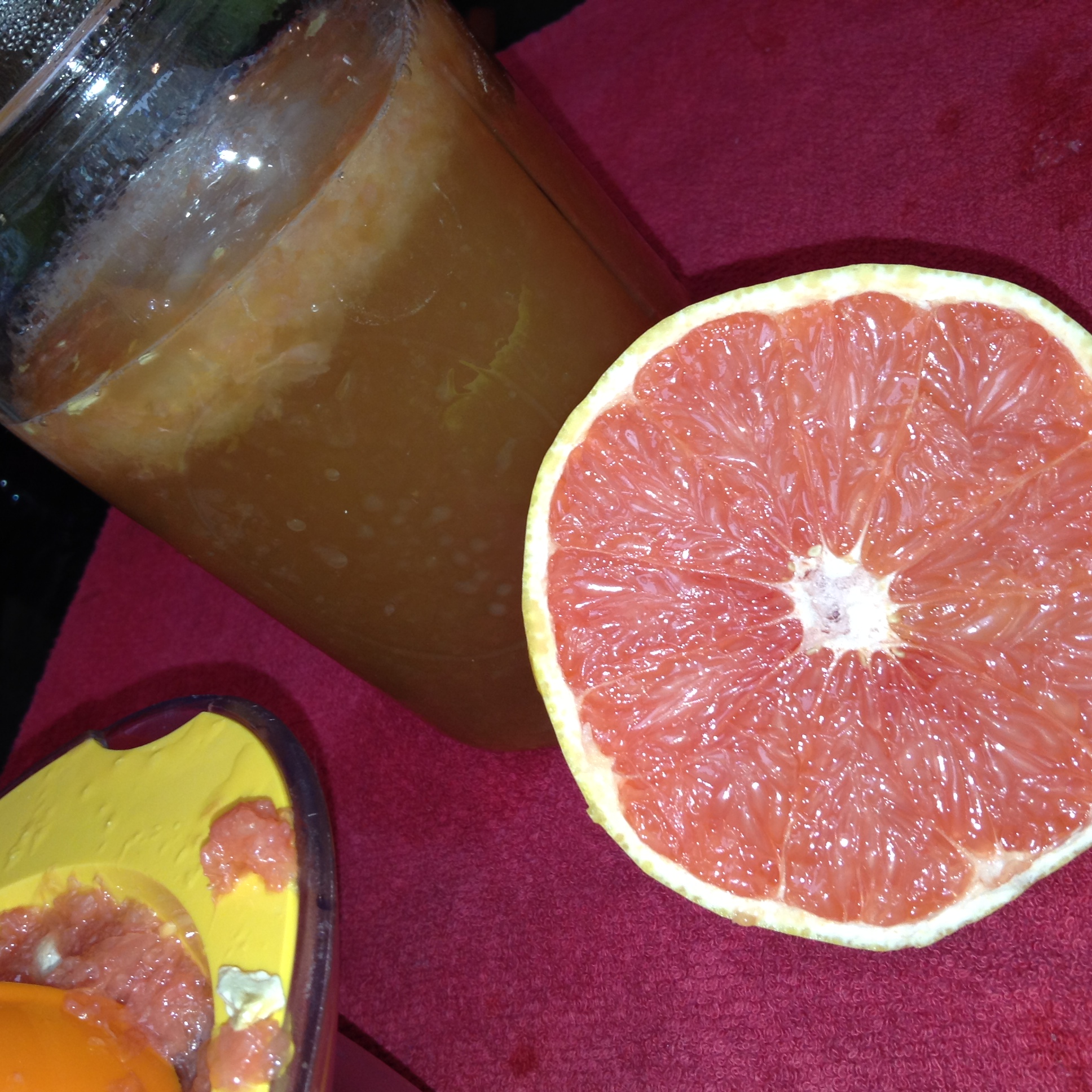
We’ve been having fun experimenting with kombucha infused with grapefruit and with ginger.

Grapefruit Infused Kombucha


sauerkraut

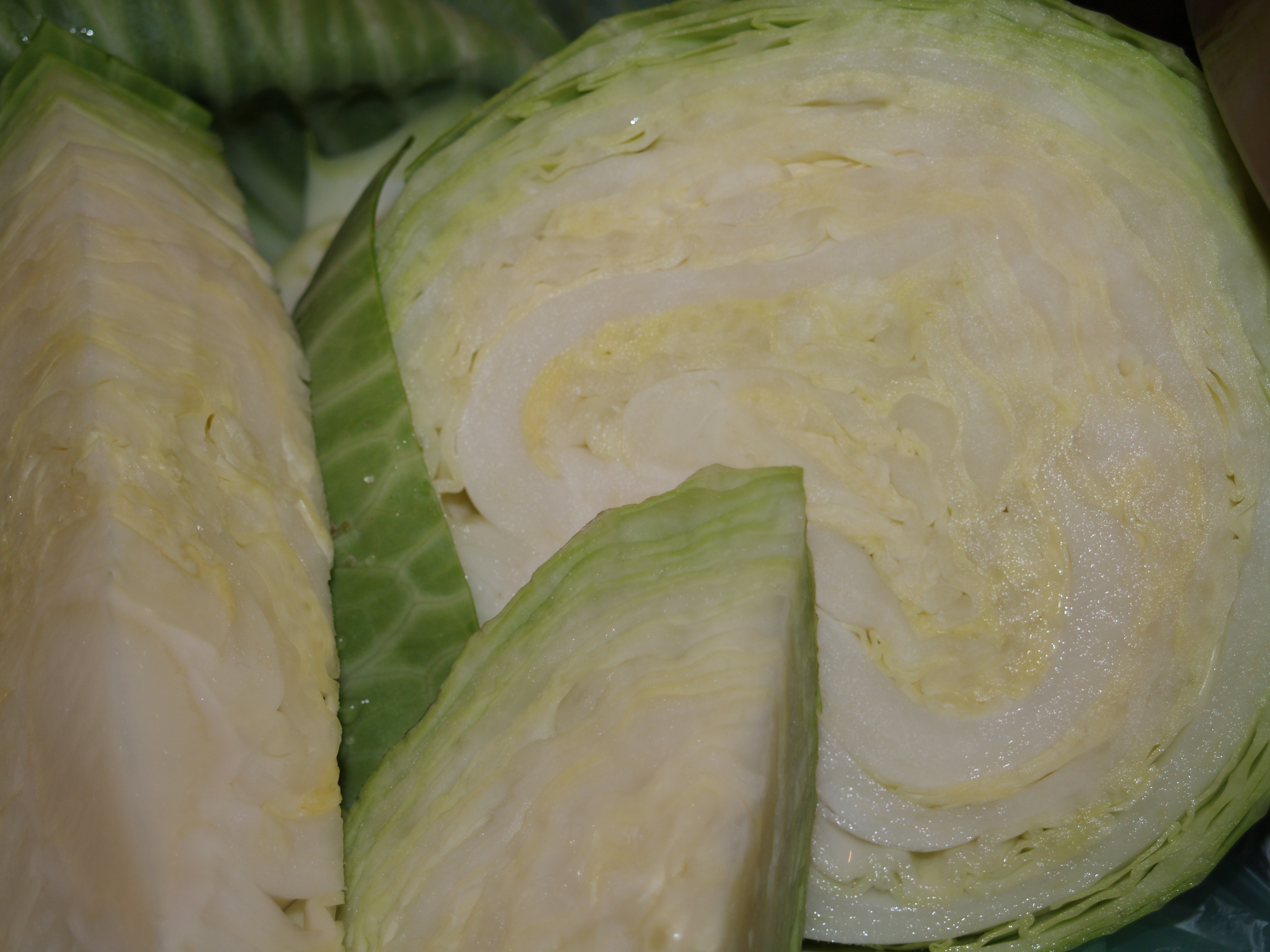
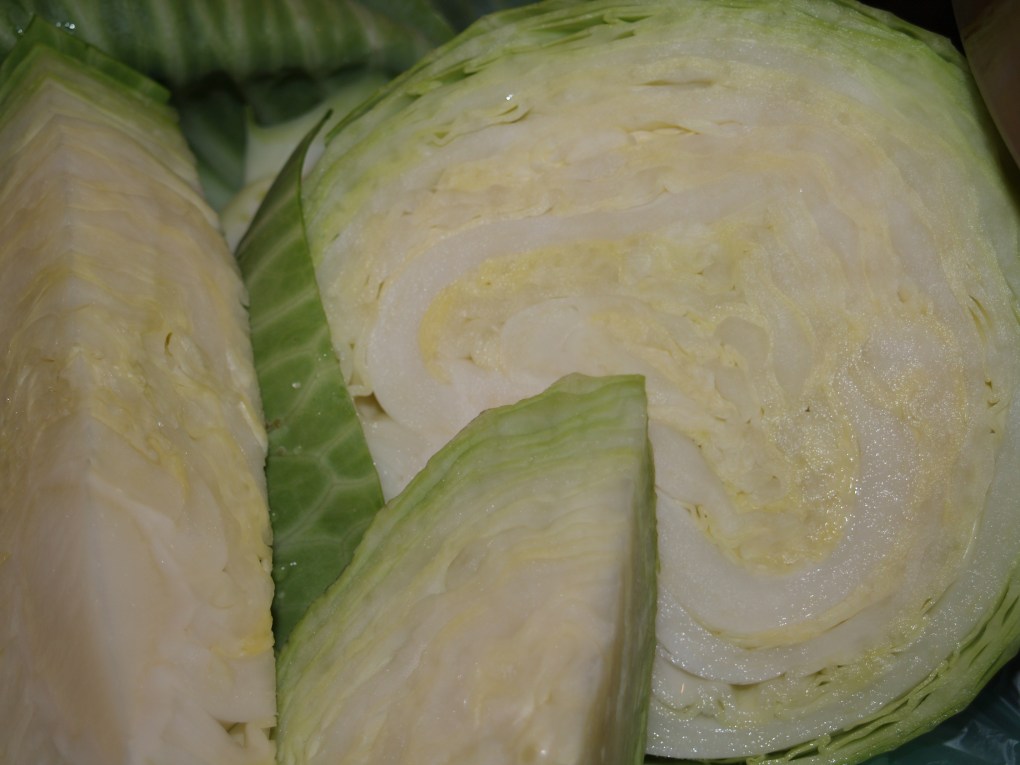
Farm Fresh Cabbages

“I have come to the conclusion that the most important element in human life is faith.  If God were to take away all the blessings, health, physical fitness,  wealth, intelligence, and leave me with but one gift, I would ask for faith— for with faith in God, in God’s goodness, mercy, love for me, and belief in everlasting life, I believe I could still be happy, trustful, leaving all to God’s inscrutable providence.” —Rose Kennedy


Most people would agree that we live in a germ-ophobic country.  YET, all around us and within us there is a microscopic world, things invisible – an interconnected multitude of fungus and bacteria.  (uh-oh…)  From the beginnings we coexisted with these little organisms; we even harnessed their help to age and preserve our food without refrigeration.  However, when Louis Pasteur uncovered the role of bacteria in disease, (which is a great thing!) we began to fear them as dangerous enemies and in fearing them we forgot about their role in health.

Not all bacteria and fungi are bad.

In our modern antiseptic world, it can take a leap of faith – and maybe even a little science – to calm our fears, reacquaint ourselves and get comfortable with the microcosmos around and within us.  A little reminder that the world God created is good  (it was also raw and unpasteurized, by the way!) and that I can rely on that whole food creation -more than food scientists and industry- for the plentiful nourishment of my family!   You know what?  So can YOU!

The word sauerkraut is German for “sour cabbage” – but the French call it choucroute.  Whatever you call it, sauerkraut is probably to most widely known fermented food behind, pickles, olives and yogurt.

Probably the most widely known sauerkraut is Bavarian style, which is shredded cabbage, salt and seasoned with caraway seeds.  Some other German styles use juniper berries to season the kraut.


A word on the nutritional virtues of sauerkraut.


Fermented sauerkraut is not only pre-gested thereby making it’s nutritional profile more bioavailable, it is also low in calories, high in fiber, and is a good source of vitamins K, C and folate and also the minerals potassium, calcium, magnesium, copper, manganese and iron.  It has a great profile of antioxidants and is anti-inflammatory.  Cabbage is exceedingly nutritious on it’s own merits, but let it ferment and it’s full potential is silently revealed.

Studies that “analyzed cabbage before and after fermentation to see how the elements had changed  found that the glucosinolates in cabbage dissolved into a class of enzymes that have been shown in prior studies to prevent cancer.” (Preventdisease.com)

But that’s not all!  Sauerkraut also helps to maintain the acid/base balance of the body, helps to regulate blood sugar levels making it useful for hypoglycemics and diabetics and has been associated with preserving ocular health.

Like all ferments, sauerkraut  is high in naturally occurring lactic acid which helps maintain a healthy acidity in the large intestine, thus creating an environment that is hostile to parasites  and yeast but comfortable for good bacteria.


Ready to give it a try?


Fermentation takes neither much time, or effort.  It’s a great way to add great nutrition to the table, and making it yourself is a real money saver when you’re on a budget and feeding a large family.

It’s super nourishing, unassuming and delicious.  We eat it because it tastes great.  On it’s own, adorning a brat or hot dog, or even as a great garnish on a wintery day’s BLT.  You can buy sauerkraut in the store, but if you want all the benefits of the ferment, then it’s best to look for small batch, artisinal, organic, lacto-fermented varieties that are also non-pastuerized.

 

IMG_0306


Michael Pollan says about fermenting, “Koreans, who know a thing or two about fermentation, distinguish between the “tongue taste” of various foods and the “hand taste“.  Tongue taste is a simple matter of molecules making contact with taste buds – the kind of cheap and easy flavors any food scientist or food corporation can produce.  Hand taste is the far more complex experience of a food that bears the indelible mark – the care and sometimes even the love – of the person who made it.  The sauerkraut (and most anything else) you make yourself will have hand taste.

That makes a lot of sense here at Nourishing Grace, because the word nourish is quite beautiful and comes from the latin nutrire, which means to feed or cherish, to preserve, look after or suckle. That implies a “hands on” relationship!


“Better is a dish of herbs where love is than a fattened ox and hatred with it.” —Proverbs 15: 17


Of all our nourishment let it be rooted in goodness and love as we prepare and enjoy our meals with loved ones at the table!


how to make your own sauerkraut

Equipment

1 – 1 gallon Ceramic crock or  wide mouth mason jar

plate or plastic that will fit inside


ingredients for sauerkraut

2 medium heads fresh cabbage (fresh local cabbage is the best because of it’s higher moisture content the salt will draw out more water for the brine.

3 tablespoons sea salt


process

chop or shred the cabbage.  We use a food processor

As you process the cabbage, place in bowl and sprinkle salt on each layer.  The salt osmotically draws the water out of the cabbage.  This becomes the brine in which the cabbage ferments without rotting.
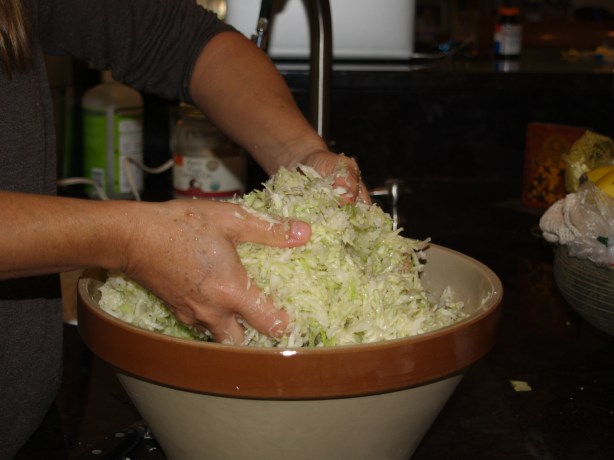
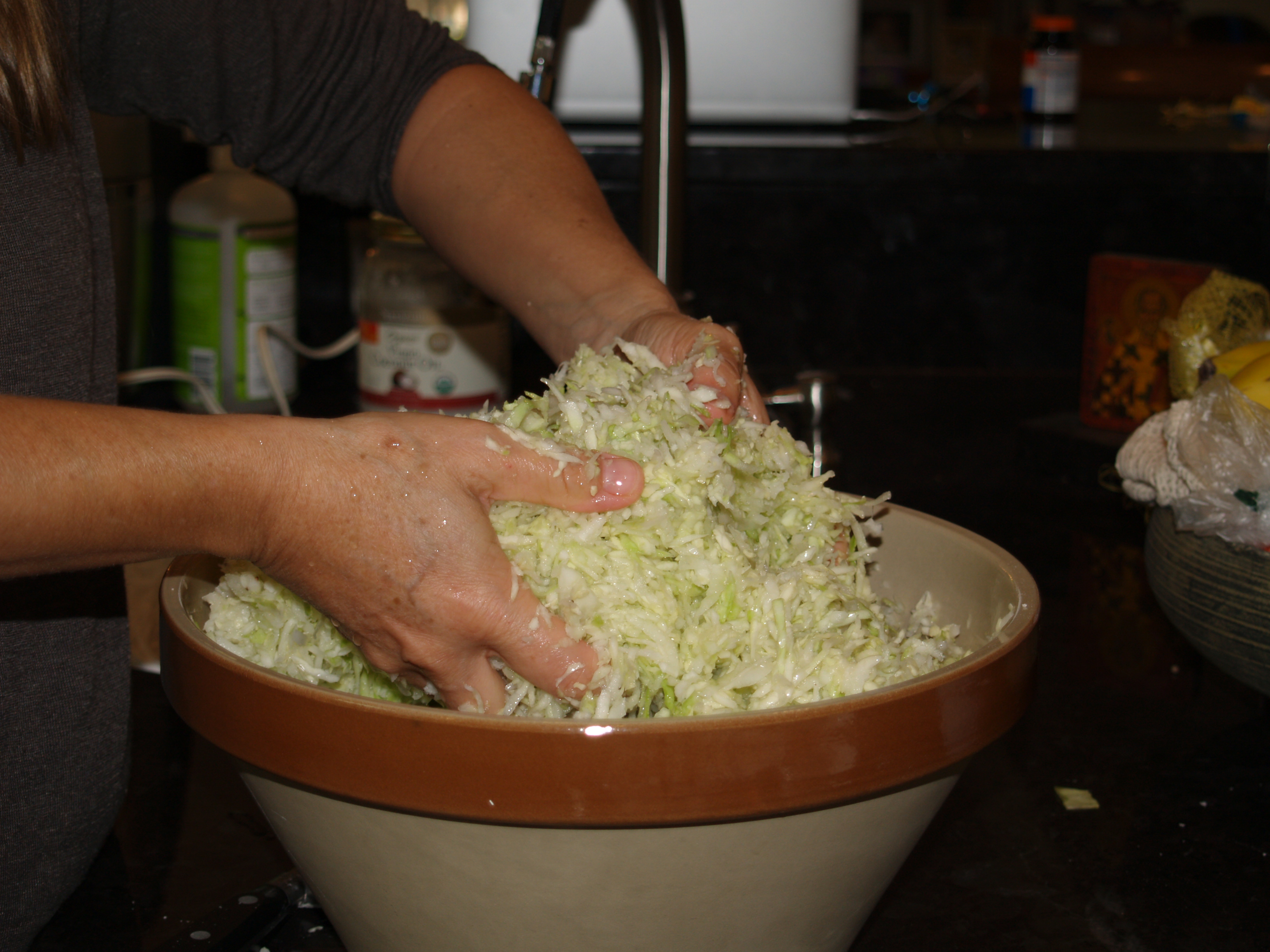
mixing the sauerkraut

mixing the sauerkraut


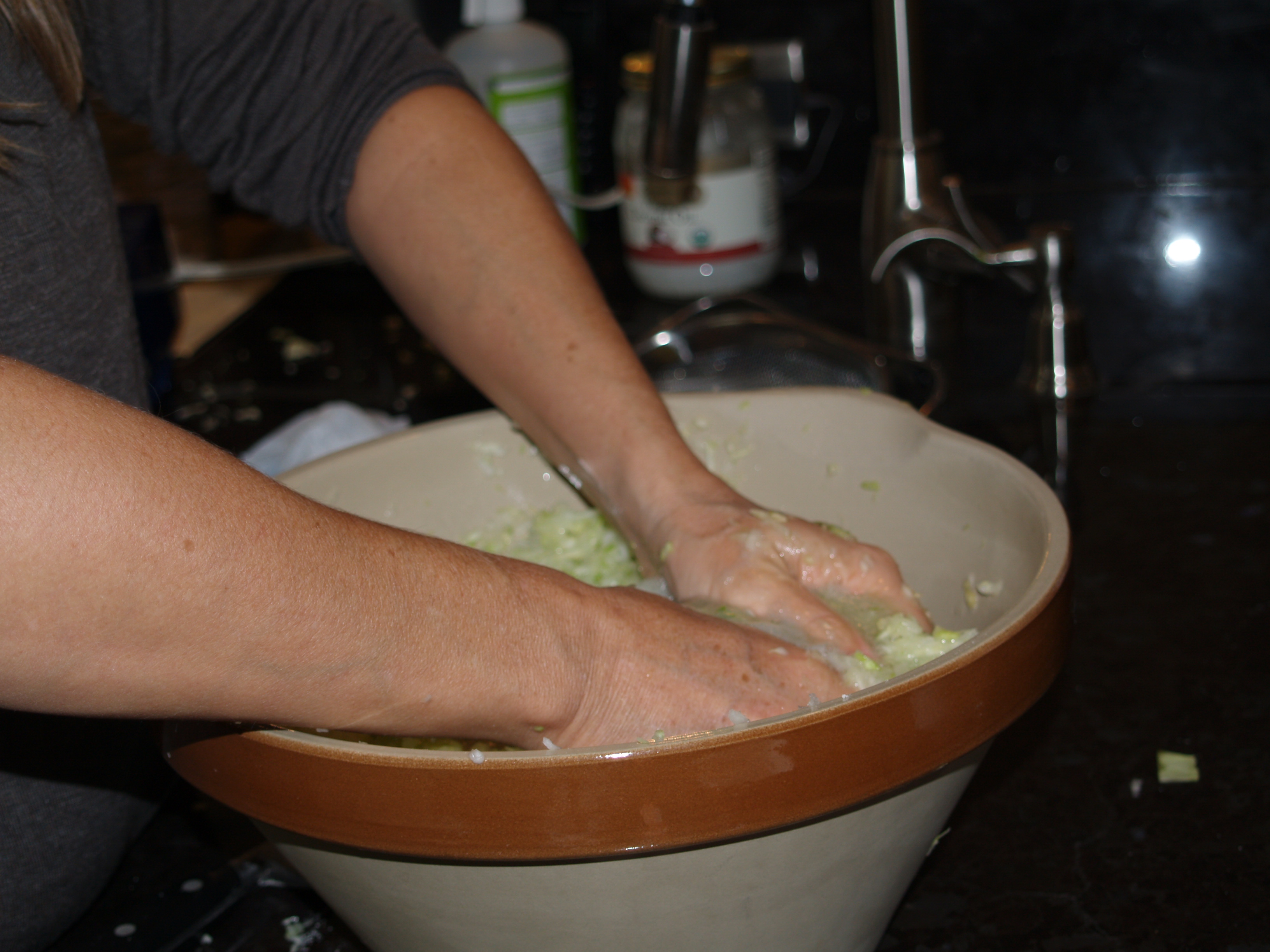
Mix the ingredients together and you can either pound the cabbage, or massage with good firm squeezing.  That will all serve to draw out the brine.  You can also mix it and leave it for a half an hour and then start the pounding or massaging.
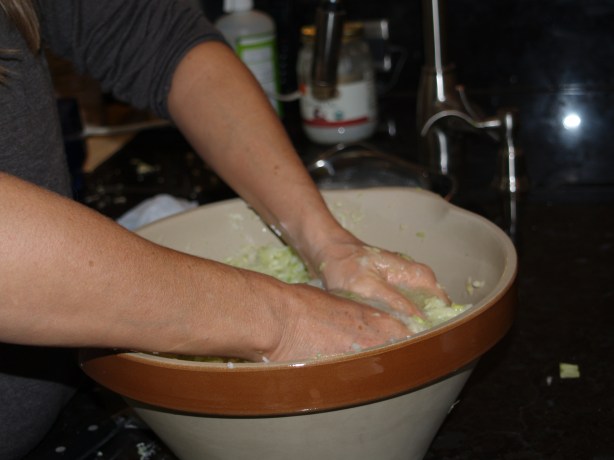
 

massaging the cabbage

massaging the cabbage


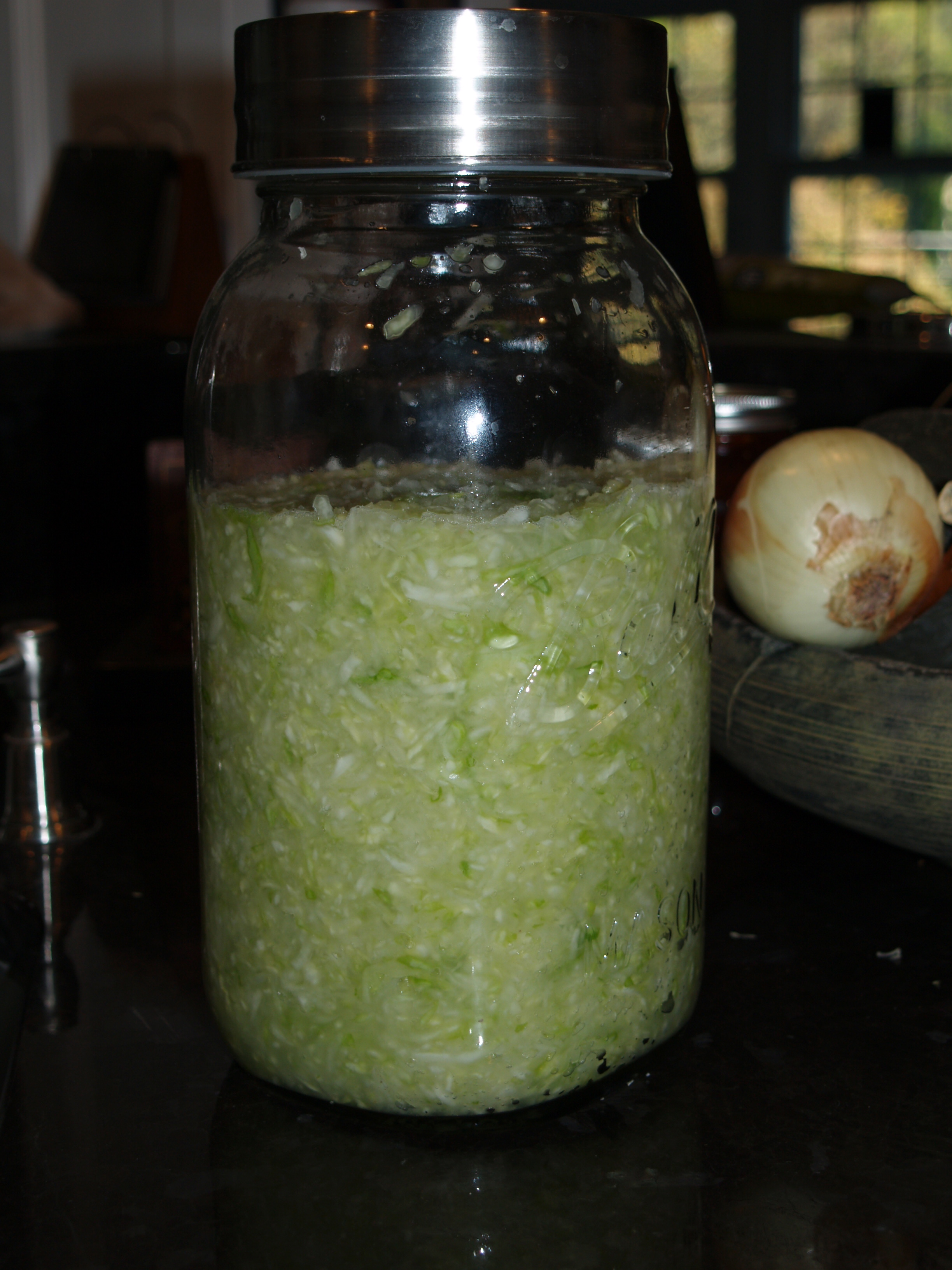
Transfer the mixture to the crock or mason jar.  Tamp it down firmly.  You can use a tamper or your fist.  I use my hands.  Push the cabbage below the brine level.  Fermentation works because the vegetables stay below the brine.  So in this oxygen deprived environment, anaerobic, only the good bacteria are able to survive and thrive.  Place a clean weight over in the crock over the cabbage to keep it down.  This can be a smaller jar with water in it.

To be honest, I do not always use a weight.  My ferments are always on the kitchen counter, so I wash my hands and push it beneath the brine several times a day.  But if you are not able to do that, it’s best to use a weight.
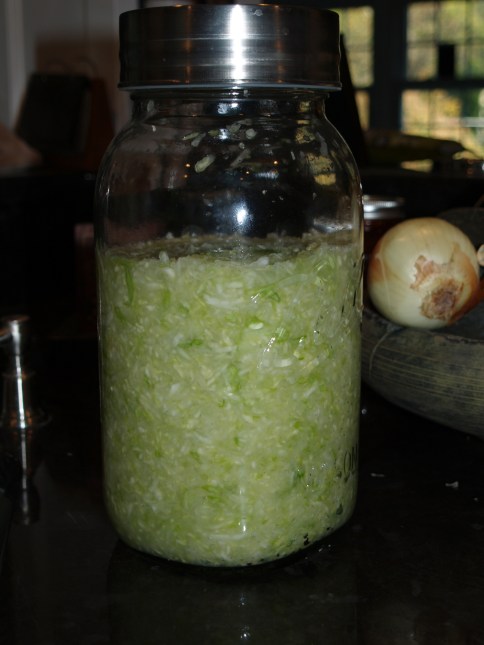
 

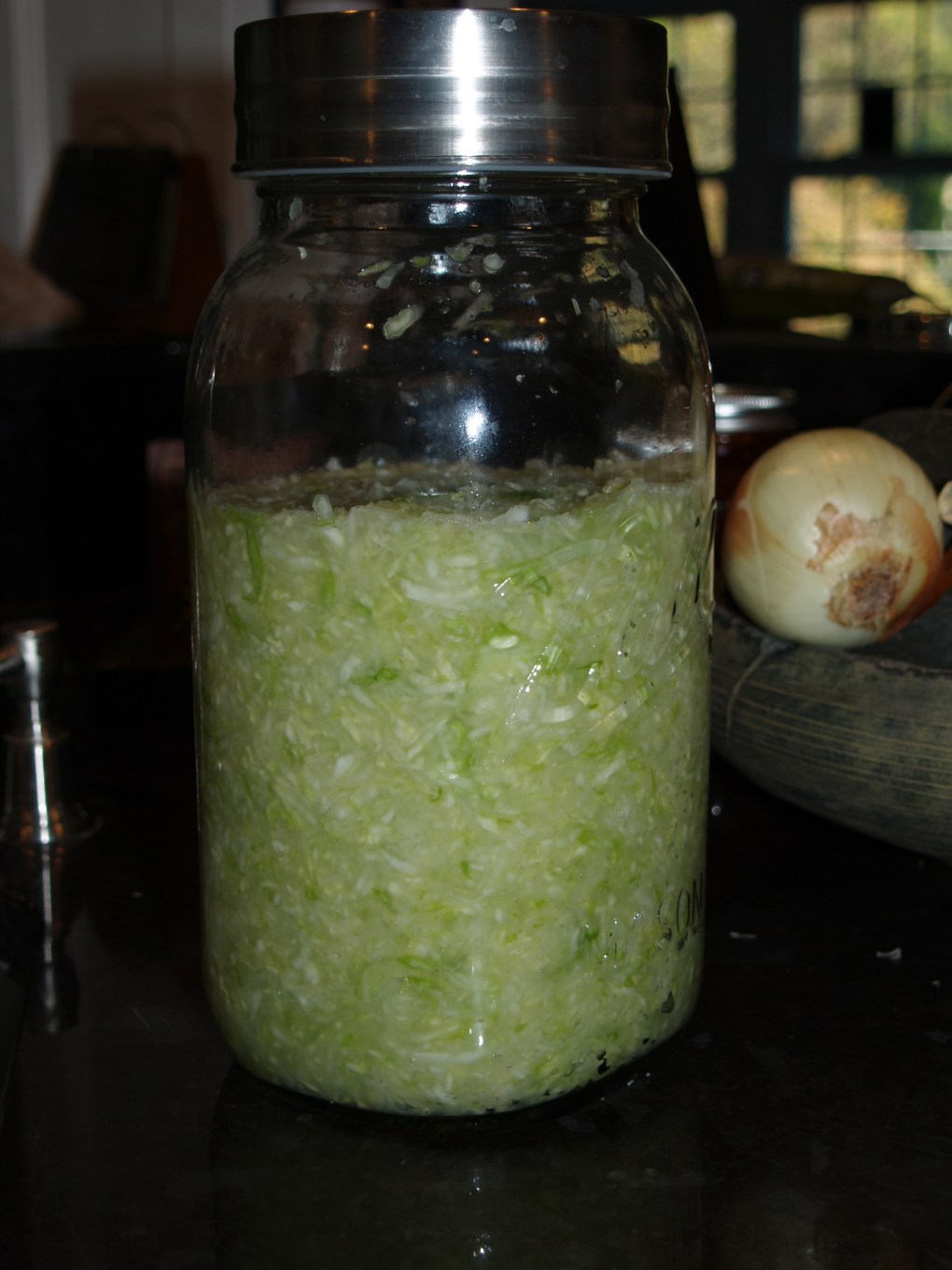
Sauerkraut on the Ferment


The sauerkraut will develop at a rate directly correlated with temperature.  At 45 Fahrenheit, fermentation is very slow, at 90 Fahrenheit it is notably faster.  Lower temperatures, in the 70 Fahrenheit range make a superior kraut.

After 3-5 days, give the sauerkraut a taste.

See if it suits you.  Some people love the flavor of an immature green kraut.  If it’s not the flavor profile you want, let it sit longer for the flavors to develop.  Once it is to your liking, place in smaller jars and move to the refrigerator or other cool spot (like a root cellar).  The slows down the fermentation process.

Taste-testing the developing sauerkraut has become my daughters job and her taste buds are definitely evolving.  We currently have a jar of sauerkraut that has been on the counter for three weeks.  We are using it, but she has not asked to have it moved the fridge.  Surprisingly it has not gotten very very sour, just more delicious.

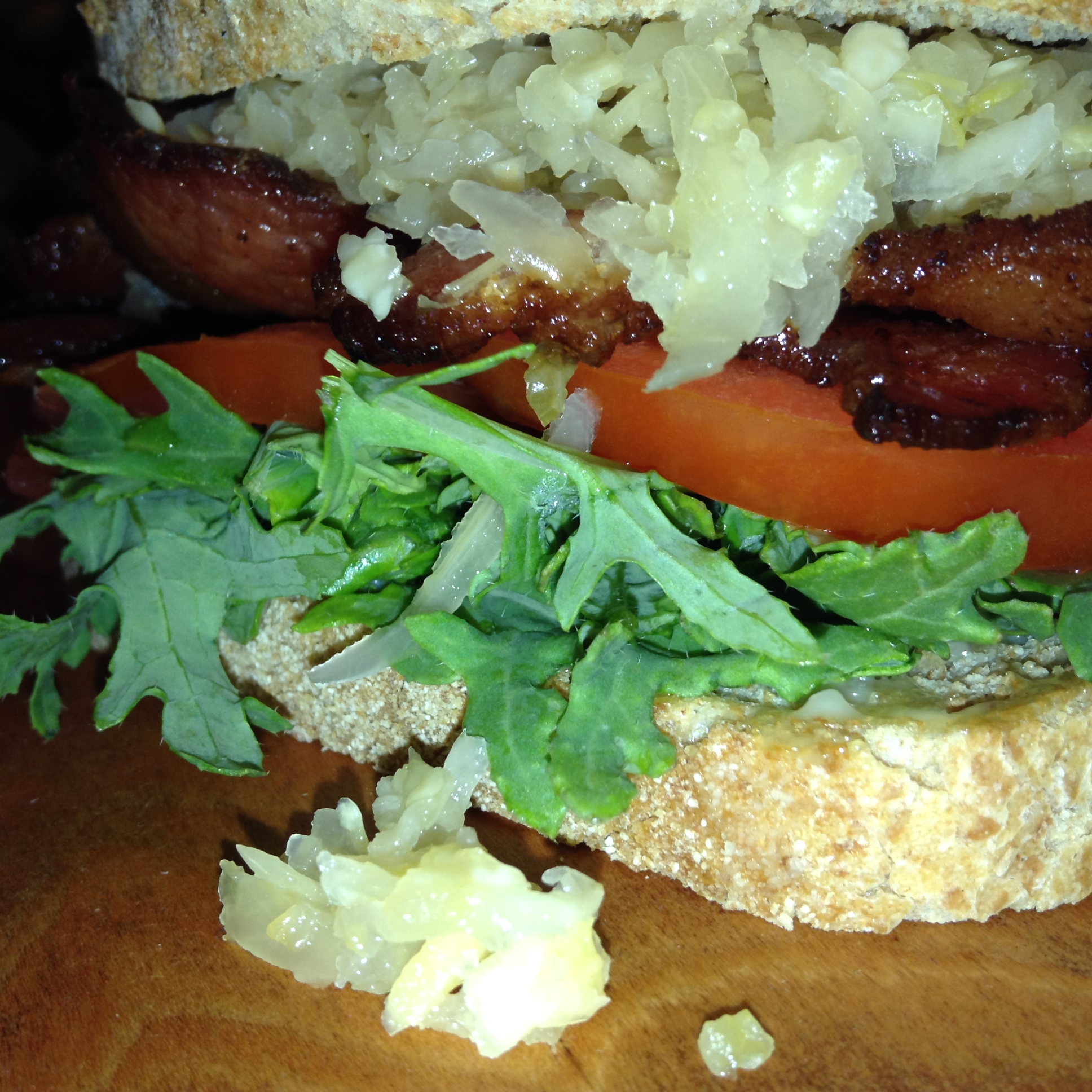
There are many ways to enjoy your kraut, most recently we had ours atop BLT’s served on a great sourdough made during the big snow storm.
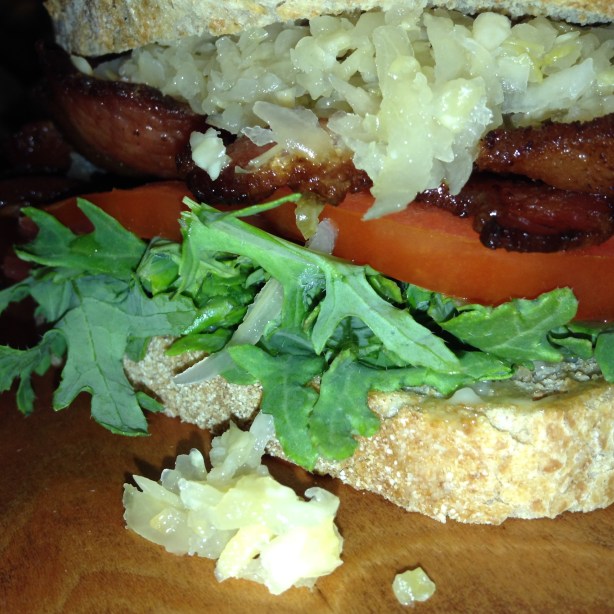
sourdough BLT with sauerkraut

sourdough BLT with sauerkraut


Sources:

Katz, Sandor Ellix. The Art of Fermentation: An In-Depth Exploration of Essential Concepts and Processes From Around the World.  White River Junction, VT: Chelsea Green Pub., 2012. Print.

“What Are The Benefits Of Sauerkraut Juice?”. Livestrong.Com

Ten Reasons to Eat Fresh Unpasteurized Sauerkraut | Vitality Magazine | Toronto Canada alternative health, natural medicine and green living


winter ferments – gingered beet and carrot slaw

The dinner table in a monastery is always set with care for both daily fare and feast days. Food is arranged to show the full beauty of God’s harvest in vegetables, grains, dairy products, and fruit.

Victor-Antoine d’Avila-Latourrette

Oh…!  The rich earthy flavor of this slaw just get better over time.  If you are a fan of beets, this does not disappoint – not one bit!  Fermenting is a low-cost, efficient and easy process that preserves foods – some indefinitely!  We still have the remnants of a corn jalapeño salsa ~ from two years ago ~ that is still viable, delicious and enjoyed!

Ferments have a self sufficient versatility – but at the same time, pair well with a variety of dishes.  Fermenting your own vegetables is an artisanal delight that is flavorful, healthy and when made with your local harvest good for the planet too!


Gingered Beet and Carrot Slaw

When fermenting –  use the best quality ingredients available to you.  Remember, local, simple and seasonal freshness make all the difference in and to the world!

ingredients:

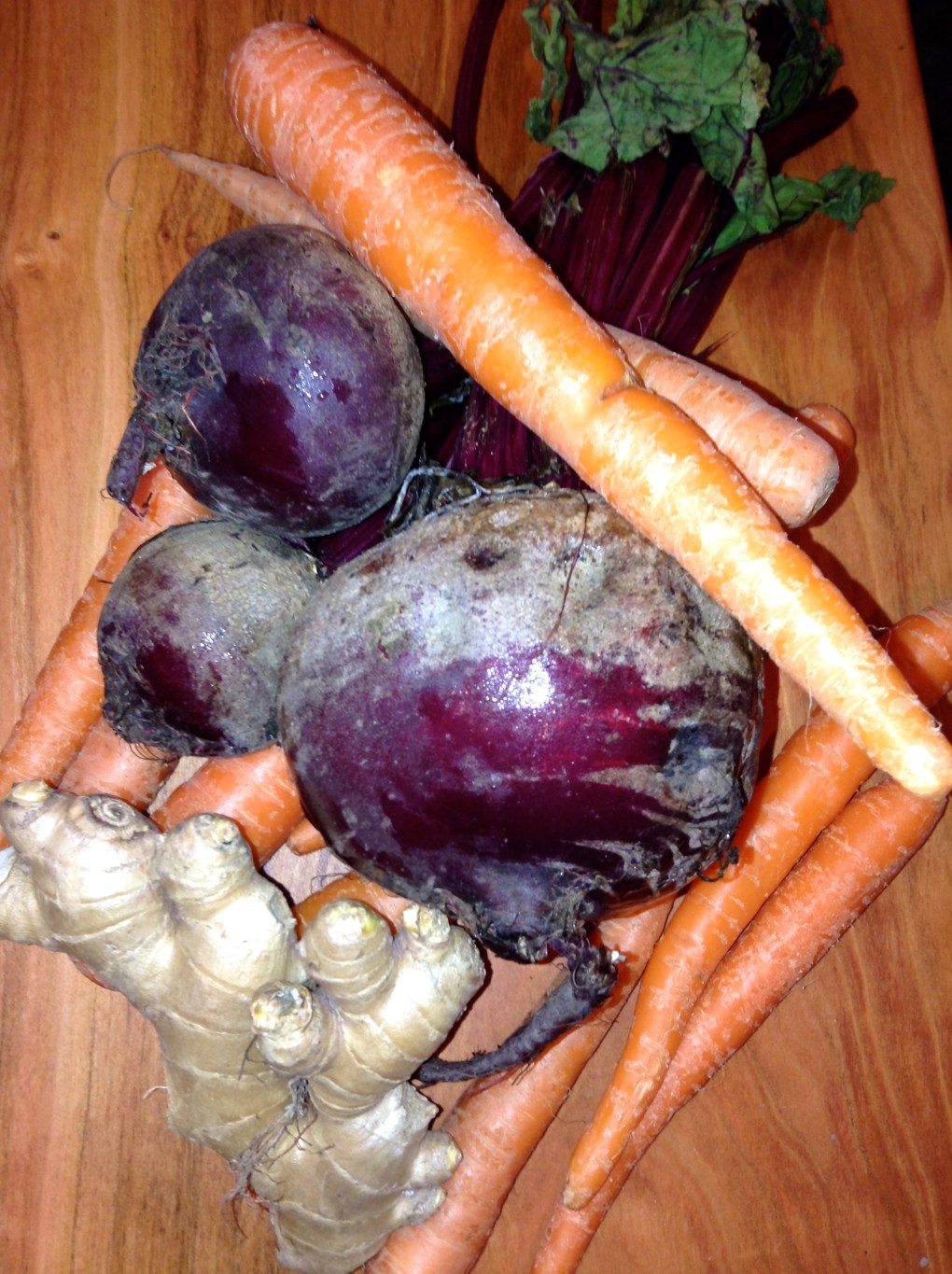
300 grams fresh shredded carrots

500-600 grams fresh shredded beets

100 -200  grams onions (optional)

1/2 – 1 teaspoon shredded fresh ginger

2 teaspoons salt

fermenting ingredients

preparation:

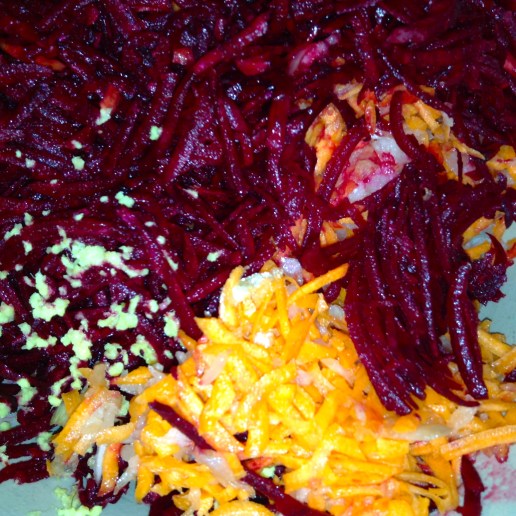
Wash hands.  Place all ingredients in large clean bowl.  Mix and massage the mixture with hands, squeezing to extract the natural juices.  Some recipes call for a brine to be added to the slaw, but my experience (and preference) is that my local fresh ingredients produce enough liquid when the salt is added to cover the vegetables.  This is the same principle used for sauerkraut.

IMG_0238

Mix for about 10 minutes (this is a great work out!).  Place in a clean mason jar and leave out of direct sunlight.

After about 5 days taste and continue to do this every day until the taste you desire is achieved.


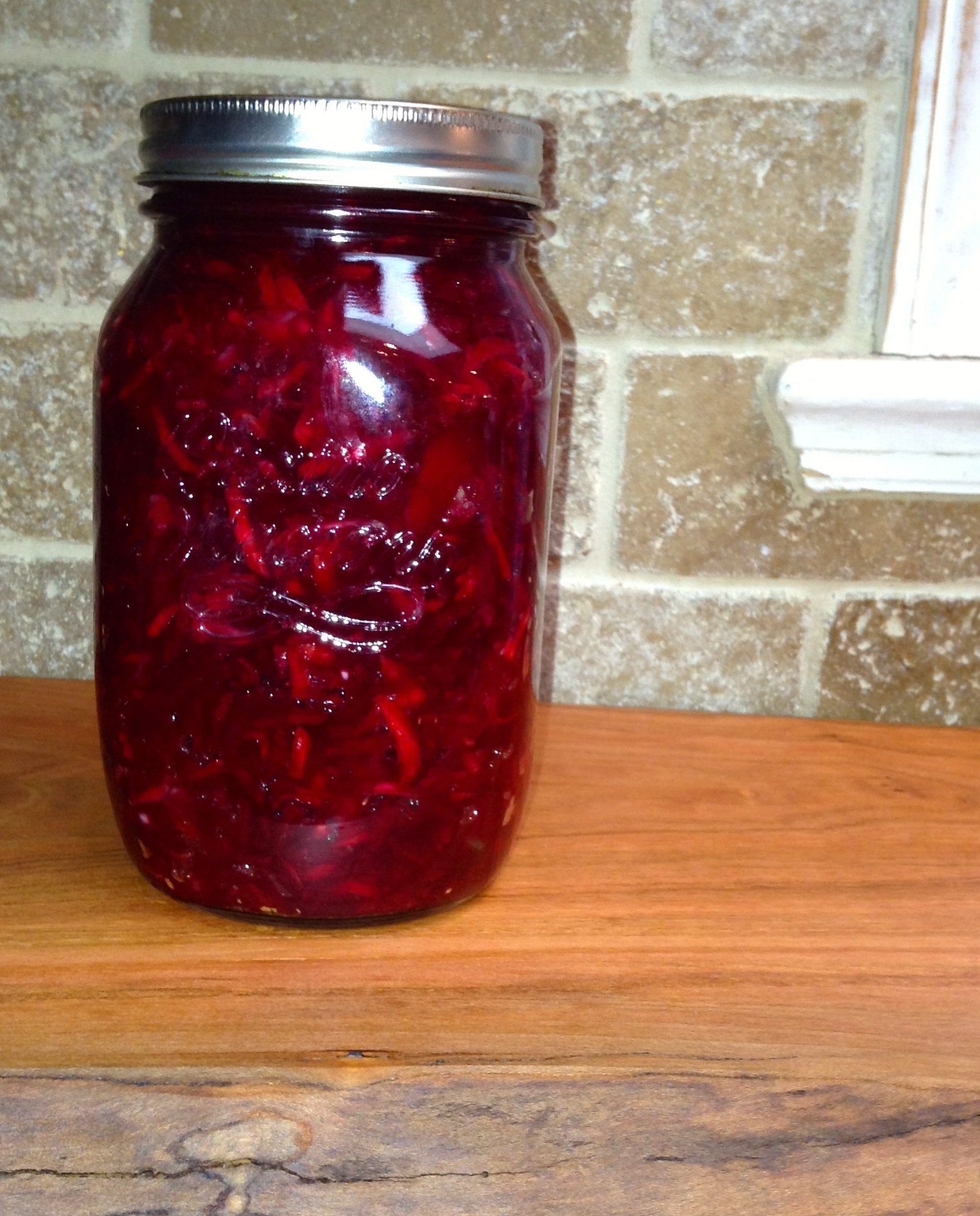
 Fermented Beet Carrot and Ginger Slaw


On the Ferment – the amazing health benefits of fermented foods

“Monastic cookery, as it has been practiced through the centuries, is cherished for its emphasis on simplicity, wholesome frugality, basic good taste, and the seasonal rhythms of the ingredients used.

Monastic kitchens always strive for a healthy and balanced diet, fully aware from past experience that the monk and the nun must be properly nourished to serve God well.

The human body is the temple of God, and its dietary needs must be respected.”  Victor-Antoine d’Avila-Latourrette

Ferments, in all their glory and wonder, are an amazingly simple way to boost the nourishment of vegetables, boost immune function and honor our body’s dietary needs.  They are a staple in the pantry stocked for ease of meals and vibrant health.  It seems strange to us that people from earlier generations knew how to extend the edible life of their vegetables without the use of freezers or pasteurization.  But, throughout the ages, people around the world, without any awareness of the scientific principles involved, utilized and prized fermented foods.

One of the benefits of fermentation are the formation of probiotics.  These are friendly tiny little micro-organisms that promote digestive wellness.  These healthy communities of beneficial microflora and bacteria in our gut have an intensely positive impact on our overall health.

Most people these days are aware that 80% of our immune system resides in the gut BUT did you know that the vast majority of the DNA in you does not even belong to you!  It’s a pretty amazing fact that

You have ten times more bacteria in your gut than you have cells in your body.  And those bacteria comprise 99 percent of the DNA in your body.  If only 1 percent of our DNA is human, and 99 percent is alien, you have to ask the question, who hosts whom??  These bacteria are called your microbiota…  The microbiota function much like an organ, and they act as a major part of the immune system.  They protect us from microbial and parasitic diseases… and contribute to our rate of aging.  (Lipski, 2012)

In that light, it’s clear that we were designed to live in symbiotic harmony with these bacteria.  Yet, modern advances – while wonderful in many respects – have led to an age where antibiotics, stress, over consumption of refined processed foods, alcohol, and over the counter prescriptions easily disrupt the delicate balance of of our digestive biome.  As a result, we are the first generation needing to consider how to refortify our diets with these helpful organisms!

There is still so much to be known about this remarkable ecosystem within us – but, thus far, we have learned a lot!  Did you know that:

  • Probiotics maintain the integrity of the intestinal tract. Each different probiotic has specific effects on the human digestive system and is able to compete with disease causing bacteria. Thriving microflora in your gut actually fights for your very health and survival!! Think about that for a minute!

  • Certain probiotics secrete large amounts of acetic, formic and lactic acid, which makes the intestinal environment inhospitable to invading microbes and helps prevent or lessen the severity of food poisoning.

  • Probiotics manufacture vitamins B1, B2, B3, B5, B6, B12 and K

  • Probiotics aid in the digestion of lactose and dairy products and digest proteins.

  • Probiotics increase the absorption of minerals.

  • Probiotics reduce intestinal inflammation.

  • Probiotics balance intestinal pH.

  • Probiotics improve or prevent irritable bowel syndrome.

  • Probiotics prevent and treat diarrhea from antibiotics and traveling.

  • Probiotics manufacture essential fatty acids and short chain fatty acids. These fatty acids actually feed the cells of the colon and optimize the colon’s pH for improved or optimal colon health!

  • Probiotics prevent and control vaginal yeast infection, thrush and bladder infection.

The list above is just a partial highlight of the amazing things that go on inside you when you eat simply and well!  It’s clear that intestinal microbes play a vital and front line role in our immune defenses.  Because they only reproduce in our digestive system for a few weeks before being eliminated – probiotic rich foods are a staple of a well balanced diet.


Properly prepared ferments add probiotics in the trillions per spoonful, with an efficacy far superior (and cost effective) to probiotics in tablet form.


When selecting your foods, keep in mind, variety is the spice of life.  If the only fermented food you eat is yogurt, you are missing out on all of the anti-inflammatory benefits of foods like sauerkraut, kimchee, kefir, brined pickles & olives, and various slaws.

Each different ferment provides a variety of bacteria and the different vegetables all bring their unique health properties to the table.


Local Seasonal Cabbage

ready for duty!


New to ferments?  Wondering how to introduce them to your family?


Okay, I totally understand that!  If you have infants and toddlers, you are in the best situation.  Little ones tend to accept new flavors readily.  We started later on the journey, with some pretty opinionated tastebuds and peer pressures.  So what was helpful was to keep in mind that a little goes a long way.  It’s really not necessary to eat a lot.  Just a tablespoon as part of each meal yields wonderful health benefits!  Build up from there if you wish.

Taste buds vary among our kids and some enjoy ferments more than others.  Our oldest loves the sauerkraut and salsa.  She usually takes more than a spoonful at each meal.  The youngest isn’t the biggest fan and she gravitates toward gingered carrots, beets and pickles.  Any vegetable can be fermented – even green beens and asparagus.

A great friend of mine from Bulgaria, actually remembers her parents and grandparents fermenting all their summer vegetables because, during communism, there was not a year round supply to be found in stores during the winter.

I was in awe!


Sauerkraut on the Ferment

Sauerkraut on the Ferment!


Ferments have a self sufficient versatility – but at the same time, pair well with a variety of dishes.  Fermenting your own vegetables is an artisanal delight that is flavorful, healthy and when made with your local harvest good for the planet too!


summer salsa

This time of year is all about preserving the freshness and bounty of the season… and that usually requires me to act fast, you know what I mean?  There comes a week, during the peak harvest, when the farmer’s market surplus of tomatoes reduces their cost  to $15 dollars for a 30 pound box – at least around here!  Tomatoes for 50 cents a pound!  It’s an irresistible sight I both long for and dread.  With so many tomatoes, one needs to act quickly or they will go bad – let them sit even overnight and you are guaranteed to loose a few to the compost.

So the season of harvest has me re-thinking our methods of preserving.  As a mom and student of holistic nutrition, I want foods teaming with life and nourishment for my very vibrant family.  A few years ago I learned about a different method of preservation… fermentation.

Unfamiliar with fermenation?

The art of fermentation is as old as humanity, but one that has largely disappeared from our western diets.  Fermentation is fairly simple because it preserves without the use of hot water baths and pressure cookers.  Conventional canning methods kill all bacteria; whereas fermentation is actually a cooperation with the bacteria (germs!) that are naturally available on the environment of the produce.  In fermentation, the naturally present bacteria feed on the sugar and starch in the food which creates lactic acid and that preserves the food, while also creating beneficial enzymes, b-vitamins, short-chain fatty acids, and various strains of probiotics.

Fermentation not only preserves produce, but also transforms ingredients into a more digestible state and creates more nutrition than it’s original vitamin content.

These foods nourish us deeply because through fermentation, nutrients become more absorbable – pregested like the lactase in yogurt which has been broken down and is why those with lactose intolerance may be able to handle yogurt or aged cheeses.
Ferments are laden with probiotics -which have numerous health benefits.   Historically, people would get a large portion of the healthy bacteria necessary for their digestive systems in the form of fermented foods.  Studies show that these good bacteria- probiotics are integral and critical to good health.  Our modern food industry, instead, has left us as a generation that turns to supplements to re-innoculate our digestive tract.  Yet with a traditional ferment, each morsel of can provide trillion of beneficial bacteria- far more that you can get from a probiotics supplements. (Mercola)  That’s pretty amazing!

Through the fermentation process, many foods accumulate increased levels of B vitamins, including thiamin (B1), riboflavin (B2) and niacin (B3) as compared with the nutrition of the raw ingredients prior to fermentation.

In a nourishing sense, fermentation is a virtue!

The finished product – through the slowness of time and the inner-working of a microbial community becomes greater than it’s original constituent ingredients.  And,  it lasts!  It’s true to say that ferments and the art of nourishment requires patience and time and nurturing.

In our day, that is a choice, one that more and more of us gladly make – for the very word nourish means to feed or cherish, to preserve, look after or suckle.  In that sense, nourishment means relationship… one involving care and love.

Fermented products can be an acquired taste, but some well known examples of fermentation include sauerkraut, kimchee and brined pickles.
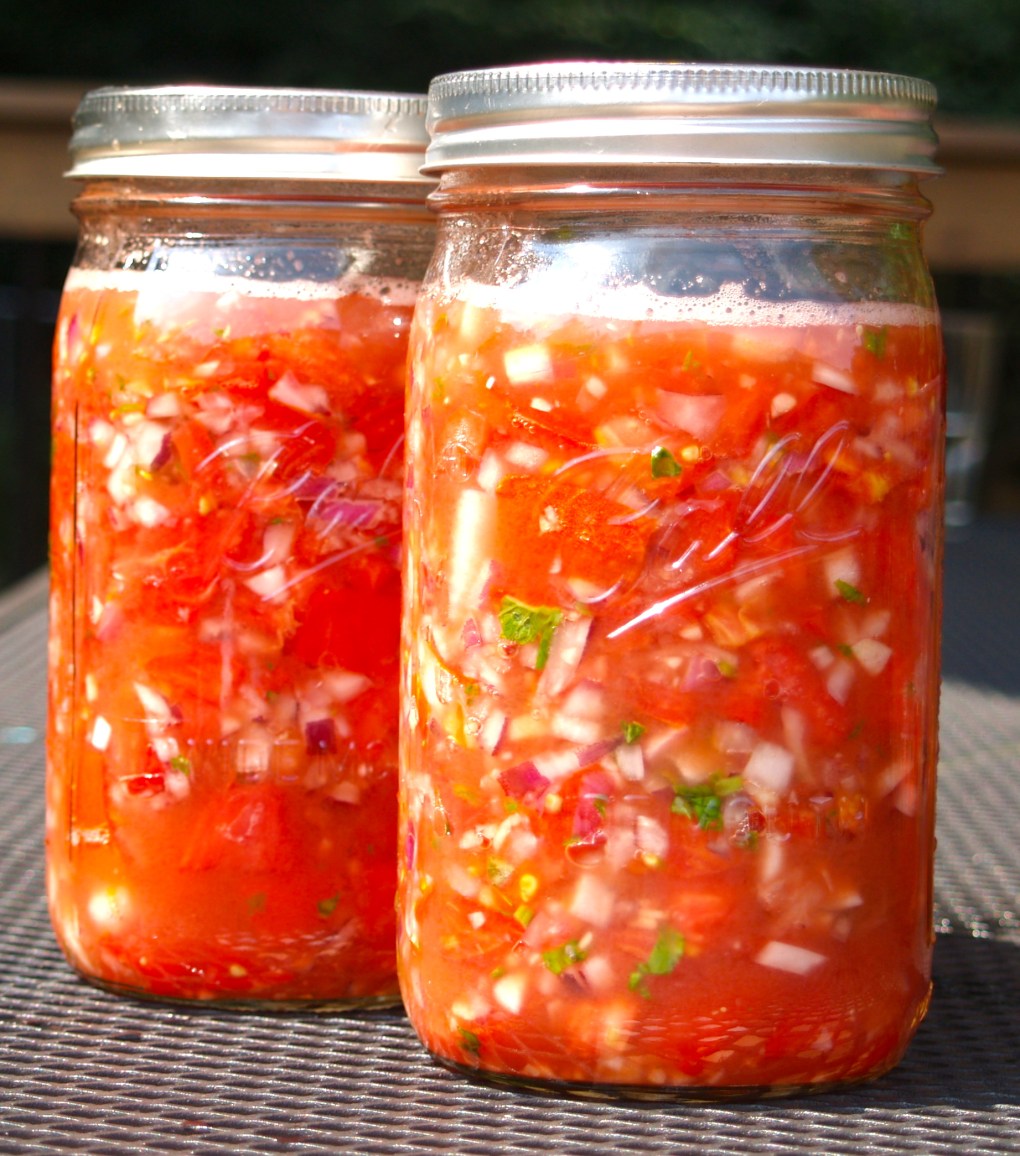
Ready to give ferments a try?  A great introduction to fermented foods is a fermented salsa that a friend shared with us.  It is delicious and a family favorite – even with the kids!  For a small batch, you’ll need:

OLYMPUS DIGITAL CAMERA

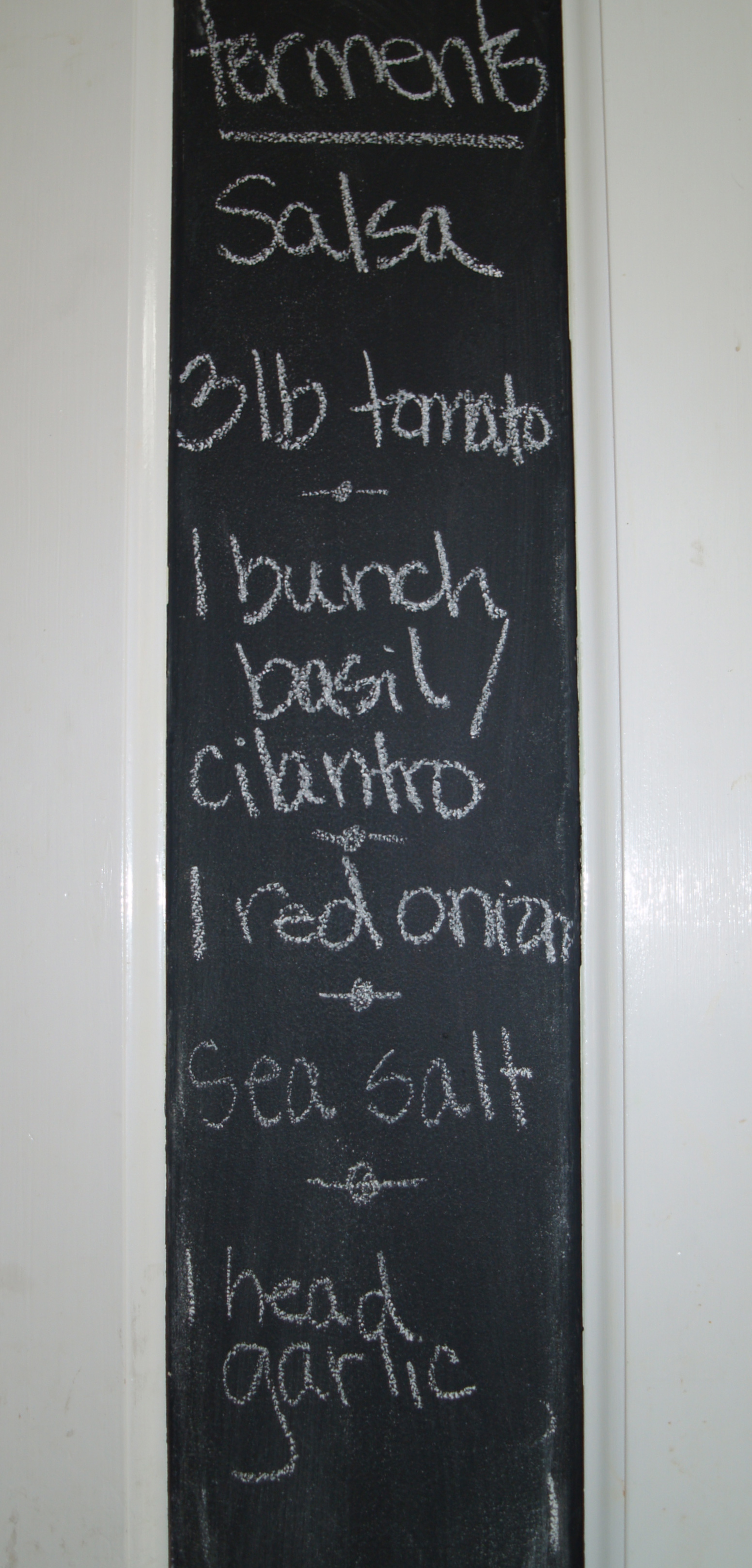
3 lbs of fresh tomatoes – chopped – do not discard the juice
1 bunch of cilantro or basil (our cilantro has died out, so we are using fresh basil)
1 small onion (about 3/4-1 cup)
3 tablespoons sea salt
1 head garlic – peeled and chopped finely
Optional – 1 jalapeño chopped – with or without seeds depending on your tastes
1 lime – I try to use only local ingredients in my ferments – so I usually skip this
2-3 clean mason jars
Clean bowl and spoon.
All your utensils, cutting boards and bowls should be clean.  It is not necessary to sterilize them.

Rinse tomatoes and wash your hands.

Chop ingredients to the salsa consistency you prefer.  It is not necessary to discard the juice as this becomes our brining liquid.  Mix all ingredients well in bowl.

Spoon into jars and either with a wooden spoon or your clean hands press the salsa below the liquid.
Seal tight and leave out of direct sunlight on the kitchen counter for 3-5 days.

Open the jars periodically as this will release some of the gases and also make sure to continue pressing your salsa below the brine line if necessary.  Frequent tasting – once the ferment has reached the taste consistency you love, enjoy some and then move it to the refridgerator.  The cooler temperature there slows down the fermentation process.


A taste of this salsa in winter will unleash the vibrant delicious flavors of summer!  It can be enjoyed with your favorite organic chips, with scrambled eggs, on a taco or anywhere that you normally would enjoy it.  One word of caution that I offer… if this is your very first ferment or your diet is generally spartan of probiotic rich foods, please start out with just a tablespoon per day for about a week to build up your internal probiotic community slowly.

Fermentation is making a niche comeback and one that has been recognized by culinary mega-giants like Williams Sonoma which now sells vessels for fermenting.  This is great news!