
This time of year is all about preserving the freshness and bounty of the season… and that usually requires me to act fast, you know what I mean? There comes a week, during the peak harvest, when the farmer’s market surplus of tomatoes reduces their cost to $15 dollars for a 30 pound box – at least around here! Tomatoes for 50 cents a pound! It’s an irresistible sight I both long for and dread. With so many tomatoes, one needs to act quickly or they will go bad – let them sit even overnight and you are guaranteed to loose a few to the compost.
So the season of harvest has me re-thinking our methods of preserving. As a mom and student of holistic nutrition, I want foods teaming with life and nourishment for my very vibrant family. A few years ago I learned about a different method of preservation… fermentation.
Unfamiliar with fermenation?
The art of fermentation is as old as humanity, but one that has largely disappeared from our western diets. Fermentation is fairly simple because it preserves without the use of hot water baths and pressure cookers. Conventional canning methods kill all bacteria; whereas fermentation is actually a cooperation with the bacteria (germs!) that are naturally available on the environment of the produce. In fermentation, the naturally present bacteria feed on the sugar and starch in the food which creates lactic acid and that preserves the food, while also creating beneficial enzymes, b-vitamins, short-chain fatty acids, and various strains of probiotics.
Fermentation not only preserves produce, but also transforms ingredients into a more digestible state and creates more nutrition than it’s original vitamin content.
These foods nourish us deeply because through fermentation, nutrients become more absorbable – pregested like the lactase in yogurt which has been broken down and is why those with lactose intolerance may be able to handle yogurt or aged cheeses.
Ferments are laden with probiotics -which have numerous health benefits. Historically, people would get a large portion of the healthy bacteria necessary for their digestive systems in the form of fermented foods. Studies show that these good bacteria- probiotics are integral and critical to good health. Our modern food industry, instead, has left us as a generation that turns to supplements to re-innoculate our digestive tract. Yet with a traditional ferment, each morsel of can provide trillion of beneficial bacteria- far more that you can get from a probiotics supplements. (Mercola) That’s pretty amazing!
Through the fermentation process, many foods accumulate increased levels of B vitamins, including thiamin (B1), riboflavin (B2) and niacin (B3) as compared with the nutrition of the raw ingredients prior to fermentation.
In a nourishing sense, fermentation is a virtue!
The finished product – through the slowness of time and the inner-working of a microbial community becomes greater than it’s original constituent ingredients. And, it lasts! It’s true to say that ferments and the art of nourishment requires patience and time and nurturing.
In our day, that is a choice, one that more and more of us gladly make – for the very word nourish means to feed or cherish, to preserve, look after or suckle. In that sense, nourishment means relationship… one involving care and love.
Fermented products can be an acquired taste, but some well known examples of fermentation include sauerkraut, kimchee and brined pickles.
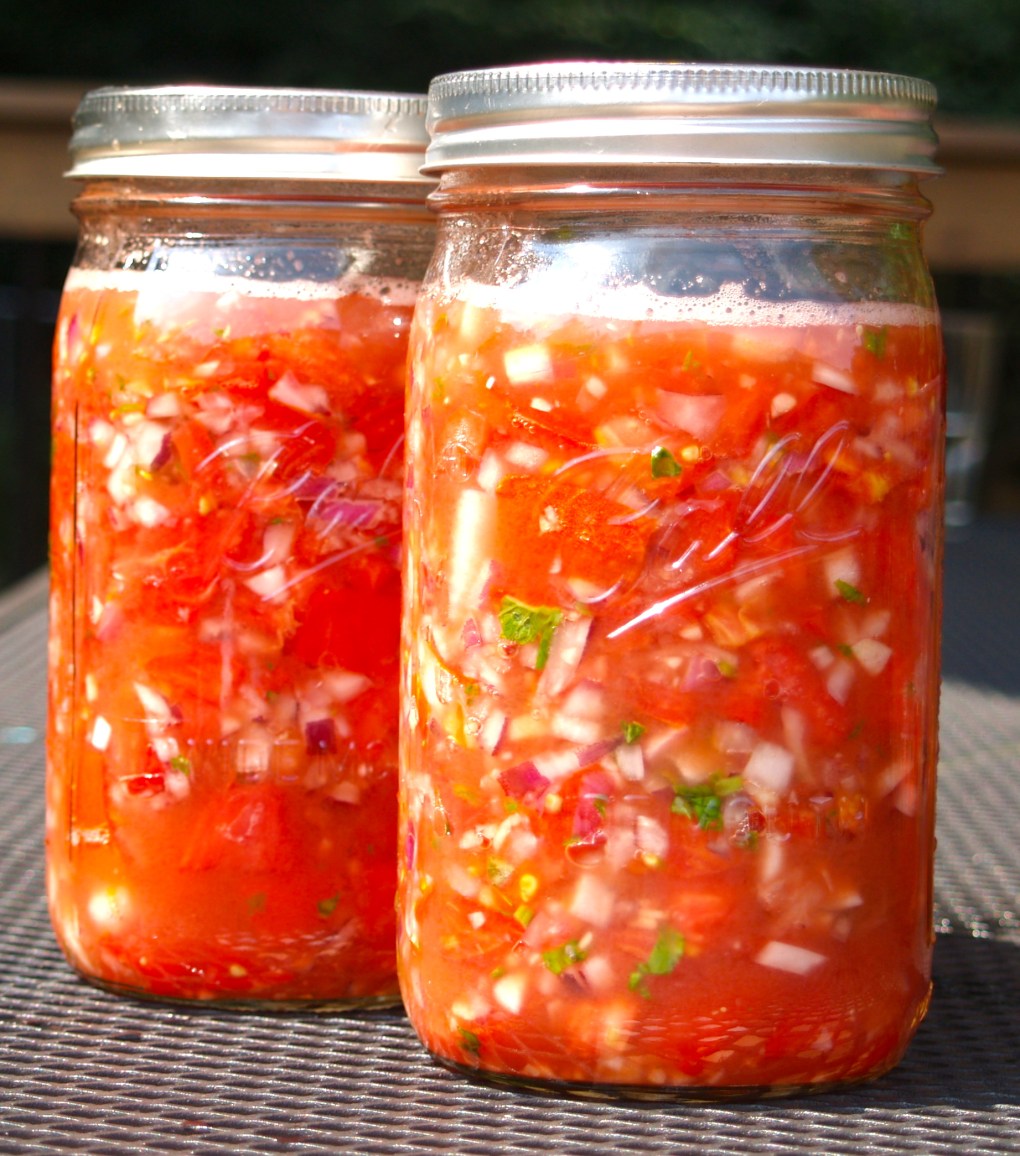
Ready to give ferments a try? A great introduction to fermented foods is a fermented salsa that a friend shared with us. It is delicious and a family favorite – even with the kids! For a small batch, you’ll need:
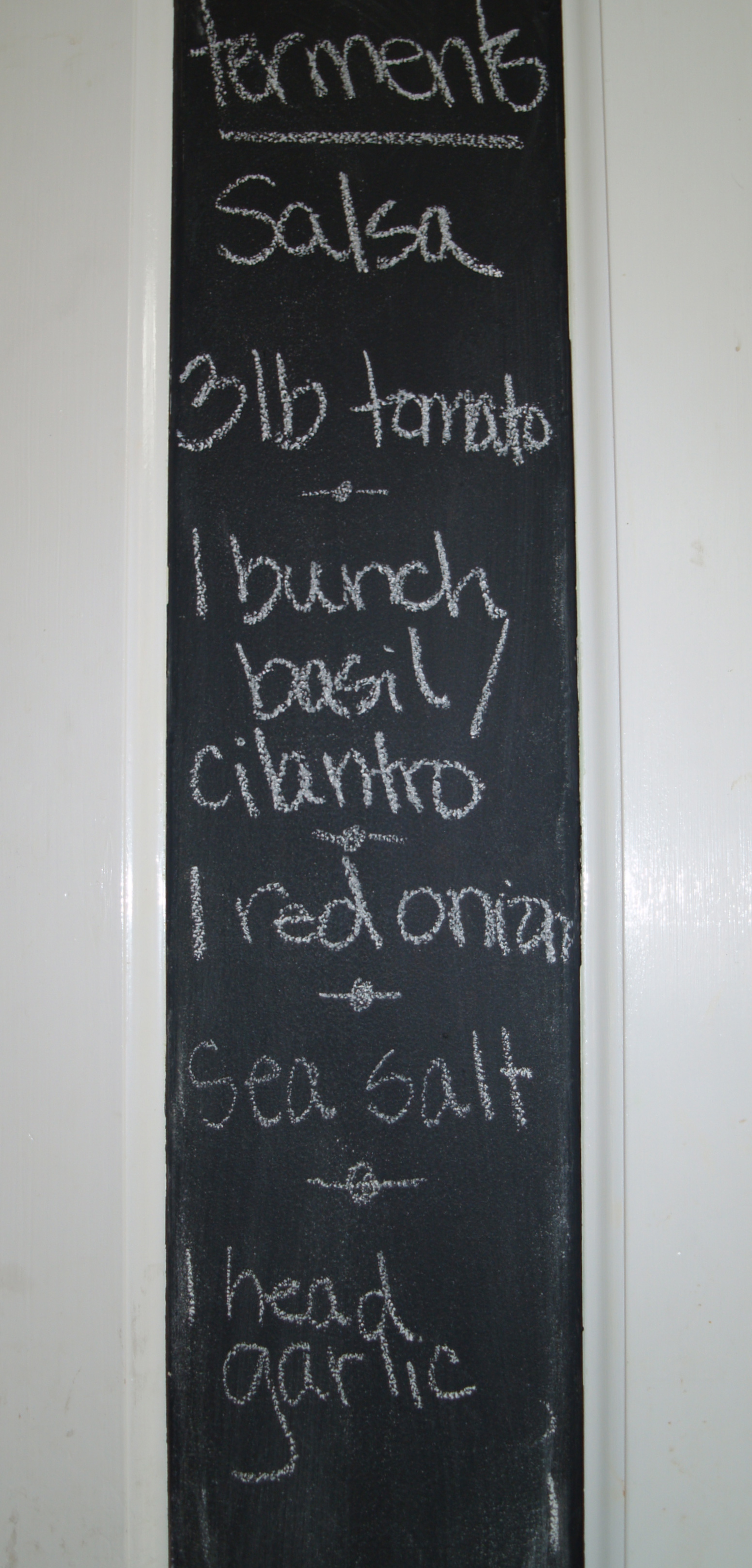
3 lbs of fresh tomatoes – chopped – do not discard the juice
1 bunch of cilantro or basil (our cilantro has died out, so we are using fresh basil)
1 small onion (about 3/4-1 cup)
3 tablespoons sea salt
1 head garlic – peeled and chopped finely
Optional – 1 jalapeño chopped – with or without seeds depending on your tastes
1 lime – I try to use only local ingredients in my ferments – so I usually skip this
2-3 clean mason jars
Clean bowl and spoon.
All your utensils, cutting boards and bowls should be clean. It is not necessary to sterilize them.
Rinse tomatoes and wash your hands.
Chop ingredients to the salsa consistency you prefer. It is not necessary to discard the juice as this becomes our brining liquid. Mix all ingredients well in bowl.
Spoon into jars and either with a wooden spoon or your clean hands press the salsa below the liquid.
Seal tight and leave out of direct sunlight on the kitchen counter for 3-5 days.


Open the jars periodically as this will release some of the gases and also make sure to continue pressing your salsa below the brine line if necessary. Frequent tasting – once the ferment has reached the taste consistency you love, enjoy some and then move it to the refridgerator. The cooler temperature there slows down the fermentation process.
A taste of this salsa in winter will unleash the vibrant delicious flavors of summer! It can be enjoyed with your favorite organic chips, with scrambled eggs, on a taco or anywhere that you normally would enjoy it. One word of caution that I offer… if this is your very first ferment or your diet is generally spartan of probiotic rich foods, please start out with just a tablespoon per day for about a week to build up your internal probiotic community slowly.
Fermentation is making a niche comeback and one that has been recognized by culinary mega-giants like Williams Sonoma which now sells vessels for fermenting. This is great news!

 gladsomelife.com