warm spiced fall apple cider

IMG_2027

“Through the Holy Spirit we are restored to paradise, we ascend to the kingdom of heaven, and are reinstated as adopted children. Thanks to the Spirit we obtain the right to call God our Father, we become sharers in the grace of Christ, we are called children of light, and we share in everlasting glory”.

St. Basil the Great


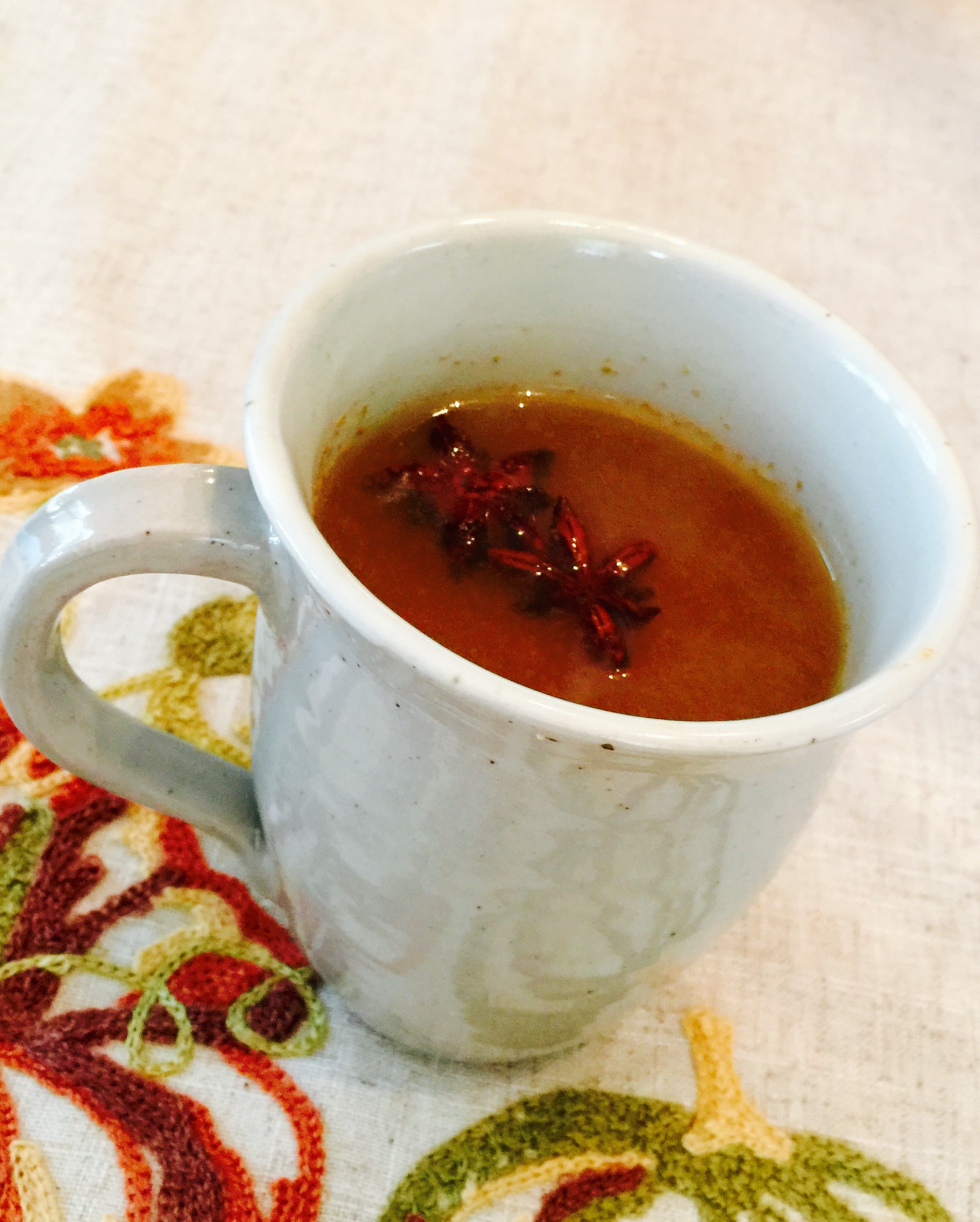
Around this time in Virginia, apple cider turns up in all the stores and farmer’s markets.  This warm apple cider is a great way to enjoy this crisp apple beverage.  It is inspired from one of our favorite restaurants, Le Pain Quotidien, which also offers it at various times throughout the year.


Warm Spiced Fall Apple Cider

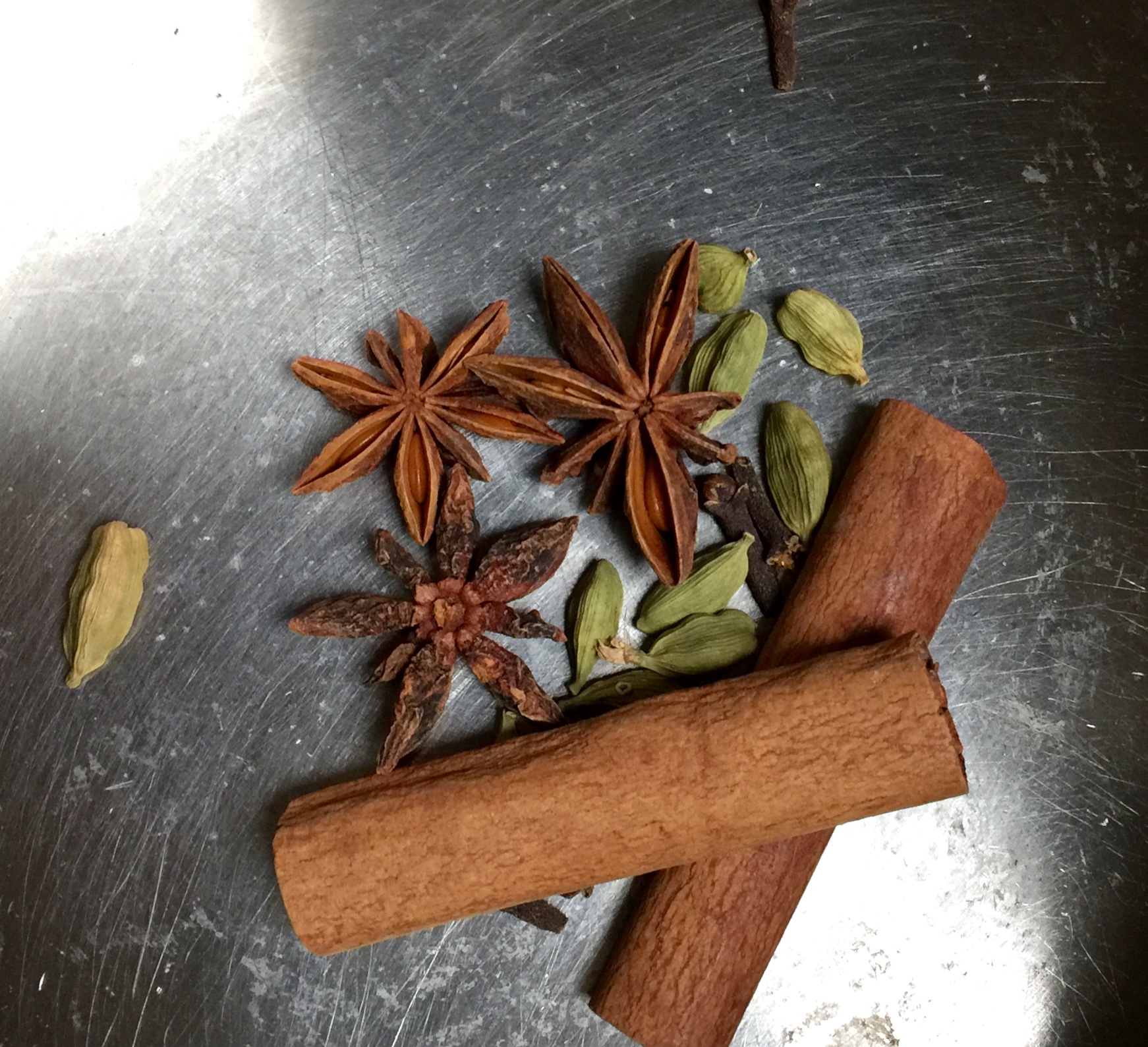
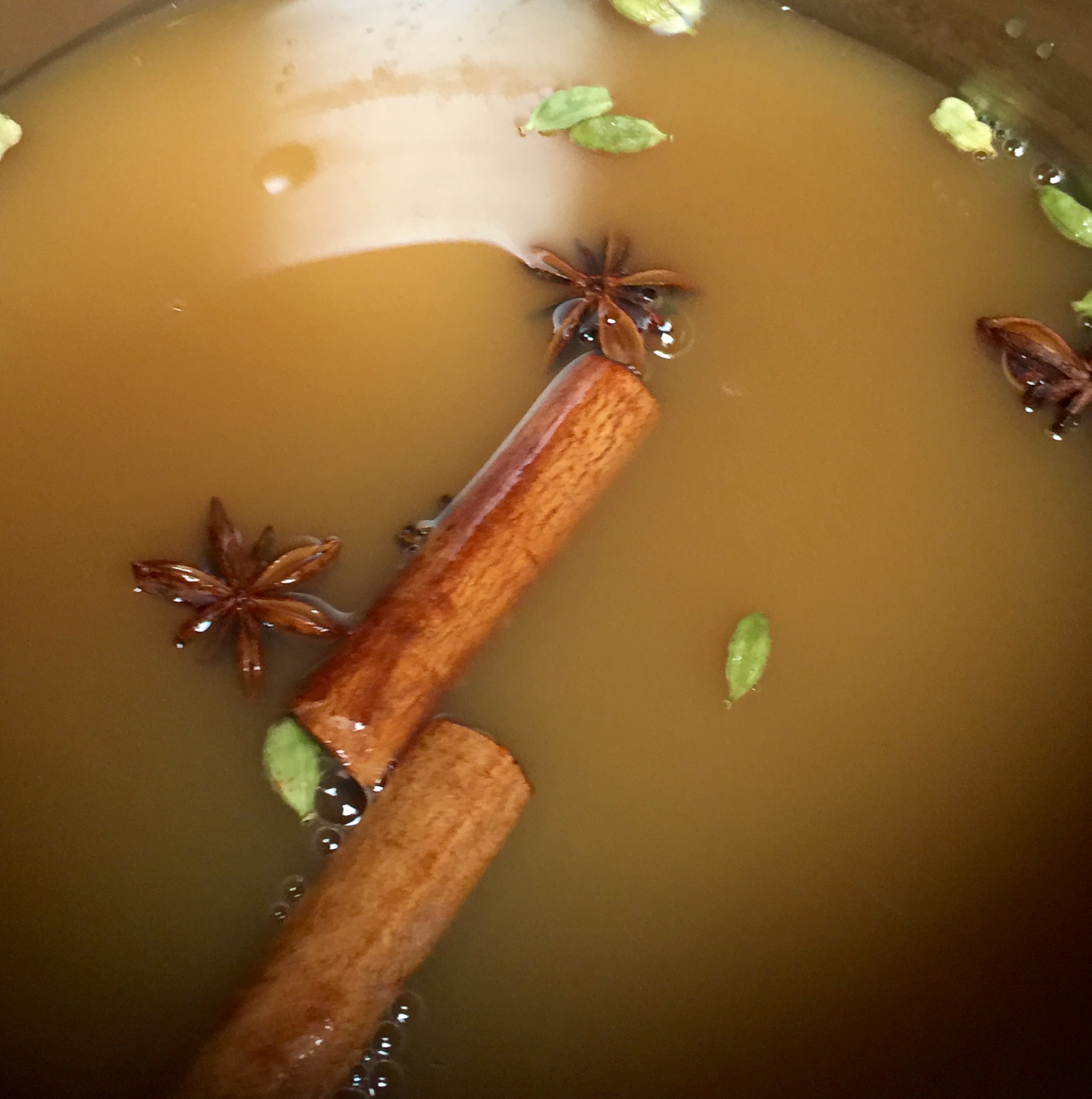
Place all ingredients in small pot.  Bring to a simmer.

IMG_2012

Remove from heat.  Let sit for ten minutes.  Pour into mugs and enjoy.

Spiced Apple Cider Warming

Alternatively, you can double or triple the ingredients and place in a crock pot on low and drink it throughout the day.

IMG_2025


Spiced Pecan Topped Pumpkin Custard

Paleo Dairy Free Pumpkin Custard Delicious!

“But the fruit of the Spirit is love, joy, peace, longsuffering, kindness, goodness, faithfulness, gentleness, self-control.

Against such there is no law.”

Galatians 5:22-23

This spiced pecan topped pumpkin custard is dairy and gluten free, but you will never miss it!  It has all of the mellow hearty flavors of fall, and the spicy pecans take the place of a crust.  It is so easy, your kids can make it!  This past weekend, we hosted  friends and family here for brunch following a Memorial Service for our brother.

Our ten year old mixed all the ingredients for this recipe on her own and got it all oven-ready.  An adult helped with pouring the boiling water and placing all the trays in and out of the oven, but it was such a great help to have the extra hands preparing the food!  The recipe for the pecans yields more than the custard calls for, but they are so delicious on their own, you won’t mind grabbing a handful here and there until they are done.

Spiced Pecan Topped Pumpkin Custard

________________________________________________________________________________________

Ingredients For the Spiced Pecans

  • 2 cups chopped pecans (you can use halves, but they are more expensive)
  • 2 teaspoons chopped fresh rosemary (use dried in a pinch)
  • 1/2 teaspoon cayenne pepper (it spices the nuts, but not too hot)  If you have kids who will not eat spicy, then add the pepper last and divide the mixture in two before you do.  Then just add half the amount of cayenne to one portion of the pecans.
  • 1 teaspoon sea salt
  • 2 tablespoons maple syrup
  • 1 tablespoon coconut oil, ghee or butter, melted

Ingredients For the Pumpkin Custard

  • 1 can pumpkin (organic is preferable)
  • 1 can full fat coconut milk
  • 4 eggs (pastured, organic is preferable)
  • 1/2 teaspoon ginger
  • 2 teaspoons cinnamon
  • 1/8 teaspoon (rounded) cloves
  • 1/2 cup plus 2 tablespoons maple syrup

Prepare the Rosemary Spiced Pecan Topping

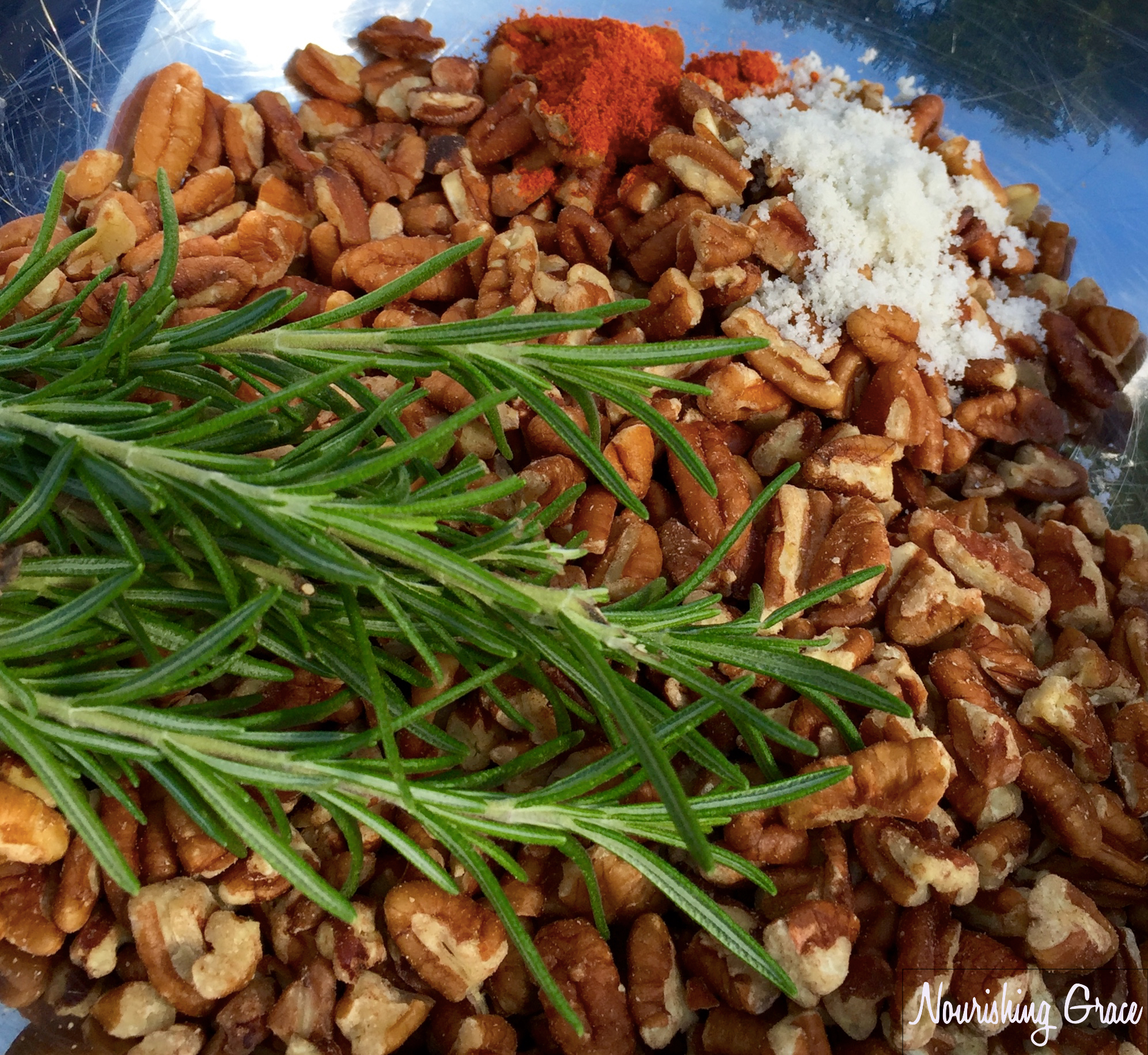
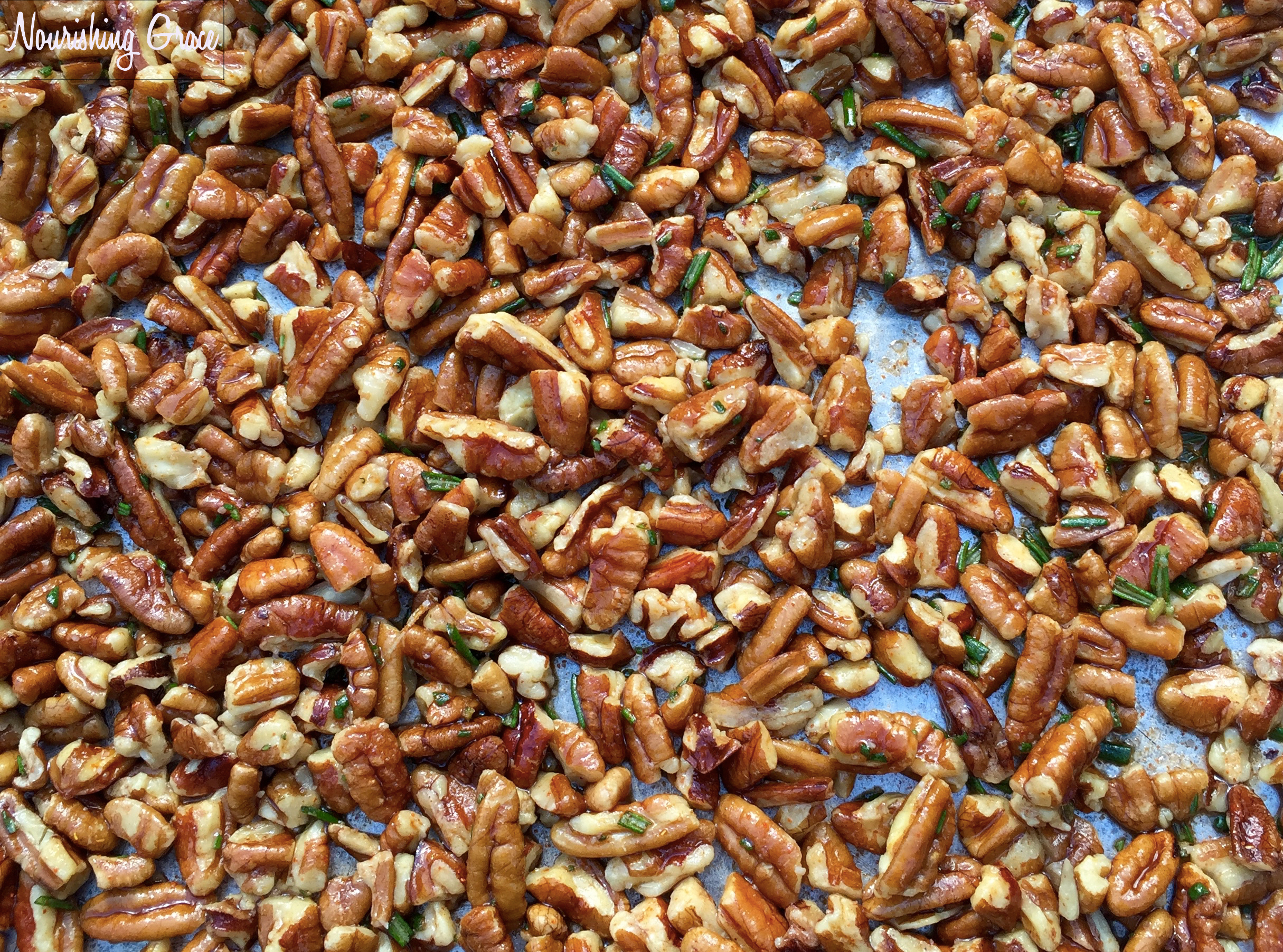
Rosemary Cayenne Pepper Pecans Ingredients

Preheat oven to 350 F.  Chop fresh rosemary and all all ingredients to a bowl.  Mix well to incorporate.  Spread on a single layer on a cookie sheet.  Place in middle rack of oven for 15 minutes.  Check to see if they are golden brown and aromatic.  If not, keep in oven for another 5-10 minutes, checking often.  When they are complete, remove from oven and let cool on cookie sheet before moving to a bowl.  We often roast the pecans while blending the custard ingredients.

Rosemary Cayenne Pecans Ready to Roast

Prepare the Pumpkin Custard

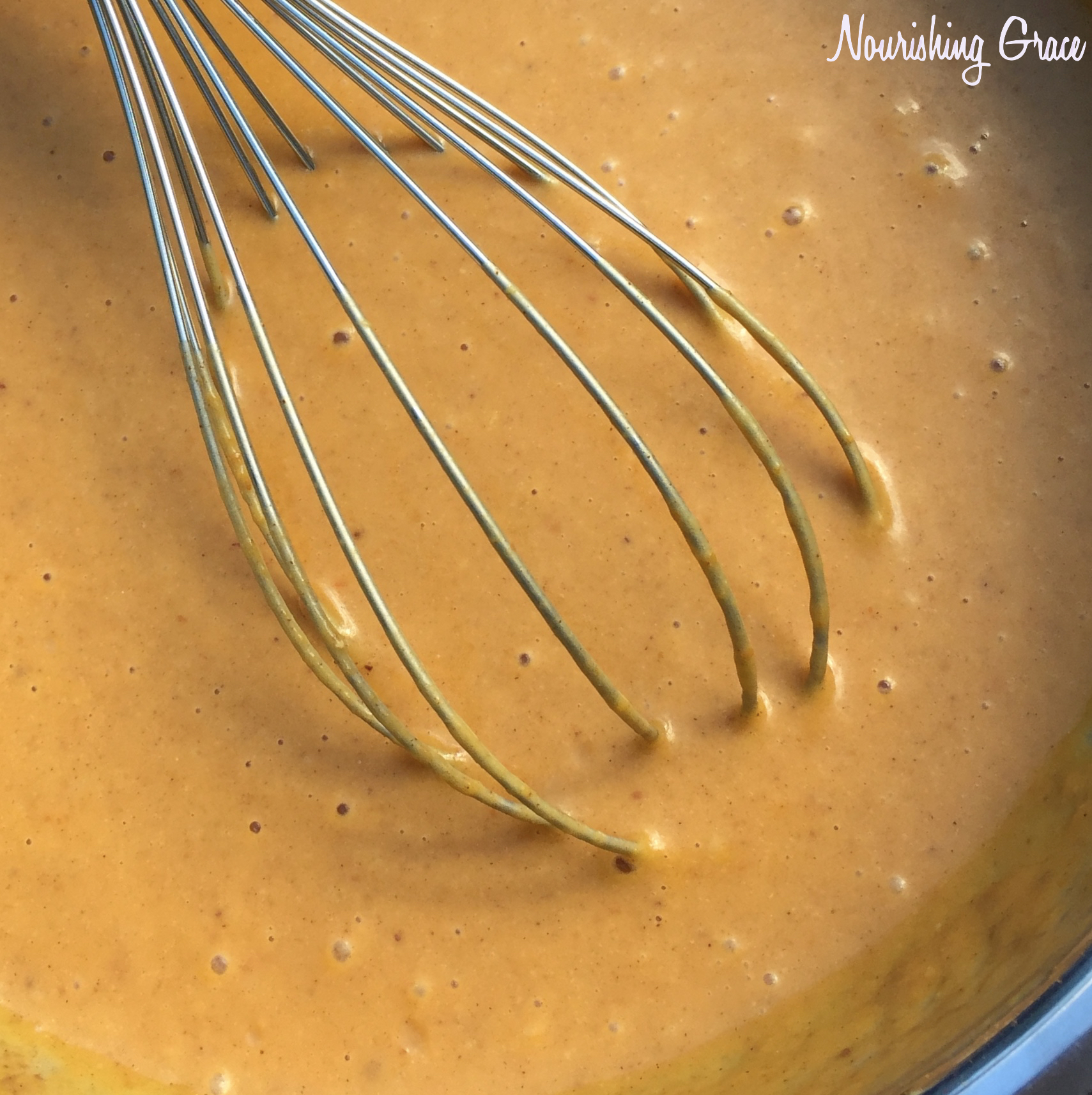
While the pecans are roasted, place all custard ingredients in a bowl.  Using a large whisk, blend thoroughly to incorporate all ingredients.

Paleo Dairy Free Pumpkin Custard Mixing

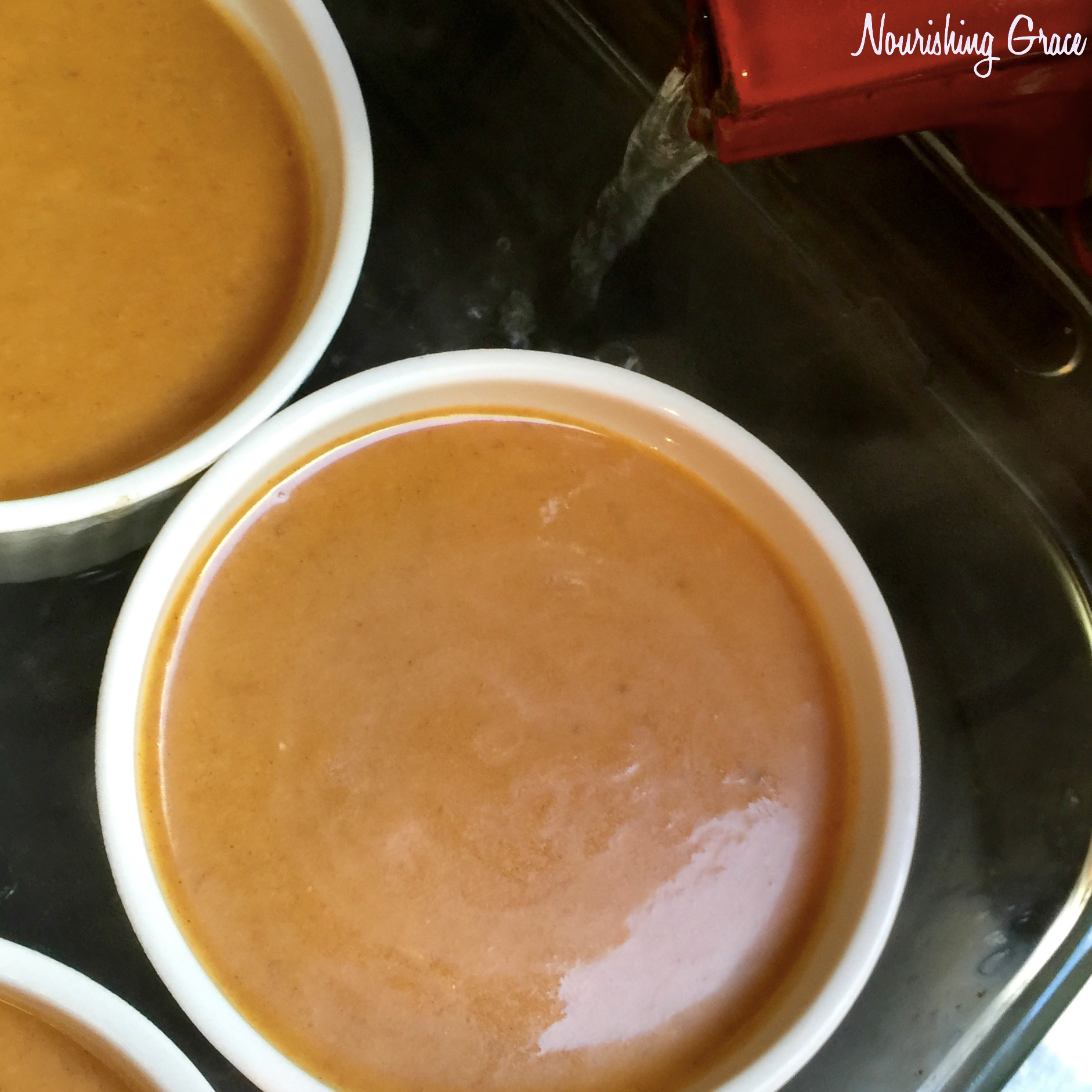
Pour the custard mixture evenly into 6 ramekins.  Place the ramekins into a large lasagna pan.  Once you have done this, carefully pour boiling water into the lasagna pan up to the halfway point of the ramekin height.  Adding the water helps the custard to cook evenly.  If you do not have a lasagna pan, or want to skip this step, then it is better to use a large cookie sheet and spread the ramekins apart from each other.  I’ve made this recipe both ways, it turns out better in the water bath.

Paleo Dairy Free Pumpkin Custard pour in boiling water

Place in a 350 F oven.  Check the custard after 40 minutes for doneness.  The custard will poof a little bit and it will be evident they are done.  If you touch the center quickly and it is not firm, then put back in the oven and check every five to ten minutes.

Cooking time will vary if you do not use the water bath and may take longer.

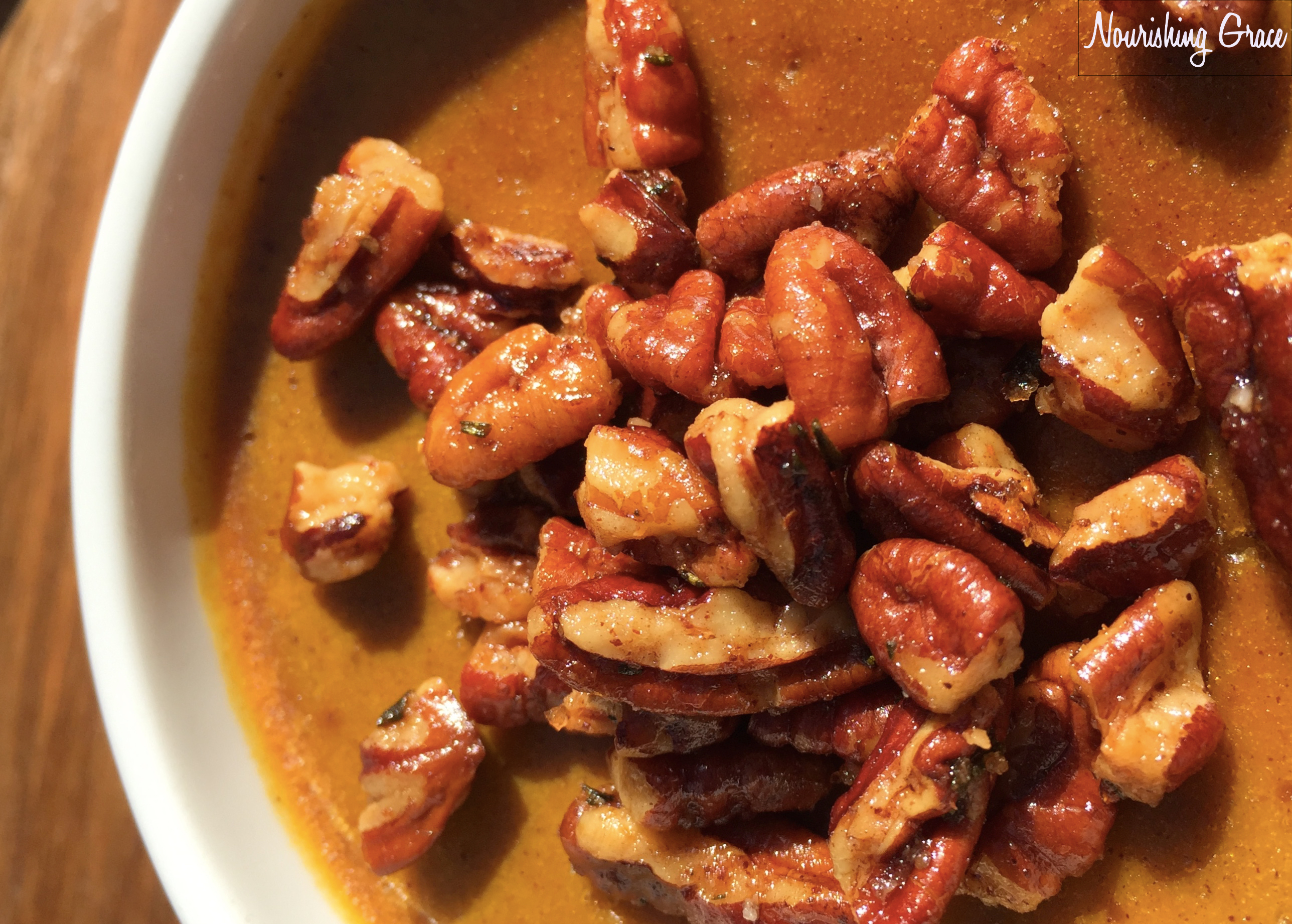
Now for the best part… sprinkle each custard with 2-3 tablespoons of spiced pecans and enjoy.  These are dairy free and paleo, but if you are not dairy free, why not add a dollop of whipped creme?

Enjoy!

Paleo Dairy Free Pumpkin Custard Ready to Eat


contain yourselves

“Odd as I am sure it will appear to some, I can think of no better form of personal involvement in the cure of the environment than that of gardening. A person who is growing a garden, if he is growing it organically, is improving a piece of the world.”  Wendell Barry – The Art of the Commonplace: The Agrarian Essays


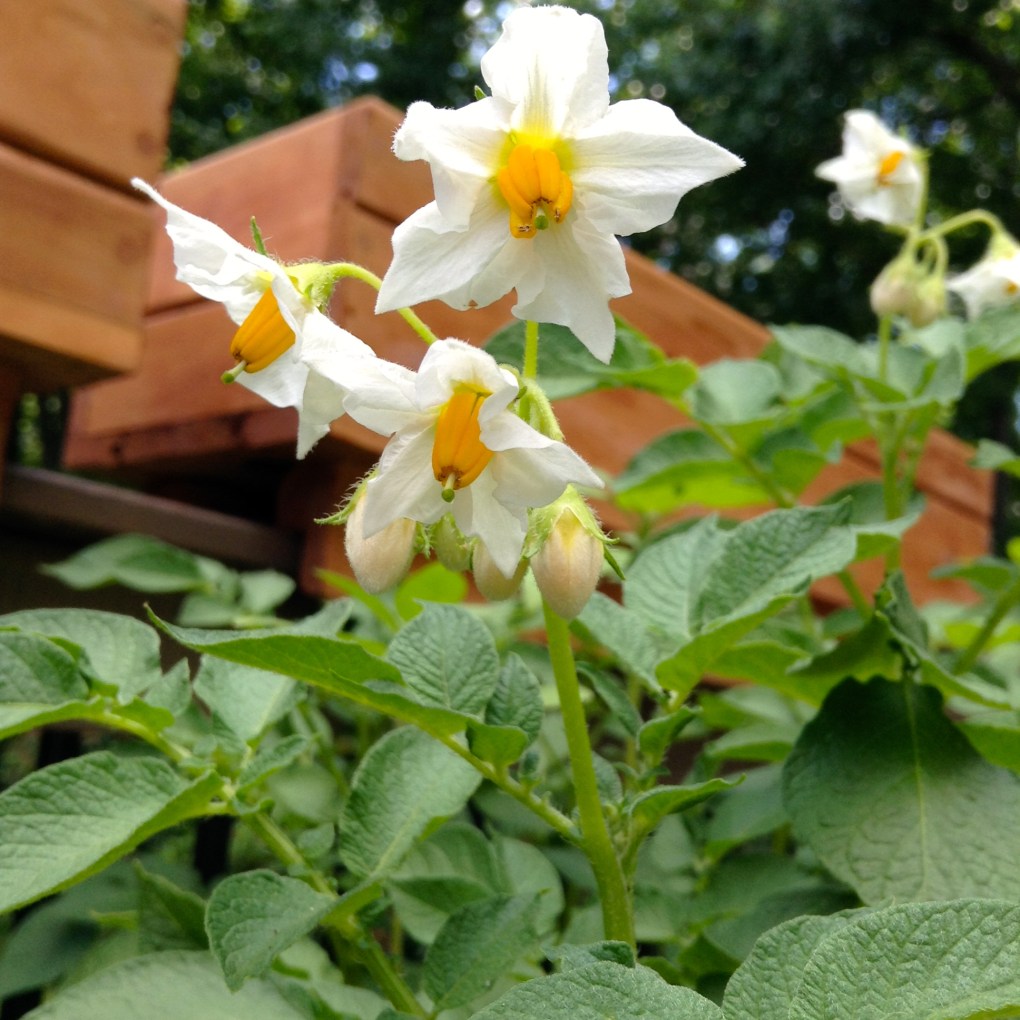
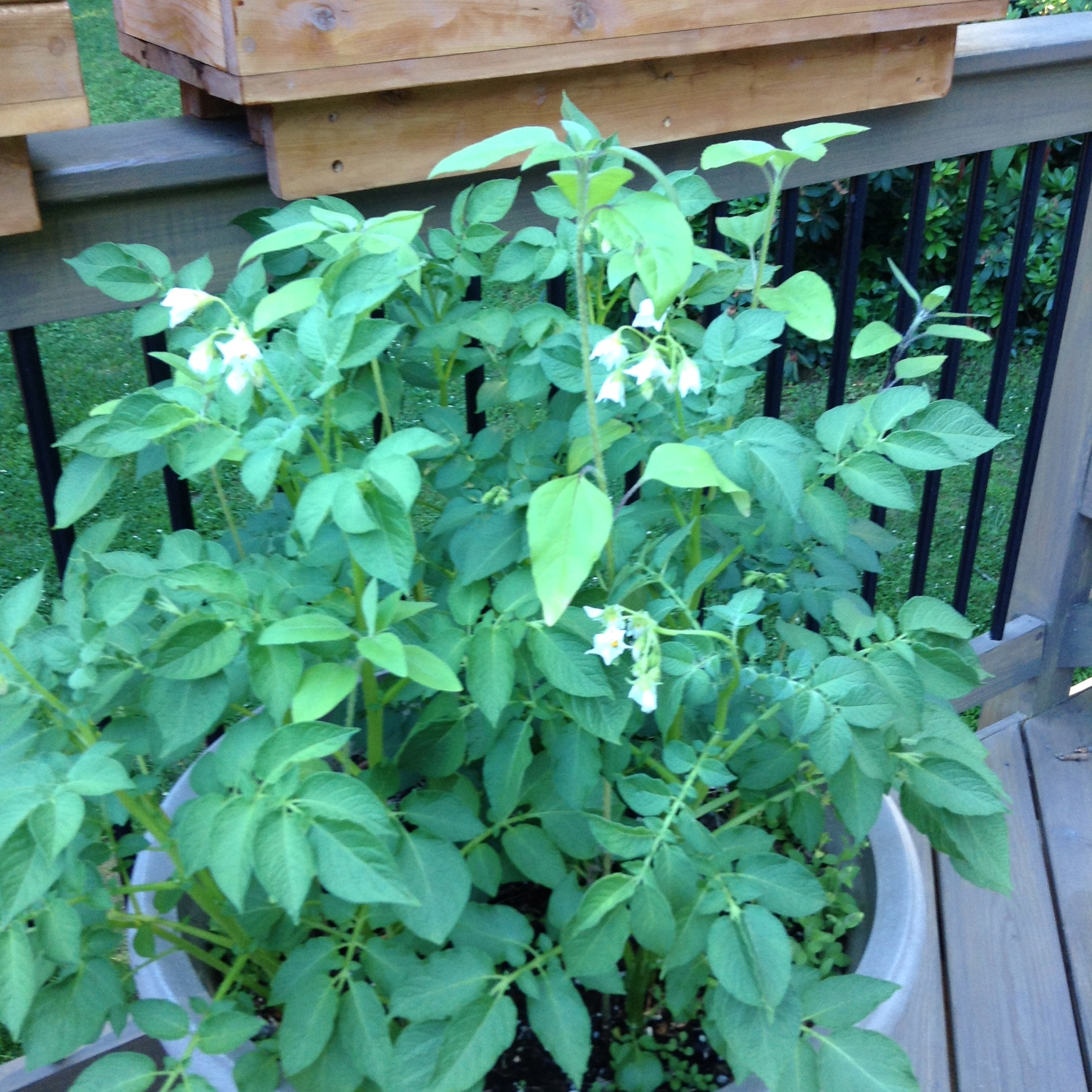
Even if you have only a tiny patio or balcony, growing your own food is a possibility.  No matter how little space you have, with a packet of seeds, a few pots or other container of your choice, you can turn a blank space into an edible landscape.  Whether you grow an assortment of kitchen herbs or potted potatoes, carrots and beans it’s easy and can transform an urban space into a haven and retreat.

A few weekends ago, we picked up some cedar planters at our local plant store DePaul’s Urban Farm and then the kids got to work staining them and planting some carrots.

This slideshow requires JavaScript.

Soon we will have an awesome harvest of carrots.

Also too we have potted potatoes – so much easier to harvest because they are confined to one space than planting in a larger garden.  For something a little different we added sunflowers into the mix – for a little flowery effect.  They will bloom soon!

Whatever you chose, the main thing is to have fun with your planting and make a space which is visually and edibly pleasing.

At the end of the day, nothing compares to your own fresh grown food.  Just as wonderful is that you really don’t need a lot of expertise or skill to grow them – especially beans, tomatoes, peas and any salad vegetable.

IMG_0286

The past ten years have seen a rapid increase and high demand for real local sustainable food.  Not a new idea, just one misplaced for about a century!… previously all food was local, mostly because there was not the ability to transport it, or the chemical fertilizers to mass-produce it.

Family gardeners restore and heal their little part of the world starting with their own space and being.  Working the dirt, it is inevitable that knowledge, experience and success from those lessons unearthed in the garden tills into other areas of our lives ~ gratitude and thanksgiving for the harvest, family and friends!

“In almost every garden, the land is made better and so is the gardener”. ~Robert Rodale


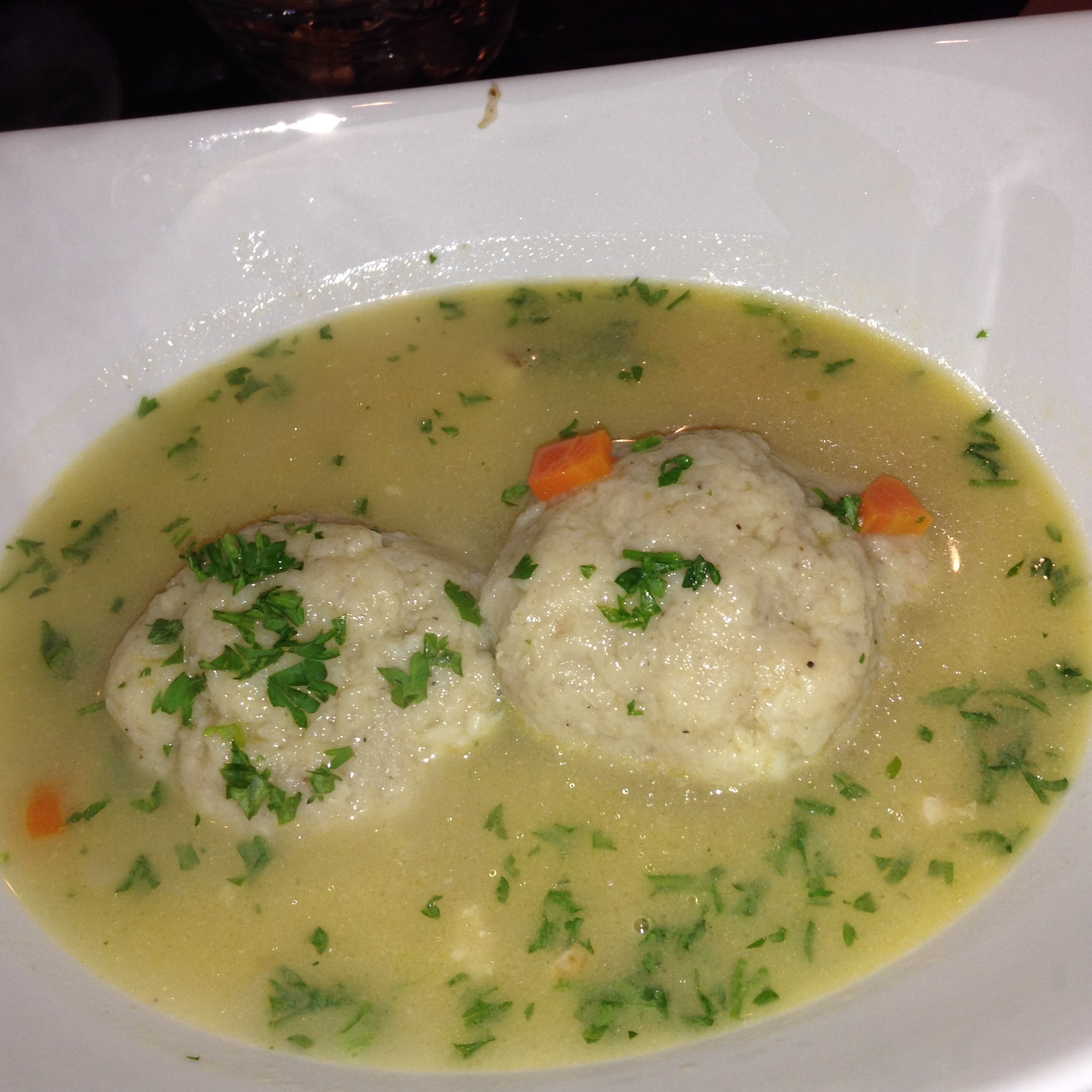
matzoh ball ~ soup for the soul

IMG_0081

“Real humility is light and buoyant, not weighted down by insecurity, self loathing or an obsession with being known and admired. Humility spends the time and energy freed up by not agonizing over one’s self reveling in the grace of everyday blessings big and small. Humility genuinely rejoices with those who rejoice and weeps with those who weep. Humility retains forever its childlike sense of hope and wonder.” ~ Molly Sabourin

Matzoh ball soup is comfort food at its finest and a great use for your homemade chicken stock!

Food sustains physical life and yet is greater than the nourishment it brings to the table.  Food gathers people  and traditional foods – passed from generation to generation tell a story.  These generational foods – shrouded in history, symbolism and ritual tell the story of peoples and their journeys of life and in that category Matzoh Ball Soup definitely tops the charts.

The Matzoh is probably one of the best known Biblical foods and one that has humbly stood the test of time.  It is a food which tells the story of the exodus of a chosen people and the guiding Hand that frees them from bondage in Egypt.

Matza is unleavened bread –  and one of the three biblical culinary components of the Jewish Passover Seder – it is also called the bread of affliction.  For Jewish families, Matzo is the only type of bread eaten throughout the Passover festival.  The generational story of the matzo is one of slavery and freedom.   The last shared act that every Israelite performed before being freed from slavery in Egypt, as well as the very first act that the entire nation shared as free people at their first stop, was eating matzo. (Encyclopedia of Jewish Food).

The first time my family ever tried matzoh ball soup was last year, visiting grandparents in Florida.  We went their favorite Deli, TooJays  in Orlando.  Such a simple dish, utilizing the most basic and unassertive ingredients – chicken broth, seasonal vegetables, eggs, schmalz (saved chicken fat – from your stock) salt and pepper.  This is quintessential comfort food!

Traditionally, matzo balls are served in a broth only served with carrots – but you can make it your own with whatever favorite vegetables you love!  This recipe doubles and triples nicely!  It also freezes well if you make a big batch.  We portion it into servings for two or four and freeze.  That way it is on hand, ready to thaw, heat and nourish on those busy school nights laden with activities and little time!

Matzoh Ball Soup – it brings nourishing comfort to the body and as the old saying goes – the soul too!


ingredients:

3 eggs

9 cups chicken stock

1/4 cup grated onion

1/2 cup melted chicken fat (Note: Jewish families would not substitute butter as that is prohibited during the Passover.  We used butter (preferably pasture raised).

1/2 teaspoon salt

1/2 teaspoon freshly grated black pepper

1 cup matzo meal (you can make your own by placing Matzo crackers and pulse in food processor or blender.  The other option is to buy it ready to use)

4- 5 diced carrots, sauteed

2 talblespoons chopped parsely  and/or chives (optional)


preparation

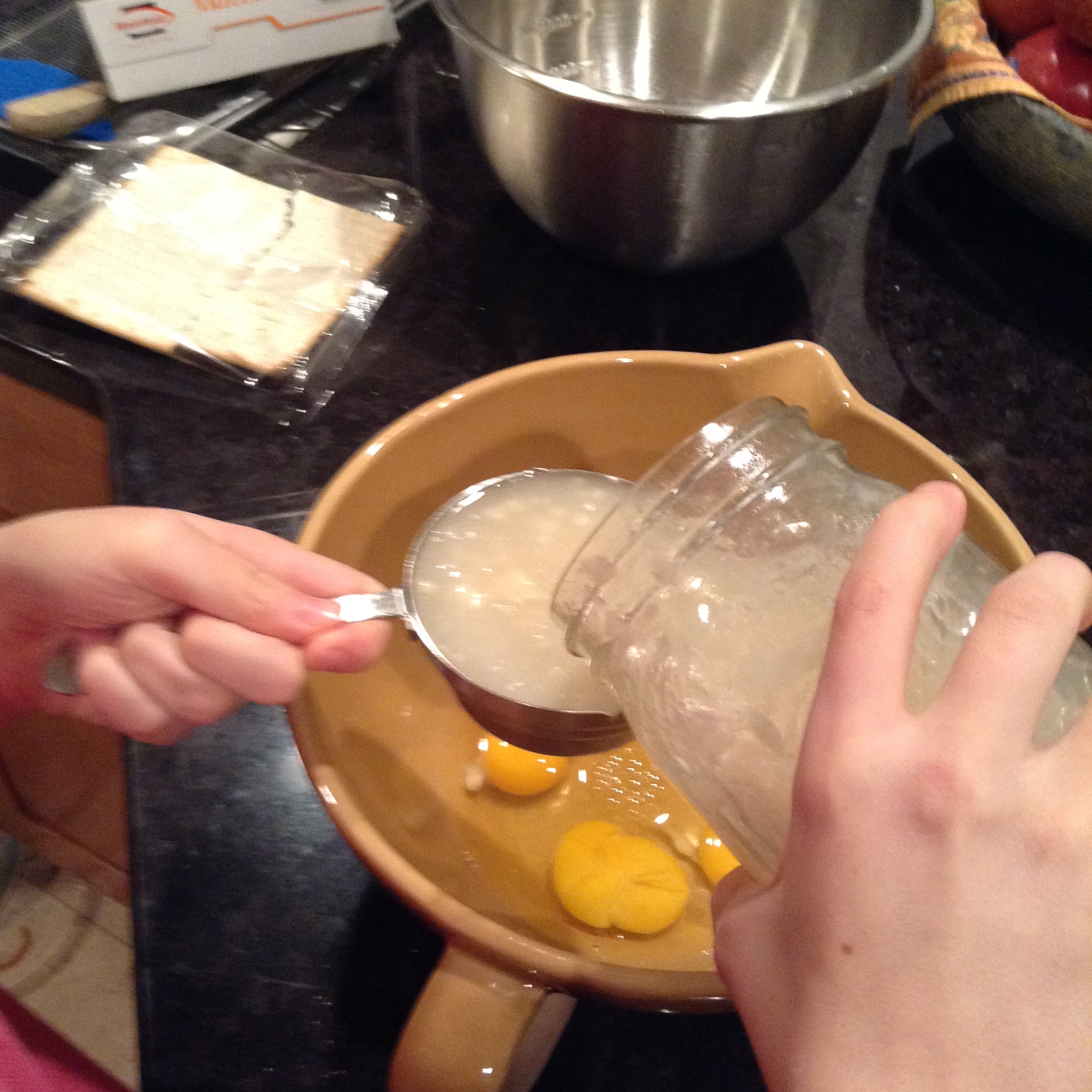
Beat the eggs together and 1/2 cup of stock.

IMG_0067

Stir in the grated onion, salt, pepper and fat.

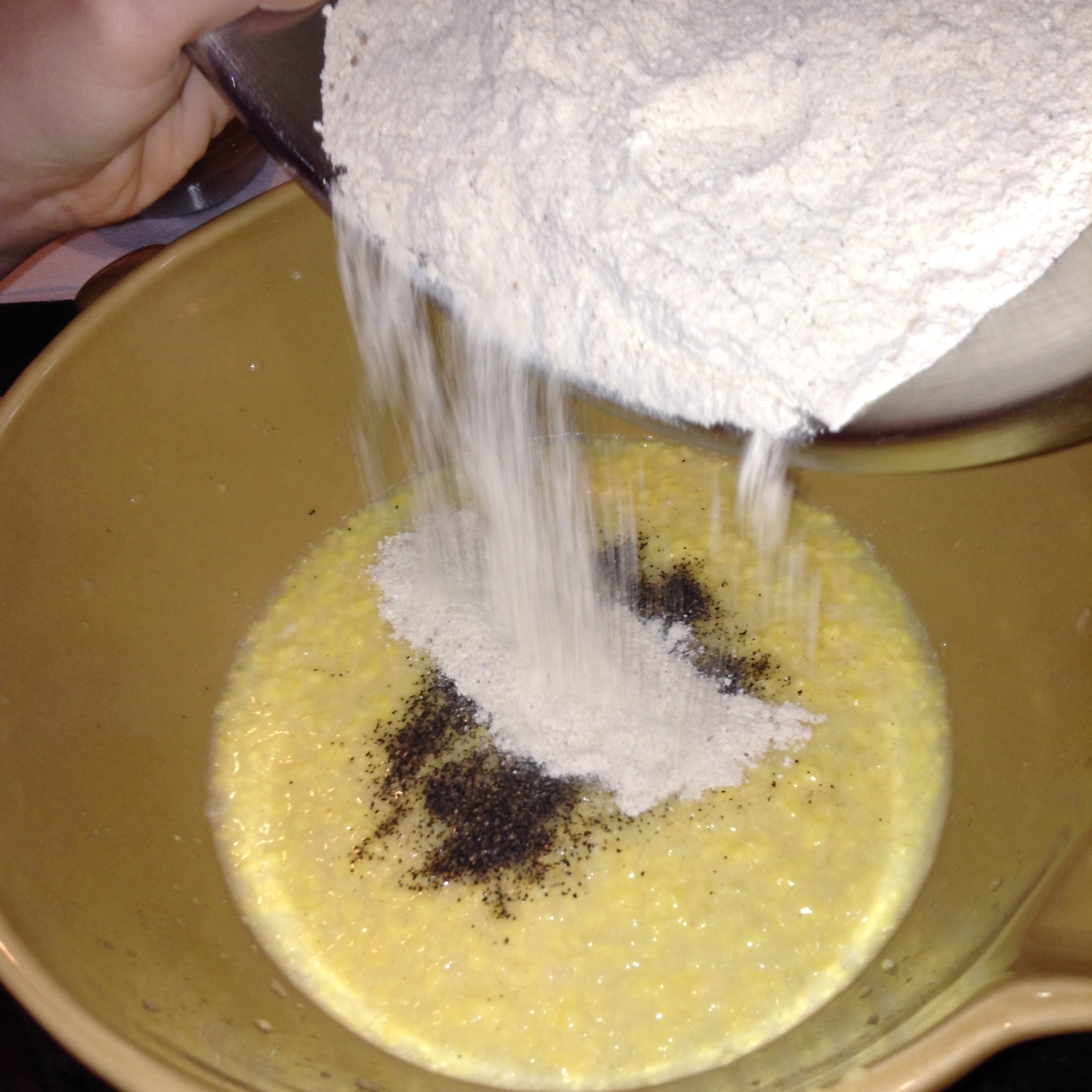
Add the matzo meal.  The dough will be moist.  Cover the mixture and refrigerate for one hour or overnight.


IMG_0073

Shape into matzo balls – about 1 inch in diameter.

Now, you can either heat a pot of salted water or heat your chicken stock (which is a personal preference.)  Drop matzo balls into boiling broth.  The matzo balls will expand and absorb a lot of liquid.  Turn the heat ti medium and let the balls cook for about 30 minutes to set.


IMG_0081

Serve one to two matzo balls with broth and sprinkle with chopped parsley and or chives.


got broth?

Fall and the approaching winter have ushered in a wave of cooler weather. With the change in seasons and temperatures, we naturally migrate our cooking toward more warming & nourishing foods like soups and stews. That brings us to one of the least glamorous of all foods – the humble broth – a nutritionally wonderful canvas to enjoy the hearty fall harvest!

Broth provides a modest yet universal meal.

A remedy for sore throats and the flu, it nurses the sick and puts vigor in our steps.  The nutritional savior of the soup kitchen, the humble broth is a warming comfort in times of need.  It is also incredibly healthy and a powerhouse of vitality!

Broths are a nutritional superfood in that they offer a very simple, affordable and rich concentration of nutrients that are easily acquired by our bodies.  That ease of nutrient absorption is paramount, because there is a big difference between consuming nutrients (from whole foods or supplements) and actually assimilating them into our cells.

Unlike it’s commercial cousins, homemade stocks and broths come with an unabridged complement of the exact nutrition we need to rebuild and maintain bones and joints.  One reason is that homemade broths and stocks are teaming with gelatin and minerals.  If you are unfamiliar with gelatin, it is a jelly like substance that is extracted from simmering bones or the soft tissues – like cartilage and skin from chicken.

Gelatin is essentially collagen in liquid form and collagen is part of the connective matrix that holds you together!  Among other things, it provides for youthful supple skin and healthy joints.  It also supports the immune system, digestive tract, heart and muscles and contributes to the building of strong cartilage and bones.

Want to know more about the benefits of gelatin and broth?

  • Gelatin is an easy way to support your digestive system.  It is not only nutritious but very soothing and healing to the digestive tract. Its ability to attract and hold liquids makes foods cooked in broths easier to digest.
  • American researcher, Dr. Gotthoffer found that cooked foods eaten with gelatin were easily digested and that babies fed milk fortified with gelatin had better digestion than those given plain milk.  Also, the babies who were fed milk without gelatin had a higher rate of allergies and intestinal issues.
  • Additionally, Gotthoffer found studies showing that convalesing adults who have lost weight because of operations, dysentery, cancer and other illnesses fare better if gelatin is added to their diet.
  • Gelatin has long been recognized in the treatment of digestive diseases.  “[Gelatin] is said to be retained by the most sensitive stomach and will nourish when almost nothing else will be tolerated,” wrote L. E. Hogan in 1909.  Today, homemade broths are the essential component of the GAPS diet protocol, in that it heals and seals the digestive tract.
  • One reason gelatin was recommended so highly for malnourished individuals is that it reduces the amount of complete protein needed by the body.  So, while gelatin is not a complete protein, it is high in the amino acids arginine and glycine which enables the body to more efficiently utilize the complete proteins that are consumed. For that reason broths are known as “protein sparing” because with broth your body can make better use of the protein you do eat, therefore not require as much.
  • Gelatin strengthens hair and nails, minimizes wrinkles and prevents and heals cellulite.
  • Gelatin may be useful in the treatment of a long list of diseases including peptic ulcers, tuberculosis, diabetes, muscle diseases, infectious diseases, jaundice and cancer.
  • Gelatin is unusually high in the amino acids glycine and proline. A vital function of glycine is detoxification. Proline aids the body in breaking down proteins for use in healthy cells and is used in making collagen, tendons, ligaments and heart muscle. Adequate proline is beneficial for the tratments of conditions such as osteoarthritis, soft tissue sprains and chronic back pain.
  • Gelatin assists in neutralizing intestinal poisons causing problems during an intestinal bug or flu.
  • Research has shown that broth aides in normalizing stomach acid levels for those with too high or too low stomach acid – which can have a profound impact on digestion.

Despite the abundance of our modern food supply, traditional diets contained far more gelatin than ours do today. Broth was a mainstay in French, Italian, Russian, Japanese, South America, Middle Eastern, African and other cuisines.  In the honored traditions of food, none of the animal went to waste (ironically, probably due to the scarcity of their food supply!)

People would eat soups made from bones all the time and doing so supplied their bodies with the whole family of glycosaminoglycans, which used to protect people’s joints. Now that few people make bone stock anymore, many of us are limping into doctors’ offices for prescriptions, surgeries and, lately, recommendations to buy over-the-counter joint supplements containing glucosamine.  (Shanahan, 2011).

Broth is economical and therapeutic food.

One can spend exhorbitant amounts on supplements containing glucosamine and chondroitins, but these capsules do not hold a candle to the efficacy of the the whole spectrum of glycosaminoglycans in a well made broth.  Whereas a supplement will contain only a few targeted ingredients, a well made broth provides the entire nutrient complex of joint building substances – some of which have likely yet to be discovered.

In that sense, bone broth represents a wonderfully inexpensive therapeutic food.  What a bargain!  A twenty five cent cup of broth offers an unparalleled small fortune in supplements: excellent levels of bioavailable minerals such as calcium, magnesium, potassium and phosphorus are supported by gelatin, chondroiton sulphate, bovine cartilage, glycine and hyaluronic acid.

Best of all, broth tastes great.

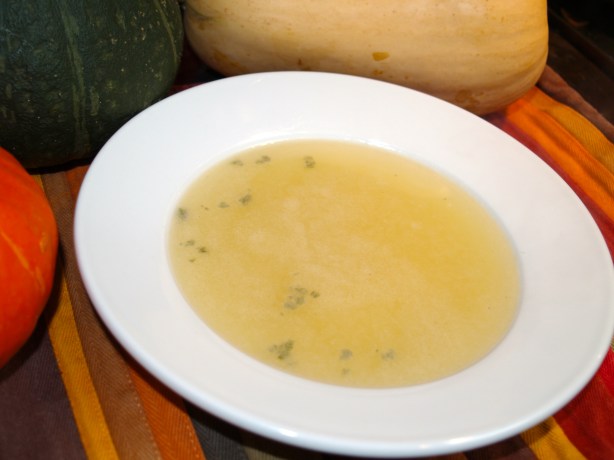
You can enjoy it warm in a mug at the end of a long day, or create delicious nourishing soups, stews and sauces.  It’s a pantry item to keep on hand in fall and winter.  Making homemade broth is not only very nourishing, but the utilization of the rest of the animal also qualities broth as a nutritional virtue and a wonderful manifestation of stewardship eating.

Of all we consume, may we always eat thankfully, wisely and well.
 

OLYMPUS DIGITAL CAMERA


Nourishing Broth Recipes:

Vegetable . Mineral . Broth

Chicken Broth


additional resources:
Broth is Beautiful by Sally Fallon

Why Broth is Beautiful: Essential Roles for Proline, Glycine and Gelatin by Kaayla T. Daniel, PhD, CCN

Gelatin in Nutrition and Medicine by N.R. Gotthoffer

Proline Amino Acid Benefits  LiveStrong


edible-fall

seasonal eating ~ edible-fall

Today there is a resurgence of folks trying to eat within the boundaries of their local geography and with good reason : local, seasonal food, prepared and eaten properly supports vibrant health and energy and is sustainable for the earth.  The thing is, it’s easier to accomplish during the long warm days of summer – when the harvest is plentiful and bringing it to the table is as simple as a trip to the farmer’s market, local market or your own backyard.

Seasonal cooking takes effort but with an adventuresome palette – a willingness to experiment – you can make your meals a seasonal thanksgiving of your landscapes harvest.  It’s simpler than you might think!

In our area of the mid-atlantic, the early days of September have already begun to melt away the lingering rays of a hot and lazy summer.  The fresh morning chill settles in overnight heralding the first days of autumn.  Waxing and waning…. it all blends together, these seasonal changes.  Those last warm days of summer are actually the first cool days of autumn. and with that our Indian Summer ushers in a whole new variety of possibilities at the farmers market.

Garner's Produce 2013


In these past few weeks, hearty fall vegetables have made their annual debut, and their rich unpretentious earthy colors are a prelude to same colorful beauty our eastern forests display in their show of fall leaves –  just before they shed to adorn the forest floor.

Foods in your local season, tend to support your wellness in that season.  Fall foods are warming foods.  Produce that matures in cooler months generally contain more calories than their summer counter-parts, and come with their own complement of nutrients.  By helping our bodies acclimate to our regional weather, they perpetuate our health and may help prevent frequent seasonal ailments.

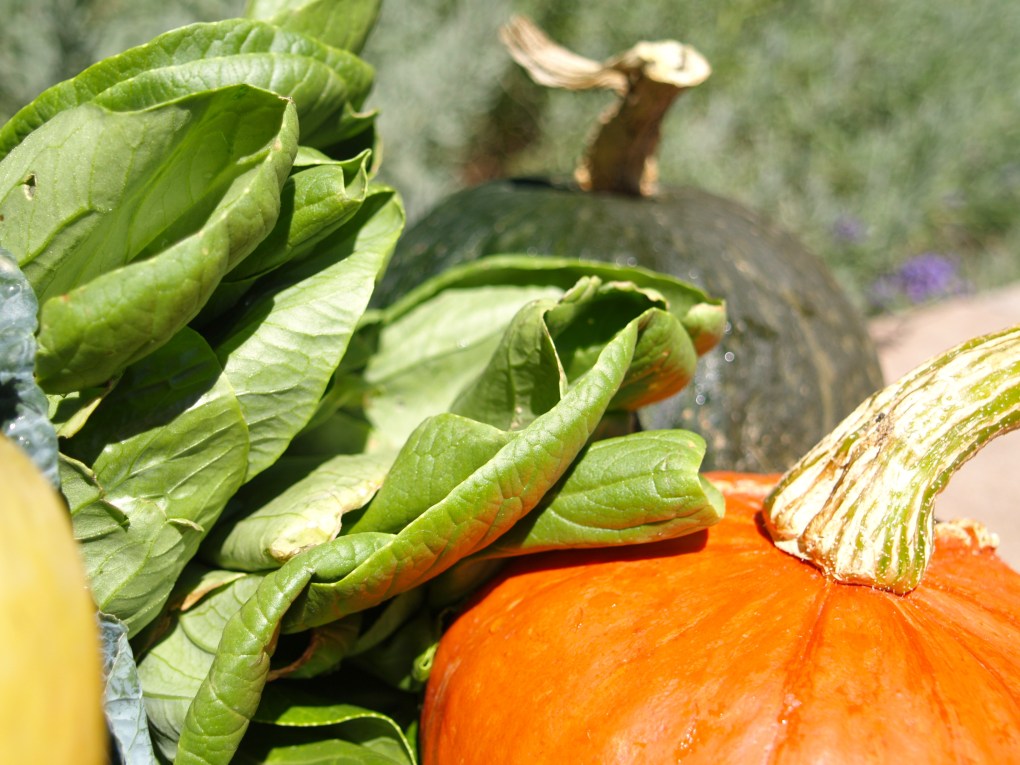
So here they are, the first butternut squashes, oddly colored and shaped gourds, beets and of course – the fall favorite – pumpkins,  all emerging at the farmer’s market.

first fall 2013 squashes and gourds - Garners Produce

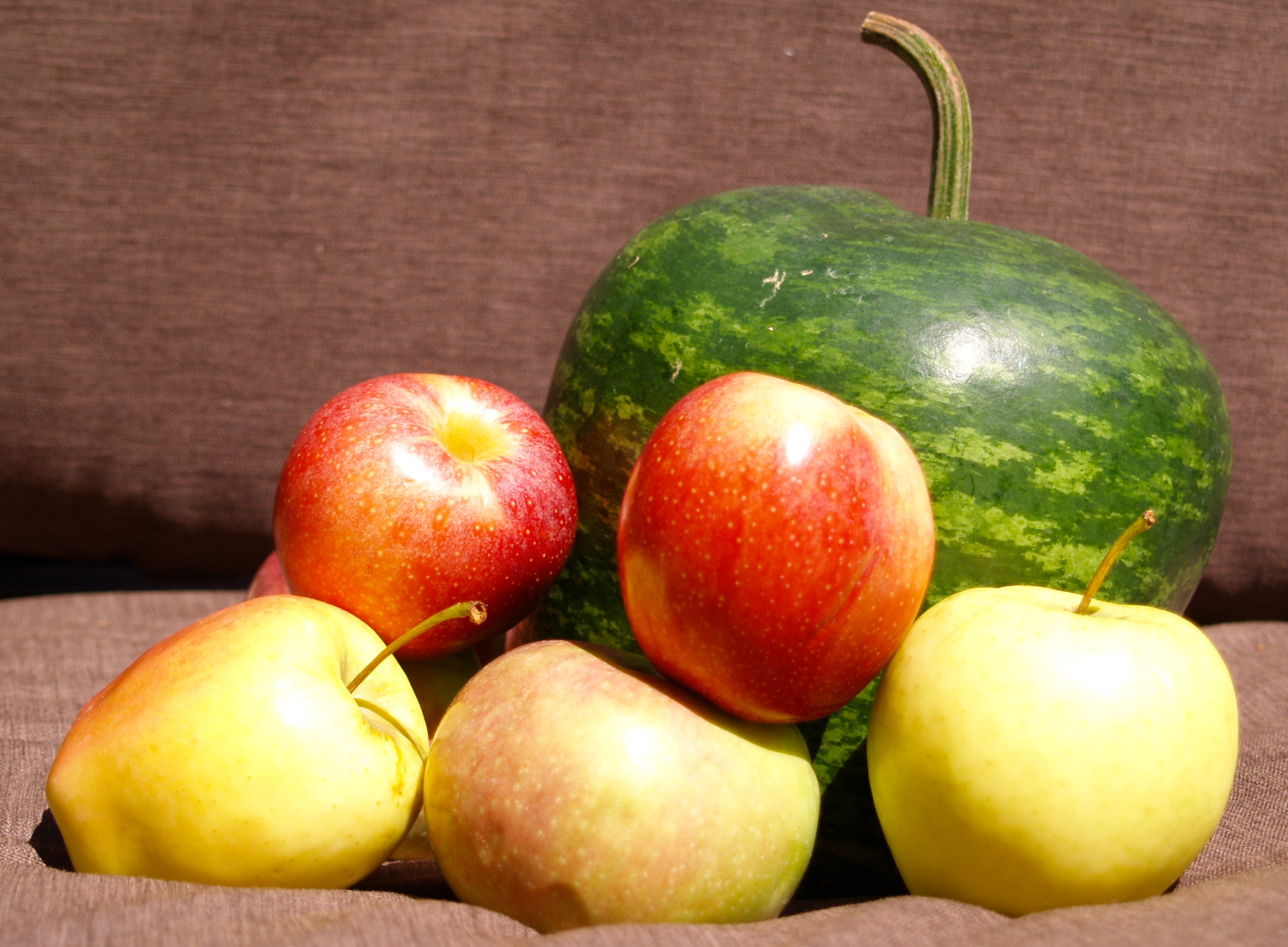
Virginia and West Virgnia is apple country, and those too are sure not to disappoint – especially not the heirloom varieties that farmers are lovingly resurrecting for locals hungry for real food!


fall 2013 Virginia apples - except for the really big one which is an apple gourd...

fall 2013 Virginia apples – except for the really big one which is an apple gourd…


As the weather changes, so to does our pantry… and a well-stocked pantry is the only way we’ve found to cook with ease at home.  Posts in the upcoming weeks will include stocking our fall pantries with a few basics, to make this seasons cooking simple and easy.

Our favorite food of the season is soup… the backbone of which is broth and that simple humble and nourishing broth is the perfect canvas to highlight so many of the glorious foods of autumn.  And that is the feature future posts – broth and soups and stews!