Proskomedia {commemoration form}

But if at the center of the Church’s life there is this self-giving Eucharistic love, then where are the Church’s boundaries, where is the periphery of this center? Here it is possible to speak of the whole of Christianity as an eternal offering of a Divine Liturgy beyond church walls … It means that we must offer the bloodless sacrifice, the sacrifice of self-surrendering love not only in a specific place, upon the altar of a particular temple; the whole world becomes the single altar of a single temple, and for this universal liturgy we must offer our hearts, like bread and wine, in order that they may be transformed into Christ’s love, that he may be born in them, that they may become “God-manly” hearts, and that He may give these hearts of ours as food for the world…”

Saint Maria Skobtsova: Essential Writings

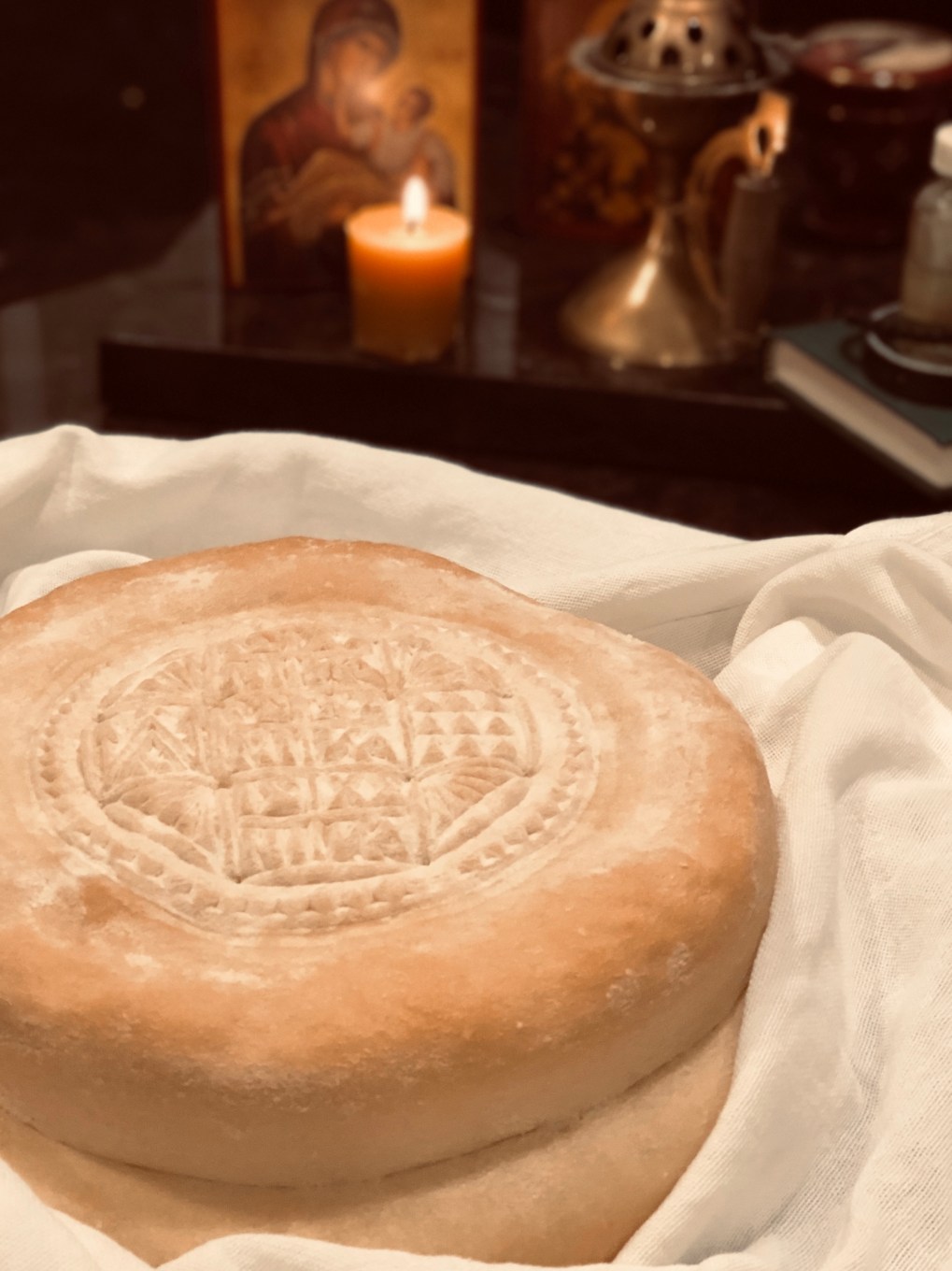
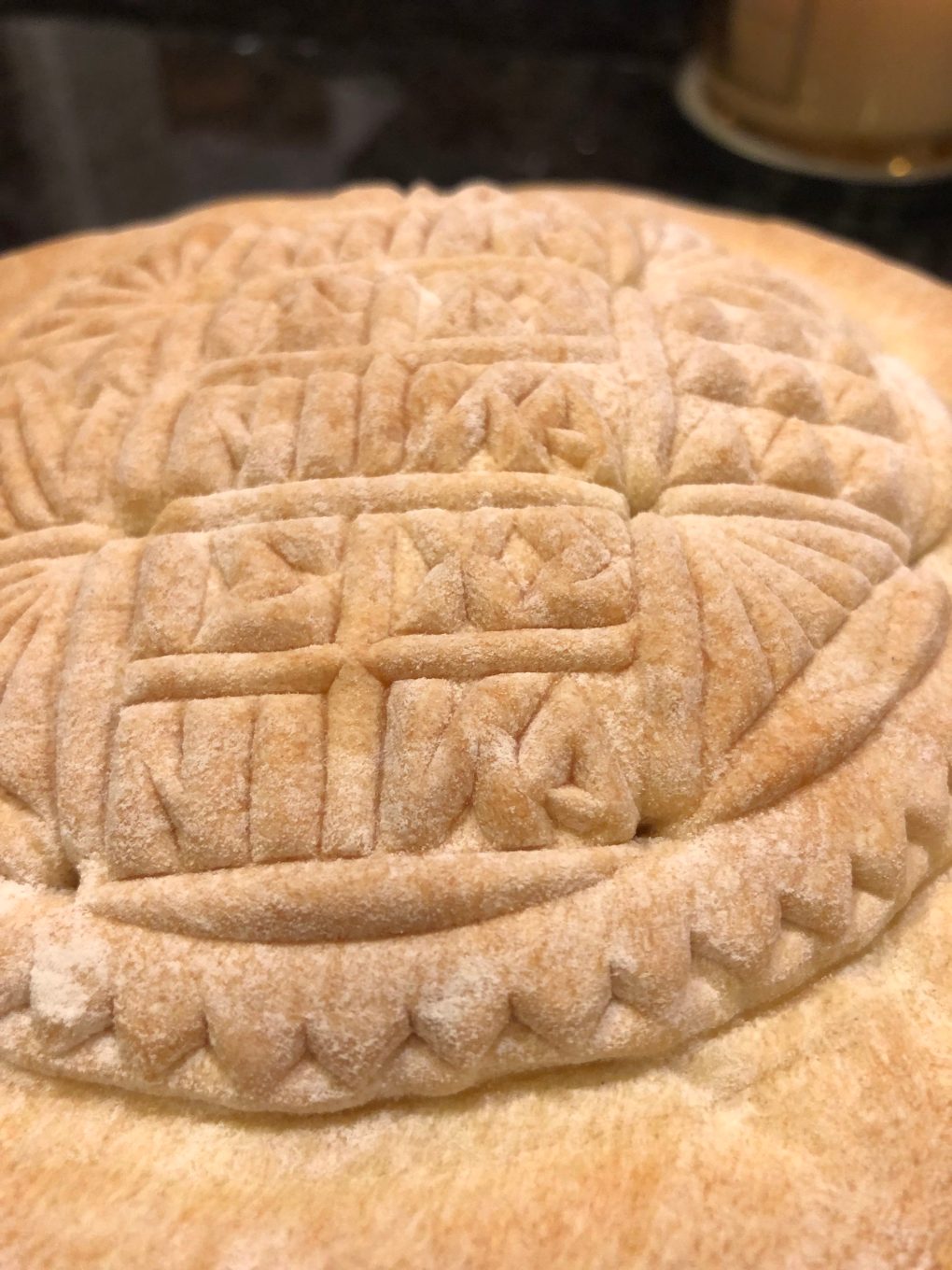
It is customary in Orthodox Liturgies for parishioners to commemorate their loved ones, friends and even enemies during the Liturgy. This is particularly true if you have prepared the Prosphora. Recipe here.

Each week I find myself scribbling down the names of our commemorations and finally decided to print up a sheet to make it less of a mess. Maybe you could use one too? I’ve made it available here and on my sidebar.

Read More

holy ordinary {simplicity}

Thou shalt sprinkle me with hyssop

Recently on my Instagram Feed a friend asked what is #holyordinary and how does it relate to our Divine Liturgy.

Holy Ordinary is life – simple, bare, straightforward – warts and all – yet blessed. Holy Ordinary is eukharistia – a life of Thanksgiving, and contentment. Holy Ordinary is looking for God in the present moment of the ordinary-ness of daily life.

In reference to our Liturgy – let’s focus on our Litanies… fervent supplication – our Litanies orient us toward every day life enveloped in that which is needful – Thy Will be done – in the midst of the sublime foretaste of Heaven which is the Liturgy and the Eucharist. It is simple, true, beautiful and all the while majestic, Holy and sublime.

Read More

sweet liturgy of saint basil

Vasilopita 2020

On January 1, 2020 we commemorated Saint Basil the Great as well as the first day of 2020 • many will have opened the new year by celebration the Divine Liturgy • and the sharing of the Vasilopita. ⠀

Most every Liturgy celebrated in the Orthodox Church is the Liturgy of Saint John Chrysostom. •  However the Church has apppointed that on certain days of the year we celebrate the Liturgy of Saint Basil •  these days are ⠀

• the five Sunday’s of Great Lent ⠀

• Holy Thursday and Holy Saturday ⠀

• Eve of the Nativity ⠀

• Feast of the Nativity ⠀

• Eve of Theophany⠀

• Feast of Theophany⠀

• Feast Day of Saint Basil (Jan 1 / 14) ⠀

Unless you happen to know that it is Saint Basil’s Liturgy being celebrated you might not notice, because it differs very little from the Liturgy of Saint John Chrysostom. However, there are layers in the Liturgy and some of those layers are veiled within the altar – this was was highlighted by our priest yesterday. In Saint Basil’s Liturgy those prayers behind the altar are more penitential and yet also speak sublimely and clearly of God’s deep devotion and love for humanity and all of creation. A closer listen and this s clear, especially the prayers of the Anaphora which say that God created man,

and fashioned him out of the dust of the earth and placed him in the midst of a bountiful paradise, promising him life eternal and the enjoyment of everlasting good things by keeping Your commandments” ⠀

Anaphora prayers of Saint Basil’s Liturgy

Saint Basil also prays beautifully in those same about how when humanity fell from Grace God has never stopped communicating, seeking, pursuing, loving, working and interacting incooperation among His people – not ever. Dynamis. But rather remembering always the work of His Hands – in His benevolent loving kindness, He visits us in different ways – through the tender compassion of His mercy sending forth Prophets and Saints in every generation. ⠀

Simplicity • God has set us within Paradise too, friends • at every Divine Liturgy • oh taste and see that the Lord is good. ⠀

O our Holy Father among the Saints • Saint Basil the Great • • pray to God for us

You can read the Liturgy of Saint Basil by clicking his name below.

Saint Basil

Additional Resources:

Exploring the Liturgy of Saint Basil

On the Liturgy of Saint Basil the Great

Podcast with Father Thomas Hopko : The Eucharistic Prayer of Saint Basils Liturgy

Anaphora Prayer of Saint Basil the Great on AbbaMoses.com


for the peace from above

He is our bread – because from the very beginning all our hunger was a hunger for Him and all our bread was but a symbol of Him , a symbol that had to become reality.
Father Akexabder Schmemman :: For the Life of the World

Ὑπὲρ τῆς ἄνωθεν εἰρήνης καὶ τῆς σωτηρίας τῶν ψυχῶν ἡμῶν τοῦ Κυρίου δεηθῶμεν.

For the peace from above and for the salvation of our souls, let us pray to the Lord.

Great Litany :: Divine Liturgy of Saint John Chrysostom

For the peace from above… we pray this in every Divine Liturgy… and this peace is not an earthly peace but rather is a peace even in the midst of chaos… Peace leading souls to still waters :: on the path of righteousness for His names sake (Psalm 23) . Soul redeeming restorative peace… a peace which surpasses all understanding :: peace of goodness and mercy unto salvation.

Heavenly peace :: and tranquility of soul.

εἰρήνης :: Peace

This is harmony.

The Litanies of the Liturgy of Life :: these are a compass to Salvation – that we will dwell in the house of the Lord all the days of our lives.

Skopelos Greece


this fasting

A clear rule handed down by the Fathers is this: stop eating while still hungry and do not continue until you are satisfied.

Saint John Cassian, Philokalia, Vol. 1 Faber & Faber, 1986, p.74

This fasting is in regard to food. Living in an age in which man much too easily lives for the sake of exterior effects, we can be fooled into thinking that fasting from food should be sufficient for spiritual growth. But in the holy Gospel, our Lord Jesus Christ says, “For from within, out of the heart of man, come….all these evil things,… and they defile a man.” (Mark 7:21-23) Here the Savior teaches us that most important is the purification from within of our heart and soul. Fasting of soul is the defeat of egotism, the renunciation sins and the abstention from passions. It is a a humble realization within ourselves emulating the example of Saint John the Baptist, the greatest man born frogwoman and the greatest faster. He says, He [Christ] must increase, but I must decrease” (John 3:30) In order to receive Christ in our hearts… we must work to destroy all that separates us from Him. We have the means close at hand to accomplish this”

  • repentance and sincere Confession, which are the hyssop which makes our souls whiter than snow (Psalm 50:7)
  • love of God and fellow creatures who are made in the image of God” this is the great commandment of God, making us like Him Who is true Love
  • charity, which covers a multitude of sins and changes the vanity of this world into eternal glory
  • spiritual hymns and pure prayer, which is the center from which all good deeds draw their power and strength
  • and above all, participation at Holy Liturgy and receiving of Holy Communion

When we join these efforts to bodily fasting, then our fast truly becomes a knitting together of ascetically effort in both body and soul. All these things we must accomplish with joy of heart as the Lord teaches us when He says: “but when you fast, anent your head and wash your face that your fasting may not be seen by men but by your Father who is in secret and your Father who sees in secret will reward you.” (Matthew 6:17-18)

“Life Transfigured”

A Journal of Orthodox Nuns, Volume 50 #3


dependable blessings

HI DiözesanK OT Himmelst so i 110310_D131 P


My husband and I have both lived in one geographic area our whole lives and this has really nurtured the blessing of what to expect seasonally, with the assurance of things to come.

Even amidst all of our rushing around, seasonal patterns emerge from the blur of the busyness of life.  Like that every late May to early June in our neck of the world, we get tons of iridescent dragonflies hatching from the creeks and fluttering through the woods where I walk.

I love it and look for it each year.  This year it seemed like they came a little late – and I thought maybe I had missed it!  Then finally a few weeks ago those little dragonflies were everywhere!

❤️

There is an immense similarity in embracing the Liturgical cycle of the year, as the faithful live the seasons of our lives within the seasons of the Faith.  The services of the One Holy Catholic and Apostolic Orthodox Church offers a certain stability of place.  Living within the Liturgical cycle of the Church is so grounding and needful.

A monk of the eastern Church has said that to live “the liturgical year forms Christ in us.”

Redeeming the time.  Over many years, the pattern of the Liturgical cycle comes into focus, like the gears of a clock, the beauty of it all fits together.  The faithful anticipate and are comforted by the coming seasons of fasting with the assurance of the awaiting feast.  This steadfast enduring call to remember our first Love, inclines the soul onward, as one walks with Christ and participates in this Liturgical dialogue – which is a song of renewal, a honeycomb of sweet wisdom, and the Hymn of salvation.

In this day and age, not every family is able to live in the suburbs of one city their whole life.  That’s okay.  The reality is that no matter where the faithful live – we have same stability of place in the timeless, salvific geographic terrain of the One Holy Catholic and Apostolic Orthodox Faith.

This is the unity of the faithful – that every Orthodox Church in every city or land preaches the same Christ and has the same Liturgical seasons.  We are rooted and grounded walking through the daily Scriptures, minding the seasons of fasting and festal celebrations of the year,  adoring our Most Holy Theotokos, commemorating the Saints, making room for the formation of Christ in us, through a life of repentance and receiving Him at each Eucharist.

The Orthodox Faith is nourishing, sober, seasonal, stable, relevant and True.  While our own lives can often encounter that which is unexpected, no matter where one lives – Christ and His Church are the same yesterday today and forever.

This is a tremendous dependable blessing and gift.


Screen Shot 2017-06-15 at 3.45.30 PM