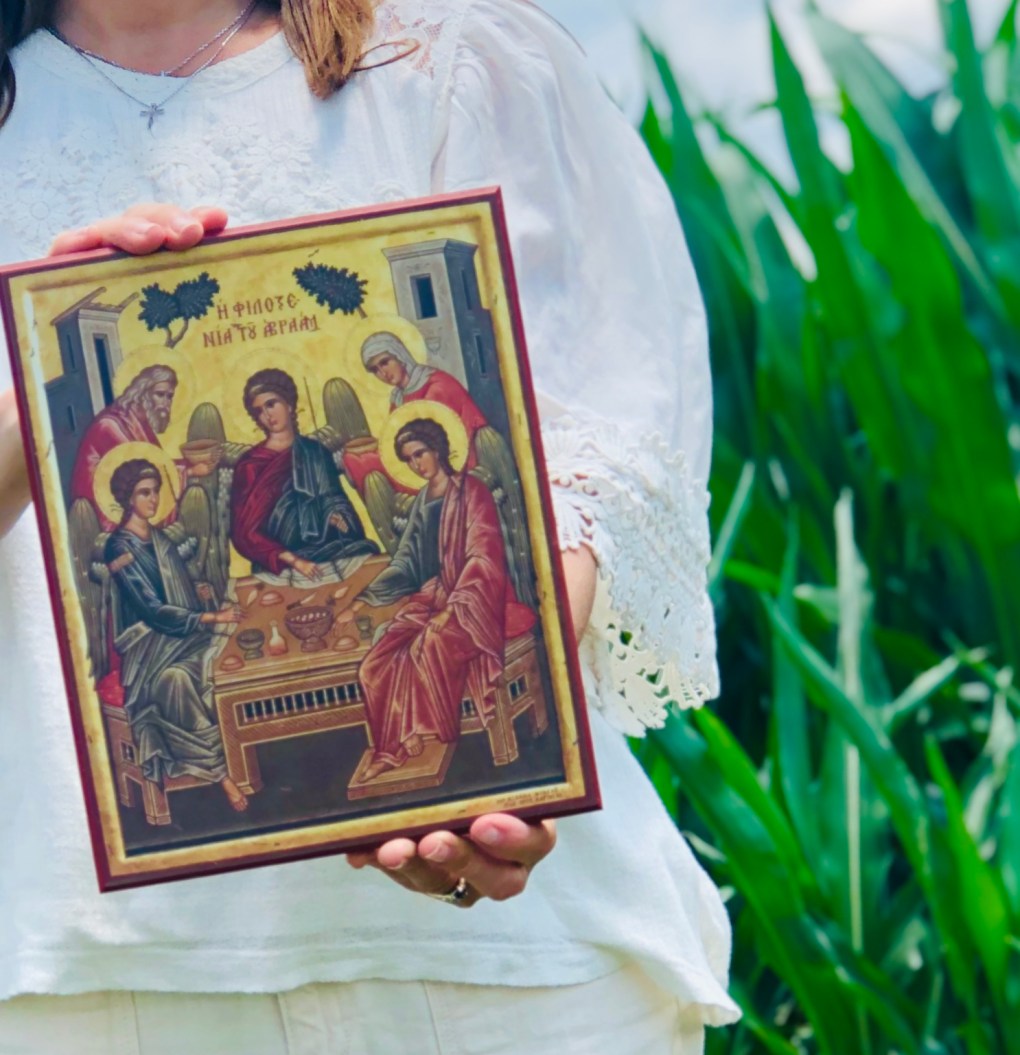
A new season of Grace {Through the Prayers of the Theotokos}

We seek Eternity in the midst of the temporal…
Celebrating the Orthodox New Liturgical Year

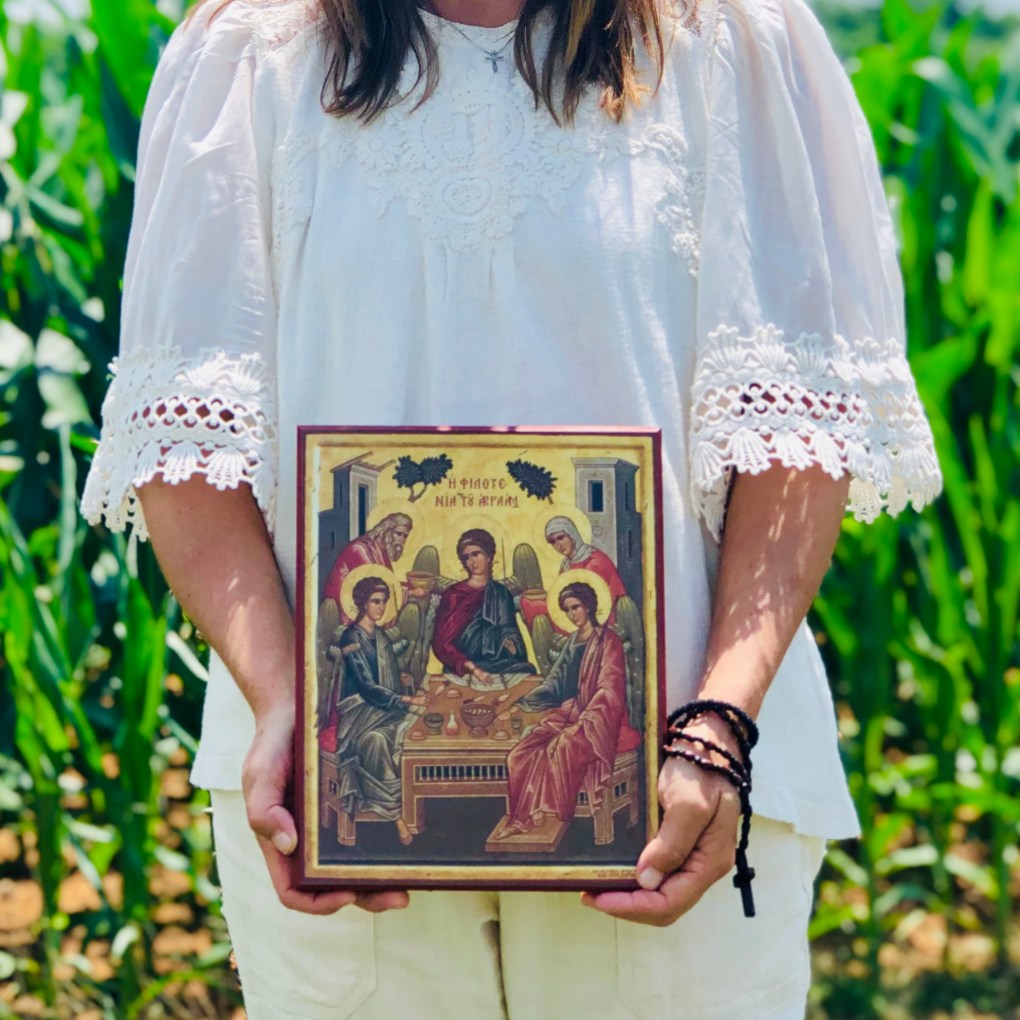
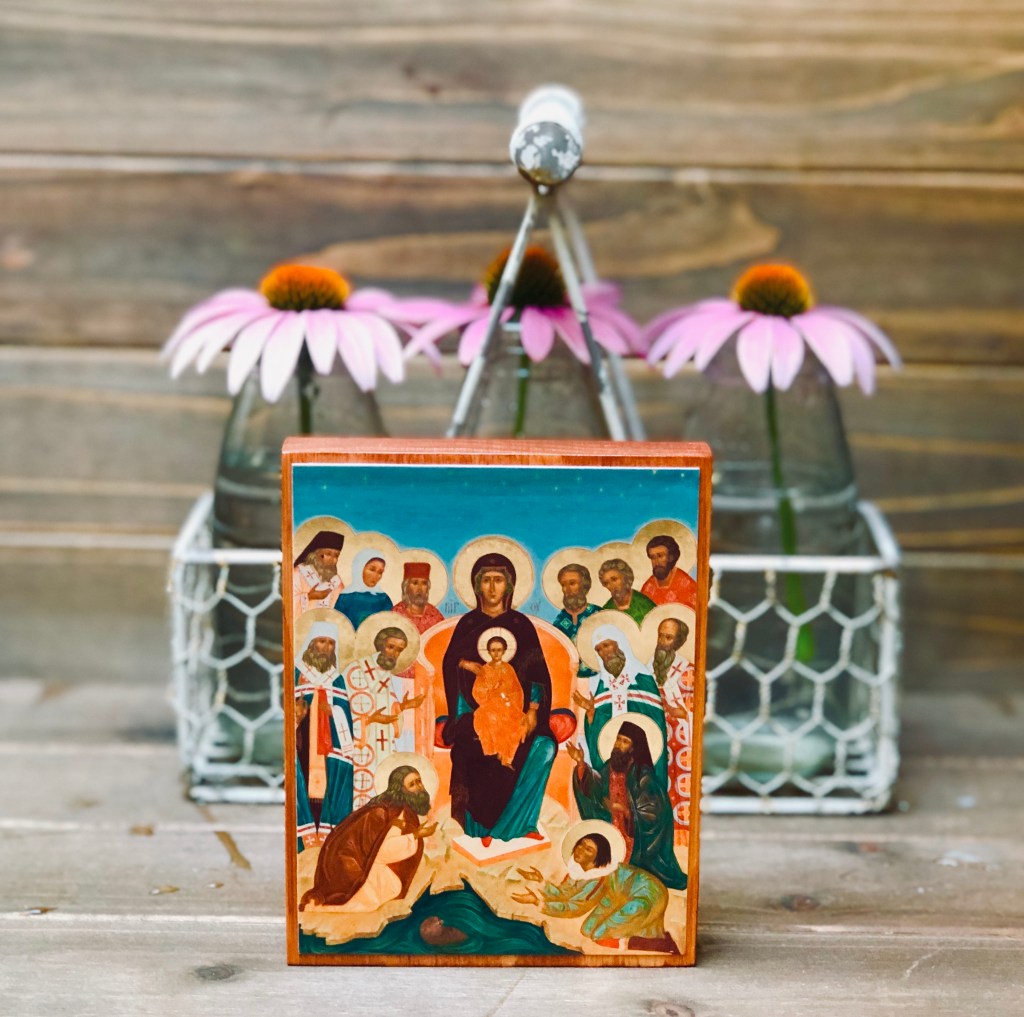
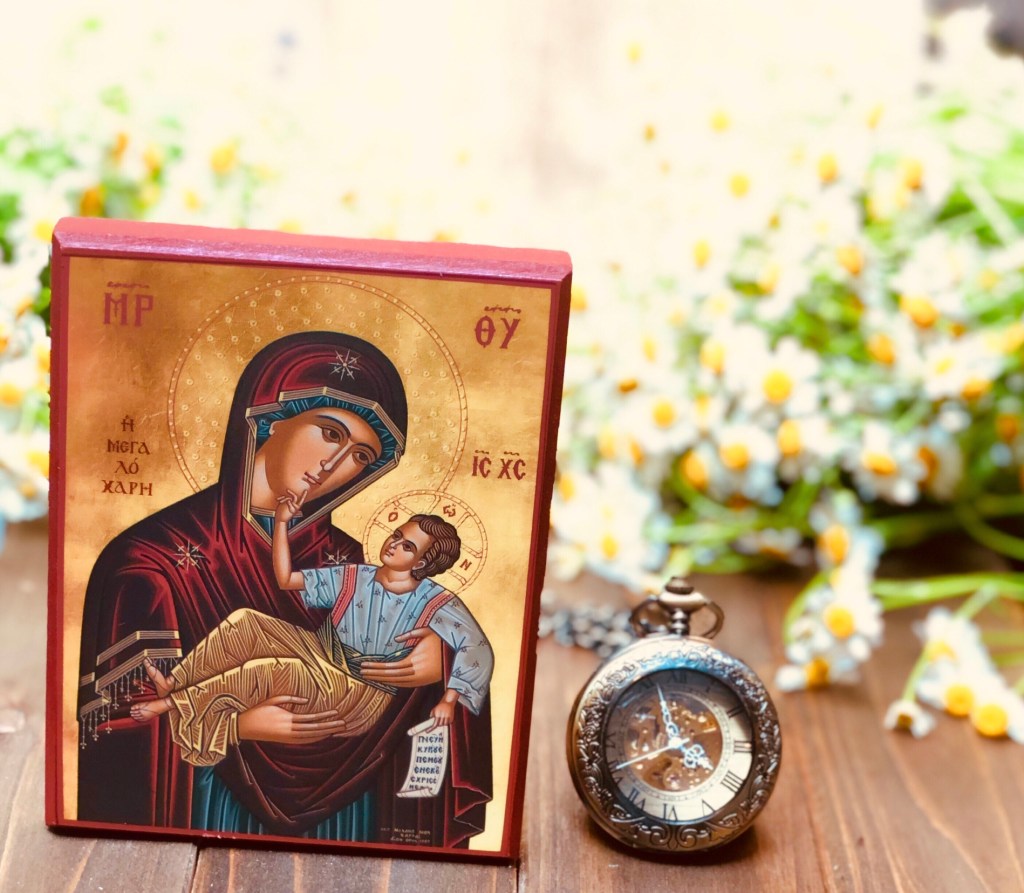
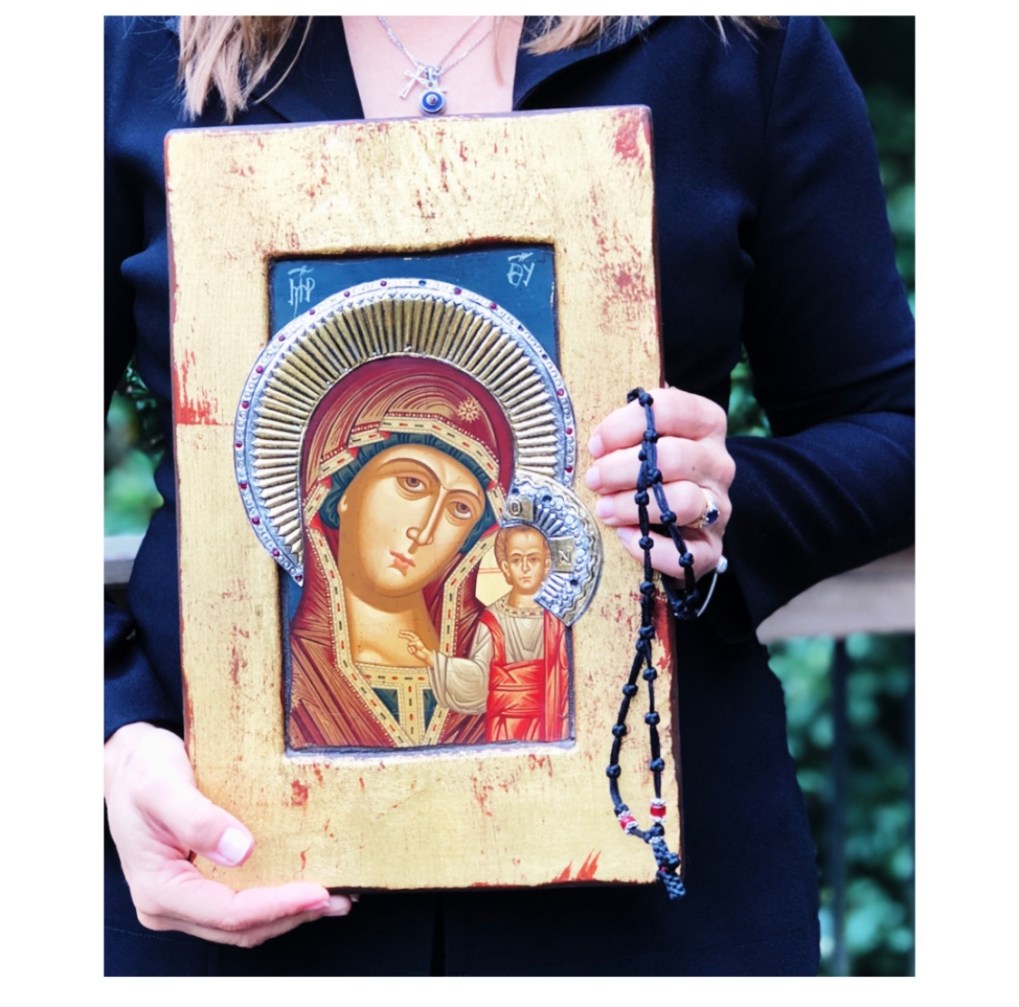
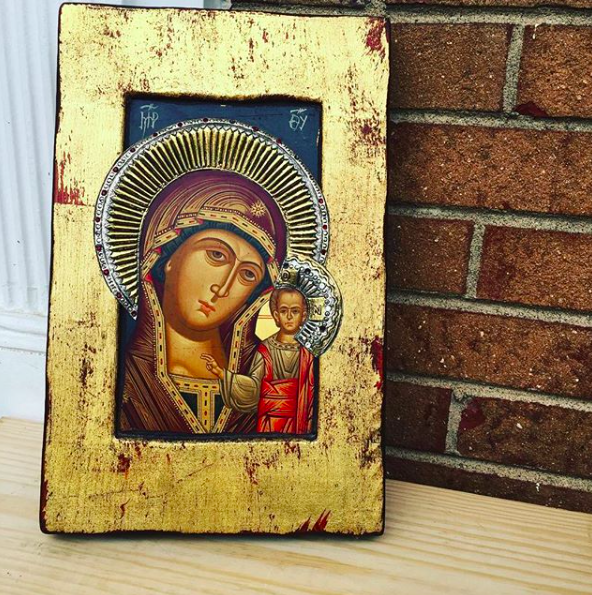
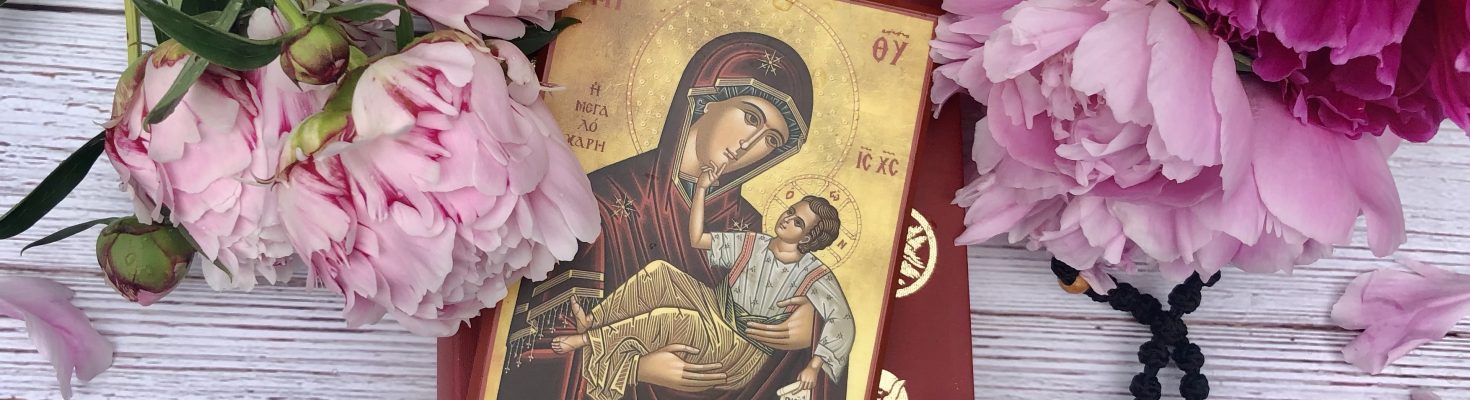
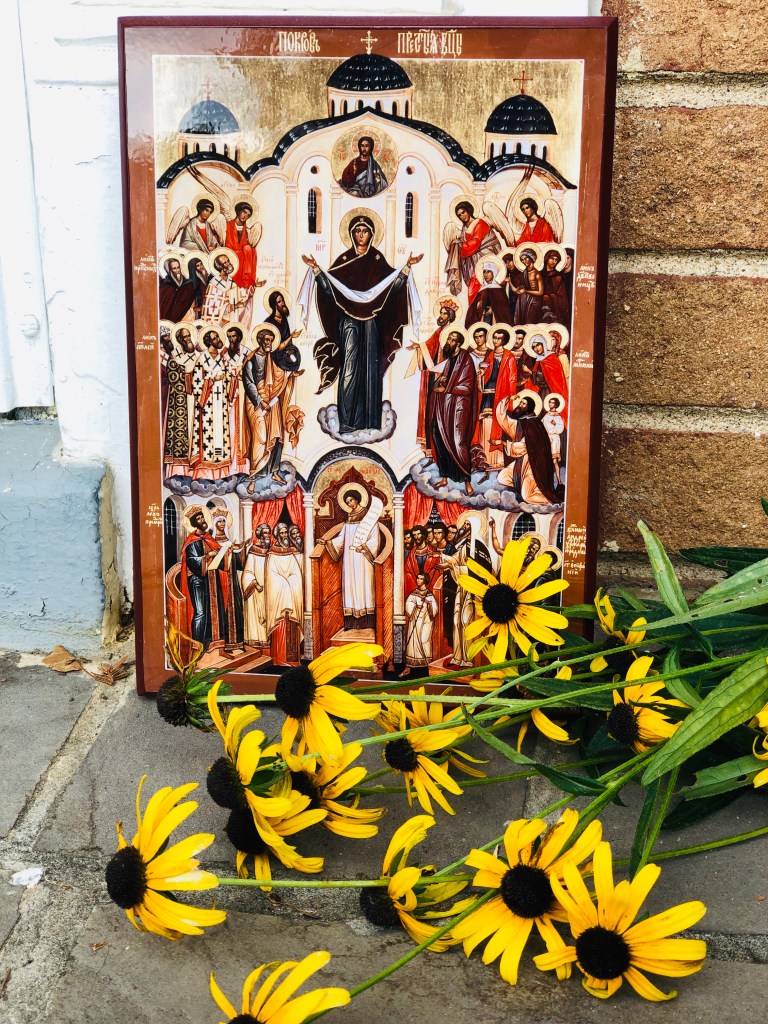
Did you know that September 1 is the beginning of the of the Orthodox Church liturgical year? It is customary in some traditions to place an icon on our doorstep on this day.

It is a beautiful tradition : the ushering in of the Gladsome Light of a new year of Grace. 

Just as the sun rises each morning the faithful rise again in this new year to walk with Christ though a new “but same” Liturgical cycle. We walk through the Feasts of Christ, the Theotokos and the Saints, the daily cycle of readings and all of the Sacraments.

When people ask if we are born again, every Orthodox Christian should actually proclaim,” YES!! ” I am a born again Christian!!

Because, as we walk sacramentally through life, living Liturgically and sacramentally to the best of our ability, we are always being reborn at each step… with each Confession, Eucharist, celebration of a feast, and even as we place an icon of the Theotokos on our very doorstep. We invite Grace into our lives.

Placing an icon on the threshold of the home on this day reminds one of many things. For our family this year it is to recall always the intercessions and protection of the Theotokos. We also remember hospitality :: to love our brother as ourself; being “not forgetful to entertain strangers: for thereby some have entertained angels unawares.” (Hebrews 12:2)

Like breaking bread, our traditions unite us together. A recommitment to offer our lives to Christ and quite simply an physical manifestation of remembering Christ in our daily lives.

Monastics say, the soul follows the body.

They also say, Remember Thy First Love – that is Christ.
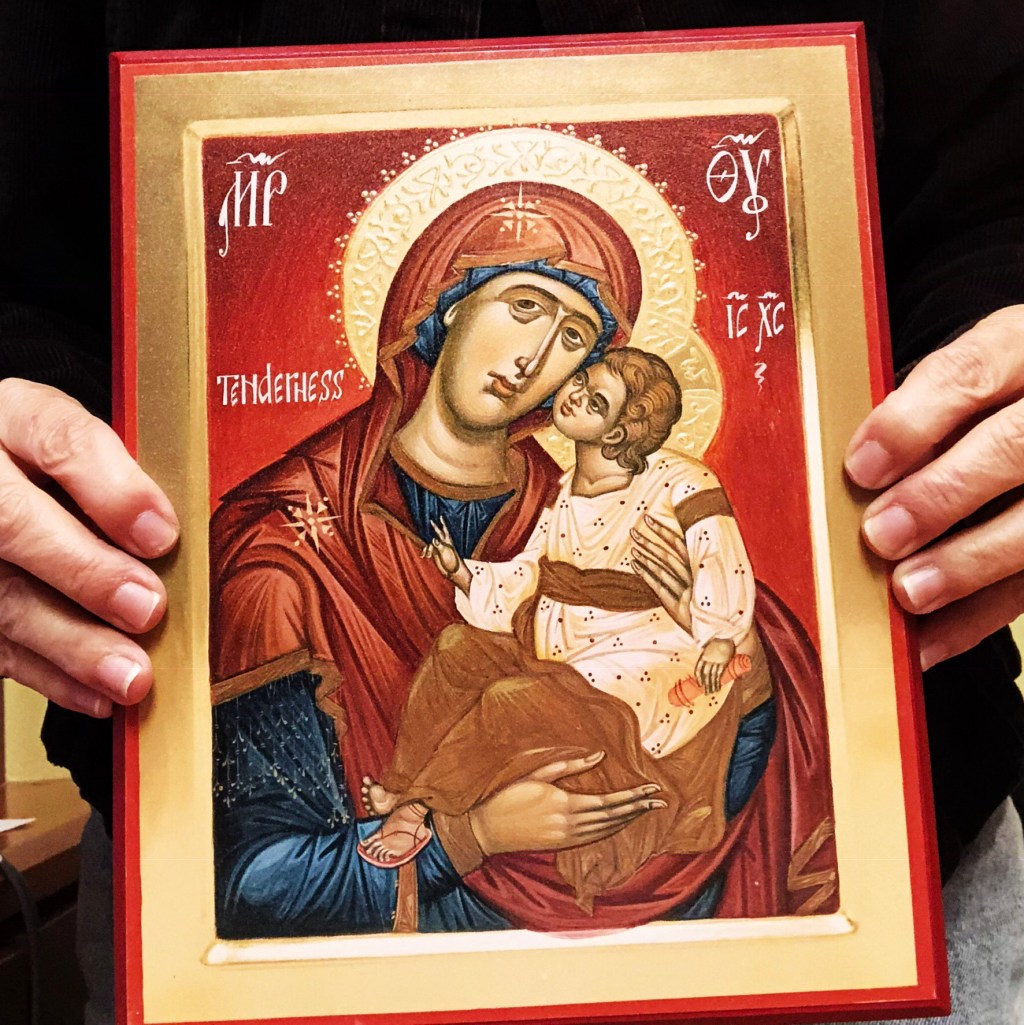
The secular world ties strings on their fingers to remember something important. The Orthodox faithful wear prayer ropes, place icons on our doors, sprinkle holy water through out our houses, anoint ourselves with Holy Oil and drink Holy Water along with prayer in time of crisis or need, we bake delicious faith based traditional breads and sweets that we share with family and friends and distribute to the poor.

We whisper the Jesus Prayer when we awake or can’t dleep at night, rather than count sheep.

And so, we might cross ourselves when we pass a Church, or cross ourselves when our children partake of the Eucharist and even when we yawn during a service – in this way- in some small measure we seek to remember Christ and offer all of ourselves to Him, and stand in the eternity of kairos, if but only for a second.

Of course, that happens most fully when we are in Church – partaking of the Eucharist, but when we leave we live in the Liturgy outside the Liturgy (Father Alexander Schmemman) and we bring Church into our lives. We bring our love of Christ into our every day lives, not just Sunday.

Recently I was struck in reading Deuteronomy

You shall love the Lord your God from your whole heart, from your whole soul, and from your whole power. So these words I command you today shall be in your heart and in your soul. You shall teach them to your sons, and shall talk of them when you sit in your house, when you walk by the way, when you lie down, and when you rise up. You shall bind them as a sign on your hand, and it shall be immovable before your eyes; and you shall write them on the doorposts of your houses and on your gates.” 

Deuteronomy 6:5-8
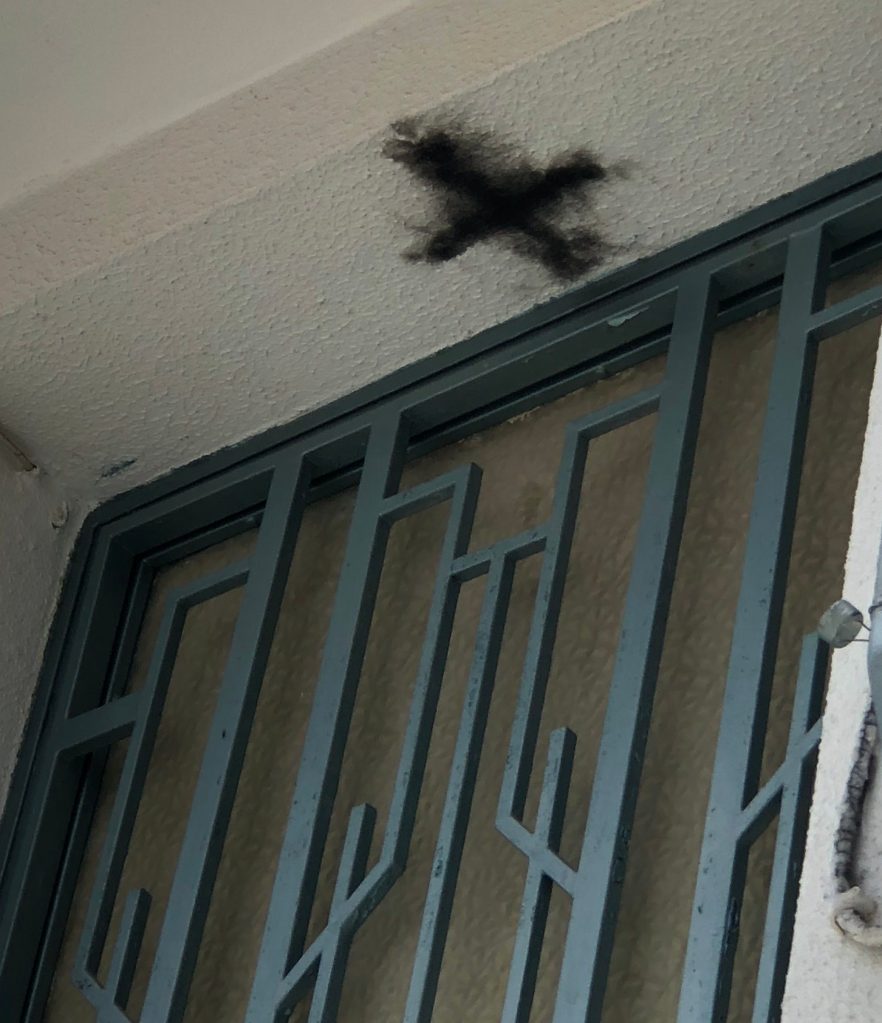
It reminded me of the Cross we burn onto our door thresholds at every house blessing.

Orthodox Christians express our faith in very tangible, open ways expressed our every day life. This will take many manifestations – certainly the most of which is that You shall love the Lord your God from your whole heart, from your whole soul, and from your whole power  

Certainly, its also important to say that no tradition ever overshadows the Sacraments of our Faith. And one can live their whole life never practicing the little “t” traditions and honestly that is totally fine – or you totally forget some years, or just are overcome by events…. look – nothing bad is going to happen and so one has to be wary of superstition.

The point is our faith is real, tactile and sensory – Overflowing from the silent depth of the heart and lived openly – but quietly, like the silent vigil candle or the sweet smelling incense lighting sweet fragrance in our icon corners (a place set aside for prayer within our home).

These little ways, help us sanctify our days and time and together with one voice and one mind – as the body of Christ – we walk boldly and in humility through the seasons of the Church year. These ways quiet and calm the restless bombarded soul of the modern world. A balm of needfulness and moments set aside.

We remember the “yes” of the Theotokos as we seek our own “yes” to Gods Will throughout our own ordinary regular lives.

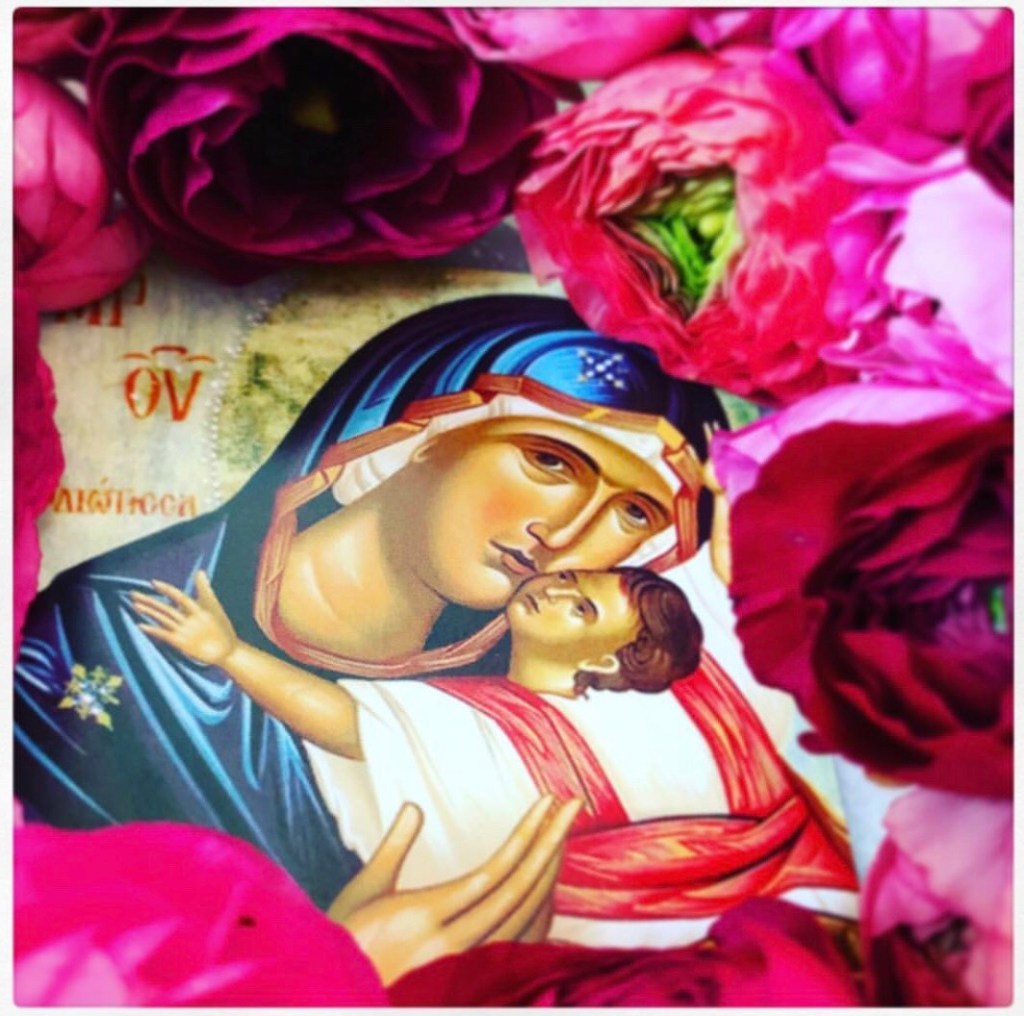
And so it is an absolultey beautiful tradition to place an icon of the Theotokos on our doorsteps today – ushering in the stable rhythm of the Church as we offer the bread of our hearts, the bread of our lives, as an anaphora – through the many the seasons of the Liturgy of our lives.

It’s also an invitation to Grace – an open door… like that popular Christian song on the radio by Francesca Battistell “Holy Spirit” you are welcome here. 

Little “t” traditions are not rote or meaningless but a reflection and movement and outpouring of the heart.

There are times when it’s so easy to dwell my mind not on Goodness but many other things.  Some years I don’t  even remember to put my icon at the door till the end of the day… others I’ve forgotten all together.  And honestly – that’s okay!  The thing is that these little ways are little reminders.

Especially in our busy world- everyday brings a myriad of distractions and many of them entirely necessary and of course women have a million lists in their head – like what does this child need, how am I going to be in three different places at once, getting dinner ready, doctors appointments, back to school nights, youth group serving the soup kitchen, getting off time from work for my kids softball games, etc etc

One day in this country we will have incorporated these traditions and organically begun our own as an expression of our faith.  My encouragement to all is to look beneath the surface of our traditions – my experience of them is that they orient us to dwell our mind on Christ in little ways – throughout the day, throughout the week, throughout the year and throughout our lives. 
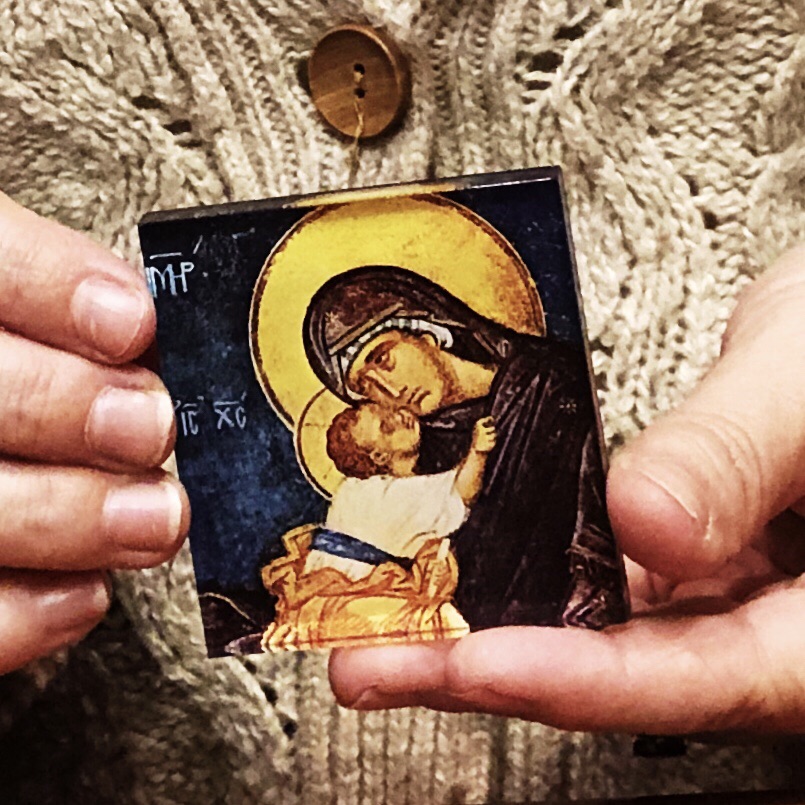


These little momentary ways of blessing are little ways of respite – moments directed to God.

We seek Eternity in the midst of the temporal. We seek to be mindful of not just what us important but what is needful, that there is a deeper fabric and thread to life than just what is on the surface.

We express that yearning in many ways – just one of which is to place an icon of the Theotokos on our footsteps inviting a new Season of Grace and you in.

Happy New Year and blessed new beginnings
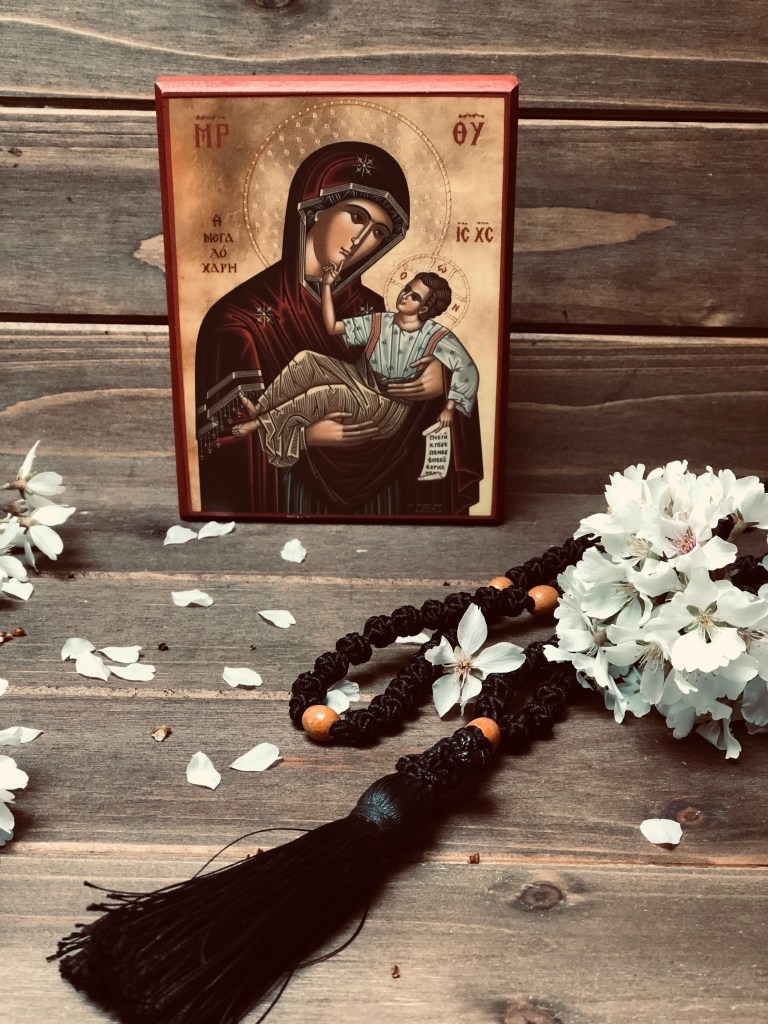

a new year of Grace {repost}

As a convert to the Faith, I think a lot of the treasure of tradition that has been handed down for thousands of years… and often I am deeply drawn to the “little t” ways practiced in the “Little Church” of the home traditions most of all.

They are ways passed onto us from a deeply simple time of old… a time without hashtags and constant noise. They are little ways that perhaps one person in one village began, and others like bees drawn to a flower filled themselves of that nectar and made a harvest of honey out of it in the hive of their own lives.

Many times the “little-t” traditions are very local, such that the average convert doesn’t know what to make of it all. And we are the melting pot of every Orthodox tradition from every jurisdiction in this country.

The non-Orthodox routinely call them rote and meaningless gestures of Faith… and so over the years I have sat with each tradition that I know (and I am always learning more) and pondered why would I do this? I’ve come to the conclusion that none of it is meaningless and I sought a possibility of why it was done in the first place… my answers are my own, hopefully inspired by some Grace – not about me, but Christ. They may not resonate with you, or they might.

In the end they are deeply meaningful to me. I offer them to anyone wondering or struggling how to incorporate them into their life on a deeper level, rather than just to do them. Every tradition I know, I have learned about from others – family, friends – both in person and on social media.

A rote action is to live on the surface, to involve the body but not the soul. To those non-Orthodox who wonder about the little “t” tradition, even dismising them, I thank you. Your skepticism brought me beneath the surface of the veneer and into the deep woody grain of the cross. Partly to give non-Orthodox friends an answer but mostly to live and incorporate these expressions of Faith in my life in a real way, not a rote one. Every year I come back to those reflections with a fresh new look.

The Liturgical cycle of the Faith, both little “t” and big “T” is the same each year – teaching me and inviting me deeper into the Faith. And as we approach the new liturgical cycle, like the moon orbiting the Sun, or the rings of a tree showing the signs of feasting and famine, drought or floods… we are in a different season of life each year. We learn something new; we are reborn through repentance, through Grace, through Liturgical Living and this is a deep steadfast blessing to the faithful.

The following is a reflection of the practice of ushering in the Ecclesial New Year by placing an icon on our doorstep from a few years ago…

A New Year of Grace {Repost}

The Treasure of Tradition    Despite being united to Christ in the Orthodox Church some twenty years ago, there are still many of those little “t” traditions of which I do not know.  When I joined the Orthodox Church the first thing I realized is that I don’t know anything, and not in a bad way at all, but a very very good way…. a way that allows me to incorporate the faith morsel by morsel so that I can digest it.

This year (just last night in fact!) I learned of the tradition to place an icon of the Most Holy Theotokos at the threshold of the door to our home as we usher in the new Liturgical (Ecclesial) Year of Grace.

In many conversations with non-Orthodox over the years, I have been struck by their idea that our little “t” and big “T” traditions are merely rote action.  Yet, as one who seeks (and quite imperfectly, too)  to live and raise a family in the faith, I find most beautifully that these “traditions” of ours are not rote or meaningless at all ::  but rather beckon and re-orient our hearts to that which is needful.

Just as we pray corporately the Anaphora during the Divine Liturgy, these little “t” traditions are our “little a” anaphoras :: a lifting up and offering of ourselves.  A simple, humbling endeavor, to place God above all, offering up our whole  lives to Him.

It is Eucharisteo : Grace,  Joy and Thanksgiving throughout the seasons of our lives.

These are just another way in which we lift up our hearts in this great litany of our lives.  Little children in Greece make the sign of the cross when riding their bikes past a Church :: mothers entering Church remind their little ones to make the sign of the cross before they enter :: we light candles :: burn sweet smelling incense :: we trace the sign of the cross on our children when tucking them into bed :: prayers and prostrations dovetail together :: we kiss the icons and we greet one another with a kiss of peace :: we dye our Pascha eggs the reddest of red, but we don’t dye them on Holy Friday ::  fresh basil is brought home from Church on the Elevation of the Cross and placed in the sourdough starters that will leaven phosphora :: and of course, we pray facing the east – our souls waiting for the Lord, like the watchman waiting for the dawn.

Again and again, in so many ways, we are called to this life in Christ.  To live our lives through the years and seasons and rhythm of the Church.  It is our great priority :: this great Liturgy of Life :: it is more needful  than schoolwork, profession, sports and hobby :: and yet with life in Christ as our priority our ability to fulfill our schoolwork, professions, sports or hobby is in no way diminished.  Traditions bring to light blessings :: even on the threshold of our very home.

Placing an icon of the Most Holy Theotokos at our doorstep – what a wonderful tradition to usher in the new Ecclesial Year :: just as the Ecclesia means “called out” :: the new Ecclesial year “calls us out” again, “to lay aside our earthly cares” and enter into the timeless rhythms and seasons of the Liturgical life of the Church.

The Orthodox Christian lives Ecclesial Year to Ecclesial Year ::Feast to Feast :: Fast to Fast ::Confession to Confession :: Liturgy to Liturgy :: Eucharist to Eucharist.  Just as we have New Year’s resolutions to usher in a new calendar year, now is a great moment to pause, reflect and begin again.

Does my family have regular prayer time?  If not, this is a time to begin.  Are we attending Church weekly?  That’s alright :: start this weeks Vespers and Liturgy.  Has it been forever since my last Confession :: make an inventory, call your priest.  Go.

And so today, on the dawn of a new ecclesial year, the faithful are hopeful standing on this threshold of Grace of a new year, with an invitation to redeem the time.

Blessed art thou O Lord, teach me Thy statutes.

Real life is Eucharist, a movement of love and adoration toward God, the movement in which alone the meaning and the value of all that exists can be revealed and fulfilled

~

Alexander Schmemman

small beginnings

Screen Shot 2017-09-01 at 7.35.44 PM

Begin again… every September 1st is the renewal of the Liturgical cycle of the Orthodox Church – this Gladsome Light dawning a new year of Grace.

Redeeming the time

Seeking Christ.  The Scriptures, Grace, a life of mercy and repentance are not only woven through the Liturgy but throughout the tapestry of our lives.  Just as He pursues us, He wants us to seek Him and He wants to be found with our whole heart.

Christ is the same yesterday, today and forever.  He is unchanging, but we are not.  We come to Him new each and every day.  Each day, each year brings its own pain, joy, crosses, mercies and love in our lives and those that surround us.  We are bound together in this time that we have – here and now.

And so, just as the sun rises in the east each morning, Orthodox Christians again and again, celebrate the Feasts of Christ, the Theotokos and the Saints :: from the  Grace pouring forth from a young girls small, lowly but hidden ‘yes’ to the awesome humility of Christ’s glorification.

It seems like such a little way, but is really is a door open to Grace, this beautiful tradition to place an icon of the Theotokos on our doorsteps – ushering in the rhythm of the Church throughout the liturgy and litanies of life.

As a convert, walking in an ancient faith, one always learning and growing…   Last year was the first time we practiced this tradition. I didn’t feel quite right placing the Theotokos on the ground – something about reverence – so this year I placed Panagia on a wine crate on the front porch.  I’m sure the neighbors are just looking at our porch like ‘huh?’


a new year of grace

IMG_4651

The mystery of liturgical time… In God, there is but one moment, in which everything is included.  The fullness of the liturgical year does not consist of the commemorative cycle of Christ’s life being resolved or completed, for the completion of a series implies that there is a series, a succession of disjointed elements.  The fullness of the liturgical year has to be thought of qualitatively and not quantitatively:  it is achieved if, on any day whatsoever of the liturgical year, whichever it might be, we are capable of grasping :: through the particular event which is commemorated :: Christ as a whole, the whole of His life, the whole of His work, the whole of His word.  Each feast and even each day of the year thus becomes the fullness of the whole liturgical cycle.  This cycle never repeats itself :: each one of its aspects reflects the inexhaustible depth and fullness of Christ, and as a result, becomes new for us to the extent that we understand it better.  The liturgical year is a prism which receives the white light of Christ and splits it into different colors.  Christ is the year.

~

a monk of the eastern orthodox church

The Treasure of Tradition    Despite being united to Christ in the Orthodox Church some twenty years ago, there are still many of those little “t” traditions of which I do not know.  When I joined the Orthodox Church the first thing I realized is that I don’t know anything, and not in a bad way at all, but a very very good way…. a way that allows me to incorporate the faith morsel by morsel so that I can digest it.

This year (just last night in fact!) I learned of the tradition to place an icon of the Most Holy Theotokos at the threshold of the door to our home as we usher in the new Liturgical (Ecclesial) Year of Grace.

In many conversations with non-Orthodox over the years, I have been struck by their idea that our little “t” and big “T” traditions are merely rote action.  Yet, as one who seeks (and quite imperfectly, too)  to live and raise a family in the faith, I find most beautifully that these “traditions” of ours are not rote or meaningless at all ::  but rather beckon and re-orient our hearts to that which is needful.

Just as we pray corporately the Anaphora during the Divine Liturgy, these little “t” traditions are our “little a” anaphoras :: a lifting up and offering of ourselves.  A simple, humbling endeavor, to place God above all, offering up our whole  lives to Him.

It is Eucharisteo : Grace,  Joy and Thanksgiving throughout the seasons of our lives.

These are just another way in which we lift up our hearts in this great litany of our lives.  Little children in Greece make the sign of the cross when riding their bikes past a Church :: mothers entering Church remind their little ones to make the sign of the cross before they enter :: we light candles :: burn sweet smelling incense :: we trace the sign of the cross on our children when tucking them into bed :: prayers and prostrations dovetail together :: we kiss the icons and we greet one another with a kiss of peace :: we dye our Pascha eggs the reddest of red, but we don’t dye them on Holy Friday ::  fresh basil is brought home from Church on the Elevation of the Cross and placed in the sourdough starters that will leaven phosphora :: and of course, we pray facing the east – our souls waiting for the Lord, like the watchman waiting for the dawn.

Again and again, in so many ways, we are called to this life in Christ.  To live our lives through the years and seasons and rhythm of the Church.  It is our great priority :: this great Liturgy of Life :: it is more needful  than schoolwork, profession, sports and hobby :: and yet with life in Christ as our priority our ability to fulfill our schoolwork, professions, sports or hobby is in no way diminished.  Traditions bring to light blessings :: even on the threshold of our very home.

Placing an icon of the Most Holy Theotokos at our doorstep – what a wonderful tradition to usher in the new Ecclesial Year :: just as the Ecclesia means “called out” :: the new Ecclesial year “calls us out” again, “to lay aside our earthly cares” and enter into the timeless rhythms and seasons of the Liturgical life of the Church.

The Orthodox Christian lives Ecclesial Year to Ecclesial Year :: Feast to Feast :: Fast to Fast :: Confession to Confession :: Liturgy to Liturgy :: Eucharist to Eucharist.  Just as we have New Year’s resolutions to usher in a new calendar year, now is a great moment to pause, reflect and begin again.

Does my family have regular prayer time?  If not, this is a time to begin.  Are we attending Church weekly?  That’s alright :: start this weeks Vespers and Liturgy.  Has it been forever since my last Confession :: make an inventory, call your priest.  Go.

And so today, on the dawn of a new ecclesial year, the faithful are hopeful standing on this threshold of Grace of a new year, with an invitation to redeem the time.

Blessed art thou O Lord, teach me Thy statutes.

Real life is Eucharist, a movement of love and adoration toward God, the movement in which alone the meaning and the value of all that exists can be revealed and fulfilled

~

Alexander Schmemman