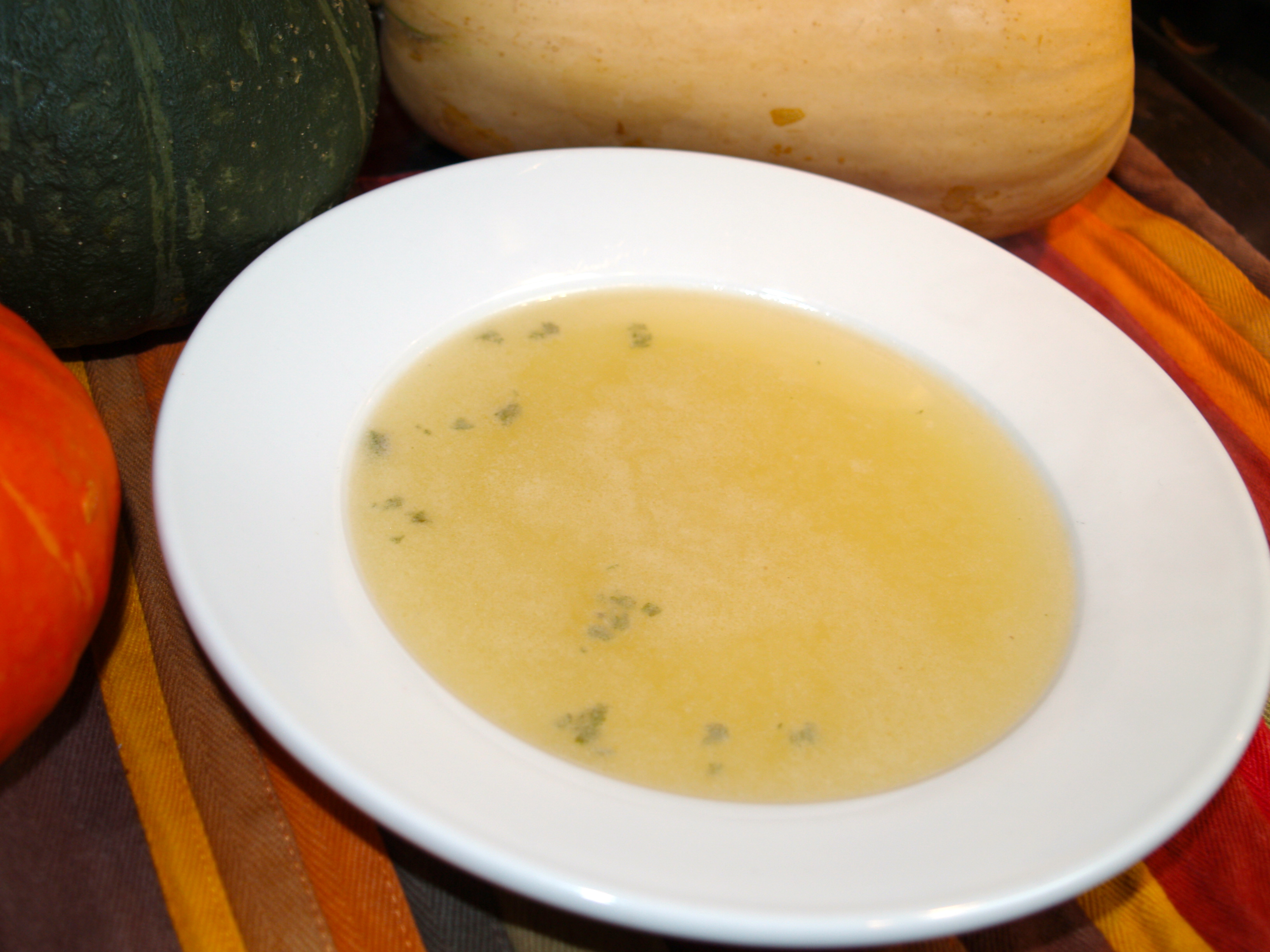
clam chowder

IMG_1640

“The kingdom of heaven is not a reward for works, but a gift of grace prepared by the Master for His faithful servants.

Saint Mark the Ascetic


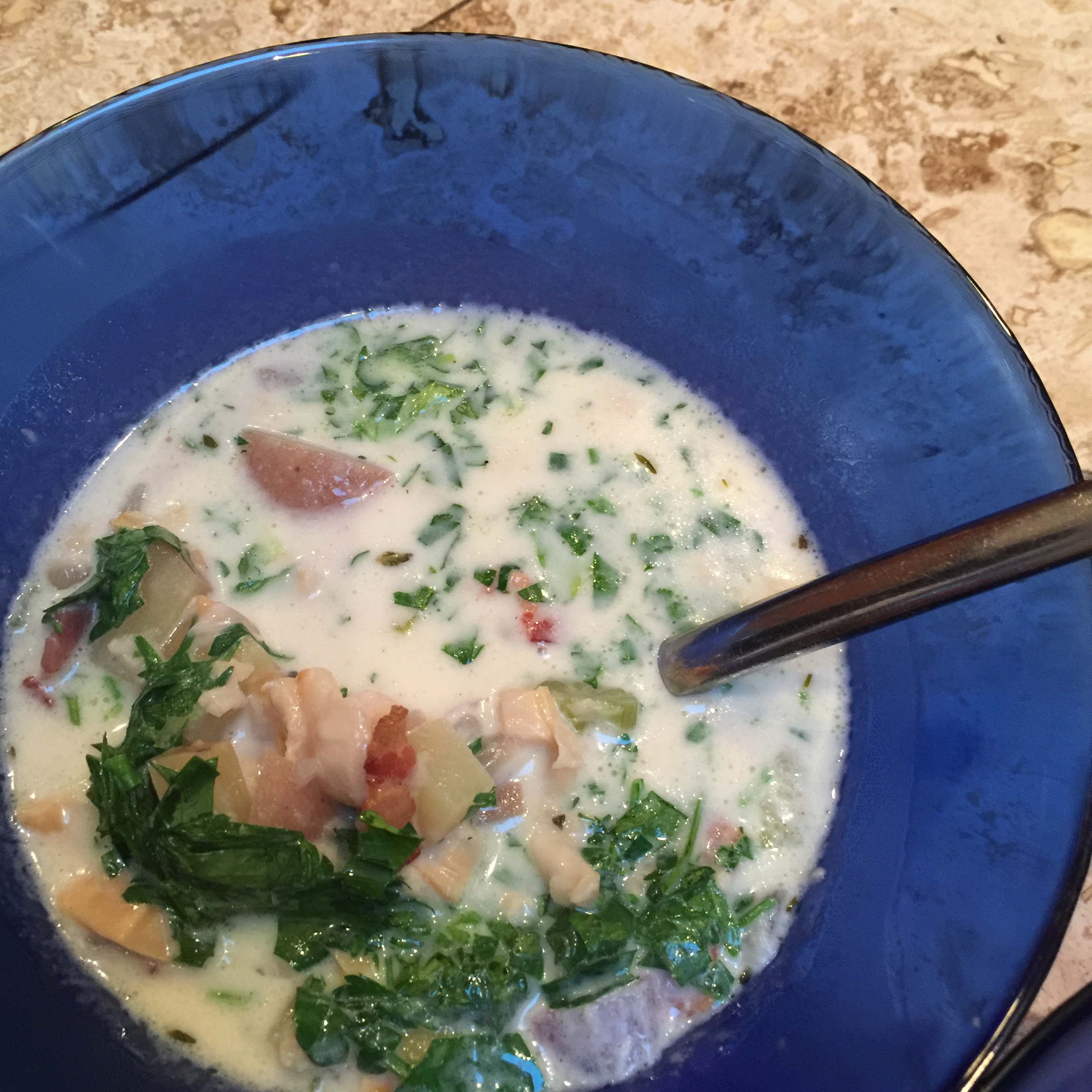
This simple to prepare clam chowder is a favorite during the cold months of winter.  It’s a quick meal that warms and nourishes through and through.  It is a great choice for Cheesefare Week – which is just around the corner!  Since it is not a thick clam chowder, so there is no need to go through the trouble of a rue.   The clam juice in the can is enough for the broth.  For the clams, we get the two pack of the really giant can of clams from Costco.  It makes a big batch of soup, and the leftovers store well for about three days in the fridge, but I will often freeze the leftovers and bring them out for supper the following week.


Ingredients:

  • 1 cup minced onion
  • 2 cups red potato –  chopped small
  • 1 teaspoon fresh thyme
  • 2 cups clam broth (reserved from can)
  • 1 large can chopped clams strained
  • 1 cup cream
  • 1 cup whole milk
  • parsley for garnish
  • 1 teaspoon olive oil or ghee
  • pinch salt and pepper to taste
  • optional : if it is not during Lent- 3 sliced of chopped cooked bacon is a very nice addition.


Preparation:

In large pot, saute onions in olive oil or ghee, over medium heat, until translucent – about five minutes.  Season with salt and pepper.

Add potatoes and cook for ten minutes.  Add thyme and stir well.  Continue cooking until thyme  is fragrant -about five more minutes.

Add clam broth and clams.  Bring to a simmer.  Add milk & cream and cook on very low for another five minutes.

Top with parsley and bacon (if using).


IMG_2321


No duty is more urgent, than that of returning thanks.

Saint Ambrose


dinner in a pinch : R-amen!

“Our hope is that the winter of humanity will gradually be transformed to the bursting forth of love, for it is to this that we are called.” —Jean Vanier

This is becoming another favorite for the evenings when the kids have activities and we are at a pinch for time.  When I was young we used to LOVE ramen noodles.  My brother and I would come home from school and eat the noodles straight from the pack – without even cooking them!  So, this meal is a trip down memory lane.

Now though, as a student of holistic nutrition, the ingredients in your average store-bought ramen present a major culinary impasse.  We just can’t do the ninety nine cent ramen pack- loaded with MSG and lacking any nutritional value.

It’s important for me to nourish my family well, especially during the cold winter months when it’s all too easy to come down with the flu or a cold .  With all that home made broth we’ve stocked in our pantry, we now have an easy canvas for almost anything we can throw together.  Add to that the mineral richness of stock and bone broth, and your getting a great meal with immune boosting properties.

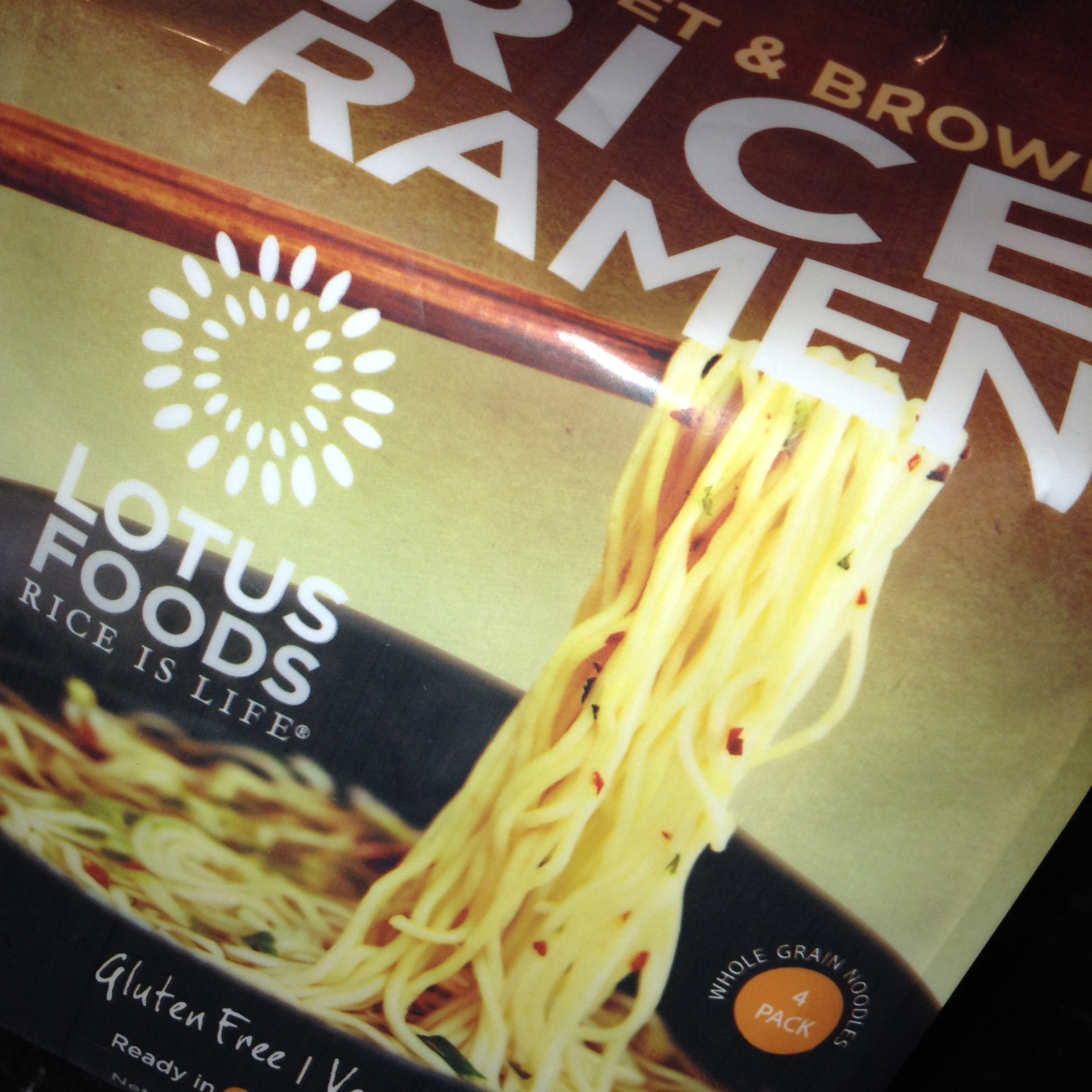
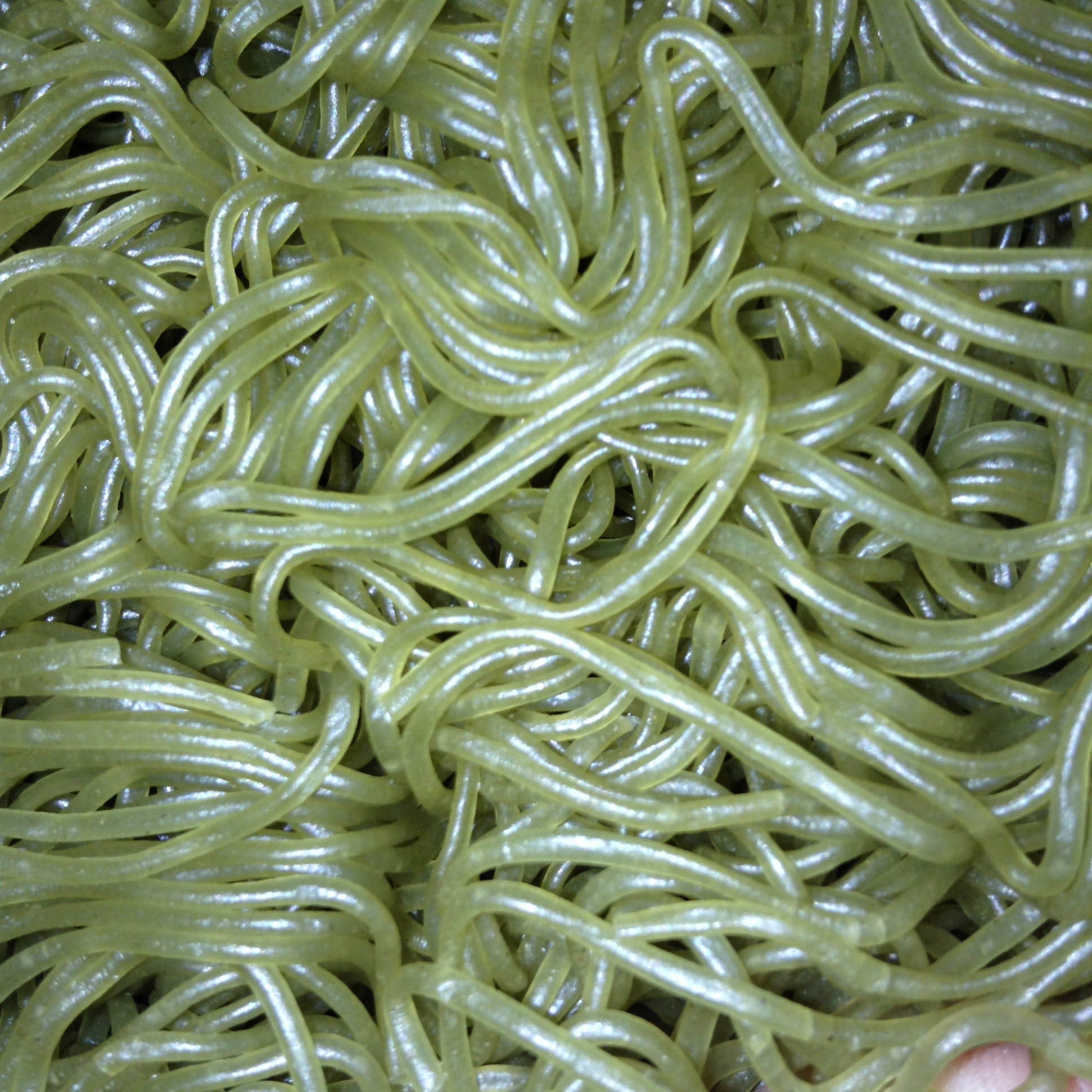
Recently, I discovered Lotus brand foods.  They have a great and fun selection of ramen noodles, with a short but admirable list of ingredients.  There are individual soups, to which you can just add water, but we really like the big packets of ramen noodles.  There are Millet and Brown Ramen,  Forbidden Rice Ramen made with black rice and Jade Pearl Rice.

Lotus Brand Ramen Noodles

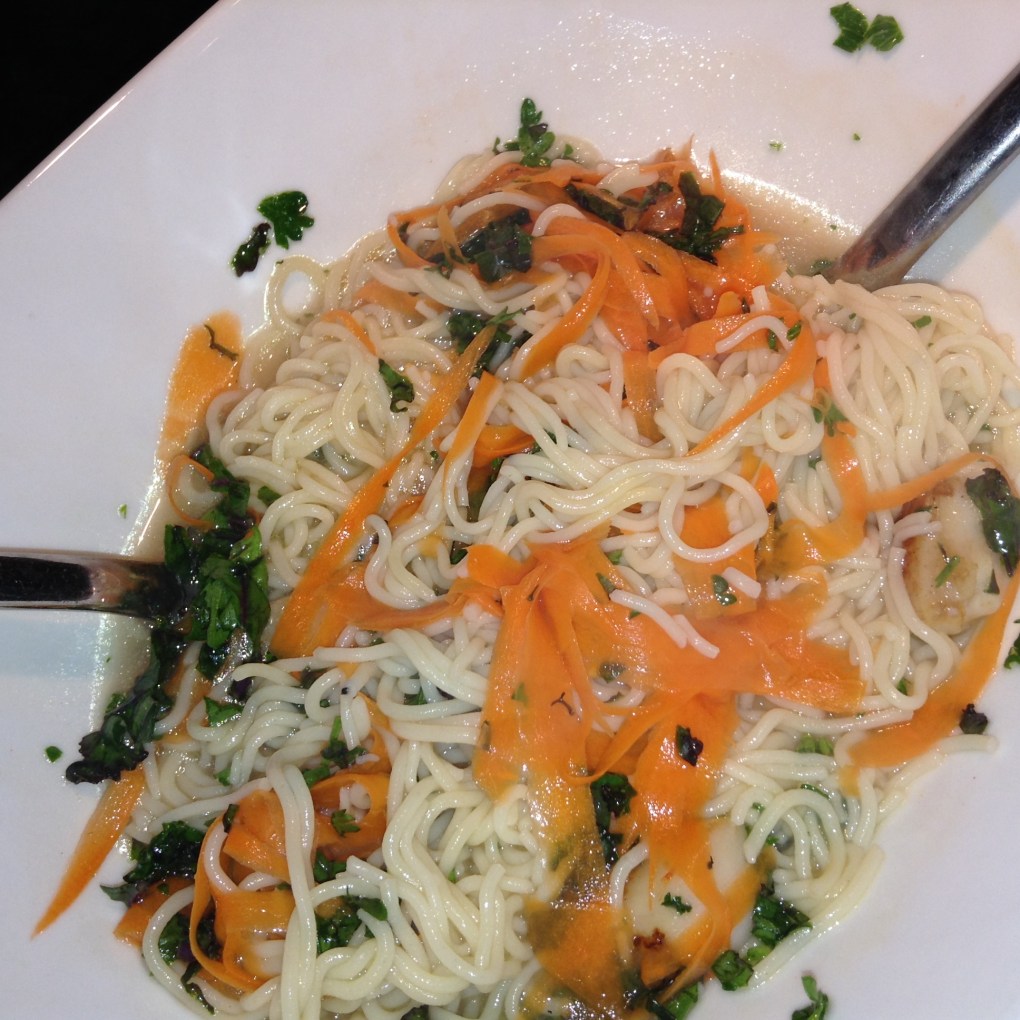
A well stocked pantry makes this an easy weeknight meal.  You’ll need some vegetables of your choice, noodles, seasoning and broth.  This recipe is really a framework for whatever you have on hand.  We make it new every time but this serves as a good guide.  You can use anything you have on hand.


super easy R-AMEN! (serves 4)


ingredients

1 packet Lotus Ramen noodles (4 squares of pressed ramen/ package)

Vegetable of your choice – we used 4 carrots – shredded with a vegetable peeler

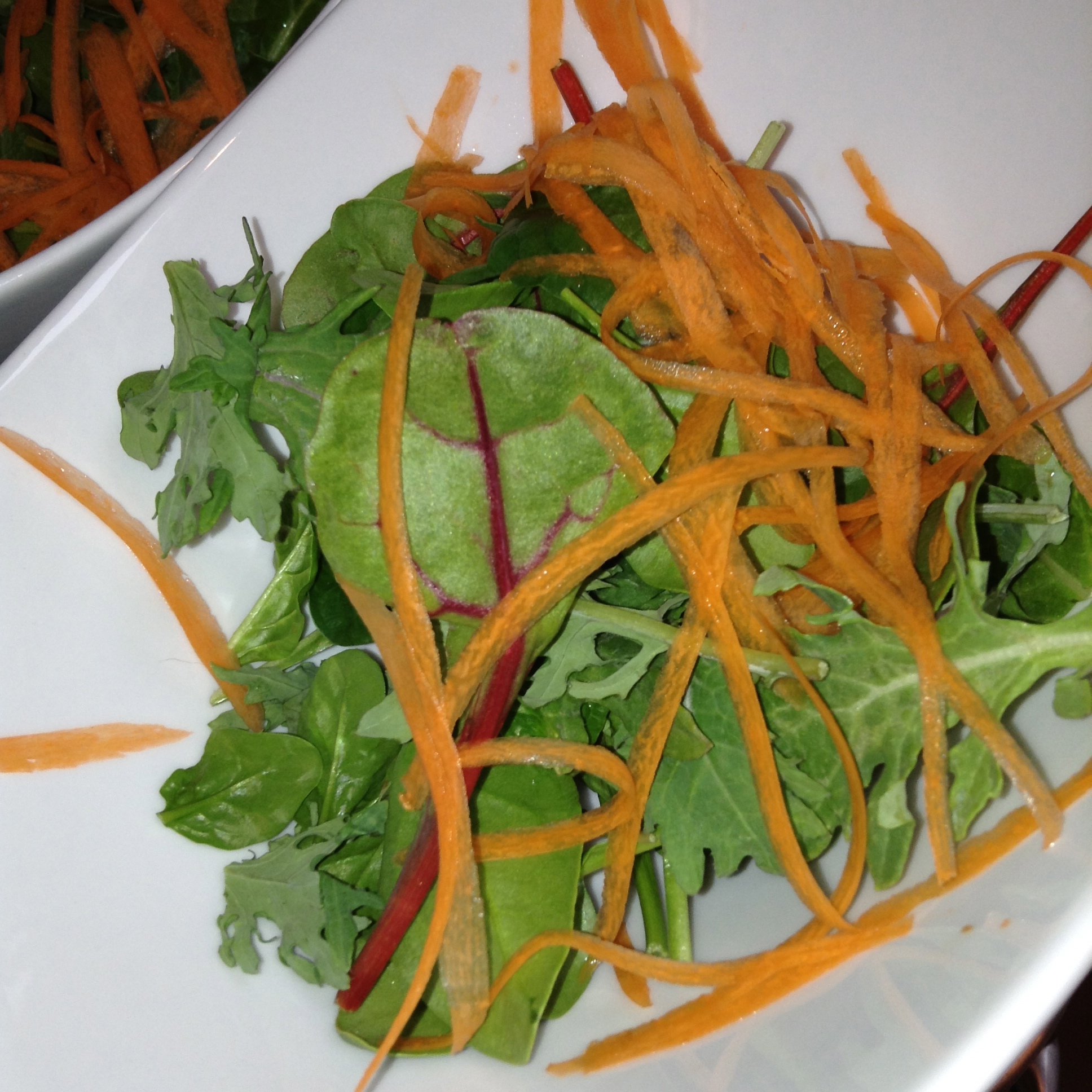
a few handfuls greens per bowl- baby spinach, baby kale or even lettuces

6-9 cups chicken, beef, fish or vegetable stock

optional: 1 cup fermented tofu, shredded chicken (we always have leftovers from making broth) or any meat or fish

also optional : wakame seaweed flakes, toasted sesame seeds, sliced green onion, chopped parsley, basil or cilantro, red pepper flakes or hot sauce of your choice     🙂


IMG_0264

Unccoked Jade Pearl Ramen

preparation

place equal amounts of carrot shavings and greens into each bowl  (about a heaping cupful or two for each serving, they will wilt nicely once you place the hot broth into the bowl).   Really, any vegetable is fine, you can just as easily use red or green peppers, tomatoes, thinly sliced cabbage, sliced fresh green beans, bean  or other sprouts – whatever you have on hand!

IMG_0258

greens and vegetables

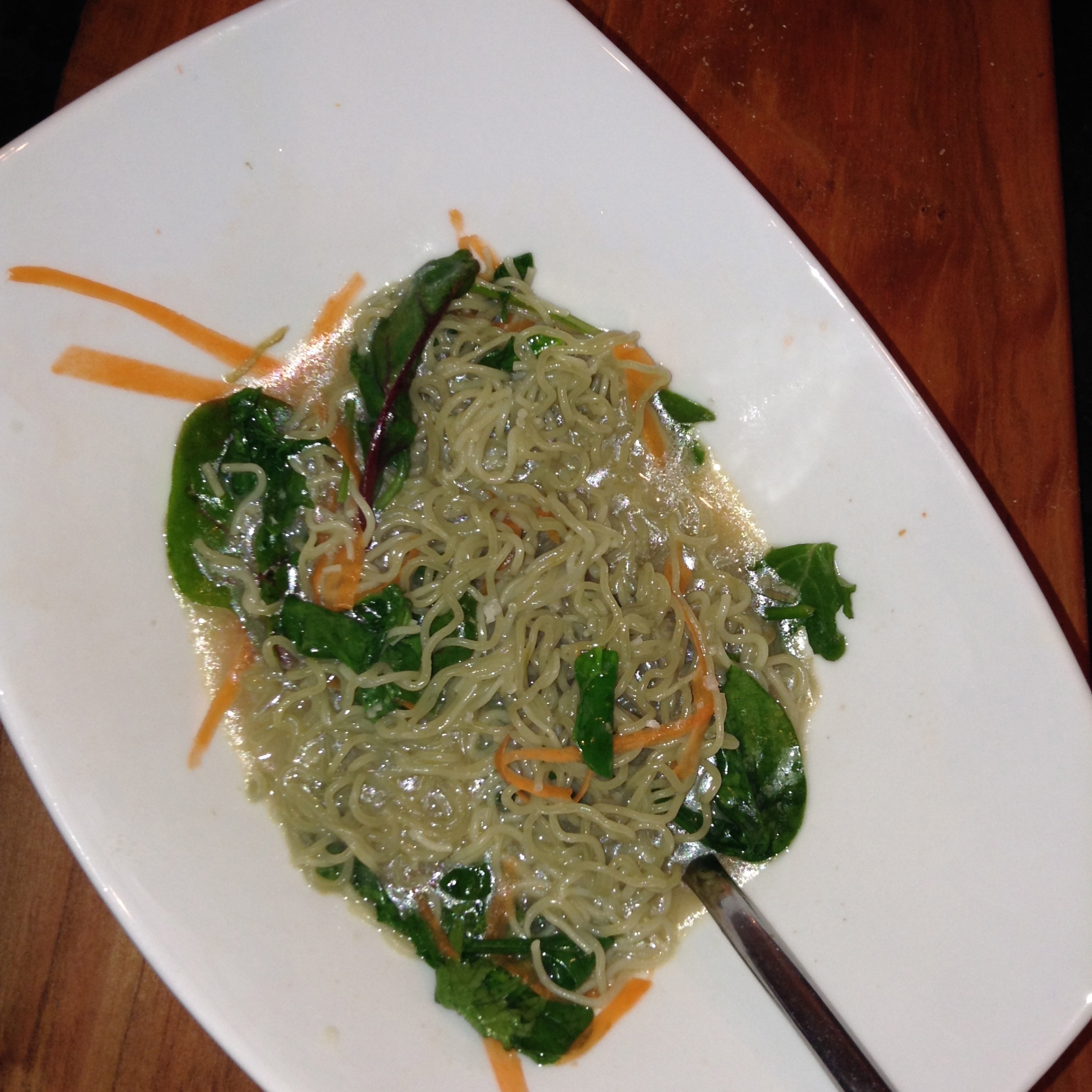
place ramen noodles and broth into a pot and warm until ramen cooks – about 5 – 10 minutes.  You can also cook the ramen in boiling water.

Ladle ramen noodles and broth distributing evenly between bowls.

IMG_0268

For a variation, top with a spoonful of homemade sauerkraut or kimchee for an extra tang!  YUM!  Fry or poach a pasture raised egg and lay it on top of of your soup if your extra hungry.

Serve with a big side salad and you’ve got an easy weeknight meal!


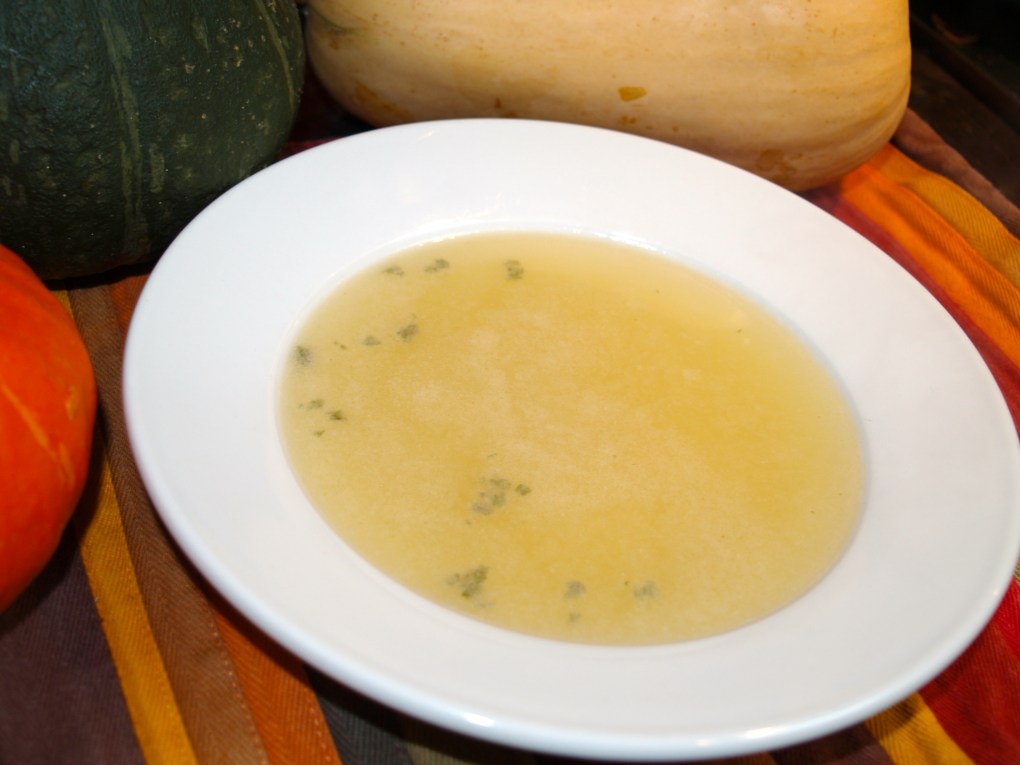
fish broth

OLYMPUS DIGITAL CAMERA

“The proof of love is in the works. Where love exists, it does great things. But where it ceases to act, it ceases to exist.” —Saint Gregory the Great


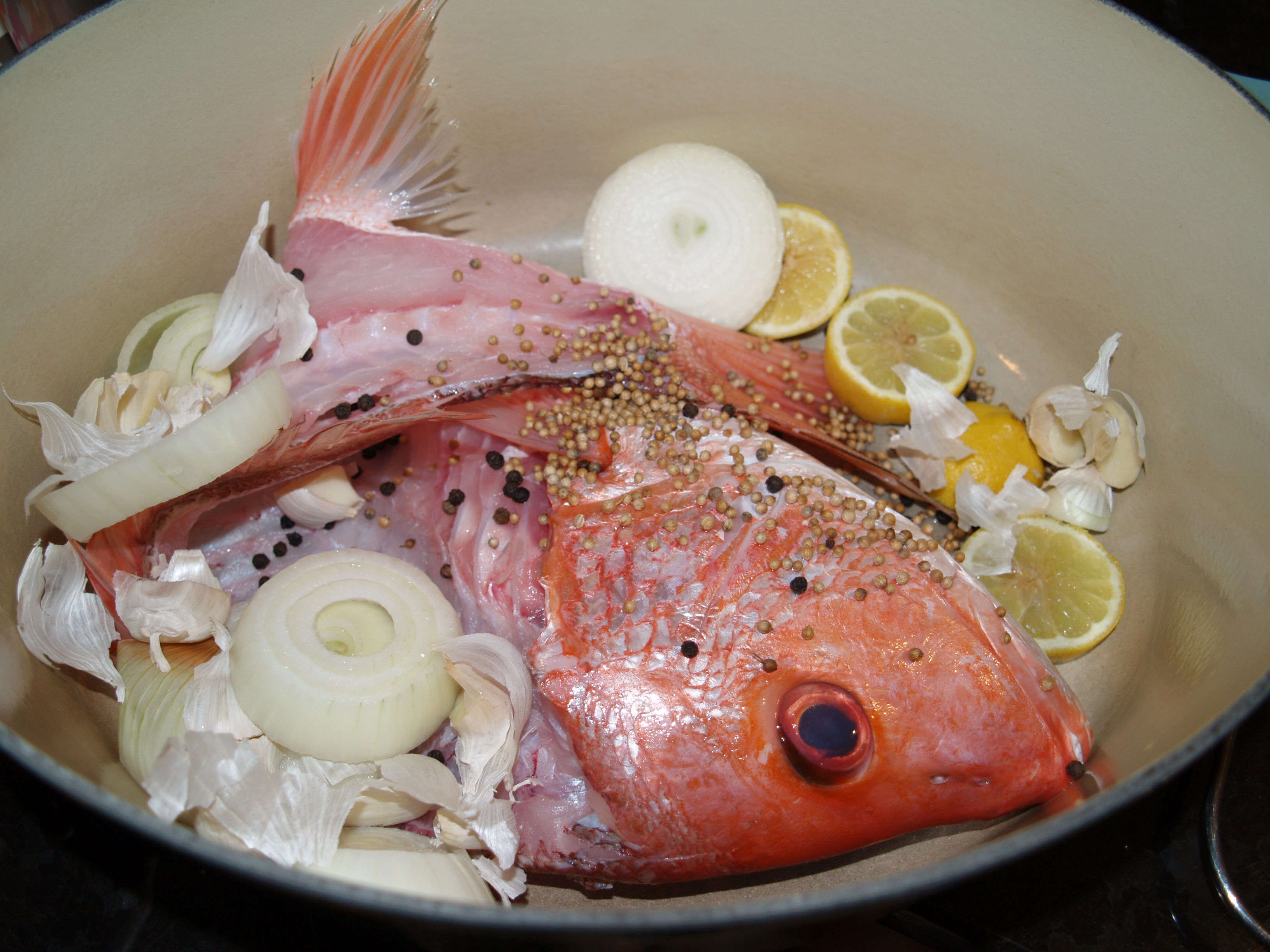
This is a simple fish broth and it’s also a very inexpensive one too.   In fact, fish broth can be the least expensive for you to make.  Just make a call to your local fish monger or supermarket and ask them to put aside any carcasses for you from the day.  Chances are they’ll charge you 50 cents to a dollar for it, or just let you have them for free!  For vegetarians, this is a great way to add the benefits of bone broth in to your diet.

Fish broth has a delicate flavor but strong smell when it is cooking.

It’s a good idea to avoid the larger fish when making broth – this is due to the probable build up of mercury in the larger varieties like tuna.


Ingredients:

  • 2 medium fish carcasses or several fish heads – such as  rockfish, snapper, or turbot
  • 1 small head celery
  • 1 medium onion cut into fourths
  • 2 carrots
  • 1 small head garlic, washed, not peeled but cut in half
  • 1 teaspoon black pepper corns
  • 3 quarts cold water
  • juice of one lemon

Place all ingredients except lemon in stock pot.  Bring to boil and skim.  Simmer covered for 3 hours.  Remove from heat, strain add the juice of the lemon and use or store.  It is important not too cook with the lemon, but add it at the end as if you cook with the lemon that will impart a bitter flavor to the soup.


simply beef broth

“When you sit down to eat a meal it should be a time for pleasure and warmth, family and friends.  Food should be enjoyed.  Even more importantly, it should also be nourishment that meets your bodies needs… in these times the food supply is plentiful but it lacks the bodies needs.”  Tom Valentine-Search for Health

In days of old, families went to the butcher for meat on the bone, rather than prepackaged cellophane wrapped individual filets.  Our prudent forefathers then made use of every part of the animal by preparing stock or broth from the bony portions.  This beef broth is simple to make, and like chicken, fish and vegetable broth it is very very nourishing.

The “rest” of the animal is commonly known as offal (not awful!).  Most of the meat we eat is only a small portion of the animal, pieces like steaks and chops and tenderloin.  Offal are pieces like the neck, shank and tail and bones and used to be the pieces we enjoyed and relished but now no longer appreciate.  What were once the choice cuts such as the tenderloin and New York strip were expensive and actually special; but thanks to industrial farming these once pricey portions are now very cheap, and so we have forgotten about the rest of the animal.

In the sense of pastoral eating, using the other parts of the animal is a way of honoring that animals sacrifice for our table.

A note on sourcing your ingredients:  A butcher or local farmer that is a great place to start when sourcing your meat, mainly because they can answer your questions about what it was fed and how it was raised.  How an animal is raised, fed, slaughtered and aged are important factors to consider when purchasing your meat ~ and these factors are not easily determined when looking at a final product.  A cow is a ruminant animal that is going to be healthier when raised on the grasses for which it’s ruminant digestive system was created.  There is ample evidence that corn and grain weakens the health of an animal as well as increasing the amount of fat and changing it’s composition to contain a much higher ratio of omega-6 to omega-3 fatty acids.

The addition of the vinegar in the recipe below increases the mineral content of the final stock.


Simply Beef Broth

Ingredients:

  • 1 large onion, rinsed and unpeeled, cut into wedges
  • 3 carrots, sliced
  • 3 stalks celery sliced
  • 1 leek, washed and cut – both white and green parts
  • 4 pounds mixed beef bones and odd bits
  • 4 or more quarts cold water
  • 1-2 tomatoes halved
  • 1 medium head garlic, rinsed and cut in half
  • 3 sprigs thyme, rosemary or combination
  • 1 fresh bay leaf (you may use dried)
  • 1/2 teaspoon black peppercorns
  • 1/4 cup apple cider vinegar

Preparation:

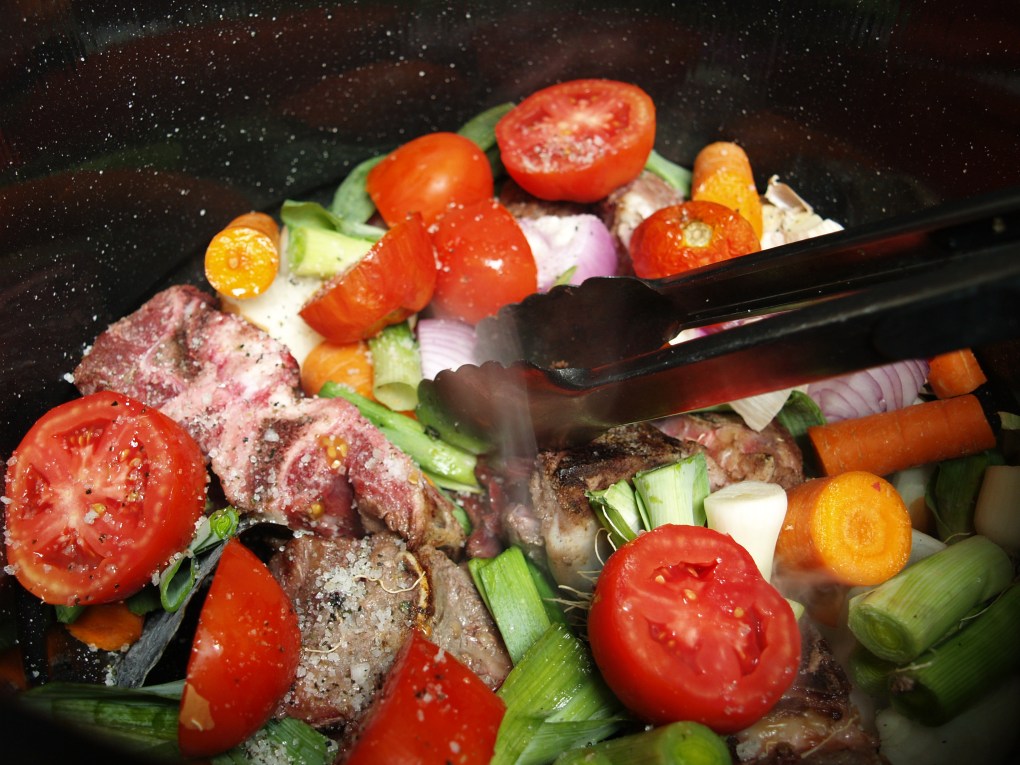
Place bones and odd bits in heavy stock pot – enamel coated cast iron or stainless steel are best.  Saute on low heat to brown on all sides (about 30 minutes).  Add vegetables, vinegar and water.  Bring to a boil.  Cover, reduce to simmer and cook for 12 to 24 hours.  If necessary, add more water to cover the bones.

While it is cooking, check it periodically, skim off anything with a spoon that rises to the surface.

Strain.  Discard bones and compost vegetables.

This stock is the base for many wonderful soups.

OLYMPUS DIGITAL CAMERA


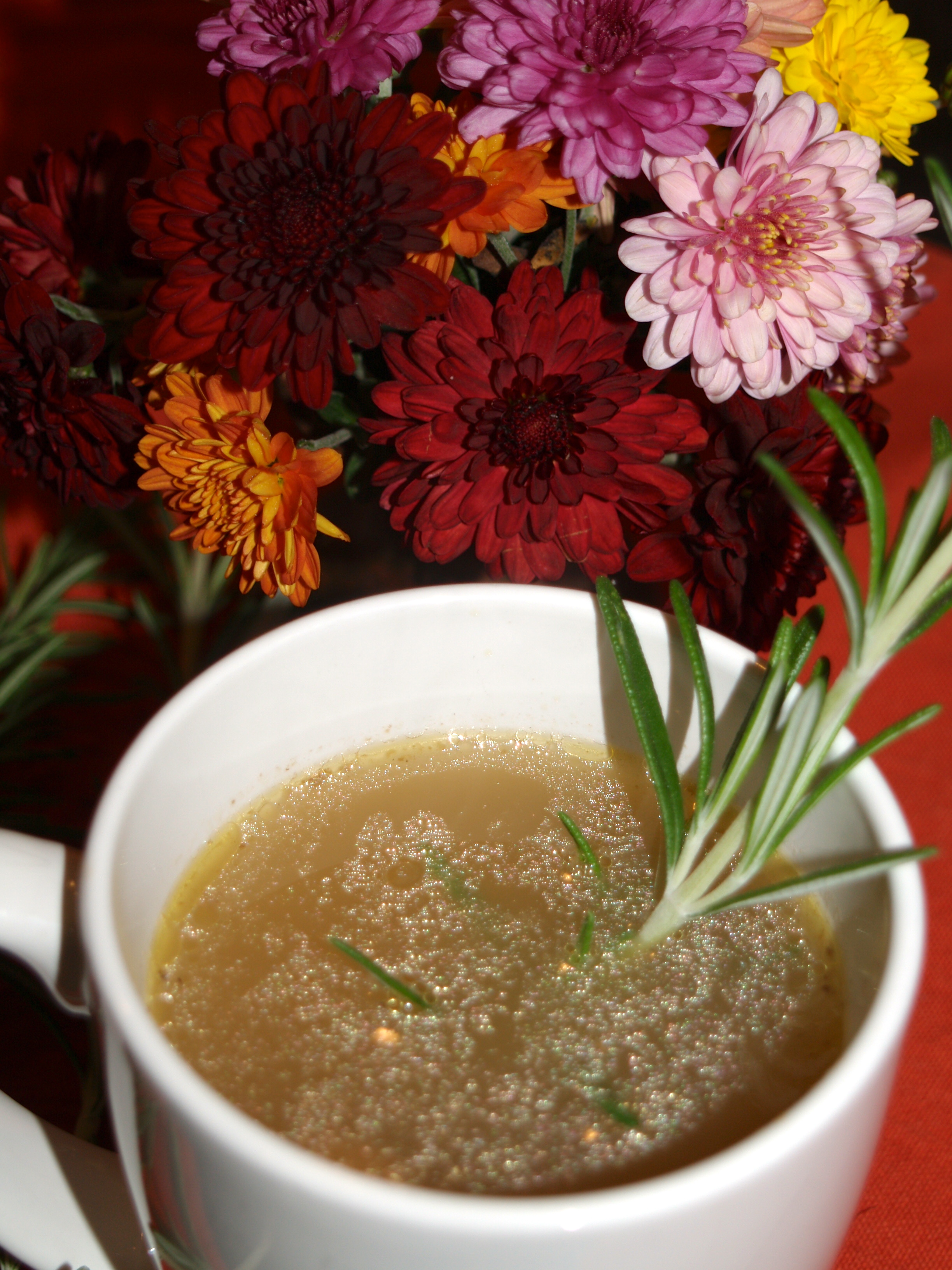
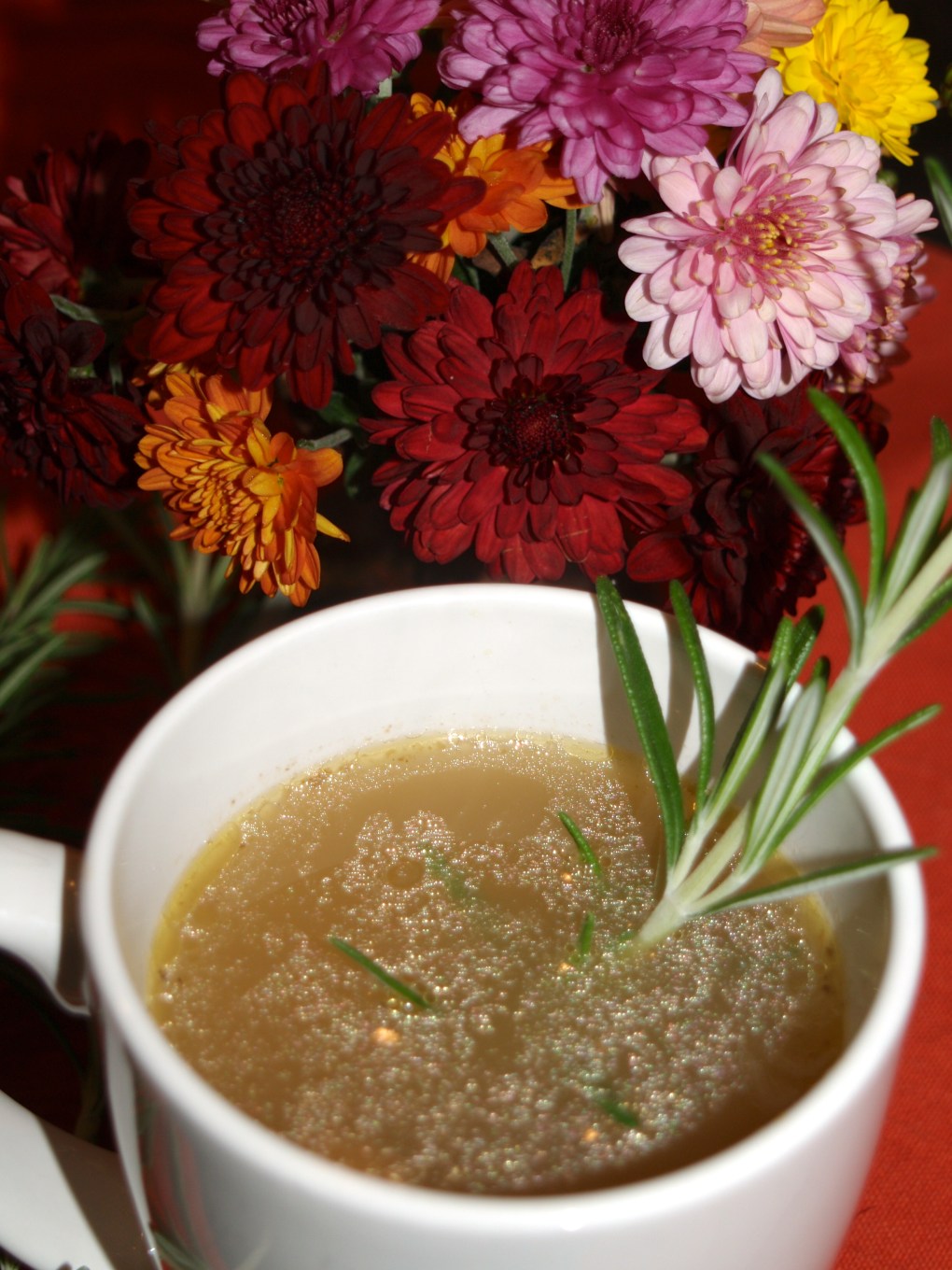
vegetable . mineral . broth

Vegetable Mineral Broth

“Solitude, prayer, love and abstinence are the four wheels of the vehicle that carries our spirit heavenward.”  

Saint Seraphim of Sarov

Vegetarian cooking, for both health and spiritual reasons, has been rediscovered and has attained wide prominence.  In the cooking at monasteries, this goes a long way toward sustaining and encouraging the positive trend we see today.  Besides, a vegetarian meal— when well prepared and attractively presented at the monastic table— has a charm all its own.  I am sure the same can be said of other vegetarian tables around the country and around the world.”  (Brother Victor-Antione d’Avila Latrourette)

This broth is a fasting staple in our home, and when the seasons of the Fasts approach we double and triple this recipe into mason jars in order to have ample stock on hand.  It simplifies our Lenten meal preparation, and as you can imagine, that is a great blessing!

In this age of take out and hurried cooking making your own stock may seem like a bother, but your meals will have greater flavor and nourishment if you do!

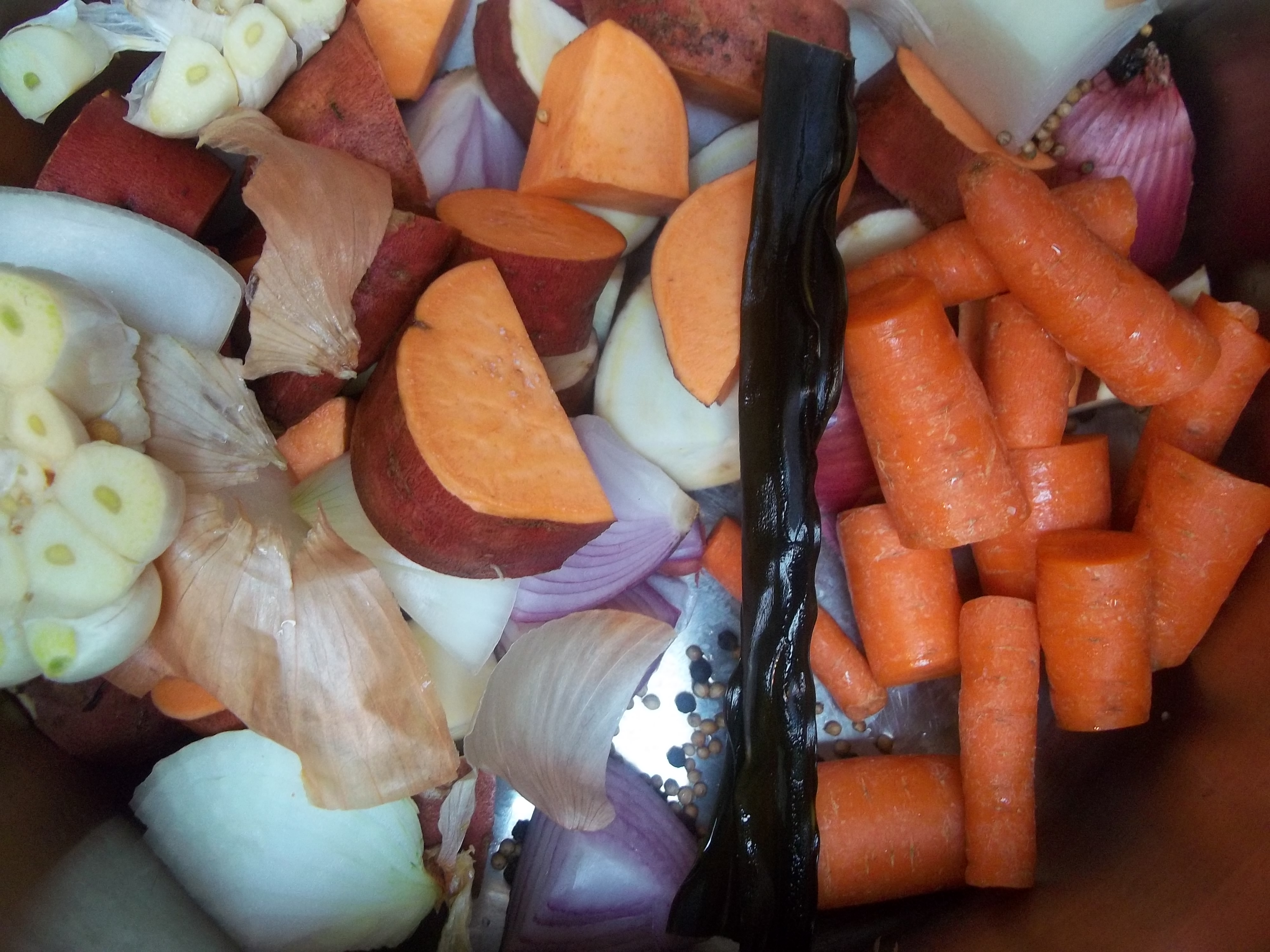
The preparation of this nourishing mineral rich broth requires no fancy equipment or culinary skills.  It is a recipe we appreciate for it’s ease of simplicity, wholesome monkish frugality and great flavor.  All the ingredients are very rough chopped into large chunks, and allowed to simmer for a few hours.  The result is a sweet tasting, aromatic broth.  It’s just that easy.

Vegetable stocks tend to have less body and texture due to the lack of gelatin and fat, but with the combination of sweet potatoes, garlic and leeks, this broth is unapologetic fresh, nourishing and delicious.  The addition of the kombu adds valuable trace minerals to this exceptional vegetable broth.  (Kombu is available in the asian section of most grocery stores.)

We load our pantry with this mineral broth during fasting seasons and it is the base for almost everything we cook from rice, to lentil soup to minestrone.

This recipe is inspired and adapted from The Cancer Fighting Kitchen : Nourishing Big-Flavor Recipes for Cancer Treatment and Recovery by Rebecca Katz who says, “This rejuvenating liquid, chock-full of magnesium, potassium, and sodium, allows the body to refresh and restore itself.”


Vegetable . Mineral . Broth

Ingredients

As always, source the best ingredients available and affordable to you.  Organic is the best option since this recipe calls for the peels of the vegetables – since that is where many minerals reside, but it is also where pesticide residues can be found.

  • 1 pound unpeeled carrots, cut into thirds
  • 1 unpeeled yellow onion, cut into chunks
  • 1 unpeeled red onion, cut into chunks
  • 2 leeks, white and green parts, cut into thirds
  • 1 bunch celery, including the heart, cut into thirds
  • 4 unpeeled red potatoes, quartered
  • 3 unpeeled sweet potatoes, quartered
  • 1 unpeeled garnet yam, quartered
  • 1 head garlic, halved
  • 1 bunch fresh flat-leaf parsley
  • 1 8-inch strip of kombu or Nori
  • 10 black peppercorns
  • 4 whole allspice or juniper berries
  • 1 bay leaf
  • 8 quarts cold, unfiltered water 1 teaspoon sea salt (to taste)

 Preparation

Rinse all of the vegetables well, including the kombu. In a 12-quart or larger stockpot, combine all of the ingredients with the water (2 inches below the rim), cover, and bring to a boil.

Decrease the heat to low, and simmer, for about least 2 hours. As the broth simmers, some of the water will evaporate; add more if the vegetables begin to peek out. Simmer until the full richness of the vegetables can be tasted. Strain the broth through a large, coarse-mesh sieve add salt to taste. The strained solids can be composted.

Let cool to room temperature before refrigerating or freezing.

You can drink this warm from a cup like tea or use it as the base for soups and rice.


chicken broth

“Soup puts the heart at ease, calms down the violence of hunger, eliminates the tension of the day, and awakens and refines the appetite.”  Auguste Escoffier

“Soup is the song of the hearth…  and the home.”

Louis P. De Gouy, ‘The Soup Book’ (1949)

Homemade chicken soup: it’s not only good for the soul but also the flu!  A warm bowl of it contains rejuvenating nutrients and proteins that may otherwise be difficult for a flu ridden and nauseous stomach to digest.

Whether you find you like to make large batches, or enjoy simmering a pot every few days, you’ll need a large stock pot with a lid. Stainless steel and enameled cast iron are very good choices.

A word on ingredients.  Find and use the best ingredients affordable to you.  Bones and carcasses from free range pastured animals are the gold standard, which we’ll talk about in an upcoming post.

Remember, eating healthy broth need not be an expensive endeavor.  Our farmer sells pastured beef bones for $1.00/lb and chicken carcasses for $2.00/lb.   That’s a great deal!  Despite being carcasses they are absolutely loaded with meat and frankly it’s enough for our soups and stews – no need to add any extra.


Basic Chicken Broth / Stock

  • 1 whole free range chicken, or 1 organic chicken carcass or 2-3 pounds chicken parts i.e  chicken feet, necks or scraps
  • 1 large onion quartered
  • 1 head garlic, rinsed and cut in half
  • 3 celery stalks coarsely chopped
  • 2 washed, unpeeled sweet potatoes or yams, cut into thirds
  • 4 carrots coarsely chopped
  • 1 strip kombu –  optional : this is a great source of potassium and iodine and minerals
  • 12 or so black peppercorns
  • 1 or two bay leaves or several generous sprigs of any fresh herbs you have on hand, thyme, sage, oregano are great
  • 1 tablespoon apple cider vinegar (this acidity allows more minerals to leech from the bones)
  • 1 teaspoon sea salt


Rinse all vegetables well.  Place chicken, carcass or parts in a 12-quart or larger stock pot.  Brown on low heat briefly on all sides.  Add vegetables and herbs and fill pot with cold water, about two inches below the rim.  Add vinegar or lemon juice.  Bring to a boil.  Remove the lid, decrease to low heat and simmer for at least two hours.  Some of the water will evaporate.

Strain broth through a coarse sieve.  Cool to room temperature before refrigerating or freezing.    Will store in refrigerator for 5 to 7 days or in the freezer for 4 months.

Once cool, the fat will separate to the top, you can remove this and use it for other purposes.


got broth?

Fall and the approaching winter have ushered in a wave of cooler weather. With the change in seasons and temperatures, we naturally migrate our cooking toward more warming & nourishing foods like soups and stews. That brings us to one of the least glamorous of all foods – the humble broth – a nutritionally wonderful canvas to enjoy the hearty fall harvest!

Broth provides a modest yet universal meal.

A remedy for sore throats and the flu, it nurses the sick and puts vigor in our steps.  The nutritional savior of the soup kitchen, the humble broth is a warming comfort in times of need.  It is also incredibly healthy and a powerhouse of vitality!

Broths are a nutritional superfood in that they offer a very simple, affordable and rich concentration of nutrients that are easily acquired by our bodies.  That ease of nutrient absorption is paramount, because there is a big difference between consuming nutrients (from whole foods or supplements) and actually assimilating them into our cells.

Unlike it’s commercial cousins, homemade stocks and broths come with an unabridged complement of the exact nutrition we need to rebuild and maintain bones and joints.  One reason is that homemade broths and stocks are teaming with gelatin and minerals.  If you are unfamiliar with gelatin, it is a jelly like substance that is extracted from simmering bones or the soft tissues – like cartilage and skin from chicken.

Gelatin is essentially collagen in liquid form and collagen is part of the connective matrix that holds you together!  Among other things, it provides for youthful supple skin and healthy joints.  It also supports the immune system, digestive tract, heart and muscles and contributes to the building of strong cartilage and bones.

Want to know more about the benefits of gelatin and broth?

  • Gelatin is an easy way to support your digestive system.  It is not only nutritious but very soothing and healing to the digestive tract. Its ability to attract and hold liquids makes foods cooked in broths easier to digest.
  • American researcher, Dr. Gotthoffer found that cooked foods eaten with gelatin were easily digested and that babies fed milk fortified with gelatin had better digestion than those given plain milk.  Also, the babies who were fed milk without gelatin had a higher rate of allergies and intestinal issues.
  • Additionally, Gotthoffer found studies showing that convalesing adults who have lost weight because of operations, dysentery, cancer and other illnesses fare better if gelatin is added to their diet.
  • Gelatin has long been recognized in the treatment of digestive diseases.  “[Gelatin] is said to be retained by the most sensitive stomach and will nourish when almost nothing else will be tolerated,” wrote L. E. Hogan in 1909.  Today, homemade broths are the essential component of the GAPS diet protocol, in that it heals and seals the digestive tract.
  • One reason gelatin was recommended so highly for malnourished individuals is that it reduces the amount of complete protein needed by the body.  So, while gelatin is not a complete protein, it is high in the amino acids arginine and glycine which enables the body to more efficiently utilize the complete proteins that are consumed. For that reason broths are known as “protein sparing” because with broth your body can make better use of the protein you do eat, therefore not require as much.
  • Gelatin strengthens hair and nails, minimizes wrinkles and prevents and heals cellulite.
  • Gelatin may be useful in the treatment of a long list of diseases including peptic ulcers, tuberculosis, diabetes, muscle diseases, infectious diseases, jaundice and cancer.
  • Gelatin is unusually high in the amino acids glycine and proline. A vital function of glycine is detoxification. Proline aids the body in breaking down proteins for use in healthy cells and is used in making collagen, tendons, ligaments and heart muscle. Adequate proline is beneficial for the tratments of conditions such as osteoarthritis, soft tissue sprains and chronic back pain.
  • Gelatin assists in neutralizing intestinal poisons causing problems during an intestinal bug or flu.
  • Research has shown that broth aides in normalizing stomach acid levels for those with too high or too low stomach acid – which can have a profound impact on digestion.

Despite the abundance of our modern food supply, traditional diets contained far more gelatin than ours do today. Broth was a mainstay in French, Italian, Russian, Japanese, South America, Middle Eastern, African and other cuisines.  In the honored traditions of food, none of the animal went to waste (ironically, probably due to the scarcity of their food supply!)

People would eat soups made from bones all the time and doing so supplied their bodies with the whole family of glycosaminoglycans, which used to protect people’s joints. Now that few people make bone stock anymore, many of us are limping into doctors’ offices for prescriptions, surgeries and, lately, recommendations to buy over-the-counter joint supplements containing glucosamine.  (Shanahan, 2011).

Broth is economical and therapeutic food.

One can spend exhorbitant amounts on supplements containing glucosamine and chondroitins, but these capsules do not hold a candle to the efficacy of the the whole spectrum of glycosaminoglycans in a well made broth.  Whereas a supplement will contain only a few targeted ingredients, a well made broth provides the entire nutrient complex of joint building substances – some of which have likely yet to be discovered.

In that sense, bone broth represents a wonderfully inexpensive therapeutic food.  What a bargain!  A twenty five cent cup of broth offers an unparalleled small fortune in supplements: excellent levels of bioavailable minerals such as calcium, magnesium, potassium and phosphorus are supported by gelatin, chondroiton sulphate, bovine cartilage, glycine and hyaluronic acid.

Best of all, broth tastes great.

You can enjoy it warm in a mug at the end of a long day, or create delicious nourishing soups, stews and sauces.  It’s a pantry item to keep on hand in fall and winter.  Making homemade broth is not only very nourishing, but the utilization of the rest of the animal also qualities broth as a nutritional virtue and a wonderful manifestation of stewardship eating.

Of all we consume, may we always eat thankfully, wisely and well.
 

OLYMPUS DIGITAL CAMERA


Nourishing Broth Recipes:

Vegetable . Mineral . Broth

Chicken Broth


additional resources:
Broth is Beautiful by Sally Fallon

Why Broth is Beautiful: Essential Roles for Proline, Glycine and Gelatin by Kaayla T. Daniel, PhD, CCN

Gelatin in Nutrition and Medicine by N.R. Gotthoffer

Proline Amino Acid Benefits  LiveStrong