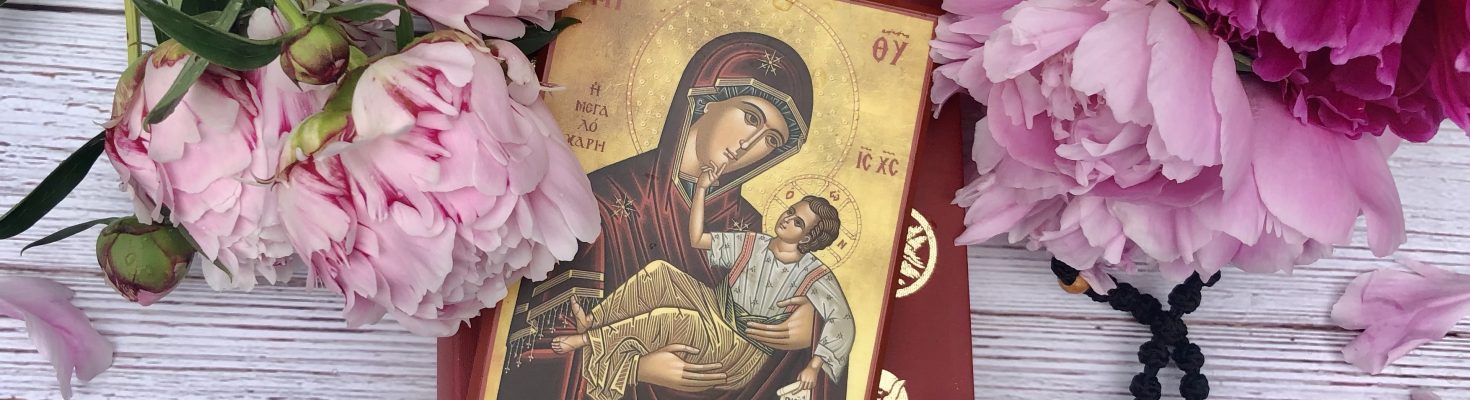


have mercy on us

We have one sword, the Prayer of Jesus. It is said, strike the unseen enemies with this sword, for there is no more powerful weapon, either in Heaven or on earth.
Saint Barsanuphius
Living Without Hypocrisy, Spiritual Counsels of the Holy Elders of Optina
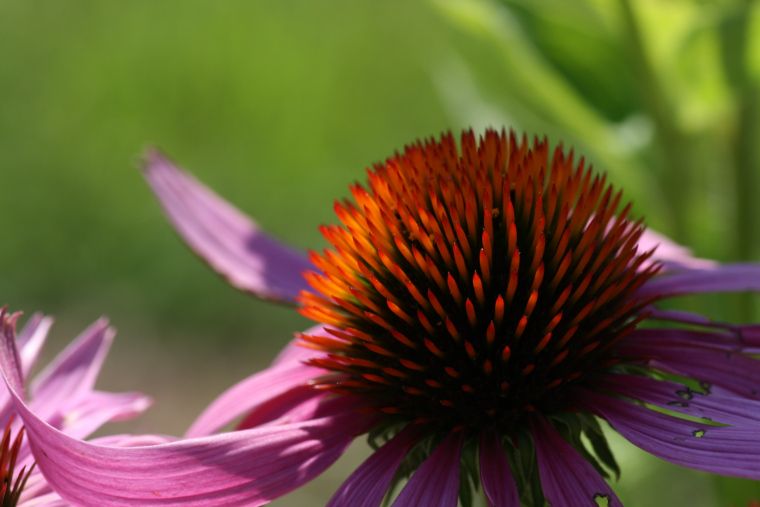
echinacea
Echinacea, also known as coneflower, is a down to earth all american wildflower. It’s natural habitat is the midwest plains, the open meadows and prairies of the United States, but now it’s such a popular perennial you can find it dotting the landscape in many gardens.
My own family has grown it for years, not for it’s medicinal qualities, but because it is hardy, drought resistant, comes back every year and most importantly, the deer that bed down in our yard won’t eat it. In fact most of the herbs featured in this series are deer resistant, unless of course the deer are very very hungry. We have also found (through sheer laziness-from not pruning back the dead summer growth) that the dried out summer flowers are a delight for the winter birds which are marvelously thankful for these pods of seeds left for them during the scarcity of winter.
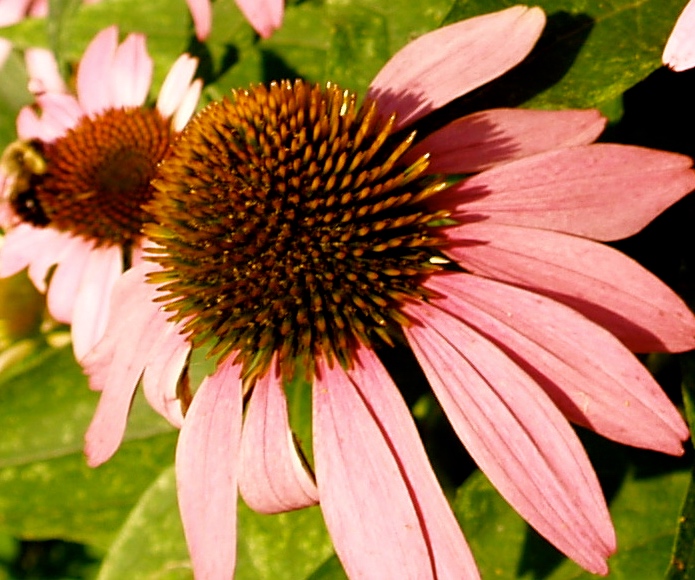
There are several different colors of echinacea cultivated today, but the traditional coneflower is a beautiful pinkish purple petaled flower with cone shaped spiny seed podded head in the center.
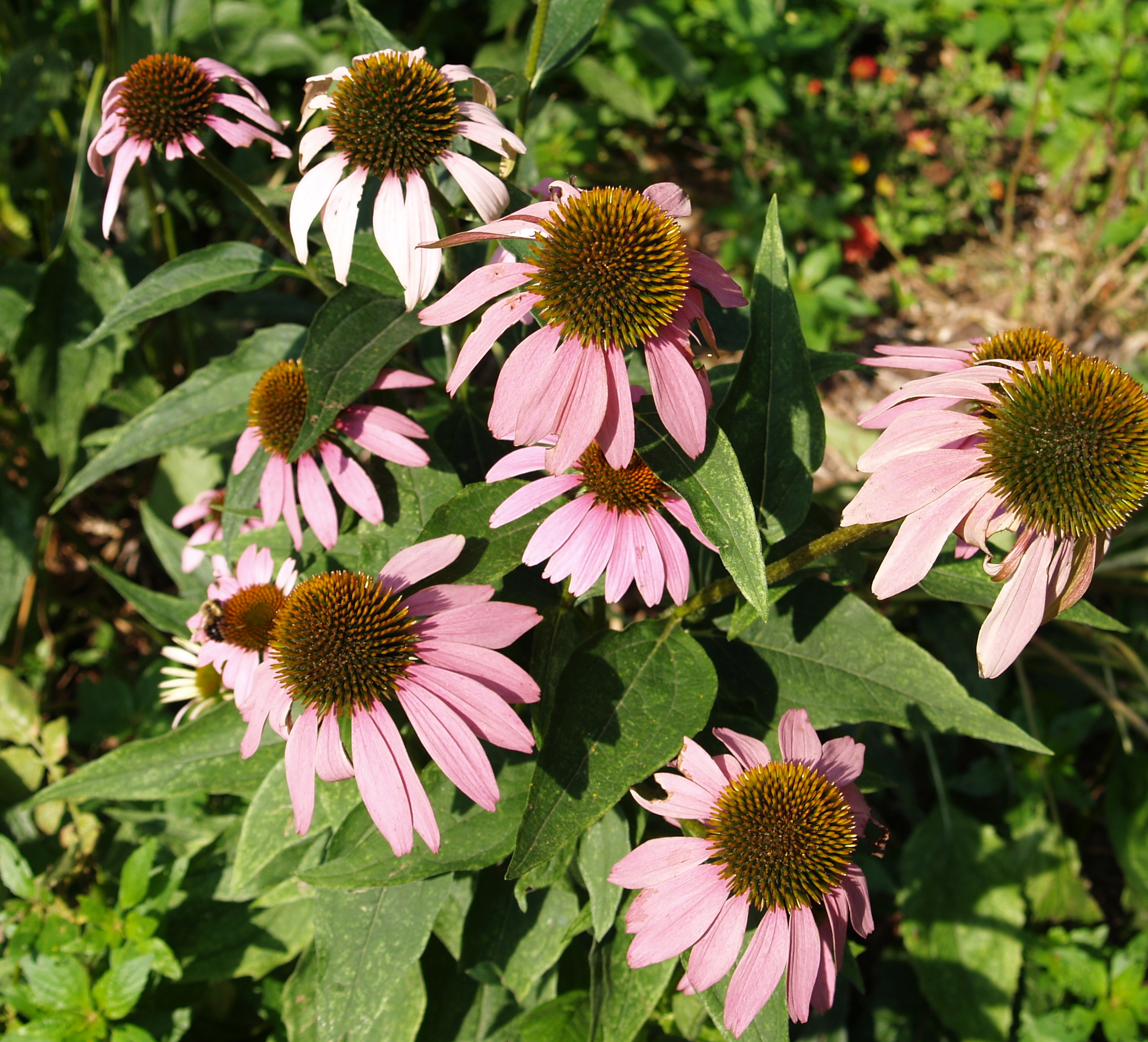
The root, flowers and leaves of echinacea were introduced to European settlers by the American Indians, who used it to treat more illnesses than any other plant. Today, it is one of the most common herbs for immune system health and has been widely researched in that capacity, in more than 300 studies.
Echinacea is best known for the following qualities:
[box]
-
Treatment of the common cold. This is one of the most popular uses of echinacea. Studies have shown that treatment with echinacea at the on set of a cold results in a significant reduction of symptoms. In trials, the length of time between infections was 60% greater for those receiving echinacea than those given a placebo. When infections did occur, the symptoms were less severe for those receiving the echinacea. Patients having a weakened immune system benefitted the most from the echinacea.
-
Echinacea not only shortens the duration and lessens the severity of colds, but it can actually stop a cold that is just starting. That is because echinacea has antibacterial and antiviral qualities, and in this way resists infections.
-
It is very supportive of lymphatic health. The lymphatic system is part of your immune system consisting of a series of fluids and glands that sweep away toxins and byproducts of inflammation in order to keep you healthy. In this way, echinacea aids in reducing congestion, swelling and also keeping your lymph moving.
-
In tincture form, the juice of the aerial portion has been shown to possess antiviral activity.[/box]
If you grow echinacea and want to harvest it, here are a few tips:
- The leaves can be harvested the spring, when they are still growing.
- The flowers can be harvested when they start to open but for maximum potency, harvest the cone whenit is mounding.
- Dig up the root in the fall of the third or fourth year.
Echinacea is excellent in tinctures designed to boost both the immune and lymphatic health. Herbalists favor tinctures because the most potent active compounds are likely more stable and preserved in an alcoholic solution. Tinctures generally have a shelf life of at least 2-3 years, provided they are stored in a dark container our of direct sunlight or heat.
You can buy tinctures at most health food stores, or online. Or you can venture to make your own. Here are some simple recipes from normal folks, like you and me : Making Echinacea Tincture from Fresh Root, Homemade Tinctures 101 and How to Make Echinacea Tincture. If you are using fresh echinacea, you’ll want to make sure that you have all of the plant is submerged below the alcohol.
Mother Earth News recommends the following recipe for fresh echinacea tincture.
[box]
Echinacea Tincture
1 cup fresh echinacea buds, flowers, leaves and stems rinsed chopped and pounded
1 cup 190 proof ethanol alcohol – that’s Everclear
1 cup distilled water.
Place herb in clean jar and cover with the alcohol and distilled water. Store in a cool dark place and shake twice daily for 48 hours. Filter the tincture through a food grade screen and pour tincture into a brown glass bottle and label with contents and date. As an immune stimulant at the onset of a cold and during infection, take two dropperfuls of tincture three to four times daily in cycles of two weeks on and off.[/box]
Dried echinacea works well in teas, a great recipe can be found at How to Make Your Own Echinacea Tea. Quality echinacea can be found here. And ready made echinacea teas abound in the market, but Traditional Medicinals is a quality product and many stores carry it.
[box]
Anti-Inflammatory & Vitamin C Echinacea Tea
- 2 cups boiling water
- 1 teaspoon dried echinacea fresh edible flower (or roots)
- 1/2 teaspoon finely chopped fresh ginger
- 1 tablespoon freshly squeezed lemon juice
- 1 teaspoon honey (or more to taste)
-
In a teapot, pour the boiling water over the echinacea and chopped ginger.
-
Cover and steep for 10-15 minutes.
-
Add lemon juice and honey and stir to mix. Strain and pour into 2 mugs.
-
Serve warm and enjoy![/box]
Resources:
Joseph E Pizzorno and Michael T Murray : Textbook of Natural Medicine
love one another

The Lord Jesus personally gives us the commandment to love one another, so that by consoling one another with mutual love, we may lighten the sorrowful and narrow way of our journey to the heavenly country.
Saint Seraphim of Sarov
dwell on the positive

Think about the good, so as not to think about the bad.
Saint Ephraim the Syrian
Commemorated January 28th
God is Love
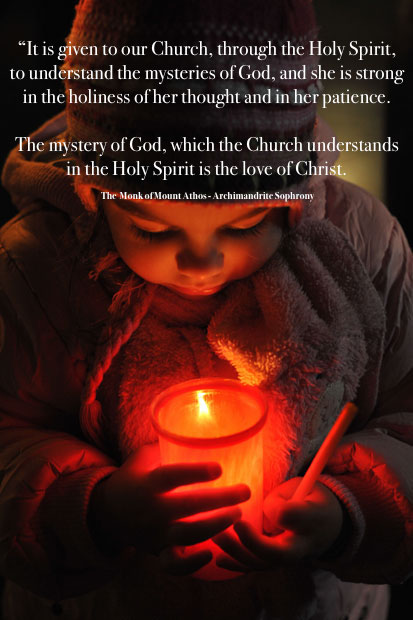
It is given to our Church, through the Holy Spirit, to understand the mysteries of God, and she is strong in the holiness of her thought and her patience. The mystery of God, which the Church understands in the Holy Spirit, is the love of Christ.
from the book, The Monk of Mount Athos
that He is mindful of us

All of life is a wonderful mystery, known only to God. In life there is not just an accidental chain of events – everything is providential.
Saint Barsanuphius
Living Without Hypocrisy – Spiritual Counsels of the Holy Elders of Optina.
you are wonderously made

winter bees part III
“One can no more approach people without love than one can approach bees without care. Such is the quality of bees…” Leo Tolstoy
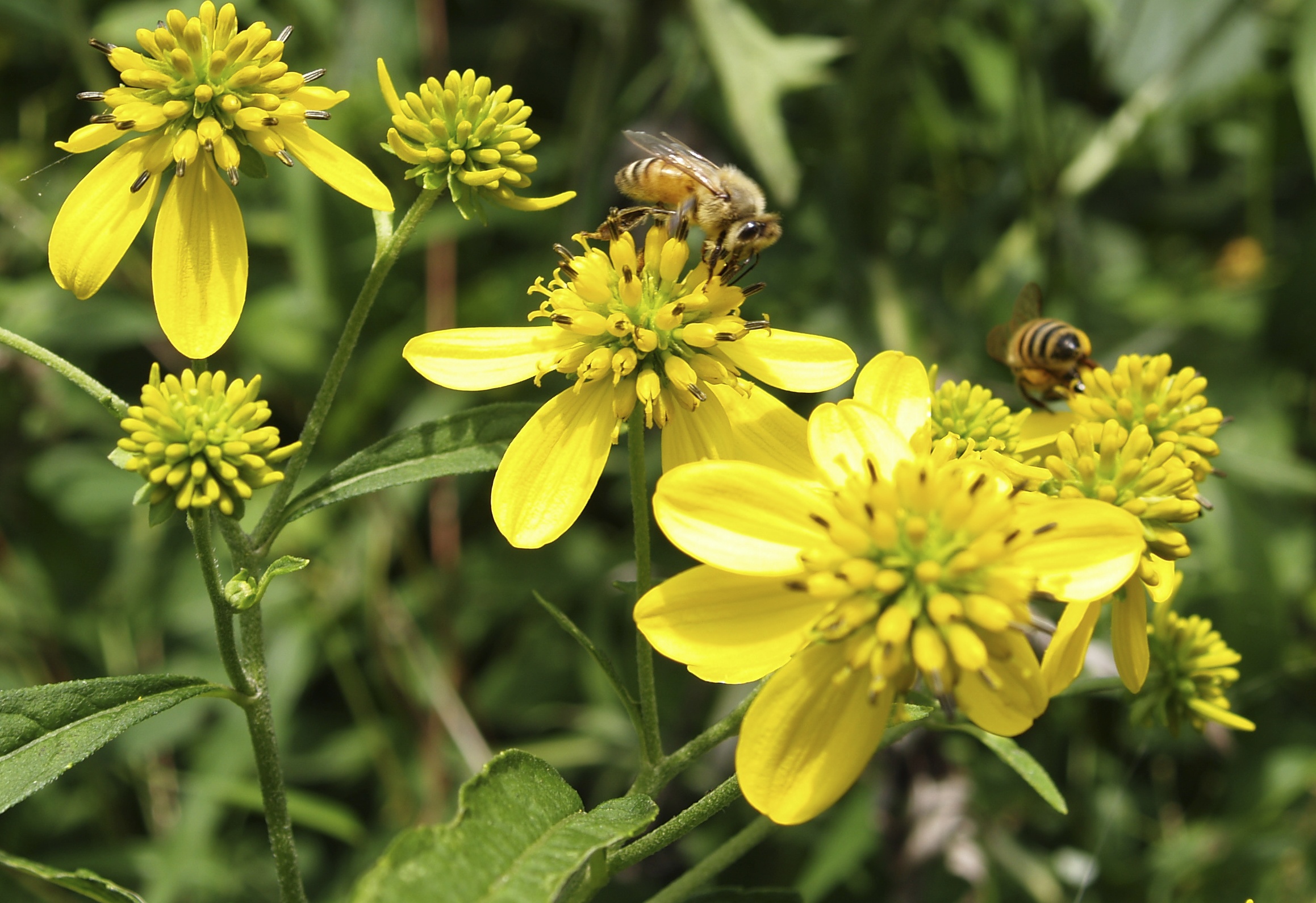
happy bees
Bees are industrious, generous and fascinating. You see this versatile little bee, who cools her hive in summer with coordinated flapping of wings between flanks of bees on either side of the hive now warms her hive in winter with those same wings. Through a constant and simultaneous flapping of their wings, the bees will maintain the temperature of their hive to warmth mirroring the coming days of spring. Now in the height of winter, they cluster together, on the central comb with the queen in the midst of them. Row upon row of bees surround the sealed honeycomb flapping their wings. When the weather gets extraordinarily cold, they can actually dislocate their wings allowing them to flap in a way that produces even more heat. When the little bees on the outer edges feel the cold embracing them, they crawl over their sisters to take a turn in the middle. The move gradually up the hive as each cell of honey is emptied of it’s store. The bees nearest the warm cells of honey pass it onto their neighbors and thus their stores of fragrant floral sunshine is shared throughout the darkness of the hive.
Around January is when a beekeeper begins to wonder whether the bees have gone through their stores of honey. It’s too cold open the hive, but it’s best to stay prepared. We’d placed two liters of honey in some mason jars with punctured lids on the counter, waiting for any break in the weather. If the bees are going to starve, January is generally when it happens. The temperatures have been bitter here in Virginia, only in the 20’s and low 30’s, but just the other day we got into the forty’s and I placed the honey in for them. It’s risky, because if the honey leaks everywhere you can kill a lot of bees – cold and being covered with honey don’t mix well when a bee needs to flap it’s wings for warmth.
The first hive went through about half of their honey overnight. But, I found the second hive had devoured theirs, so we placed more in – and just in time. We are expecting some serious snow in the coming days.
Here we are approaching February. Soon, the queen will begin laying more eggs, preparing for the longer days of spring and the abundance of nectar it promises. The bees will begin to forage on the pollen and nectar of the budding trees.

“In the Orthodox Church we have recognized the importance of bees
for centuries and have prayers for both bees and beehives.”
Prayer for Bees
O God, who knows how to work benefits through human labor and irrational living things, You instructed us in your loving-kindness to employ the fruits and works of the bees for our needs. Now humbly we beseech Your majesty: Be pleased to bless the bees and increase them for the profit of the human race, preserving them and making them abundant. Let everyone hoping in Your majesty and Your boundless compassions, and laboring in the care of these living things, be counted worthy to receive abundant fruits of their labors and to be filled with heavenly blessings in Christ Jesus our Lord, to whom is due glory, honor and worship unto ages of ages. Amen.
from Orthodox Prayer for Bees, in the article The Blessing of the Bees : fried.wordpress.com
Maybe you are interested in keeping bees too? There are many resources to help you begin your journey. The first of which is really to take a class.
Our local bee club offers them, and you can find out more here. If you are not from the Virginia area, you should be able to find a bee club in your neck of the woods. But, I just came across this web-based beekeeping class from the Ohio State Beekeepers and there is another one from the University of Montana.
You can find equipment and other resources (like books and protective gear and hives) here, here and here.
You can learn more about the vanishing of the bees here and here and here!
may the God of peace be with you

 gladsomelife.com