just how is one to be

Guard the Heart Saint Theophan


 on guarding the heart

+

“Just how is one to be?…to shun everyone is, of course impossible, but refuse whenever possible to enter into this circle of worldly life.   When it does pull you against your will, act as if you were not there.

+

look but do not see, listen but do not hear

+

Let what you see pass by your eyes and what you hear pass by your ears.  Outwardly behave like everyone else, be straightforward and sincere, but guard your heart from sympathies and attractions.

The main thing is to guard the heart, then you will be there in body but not in soul, faithfully carrying out the commandment of the Apostle  ‘be as they that use this world, as not abusing it ‘(1 Cor 7:31)”

+

 Saint Theophan the Recluse


the force of love


Romans 8:35-39

“the kingdom of heaven suffers violence and the violent take it by force” (Matthew 11:12)

“No one on this earth can avoid affliction and although the afflictions that the Lord sends are not great – men imagine them beyond their strength and are crushed by them.  This is because they will not humble their souls and commit themselves to the Will of God. But the Lord Himself guides with Grace those who are given over to God’s will and they bear all things with fortitude for the sake of God whom they so loved. And through Him they are glorified forever.  It is impossible to escape tribulation in this world but the man who is given over to the Will of God bears tribulation easily by putting his trust in the Lord – so his tribulations pass.  Embracing suffering with Faith and Trust – that is the key to beating them without getting crushed by them.

+Elder Sophrony


repost : The Elevation of the Cross : Leaven and Life

leaven and life


Prayer is by nature a dialog and a union of man with God. Its effect is to hold the world together. It achieves a reconciliation with God. . . . It is an expiation of sin, a bridge across temptation, a bulwark against affliction. . . . Prayer is future gladness, action without end, wellspring of virtues, source of grace, hidden progress, food for the soul, enlightenment of the mind, an axe against despair, hope demonstrated, sorrow done away with.

Vassilios Papavassiliou :: Thirty Steps to Heaven

sour·dough – (noun) leaven for making bread, consisting of sour fermented dough, typically that left over from a previous batch

“The hunger for love is much more difficult to remove than the hunger for bread.” – Mother Teresa

In the beginning, all risen breads were sourdough.  Bread was a great mystery but the women knew that if they blended warm water, flour and time, then nurtured the mixture through regular feeding, that eventually the dough would become alive, bubbles would form mysteriously in the mixture and when it was baked the texture would be lighter with an intriguing taste.  Commercial “fast acting” strains of yeast were unavailable and so the only leaven was the natural product of the fermentation of wild yeast and bacteria, which transformed into a sourdough.  The Latin fermentāre means to rise.

As often happens, the first fermentation of sourdough likely occurred by chance.  How many of you would think to bake (or brew into beer) the accidental fermentation of grain, left unattended, souring on your kitchen counter?  In this day and age, probably not many of us, including me – especially considering how germophobic we are… we’d rather not deal with the naturally present bacteria on any surface!

But fermentation is an age old method of preservation, that involves cooperation with a community of microbes we can not even see.  And that cooperation enhances the nutritional quality of the foods fermented.  It was a surprise for us to learn that a natural sourdough will not mold, instead, due to the lactic acid (this wonderful preservative produced in the sourdough)  it keeps longer than commercial bread.  Sourdough breads are also what is known as predigested, and therefore easier on our digestive systems, reducing gluten content and allowing absorption of more nutrients.

The organisms necessary for fermentation are usually always present on the surfaces of grain and flour.  Unlike commerical strains of yeast, which are similar or the same,  sourdoughs cultivated by people in different places can be very distinctive, such as San Francisco sourdoughs.

Our planet was created with great diversity and that’s the beauty of a sourdough – that you can’t pick and choose your naturally present wild yeast.  Although all healthy sourdoughs contain lactobacilli and the lactic acid produced by it,  each sourdough starter is essentially very unique.  Natural sourdoughs are not static microbial communities  Instead they are very dynamic.  More than that….they become their environment and so, if you begin a sourdough starter it it will develop unique flavor characteristic to whatever yeasts are present in your air and your flour.

Patience is a virtue.  A sourdough starter takes days if not a week to mature to the point that it may be used in baking… and there is no such thing as fast acting or fast rising prozymi or starter  A sourdough bread rises anywhere from 8 to 24 hours, depending on your recipe and the conditions.
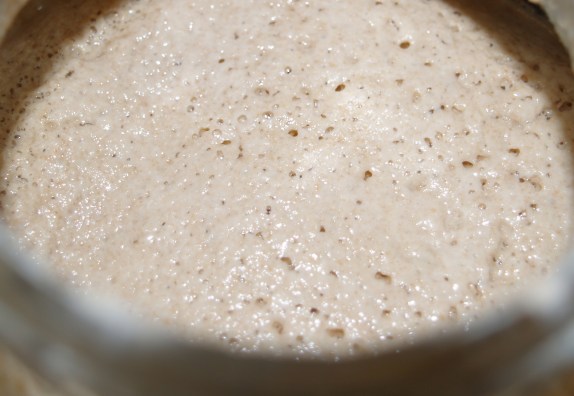
prozymi - sourdough starter

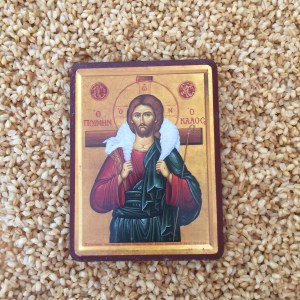
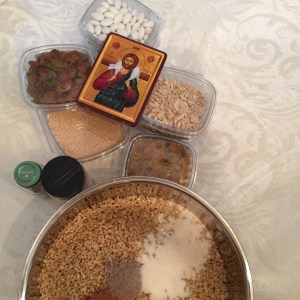
Traditionally, Greek Orthodox women make their sourdough starter around the Feast of the Elevation of the Cross, celebrated on September 14.   The starter is called prozymi.  In many  Orthodox Churches, fresh basil is used to sprinkle Holy Water, a sprig of which is taken home and placed in the prozymi.  If the prozymi is started around Pascha (Easter) then the mixture contains a handful of the flowers used to decorate the Epitaphios.  This sourdough starter is then used for baking Prosphora – an offering – the bread we make for Communion.

Concepts create idols, only wonder grasps anything.”  Saint Gregory of Nyssa

It’s been said that the elderly Orthodox women in Greece, if asked, will tell you that the transformation of the flour, water and basil or flowers into the prozymi occurs by Gods Grace alone, and well, that is entirely true… for that is our belief  ~  that all life is a gift and sustained from a loving God.

These women are grounded in Christ – living within the seasonal rhythm of the Church, anchored but always anticipating the upcoming feasts and living and incorporating the faith into daily life.

Give us this day our daily bread.  Laboring a sourdough, this wild yeast fermentation of the prozymi becomes an endeavor of trust and of creation – fashioned through a relationship with God.  This becomes our offering- the prosphora –  A simple, humbling endeavor, to place God above all, offering up our whole  lives to Him.

And all that inspired us to incorporate prozymi into our family traditions too and so we’ve coincided our sour dough starter with the Elevation of the Cross.

Happy Feast!

Below is is a Basic Sourdough / Prozymi Starter

There are slight variations in every sourdough recipe, some call for rye flour, some call for adding a piece of fruit, like a plum or grape which has a little hint of white film -which is yeast and called the bloom, and others – like the Orthodox tradition call for adding our blessings from Church.

Timeframe about 1 week Ingredients

 [box] Flour (any kind) water – non chlorinated

fresh basil, fresh organic plum or grapes (optional)

In a jar or bowl mix 2 cups of water and flour. Stir mixture vigorously. Add basil or fruit if using. Cover the mixture with a cheesecloth or any other porous material that lets the air circulate.

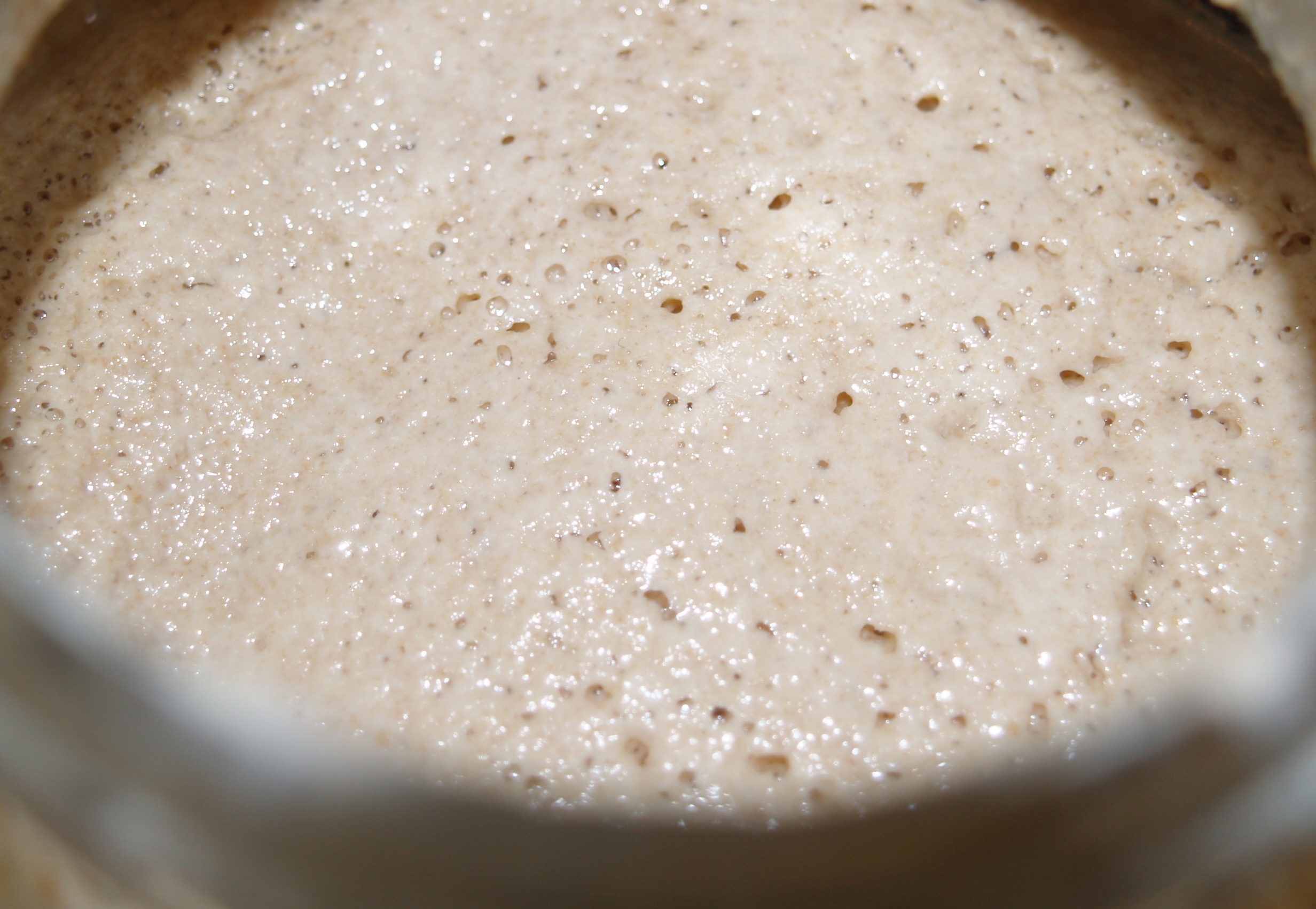
Store batter in a warm place in the 70-80 degree range. Visit the batter daily and stir it to distribute the yeast. After a few days you will notice some bubbles on the surface of the batter. The yeast is letting you know it is active.

Remember, your home is it’s own ecosystem. Every ecosystem has its own unique micro-organism communities – the ecosystem in your home plays a role in how slowly or quickly your batter will germinate. Once yeast activity is evident, strain out the fruit.

Add 1 or 2 tablespoons of flour to the mixture each day for three days. The batter will begin to thicken and rise. Add more water when necessary. By about day five your starter should be bubbly. With a clean spoon, remove about half the sourdough starter, if you compost you can throw it in your bin.

Stir in 1/2 cup flour and about 1/4 cup water. You now should have an active starter – cover it and leave it at room temperature until it has almost doubled. You can now expand the starter for baking bread or refrigerate it overnight and start expanding the next day. [/box]

If your are looking for some recipes to use with your starter, this is a great resource.  And, if you are thinking to bake phosphoro for Church a very well detailed recipe can be found here, on OrthodoxMom.com .  What a beautiful post!
 

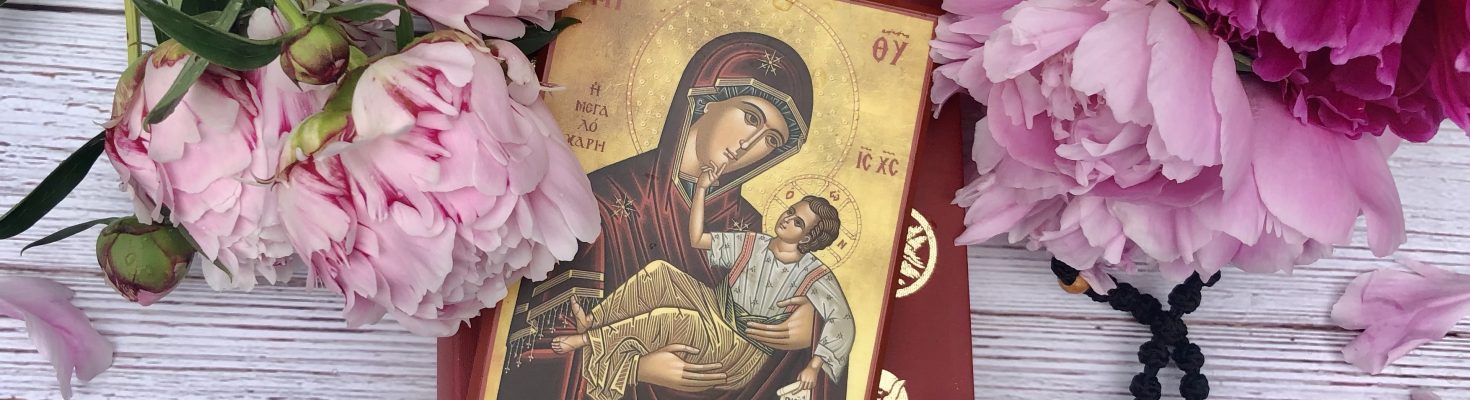
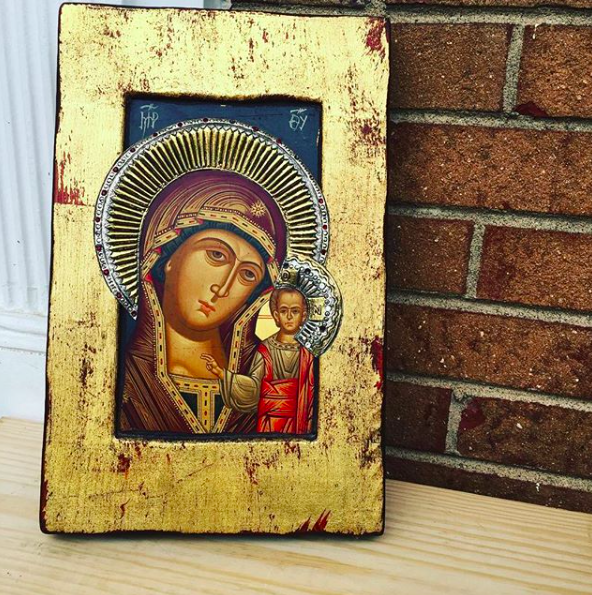
Most Holy Theotokos


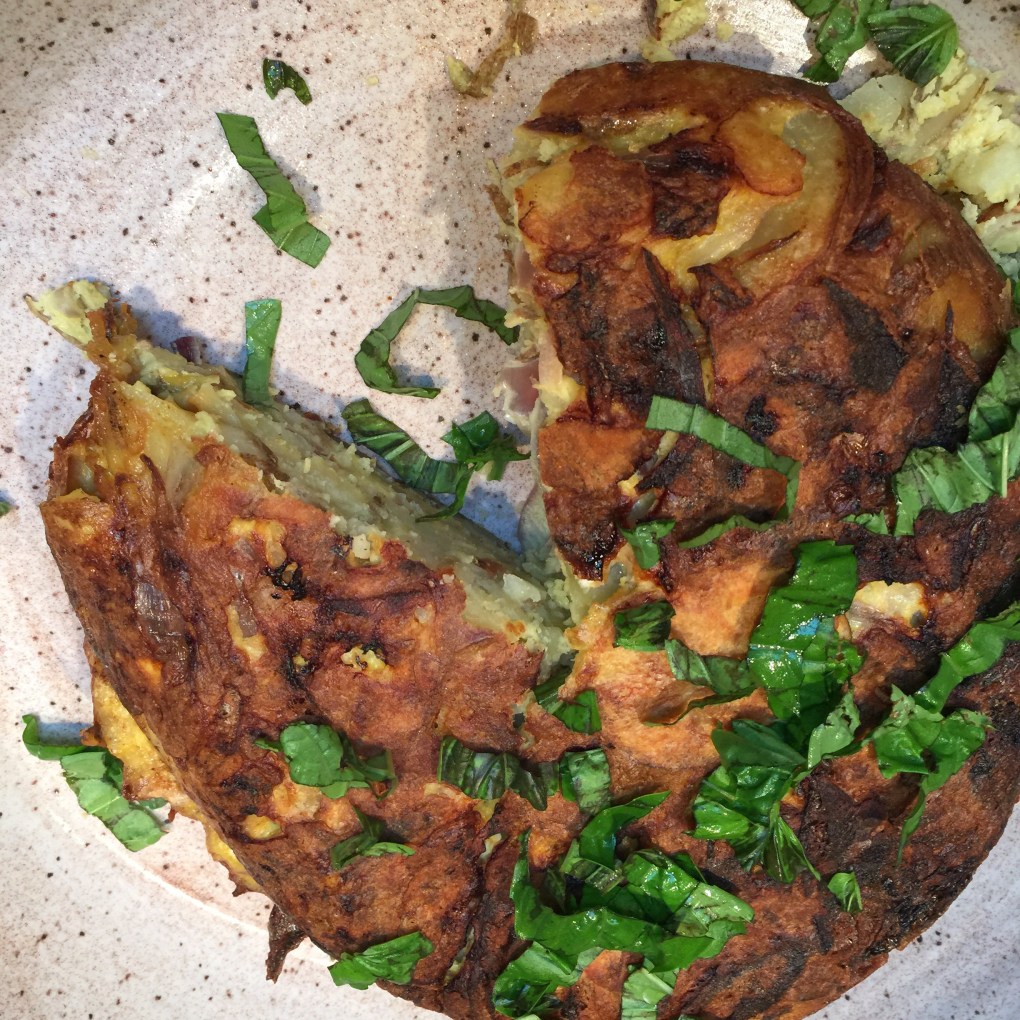
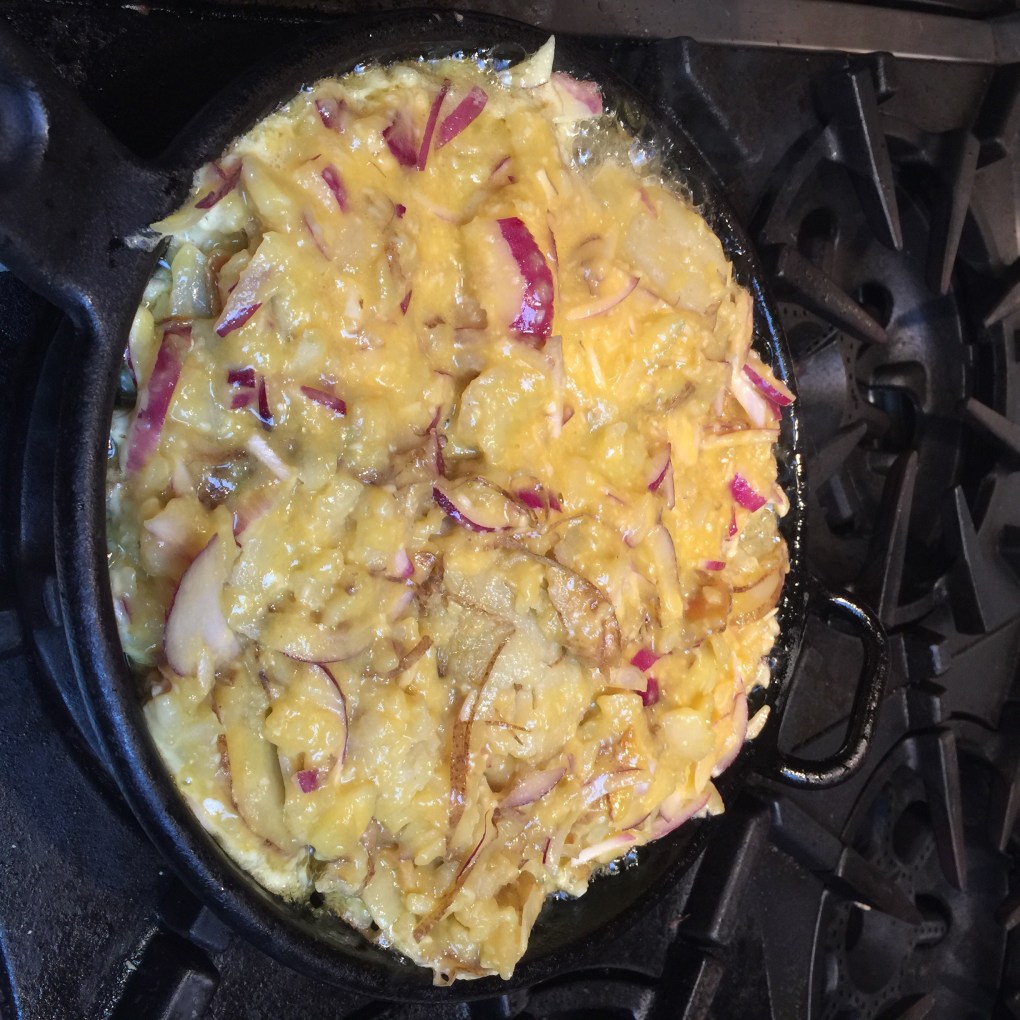
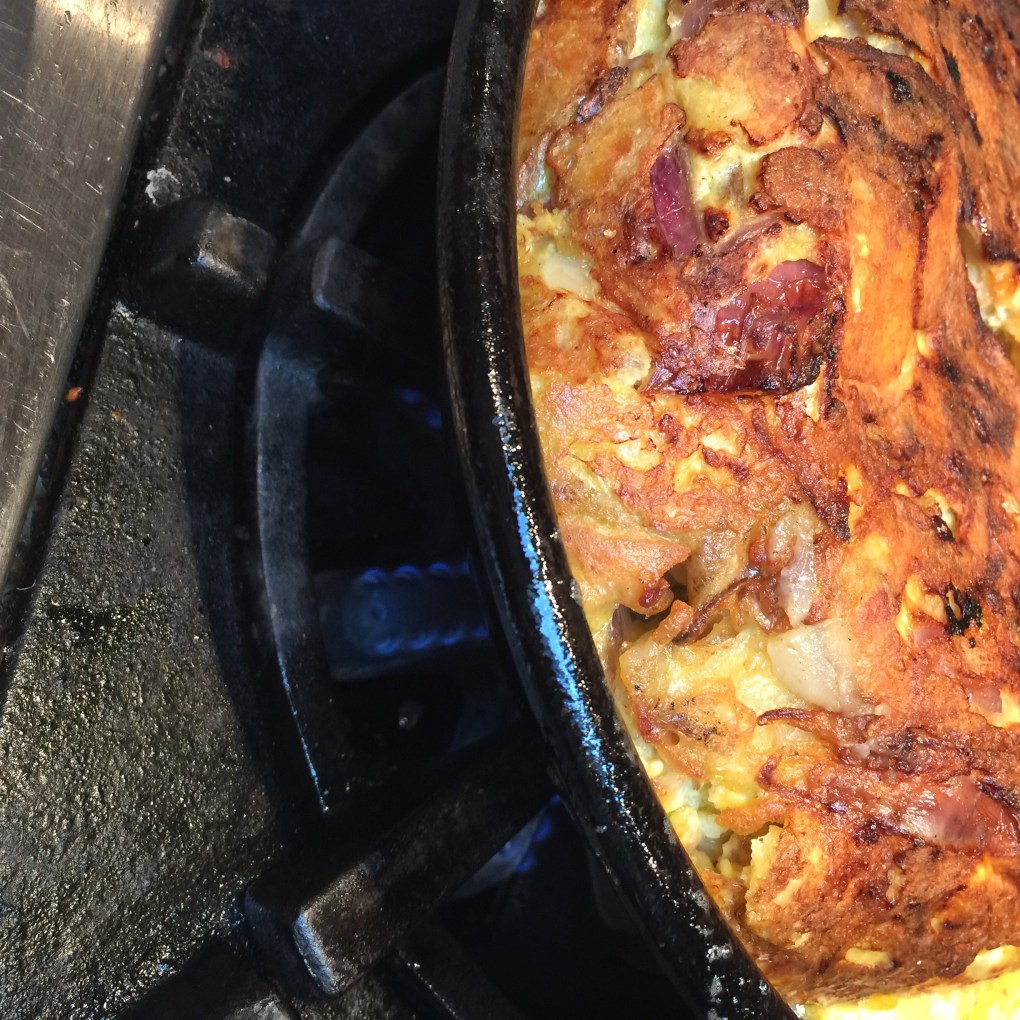
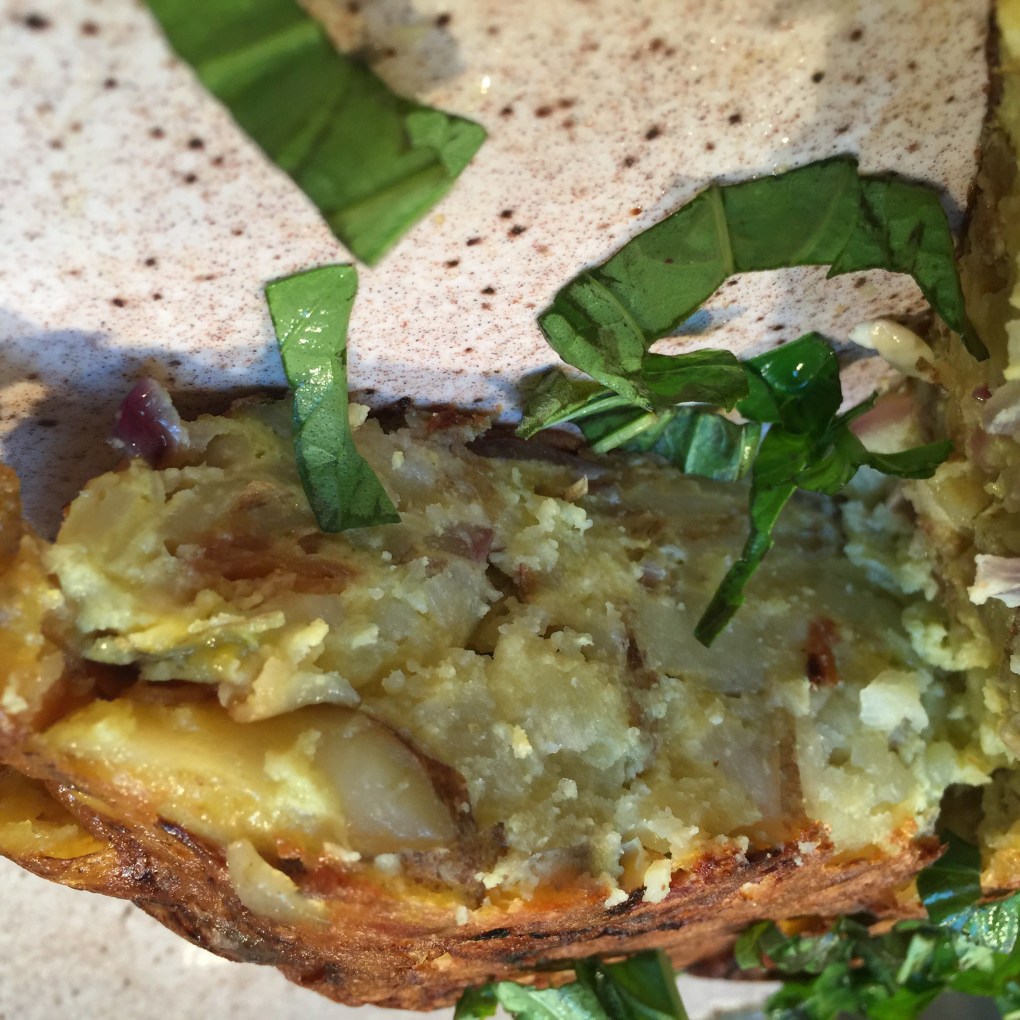
potato galette

IMG_3821

He became man and lived in this world. He ate and drank, and this means that the world of which he partook, the very food of our world became His body, His life. But His life was totally, absolutely eucharistic—all of it was transformed into communion with God and all of it ascended into heaven. And now He shares this glorified life with us. “What I have done alone—I give it now to you: take, eat.…”

~

Alexander Schmemann

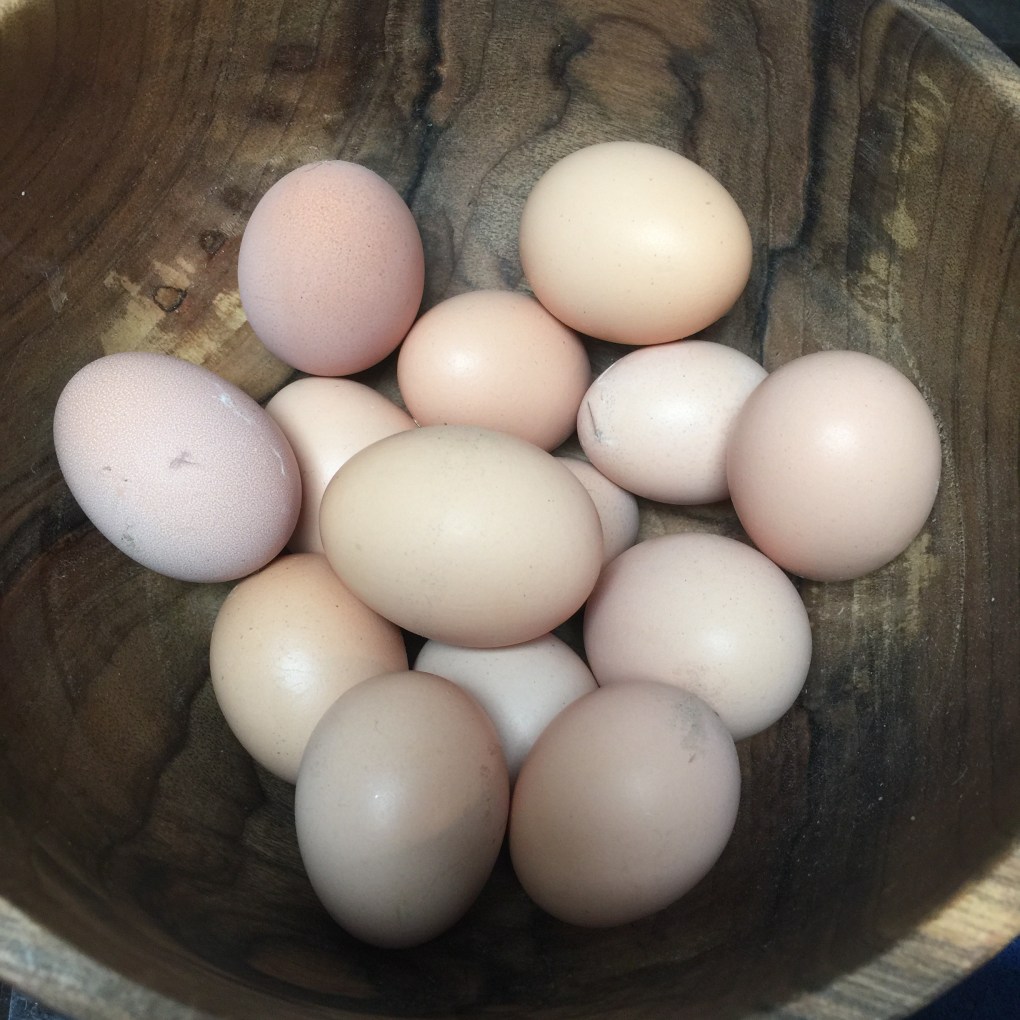
If one intends to raise chickens, it’s a great thing to love eggs!  This spring our family acquired eight hens and as of now, we harvest six eggs a day, on average.  That’s 42 eggs a week.  So we are now gladly sourcing recipes with eggs!

This potato gallette is a really easy weeknight meal.  It’s savory with a hint of herbs from the garden.  Our egg yolks are so absolutely vibrantly orange (like the old fashioned red orange crayola color) it’s abundantly clear they are packed with choline, folate, vitamin A, vitamin E, tons of beta-carotene and plenty of omega-3 fats from the flax we feed them and the free range forage they enjoy.  If your interested in how the life and diet of a hen reflect in the nutrient content of her eggs, check out these results from Mother Earth News.

IMG_3811

Now onto the potato galette!  I strongly recommend using a well seasoned cast iron pan if you have one.  I find them non-stick far better than others, and the heat is so nice and even that it really crisps up the galette.


Before we begin, a note on the potatoes.  If you are using fresh potatoes, that have not hint of green on them (like right under the peel) then do not peel the potatoes… lots of good nutrition there.  If however, your potatoes where not stored well and they have that green you can either peel the parts with the green or peel the entire potato.  My grandmother, who grew up in Germany during a time of root cellars, world wars and no refrigeration always told me that the green on the potatoes is poisonous.   You can read more about it here in this short article in the New York times.  Storing potatoes properly is very important.  They will begin to sprout depending on light and temperature.  GrowAGoodLife has a great article on potato storage.

Ingredients:

  • Olive oil – enough to coat the potatoes and cover the bottom of the cast iron pan
  • 1-2 pounds potatoes, new or yukon gold
  • 2 teaspoons celtic sea salt or other natural salt
  • 1-1/2 cups onions : I prefer vidalia or some other sweet onion, but your basic yellow onion is just absolutely fine
  • 1 tablespoon fresh oregano, thyme or basil or some combination of fresh herbs
  • 5 medium cloves of garlic, peeled and minced
  • 6 large pastured eggs or 8 small pastured eggs (we have all sizes here!)
  • fresh ground black pepper

Preparation

Using a mandolin, slice potatoes about 1/8 of an inch.  Place in a very large bowl, sprinkle with salt, pepper and about three tablespoons of olive oil.  This coats them so they will not stick on pan.

Drizzle olive oil to cover the bottom of  a large cast iron skillet over medium heat.  Place potatoes in pan and cook them in batches.  You should not hear a searing sizzle, we are just par-cooking them.  They should not be turning color, and should not be soft so that they break when you remove them.  After each batch place potatoes in another large bowl.

While these are cooking, you want to crack your eggs and beat them in a small bowl.  Add herbs and a little more salt.

Once all potatoes are done, add the onions and garlic to the pan.  Saute till softened and fragrant, but not browned.  Rinse the skillet.  Add egg mixture to potatoes and toss well to coat.

Coat bottom of skillet with oil again and place over medium high heat.  Add in potato mixture.  Do NOT stir or move the mixture.

Let it cook for about ten to fifteen minutes.  The sides will start to pull away from the pan.  Again we are not going for a high heat because we want them to cook evenly and thoroughly – as well as get a nice brown on the potatoes.

Okay, now for the fancy flip.

After about ten minutes you can start to tease the side of the galette away from the pan, if it is not starting to do so.    At this point you will want to get a plate so you can flip the galette.  The plate needs to be bigger than your pan.

Take the skillet off of the burner. Carefully, place the plate a top of the skillet.  With your hand on top of the plate turn the skillet upside down so that the potato galette falls out of the skillet and onto the plate.  Now you can slide the galette back into the skillet to brown on the other side.

Let this cook another five to ten minutes until browned.   Remove from skillet and place on serving dish.  Garnish with more fresh herbs if desired.

Serve and enjoy.  This makes a great leftover meal as the flavors continue to melt together as time goes on!

IMG_3820


a new year of grace

IMG_4651

The mystery of liturgical time… In God, there is but one moment, in which everything is included.  The fullness of the liturgical year does not consist of the commemorative cycle of Christ’s life being resolved or completed, for the completion of a series implies that there is a series, a succession of disjointed elements.  The fullness of the liturgical year has to be thought of qualitatively and not quantitatively:  it is achieved if, on any day whatsoever of the liturgical year, whichever it might be, we are capable of grasping :: through the particular event which is commemorated :: Christ as a whole, the whole of His life, the whole of His work, the whole of His word.  Each feast and even each day of the year thus becomes the fullness of the whole liturgical cycle.  This cycle never repeats itself :: each one of its aspects reflects the inexhaustible depth and fullness of Christ, and as a result, becomes new for us to the extent that we understand it better.  The liturgical year is a prism which receives the white light of Christ and splits it into different colors.  Christ is the year.

~

a monk of the eastern orthodox church

The Treasure of Tradition    Despite being united to Christ in the Orthodox Church some twenty years ago, there are still many of those little “t” traditions of which I do not know.  When I joined the Orthodox Church the first thing I realized is that I don’t know anything, and not in a bad way at all, but a very very good way…. a way that allows me to incorporate the faith morsel by morsel so that I can digest it.

This year (just last night in fact!) I learned of the tradition to place an icon of the Most Holy Theotokos at the threshold of the door to our home as we usher in the new Liturgical (Ecclesial) Year of Grace.

In many conversations with non-Orthodox over the years, I have been struck by their idea that our little “t” and big “T” traditions are merely rote action.  Yet, as one who seeks (and quite imperfectly, too)  to live and raise a family in the faith, I find most beautifully that these “traditions” of ours are not rote or meaningless at all ::  but rather beckon and re-orient our hearts to that which is needful.

Just as we pray corporately the Anaphora during the Divine Liturgy, these little “t” traditions are our “little a” anaphoras :: a lifting up and offering of ourselves.  A simple, humbling endeavor, to place God above all, offering up our whole  lives to Him.

It is Eucharisteo : Grace,  Joy and Thanksgiving throughout the seasons of our lives.

These are just another way in which we lift up our hearts in this great litany of our lives.  Little children in Greece make the sign of the cross when riding their bikes past a Church :: mothers entering Church remind their little ones to make the sign of the cross before they enter :: we light candles :: burn sweet smelling incense :: we trace the sign of the cross on our children when tucking them into bed :: prayers and prostrations dovetail together :: we kiss the icons and we greet one another with a kiss of peace :: we dye our Pascha eggs the reddest of red, but we don’t dye them on Holy Friday ::  fresh basil is brought home from Church on the Elevation of the Cross and placed in the sourdough starters that will leaven phosphora :: and of course, we pray facing the east – our souls waiting for the Lord, like the watchman waiting for the dawn.

Again and again, in so many ways, we are called to this life in Christ.  To live our lives through the years and seasons and rhythm of the Church.  It is our great priority :: this great Liturgy of Life :: it is more needful  than schoolwork, profession, sports and hobby :: and yet with life in Christ as our priority our ability to fulfill our schoolwork, professions, sports or hobby is in no way diminished.  Traditions bring to light blessings :: even on the threshold of our very home.

Placing an icon of the Most Holy Theotokos at our doorstep – what a wonderful tradition to usher in the new Ecclesial Year :: just as the Ecclesia means “called out” :: the new Ecclesial year “calls us out” again, “to lay aside our earthly cares” and enter into the timeless rhythms and seasons of the Liturgical life of the Church.

The Orthodox Christian lives Ecclesial Year to Ecclesial Year :: Feast to Feast :: Fast to Fast :: Confession to Confession :: Liturgy to Liturgy :: Eucharist to Eucharist.  Just as we have New Year’s resolutions to usher in a new calendar year, now is a great moment to pause, reflect and begin again.

Does my family have regular prayer time?  If not, this is a time to begin.  Are we attending Church weekly?  That’s alright :: start this weeks Vespers and Liturgy.  Has it been forever since my last Confession :: make an inventory, call your priest.  Go.

And so today, on the dawn of a new ecclesial year, the faithful are hopeful standing on this threshold of Grace of a new year, with an invitation to redeem the time.

Blessed art thou O Lord, teach me Thy statutes.

Real life is Eucharist, a movement of love and adoration toward God, the movement in which alone the meaning and the value of all that exists can be revealed and fulfilled

~

Alexander Schmemman


holy ordinary {gifts from God}

IMG_3731


blessings in the holy ordinary

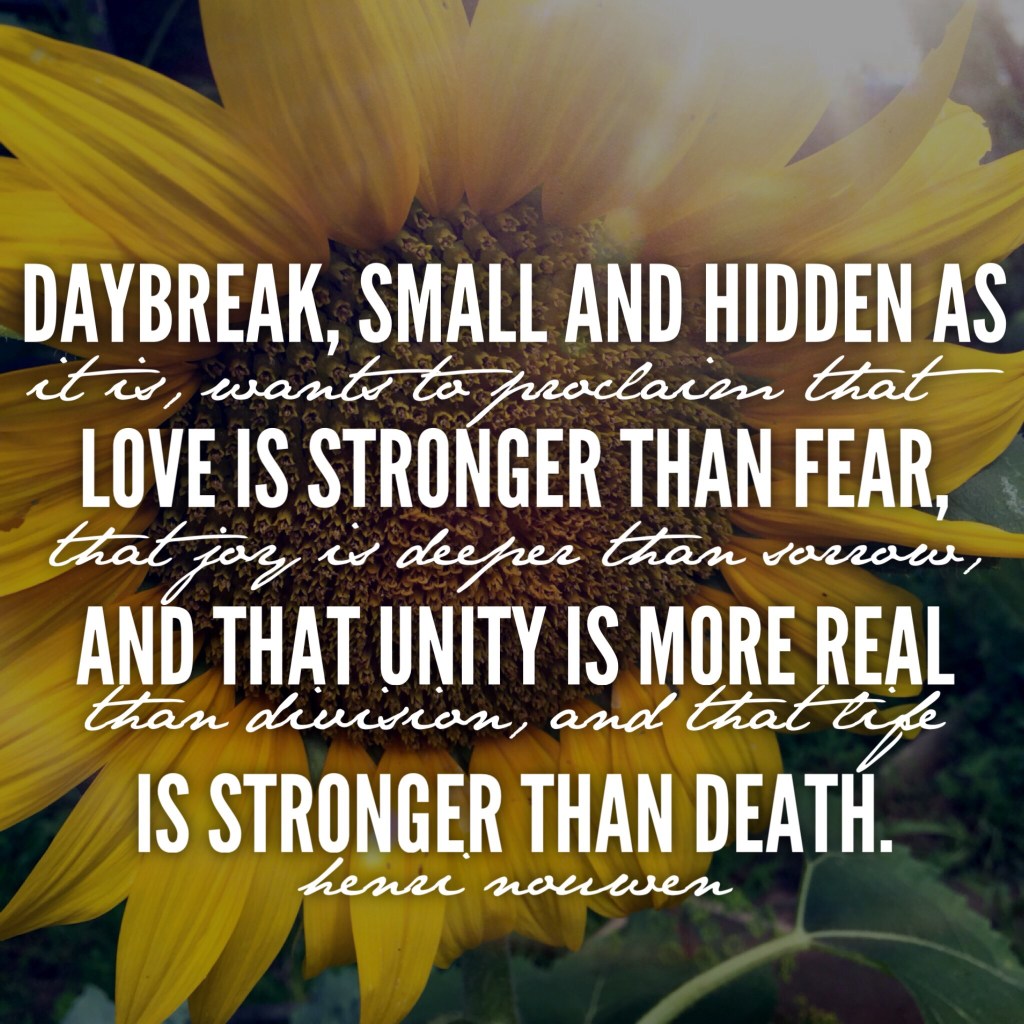
Daybreak, small and hidden as it is, wants to proclaim that love is stronger than fear, that joy is deeper than sorrow, and that unity is more real than division, and that LIFE is stronger than death.

Henri Nouwen

IMG_3721


sprouts and cukes

IMG_3818-2

“God, Who is by nature good and dispassionate, loves all men equally as His handiwork. But He glorifies the virtuous man because in his will he is united to God. At the same time, in His goodness he is merciful to the sinner and by chastising him in this life brings him back to the path of virtue. Similarly, a man of good and dispassionate judgment also loves all men equally. He loves the virtuous man because of his nature and the probity of his intention; and he loves the sinner, too, because of his nature and because in his compassion he pities him for foolishly stumbling in darkness.”

—St. Maximos the Confessor

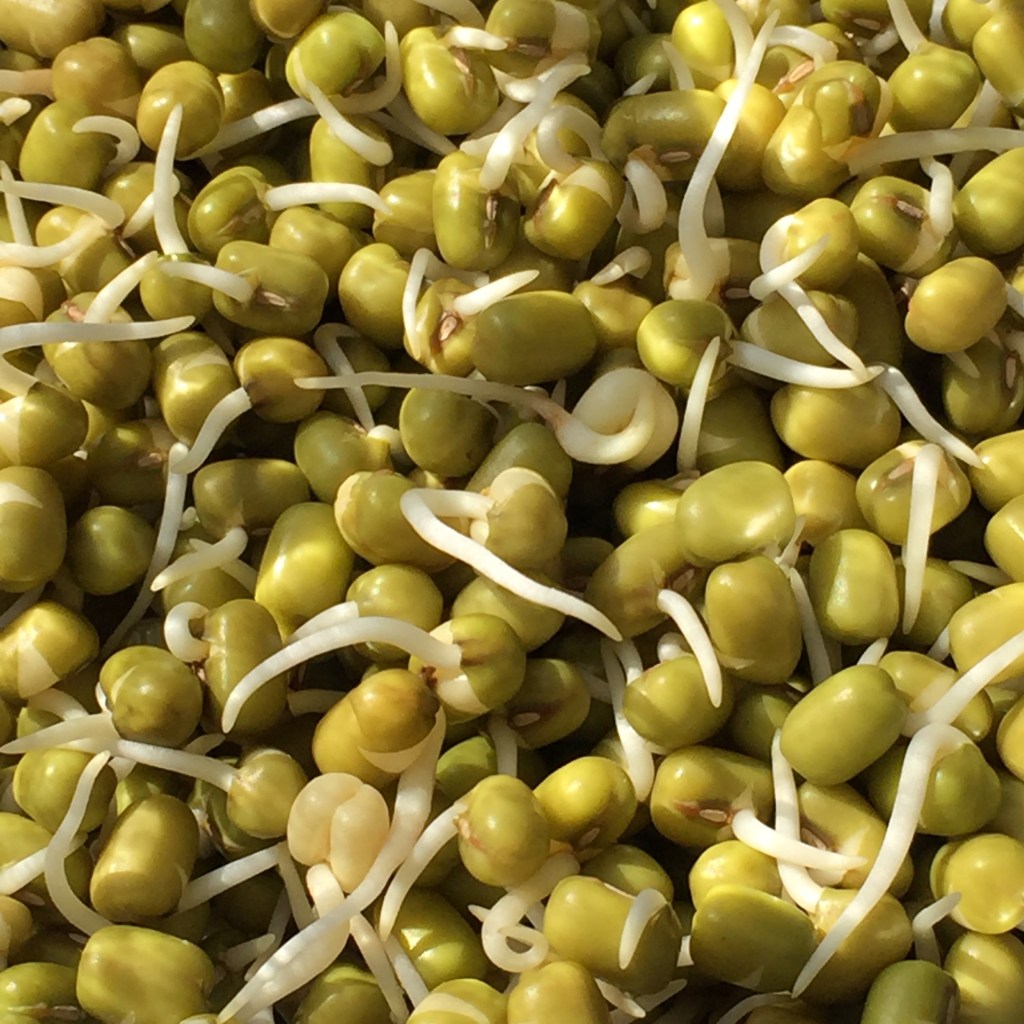
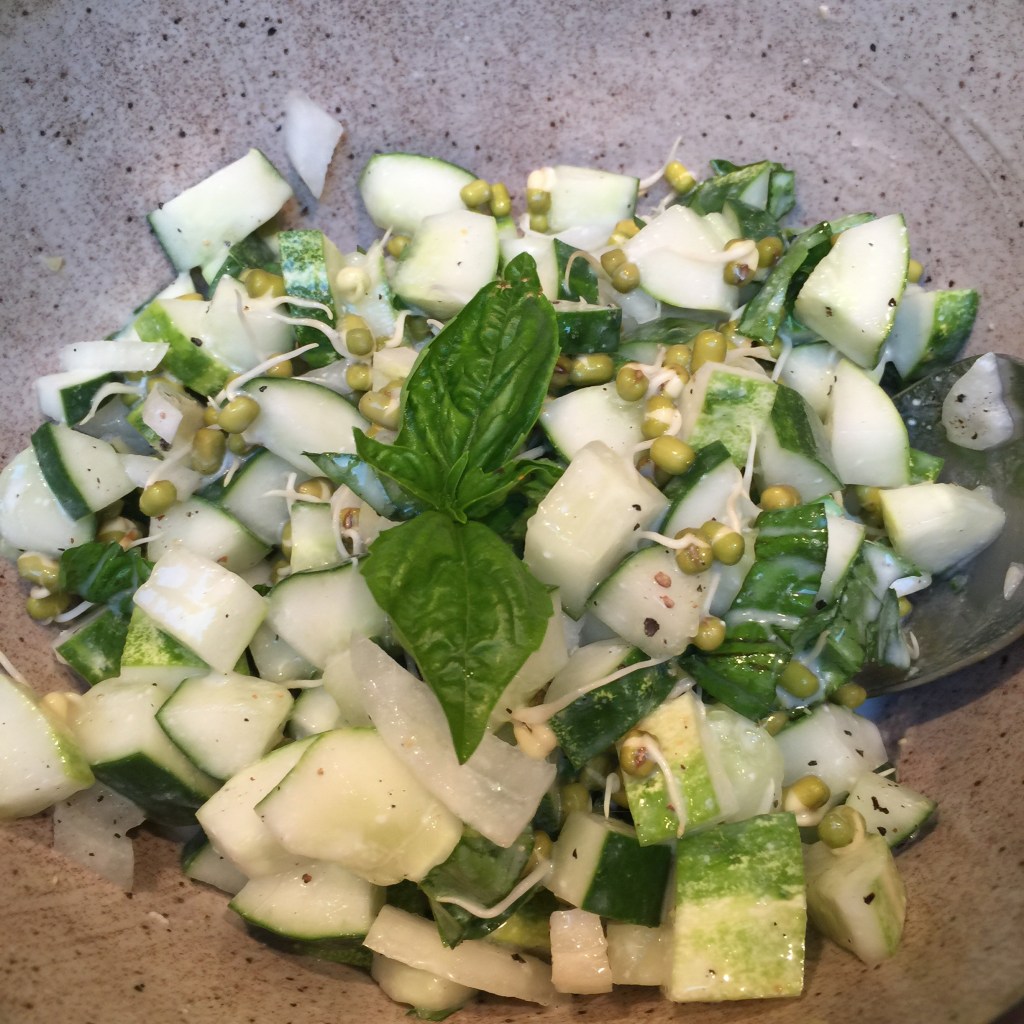
Lately we have been sprouting our own micro-greens and sprouts for salads.  It’s so much easier to buy them at the store, but when a small bag costs $5 and up, it starts to put a pinch in the pocketbook.  What we’ve learned is that sprouting is pretty darn simple. Seeds want to sprout.  Given moisture and an area out of the sun, the little sprouts burst out of their seed shells in no time at all.  This salad is a combination of our pickling cucumbers – they tasted just fine fresh – and the mung beans we grew on in a mason jar on the counter.

Adding sprouts is a delicious way to boost the nutrient content of any salad.  Mung beans are especially high in manganese, potassium, B vitamins, folate, copper, zinc and magnesium.  Mung beans can also help fight cholesterol and decrease your risk of heart disease, but most notable is that they contain powerful free-radical scavenging antioxidants against cancer.   Their phytonutrient content is protective against viruses and infection.  Sprouts are a nutritional virtue and deserve a space in any salad or sandwich and because they are sprouted, they are also easier to digest than many starchy beans!

I did not special order any of my mung beans, but purchased them from the bulk food aisle of our local favorite organic store, Mom’s Organic Market.

For more information on sprouting visit Sprouting People, Mumm’s Sprouting Seeds or Garden Therapy.

IMG_3784

Sprouts and Cukes Salad

Ingredients

  • 1-1/2 cups sprouts (mung, broccoli, bean – whatever you like)
  • 3 tablespoons goat milk kefir or plain yogurt
  • 1 tablespoon fresh basil or oregano, chopped small
  • 3 cups cucumbers, seeded and cut small
  • 1/4 cup finely cut vidalia or red onion
  • grey celtic sea salt to taste
  • pepper to taste

Preparation

Mix all ingredients in bowl and toss.


IMG_3817


simplest tomato salad

image


Our first and most important spiritual task is to claim God’s unconditional love for ourselves. To remember who we truly are in the memory of God. Whether we feel it or not, whether we comprehend it or not, we can have spiritual knowledge in the heart— a deep assurance that passes understanding— that we are God’s beloved.

Henri Nouwen

It’s the ripe, plump tomatoes which blanket the farmer’s markets and neighbors gardens that make this simplest tomato salad so delectable.  No need to fancy it up – the salt really brings out the savory sweet juicy flavors of the tomatoes.   It’s a family favorite during the summer.

Ingredients

  • 5-6 ripe in season tomatoes
  • 3 tablespoons olive oil
  • 1/3 cup finely chopped red onion
  • salt and pepper to taste

Mix all ingredients and serve.  Dinner can be that simple…


blessing from all eternity

image

The truth is that God loved us before we were born and will love us still after we have died. God molded us in the depths of the earth. God knitted us together in our mothers’ wombs. God has inscribed us on the palm of his hand. Every hair on our heads is numbered and counted by God. We are held by God in an everlasting embrace. We belong to God from eternity to eternity. Indeed, we are God’s daughters and sons. As beloved children, our core identity is secure in the memory of God. Whether we do anything worthwhile, prove anything important, or give anything of value, God still loves us unconditionally. It is a strong, vital, and active fatherly and motherly kind of love that holds us safe and affirms our worth, wherever we go and whatever we do.

Henri Nouwen


garden beet salad


IMG_3591

Do not say “this happened by chance, while this came to be of itself.”  In all that exists there is nothing disorderly, nothing, indefinite, nothing without purpose, nothing by chance…. How many hairs are on your head?  God will not forget one of them.  Do you see how nothing, even the smallest thing, escapes the gaze of God? ~Saint Basil the Great


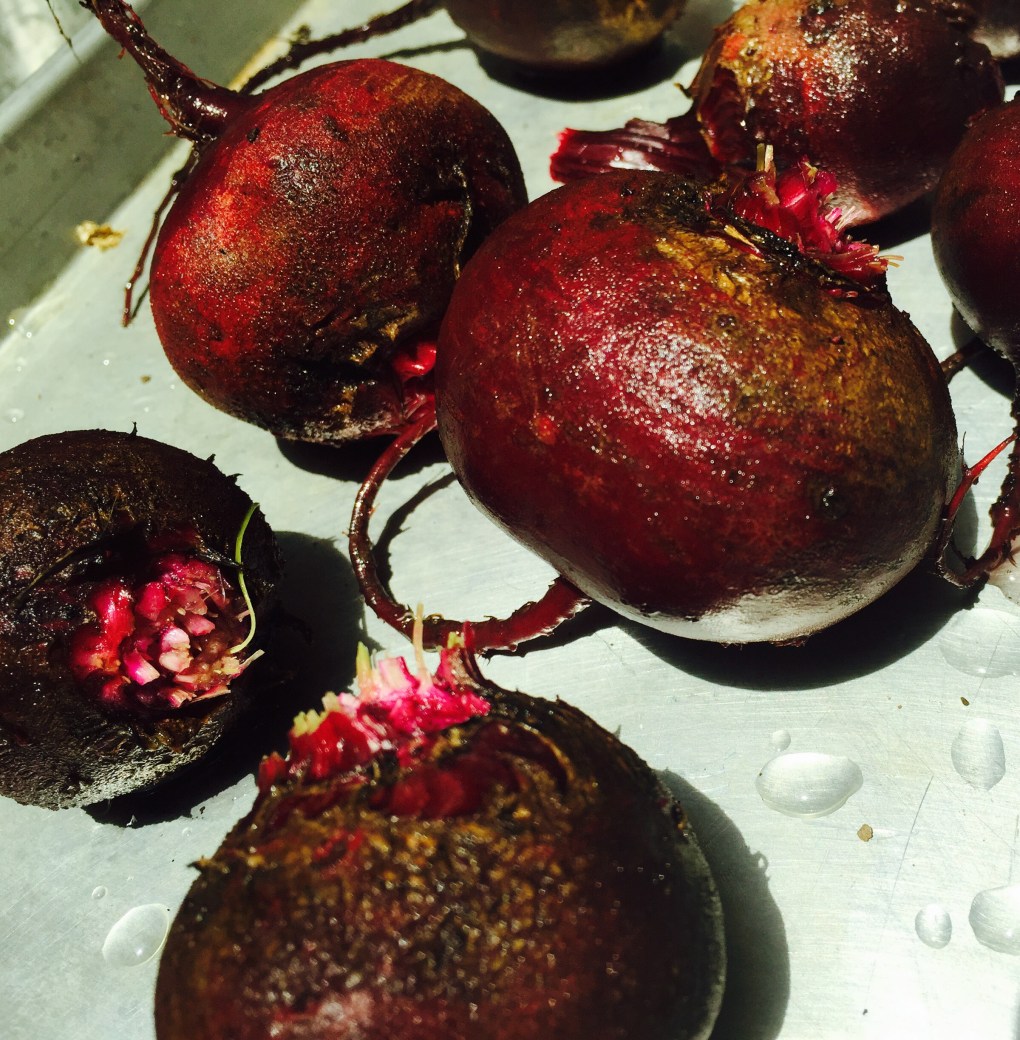
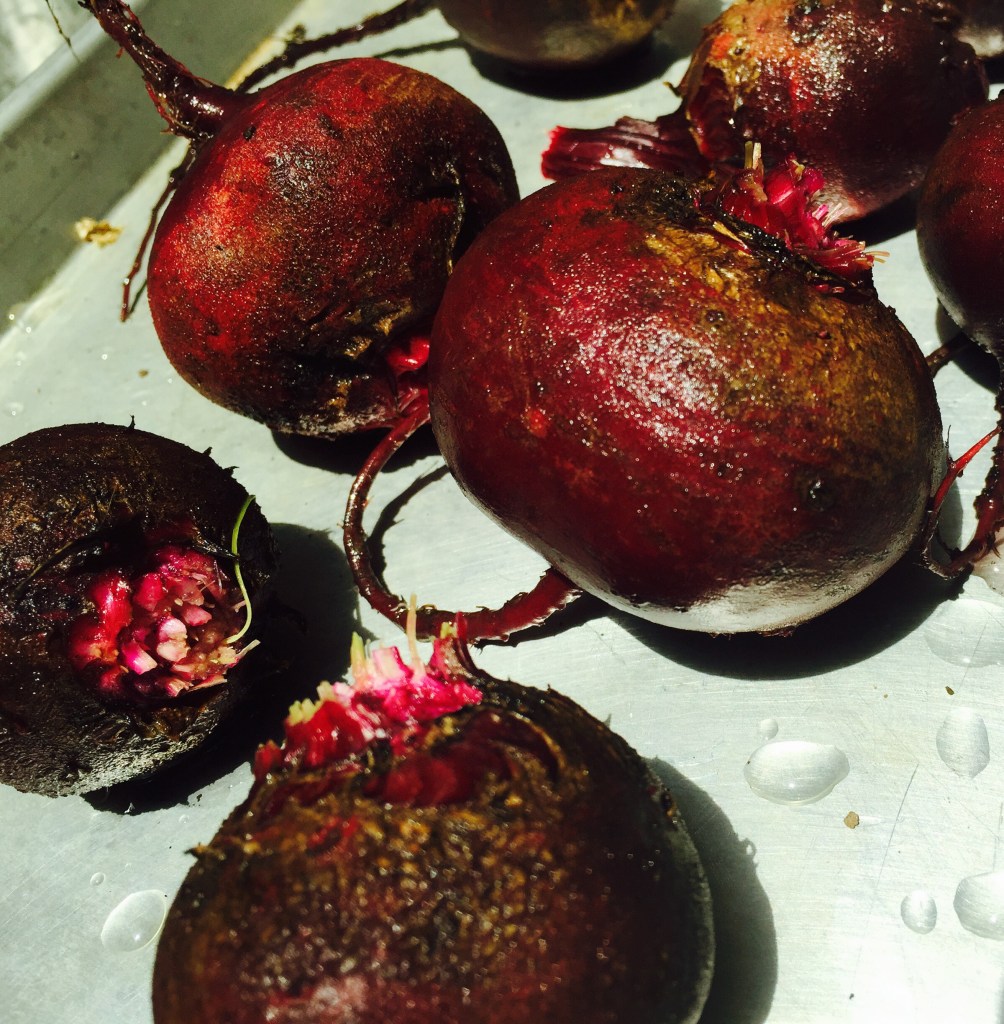
During the summer, we crave salads.  They are a nice cool addition to any meal, or can be served as a meal on their own.  You simply can not “beet” the simplicity of a garden beet salad.  These particular beets are gems straight from our garden, but any from the store or farmer’s market will do.  We planted these in early spring.

I actually hadn’t planned to harvest them, but I accidentally pulled one out while weeding…  it looked so good, that we harvested the rest from that bed!  Beets have a sweet earthy flavor, and are a mineral rich nutritional powerhouse.  They have more iron than spinach, and are an excellent source of calcium, magnesium, copper, and phosphorous.  They’re also packed with  choline, folic acid, iodine, manganese, organic sodium, potassium, fiber and carbohydrates (in the form of natural easily digestible sugars).   Quite simply, they are superfood.

One great benefit of the beet is that is alkalizing to the body and that’s great news in a nation with a standard diet that is acid forming.  Beets are a stimulator of liver health.  They also have many cardiovascular benefits.  They can be helpful in reducing cholesterol and their rich potassium content benefits blood pressure.  Fermented drinks like beet kvass have been known throughout history as a blood tonic.  And the list goes on.  Some studies have also shown that beets are preventative for skin, lung and colon cancer, they support the structure of our capillaries, and can also aid in the slowing or prevention of macular degeneration.

Beets, they do a body good!


Garden Beet Salad

Ingredients:

  • 9 beets, washed but not peeled
  • 4 tablespoons goat cheese in small chunks to drop into salad
  • 3 tablespoons pinenuts, slightly toasted
  • 1/4 cup  finely chopped red onion, green onion tops or chives
  • 3 tablespoons olive oil
  • 1 tablespoon rice wine vinegar
  • sea salt and pepper to taste

Preheat oven to 350F and place beets on a cookie sheet.  Top loosely with foil and place oven for about an hour.  They should be tender.

Remove from oven and let cool.  Once cool, using the edge of a knife or a vegetable peeler, peel of the outer skin of the beet.  Your hands will get very red!

Next, cut the beets into bite sized pieces.  Place all ingredients into your favorite salad bowl and toss lightly to incorporate.

Delicious!


Additional Resources

http://www.whfoods.com/genpage.php?tname=foodspice&dbid=49