
wisdom from the hive

wisdom of the bee

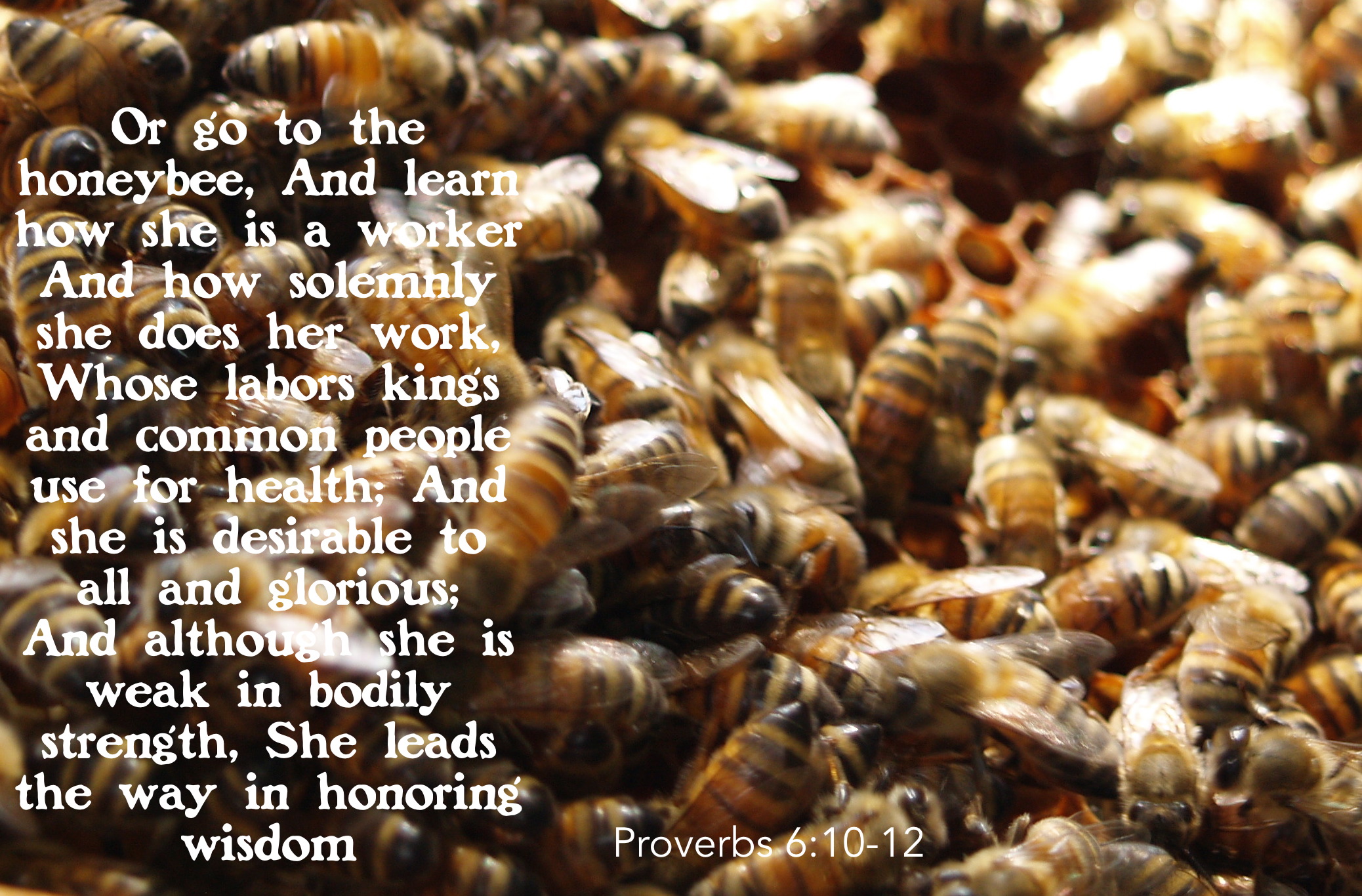
Or go to the honeybee, And learn how she is a worker And how solemnly she does her work,  Whose labors kings and common people use for health; And she is desirable to all and glorious;  And although she is weak in bodily strength, She leads the way in honoring wisdom.

Proverbs 6:10-12

A hive of bees is centered around the fullness and joyful labor of their common life together.

An observer to a beehive is struck at the seeming joy the bees take in each of their appointed tasks.  Over her life, a bee will have provided for the sustenance of the hive by laboring at every available position to support the colony.

 As soon as she is born, a young bee gets right to work as a nursemaid.  In this role she feeds and tends to the eggs and larvae of the hive.  At about two weeks of age, she will begin producing wax- and despite the sheer darkness within the hive, the bee will effortlessly draw out beautifully perfect geometric combs for the storage of nectar as it becomes honey.

Then there are the bee chefs… and they produce royal jelly and beebread.  If you are fan of fermentation, then you will appreciate the production of beebread.  Beebread is a combination of fermented pollen, sweet little bee secretions and honey and it’s kind of like a bee sourdough!

As she grows and matures, the bee will learn to guard the hive at the entrance and will also  get into great shape constantly fanning her wings for the cooling or warming of the hive.

Once she is about three weeks old, this little lady then really spreads her wings –  gathering floral sunshine as she forages for nectar and pollen.

It is this foraging for nectar which  is the bees most precious gift for mankind.  Although we crave their honey, it is their pollination that is vital to our wellbeing.   When a bee finds a rich source of nectar, she will dance a joyful circular little bee folk dance, for her sisters.  This lets the other bees know where to locate the forage.  Her dancing directions are remarkably accurate and reference flight patterns focused on angles of the sun.

At one point in her life she will even take on the merciful task of undertaker – that is removing the bodies of any bees that die in the hive.  There are no idle moments for bees, they work day and night, and live for about six weeks.  When her body finally succumbs to death,  the industrious and watchful bee will never have slept a moment in her life.

Nature never taught me that there exists a God of glory and infinite majesty.
I had to learn that in other ways.  But nature gave the word glory a meaning for me.
I still do not know where else I could have found one.”–C.S. Lewis

A hive of bees is considered a single organism – a body.  And each little bee is a but a tiny part of the body of the hive, yet collectively their common labor yields a wonderful harvest.   There is no “down time” and certainly not a lot of distraction in a hive.  Collectively, as members of the body, they labor toward what is needful and beneficial for life.

In this way, one senses neither judgement nor conflict amongst the bees.  Despite the various roles a bee will take on over the course of her life, each bee appears quite satisfied exerting herself with the current task at hand, focusing on her own labor but also indebted to the roles of her fellow laborers in the hive.

Bees live and act as one, and all of this is for the common good of the colony.  It is a life of service, as evidenced by their communal labor and the constant droning buzz, which is the eison of life and of service within the hive.
OLYMPUS DIGITAL CAMERA

“… I pray that you may enjoy good health and that all may go well with you, just as your soul prospers.”

3 John 2

winter bees part III

“One can no more approach people without love than one can approach bees without care. Such is the quality of bees…”   Leo Tolstoy

open pollination

happy bees

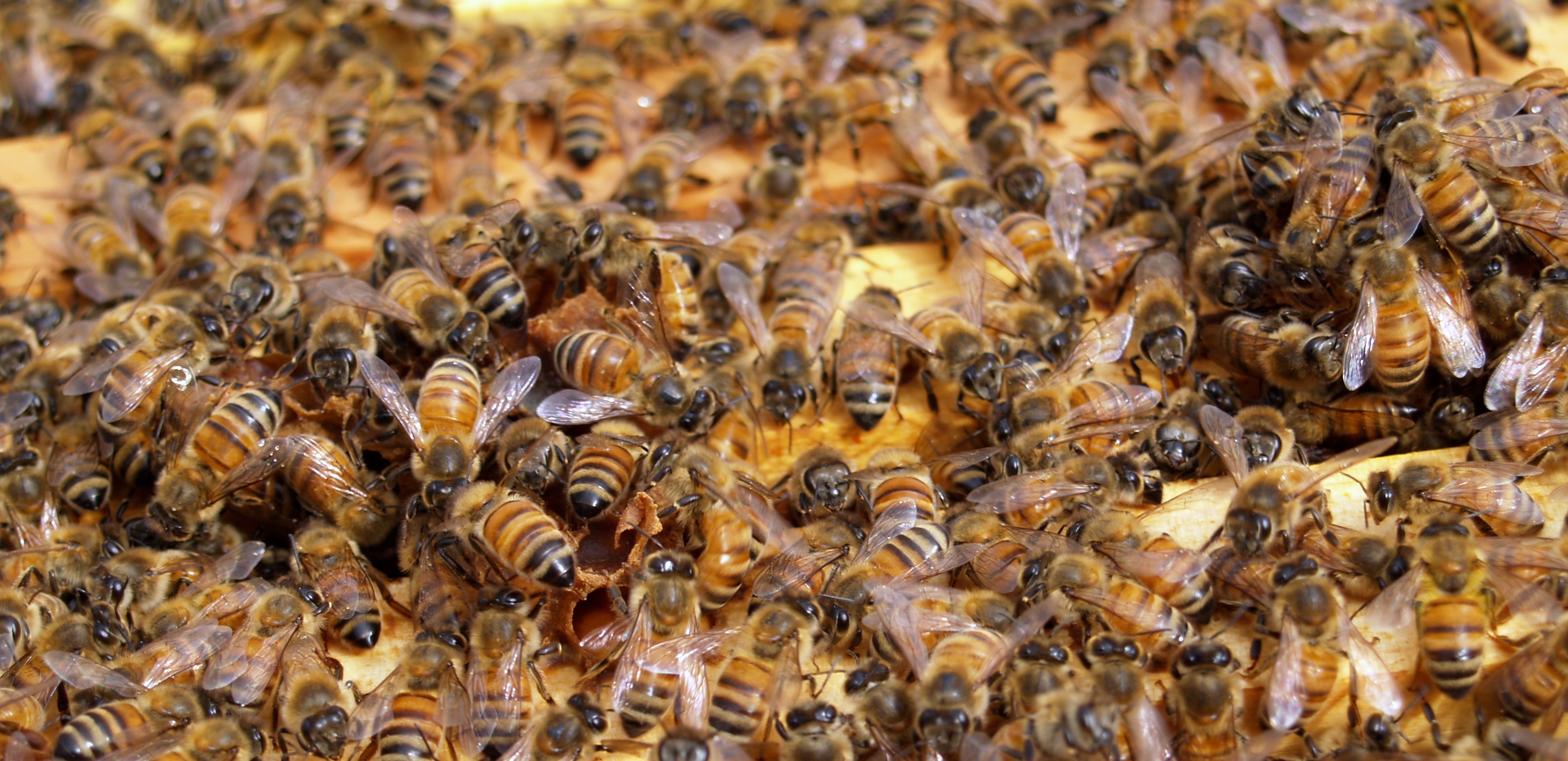
Bees are industrious, generous and fascinating.  You see this versatile little bee, who cools her hive in summer with coordinated flapping of wings between flanks of bees on either side of the hive now warms her hive in winter with those same wings.  Through a constant and simultaneous flapping of their wings, the bees will maintain the temperature of their hive to warmth mirroring the coming days of spring.  Now in the height of winter, they cluster together, on the central comb with the queen in the midst of them.  Row upon row of bees surround the sealed honeycomb flapping their wings.  When the weather gets extraordinarily cold, they can actually dislocate their wings allowing them to flap in a way that produces even more heat.  When the little bees on the outer edges feel the cold embracing them, they crawl over their sisters to take a turn in the middle.   The move gradually up the hive as each cell of honey is emptied of it’s store.  The bees nearest the warm cells of honey pass it onto their neighbors and thus their stores of fragrant floral sunshine is shared throughout the darkness of the hive.

Around January is when a beekeeper begins to wonder whether the bees have gone through their stores of honey.  It’s too cold open the hive, but it’s best to stay prepared.  We’d placed two liters of honey in some mason jars with punctured lids on the counter, waiting for any break in the weather.  If the bees are going to starve,  January is generally when it happens. The temperatures have been bitter here in Virginia, only in the 20’s and low 30’s, but just the other day we got into the forty’s and I placed the honey in for them.  It’s risky, because if the honey leaks everywhere you can kill a lot of bees – cold and being covered with honey don’t mix well when a bee needs to flap it’s wings for warmth.

The first hive went through about half of their honey overnight.  But, I found the second hive had devoured theirs, so we placed more in –  and just in time.  We are expecting some serious snow in the coming days.

Here we are approaching February.  Soon, the queen will begin laying more eggs, preparing for the longer days of spring and the abundance of nectar it promises.   The bees will begin to forage on the pollen and nectar of the budding trees.

celtic-patterns-1


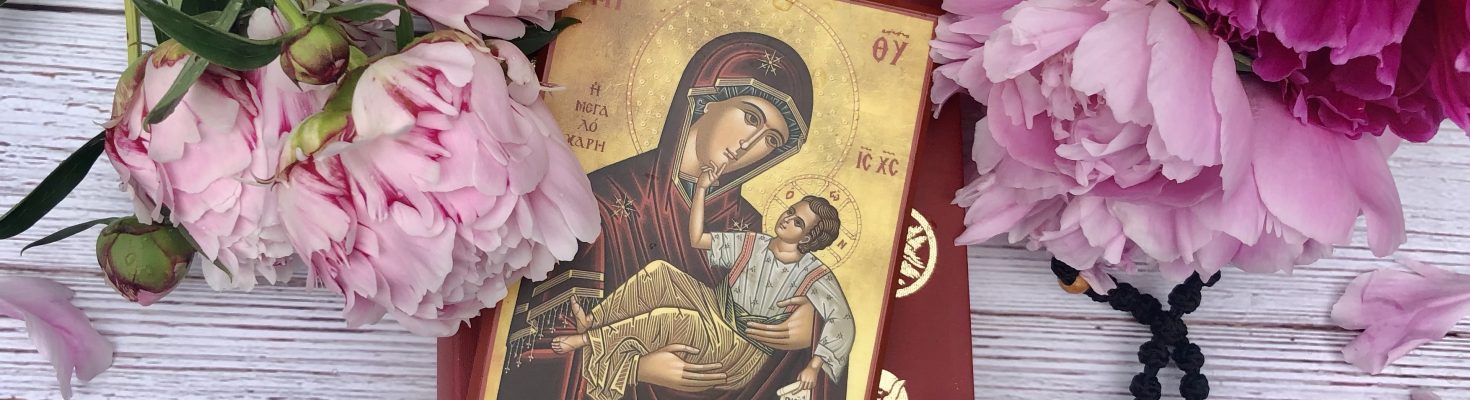
“In the Orthodox Church we have recognized the importance of bees

for centuries and have prayers for both bees and beehives.”

Prayer for Bees


O God, who knows how to work benefits through human labor and irrational living things, You instructed us in your loving-kindness to employ the fruits and works of the bees for our needs.  Now humbly we beseech Your majesty: Be pleased to bless the bees and increase them for the profit of the human race, preserving them and making them abundant.  Let everyone hoping in Your majesty and Your boundless compassions, and laboring in the care of these living things, be counted worthy to receive abundant fruits of their labors and to be filled with heavenly blessings in Christ Jesus our Lord, to whom is due glory, honor and worship unto ages of ages. Amen.

from  Orthodox Prayer for Bees, in the article The Blessing of the Bees : fried.wordpress.com


Maybe you are interested in keeping bees too?  There are many resources to help you begin your journey.  The first of which is really to take a class.

Our local bee club offers them, and you can find out more here.  If you are not from the Virginia area, you should be able to find a bee club in your neck of the woods.  But, I just came across this web-based beekeeping class from the Ohio State Beekeepers and there is another one from the University of Montana.

You can find equipment and other resources (like books and protective gear and hives) herehere and here.

You can learn more about the vanishing of the bees here and here and here!


winter beekeeping part II

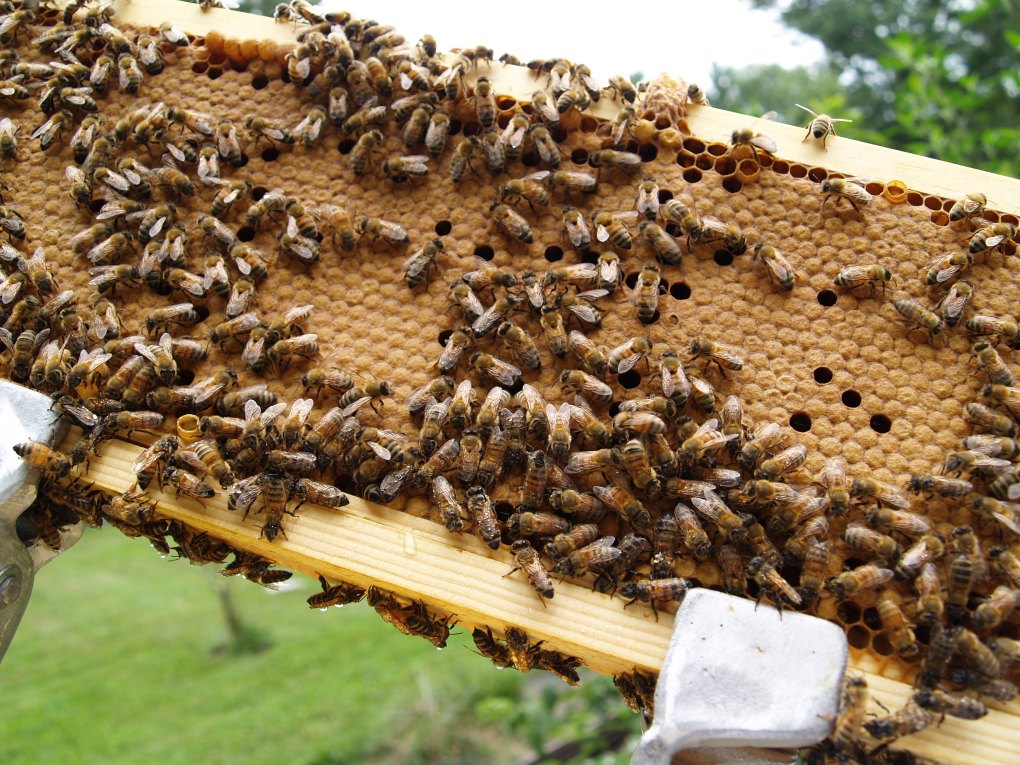
bee brood

“Like a bee one should extract from each of the virtues what is most profitable.  In this way, by taking a small amount from all of them, one builds up from the practice of the virtues a great honeycomb overflowing with the soul-delighting honey of wisdom.” 

(St. Gregory of Sinai – 14th Century)


Did you know that it takes nectar from about 2.6 million flowers to make one pound of honey?   And that it takes one thousand bees to make one ounce of honey?

The bee, from her industry in the summer, eats honey all the winter.
-Belgian Proverb

It was mid-June when we brought the bees back to our yard.  This was well  after the peak nectar flow of April and May.  With that in mind,  we did a lot of feeding to get them prepared for winter.  It was so late in the summer, there was no way they would be able store enough honey to survive the winter without a hand.

Now in the midst of the short winter days, this beekeeper is once again schooled in patience and faith.  The days are too cold to check on the health of the colony and the cold temperatures of winter bring a hush over the hive.  The normally bustling entrance is silent of all activity.

When you can’t bear it any longer you might take a chance and knock on the side of the hive, they will occasionally have mercy on you and send out a little sentinel to let you know that they are still alive and well.  Save for a warm enough day when the bees can get out of the hive for a potty break, the hive appears dormant and lifeless.

But, life in the hive has not ceased – it’s merely less active to the visible  –   and hidden from the world.


to bee continued


winter beekeeping

 OLYMPUS DIGITAL CAMERA

The closer we examine the honeybee, the more we realize the workings of a beehive encompass territories beyond our comprehension. – Leo Tolstoy

A little over a year ago, we a lot of our hives after the passing of two beloved members of our family.  Disappointed and feeling stretched thin, I gave the equipment for one entire hive to my local farmer – where we had been keeping a colony to help pollinate their fields.  We liked being part of the local food shed, but it was just too much to homeschool, get a master’s degree, do chores, teach Sunday School and take care of the bees in the garden and the bees on the farm.  Time to pair down.

We considered getting out of the bee business altogether but one factor motivating replacing the hives is the situation with the disappearing bees.  Last March, one of the nation’s largest beekeepers lost half of their hives.  This is pretty significant.  There are many who say that it is the hobbyist beekeepers that will save the bees.  The reason?  They are more likely to use sustainable organic methods, raise bees that stay in one place with seasonal local foraging possibilities.  All that combined will breed heartier less stressed bees.

So, last summer, we jumped back in and set up two young hives of Russian bees in the garden.

These came from  local beekeeper in Maryland.  His name is Charles Walter and he is part of a certified bee breeding program for our region.  You see, our local beekeeping community is working diligently to breed bees that thrive in our area.  Every region has it’s own climate and nectar flow patterns and pests… these awesome men and women are rearing queens that are well suited to our region- many of them do it organically too!

That means for a queen breeding program, that apiary is not allow to intervene on any of those hives.  The colonies need to be strong, and produce queens with hearty DNA that aren’t as susceptible to mites.

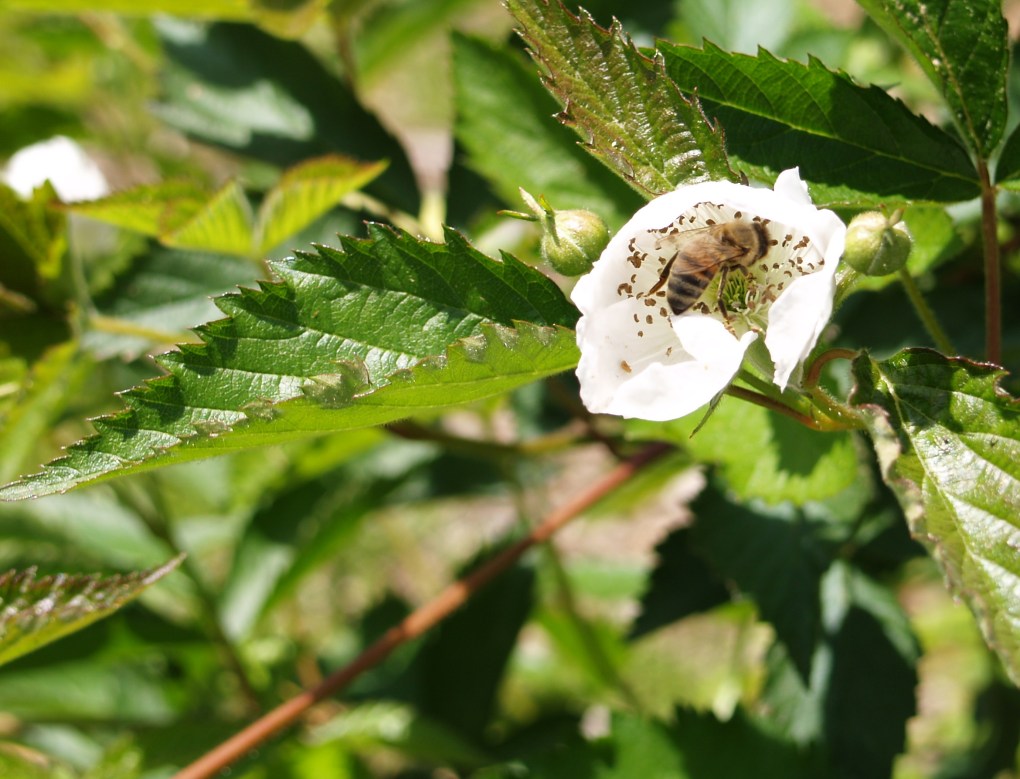
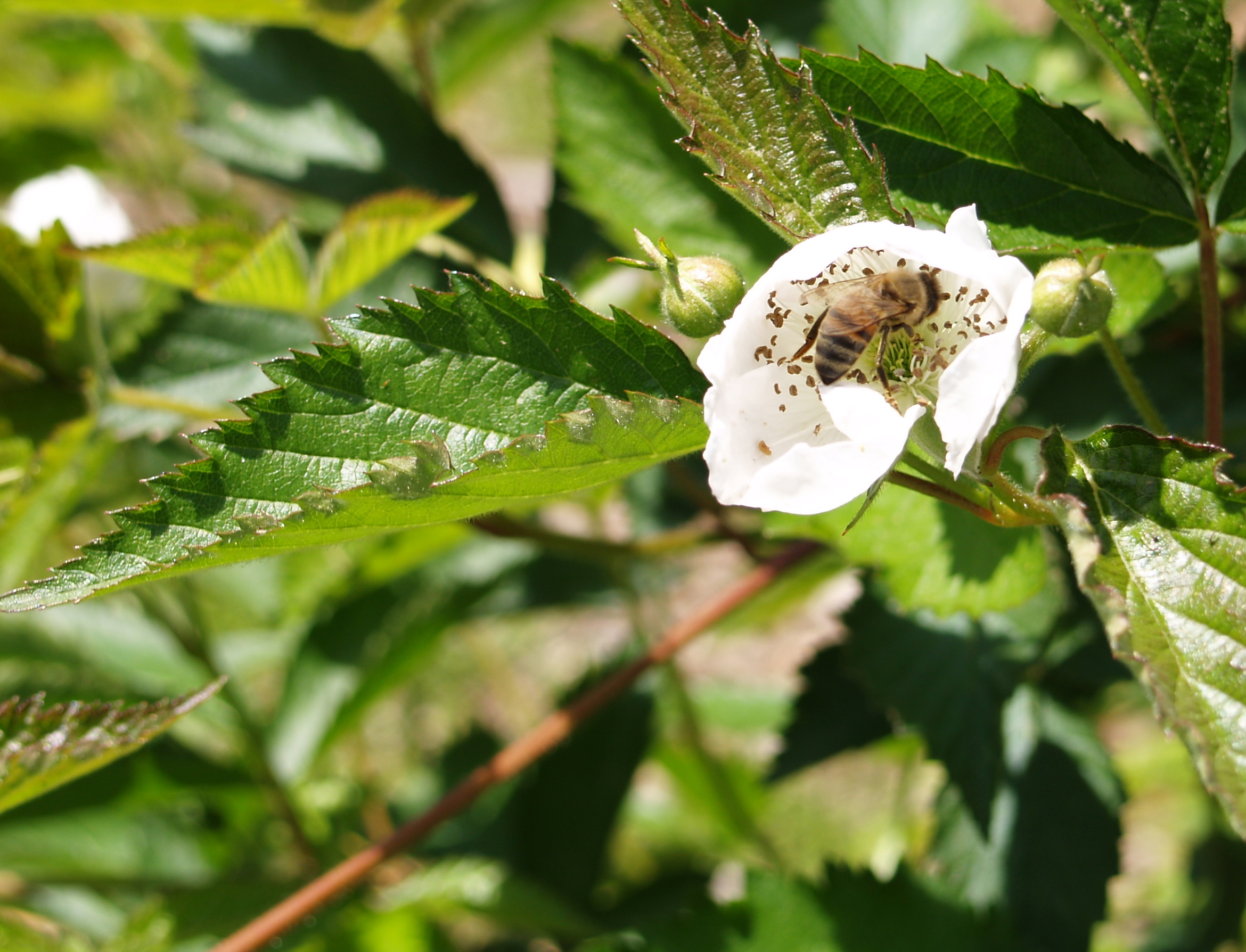
blackberry pollination

As it turned out, we picked up our bees from the apiary in person – which was awesome, because we got to see a master beekeeper open up his hives.  I learned more that day watching him then in all my beekeeping classes!  The result was a drive home with 30,000 bees in the car… give or take a few.  The kids joked and wondered whether we should put the “Bee Movie” on for the drive home.

to bee continued


busy as a bee

“The keeping of bees is like the direction of sunbeams.”  Henry David Thoreau

Bees may be the most fascinating of God’s creatures… at least in our garden anyhow!  With beekeeping as with life, we never stop learning or as a one beekeeper, Michael Bush, said, “If you are not confused, you are not learning anything.”

At the beginning of August our strongest hive – kept at our local farmers – had lots of brood, bees and honey – probably 2 gallons in the super, which is why we left it – so they might fill it more.  Turns out the weather in Virginia has been hard on the bees this year…and today we went out to check on the hive and it was empty of all honey… all of it… every single last drop.  Gratefully there was still some brood, but not a lot and a good amount of bees, but the poor girls are literally living hand to mouth and could not have gone on long like that.

By some amazing circumstance  we brought one quart of sugar water with us – not really thinking we would need it – and  it is certainly not enough for this colony.  They will go through it all in one night.  But thank goodness we had some!

You see, September and early October  is a very important time for the bees.   The eggs the queen lays now will sustain the hive during the winter.  Winter bees are special little bees that are physiologically different than her spring and summer sisters.  Worker bees live for about 6 weeks in the summer, but the eggs laid in the next few weeks will grow into the winter bees which live for four to nine months, warming the hive in the cold winter months and tending and caring for the hive through spring.

Needless to say, we are now busy as bees making lots and lots sugar syrup … which as a student of holistic nutrition is very against my grain, but then again

“The pedigree of honey
Does not concern the bee;
A clover, any time, to him
Is aristocracy.”
Emily Dickinson

OLYMPUS DIGITAL CAMERA

Labor Day Weekend 2013
Shenandoah National Forest


harmony of the hive

Last spring was an exciting time ~ our family began a new journey raising honeybees.  It’s a seed planted years ago while reading the The Secret Life of Bees.  The story is a wonderful wisdom about the coming of age of a young girl, Lily, who is motherless, abused and runs away from home.   It is set in the South, during the 1960 Civil Rights Movement – a time when America forgot that all are created in the image of God.  Underlying the journey is a mother lost and new ones found, the essence of maternal love, the beauty of forgiveness – and the transforming power of love.

Perhaps one of the greatest lessons in the book is the redemptive simplicity of “choosing what matters”.  Moments of being human…

“You know some things don’t matter that much…  Like the color of a house.  How big is that in the overall scheme of life?  But lifting a person’s heart – now that matters.” (Secret Life of Bees)

At the beginning of each chapter and sprinkled throughout the book are fascinating anecdotes about bees and little tidbits about the secret lives of these tiny buzzing insects. These were truly just as captivating to me as the story itself.

“Honeybees depend not only on physical contact with the colony, but also require it’s social companionship and support. Isolate a honeybee from her sisters and she will soon die.”  ~The Secret Life of Bees~

blackberry pollination

early summer blackberry pollination

Biologically, a hive is classified as a single organism – one body – whose sum is greater than it’s individual parts.  As such, bees lives are all interconnected, in unison and harmony – their sole purpose is to do what is worthy for the hive.  Within a hive are the queen, the female workers and the male drones.  Despite her prestigious title, the queen is not in charge.  Her true role rather is mother of every bee in the hive and they all depend on her to keep it going.  She emits a substance, called the queen substance – kind of like a little bee love,  the bees receive it through touch, and it unifies.

“The queen for her part is the unifying force of the community; if she is removed from the hive, the workers very quickly sense her absence.  After a few hours or less, they show unmistakable signs of queenlessness.”   ~The Secret Life of Bees~

Without intervention, a queenless hive will die, so the queen’s presence literally holds the life of the hive together, just as a mother her home.

After the queen come the worker bees, female sisters.  These girls are the heart and soul of the colony.  Thousands of little worker bees with tireless hearts nurse, clean house, forage pollen and nectar, attend to the queen and the security of the colony – each one living selflessly for the others.

The male drones, larger than the workers, interestingly have no stinger.  While they contribute a lot to the morale of the hive, they do not forage or provide protection.  My apiary mentor- a very very kind and salty old man said, if you want to give your daughters a bee to play with, give them a drone…!  My oldest daughter who is absolutely petrified of bees is willing to give it a shot!

Our bee populations are suffering and disappearing.  We depend upon bees for much ~ and they are an indicator species, which is a mirror of the health of the environment.  Within the hive of the world’s ecosystem, all creatures have a role, and while we might not fully understand it ~ even the smallest of insects make a contribution.

OLYMPUS DIGITAL CAMERA

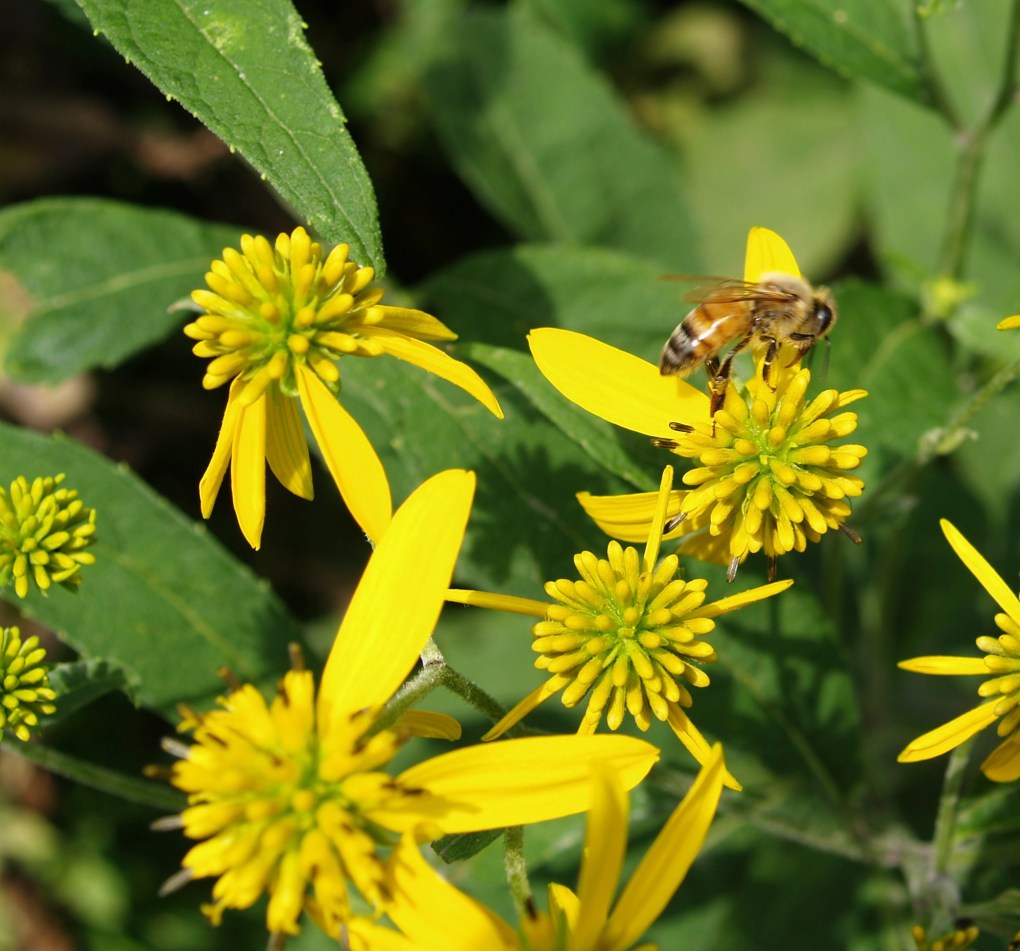
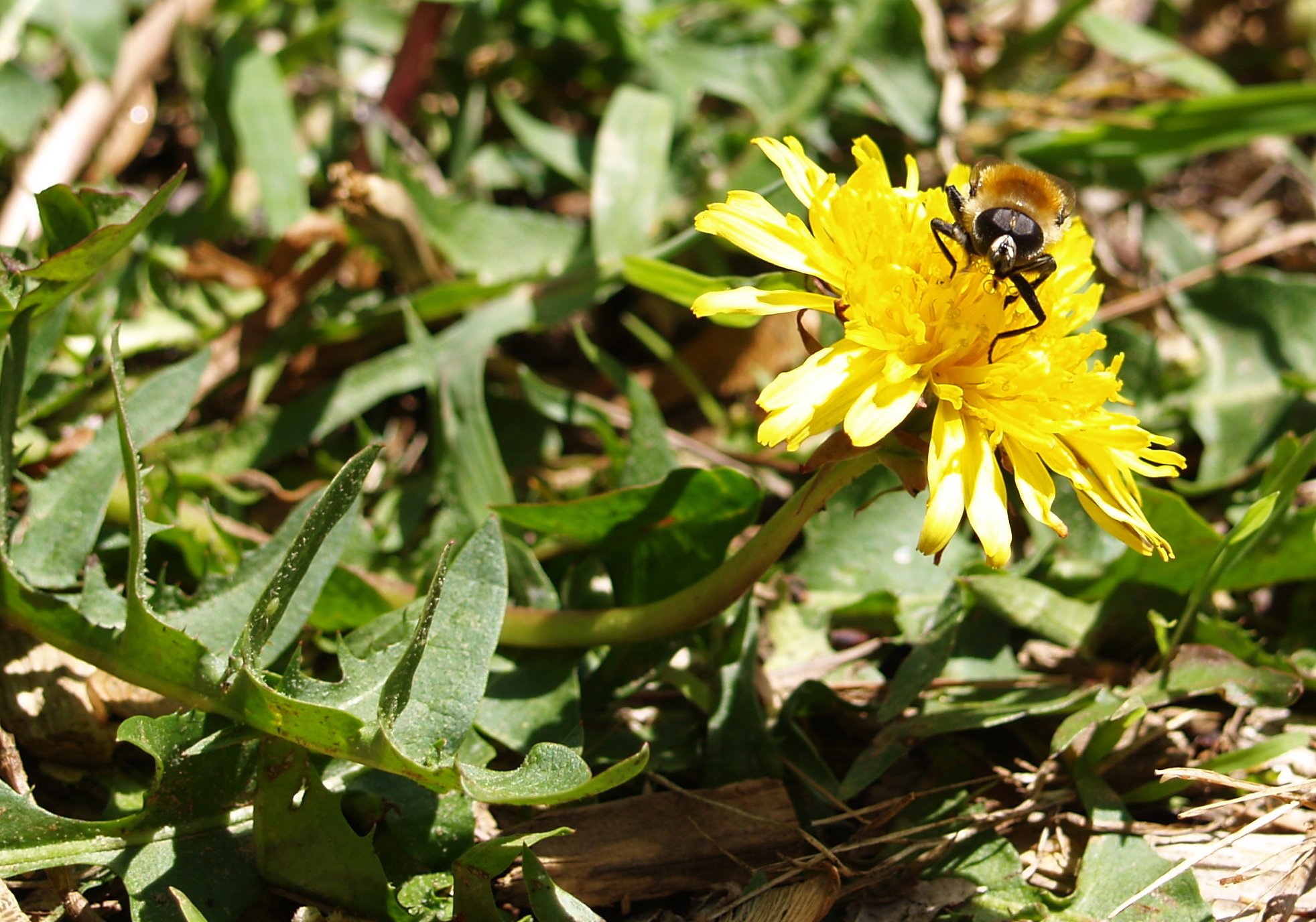
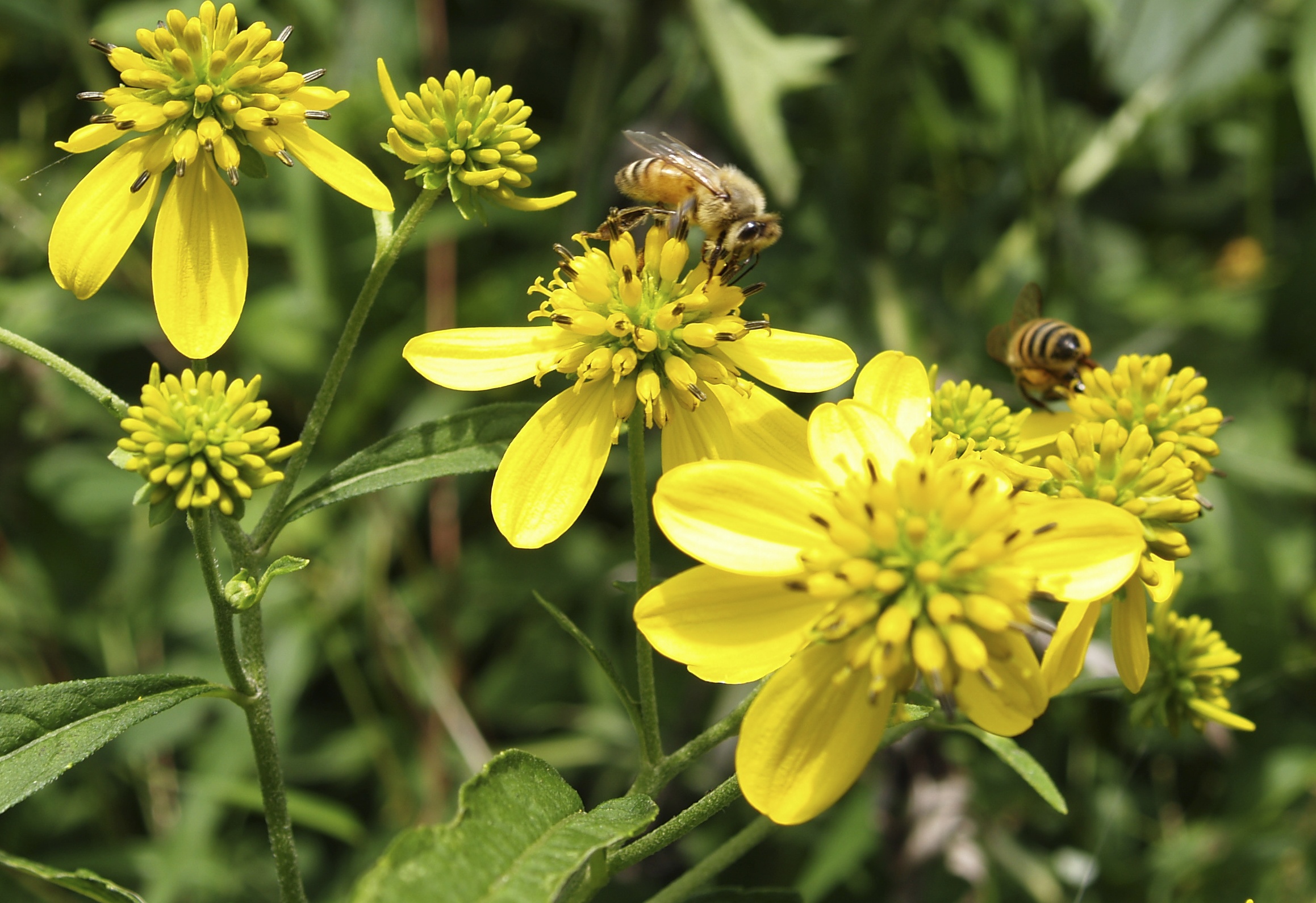
summer 2013 weed pollination

A bit of a reminder that all life on our planet is interconnected.  It reflects a balance and so, the gentle remembrance that our God given role is not that of swatter or exploiter but as tillers and keepers of the earth – healers and stewards of our planet.

“Love all of God’s creation, the whole of it and every grain of sand.  Love every leaf, every ray of God’s light.  Love the animals.  Love the plants.  Love everything.  If you love everything you will perceive the divine mystery in things.”  ~ Brothers Karamazov ~