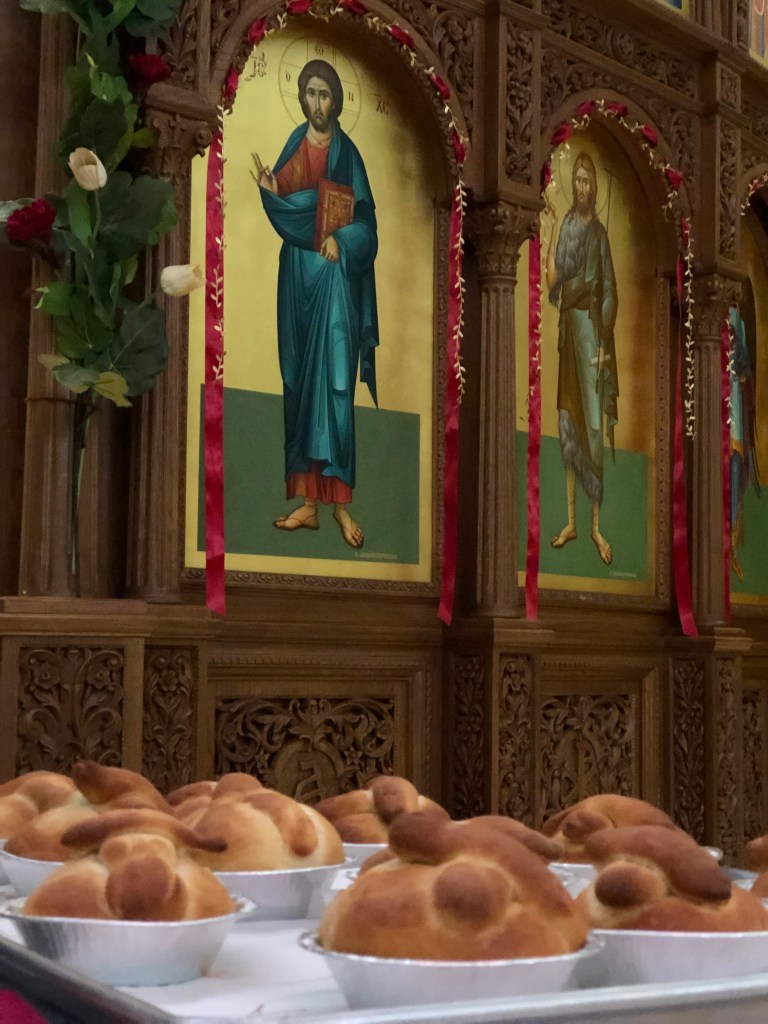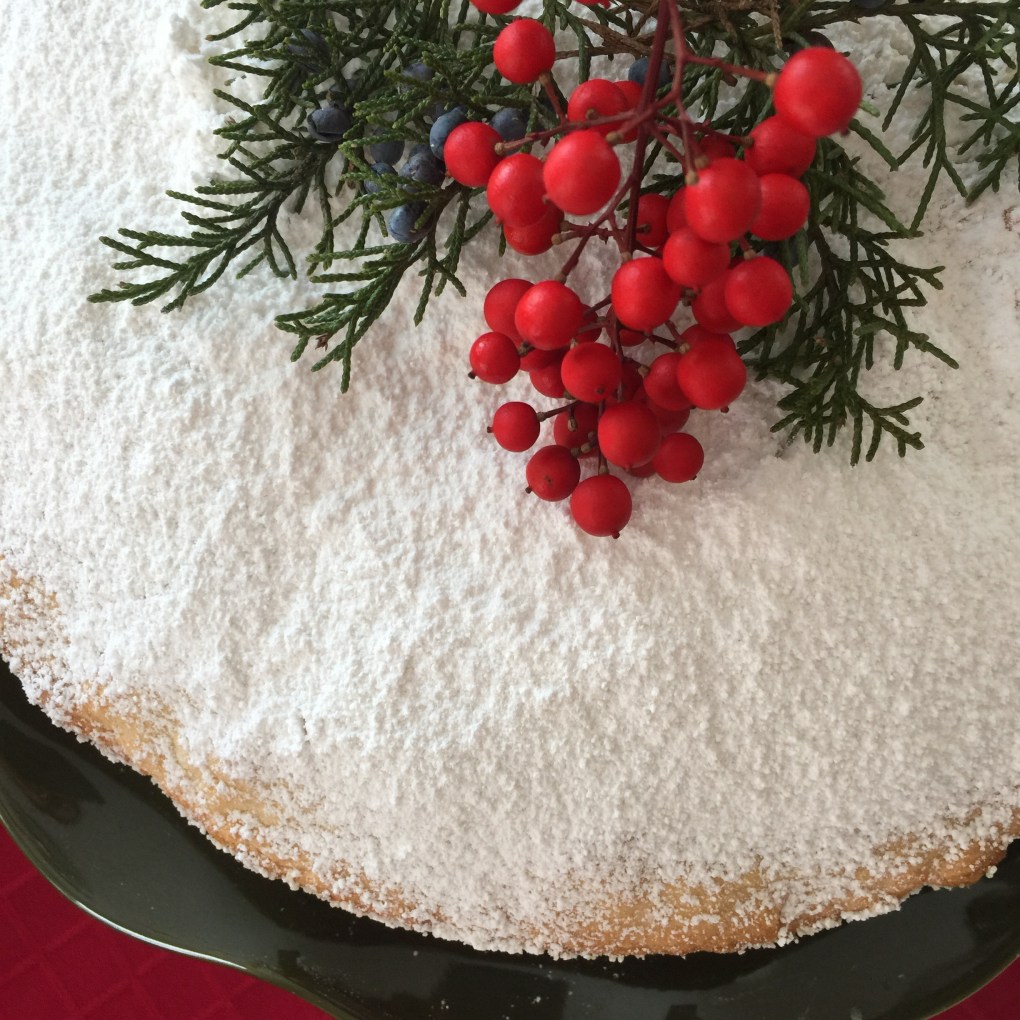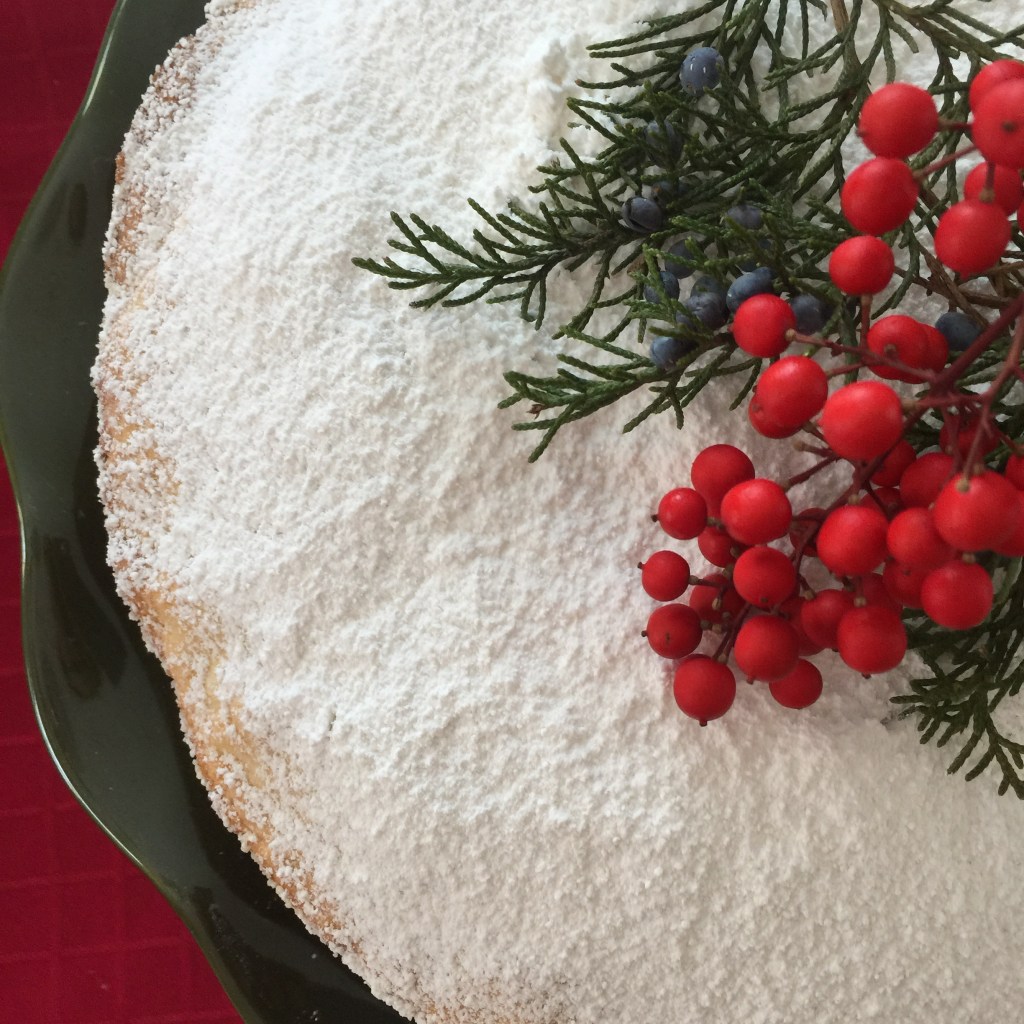

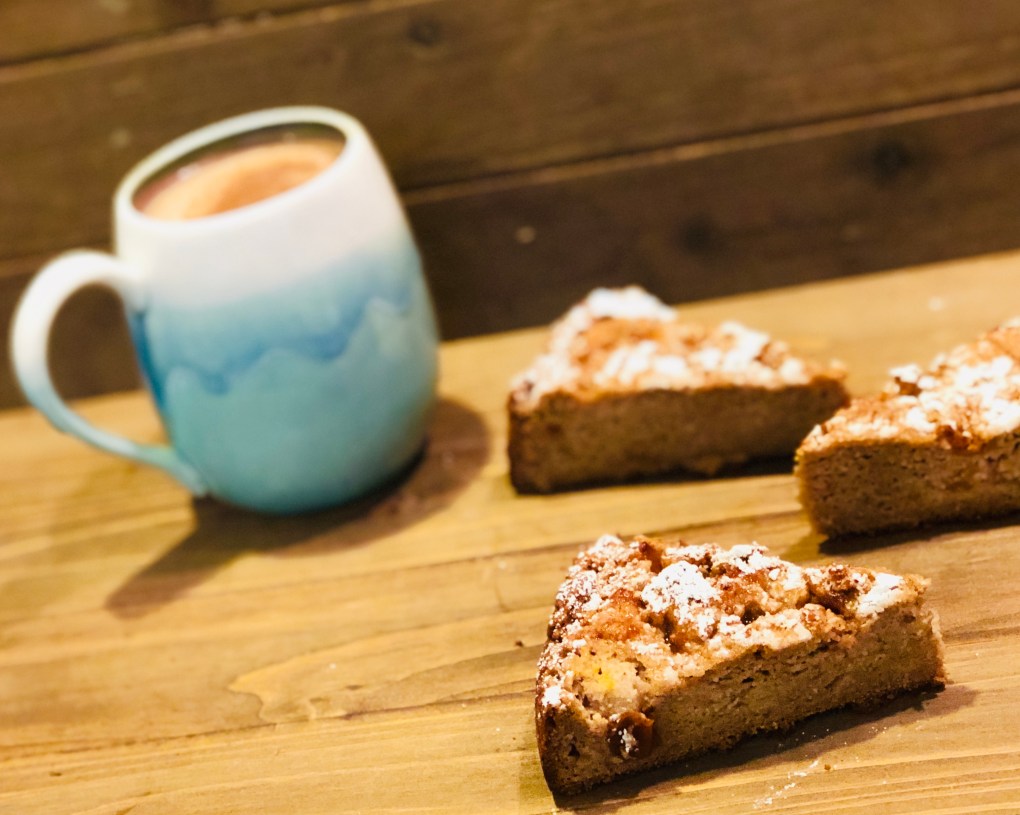
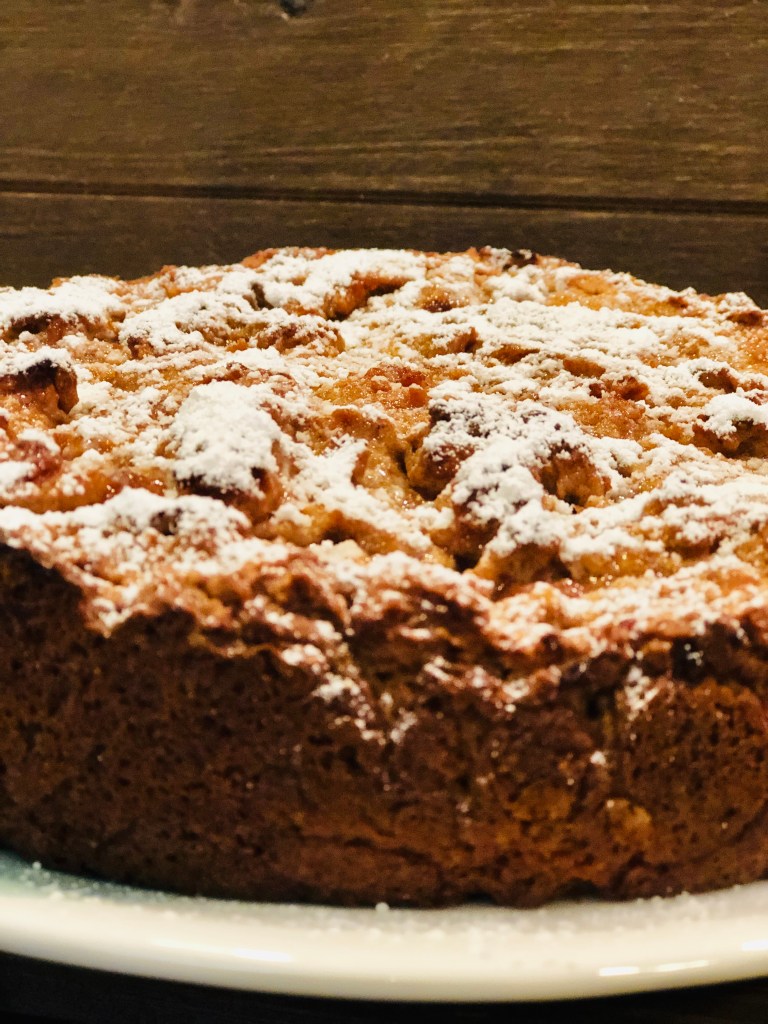
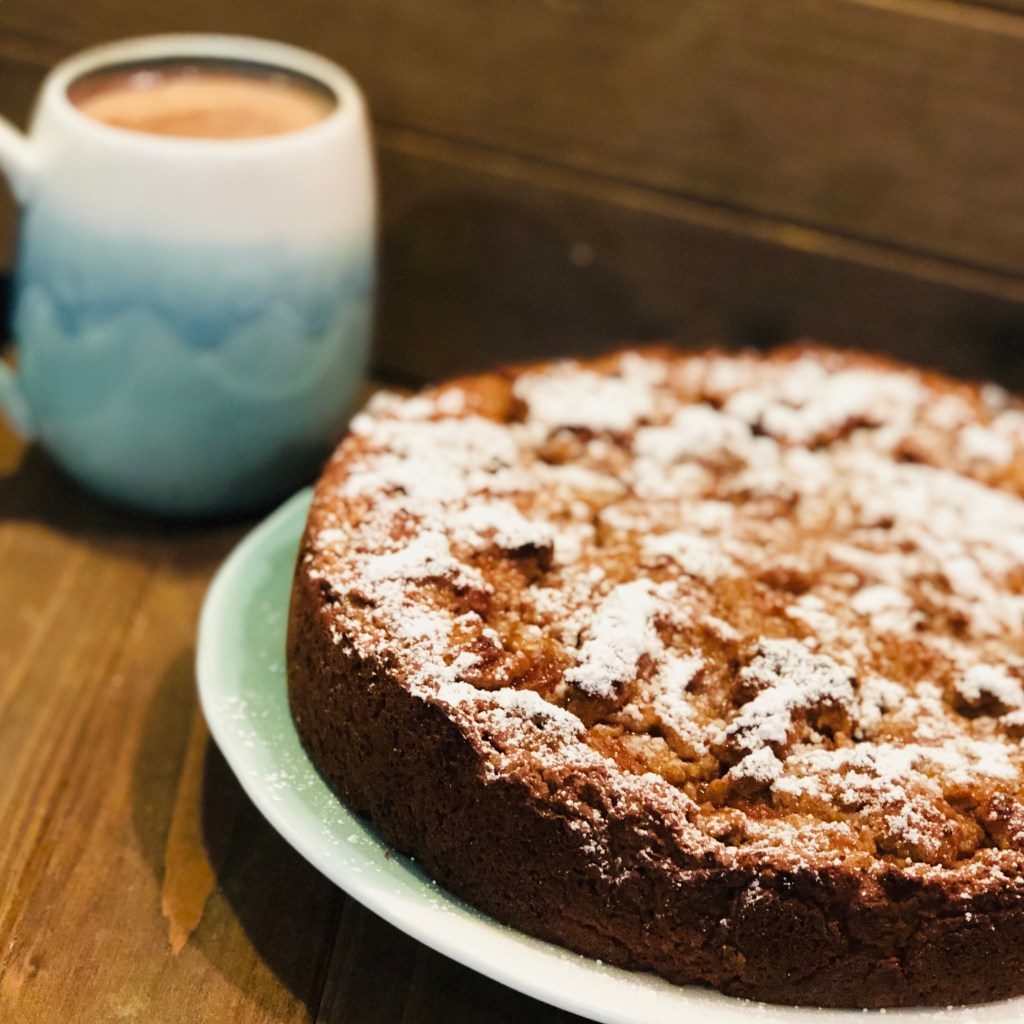
Phanouropita {gluten-free}

On August 27th we commemorated Saint Phanourious and it is customary in many parishes to bake a special cake to bring to Church for a blessing. Some traditions hold that we bake the Phanouropita and distribute it to the poor. Any time we ask his intercession and receive it is also an occasion to bake the bread and bring it for a blessing.

The name Phanrourios means “I reveal”. Through the centuries he has become an intercessor for lost and found things… and so some refer to him as the Saint of lost and found. So if the faithful ask for his intercession and their lost item appears, then it is custom to bake the sweet bread, bring it to Church for a blessing and distribute it to the poor.

Tradition holds that Saint Phanourios mother lived a terrible life and was not a Christian. When Saint Phanourios was martyred he also prayed for his mother. That it why, the faithful also pray for the mother of this beloved Saint… centuries after his repose and hers. And so we co-labor with this Saint in asking intercession for his mother, a woman whose name we do not know – “the mother of Phanourios”.

Several of us in this family have a gluten intolerance, and so I have begun the process of converting many of my traditional recipes, like this one, to a gluten free version. If you have a gluten sensitivity, then you know how bad you can feel after eating it. You also know how challenging it can be when you are in community settings and there is no option for you. Food forms community and social bonds – to break bread with one another binds us together. Having said that, I will say that my non-gluten endeavors do not apply to Prosphora – which I truly believe does not believe needs to be gluten free. The Eucharist is truly the Body and Blood of Christ. Alcoholics part-take without issue, and I have never heard of anyone partaking who has a gluten allergy that has an issue either…

So, here is the recipe….
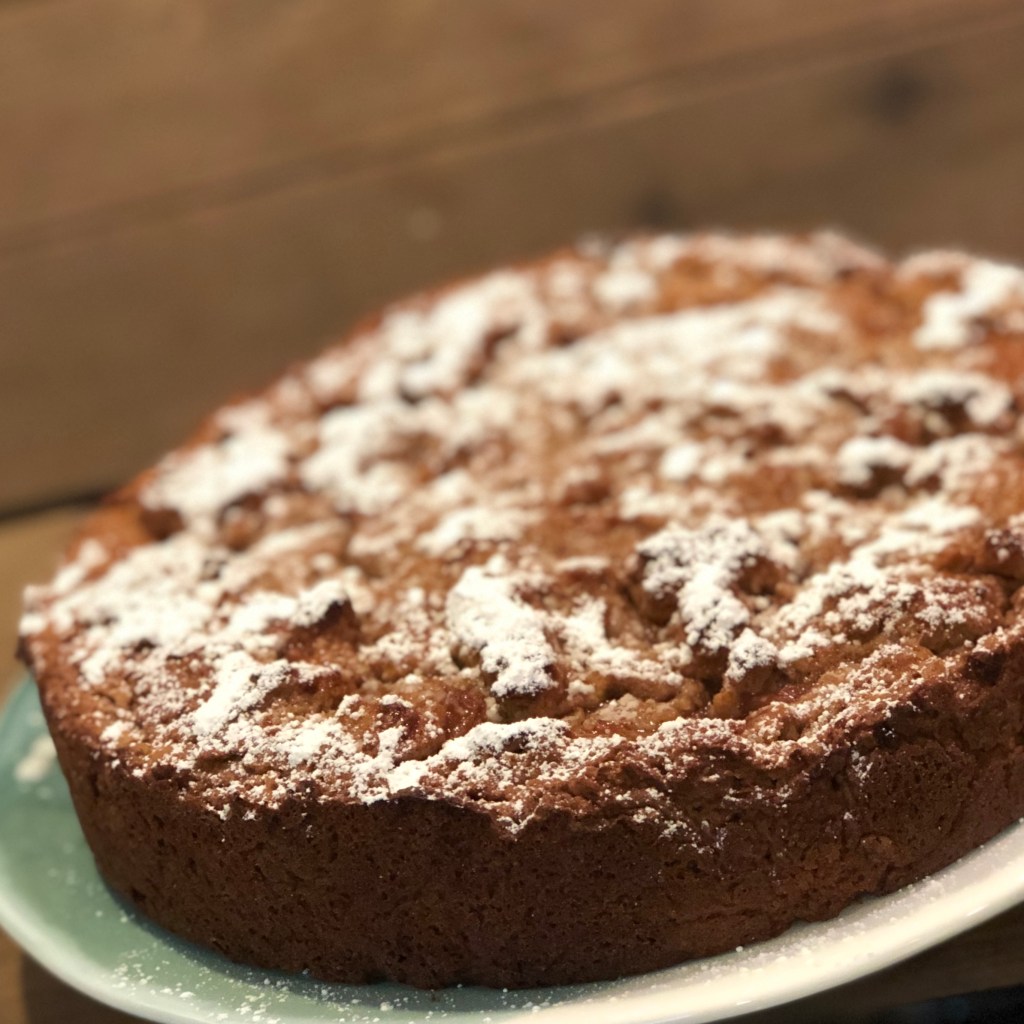
Recipe for Phanouropita

WET INGREDIENTS

  1. 1 can coconut milk (not cream of coconut)
  2. 1 1/2 tsp apple cider vinegar (or lemon juice)
  3. 1/2 cup unsweetened applesauce
  4. 1 tsp pure vanilla extract
  5. 1/4 cup honey

DRY INGREDIENTS

  1. 2-1/2 cups almond flour (I prefer Bob’s Red Mill)
  2. 1 cup gluten free flour : I prefer King Arthur or Bob’s Red Mill
  3. 1 scant cup arrowroot flour (Bob’s Red Mill is a good brand)
  4. 1 1/2 tsp baking powder
  5. 1 1/2 tsp baking soda
  6. 1/2 tsp salt (optional)
  7. 2 teaspoons cinnamon
  8. 1 teaspoon cloves
  9. zest of two oranges

Instructions

  1. Preheat oven to 350 degrees F (176 C) and lightly grease one standard 8-inch round cake pan, with butter or coconut oil and dust with gluten-free flour. Shake out excess and set aside.
  2. In a small bowl combine coconut milk and vinegar. Let set a few minutes. Then add applesauce and vanilla and honey. Whisk/stir to combine.
  3. Add dry ingredients to a large mixing bowl and whisk to combine and get out any lumps. Add wet ingredients to the dry ingredients and mix until well incorporated and no large lumps remain. The batter should be thick but pourable. Add more almond flour if too wet or dairy-free milk if too thick.
  4. Pour batter into the prepared pan and place in the oven for approximately 35-40 minutes or until a toothpick inserted into the center comes out clean and the edges and surface appear golden brown.
  5. Let cool 15 -20 minutes so the sides pull away from the pan. To remove, run a dull knive around the edges toloosen the cakes. Then place a plate or cooling rack on top and quickly invert.
  6. Let cool completely and dust with powdered sugar.
Additional reading about this beloved Saint may be found at the links below.

Homily by Father Josiah Trenham about Saint Phonorious and the Richman
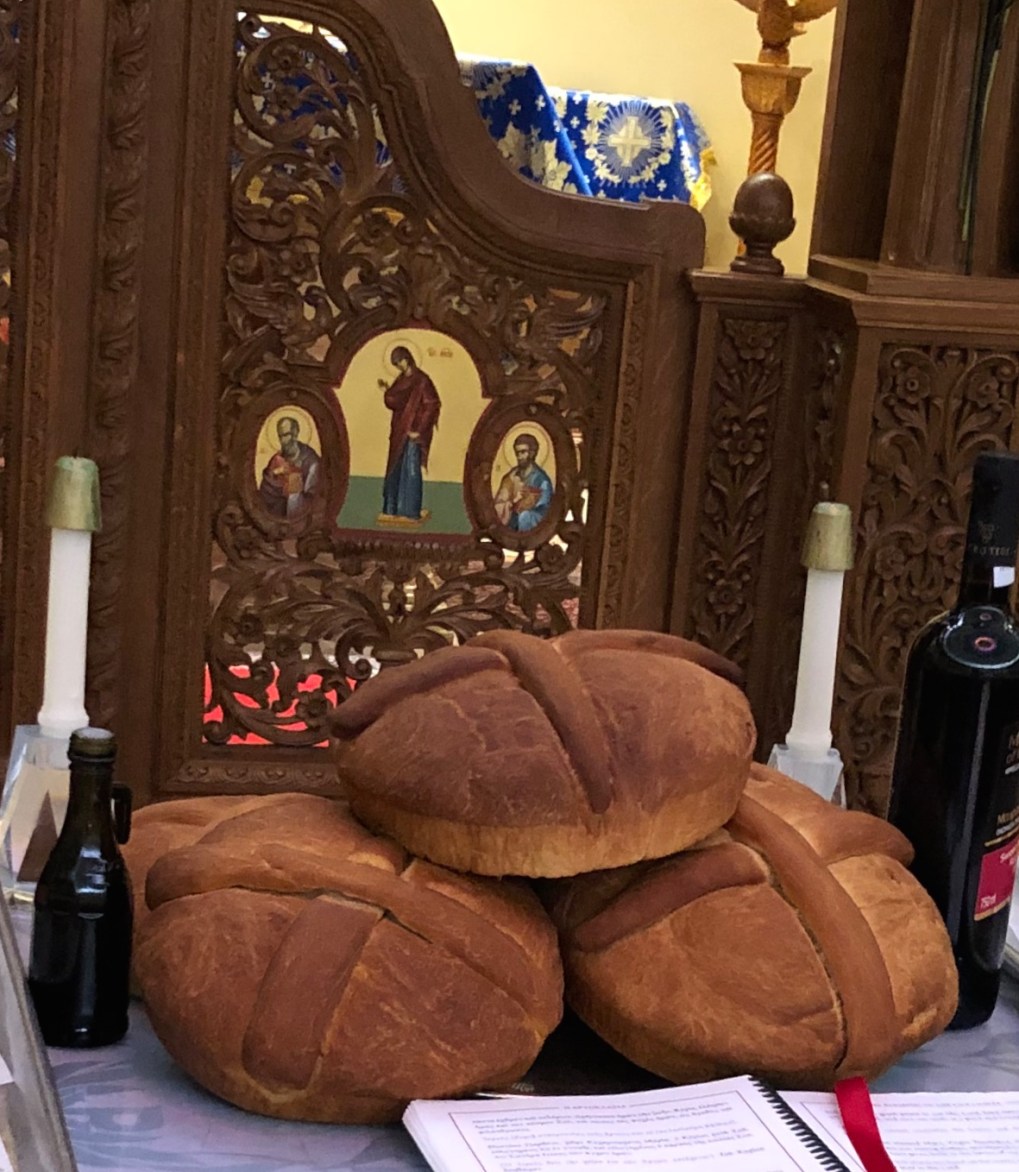
The Life of Saint Phanrourios

Orthodox Church of America

Traditional Recipes for Phanouropita can be found in these links:

John Sanidopoulos

Saint Nicholas Russian Orthodox Church

Serious Eats


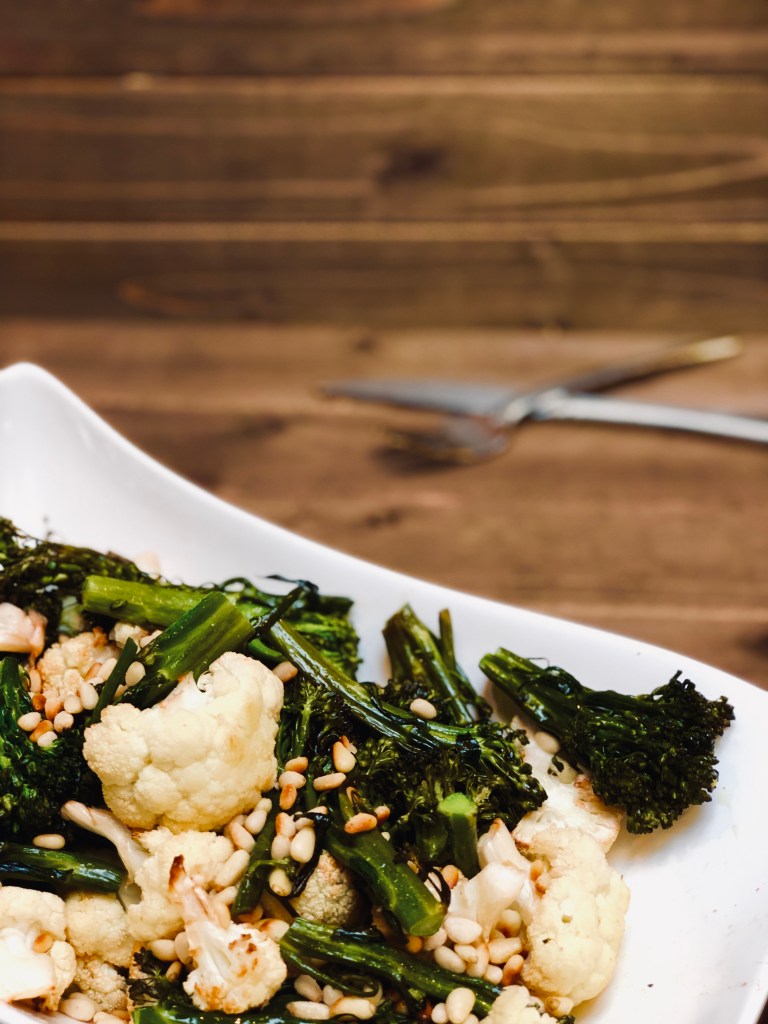
grilled broccolini and cauliflower

A ‘word’ spoken from the heart of the hermit, as from the Holy Spirit, in the language of the desert, is considered revealed and authentic and the one who requests it, receives it as the fruit of Grace, without elaborating on it in his mind. This ‘word’ from the spiritual father is absolutely necessary for the one who asks. The ‘word’ comes from a soul which is the friend of God, wounded by the love of God, and is spoken in accordance with the measure of ‘thirst’ of the one who asks. As the Holy Mother of God, conceived the Word of God and gave birth to the Theanthropos Christ, becoming therefore the ‘joy of all creation’ in the same way, do the Fathers, because of their purity, conceive the word and transmit it to those who thirst for it, becoming for them their joy…

A Night in the Desert of the Holy Mountain : Metropolitan Of Nafpakos Hierotheos

Fasting for our family these days needs to be an effort in absolute simplicity. If I find I have a lot of time, I will make something that requires for time, but mostly I find myself making tapas style meals for dinner. Leftovers mixed with side dishes and meals prepared the same day. It’s how my German family eat. Dinner is a simple affair – because that is also the time of day when I am getting a little tired.

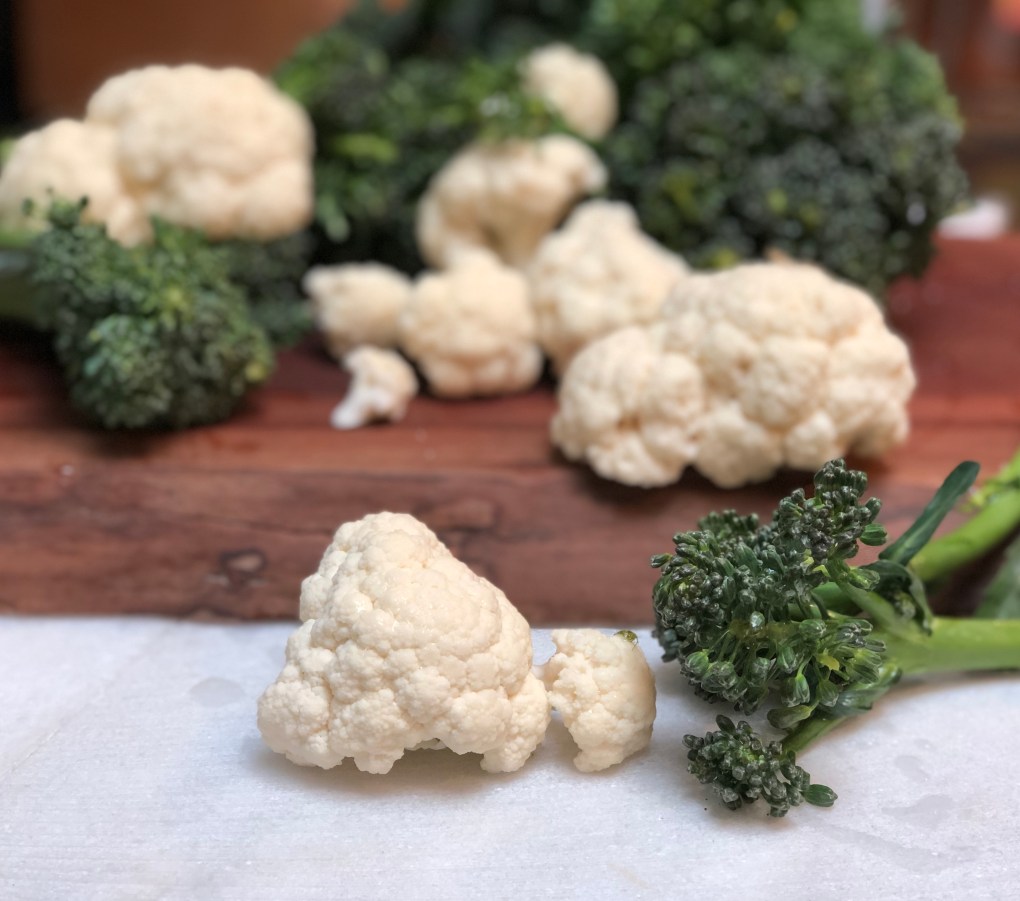
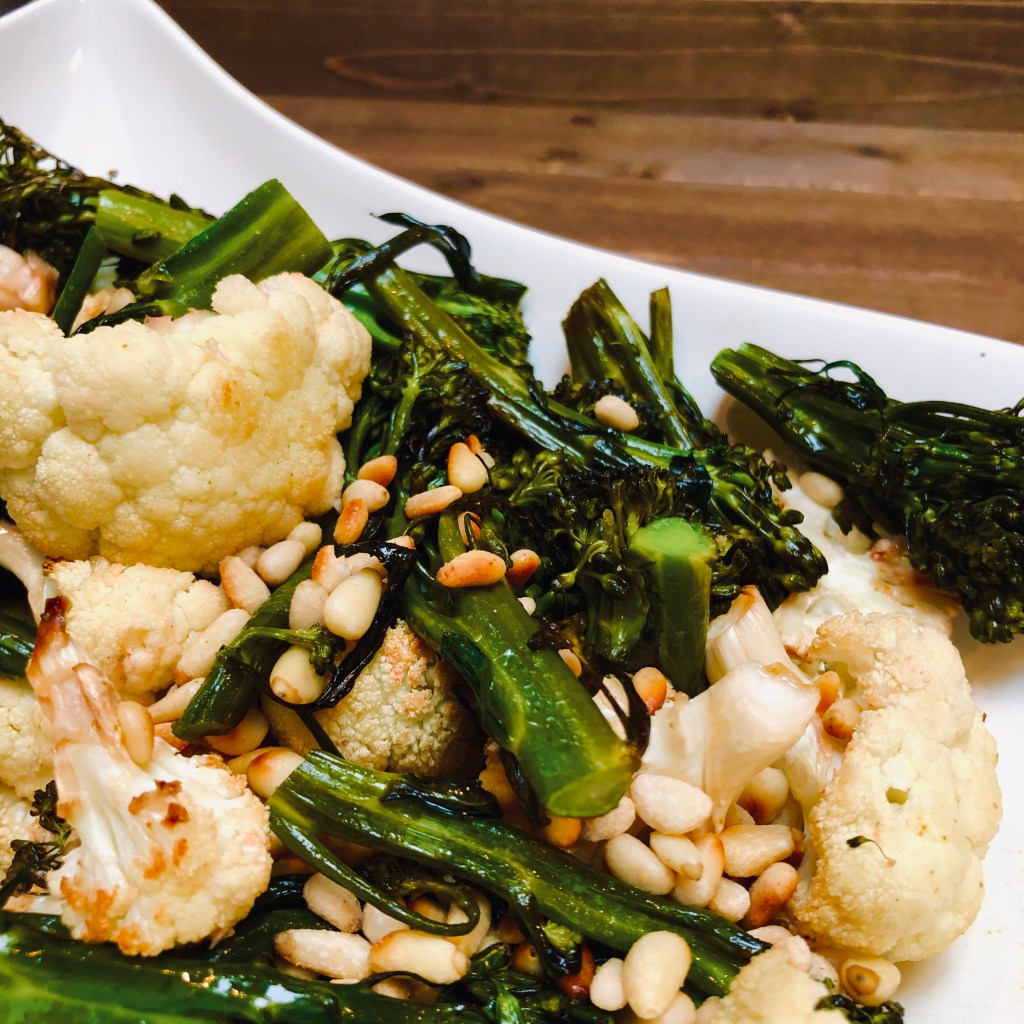
This Grilled Broccolini and Cauliflower has pine nuts that give it a little nuttiness and goes nicely with the caramelization on the veggies. It is a great side dish because you can grill it in the oven while you prepare the rest of the evening meal.

Grilled Broccolini and Cauliflower with Pine Nuts

Ingredients

  • 1 head cauliflower
  • 3 bunches of broccolini
  • 4 tablespoons olive oil
  • 1 clove of garlic minced
  • pinch of celtic sea salt
  • pinch of pepper
  • 4 tablespoons pine nuts

Preparation

  • Preheat oven to 350F
  • Wash and cut cauliflower into bite sized florets
  • Wash and cut off ends of broccolini (I cut them up and freeze them to use later in mashed potatoes)
  • Place olive oil, pepper, salt and minced garlic in a large mixing bowl and whisk together. Add cauliflower and broccolini to the large bowl and toss to coat evenly.
  • Place vegetables on a large cooking pan and place in preheated oven.
  • Place pine nuts evenly in a saute pan over low heat. Stir constantly until fragrant and a little toasted. Not more than 10 minutes.
  • Bake for 45 minutes or just until the edges get a little crispy and brown..
  • Remove cooked veggies from oven and place in serving dish.

Enjoy!


sweet bread of basil

IMG_9906

Everyone as he is able, should try to heal (with kindness) anyone who has something against him.

Saint Basil the Great

The Fathers Speak (p. 55)

It is a cherished tradition bearing the leaven of hope toward the coming year and the further redemption of our time here, in Christ, that Orthodox Christians bake this sweet bread of orange and lemon to ring in the new year.

The bread is called vasilopita which means the sweet bread of basil.  It’s namesake is a humble holy bishop Saint Basil the Great whose heart compelled him during a time of famine  to help the poor.  It was a time of merciless and unfair taxation.   The Bishop confronted the emperor who had levied the tax, calling him to repentance for the harsh burden he placed upon the people.

Amazingly, the emperor did repent and he returned the gold and jewelry that had been taken from the townspeople.  Basil and the villagers offered thanksgiving prayers after which the Holy Bishop  commissioned women to bake and place the gold coins into a sweet bread which were then distributed.  Miraculously each family found in their bread, their own valuables which had been collected as part of the taxation.

Today, the vasilopita is baked in memory of that miracle forged by God and Saint Basil’s faith, love and shepherding of his people.  Each year on January 1st– the date on which St. Basil reposed in the Lord , Orthodox Christians observe the tradition of the Vasilopita.   The recipient of the coin is considered especially blessed.

This is the first year our family has ever made the vasilopita.  There are many regional variations to the bread, yet a taster will find that all of the recipes are sweet and authentic!

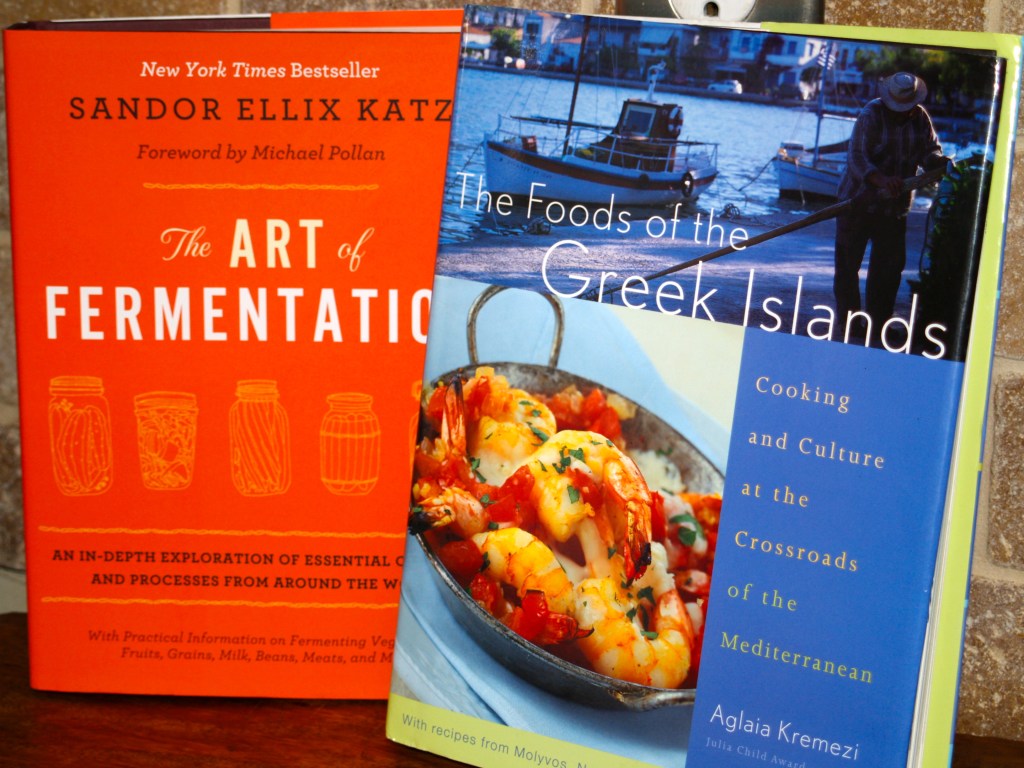
This particular recipe is adapted from my “go to” Greek Cookbook by Aglaia Kremezi The Foods of the Greek Islands.  She gives a rich history of her recipes and I appreciate her anecdote that butter and eggs were luxuries in Greece during times past.   What I love about the old way of Greek cooking is that by using the brandy the texture of the flour totally changes into a nice bread texture.  There is no yeast in this bread, instead the brandy adds to the leaven quality of the dough.

Vassilopita

Ingredients

  • 4 large eggs, separated
  • 1 cup sugar
  • 12 tablespoons melted butter (1-1/2 sticks)
  • 1-1/2 cups orange juice
  • 1/2 cup brandy
  • 4 cups all purpose flour
  • 4 teaspoons baking powder
  • 1/4 teaspoons baking soda
  • grated zest of two oranges and two lemons
  • whole blanched almonds and /or powdered sugar to decorate

Recipe

Preheat oven to 375F.

Grease a 10 – 12 inch springform pan

In a large bowl beat egg yolks, zest and  sugar (this releases the essential oils from the zest) for about three minutes.

Add butter and beat for an additional minute

Add orange juice and brandy, beat until it is incorporated.

Whisk the flour, baking powder and baking soda in a separate bowl.  This makes sure that you will not have any clumps of the baking powder and baking soda but that it will be totally distributed.

Add to the liquid  mixture and stir until incorporated.

In separate bowl (I actually use a mason jar with a hand held electric stick mixer so that it does not splatter everywhere) whip the egg whites until soft peaks form.

Fold the egg whites into the batter.  Pour batter into the greased springform pan.

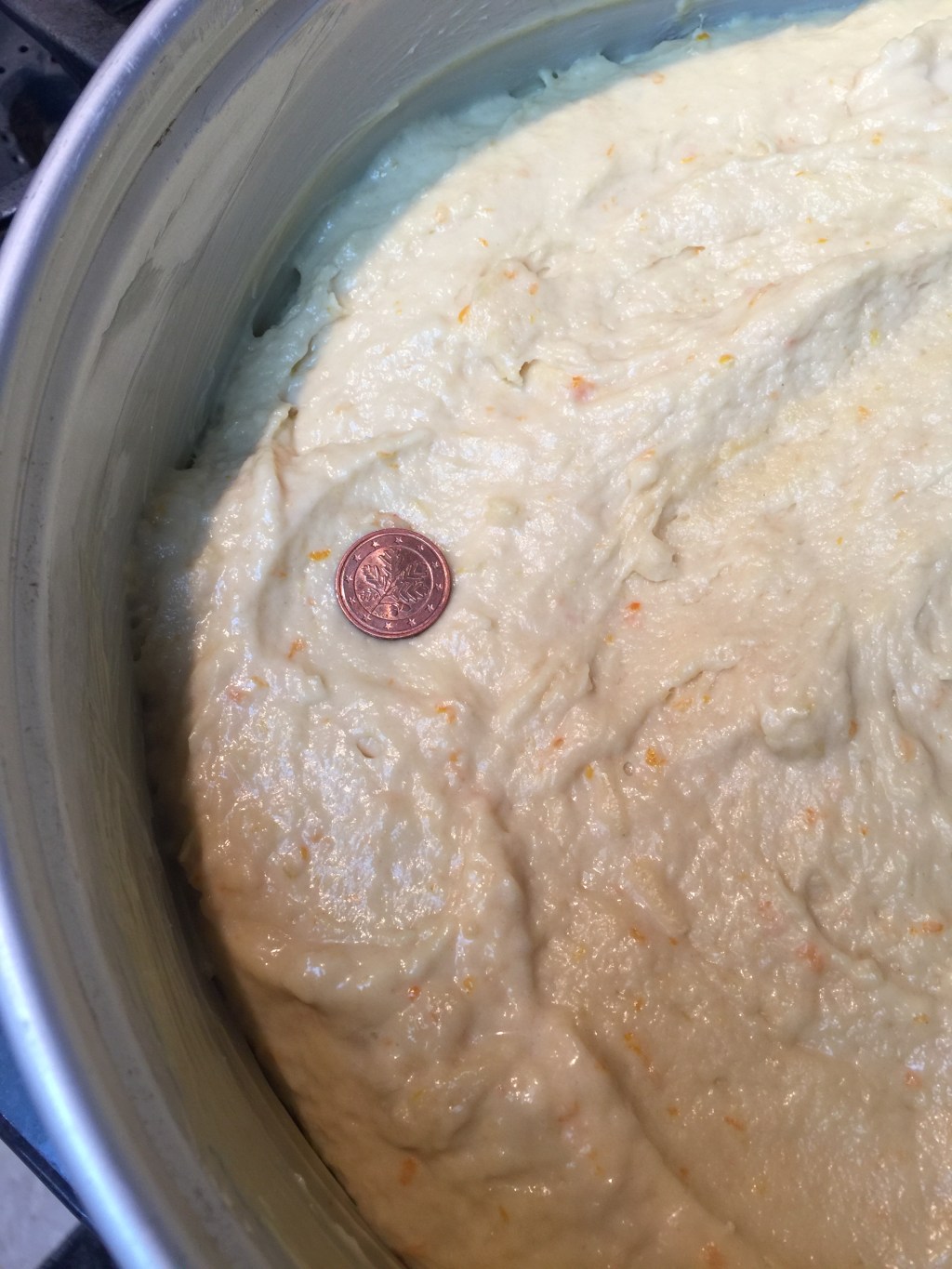
Place clean coin (my daughter found a euro coin for one and a dime for another)

Bake for 45 minutes to an hour until gold brown.

Decorate with almonds and/ or powdered sugar.

IMG_9904
IMG_9907

May we all be especially blessed in the coming New Year!


lenten quinoa cakes

lenten zucchini quinoa cake

seek Him with your whole heart (Jer 29:13)

+

The Lord seeks a heart filled to overflowing with love for God and our neighbour; this is the throne on which He loves to sit and on which He appears in the fullness of His heavenly glory.  ‘Son, give Me thy heart,’ He says, ‘and all the rest I Myself will add to thee (Prov. 23:26; Matt. 6:33),’ for in the human heart the Kingdom of God can be contained.  The Lord commanded His disciples:  Seek first the Kingdom of God and His righteousness, and all these things shall be added to you; for your heavenly Father knows that you need all these things (Mat. 6:32,33).

Saint Seraphim of Sarov

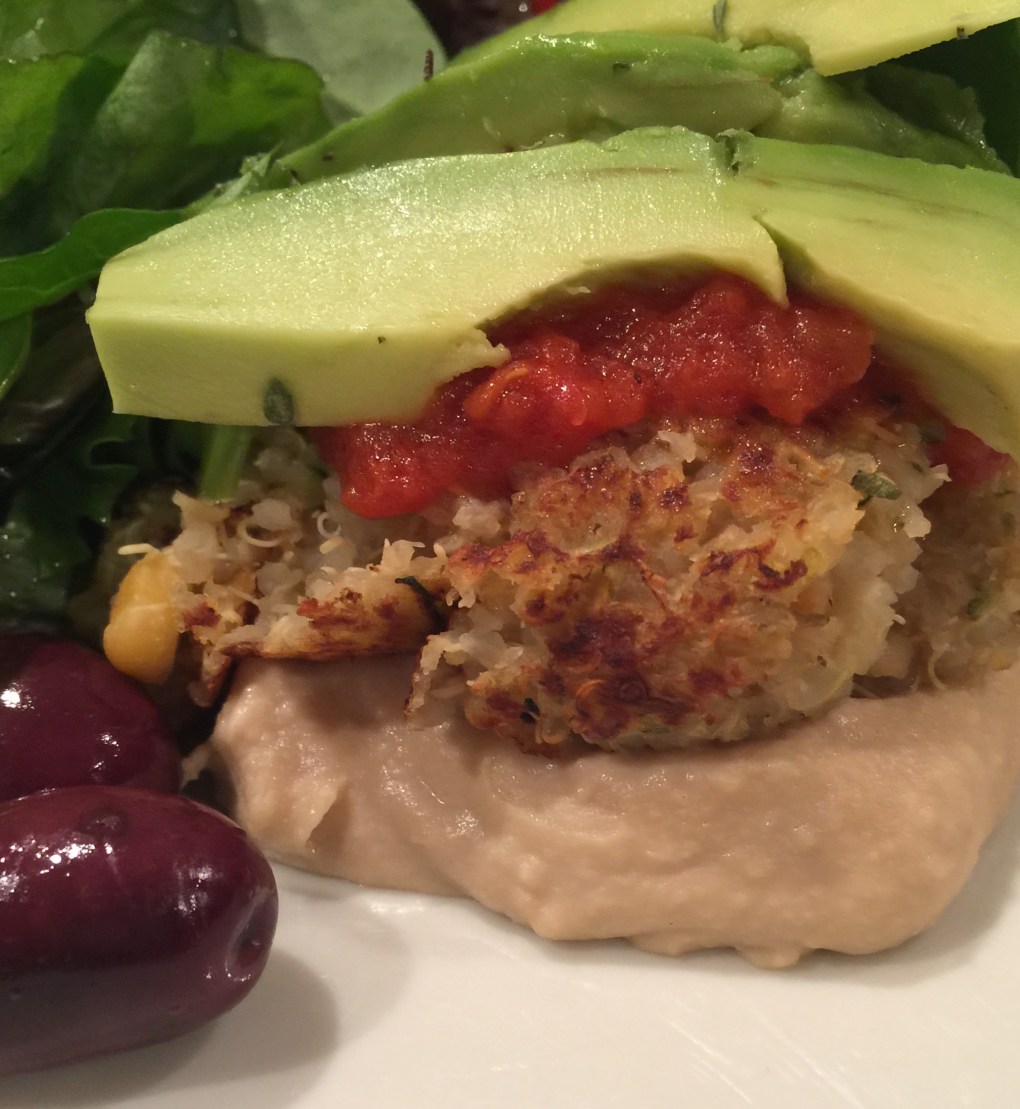
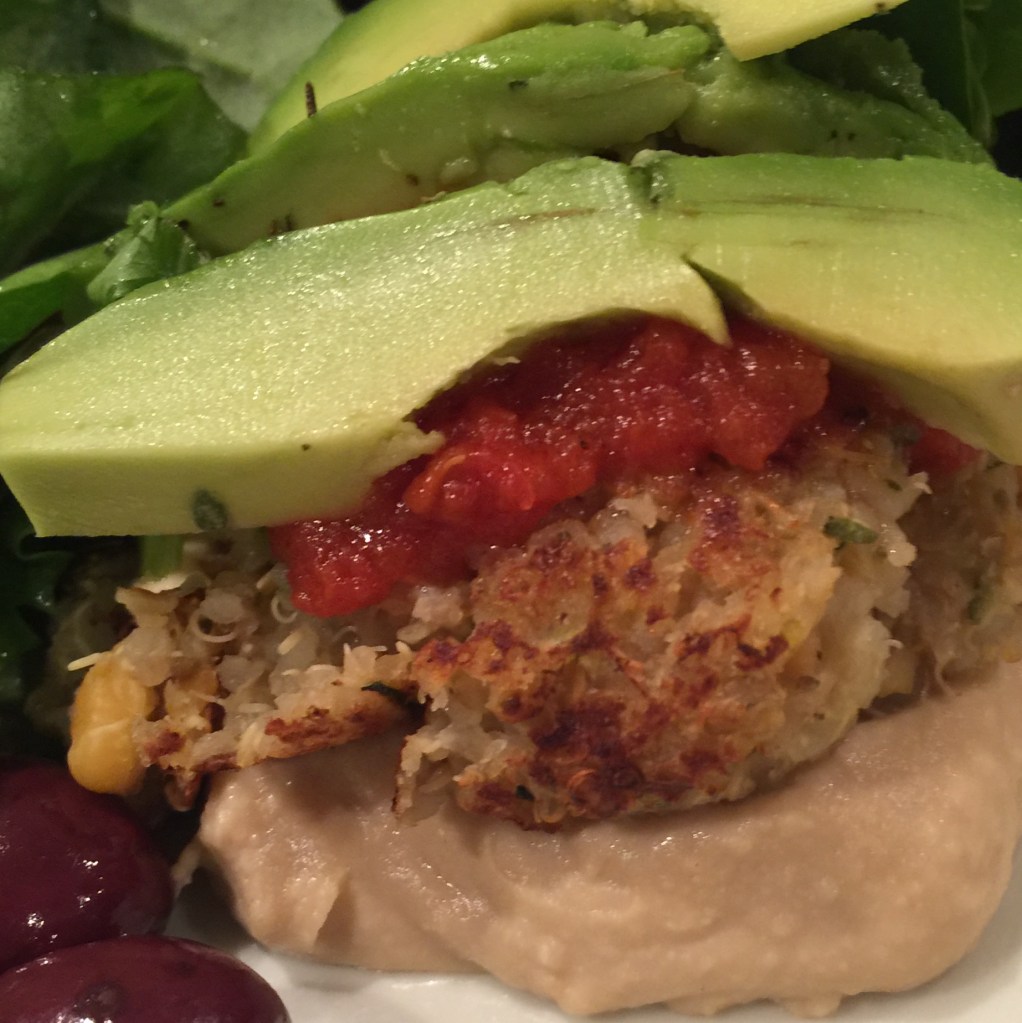
Lenten Quinoa Cakes with Zucchini and Hummus

This recipe is adapted from a family favorite at Le Pain Quotidien cafe.   The quinoa is a good source of protein during the fasting periods of the Liturgical year.   Combined with whole wheat bread and hummus and you have all the amino acids, which means it is also a complete protein, and that is important to your health.

These cakes are kind like a burger served over hummus and topped with fresh avocado

Ingredients

  • 2 tablespoons olive oil
  • 1 fresh raw zucchini grated (can be any color – we used green)
  • 1 small white onion, minced
  • 1 cup chickpeas, cooked and mashed coarsely (we use a potato masher)
  • 2 cups cooked quinoa (rinse your quinoa before cooking – quinoa can actually be bitter and rinsing it has the effect to remove that bitter quality)
  • 1 tablespoon each resh oregano and thyme
  • 1 tablespoon lemon juice
  • 3 tablespoons nutritional yeast
  • 1/2 cup marinara sauce for garnish (we use Victoria brand from Costco)
  • fresh avocado for garnish
  • fresh hummus

Preparation

Preheat oven to 350 F.  Mix all ingredients except hummus, marinara sauce, olive oil, and avocado in a bowl and mix to incorporate well.

Press the quinoa mixture into a loaf pan   Really press it together because you want it to adhere to itself, since we will slice it and sautee it in a pan to finish it off.

Place in oven and cook for 45 minutes.  It should be fragrant when it is done.

Once it is cooked you can either place in the refrigerator to use the next day or carefully slice pieces of the quinoa loaf and place on a heated seasoned cast iron skillet with olive oil.  Cook on both sides until brown.

Serve over hummus and top with a few spoons of marinara sauce and avocado.

Goes great with a fresh green salad!

Enjoy and may your fasting be blessed.


kitcheri

Screen Shot 2017-11-16 at 2.58.07 PM


With prayer and fasting in the Lenten spring, the Christian clears the self’s soil of stony sin and makes rooms within for the birth within of the pierced heart and bleeding  flesh of Jesus.  “A new heart I will give you and a new spirit I will put within you and I will remove from your body the heart of stone and give you a heart of flesh” (Ezekiel 36:26)  Our love and labor along with God’s grace can make even the poorest stony soil grow round red beets, sweet hearts of flesh.  Vigen Guroian – Inheriting Paradise : Meditations on Gardening


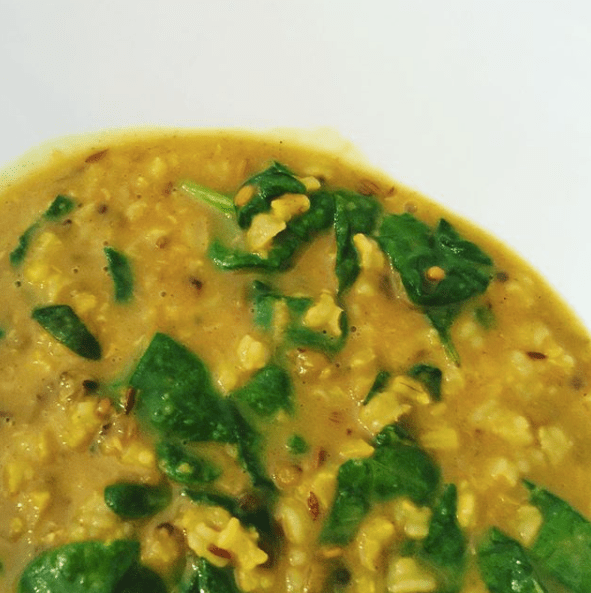
Healing foods : tonight I am making my family an Indian dish called  Kitchari  – pronounced kitch-r-ree.   It is fast friendly, and aside from that it is an alkalizing nutrient rich meal which is so easy to digest and brings balance to the body. It is very good for anyone suffering intestinal discomfort.  It is traditionally vegetarian, but one can use chicken or bone broth instead of vegetable broth.
KITCHARI

1 cup basmati rice – rinsed
1 cup mung bean dal (split yellow) 6 cups fresh organic spinach
1 tablespoon turmeric powder
1 tablespoon cumin seed
1 tablespoon mustard seeds
1 tablespoon fennel seeds
1 tablespoon Celtic sea salt or Himalayan pink salt
1/2 teaspoon cinnamon
1/2 teaspoon fresh cracked pepper
1/2 teaspoon ground coriander
2 inch piece fresh peeled minced ginger
4-6 cups water, vegetable broth or homemade bone broth
3 tablespoons ghee (clarified butter) or coconut oil
1 can coconut milk

Preparation
Soak Mung Dal overnight.  This makes them easier to digest. .
Place ghee and seeds in large skillet over medium heat. Once seeds start to pop and are fragrant add remaining spices and ginger.
Add rice and beans stirring to coat. Do this quickly to avoid burning. .
Add liquid (bone broth, veggie stock and/or water)

Bring to a boil and lower heat. Co we with lid and cook for 45-60 minutes. .
Add spinach and coconut milk. .
Stir to wilt spinach. Add salt and stir. .
This recipe makes 4-6 servings.
The lentil and rice combination makes for a complete protein. It stabilizes blood sugar and helps the body detoxify. It is so easy to digest that it soothes the intestinal wall.


fast friendly paleo chocolate delight

IMG_5935

To no longer live exclusively for myself, but for God, also means that I now live for my neighbor, loving him as myself. + Elder Aemilianos of Simonopetra


My kids often want a sweet during Great Lent.  But I also try to keep sugar to a minimum.

Did you know that sugar is actually a toxin to the body,and  robs you of minerals (1 molecule of sugar takes over 50 molecules of magnesium to digest!).  But most relevant to us about sugar, with two in the house recovering from Chronic Lyme, is that sugar is an immune suppressant.  Not only does sugar  compete with vitamin C for valuable space within your white blood cells.  It has been shown that 1 tablespoon of sugar reduces immunity for hours after consumption.

We have modified our fasting for Great Lent – due to the Lyme and some threats from the doctor.   My doctor said that I am so aenimic due to one of the coinfections of the Lyme that she threatened me with IV iron.  (I have resorted to my least favorite food – liver – but just a few bites a day.  It’s all I can bear.  The iron pills were not raising my numbers sufficiently and despite the taste, I feel better after eating the liver.  Just more proof – and in no way strange – that God made always nourishes better than man made.)

Other than that we are mostly adhering to a very vegetarian Paleo diet.

IMG_5932

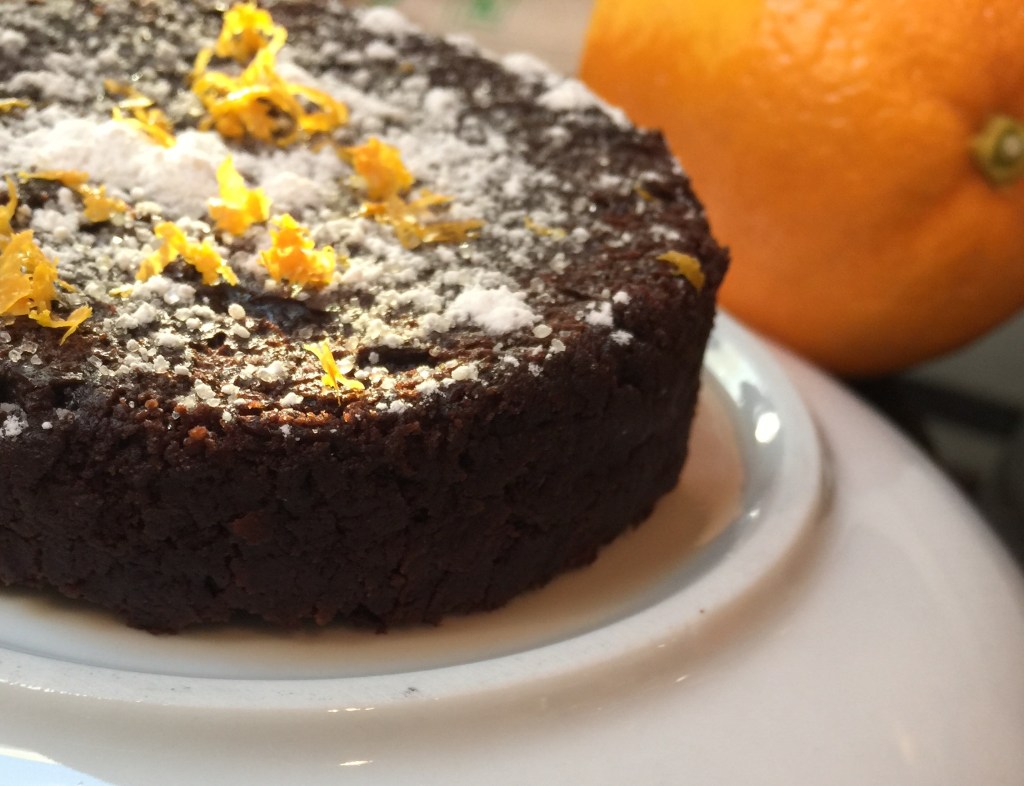
We tried this Super moist orange laden chocolate cake yesterday, which you can find at Strictly Delicious.  It is definitely “strictly delicious” and beyond yummy.   I have to share on their behalf.

Normally I cut back the sugar in every recipe but found it wasn’t necessary to reduce it one bit in this cake.

This dessert is fasting and family friendly.  We will be making it again!

IMG_5934


vegan mint chocolate chip ice cream

img_5398

The soul should be filled with such insatiable love of God that the mind in all its strength dwells continually  in God, captive only to Him.  ~ Saint Silouan the Athonite

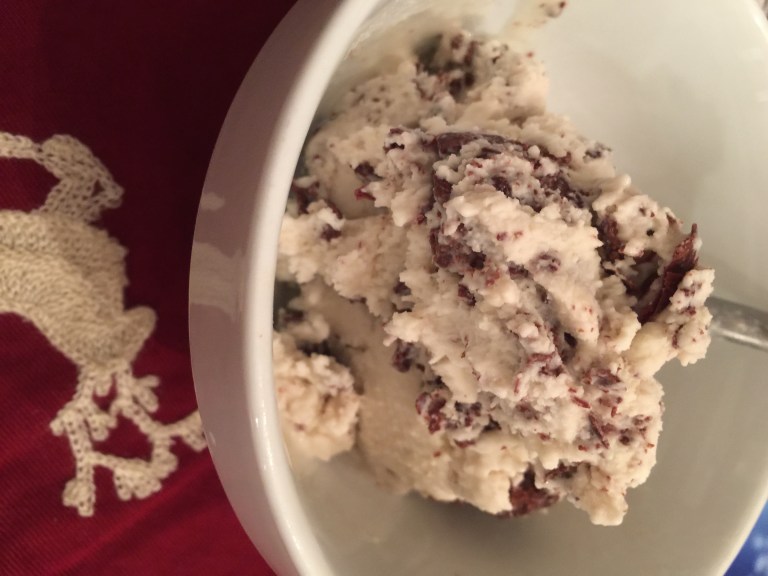
This vegan mint chocolate chip ice cream, is absolutely delicious and has become a new favorite.  The base has just four simple ingredients and requires no cooking.  It can be used with any number of different flavors to create any ice cream combination.

You will need an ice cream maker for this recipe and a food processor.  You will want to make sure that your ice cream bowl has been frozen according to the manufacturers instructions so that it is cold enough to make this into ice cream.

Vegan Mint Chocolate Chip Ice Cream

Ice Cream Base

  • 1 can coconut milk (don’t get coconut cream and look for a brand that has only coconut and water)  I like Native Forest brand and Natural Value
  • 1/2 cup raw sugar
  • 1 cup raw cashews
  • 1 cup water

For Flavoring

  • 2 teaspoons natural mint extract – I use Flavorganics brand : but if you are using a different brand, use one teaspoon and taste before adding more.
  • 1/2 cup dark chocolate chips
  • 2 teaspoons coconut oil

Place cashews and water into a food processor and process on high for 5 minutes or until mixture is very very smooth.  The goal is to get rid of all the cashew chunks.  Depending on your food processor, it may take longer.

Add coconut milk and sugar to the food processor and process on high for another few minutes to totally incorporate.  This should be really creamy.

Pour mixture into a bowl or jar and place in the refrigerator for about an hour.

While this is chilling, add two teaspoons coconut oil into a saucepan over low heat.  Let it melt to coat the bottom of the pan and then add the chocolate chips.  This avoids the chance that your chocolate will seize or get stuck onto the bottom of your pan.  Stir to incorporate as it melts.  Using the coconut oil allows this to still be bitable once its s frozen.  We’ve tried just adding straight chocolate to ice cream.  Good luck trying to chew it without breaking your teeth.

This chocolate sauce can also double as a homemade “magic shell” for your ice cream toppings.

Let the chocolate sauce sit on the counter until ready to use.

Prepare the ice cream

Once the mixture in the refrigerator is completely cooled, pour it into the ice cream maker and begin to churn.  Add the peppermint.

When it is very thick and almost finished, start to drizzle in the chocolate sauce.  It will harden almost immediately but since it is stirring it gets incorporated throughout the ice cream.

This recipe makes enough ice cream for our whole family.  Double it if you want leftovers… Delicious!

img_5398


repost : The Elevation of the Cross : Leaven and Life

leaven and life


Prayer is by nature a dialog and a union of man with God. Its effect is to hold the world together. It achieves a reconciliation with God. . . . It is an expiation of sin, a bridge across temptation, a bulwark against affliction. . . . Prayer is future gladness, action without end, wellspring of virtues, source of grace, hidden progress, food for the soul, enlightenment of the mind, an axe against despair, hope demonstrated, sorrow done away with.

Vassilios Papavassiliou :: Thirty Steps to Heaven

sour·dough – (noun) leaven for making bread, consisting of sour fermented dough, typically that left over from a previous batch

“The hunger for love is much more difficult to remove than the hunger for bread.” – Mother Teresa

In the beginning, all risen breads were sourdough.  Bread was a great mystery but the women knew that if they blended warm water, flour and time, then nurtured the mixture through regular feeding, that eventually the dough would become alive, bubbles would form mysteriously in the mixture and when it was baked the texture would be lighter with an intriguing taste.  Commercial “fast acting” strains of yeast were unavailable and so the only leaven was the natural product of the fermentation of wild yeast and bacteria, which transformed into a sourdough.  The Latin fermentāre means to rise.

As often happens, the first fermentation of sourdough likely occurred by chance.  How many of you would think to bake (or brew into beer) the accidental fermentation of grain, left unattended, souring on your kitchen counter?  In this day and age, probably not many of us, including me – especially considering how germophobic we are… we’d rather not deal with the naturally present bacteria on any surface!

But fermentation is an age old method of preservation, that involves cooperation with a community of microbes we can not even see.  And that cooperation enhances the nutritional quality of the foods fermented.  It was a surprise for us to learn that a natural sourdough will not mold, instead, due to the lactic acid (this wonderful preservative produced in the sourdough)  it keeps longer than commercial bread.  Sourdough breads are also what is known as predigested, and therefore easier on our digestive systems, reducing gluten content and allowing absorption of more nutrients.

The organisms necessary for fermentation are usually always present on the surfaces of grain and flour.  Unlike commerical strains of yeast, which are similar or the same,  sourdoughs cultivated by people in different places can be very distinctive, such as San Francisco sourdoughs.

Our planet was created with great diversity and that’s the beauty of a sourdough – that you can’t pick and choose your naturally present wild yeast.  Although all healthy sourdoughs contain lactobacilli and the lactic acid produced by it,  each sourdough starter is essentially very unique.  Natural sourdoughs are not static microbial communities  Instead they are very dynamic.  More than that….they become their environment and so, if you begin a sourdough starter it it will develop unique flavor characteristic to whatever yeasts are present in your air and your flour.

Patience is a virtue.  A sourdough starter takes days if not a week to mature to the point that it may be used in baking… and there is no such thing as fast acting or fast rising prozymi or starter  A sourdough bread rises anywhere from 8 to 24 hours, depending on your recipe and the conditions.

prozymi - sourdough starter

Traditionally, Greek Orthodox women make their sourdough starter around the Feast of the Elevation of the Cross, celebrated on September 14.   The starter is called prozymi.  In many  Orthodox Churches, fresh basil is used to sprinkle Holy Water, a sprig of which is taken home and placed in the prozymi.  If the prozymi is started around Pascha (Easter) then the mixture contains a handful of the flowers used to decorate the Epitaphios.  This sourdough starter is then used for baking Prosphora – an offering – the bread we make for Communion.

Concepts create idols, only wonder grasps anything.”  Saint Gregory of Nyssa

It’s been said that the elderly Orthodox women in Greece, if asked, will tell you that the transformation of the flour, water and basil or flowers into the prozymi occurs by Gods Grace alone, and well, that is entirely true… for that is our belief  ~  that all life is a gift and sustained from a loving God.

These women are grounded in Christ – living within the seasonal rhythm of the Church, anchored but always anticipating the upcoming feasts and living and incorporating the faith into daily life.

Give us this day our daily bread.  Laboring a sourdough, this wild yeast fermentation of the prozymi becomes an endeavor of trust and of creation – fashioned through a relationship with God.  This becomes our offering- the prosphora –  A simple, humbling endeavor, to place God above all, offering up our whole  lives to Him.

And all that inspired us to incorporate prozymi into our family traditions too and so we’ve coincided our sour dough starter with the Elevation of the Cross.

Happy Feast!

Below is is a Basic Sourdough / Prozymi Starter

There are slight variations in every sourdough recipe, some call for rye flour, some call for adding a piece of fruit, like a plum or grape which has a little hint of white film -which is yeast and called the bloom, and others – like the Orthodox tradition call for adding our blessings from Church.

Timeframe about 1 week Ingredients

 [box] Flour (any kind) water – non chlorinated

fresh basil, fresh organic plum or grapes (optional)

In a jar or bowl mix 2 cups of water and flour. Stir mixture vigorously. Add basil or fruit if using. Cover the mixture with a cheesecloth or any other porous material that lets the air circulate.

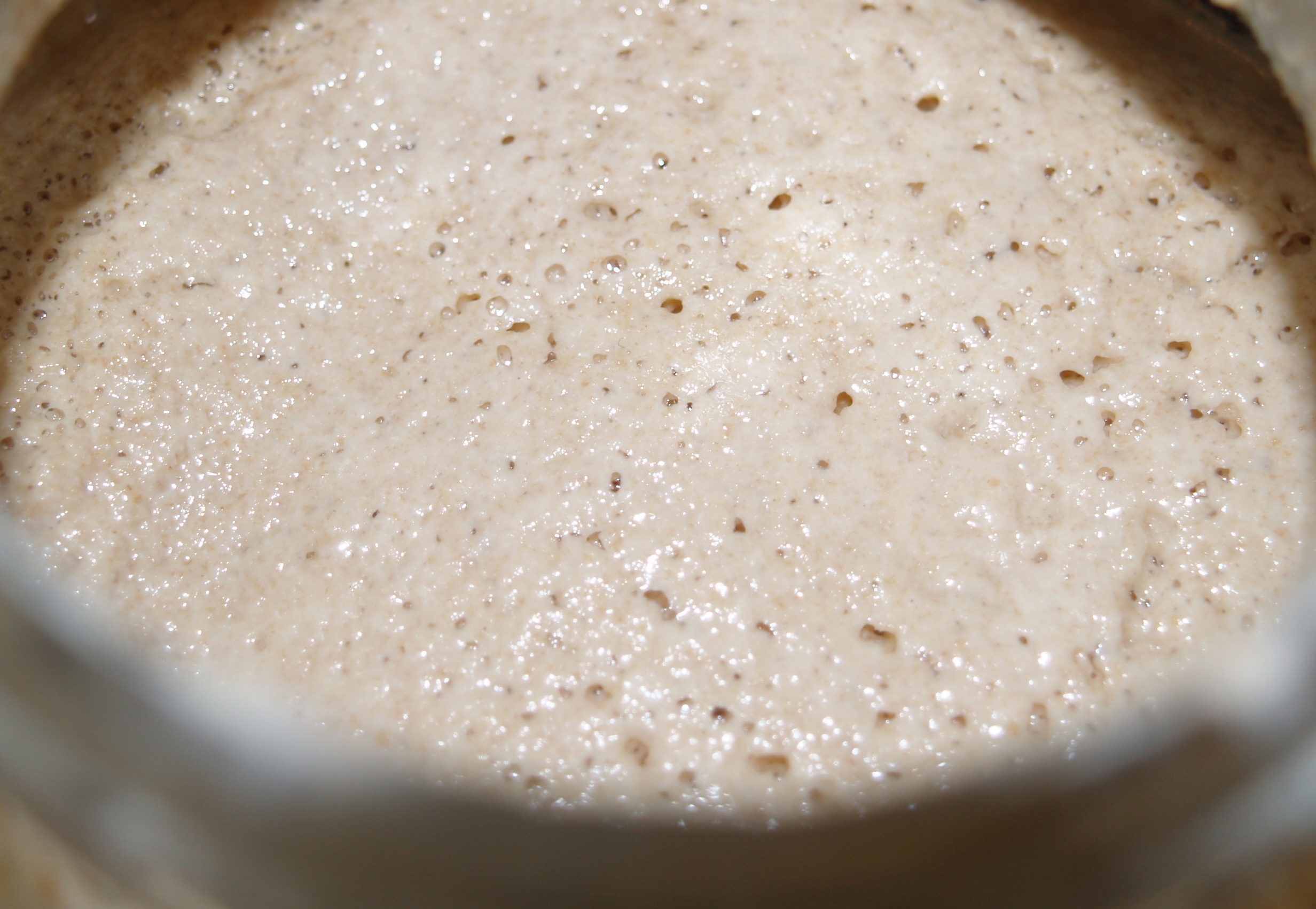
Store batter in a warm place in the 70-80 degree range. Visit the batter daily and stir it to distribute the yeast. After a few days you will notice some bubbles on the surface of the batter. The yeast is letting you know it is active.

Remember, your home is it’s own ecosystem. Every ecosystem has its own unique micro-organism communities – the ecosystem in your home plays a role in how slowly or quickly your batter will germinate. Once yeast activity is evident, strain out the fruit.

Add 1 or 2 tablespoons of flour to the mixture each day for three days. The batter will begin to thicken and rise. Add more water when necessary. By about day five your starter should be bubbly. With a clean spoon, remove about half the sourdough starter, if you compost you can throw it in your bin.

Stir in 1/2 cup flour and about 1/4 cup water. You now should have an active starter – cover it and leave it at room temperature until it has almost doubled. You can now expand the starter for baking bread or refrigerate it overnight and start expanding the next day. [/box]

If your are looking for some recipes to use with your starter, this is a great resource.  And, if you are thinking to bake phosphoro for Church a very well detailed recipe can be found here, on OrthodoxMom.com .  What a beautiful post!


Most Holy Theotokos


potato galette

IMG_3821

He became man and lived in this world. He ate and drank, and this means that the world of which he partook, the very food of our world became His body, His life. But His life was totally, absolutely eucharistic—all of it was transformed into communion with God and all of it ascended into heaven. And now He shares this glorified life with us. “What I have done alone—I give it now to you: take, eat.…”

~

Alexander Schmemann

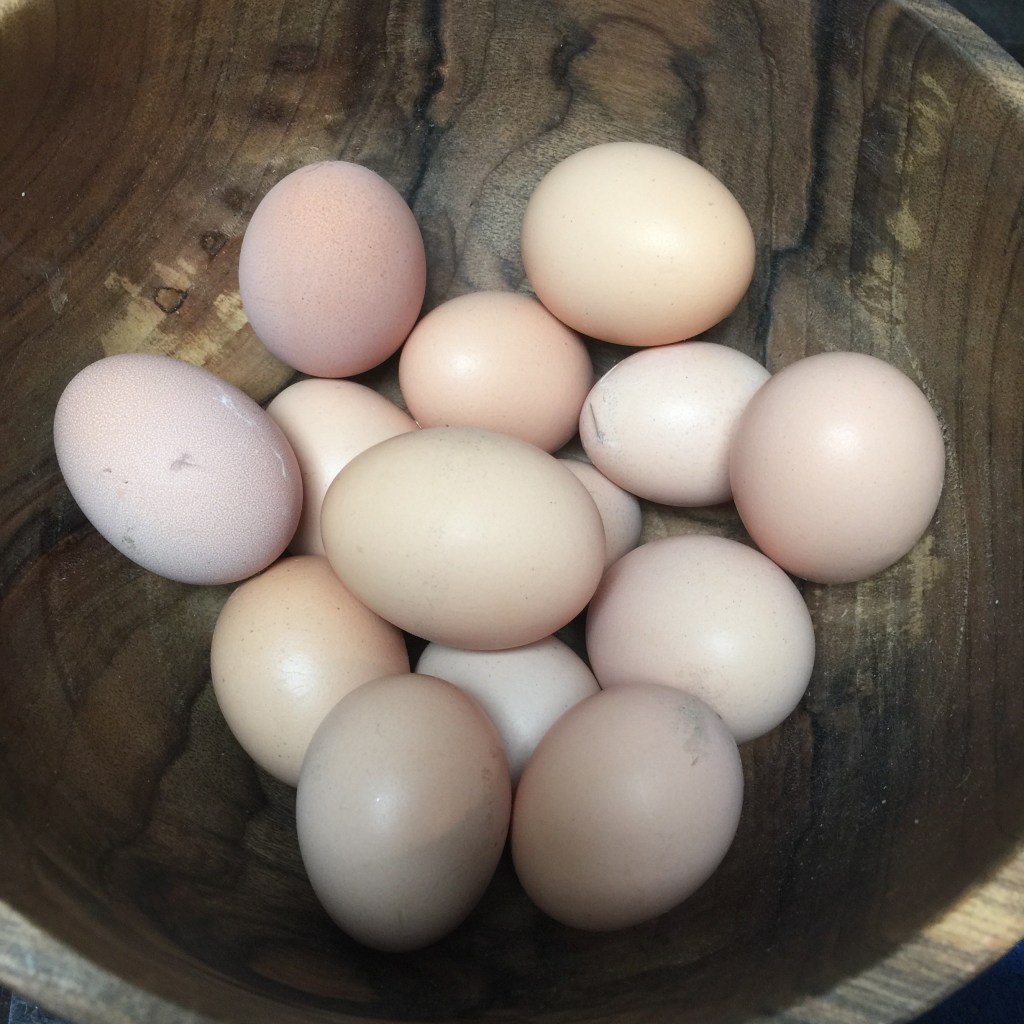
If one intends to raise chickens, it’s a great thing to love eggs!  This spring our family acquired eight hens and as of now, we harvest six eggs a day, on average.  That’s 42 eggs a week.  So we are now gladly sourcing recipes with eggs!

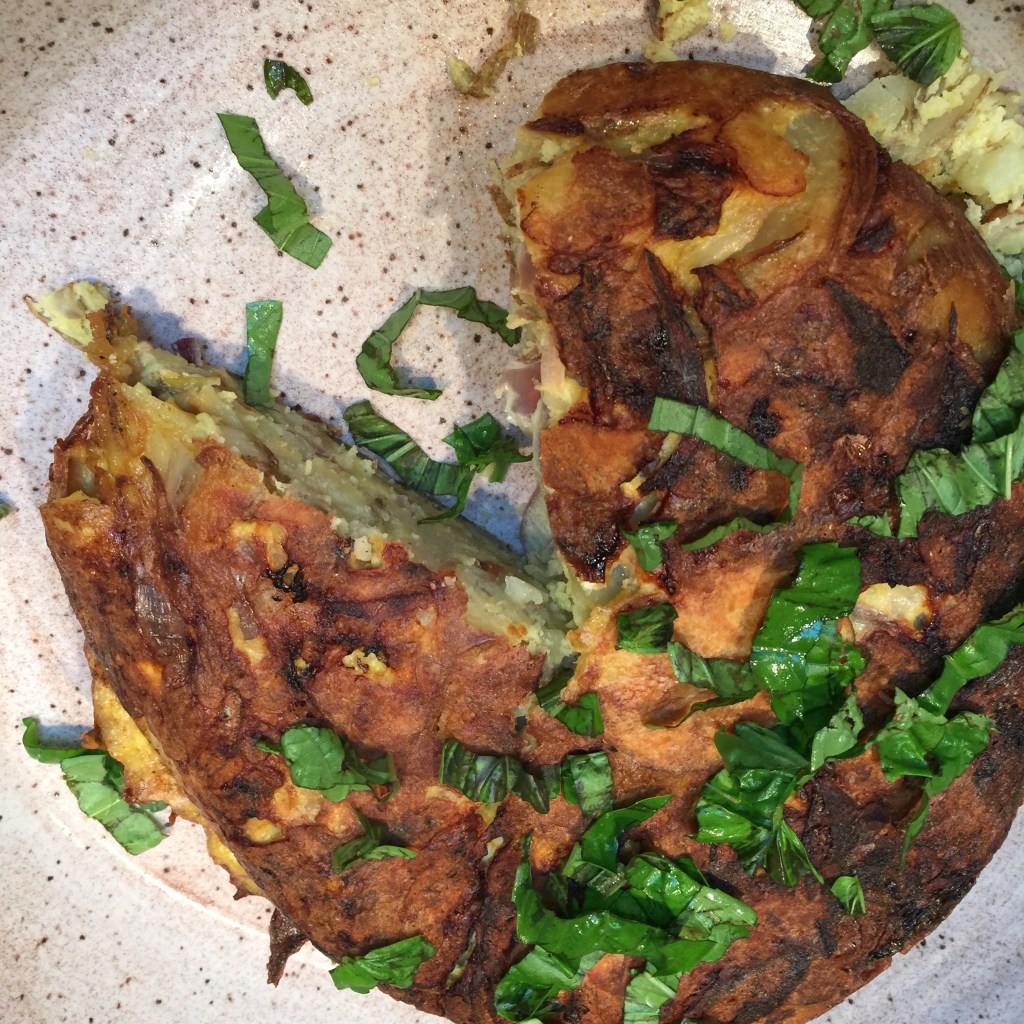
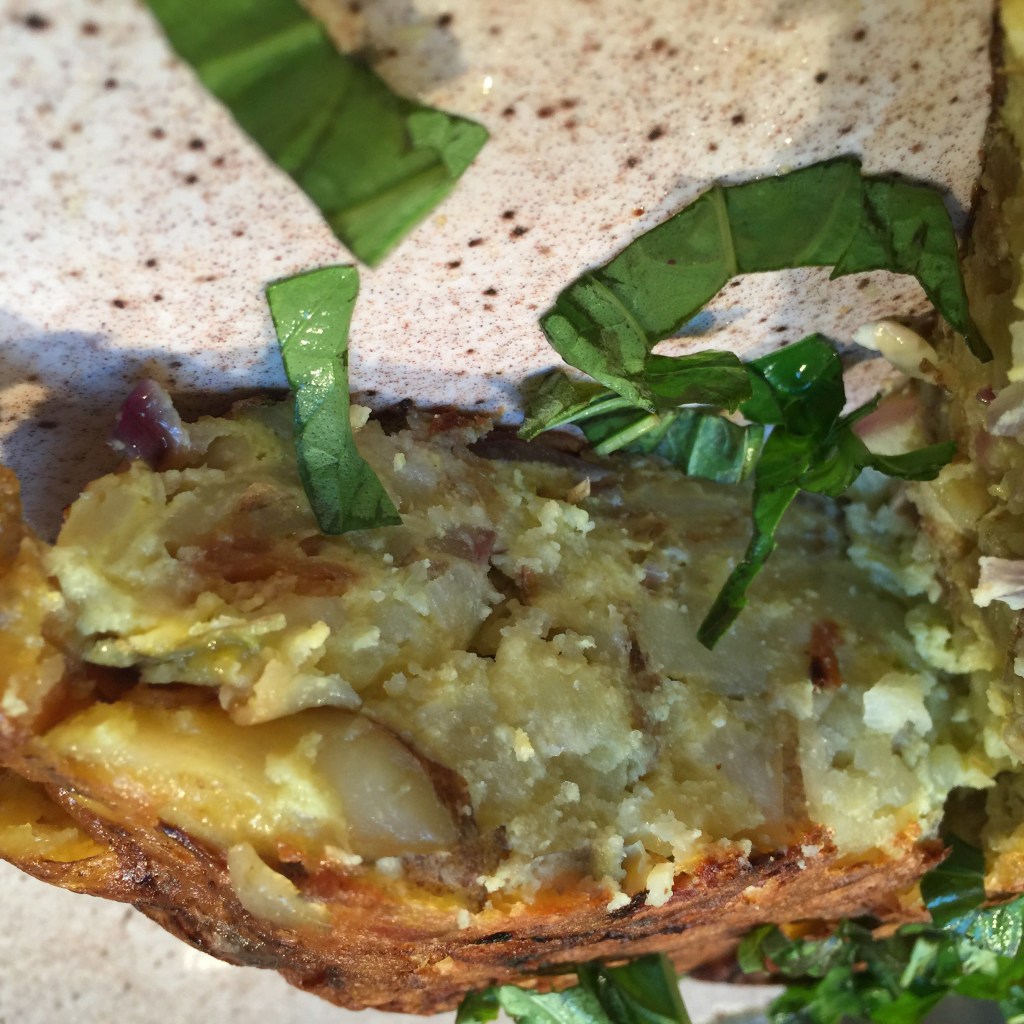
This potato gallette is a really easy weeknight meal.  It’s savory with a hint of herbs from the garden.  Our egg yolks are so absolutely vibrantly orange (like the old fashioned red orange crayola color) it’s abundantly clear they are packed with choline, folate, vitamin A, vitamin E, tons of beta-carotene and plenty of omega-3 fats from the flax we feed them and the free range forage they enjoy.  If your interested in how the life and diet of a hen reflect in the nutrient content of her eggs, check out these results from Mother Earth News.

IMG_3811

Now onto the potato galette!  I strongly recommend using a well seasoned cast iron pan if you have one.  I find them non-stick far better than others, and the heat is so nice and even that it really crisps up the galette.


Before we begin, a note on the potatoes.  If you are using fresh potatoes, that have not hint of green on them (like right under the peel) then do not peel the potatoes… lots of good nutrition there.  If however, your potatoes where not stored well and they have that green you can either peel the parts with the green or peel the entire potato.  My grandmother, who grew up in Germany during a time of root cellars, world wars and no refrigeration always told me that the green on the potatoes is poisonous.   You can read more about it here in this short article in the New York times.  Storing potatoes properly is very important.  They will begin to sprout depending on light and temperature.  GrowAGoodLife has a great article on potato storage.

Ingredients:

  • Olive oil – enough to coat the potatoes and cover the bottom of the cast iron pan
  • 1-2 pounds potatoes, new or yukon gold
  • 2 teaspoons celtic sea salt or other natural salt
  • 1-1/2 cups onions : I prefer vidalia or some other sweet onion, but your basic yellow onion is just absolutely fine
  • 1 tablespoon fresh oregano, thyme or basil or some combination of fresh herbs
  • 5 medium cloves of garlic, peeled and minced
  • 6 large pastured eggs or 8 small pastured eggs (we have all sizes here!)
  • fresh ground black pepper

Preparation

Using a mandolin, slice potatoes about 1/8 of an inch.  Place in a very large bowl, sprinkle with salt, pepper and about three tablespoons of olive oil.  This coats them so they will not stick on pan.

Drizzle olive oil to cover the bottom of  a large cast iron skillet over medium heat.  Place potatoes in pan and cook them in batches.  You should not hear a searing sizzle, we are just par-cooking them.  They should not be turning color, and should not be soft so that they break when you remove them.  After each batch place potatoes in another large bowl.

While these are cooking, you want to crack your eggs and beat them in a small bowl.  Add herbs and a little more salt.

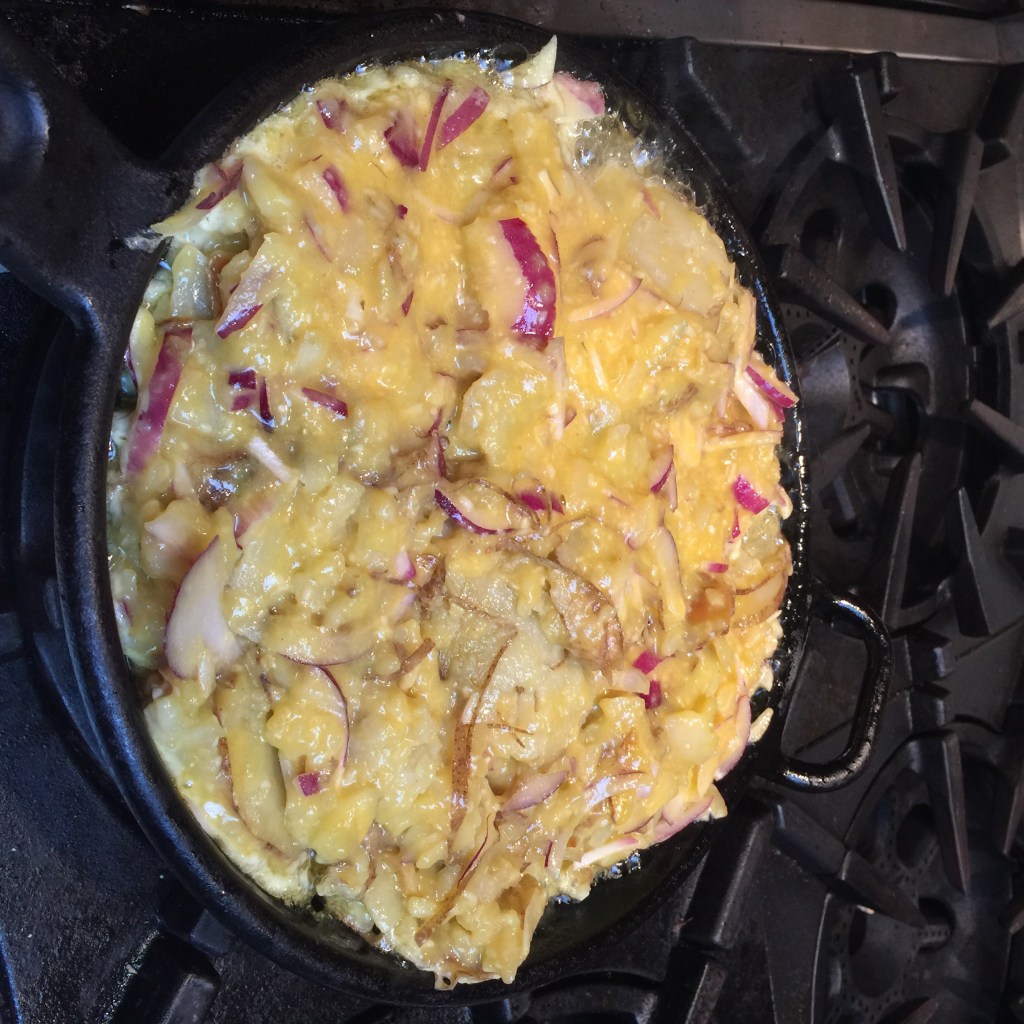
Once all potatoes are done, add the onions and garlic to the pan.  Saute till softened and fragrant, but not browned.  Rinse the skillet.  Add egg mixture to potatoes and toss well to coat.

Coat bottom of skillet with oil again and place over medium high heat.  Add in potato mixture.  Do NOT stir or move the mixture.

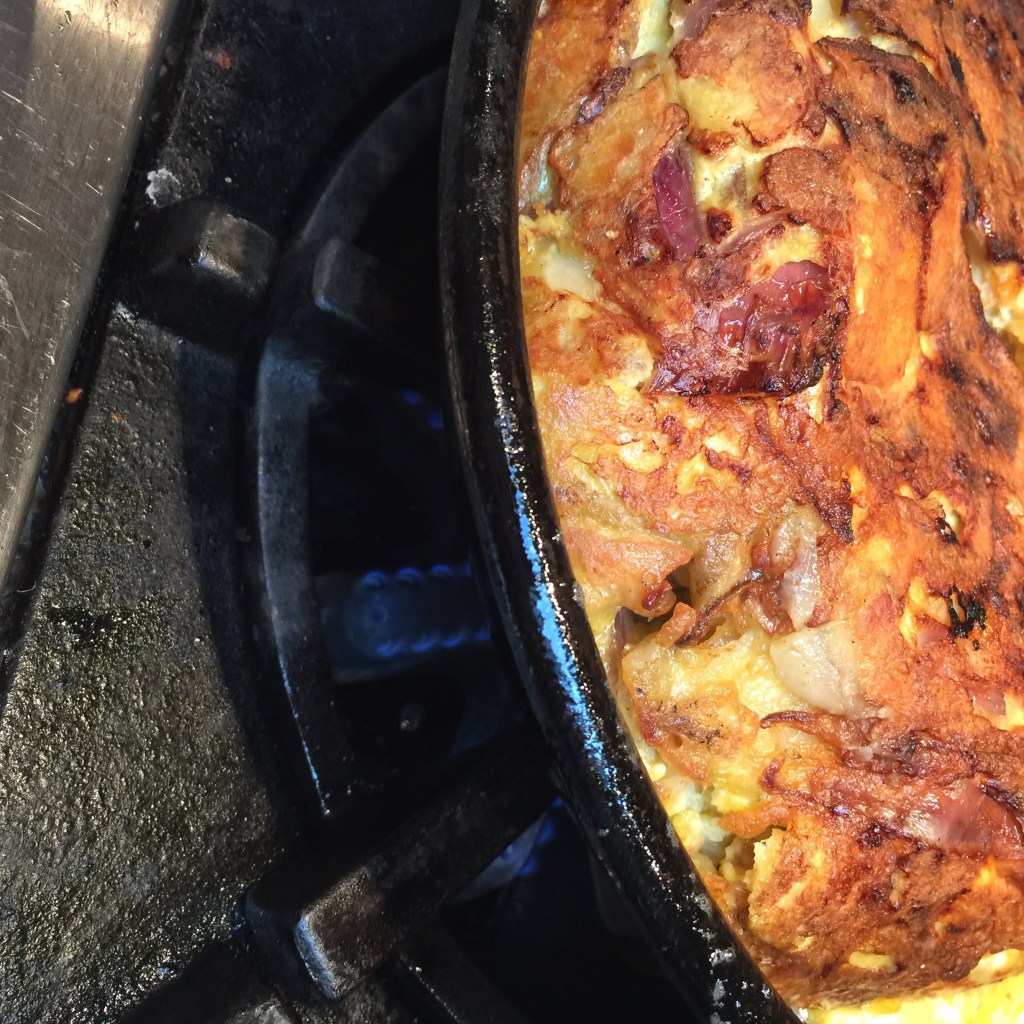
Let it cook for about ten to fifteen minutes.  The sides will start to pull away from the pan.  Again we are not going for a high heat because we want them to cook evenly and thoroughly – as well as get a nice brown on the potatoes.

Okay, now for the fancy flip.

After about ten minutes you can start to tease the side of the galette away from the pan, if it is not starting to do so.    At this point you will want to get a plate so you can flip the galette.  The plate needs to be bigger than your pan.

Take the skillet off of the burner. Carefully, place the plate a top of the skillet.  With your hand on top of the plate turn the skillet upside down so that the potato galette falls out of the skillet and onto the plate.  Now you can slide the galette back into the skillet to brown on the other side.

Let this cook another five to ten minutes until browned.   Remove from skillet and place on serving dish.  Garnish with more fresh herbs if desired.

Serve and enjoy.  This makes a great leftover meal as the flavors continue to melt together as time goes on!

IMG_3820