One thing that touched me very deeply many years ago when I met the sisters at our local monastery is their conscious choice of words. Whenever the Abbess would answer the phone she would say “evlogiete” which is a way of saying hello in the form of “blessings”. Other times she would answer the phone with “amen” as her greeting. To say amen is to say so be it. In other words I am present.
Also, whenever we visit and ask “how are you” the sisters reply is never “I’m fine” or “good” but rather “thank God“.
Every time.
Whether I am fine or good or having a terrible day, “thank God” Who is the very source of my breath and my life.
This simple choice of words speaks not only to a beautiful component of the Greek language which over 2000 years has grown around Christ and the Orthodox Faith but also of kindness, hospitality and their monastic tradition.
It is the sisters way of elevating and “offering” their daily words and disposition to the Lord.
Like many things which reorient the heart, is a little way, and it is also a good way. It is a way of making room for God. It is eukharistia.
grace.
thanksgiving.
joy.
It sets a good sound to interactions, sanctifies words and creates spaciousness in the conversation.
It is a choice and a joy and one that by knowing them I have come to love.
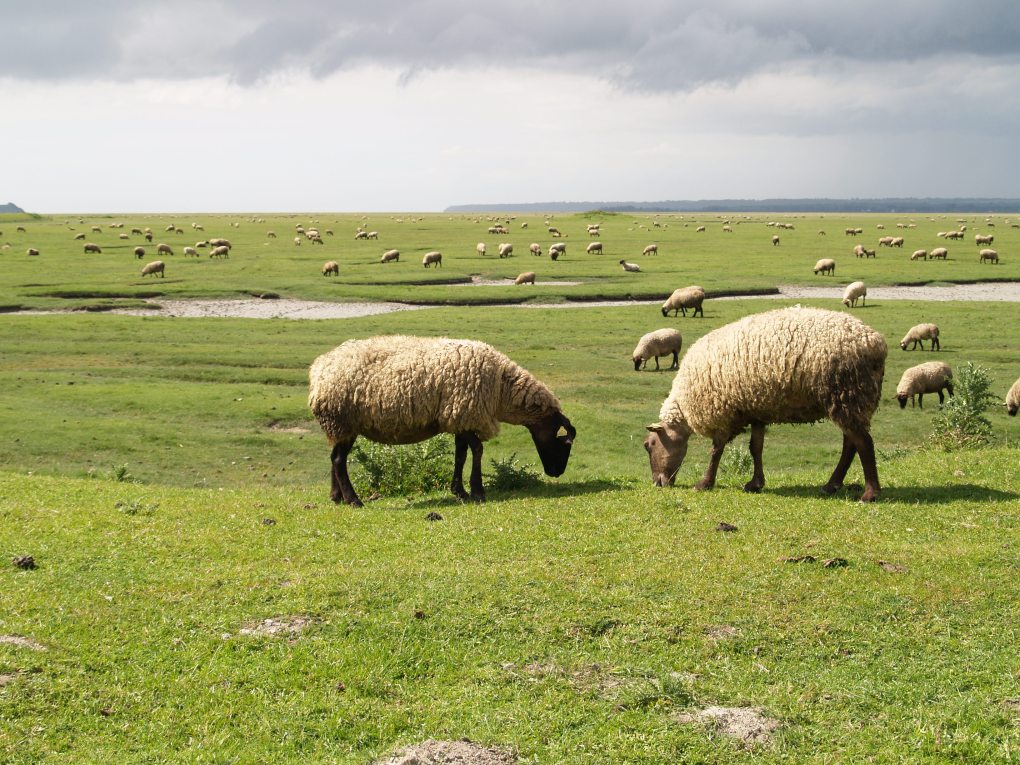
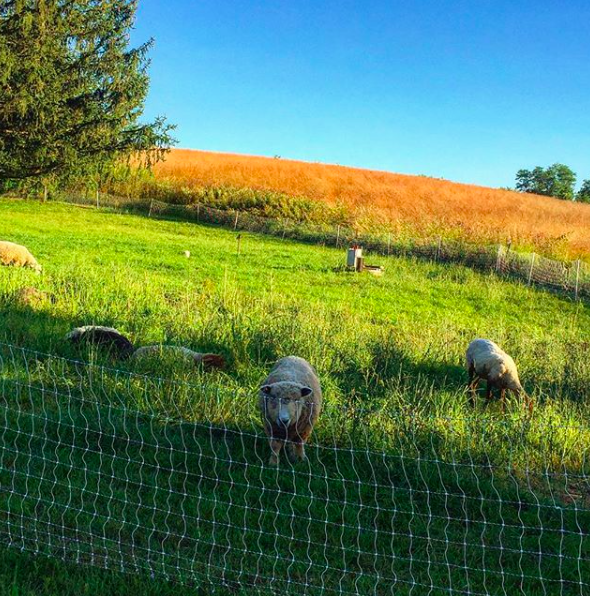
These beautiful sheep live about an hour away, at our local monastery. At a recent visit, our dear Abbess told us a story of how these sheep have really brought the Gospel to life, even for the nuns. It is that
“My sheep listen to my voice; I know them, and they follow me” (John 10:27).
This summer at their annual summer camp, they taught a beautifully enlightening and memorable hands on lesson to the children about Christ – the Good Shepherd, and how He truly knows His sheep and the sheep know Him Who gives them eternal life. They brought this parable to life to the kids about how the sheep will not follow the voice of the hireling, who does not lay down his life for the sheep.
The nuns brought the children to the sheep and each and every one of the campers called the sheep in exactly the same way as the shepherd at the monastery does.
Do you know what? Those sheep were not fooled. They did not respond to the kids, not a one of them. But when the sister shepherd voice they know called to them, all the sheep ran to her – every one.
This is a treasure lesson these kids will never forget. We are all sheep in a world offering many voices but only One is the Good Shepherd. May it always be that we hear and respond to His Voice.
Begin again… every September 1st is the renewal of the Liturgical cycle of the Orthodox Church – this Gladsome Light dawning a new year of Grace.
Redeeming the time
Seeking Christ. The Scriptures, Grace, a life of mercy and repentance are not only woven through the Liturgy but throughout the tapestry of our lives. Just as He pursues us, He wants us to seek Him and He wants to be found with our whole heart.
Christ is the same yesterday, today and forever. He is unchanging, but we are not. We come to Him new each and every day. Each day, each year brings its own pain, joy, crosses, mercies and love in our lives and those that surround us. We are bound together in this time that we have – here and now.
And so, just as the sun rises in the east each morning, Orthodox Christians again and again, celebrate the Feasts of Christ, the Theotokos and the Saints :: from the Grace pouring forth from a young girls small, lowly but hidden ‘yes’ to the awesome humility of Christ’s glorification.
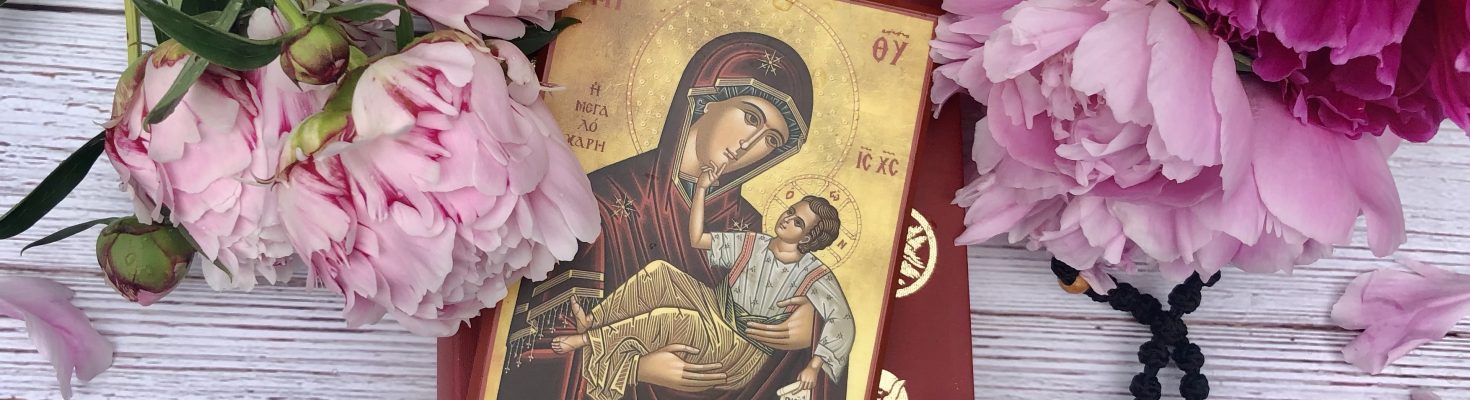
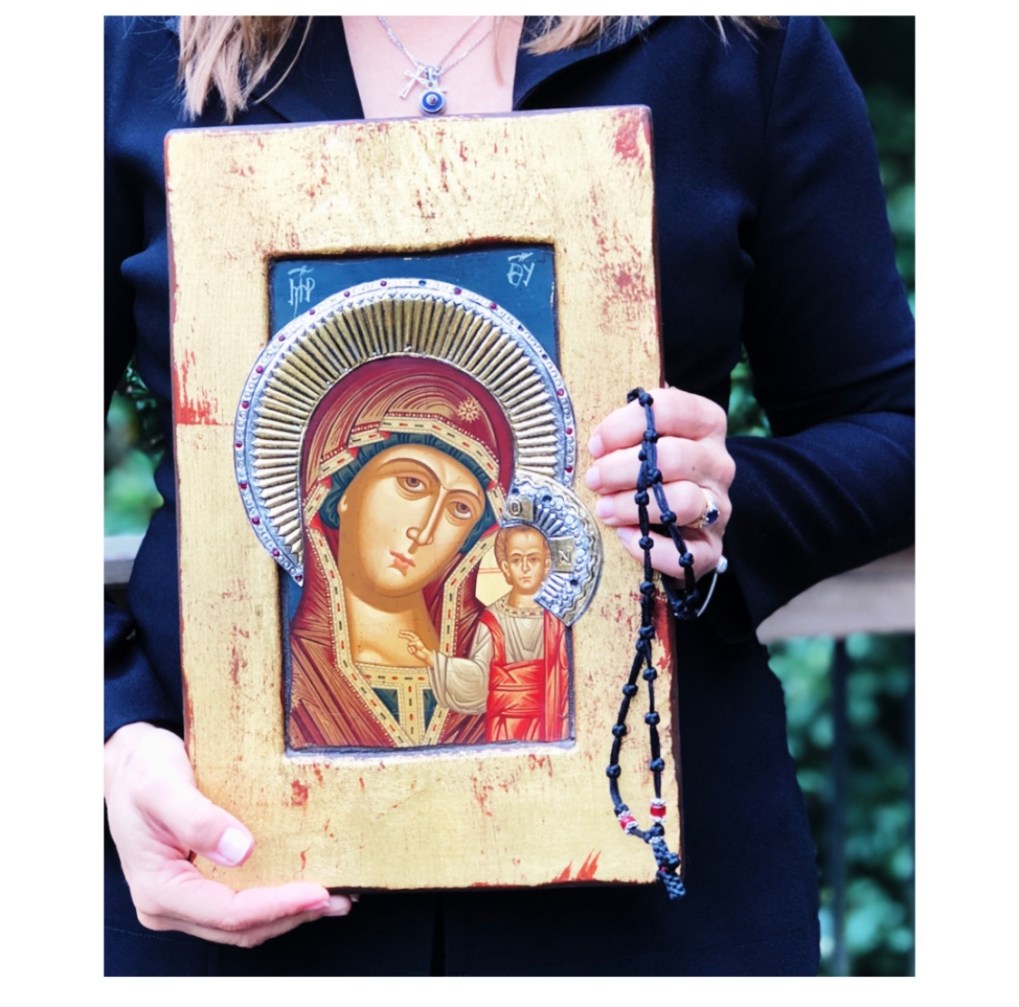
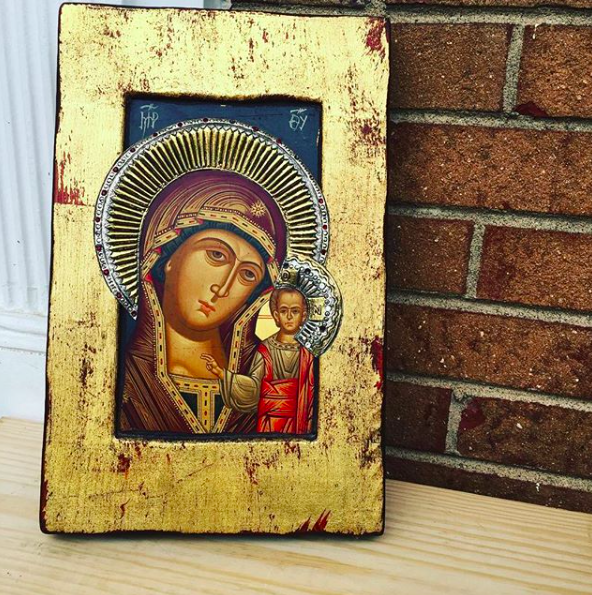
It seems like such a little way, but is really is a door open to Grace, this beautiful tradition to place an icon of the Theotokos on our doorsteps – ushering in the rhythm of the Church throughout the liturgy and litanies of life.
As a convert, walking in an ancient faith, one always learning and growing… Last year was the first time we practiced this tradition. I didn’t feel quite right placing the Theotokos on the ground – something about reverence – so this year I placed Panagia on a wine crate on the front porch. I’m sure the neighbors are just looking at our porch like ‘huh?’
It happens without fail every year. I think I only notice it for having lived in this area my whole life. This past week, the faintest scent of the coming Fall has hung in the early morning dewy air. You only smell it in the morning. I don’t know why.
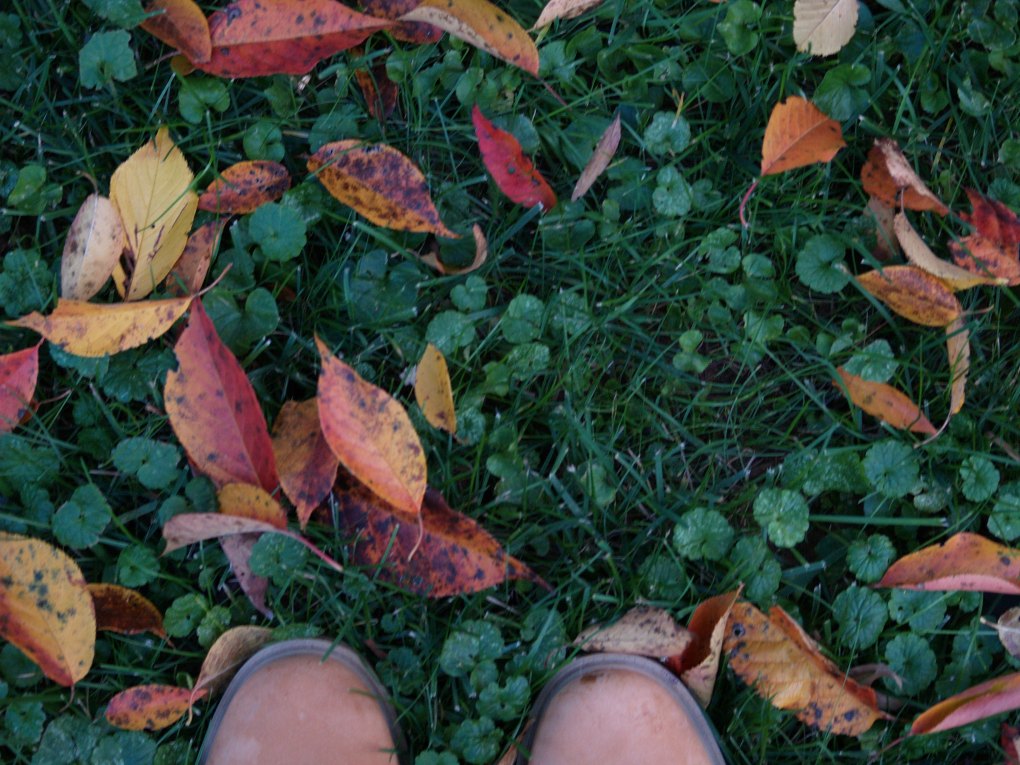
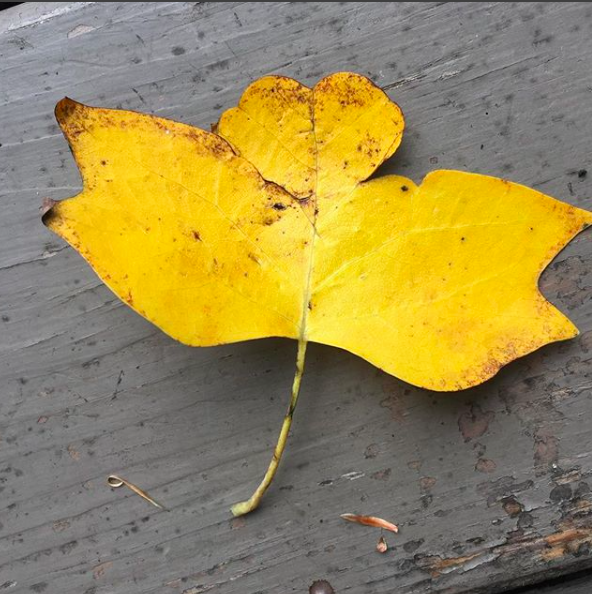
A few weeks ago, a little golden angel leaf is the first fallen leaf on the deck. None of the other leaves have changed color… yet.
When I was a young girl, that faint aroma of moldering leaves always reminded me of the beginning of school, but now it brings the recollection of the approaching end and beginning of the Liturgical Calendar just beyond the Dormition of the Theotokos.
Another years journey through complete cycle of Christ’s birth to His glorification.. the mystery of Christ and the salvation of mankind. A new school year approaches… in the school of repentance.
My husband and I have both lived in one geographic area our whole lives and this has really nurtured the blessing of what to expect seasonally, with the assurance of things to come.
Even amidst all of our rushing around, seasonal patterns emerge from the blur of the busyness of life. Like that every late May to early June in our neck of the world, we get tons of iridescent dragonflies hatching from the creeks and fluttering through the woods where I walk.
I love it and look for it each year. This year it seemed like they came a little late – and I thought maybe I had missed it! Then finally a few weeks ago those little dragonflies were everywhere!
❤️
There is an immense similarity in embracing the Liturgical cycle of the year, as the faithful live the seasons of our lives within the seasons of the Faith. The services of the One Holy Catholic and Apostolic Orthodox Church offers a certain stability of place. Living within the Liturgical cycle of the Church is so grounding and needful.
A monk of the eastern Church has said that to live “the liturgical year forms Christ in us.”
Redeeming the time. Over many years, the pattern of the Liturgical cycle comes into focus, like the gears of a clock, the beauty of it all fits together. The faithful anticipate and are comforted by the coming seasons of fasting with the assurance of the awaiting feast. This steadfast enduring call to remember our first Love, inclines the soul onward, as one walks with Christ and participates in this Liturgical dialogue – which is a song of renewal, a honeycomb of sweet wisdom, and the Hymn of salvation.
In this day and age, not every family is able to live in the suburbs of one city their whole life. That’s okay. The reality is that no matter where the faithful live – we have same stability of place in the timeless, salvific geographic terrain of the One Holy Catholic and Apostolic Orthodox Faith.
This is the unity of the faithful – that every Orthodox Church in every city or land preaches the same Christ and has the same Liturgical seasons. We are rooted and grounded walking through the daily Scriptures, minding the seasons of fasting and festal celebrations of the year, adoring our Most Holy Theotokos, commemorating the Saints, making room for the formation of Christ in us, through a life of repentance and receiving Him at each Eucharist.
The Orthodox Faith is nourishing, sober, seasonal, stable, relevant and True. While our own lives can often encounter that which is unexpected, no matter where one lives – Christ and His Church are the same yesterday today and forever.
This is a tremendous dependable blessing and gift.
Icon of Saint Genevieve of Paris and Saint Simeon the Stylite :: photo taken in Church of Saint Etienne-du-Mont
Troparion of Saint Genevieve
+ + +
O Shepherdess who guardest the sheep at Nanterre against the horde of wolves and the Scourge of God,
thou dost protect the city of the Parisians.
O St Genevieve, do not forget to guard thy spiritual sheep even now,
from heaven where thou livest after death.
On January 3rd, the Orthodox Church commemorates Saint Genevieve. Saint Genevieve of Paris, a delicate young woman, whose fasting, vibrant inviolable faith and hopeful prayers, halted the invasion of barbarian Atilla the Hun into Paris is the patron Saint of that beautiful city.
In venerating Saint Genevieve of Paris, we also remember two other beloved Saints of the Orthodox Church, Saint Simeon the Stylite and Saint John Maximovitch.
Why Saint Simeon the Stylite? Saint Simeon the Stylite was one of the most exceptional eastern orthodox monks of that time, and out of all the theologians and clergy in France, he sent a shout-out from his pillar in Syria to an otherwise lowly and unknown humble young woman – who had sought his blessing. This is why in some icons he stands next to her – and East encounters West.
Saint John Maximovitch, because as Archbishop of Western Europe in the early 1950s, he was deeply interested in learning about and venerating the pre-schism Saints of the region. He was the first Orthodox Hierarch to encourage the veneration of these local Saints in Western Europe and introduced her to the Russian people living in France at that time.
Saint John Maximovitch said that it contradicts our Orthodox spirituality to only appeal to the saints of Russia or Greece, especially for second and third generations of immigrants to a new country. Saint John felt that it was essential to live with the grace of the land, as well as the grace of the universal Church, believing in God’s providence, and honor the Saints that God has placed there.
“The Life of St. Genevieve was printed in the Journal of the Moscow Patriarchate in 1954 or 1955, and she was the first spiritual door for Russians into the veneration of western saints. We had had earlier Orthodox church theologians in the West who knew of her, but their message had not been received by the émigrés…
+++
When we read the lives of western saints of the 16th, 17th and 18th centuries, their lives and ascesis often seem strange to the Orthodox mind; but when you read the life of St. Genevieve, you see clearly that she is one of us. The first moleben to be served before a previously unrecognized western saint was done before her relics in early 1941. Now it is an annual tradition that on the first Sunday after January 3, her feast-day, the Orthodox have a joint moleben for her feast.(1)
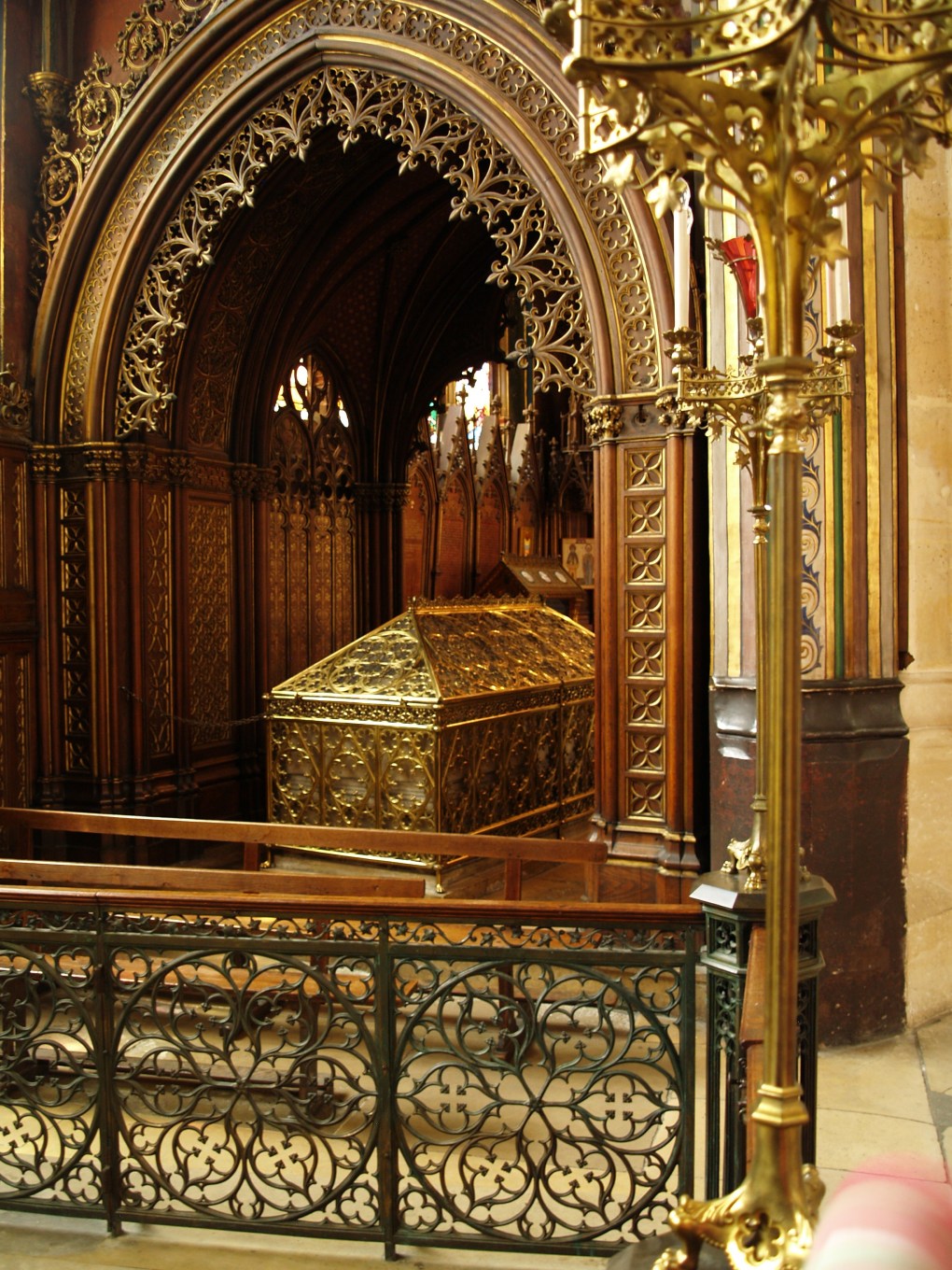
Relics of Saint Genevieve of Paris. Photo taken in the Church of Saint Etienne-du-Mont
Resources
A CITY OF SAINTS : Road to Emmaus Vol. VII, No. 2 (#25)
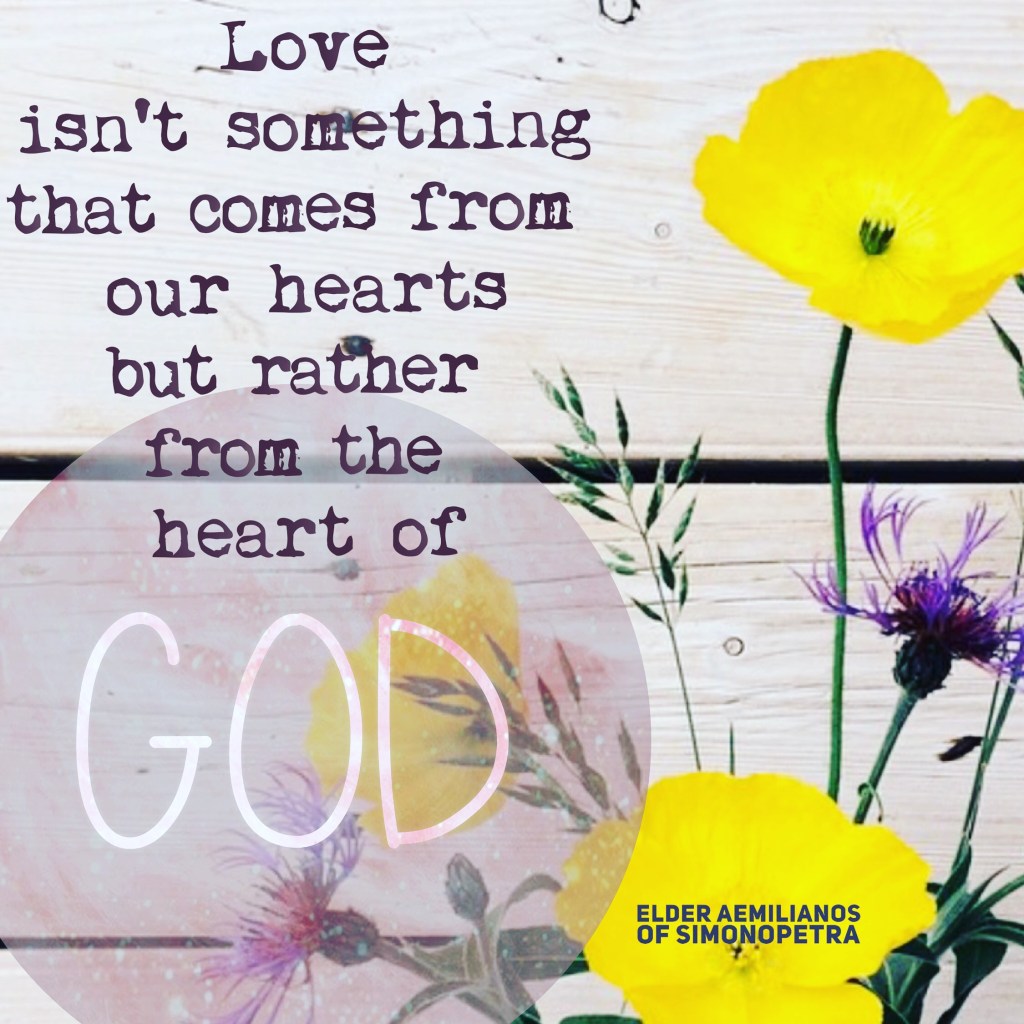
When I reject the way of repentance, I reject God.
When I chose to remain in sin, I expel God from my heart.
But as soon as I turn from my sin, God enters my heart.
And when He does, I discover my place in the Church,
which is His body and His bride.
+
Elder Aemilianos of Simonopetra
The Sacrament of Confession, is for an Orthodox Christian, the turning from sin and coming to one’s senses. One is conscious of their unworthiness, yet joyfully receives the longed for, heartwarming embrace from the Father.
It is the lost sheep returning to the flock, borne on the shoulders of the Good Shepherd.
The Church Fathers tell us that gift of repentance is the work of divine grace, which we, then, wholeheartedly offer and return to God. Saint John Chrysostom says that “repentance opens up heaven“.
While the Sacrament of Confession is the same for Orthodox world-wide, different localities may offer their own customs.
Over the summer, at a monastery retreat, Confession was available during the Divine Liturgy, in a side nave of the Church. The nave was dark except for a candle stand with one lit candle and a monk priest.
“The light of Christ illumines.” (1)
Only a few partook of Confession, but as each communicant received the prayer of absolution, she lit a new candle from the flame of the Confesson before her, so that with each new flame, the blaze and glow of each Confession literally overcame the darkness of that little chapel.
A powerfully striking impression that says more than words ever could. What a joy to behold – that as each woman left, heart lightened and unburdened – the tiny chapel became lighter and brighter. Repentance overcoming darkness and returning to the light of Christ, which illumines the faithful.
Like the Resurrection service of Pascha, Confession invites us again and again, to “discover our place within the Church” and continue on this journey redeeming the time.
“Come take ye light, that is never overtaken by night, and come glorify Christ, Who is risen from the dead“.(2)
Eucharist {thanksgiving} is the state of the perfect man.
Eucharist is the life of paradise.
Eucharist is the only full and real response of man to God’s creation, redemption and gift of heaven.
Father Alexander Schmemann of Blessed Memory
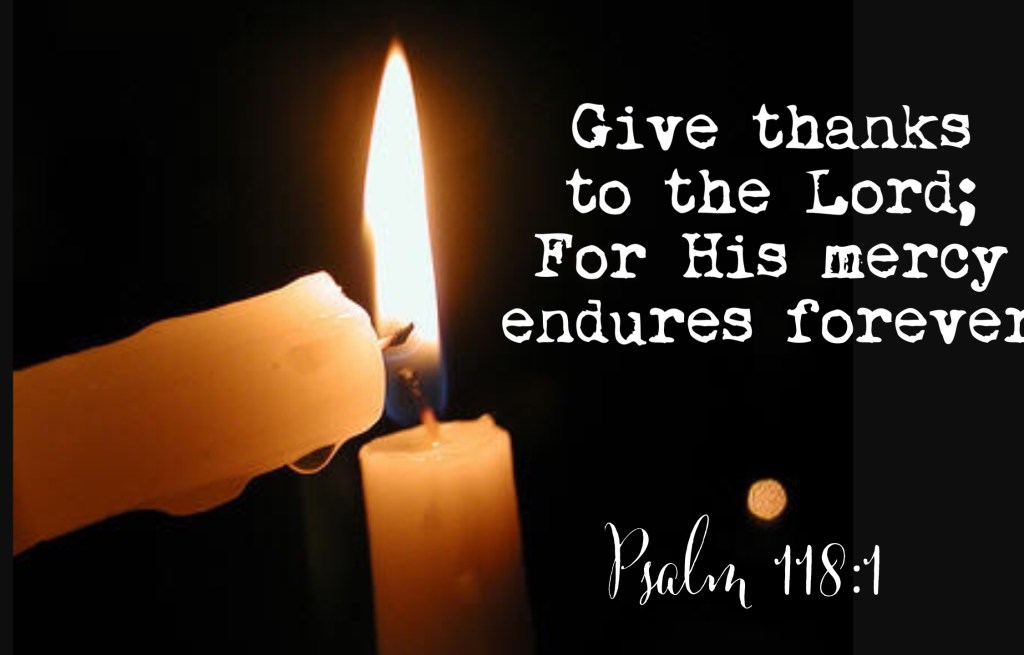
Give thanks to the Lord, for He is good; For His mercy endures forever. (Psalm 118:1)
Eucharist – comes from the Greek word eukharistia. Do you see the word kharis rooted right there in the middle of it? The tenor of kharis resonates “grace” – “favor”. It is gratitude abundant and well. Grace and favor – so freely given by God – which is swaddled, nestled and bound up in the thanksgiving we offer graciously in return to Him.
Thanksgiving is paramount to life – not just a national holiday contemplated once every November. Father Alexander Schmemann said, “The only real fall of man is his noneucharistic life, in a noneucharistic world.” In a noneucharistic world we’ve forgotten to love God with our whole heart and our whole soul and our whole mind.
There must not be a word adequately describing the lament of a noneucharistic world.
But for Orthodox Christians, every day is one ablaze with the promise of Thanksgiving : for blessings small and large, those that bring tears and those that warm the heart.
Eukharistia – it is not resevered for one day of the year or even one day of the week but celebrated in our hearts – each and every day. The thanks rendered by each person is born of their own season and circumstance of lives lived in the Church.
+ + +
With the breaking dawn – the hope of each new day, we give thanks.
Thanks for family, and friends, near and far and for friends who walk right in the house, rather than knock.
For illness and the times we stumble and fall, we give thanks. For crosses we bear and those who’ve helped us to lift them up – eukharistia.
For Faith that requires everything and for marriages and love enduring and strong – eukharistia.
Thanksgiving buds and sprouts during seasons of plentiful blessing, but blooms and flourishes through our times of trouble and want – in all of it, we lift up our hearts and render thanks to the Lord.
Eukharistia : We love Father Son and Holy Spirit : the Trinity one in Essense. We treasure the tender hearted Theotokos, and so great a cloud of witness. We cherish the harbor of the Church – a respite where earthly cares are laid aside. We give thanks for the God who first loved us and for all of His gifts, showered upon us :: gifts so freely given, unprofitable as we are, and we graciously offer to Him in return – hearts of thanksgiving.
Eucharist is the cup of salvation. Our thanksgiving is trust in the Lord and the spacious expectation and surprising joy of the present moment. Eukharistia says Thy Will be done and glory to God for all things. It is a new song unto the Lord (Psalm 96:1).
Eukharistia unearths love, forgiveness, peace and unity in the face of adversity, temptation and trial. It is the antidote to jealousy, bitterness, criticism, anxiety and resentment. The way of eukharistia allows us to endure the fatigue of the day and bear our part in all it’s passing events – resting in the assurance that it’s all for our salvation. It nourishes and uplifts, and where one is uplifted, all are uplifted.
Eukharistia allows for the mystery. It bursts forth and births into spiritual joy, softening hearts and making room for the coming of the Lord.
In this season of the Advent eukharistia is the bright shining star on a still still night guiding us toward the Nativity.
The mystery of liturgical time… In God, there is but one moment, in which everything is included. The fullness of the liturgical year does not consist of the commemorative cycle of Christ’s life being resolved or completed, for the completion of a series implies that there is a series, a succession of disjointed elements. The fullness of the liturgical year has to be thought of qualitatively and not quantitatively: it is achieved if, on any day whatsoever of the liturgical year, whichever it might be, we are capable of grasping :: through the particular event which is commemorated :: Christ as a whole, the whole of His life, the whole of His work, the whole of His word. Each feast and even each day of the year thus becomes the fullness of the whole liturgical cycle. This cycle never repeats itself :: each one of its aspects reflects the inexhaustible depth and fullness of Christ, and as a result, becomes new for us to the extent that we understand it better. The liturgical year is a prism which receives the white light of Christ and splits it into different colors. Christ is the year.
~
a monk of the eastern orthodox church
The Treasure of Tradition Despite being united to Christ in the Orthodox Church some twenty years ago, there are still many of those little “t” traditions of which I do not know. When I joined the Orthodox Church the first thing I realized is that I don’t know anything, and not in a bad way at all, but a very very good way…. a way that allows me to incorporate the faith morsel by morsel so that I can digest it.
This year (just last night in fact!) I learned of the tradition to place an icon of the Most Holy Theotokos at the threshold of the door to our home as we usher in the new Liturgical (Ecclesial) Year of Grace.
In many conversations with non-Orthodox over the years, I have been struck by their idea that our little “t” and big “T” traditions are merely rote action. Yet, as one who seeks (and quite imperfectly, too) to live and raise a family in the faith, I find most beautifully that these “traditions” of ours are not rote or meaningless at all :: but rather beckon and re-orient our hearts to that which is needful.
Just as we pray corporately the Anaphora during the Divine Liturgy, these little “t” traditions are our “little a” anaphoras :: a lifting up and offering of ourselves. A simple, humbling endeavor, to place God above all, offering up our whole lives to Him.
It is Eucharisteo : Grace, Joy and Thanksgiving throughout the seasons of our lives.
These are just another way in which we lift up our hearts in this great litany of our lives. Little children in Greece make the sign of the cross when riding their bikes past a Church :: mothers entering Church remind their little ones to make the sign of the cross before they enter :: we light candles :: burn sweet smelling incense :: we trace the sign of the cross on our children when tucking them into bed :: prayers and prostrations dovetail together :: we kiss the icons and we greet one another with a kiss of peace :: we dye our Pascha eggs the reddest of red, but we don’t dye them on Holy Friday :: fresh basil is brought home from Church on the Elevation of the Cross and placed in the sourdough starters that will leaven phosphora :: and of course, we pray facing the east – our souls waiting for the Lord, like the watchman waiting for the dawn.
Again and again, in so many ways, we are called to this life in Christ. To live our lives through the years and seasons and rhythm of the Church. It is our great priority :: this great Liturgy of Life :: it is more needful than schoolwork, profession, sports and hobby :: and yet with life in Christ as our priority our ability to fulfill our schoolwork, professions, sports or hobby is in no way diminished. Traditions bring to light blessings :: even on the threshold of our very home.
Placing an icon of the Most Holy Theotokos at our doorstep – what a wonderful tradition to usher in the new Ecclesial Year :: just as the Ecclesia means “called out” :: the new Ecclesial year “calls us out” again, “to lay aside our earthly cares” and enter into the timeless rhythms and seasons of the Liturgical life of the Church.
The Orthodox Christian lives Ecclesial Year to Ecclesial Year ::Feast to Feast :: Fast to Fast :: Confession to Confession :: Liturgy to Liturgy :: Eucharist to Eucharist. Just as we have New Year’s resolutions to usher in a new calendar year, now is a great moment to pause, reflect and begin again.
Does my family have regular prayer time? If not, this is a time to begin. Are we attending Church weekly? That’s alright :: start this weeks Vespers and Liturgy. Has it been forever since my last Confession :: make an inventory, call your priest. Go.
And so today, on the dawn of a new ecclesial year, the faithful are hopeful standing on this threshold of Grace of a new year, with an invitation to redeem the time.
Blessed art thou O Lord, teach me Thy statutes.
Real life is Eucharist, a movement of love and adoration toward God, the movement in which alone the meaning and the value of all that exists can be revealed and fulfilled





 gladsomelife.com