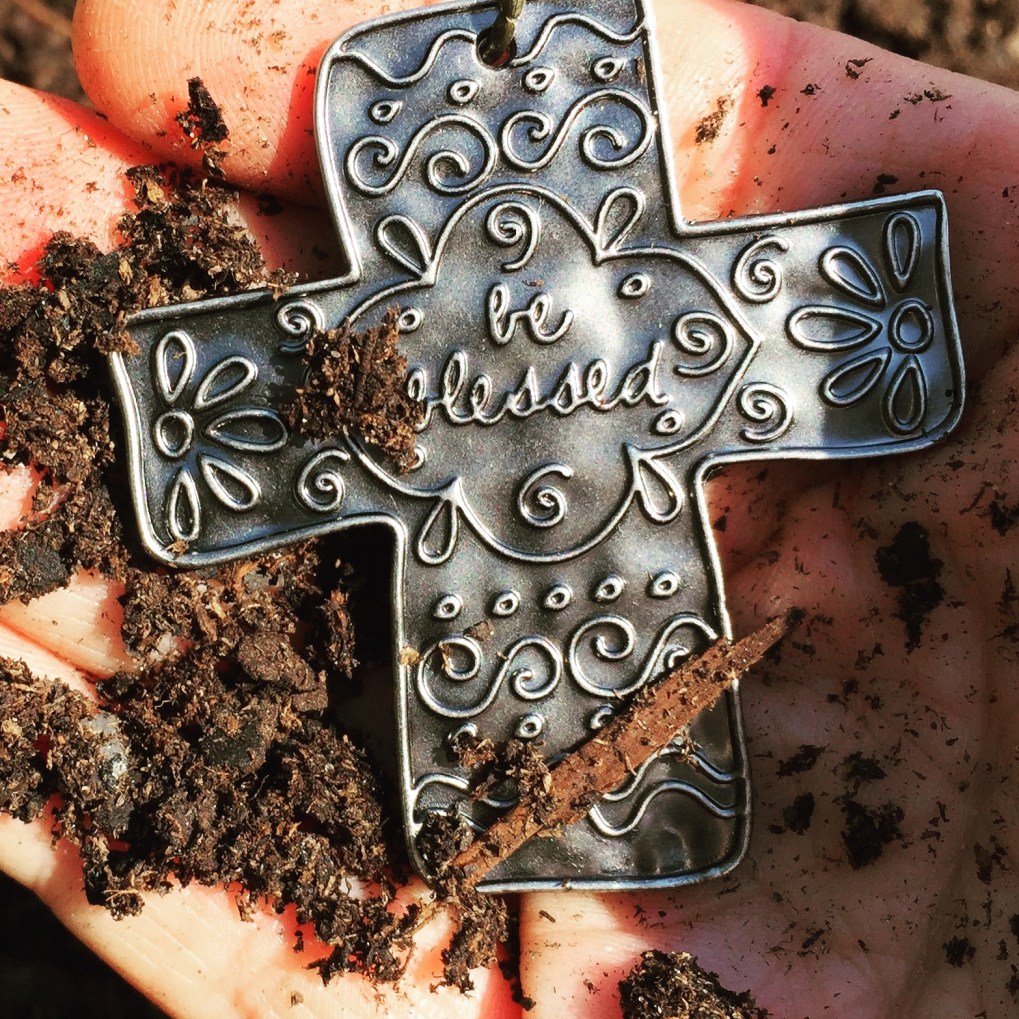
beneath the basil {repost}

Elevation of the Life Giving Cross

Tomorrow Orthodox Christians celebrated the Elevation of the Life Giving Cross. When commemorating the Life Giving Cross,  we are also drawn to Saint Helen, a holy woman of Christ and the mother of Constantine the Great.

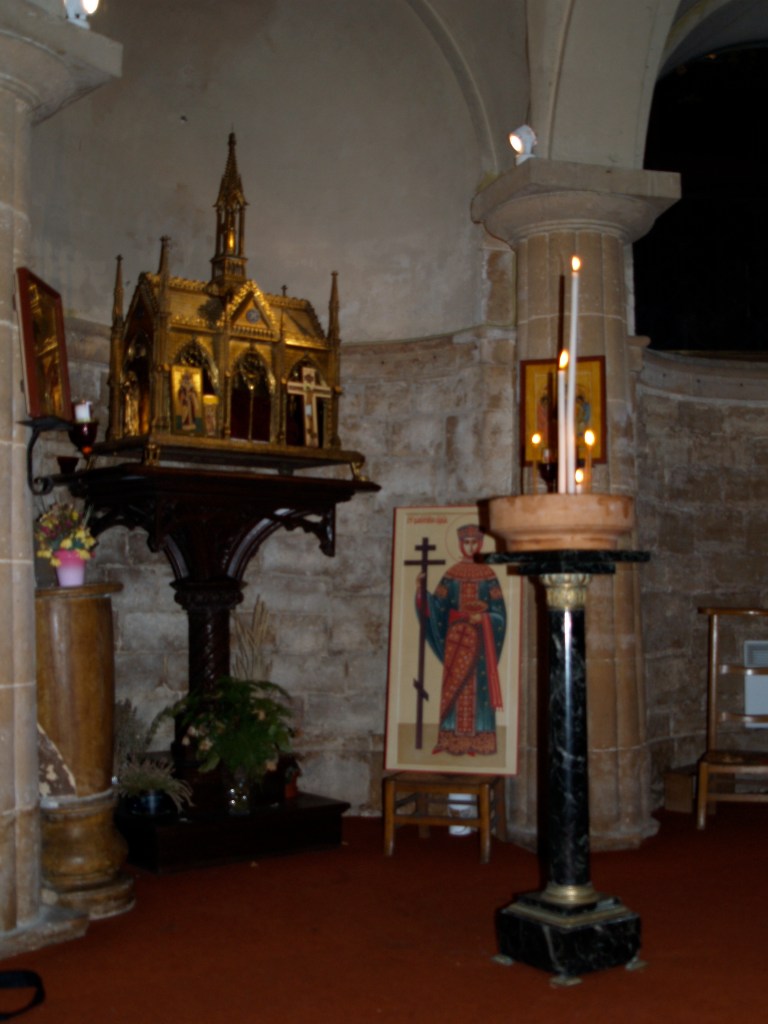
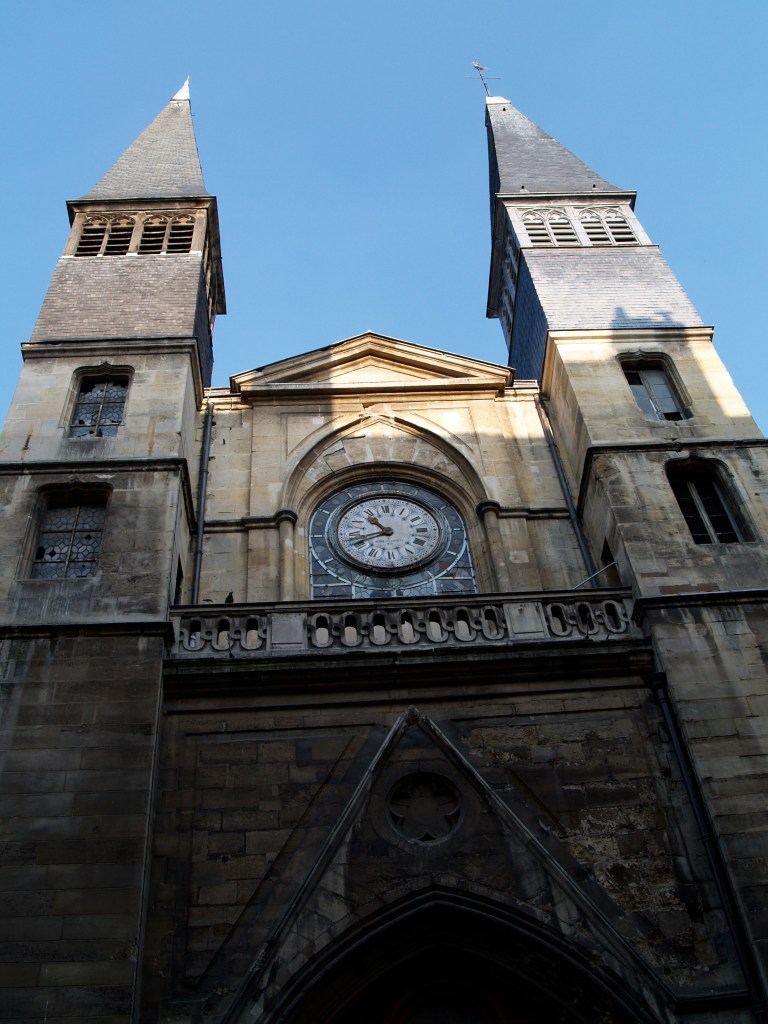
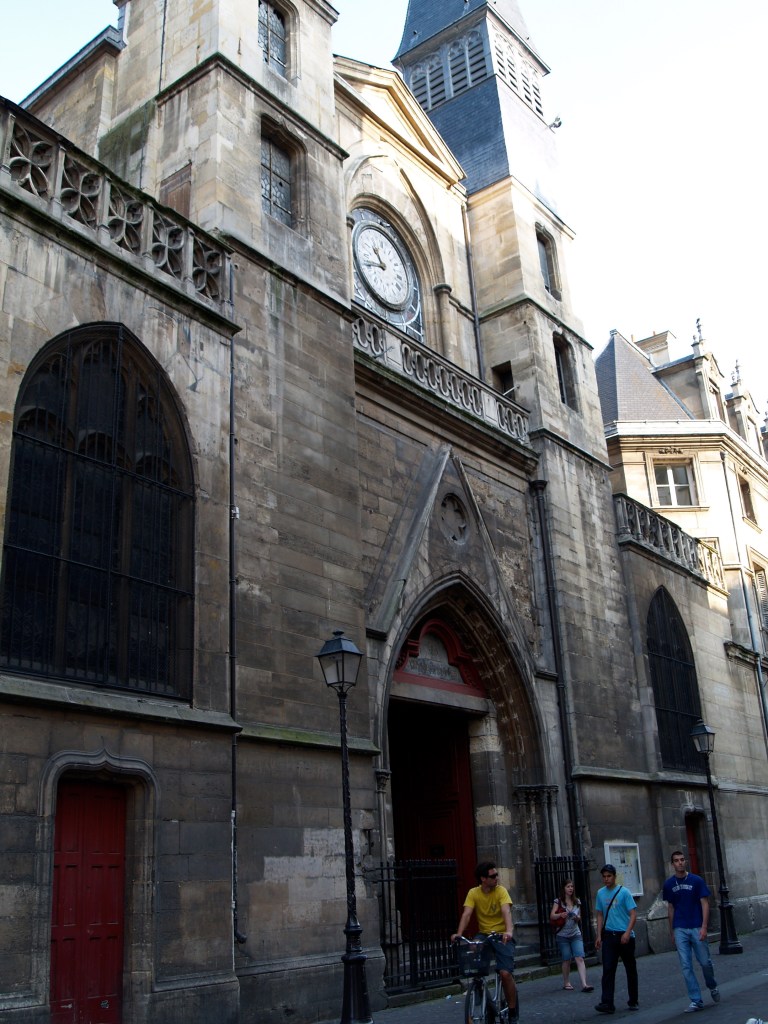
There is a rather unknown story about her, that maybe even most Orthodox Christians do not know, which is that most of her relics rest in Paris, in a cave beneath the altar of the Church of Saint Leu – Saint Gilles – an unknown Church on one of the worst streets in Paris.
OLYMPUS DIGITAL CAMERA


I have always loved Paris. My husband travels there every year and we have often accompanied him.  After years of having seen all the major tourist sites we began to seek out Orthodoxy in France – greatly encouraged by Saint John Maximovitch. 


It turns out that Saint Helen’s first resting place was Rome and the translation of her relics to Paris is a remarkable story and speaks to a depth of Faith which allows for the Grace of God working in our lives – just as that depth of Faith and spiritual vision led Saint Helen, a woman with the faith of a child, to dig beneath sweet holy Basil to unearth the true Cross.  


The story of her translation to Paris is that it was medieval times – during the 9th century – and a simple holy monk from France was in Rome.  He was granted a revelation to take the relics of Saint Helen to his monastery. He was a humble man and he followed what God spoke to him. 


This was not a planned informed ceremonial transfer.  He just quietly took her relics – a.k.a. he swiped them.   As you can imagine, when he brought her relics to his monastery of Hautvelliers he was not met with cheers but with surprise and disbelief.  This is recorded in the chronicles of the monastery.

What the Abbot wanted to know first is whether this was fraudulent and second if the relics had actually been stolen, because if misappropriated relics were now in his monastery, his relationship with Rome would need some repair. 


Word was sent to the Pope and indeed Saint Helen had been reported missing, not surprisingly from the time the monk claimed to have lifted them. 
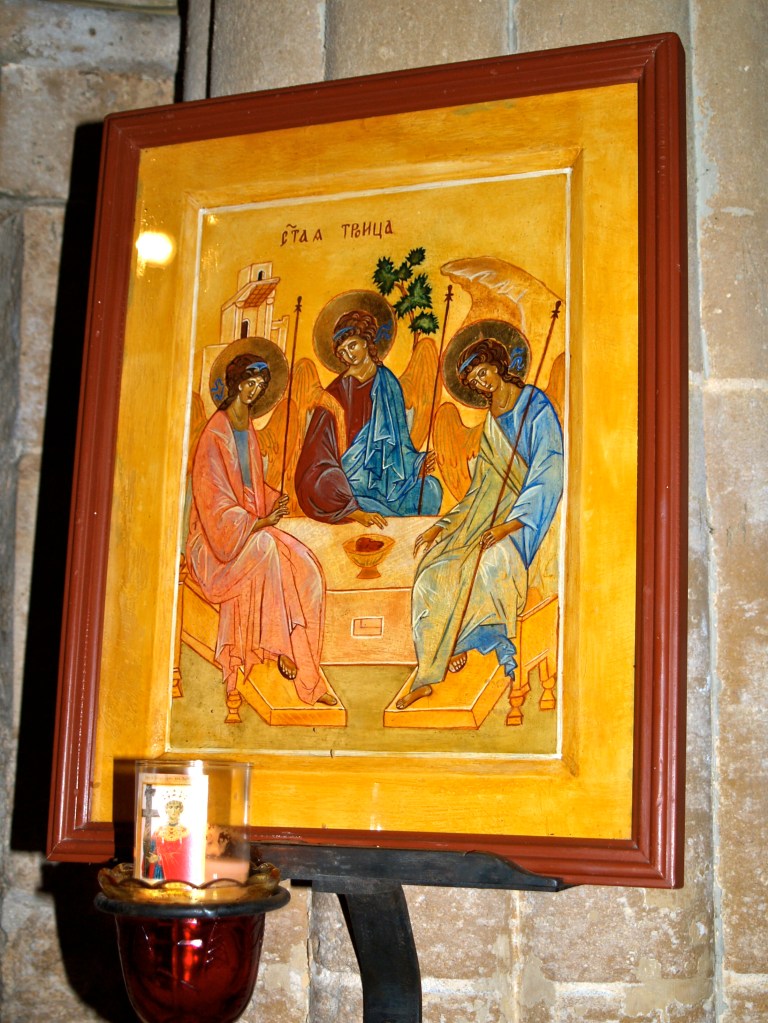
OLYMPUS DIGITAL CAMERA


But what is striking of the story is that the Pope was a holy monk of Christ with a depth and vision of Faith. When he learned of the revelation and the miracles which dovetail Saint Helen’s journey to France, he stopped and he prayed.

Ultimately, instead of requesting their return to Rome he allowed for the will of God and Saint Helen.

He understood that in the history of salvation and of the Church, Saints have often chosen their own resting place.  He was willing to allow for the Providence of God.
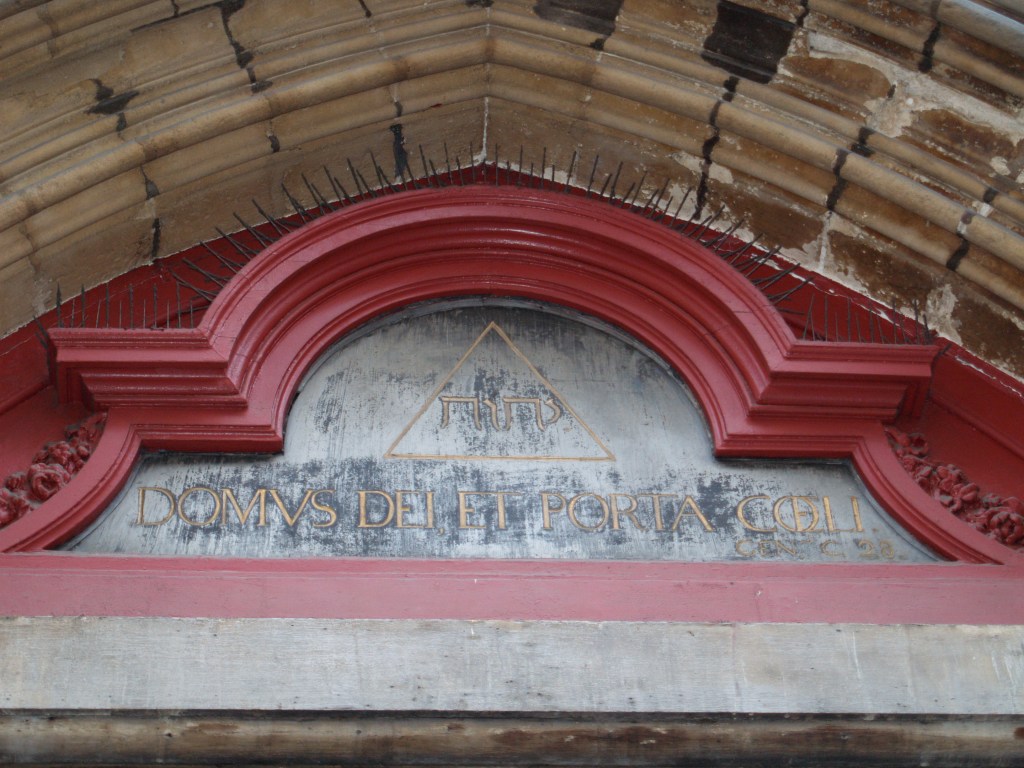
OLYMPUS DIGITAL CAMERA

Similarly, the monastery Abbot was also a man of God and a righteous man.  He tested the monk to be sure they had not been deceived.  And so it is also recorded in the monastery chronicles that the monk underwent a test with a cauldron of boiling water.  The humble monk willingly entered the boiling water.  The Abbot only asked him to do it once and the monk emerged from the water, whole.  Thus he demonstrated not only the sincerity of his faith to bear his Cross, but his devotion to the intercessions of Saint Helen  and the truth of the revelation.   Also, very importantly, it confirmed the integrity of the monastery.
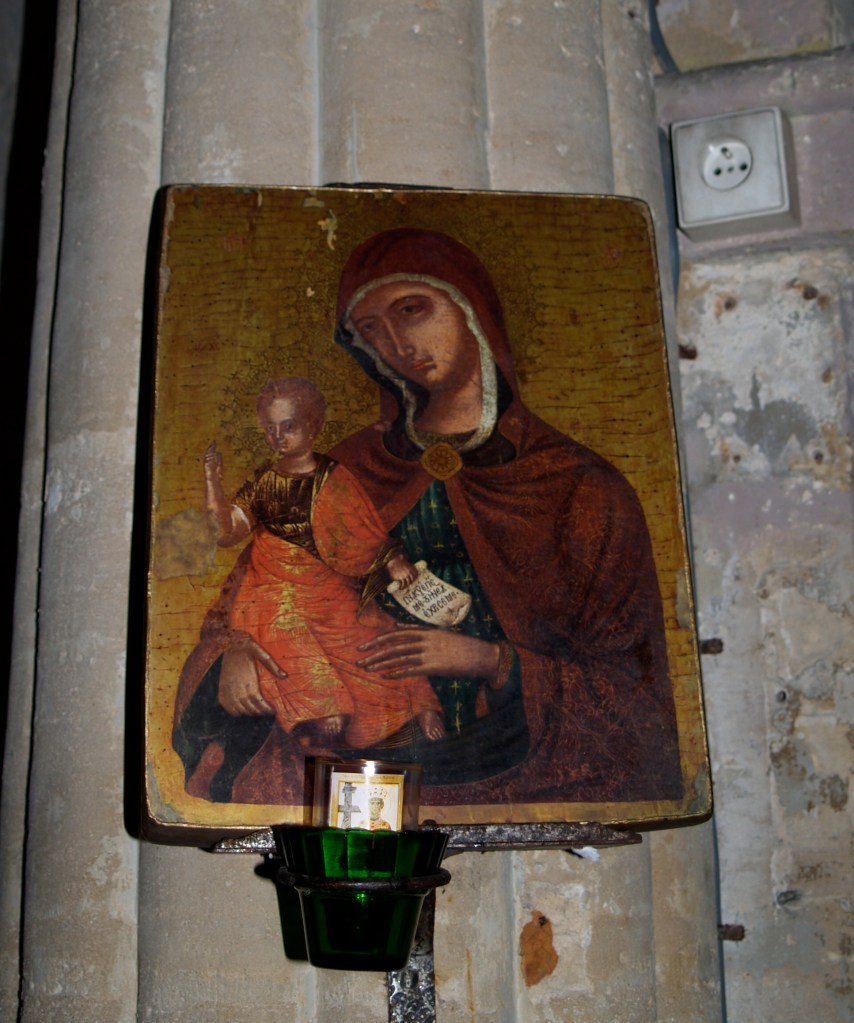
OLYMPUS DIGITAL CAMERA

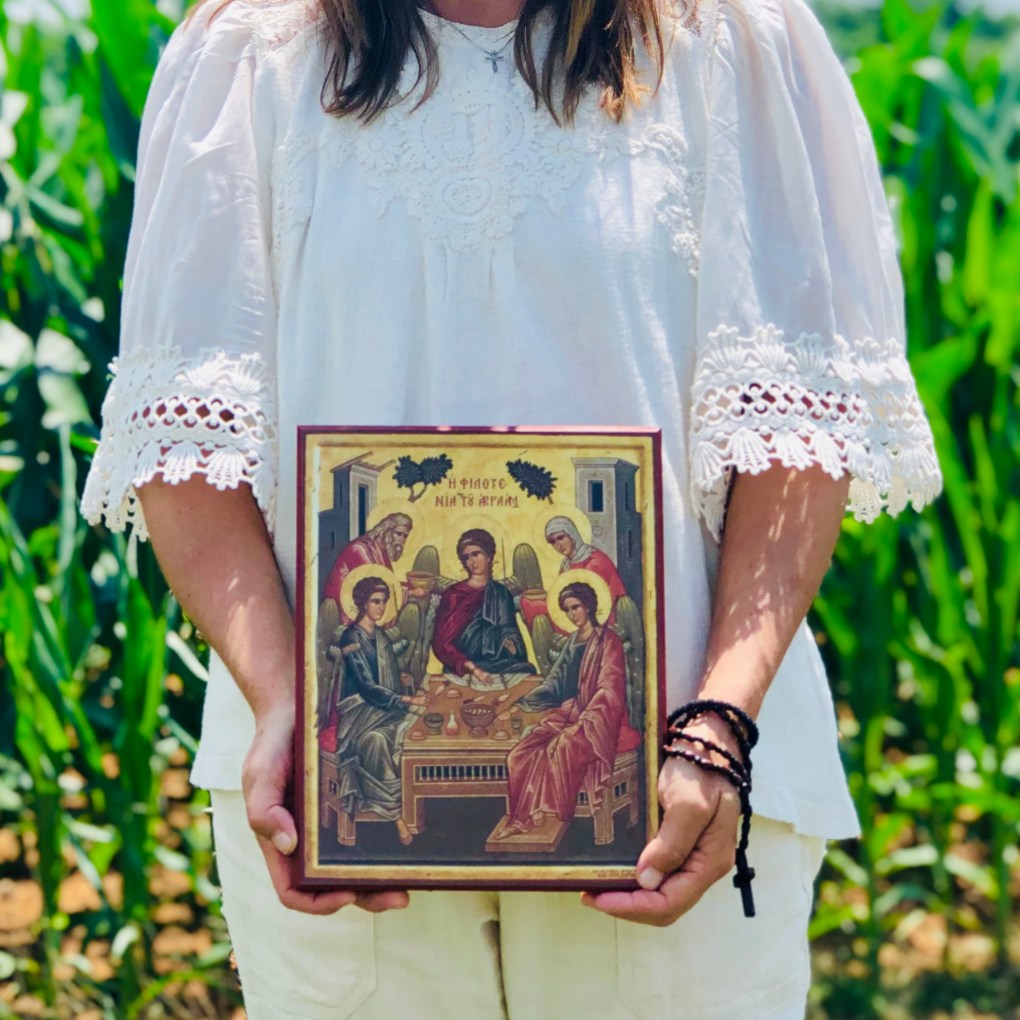
Of all the Churches in Paris we have visited, this Church was the most difficult to find – for the taxi driver too.  It is a Catholic Chuch, and even within the Church Saint Helen’s relics are not apparent but rather hidden in the sanctuary.  But that east meets west here is clear, for on the walls and in the cave are Byzantine icons of Saint Genevieve the patron Saint of Paris, Christ, Saint Symeon the Hospitality of Abraham and others.

We came to this Church in the early evening and after spending time with Saint Helen, we began to leave, except that a service was beginning.  So, we decided to stay for what was likely Vespers, a Gladsome Light and just a little bit of a Byzantine current bringing life to the chanting.  It was beautiful!
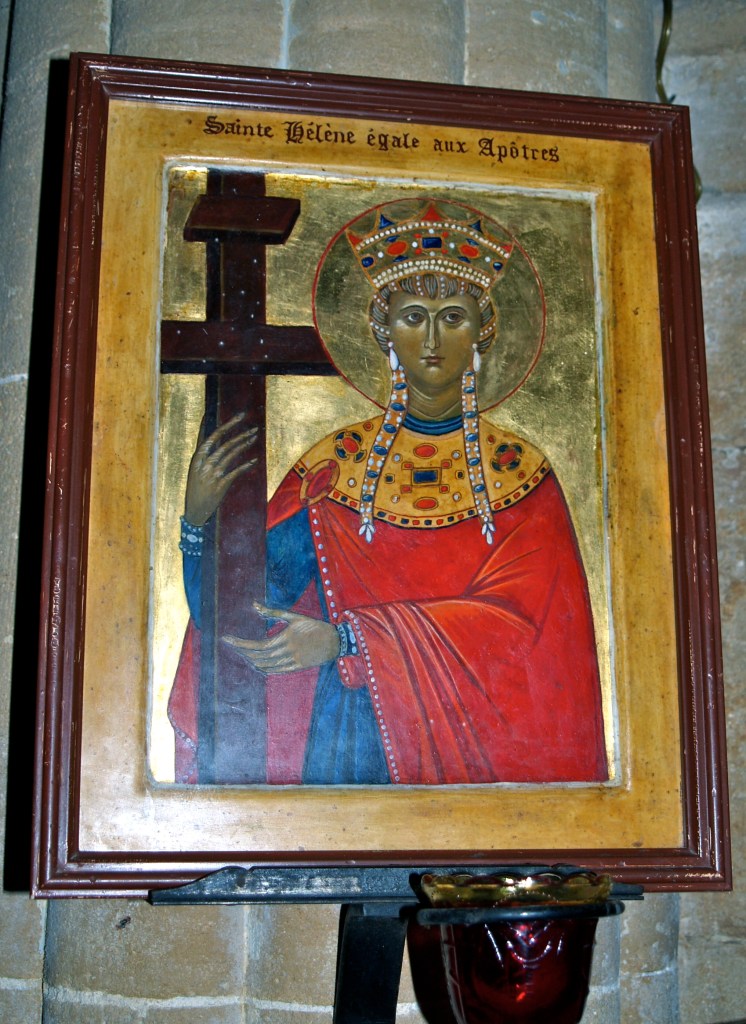
OLYMPUS DIGITAL CAMERA

It was an article in Roads to Emmaus Journal where we learned of the history of Orthodoxy in France.  In it a salient point is made, which is what would happen in the distracted age of today under such circumstances?

“The pope’s decision about St. Helen was similar; he saw God’s hand in it.  Our century, undoubtedly, would proclaim, “Return! Punish!”

Probably the relics would be returned and the monk would be punished.”

It’s a consideration.  Do we have the depth of Faith, not only to rightly worship (Orthodoxy) but to also allow for the Grace of God to work with the raw material of what is often the mess of peoples lives?  Do we actually believe that God exists beyond the tidy order of our liturgics and rubrics and that like the Potter he completes the work He begins in the lives of His people (Philippians 1:6)?

The answers to these questions are deeply personal, and speak to the heart of our relationship with God (the Father Son and Holy Spirit). It is very often that we find God in the storm…
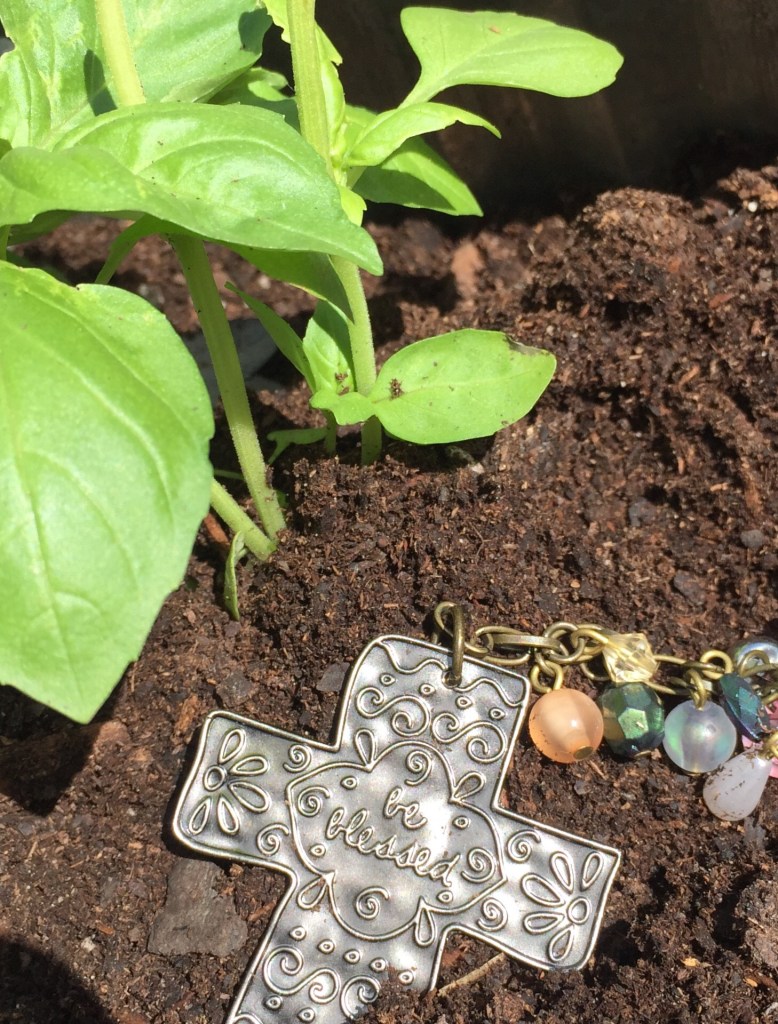
basil cross

For more information about Orthodoxy in France, read this article from Roads to Emmaus journal.

O Lord, save Thy people and bless Thine inheritance!
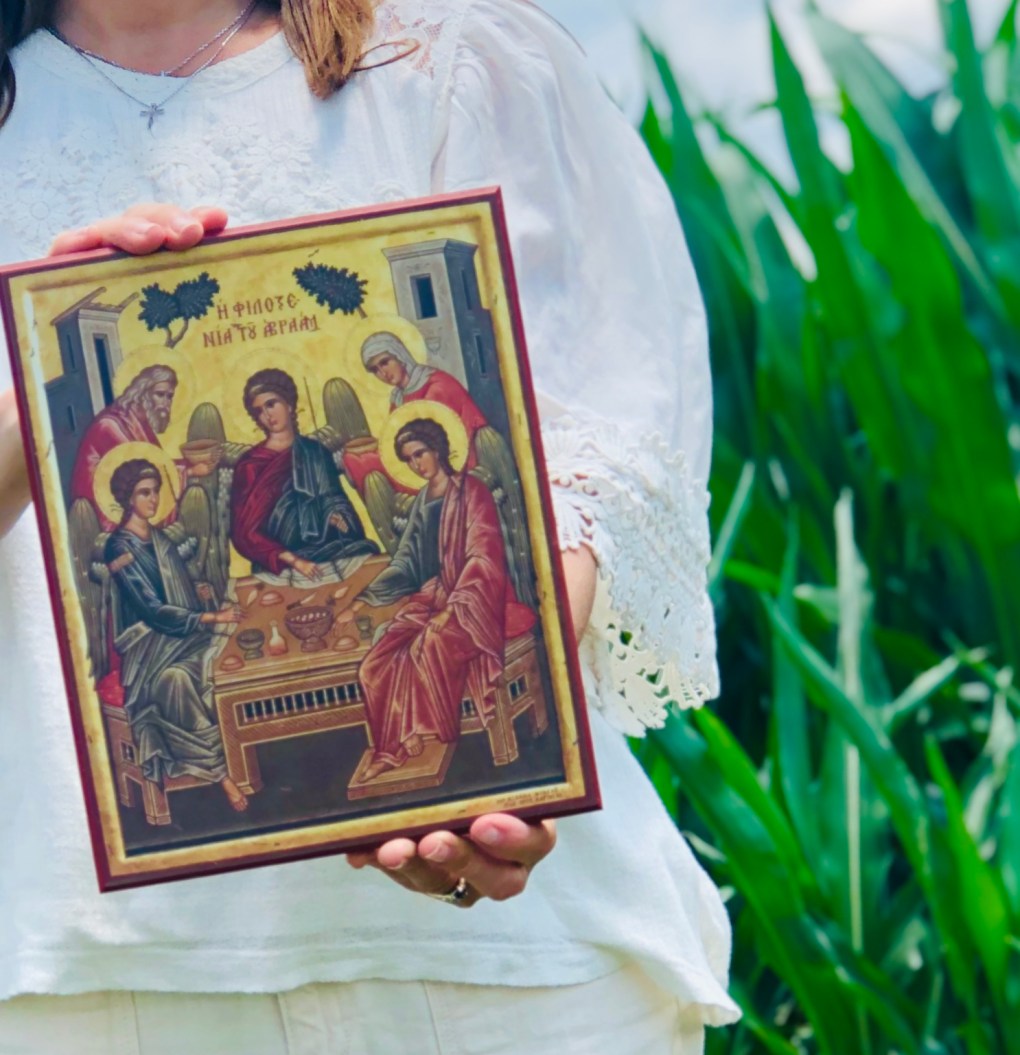

A new season of Grace {Through the Prayers of the Theotokos}

We seek Eternity in the midst of the temporal…

Celebrating the Orthodox New Liturgical Year

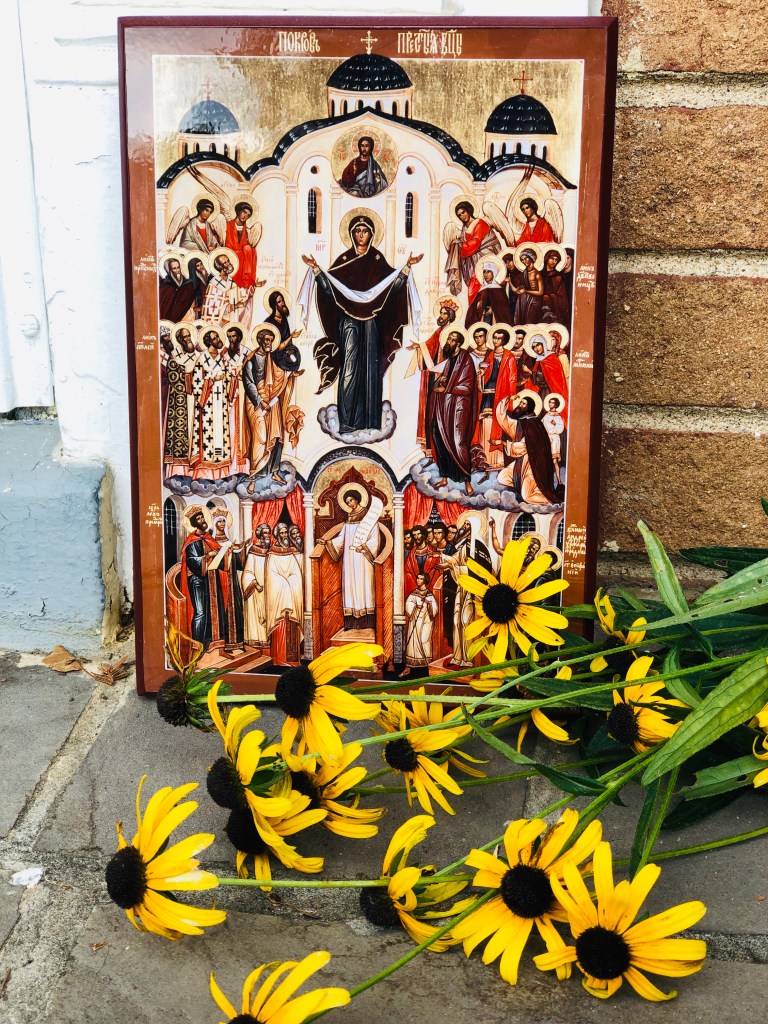
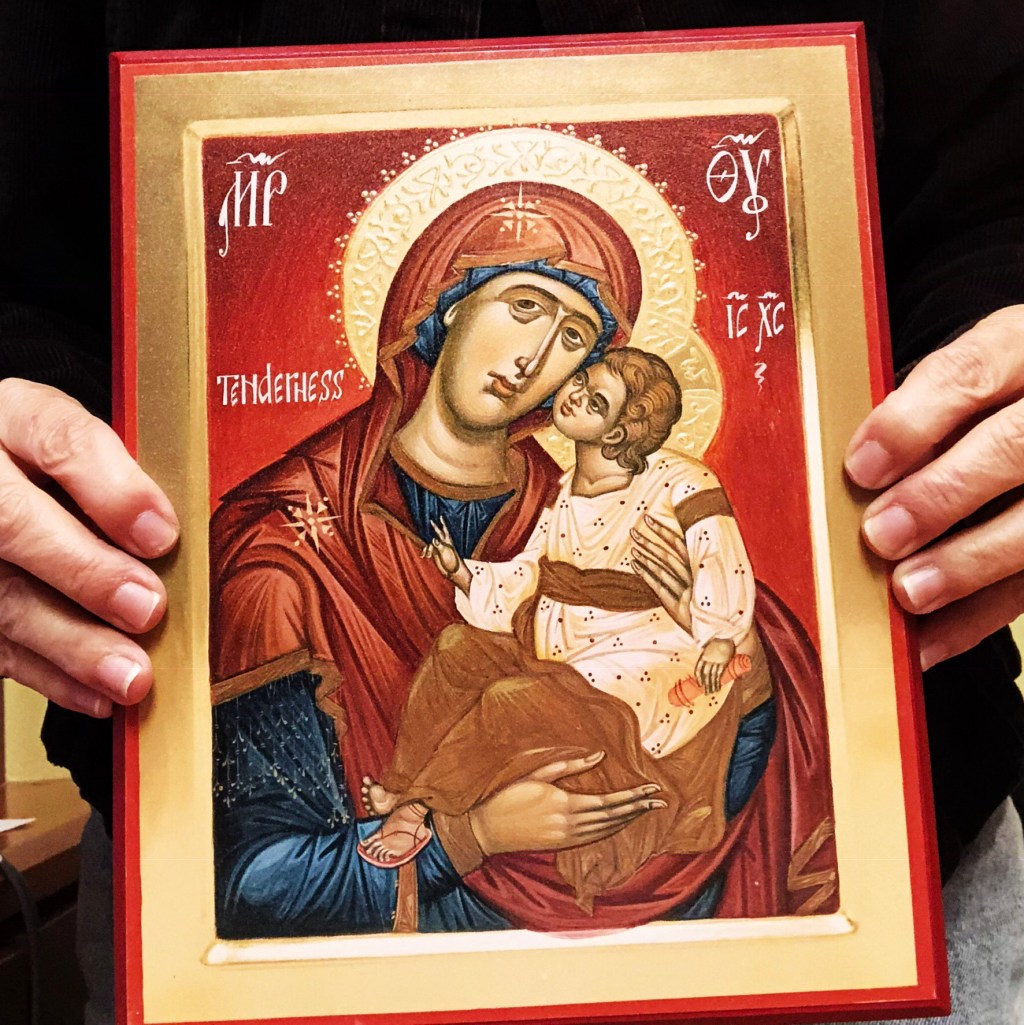
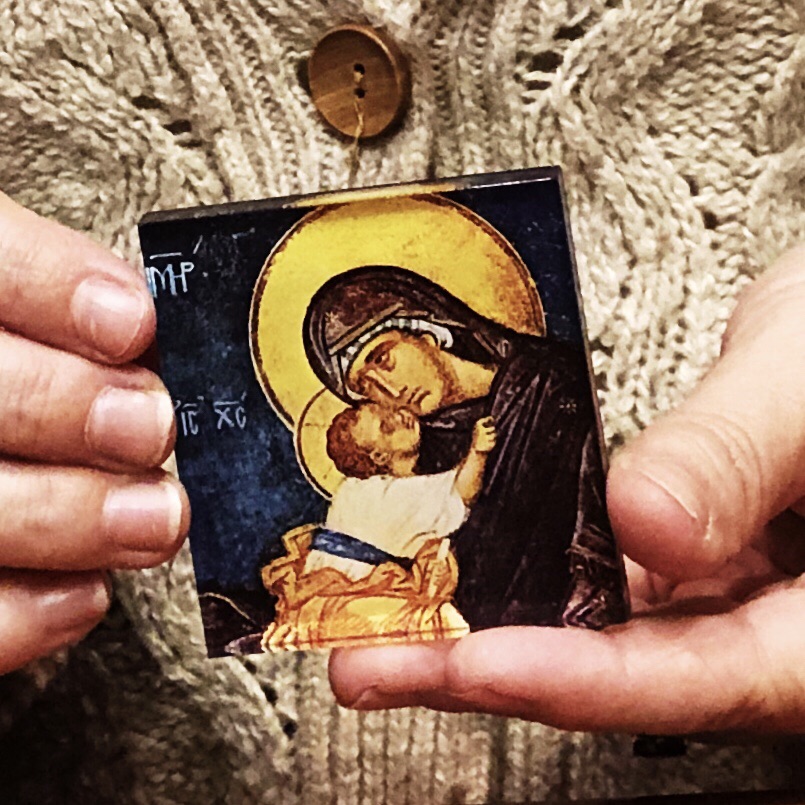
Did you know that September 1 is the beginning of the of the Orthodox Church liturgical year? It is customary in some traditions to place an icon on our doorstep on this day.

It is a beautiful tradition : the ushering in of the Gladsome Light of a new year of Grace. 

Just as the sun rises each morning the faithful rise again in this new year to walk with Christ though a new “but same” Liturgical cycle. We walk through the Feasts of Christ, the Theotokos and the Saints, the daily cycle of readings and all of the Sacraments.

When people ask if we are born again, every Orthodox Christian should actually proclaim,” YES!! ” I am a born again Christian!!

Because, as we walk sacramentally through life, living Liturgically and sacramentally to the best of our ability, we are always being reborn at each step… with each Confession, Eucharist, celebration of a feast, and even as we place an icon of the Theotokos on our very doorstep. We invite Grace into our lives.

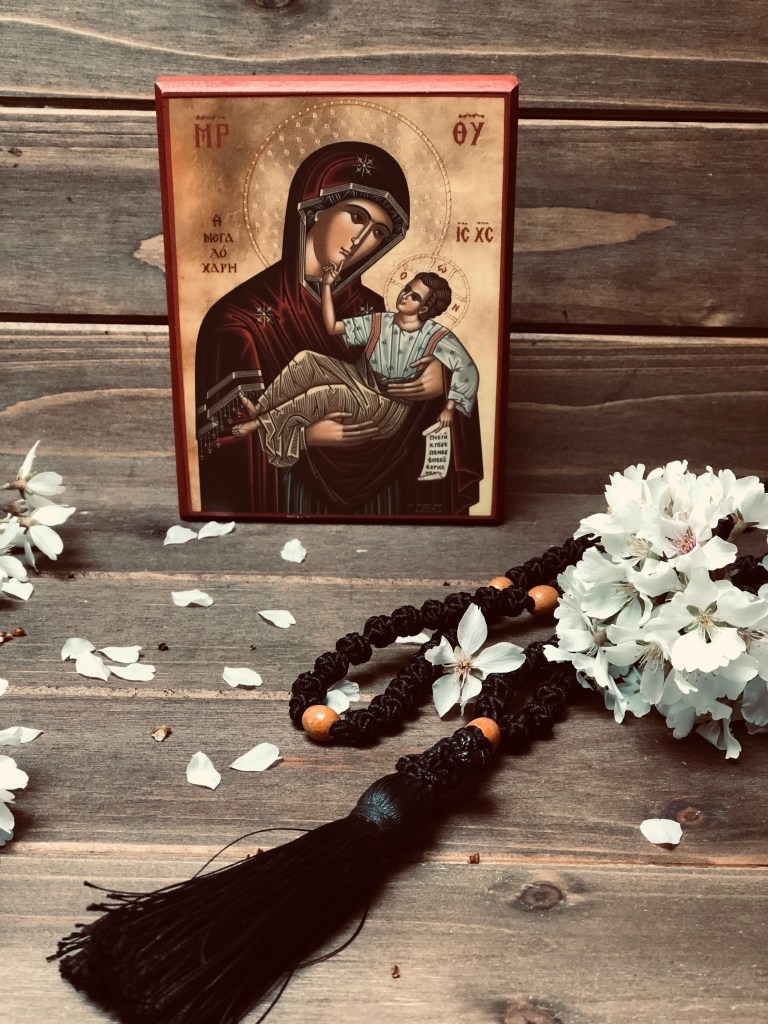
Placing an icon on the threshold of the home on this day reminds one of many things. For our family this year it is to recall always the intercessions and protection of the Theotokos. We also remember hospitality :: to love our brother as ourself; being “not forgetful to entertain strangers: for thereby some have entertained angels unawares.” (Hebrews 12:2)

Like breaking bread, our traditions unite us together. A recommitment to offer our lives to Christ and quite simply an physical manifestation of remembering Christ in our daily lives.

Monastics say, the soul follows the body.

They also say, Remember Thy First Love – that is Christ.

The secular world ties strings on their fingers to remember something important. The Orthodox faithful wear prayer ropes, place icons on our doors, sprinkle holy water through out our houses, anoint ourselves with Holy Oil and drink Holy Water along with prayer in time of crisis or need, we bake delicious faith based traditional breads and sweets that we share with family and friends and distribute to the poor.

We whisper the Jesus Prayer when we awake or can’t dleep at night, rather than count sheep.

And so, we might cross ourselves when we pass a Church, or cross ourselves when our children partake of the Eucharist and even when we yawn during a service – in this way- in some small measure we seek to remember Christ and offer all of ourselves to Him, and stand in the eternity of kairos, if but only for a second.

Of course, that happens most fully when we are in Church – partaking of the Eucharist, but when we leave we live in the Liturgy outside the Liturgy (Father Alexander Schmemman) and we bring Church into our lives. We bring our love of Christ into our every day lives, not just Sunday.

Recently I was struck in reading Deuteronomy

You shall love the Lord your God from your whole heart, from your whole soul, and from your whole power. So these words I command you today shall be in your heart and in your soul. You shall teach them to your sons, and shall talk of them when you sit in your house, when you walk by the way, when you lie down, and when you rise up. You shall bind them as a sign on your hand, and it shall be immovable before your eyes; and you shall write them on the doorposts of your houses and on your gates.” 

Deuteronomy 6:5-8

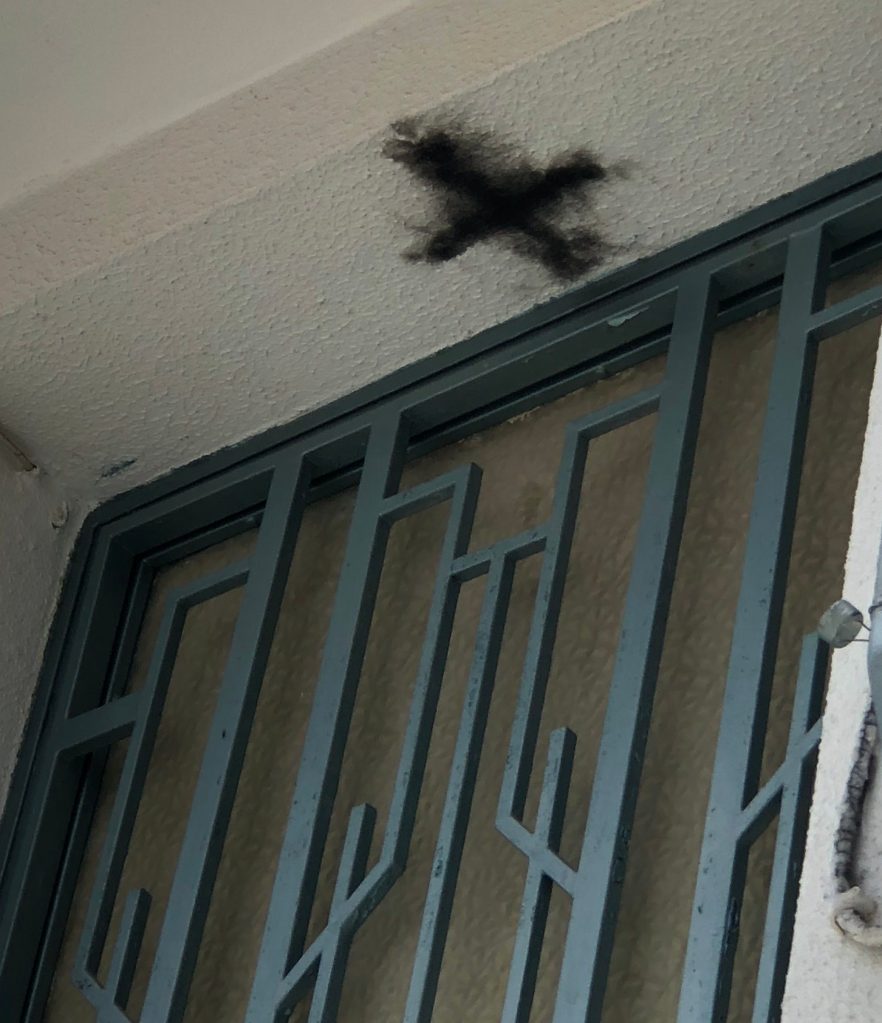
It reminded me of the Cross we burn onto our door thresholds at every house blessing.

Orthodox Christians express our faith in very tangible, open ways expressed our every day life. This will take many manifestations – certainly the most of which is that You shall love the Lord your God from your whole heart, from your whole soul, and from your whole power  

Certainly, its also important to say that no tradition ever overshadows the Sacraments of our Faith. And one can live their whole life never practicing the little “t” traditions and honestly that is totally fine – or you totally forget some years, or just are overcome by events…. look – nothing bad is going to happen and so one has to be wary of superstition.

The point is our faith is real, tactile and sensory – Overflowing from the silent depth of the heart and lived openly – but quietly, like the silent vigil candle or the sweet smelling incense lighting sweet fragrance in our icon corners (a place set aside for prayer within our home).

These little ways, help us sanctify our days and time and together with one voice and one mind – as the body of Christ – we walk boldly and in humility through the seasons of the Church year. These ways quiet and calm the restless bombarded soul of the modern world. A balm of needfulness and moments set aside.

We remember the “yes” of the Theotokos as we seek our own “yes” to Gods Will throughout our own ordinary regular lives.

And so it is an absolultey beautiful tradition to place an icon of the Theotokos on our doorsteps today – ushering in the stable rhythm of the Church as we offer the bread of our hearts, the bread of our lives, as an anaphora – through the many the seasons of the Liturgy of our lives.

It’s also an invitation to Grace – an open door… like that popular Christian song on the radio by Francesca Battistell “Holy Spirit” you are welcome here. 

Little “t” traditions are not rote or meaningless but a reflection and movement and outpouring of the heart.

There are times when it’s so easy to dwell my mind not on Goodness but many other things.  Some years I don’t  even remember to put my icon at the door till the end of the day… others I’ve forgotten all together.  And honestly – that’s okay!  The thing is that these little ways are little reminders.

Especially in our busy world- everyday brings a myriad of distractions and many of them entirely necessary and of course women have a million lists in their head – like what does this child need, how am I going to be in three different places at once, getting dinner ready, doctors appointments, back to school nights, youth group serving the soup kitchen, getting off time from work for my kids softball games, etc etc

One day in this country we will have incorporated these traditions and organically begun our own as an expression of our faith.  My encouragement to all is to look beneath the surface of our traditions – my experience of them is that they orient us to dwell our mind on Christ in little ways – throughout the day, throughout the week, throughout the year and throughout our lives. 


These little momentary ways of blessing are little ways of respite – moments directed to God.

We seek Eternity in the midst of the temporal. We seek to be mindful of not just what us important but what is needful, that there is a deeper fabric and thread to life than just what is on the surface.

We express that yearning in many ways – just one of which is to place an icon of the Theotokos on our footsteps inviting a new Season of Grace and you in.

Happy New Year and blessed new beginnings


a new year of Grace {repost}

As a convert to the Faith, I think a lot of the treasure of tradition that has been handed down for thousands of years… and often I am deeply drawn to the “little t” ways practiced in the “Little Church” of the home traditions most of all.

They are ways passed onto us from a deeply simple time of old… a time without hashtags and constant noise. They are little ways that perhaps one person in one village began, and others like bees drawn to a flower filled themselves of that nectar and made a harvest of honey out of it in the hive of their own lives.

Many times the “little-t” traditions are very local, such that the average convert doesn’t know what to make of it all. And we are the melting pot of every Orthodox tradition from every jurisdiction in this country.

The non-Orthodox routinely call them rote and meaningless gestures of Faith… and so over the years I have sat with each tradition that I know (and I am always learning more) and pondered why would I do this? I’ve come to the conclusion that none of it is meaningless and I sought a possibility of why it was done in the first place… my answers are my own, hopefully inspired by some Grace – not about me, but Christ. They may not resonate with you, or they might.

In the end they are deeply meaningful to me. I offer them to anyone wondering or struggling how to incorporate them into their life on a deeper level, rather than just to do them. Every tradition I know, I have learned about from others – family, friends – both in person and on social media.

A rote action is to live on the surface, to involve the body but not the soul. To those non-Orthodox who wonder about the little “t” tradition, even dismising them, I thank you. Your skepticism brought me beneath the surface of the veneer and into the deep woody grain of the cross. Partly to give non-Orthodox friends an answer but mostly to live and incorporate these expressions of Faith in my life in a real way, not a rote one. Every year I come back to those reflections with a fresh new look.

The Liturgical cycle of the Faith, both little “t” and big “T” is the same each year – teaching me and inviting me deeper into the Faith. And as we approach the new liturgical cycle, like the moon orbiting the Sun, or the rings of a tree showing the signs of feasting and famine, drought or floods… we are in a different season of life each year. We learn something new; we are reborn through repentance, through Grace, through Liturgical Living and this is a deep steadfast blessing to the faithful.

The following is a reflection of the practice of ushering in the Ecclesial New Year by placing an icon on our doorstep from a few years ago…

A New Year of Grace {Repost}

The Treasure of Tradition    Despite being united to Christ in the Orthodox Church some twenty years ago, there are still many of those little “t” traditions of which I do not know.  When I joined the Orthodox Church the first thing I realized is that I don’t know anything, and not in a bad way at all, but a very very good way…. a way that allows me to incorporate the faith morsel by morsel so that I can digest it.

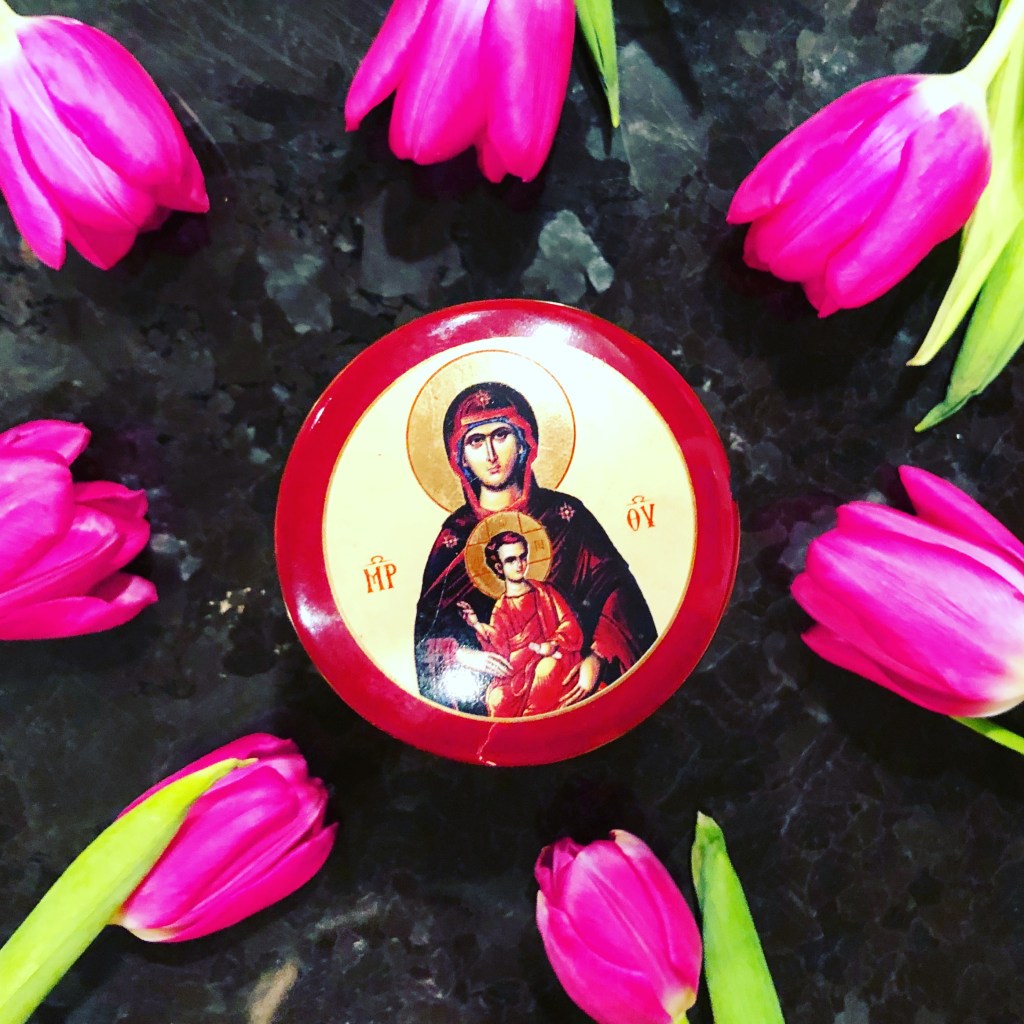
This year (just last night in fact!) I learned of the tradition to place an icon of the Most Holy Theotokos at the threshold of the door to our home as we usher in the new Liturgical (Ecclesial) Year of Grace.

In many conversations with non-Orthodox over the years, I have been struck by their idea that our little “t” and big “T” traditions are merely rote action.  Yet, as one who seeks (and quite imperfectly, too)  to live and raise a family in the faith, I find most beautifully that these “traditions” of ours are not rote or meaningless at all ::  but rather beckon and re-orient our hearts to that which is needful.

Just as we pray corporately the Anaphora during the Divine Liturgy, these little “t” traditions are our “little a” anaphoras :: a lifting up and offering of ourselves.  A simple, humbling endeavor, to place God above all, offering up our whole  lives to Him.

It is Eucharisteo : Grace,  Joy and Thanksgiving throughout the seasons of our lives.

These are just another way in which we lift up our hearts in this great litany of our lives.  Little children in Greece make the sign of the cross when riding their bikes past a Church :: mothers entering Church remind their little ones to make the sign of the cross before they enter :: we light candles :: burn sweet smelling incense :: we trace the sign of the cross on our children when tucking them into bed :: prayers and prostrations dovetail together :: we kiss the icons and we greet one another with a kiss of peace :: we dye our Pascha eggs the reddest of red, but we don’t dye them on Holy Friday ::  fresh basil is brought home from Church on the Elevation of the Cross and placed in the sourdough starters that will leaven phosphora :: and of course, we pray facing the east – our souls waiting for the Lord, like the watchman waiting for the dawn.

Again and again, in so many ways, we are called to this life in Christ.  To live our lives through the years and seasons and rhythm of the Church.  It is our great priority :: this great Liturgy of Life :: it is more needful  than schoolwork, profession, sports and hobby :: and yet with life in Christ as our priority our ability to fulfill our schoolwork, professions, sports or hobby is in no way diminished.  Traditions bring to light blessings :: even on the threshold of our very home.

Placing an icon of the Most Holy Theotokos at our doorstep – what a wonderful tradition to usher in the new Ecclesial Year :: just as the Ecclesia means “called out” :: the new Ecclesial year “calls us out” again, “to lay aside our earthly cares” and enter into the timeless rhythms and seasons of the Liturgical life of the Church.

The Orthodox Christian lives Ecclesial Year to Ecclesial Year ::Feast to Feast :: Fast to Fast ::Confession to Confession :: Liturgy to Liturgy :: Eucharist to Eucharist.  Just as we have New Year’s resolutions to usher in a new calendar year, now is a great moment to pause, reflect and begin again.

Does my family have regular prayer time?  If not, this is a time to begin.  Are we attending Church weekly?  That’s alright :: start this weeks Vespers and Liturgy.  Has it been forever since my last Confession :: make an inventory, call your priest.  Go.

And so today, on the dawn of a new ecclesial year, the faithful are hopeful standing on this threshold of Grace of a new year, with an invitation to redeem the time.

Blessed art thou O Lord, teach me Thy statutes.

Real life is Eucharist, a movement of love and adoration toward God, the movement in which alone the meaning and the value of all that exists can be revealed and fulfilled

~

Alexander Schmemman

the chant lament of all eternity

The 15th Antiphon is sung in every single Orthodox Church the world round on Great and Holy Friday,…. and it is the chant lament of all eternity. That night we read the twelve Gospels of His passion. We lament Christ’s Crucifixion – along with all of creation – with every blade of grass, the rocks and with the very rays of the sun which hide in mourning.


Yet if you listen to the hymn – you’ll find in the midst of the darkness of the worlds groaning eison lies an undergirding of the glorious hope of the Gladsome light of Christ’s Resurrection.

It is a hymn that finds its expression most beautifully in a byzantine setting. So, no matter where we worship, it is this very hymn that we always listen to on the way home from Church.


Remember me O Lord in Thy Kingdom


a peaceful fast {repost}

O Word supreme in love, who with the Father and the Spirit hast created all things visible and invisible in Thy wisdom past speech, grant that we may spend the season of the joyful Fast in profound peace.

Matins: Tuesday in Cheesefare Week

This past week of Meatfare and this present week of Cheesefare offers Orthodox Christians a wonderful occasion to clean our pantries of leftover meat, dairy and eggs as we ease into the strictness of the Fast – when, through the effort of Lent, we also clean the pantry of our hearts.  During the forty day fast we forgo heavy and clogging meals, seeking instead our nourishment from lighter and more cleansing plant-based sustenance.  All of this fasting fare is, of course, fortified with the Lenten services and soul-restorative calories found as the faithful graze within the beautiful spiritual pastures Lent.

Throughout these past weeks, our Mother the Church, has shepherded, taught and nudged the faithful closer and closer to the bounds of the Great Lent.  It is through these weeks of preparation that the aspiration of this Great Fast has been made clear once again – that it is not the rigidity of dietary restrictions (to which we are certainly called to adhere), but rather the grace of an inner change of heart.

Genuine fasting has as an essential  ingredient the relationships of family and community.  Isn’t it pleasant when brothers dwell in unity… we are not saved alone.   A wise retired priest told me once that being in family and community can be likened to a satchel of sharp jagged rocks.  Through the jostling of life we rub each other, sometimes the wrong way, with our sharp edges.  Friction happens – but through time and forgiveness, those rocky edges become smooth and mellowed.  Forgiveness Vespers seeks to erode those jagged edges of relationship.

And so it is, that this Sunday, the Orthodox Christian Lenten journey is ushered in with love and forgiveness.

How appropriate that the first flavor of this awesome labor of fasting is found in a feast… the blessed taste of forgiveness – that given and received – during the Vespers of Forgiveness this very weekend.   These past weeks of the humility of the Publican, the faithful perseverance of the woman at the well, the coming to his senses of the Prodigal – a return to the Father – these intend to soften hearts.

Great Lent is a walk of  joy, an annual journey of the faithful body of Christ.

Does it really come as any great surprise that the faithful rejoice in this Fast with gladness?  For truly, to savor even a crumb off of Lenten tables laden with fasting, reminds us that we are blessed, we are blessed, we are so very richly blessed!

lenten pantry

fruits of the struggle

they are in the world but not of the world

they are separated from all yet united to all

We visit monasteries to leave the noise of the world and find some stillness.   Especially after a tragedy it is a blessing to be in contact with monastics, better still if one has developed a relationship with them.  But either way, it’s good to get away.

Despite the growth of monastic communities there still remains skepticism by some about the role of monasteries in our Faith, yet Saint John Chrysostom is clear that the health of our Churches is interrelated to the presence of monasteries.   Monastics truly place themselves beneath all the people in the world and consider themselves the chief among sinners.  They cultivate a patience and silence that is palpable to the souls that visit them.

They pray for the salvation of the whole world as fervently as we pray for ourselves.   Their joy is not a fleeting joy but the jewel-joy forged of the pressure of the struggle.  It is like a low hanging fruit, uplifting and  nourishing all who gather under it’s branches.

Elder Amphilochios amplifies this interconnection between the health of the parishes in this way,

“Wherever Orthodox monasticism is absent, the Church does not exist, just as there can not be a government with out an army and a well-governed state without a national guard.  The monastics guard the boundaries of our Church and protect Her from her enemies, who in or contemporary materialistic ages rush to mangle her like wolves.”

To visit a monastery is to visit a place of intensified authentic spiritual struggle.  Orthodox believers should always bear that in mind when visiting monastic communities.   You might walk right in to the spiritual struggle of another – but yet all of us are in a great struggle – aren’t we?

But for pilgrims with no expectation, for pilgrims seeking a good word, one finds low hanging fruit, a respite from earthly cares, and a glimpse at heaven on earth.


believe {the gift}

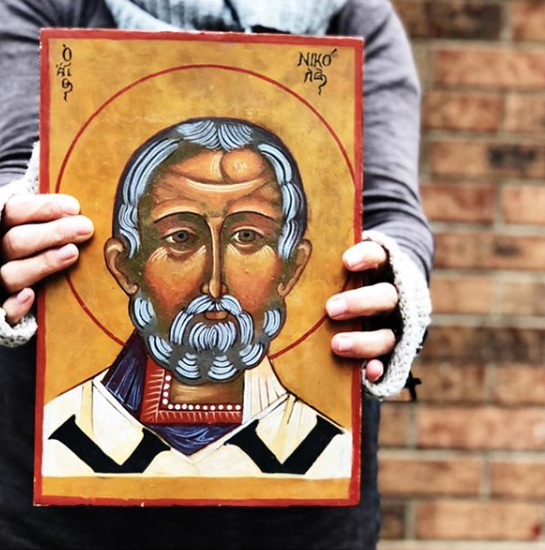
Blessed Happy Enduring Wondrous Feast of Saint Nikolaus – the true Santa Claus. My daughter Kate wrote this icon I’m holding in the picture – we scraped every penny we had so she could take the lessons. If you want to hear a story about the hope and eyes of truth and love of a child it’s about our youngest daughter . It’s not a story about theology but it might be – because it’s out of the mouths of babes and unless ye become like children … we never spoke of Santa Claus with our oldest but of Saint Niklaus – though in truth we made no distinction. It’s possible that we left cookies of which we took a bite and left as evidence and of which she found. And in sixth grade every kid in that elementary school class made fun of her and said Santa Claus is a fake and your parents are liars – you are so sheltered. She came home crying. Angry. Heartbroken – of course – we are her parents. Did we do something wrong.??? I don’t know. But for her youngest sister we learned our lesson and – said there is not a Santa Claus. Or so we thought. Yes there is a Saint Nikolaus but not a Santa Claus. We would not again have a daughter so ruthlessly hurt. And then ( and this is no lie )- our youngest daughter took a Santa Claus sized bite out of each of the cookies one year (and she was young – too young to do it )- and left them for us to find – in my heart it’s always been God inspired – because she left the cookies for me – and specifically said Santa Claus took a bite out of these mom. She was – like in kindergarten. She did that just like she left the quarter under her own pillow from the tooth fairy that I wasn’t going to trick her into believing – to show us in the morning. Each one of our children has taught us so very very much – the heart of Faith in their child love touching the waning needful Faith in us. This story is true about a child wanting to embrace wonder and goodness. And it is offered to you On this Feastal Day of Saint Nichoolas my wish for you is to believe and keep your wonder alive.


fasting for a jealous God

A44A64E1-7054-4481-9CAE-1D8BE45C0DAB


We have walked almost one week in this time of the great abstinence for Orthodox Christians.   Coming from a family that is not Orthodox and having many friends outside the faith,  I have often been asked, why this  mindless rote mechanical endeavor?”  Many outside the Faith question the validity of fasting for spiritual purposes – yet embrace it for health, beauty, weight loss and the like.

My answer is, why not come, taste and see what is the Fast. I assure you that the answer is no – it is not mindless endeavor but rather the most mindful one.

Fasting is hearts seeking the God seeking our hearts.

Our fast begins with a feast of forgiveness where we literally ask forgiveness of our brothers and sisters.

The Church sets aside the fast In the understanding that life is so interrupted frenzied and discombobulated and we are easily distracted and need a time set aside for this very purpose.

Why fast? Because what nourishes the soul is just as important as what nourishes the body.  I was reminded that fasting gives us greater awareness of our spiritual situation but only when balanced by prayer.   The purpose of that awareness is healing – reconciliation – wholeness – ultimately Confession.

And so, we are fortified and sustained  not on the little we omit but on the abundance we add.

We increase our devotion to Scripture : nourishing on the Word of God.

We add greater Almsgiving : charity nourishing the heart of the giver and feeding heart and body of the receiver.

We make every effort to immerse ourselves in the Lenten cycle of services – and expecting to be tired – we receive the healing Grace poured into our hearts expressed in the poetic hymnody of the Church and the Mysteries of the Sacraments.

Great Lent is laying aside our earthly cares.  It is placing God first – where He belongs and jealously longs to be.


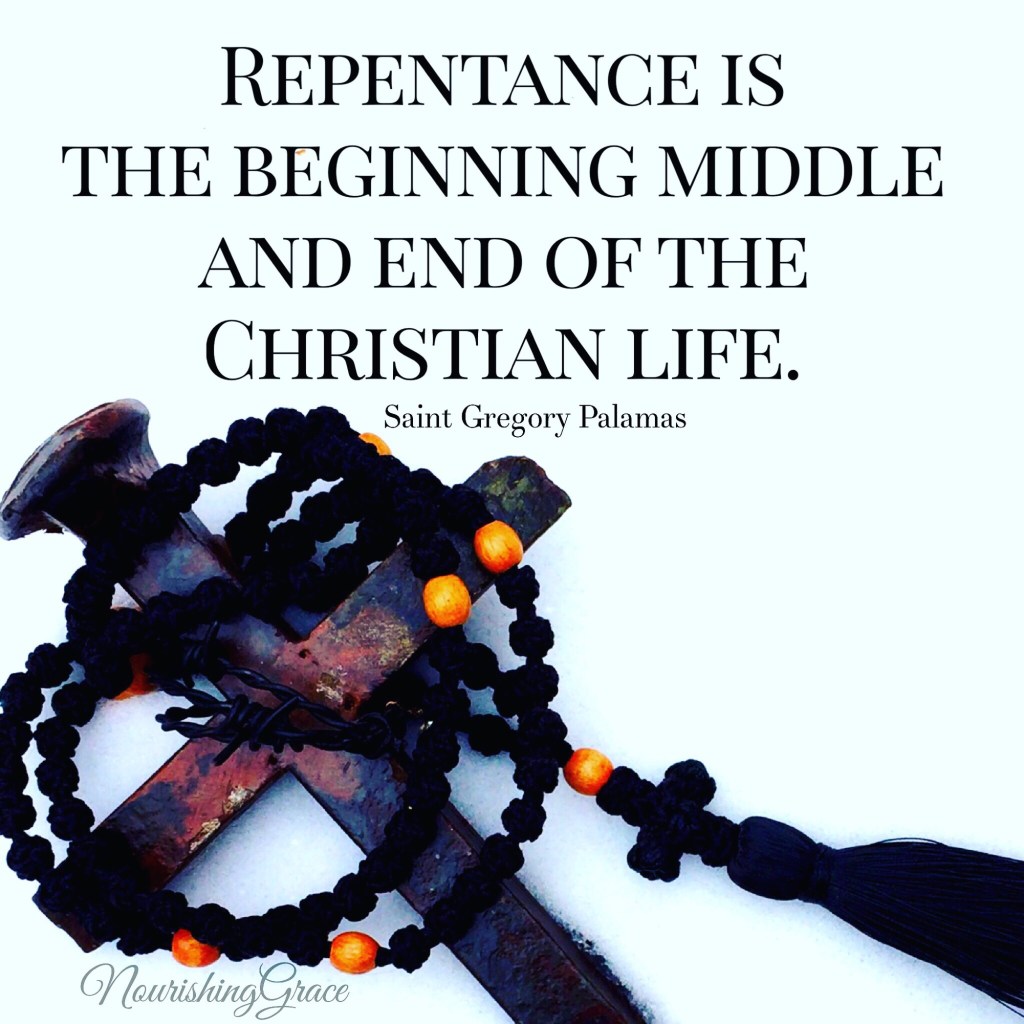
the beginning middle and end

E4D2A814-FEE4-494A-886D-AA2CDAA8620A

We are approaching a beautiful time of repentance set aside for us in the life of the Orthodox Church.

It is a time of reconciliation and spiritual growth

Already the Church has been priming us with the beautiful Sunday’s of preparation… the humility of the tax collector, the coming to his senses of the Prodigal Son.  Judgement Sunday is a great call bringing us to our senses that we are not saved alone, our lives are not our own and the least of our brethren is Christ – the beggar, the prisoner, the crippled man.   That to pass by their suffering is to pass by Christ   Rejection.

These are but a little leaven softening the lump of our hearts.

It’s my favorite season of the Church – but I know I say that about all of the seasons set aside in the Church – I guess they all are my favorite, really.

As a mom I have tried to explain this word repentance to my daughters. I want them so comfortable with it that they could cuddle up with it like a blanket.

I want them to nestle in the Truth of Faith and embrace the timeless wisdom and Grace of the Church and live their lives in it. Because what I have noted is that in today’s relative everything goes world many ears have hardened to this word making it sound more like a punishment than a healing holistic way.

Repentance as a word and a way looks like an angry wagging finger rather than an inviting outstretched Hand.

The reality for most of us us that life happens. We get mired in the muck of it and the muck of it gets all over us. And so the Church guides us gently into Repentance.

The fruit of it is a heart returning to innocence – something like that of a child.  Another helpful explanation I have heard is that it is a cure or return to wholeness.  A monk, older than me, once told me that after years of not seeing a childhood friend who had entered Orthodox monasticism he made the journey to visit her and saw in her all of the qualities of innocence he remembered from when they were children playing together and this innocence, for me is now the image of repentance.

I suppose that’s why monastics also say that repentance is gift and our task.

It’s a heart given entirely over to Christ. A struggle.

Faith like a child, love like a child, forgiveness and innocence like a child.

I want that – I need that. don’t you?


the gates of innocence

IMG_1233


This is a gate of the road leading to the pasture of our small family farm…

As we approach the time of the Orthodox Christian beautiful fast, which is more to say the beautiful emphasis on repentance (rekindling the Greatest Commandment in our hearts) the Church blesses and fortifies us with the hymn 

Open to me, O Giver of Life, the gates of repentance:

for early in the morning my spirit seeks Your holy temple…

(Troparion of Matins, Sunday of the Publican and the Pharisee).  

Some time ago a monastic told me that “repentance is a gift” and that it is also our task.  Struggle.  A blogging priest wrote that repentance is turning to God in the acceptance who I am (warts and all).  Stark reality.  A friend monk recently explained repentance as a return to childhood innocence yet with all the knowledge and experience of a life lived.  Humility. Struggle.  Rekindling.

 My admiration for monastics is deep because their repentance is lived every second of every day which is why the faithful also seek out their counsel. 

Over the years and tears, a meditation of the gates of repentance, that might one day open for me, has formed. 

That meditation is of our migration, as the body of Christ, being led by our Mother the Church into the fields of Great Lent.  Each year I envision it as a pasture – like the one above – and that Lenten pasture nourishment being the hymns of the Church services; our public prayers corporate and deepest most intimate devotions private; the reading of Scriptures;  the Mysteries of the Church and the giving of alms.  These ways bear the language and embodiment of repentance.  They remind us that everything—the beating of our hearts, the breath of our lungs, each morsel of food, every failure – like the pig pen of the Prodigal, and every success—is pure gift.   Great Lent is about love, because it is Divine Love that brought us into being.

The pastures of Great Lent nourish us on the language of salvation, encouraging and nourishing the very depth of our being – that our life is not our own and  “that it is not the production of crops that feeds man, but Your word that maintains those who believe in You” (Wisdom of Solomon 16:26)

May God bless us to feel the Lent.

“Open to me the doors of repentance for early in the morning my spirit seeks Your holy temple…”