come receive the light

img_5449

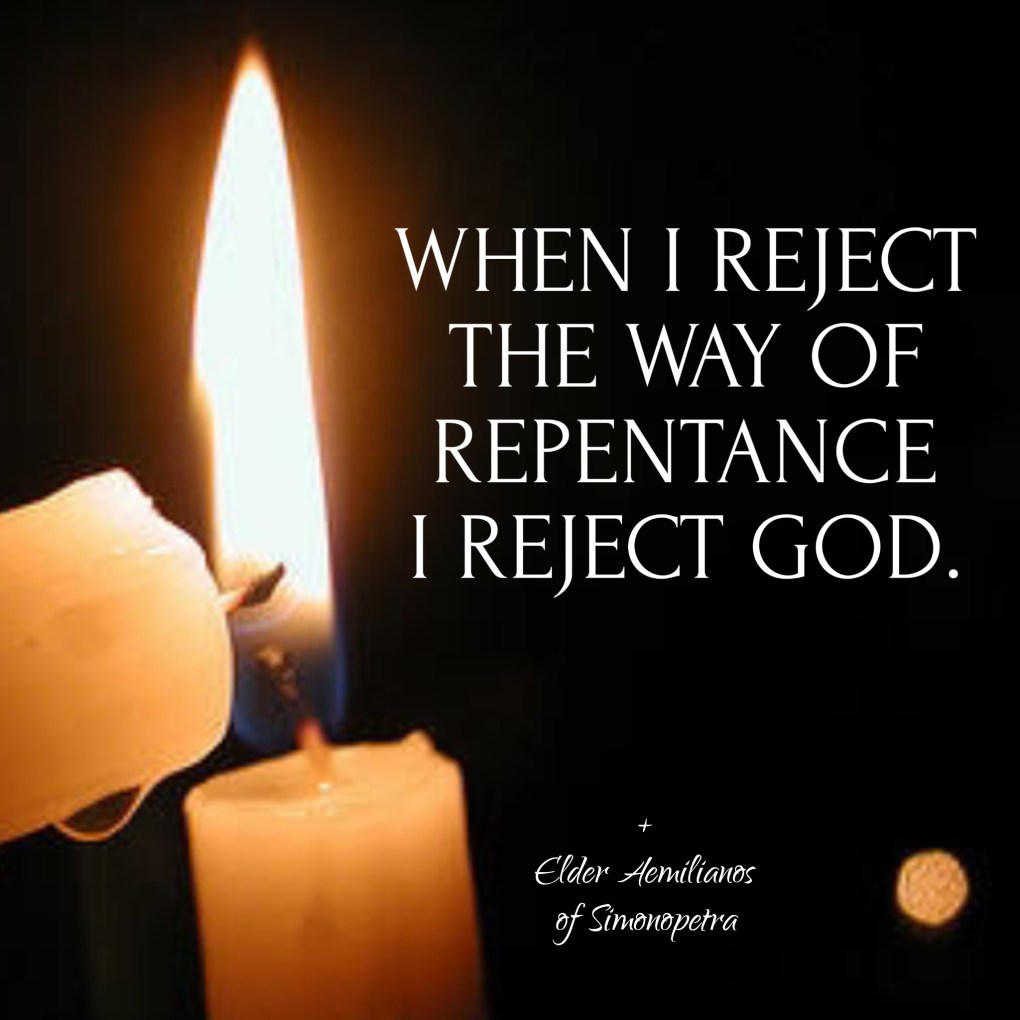
When I reject the way of repentance, I reject God.

When I chose to remain in sin, I expel God from my heart.

But as soon as I turn from my sin, God enters my heart.

And when He does, I discover my place in the Church,

which is His body and His bride.

+

Elder Aemilianos of Simonopetra


The Sacrament of Confession, is for an Orthodox Christian, the turning from sin and coming to one’s senses.  One is conscious of their unworthiness, yet joyfully receives the longed for, heartwarming embrace from the Father.

It is the lost sheep returning to the flock, borne on the shoulders of the Good Shepherd.

The Church Fathers tell us that gift of repentance is the work of divine grace, which we, then, wholeheartedly offer and return to God.  Saint John Chrysostom says that “repentance opens up heaven“.

While the Sacrament of Confession is the same for Orthodox world-wide, different localities may offer their own customs.

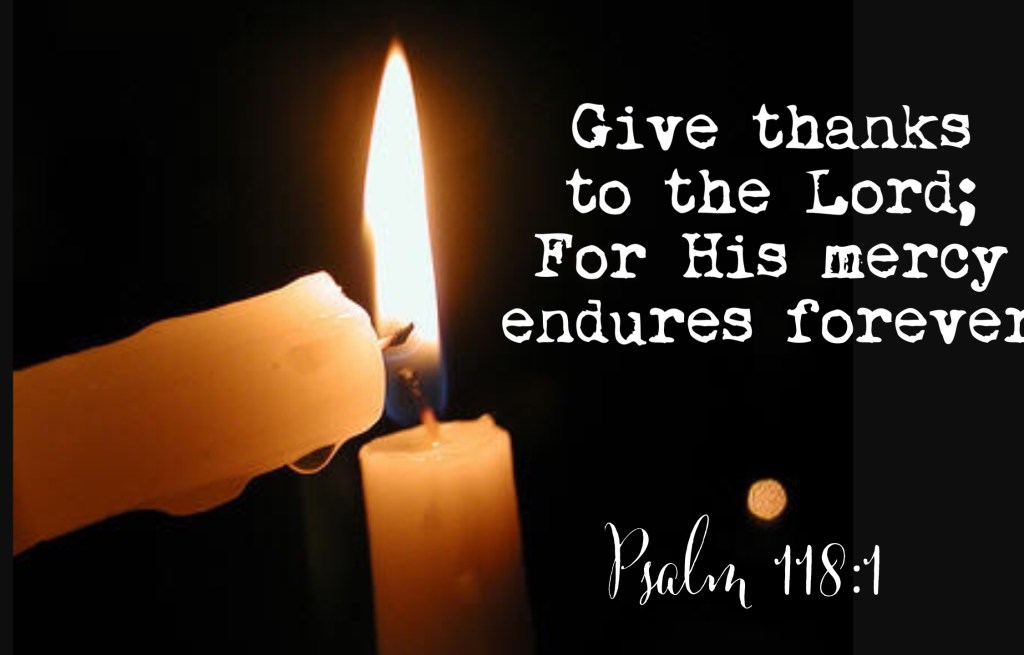
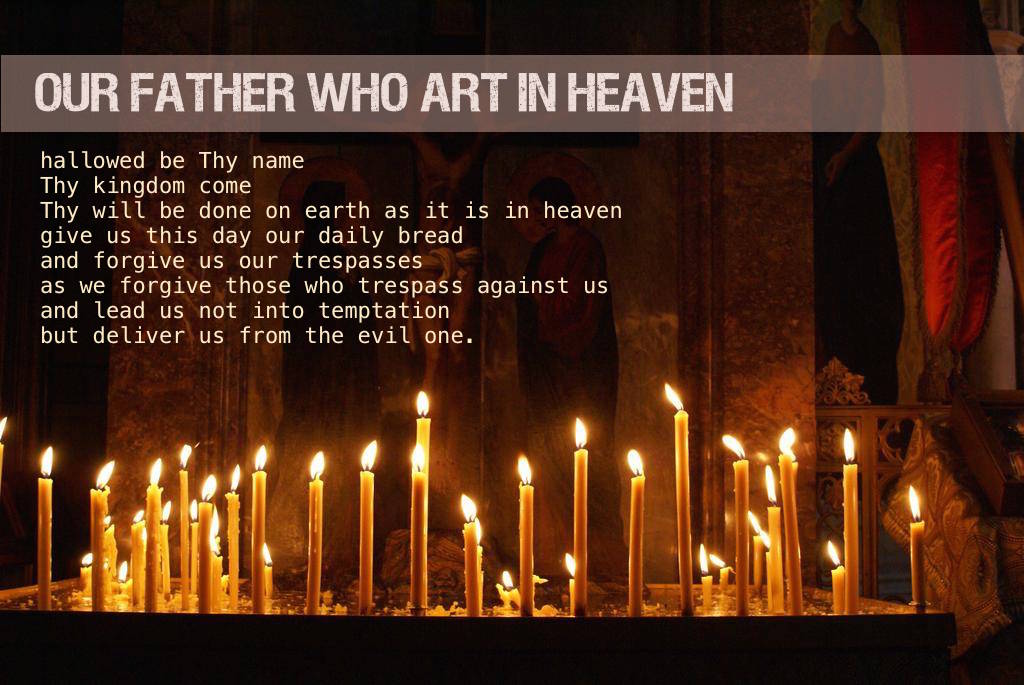
Over the summer, at a monastery retreat, Confession was available during the Divine Liturgy, in a side nave of the Church.  The nave was dark except for a candle stand with one lit candle and a monk priest.

The light of Christ illumines.” (1)

Only a few partook of Confession, but as each communicant received the prayer of absolution, she lit a new candle from the flame of the Confesson before her, so that with each new flame, the blaze and glow of each Confession literally overcame the darkness of that little chapel.

A powerfully striking impression that says more than words ever could.  What a joy to behold – that as each woman left, heart lightened and unburdened – the tiny chapel became lighter and brighter.  Repentance overcoming darkness and returning to the light of Christ, which illumines the faithful.

Like the Resurrection service of Pascha, Confession invites us again and again, to “discover our place within the Church” and continue on this journey redeeming the time.

Come take ye light, that is never overtaken by night, and come glorify Christ, Who is risen from the dead“.(2)


+     +     +

(1) Orthodox Service of the Presanctified Liturgy

(2) Orthodox Christian service of Pascha


thanksgiving

img_5301

Eucharist {thanksgiving} is the state of the perfect man.

Eucharist is the life of paradise.

Eucharist is the only full and real response of man to God’s creation, redemption and gift of heaven.

Father Alexander Schmemann of Blessed Memory

Give thanks to the Lord, for He is good; For His mercy endures forever. (Psalm 118:1)

Eucharist – comes from the Greek word eukharistia.  Do you see the word kharis rooted right there in the middle of it?  The tenor of kharis resonates “grace” – “favor”.  It is gratitude abundant and well.  Grace and favor – so freely given by God – which is swaddled, nestled and bound up in the thanksgiving we offer graciously in return to Him.  

Thanksgiving is paramount to life – not just a national holiday contemplated once every November.  Father Alexander Schmemann said, “The only real fall of man is his noneucharistic life, in a noneucharistic world.”   In a noneucharistic world we’ve forgotten to love God with our whole heart and our whole soul and our whole mind.

There must not be a word adequately describing the lament of a noneucharistic world.

But for Orthodox Christians, every day is one ablaze with the promise of Thanksgiving : for blessings small and large, those that bring tears and those that warm the heart.

Eukharistia – it is not resevered for one day of the year or even one day of the week but celebrated in our hearts – each and every day.  The thanks rendered by each person is born of their own season and circumstance of lives lived in the Church.

+ + +

With the breaking dawn – the hope of each new day, we give thanks.

Thanks for family, and friends, near and far and for friends who walk right in the house, rather than knock.

For illness and the times we stumble and fall, we give thanks.   For crosses we bear and those who’ve  helped us to lift them up – eukharistia.

For Faith that requires everything and for marriages and love enduring and strong – eukharistia.

Thanksgiving buds and sprouts during seasons of plentiful blessing, but blooms and flourishes through our times of trouble and want  – in all of it, we lift up our hearts and render thanks to the Lord.

Eukharistia : We love Father Son and Holy Spirit : the Trinity one in Essense.  We treasure the tender hearted Theotokos, and so great a cloud of witness.  We cherish the harbor of the Church – a respite where earthly cares are laid aside.  We give thanks for the God who first loved us and  for all of His gifts, showered upon us :: gifts so freely given, unprofitable as we are, and we graciously offer to Him in return – hearts of thanksgiving.

Eucharist is the cup of salvation.  Our thanksgiving is trust in the Lord and the spacious expectation and surprising joy of the present moment. Eukharistia says Thy Will be done and glory to God for all things.  It is a new song unto the Lord (Psalm 96:1).

Eukharistia unearths love, forgiveness, peace and unity in the face of adversity, temptation and trial.  It is the antidote to jealousy, bitterness, criticism, anxiety and resentment.  The way of eukharistia allows us to endure the fatigue of the day and bear our part in all it’s passing events – resting in the assurance that it’s all for our salvation.  It nourishes and uplifts, and where one is uplifted, all are uplifted.

Eukharistia allows for the mystery.  It bursts forth and births into spiritual joy, softening hearts and making room for the coming of the Lord.

In this season of the Advent  eukharistia is the bright shining star on a still still night guiding us toward the Nativity.

Blessings on this Thanksgiving Holiday.

Resources:

Eukharistia : http://www.etymonline.com/index.php?term=Eucharist


a new year of grace

IMG_4651

The mystery of liturgical time… In God, there is but one moment, in which everything is included.  The fullness of the liturgical year does not consist of the commemorative cycle of Christ’s life being resolved or completed, for the completion of a series implies that there is a series, a succession of disjointed elements.  The fullness of the liturgical year has to be thought of qualitatively and not quantitatively:  it is achieved if, on any day whatsoever of the liturgical year, whichever it might be, we are capable of grasping :: through the particular event which is commemorated :: Christ as a whole, the whole of His life, the whole of His work, the whole of His word.  Each feast and even each day of the year thus becomes the fullness of the whole liturgical cycle.  This cycle never repeats itself :: each one of its aspects reflects the inexhaustible depth and fullness of Christ, and as a result, becomes new for us to the extent that we understand it better.  The liturgical year is a prism which receives the white light of Christ and splits it into different colors.  Christ is the year.

~

a monk of the eastern orthodox church

The Treasure of Tradition    Despite being united to Christ in the Orthodox Church some twenty years ago, there are still many of those little “t” traditions of which I do not know.  When I joined the Orthodox Church the first thing I realized is that I don’t know anything, and not in a bad way at all, but a very very good way…. a way that allows me to incorporate the faith morsel by morsel so that I can digest it.

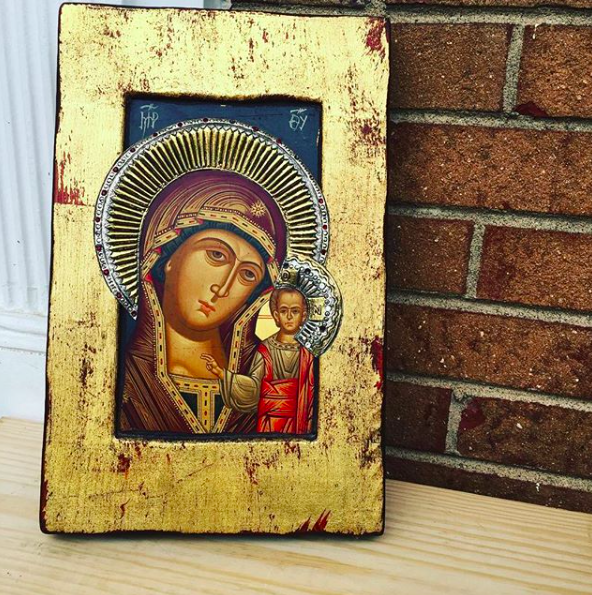
This year (just last night in fact!) I learned of the tradition to place an icon of the Most Holy Theotokos at the threshold of the door to our home as we usher in the new Liturgical (Ecclesial) Year of Grace.

In many conversations with non-Orthodox over the years, I have been struck by their idea that our little “t” and big “T” traditions are merely rote action.  Yet, as one who seeks (and quite imperfectly, too)  to live and raise a family in the faith, I find most beautifully that these “traditions” of ours are not rote or meaningless at all ::  but rather beckon and re-orient our hearts to that which is needful.

Just as we pray corporately the Anaphora during the Divine Liturgy, these little “t” traditions are our “little a” anaphoras :: a lifting up and offering of ourselves.  A simple, humbling endeavor, to place God above all, offering up our whole  lives to Him.

It is Eucharisteo : Grace,  Joy and Thanksgiving throughout the seasons of our lives.

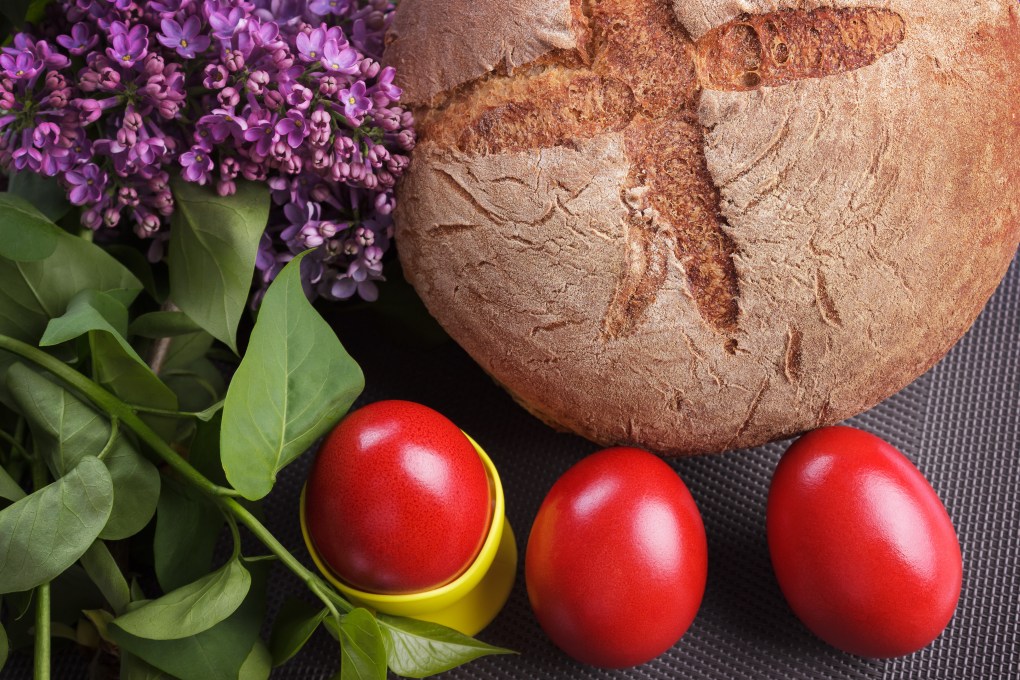
These are just another way in which we lift up our hearts in this great litany of our lives.  Little children in Greece make the sign of the cross when riding their bikes past a Church :: mothers entering Church remind their little ones to make the sign of the cross before they enter :: we light candles :: burn sweet smelling incense :: we trace the sign of the cross on our children when tucking them into bed :: prayers and prostrations dovetail together :: we kiss the icons and we greet one another with a kiss of peace :: we dye our Pascha eggs the reddest of red, but we don’t dye them on Holy Friday ::  fresh basil is brought home from Church on the Elevation of the Cross and placed in the sourdough starters that will leaven phosphora :: and of course, we pray facing the east – our souls waiting for the Lord, like the watchman waiting for the dawn.

Again and again, in so many ways, we are called to this life in Christ.  To live our lives through the years and seasons and rhythm of the Church.  It is our great priority :: this great Liturgy of Life :: it is more needful  than schoolwork, profession, sports and hobby :: and yet with life in Christ as our priority our ability to fulfill our schoolwork, professions, sports or hobby is in no way diminished.  Traditions bring to light blessings :: even on the threshold of our very home.

Placing an icon of the Most Holy Theotokos at our doorstep – what a wonderful tradition to usher in the new Ecclesial Year :: just as the Ecclesia means “called out” :: the new Ecclesial year “calls us out” again, “to lay aside our earthly cares” and enter into the timeless rhythms and seasons of the Liturgical life of the Church.

The Orthodox Christian lives Ecclesial Year to Ecclesial Year :: Feast to Feast :: Fast to Fast :: Confession to Confession :: Liturgy to Liturgy :: Eucharist to Eucharist.  Just as we have New Year’s resolutions to usher in a new calendar year, now is a great moment to pause, reflect and begin again.

Does my family have regular prayer time?  If not, this is a time to begin.  Are we attending Church weekly?  That’s alright :: start this weeks Vespers and Liturgy.  Has it been forever since my last Confession :: make an inventory, call your priest.  Go.

And so today, on the dawn of a new ecclesial year, the faithful are hopeful standing on this threshold of Grace of a new year, with an invitation to redeem the time.

Blessed art thou O Lord, teach me Thy statutes.

Real life is Eucharist, a movement of love and adoration toward God, the movement in which alone the meaning and the value of all that exists can be revealed and fulfilled

~

Alexander Schmemman


the fast : detoxification for the soul

OLYMPUS DIGITAL CAMERA

“Showing joyfulness of soul in the Fast, let us not be of sad countenance, for the change in our “manner of living” during these blessed days will help us to gain holiness.”


The Greek word for diet means “our manner of living” and in all respects, that extends beyond the staples of our pantries, cupboards and recipe books.  No, our “manner of living” embodies the very core of our being.  In it’s truest sense, a manner of living is the nourishment not only of our physical bodies but also our soul.

In this way,  food is not merely comprised of what is on our plates – but also what we read, and watch and hear.  It is probably for this very reason that, back in the day,  many Orthodox countries, like Greece, would have closed movie theaters and the tavernas would have actually had Lenten menus for their patrons to adhere to the Fast.  The whole country participated in this normal manner of living.   Fasting is certainly simplified when everyone does it.

Fasting is an enduring part of our world, and most religions practice it in one form or other.  Beyond that, there are medical fasts, detoxifying fasts and physical fasts.  And isn’t it funny, how comfortable one is knowing that a friend is fasting for health -perhaps they are vegan or paleo or gluten free – but turn the fast from health or beauty endeavors toward that which renders wellness of soul, and understanding may dwindle.

As a student of nutrition, eating healthy for vitality, fitness and beauty are very good aspirations.  I counsel people on how to eat for their own unique physical situation to improve health, manage disease, detoxify and enhance digestion.    Paleo eating has been incredible for our family, with one who is gluten sensitive and another who became incredibly ill last year, struggling to overcome Lyme disease.  Foods that enhance the immune system and promote excellent digestion are paramount for physical health.  Developing plant based healthy paleo recipes for the fast has been a fun challenge.

The difference between the Orthodox Fast of Great Lent and other ways of eating however, is that a diet to lose weight or improve health has no meaning outside of “self” whereas the Great Fast of Lent is, in the words of Saint Isaac the Syrian, “to chose God”.  It involves entire communities committed to Christ, and as His body, our relationships with one another.

Fasting cleanses the soul.  It reinvigorates our spiritual lymph so that we may detoxify our heart, mind and soul.  Almsgiving, spiritual reading, attendance of the services and prayer provide nourishment and open the pathways of  spiritual detoxification.

Cleansing our hearts through Confession, the acceptance of mercy, forgiveness of others, greater attendance (and attention) at the services – are all on the Lenten menu.

In so doing, however feeble our attempts, the Orthodox Christian strives to love God with all our heart and with all our mind and all of our soul, and love our neighbor as ourself.

These are blessed days of fasting!


a peaceful fast

OLYMPUS DIGITAL CAMERA

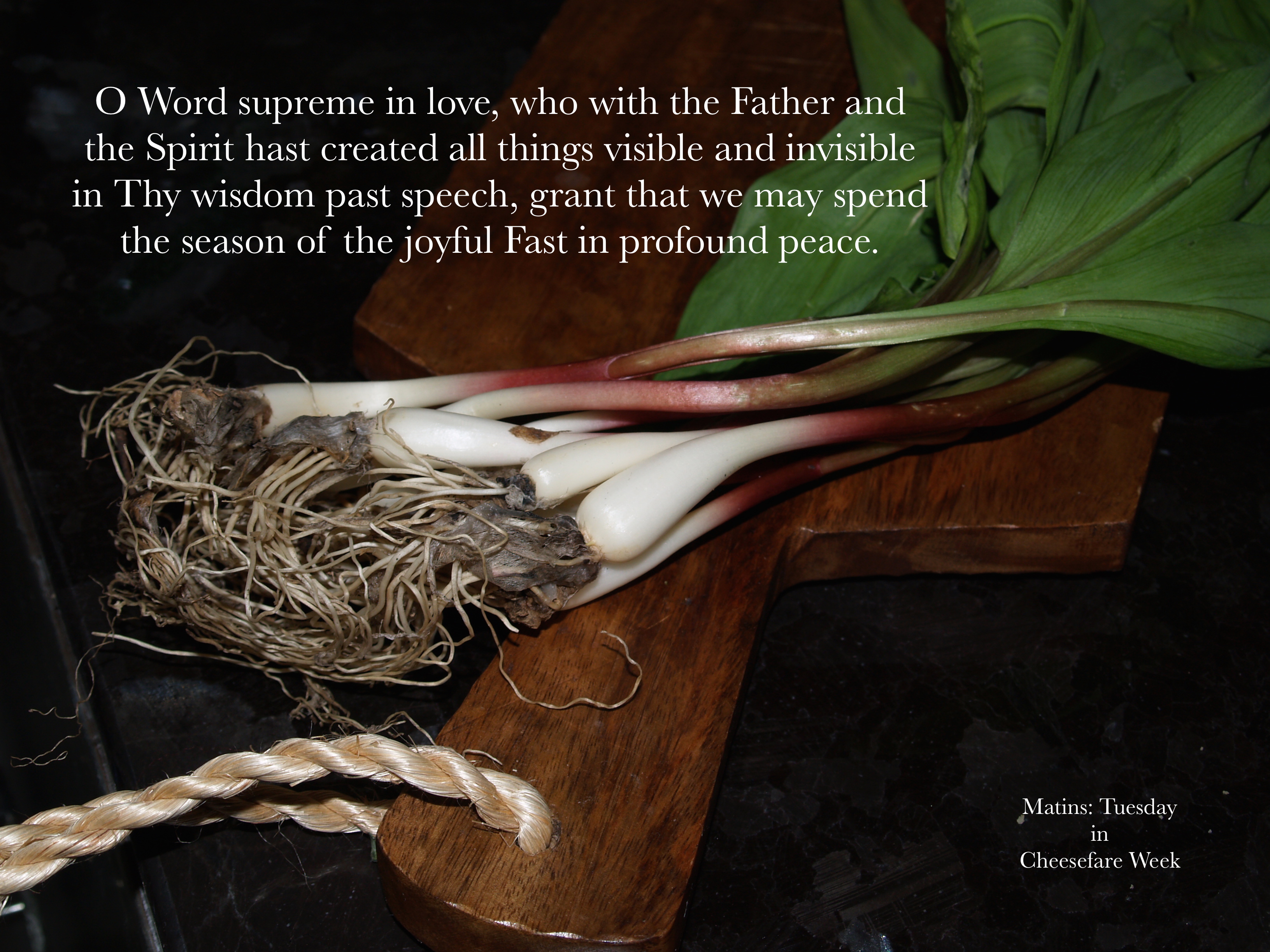
O Word supreme in love, who with the Father and the Spirit hast created all things visible and invisible in Thy wisdom past speech, grant that we may spend the season of the joyful Fast in profound peace.

Matins: Tuesday in Cheesefare Week

This past week of Meatfare and this present week of Cheesefare offers Orthodox Christians a wonderful occasion to clean our pantries of leftover meat, dairy and eggs as we ease into the strictness of the Fast – when, through the effort of Lent, we also clean the pantry of our hearts.  During the forty day fast we forgo heavy and clogging meals, seeking instead our nourishment from lighter and more cleansing plant-based sustenance.  All of this fasting fare is, of course, fortified with the Lenten services and soul-restorative calories found as the faithful graze within the beautiful spiritual pastures Lent.

Throughout these past weeks, our Mother the Church, has shepherded, taught and nudged the faithful closer and closer to the bounds of the Great Lent.  It is through these weeks of preparation that the aspiration of this Great Fast has been made clear once again – that it is not the rigidity of dietary restrictions (to which we are certainly called to adhere), but rather the grace of an inner change of heart.

Genuine fasting has as an essential  ingredient the relationships of family and community.  Isn’t it pleasant when brothers dwell in unity… we are not saved alone.   A wise retired priest told me once that being in family and community can be likened to a satchel of sharp jagged rocks.  Through the jostling of life we rub each other, sometimes the wrong way, with our sharp edges.  Friction happens – but through time and forgiveness, those rocky edges become smooth and mellowed.  Forgiveness Vespers seeks to erode those jagged edges of relationship.

And so it is, that this Sunday, the Orthodox Christian Lenten journey is ushered in with love and forgiveness.

How appropriate that the first flavor of this awesome labor of fasting is found in a feast… the blessed taste of forgiveness – that given and received – during the Vespers of Forgiveness this very weekend.   These past weeks of the humility of the Publican, the faithful perseverance of the woman at the well, the coming to his senses of the Prodigal – a return to the Father – these intend to soften hearts.

Great Lent is a walk of  joy, an annual journey of the faithful body of Christ.

Does it really come as any great surprise that the faithful rejoice in this Fast with gladness?  For truly, to savor even a crumb off of Lenten tables laden with abstinence, reminds us that we are blessed, we are blessed, we are so very richly blessed!


a thousand points of light

a thousand points of lightjpg

“This prayer has been said, and without interruption for two thousand years.   At every moment somewhere on the globe, people are saying those very words which were once uttered by Christ himself.    This is why we have no better path to the heart of Christianity than by this short, and on first observation, simple, prayer. ”  

Father Alexander Schmemman

Such a parallel can be drawn with the Orthodox Liturgy,  because every Sunday, at every moment in every time zone on the globe, the Orthodox Divine Liturgy, this holy and wonderful “work of the people,”  is offered in one voice, the world round.  It is a full twenty four hour cycle of thanksgiving and praise in thousands and thousands of Orthodox Monasteries and Churches.  Each offering the “same” Liturgy in their own tongue and from their own geography.

The Divine Liturgy is Christ in our midst.  It is an encounter with the resurrected Christ.  And, in partaking of the eucharist — the “Bread of Life” — we who are many become one body…  that is the body of Christ and the living Church.

Some call the richness of Orthodox Christian worship ritual, yet intertwined in this sublime Liturgical and spiritual tradition are the threads of living, personal and authentic Christian devotion.

“Blessed is the kingdom of the Father and of the Son and of the Holy Spirit…” sets the Liturgy in motion.  This is the timeless, honest, and simple fullness of eucharistic praise – in all languages and ethnicities – offered on behalf of all and for all.


ever thankful

thanksgiving multiplied

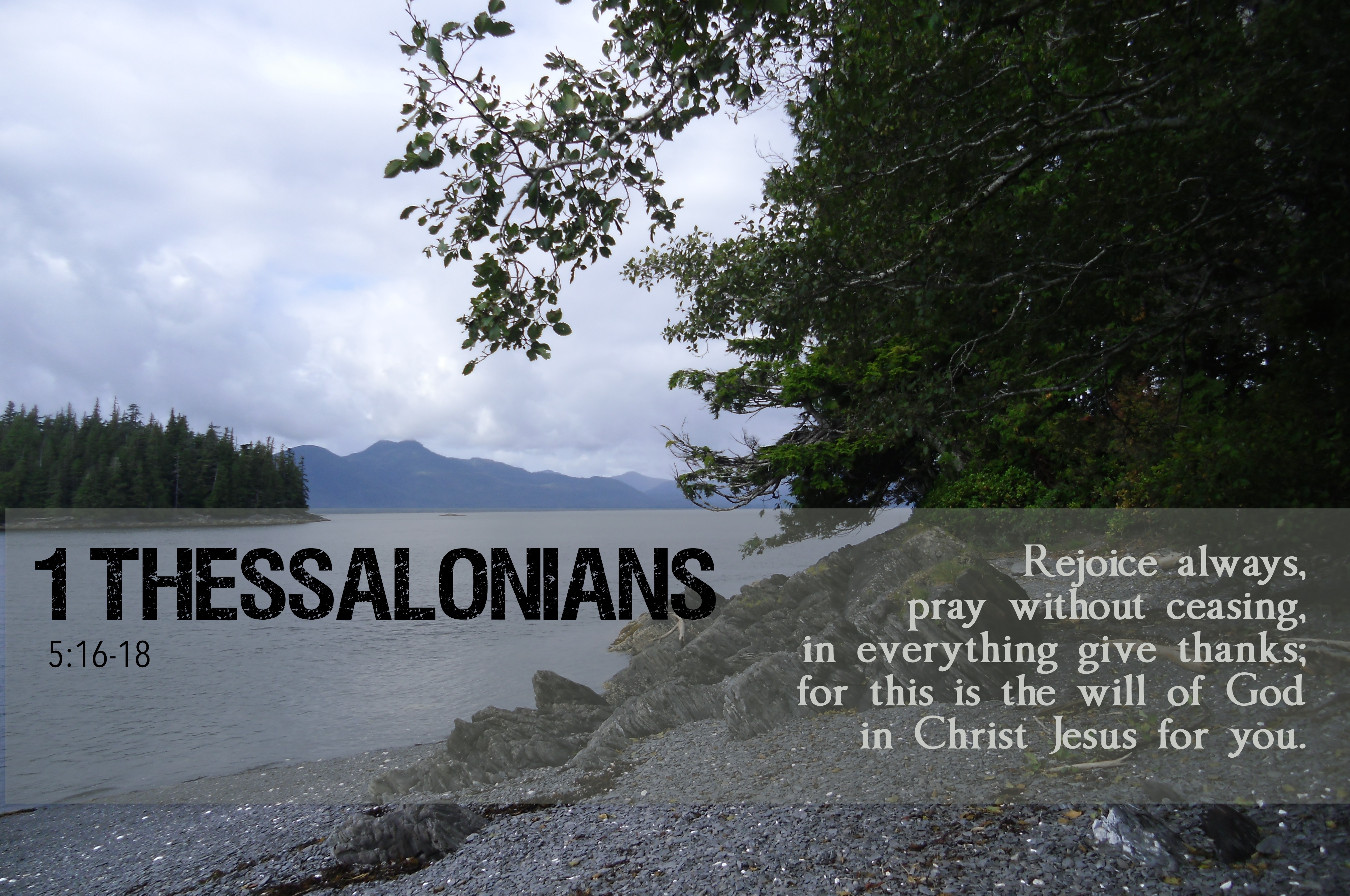
“Rejoice always, pray without ceasing, in everything give thanks; for this is the will of God in Christ Jesus for you.”

1 Thessalonians 5:16-18

What a blessing to know that – though we may falter – God is faithful, steadfast, unwavering and unchanging.  He is the same yesterday, today and tomorrow (Heb 13:8).  When we face challenges in our relationships with family or friends, grieving the death of a loved one,  disease in our physical health, or any trauma or sadness imaginable, no matter what it is – God is forever with us.  His word is true and unchanging, and where there are difficulties or misfortune, He ALWAYS offers a way of escape so that the trouble is bearable (1 Cor 10:13) – hope above and beyond the trial.

“I can do all things through Christ who strengthens me.” (Phil 4:13)  The bearable means of enduring and facing hardship is turning to God.  In this way, we get out of the stumbling block of our own selves; instead allowing Him to be a lamp to our feet (Psalm 118:105).

“Rejoice in the Lord always”…. this is not to be confused with cheerful jubilation or emotion.  It is the prayer of the heart – “Lord Jesus Christ, have mercy on me.”

In the Orthodox Church we are taught that the word mercy in Hebrew means “steadfast love” and that the Greek root for mercy has the same root as the old Greek word for olive oil, which biblically was used for healing wounds, bruises and ailments.  To say, Lord have mercy is to ask the Lord to shroud our fallen selves in His steadfast healing love.

This is the way of thanksgiving; abiding and resting in His peace.  Where there is suffering, there consolation also abounds.

May we all rejoice in the Lord, always.


changes underway

Nourishing Grace took the summer off….  and during that time I really reflected on the blog.  All summer long I had this nagging thought to separate the Holistic Nutrition articles from the soul food.  In August I started a blog called WellNourishedFamily.wordpress.com, but as of yet it is not public.  It is in a state of migration and there is lots of tweaking going on at the moment.

Deep breath.

In the coming weeks, the nutrition and health posts on this blog will be relocated over to my new blog “Well Nourished Family”, but Nourishing Grace will remain with the soul food of Orthodox Christian quotes from scripture, the Holy Fathers and also the occassional reflection.   Future posts from Nourishing Grace will be integrated into the new website -maybe under the header “Beyond Calories”;  however the food and holistic nutrition blog will not be incorporated here.

In the meantime, I offer this little food for thought.  Faith is as much a part of health as food and exercise – that’s not radical.

In his book, For the Life of the World, Father Alexander Schmemman writes:

In the Bible the food that man eats, the world of which he must partake in order to live, is given to him by God, and it is given as communion with God.  The world as man’s food is not something “material” and limited to material functions, thus different from, and opposed to, the specifically “spiritual” functions by which man is related to God.  All that exists is God’s gift to man, and it all exists to make God known to man, to make man’s life communion with God.

It is divine love made food, made life for man.

God blesses everything He creates, and, in biblical language, this means that He makes all creation the sign and means of His presence and wisdom, love and revelation:

“O taste and see that the Lord is good.”

Recognizing that nourishment is beyond protein, carbohydrates, fats and fiber really isn’t edgy or new age.

With the mapping of the human genome, the field of epigenetics bears this out : that nourishment – the food we ingest – affects our gene expression.   Additionally, the Harvard Medical School found that prayer induces immediate positive changes in gene expression .    My recent class on detoxification listed “loss of Faith” as one of the reasons for the buildup of toxins in the body.  Let me tell you, I noticed that one factor more than all the others …

Just as junk food causes good genes to behave badly – so does loss of faith, negativity and stressful situations – especially when prolonged.  That kind of malnutrition affects health.  That’s not theology, just data.

In that sense we can see that nourishment is more than what is on our plate.   Integrative Medicine, modern as it is, recognizes the role of Faith in physical health, ancient as that is.  We are what we eat in every sense of the phrase.   Many turn to eastern philosophies, yoga, Buddhism in an attempt to find some spirituality and quell the hunger yet are still left with the pangs of malnutrition.

The Orthodox Christian Faith stands as a timeless beacon of wisdom, love, fullness and salvation.  It’s the benevolent, girding substance of every day life, seeking communion with God, lifting up all we do to the Glory of God (1 Cor 10:31).   We beseech God daily for our daily bread, the bread of the Kingdom of God, and nourishment for our soul.  Salvation is not about the quality of our  physical food, but people – working out their salvation in the Church.

And I think that is why I decided to separate the blog.  I wouldn’t want someone confusing meal plans with repentance, good complex carbs with salvation or that somehow having a well balanced diet is going to make one a better person.  These are matters of the heart.  Health has many implications, and there are doctors trained in the world of spiritual therapy and operation (spiritual fathers and mothers and some priests),  I do not claim to possess any wisdom of my own – just a family’s life experiences – especially the trials –  channeled through our walk of Faith in the Orthodox Church – that, and  I can also tell you how to make a really good salad and awesome gluten free pancakes that your family will actually want to eat!

The Orthodox Faith permeates the lives lived within her, through God the Father, Son and Holy Spirit and the teachings of the Holy Fathers, participation the the Divine services and partaking of the Eucharist, lives are transformed.

That’s good stuff…!

With that I will leave you with one more thought from Father Alexander Schmemman.

“Food is still treated with reverence.  A meal is still a rite—the last “natural sacrament” of family and friendship, of life that is more than “eating” and “drinking.”   To eat is still something more than to maintain bodily functions. People may not understand what that “something more” is, but they nonetheless desire to celebrate it.

They are still hungry and thirsty for sacramental life.”

I hope that all makes sense.  Many blessings to you, your families and those you love…  and please excuse the construction.

Resources:

http://www.pnas.org/content/110/41/16574.abstract

Shanahan MD, Catherine (2011-04-22). Deep Nutrition: Why Your Genes Need Traditional Food (p. 4).
flawless


flawless

amazing grace

living hope

+

unconditional

perfect love

+

mercy in good measure

love your enemies

judge not

forgive all

banish anxiety from your heart

bless those who curse you

imitate His love and mercy

be holy in all you do

let the Lord be your portion

+

IMG_1221_2


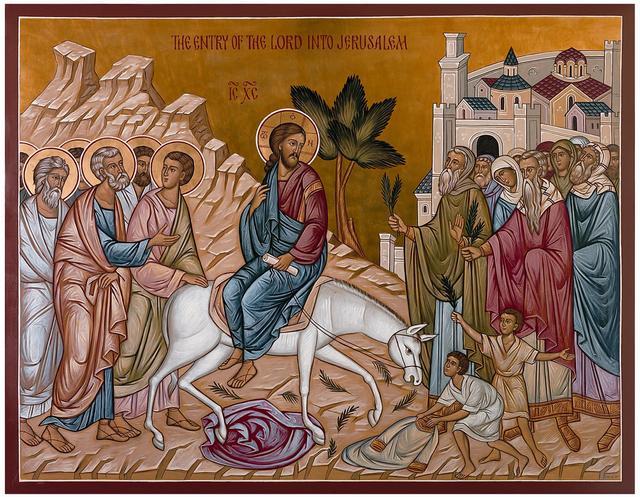
palms & hosanna

Entry_Into_Jerusalem

Palm Sunday


behold your God

ineffable . inconceivable . untameable .  humble – riding on a foal

the true Light illumining all


Today the faithful greet Him with palms and branches.

Glorious!  Triumphant!  Joy!

This is Holy Week.  Steadfast, we will journey with Christ

together with our friends and families – a community of faith.


The Last Supper. The Betrayal. Trial. Scourging. Denial.

Extreme Humiliation. Rejection. Forgiveness. Voluntary Crucifixion.


We will weep with His Most Holy Mother


chant Lamentations


And together with Joseph and Nicodemus we will beg for His body,

wrap Him in fine linen and place Him in a new tomb.

We will come hand in hand with the myrrbearers to anoint His body and find it is gone.

And on Pascha we will behold the awesome glory of His Resurrection


Great Lent is over and the faithful have emerged

– prepared for this journey through the mystery of Holy Week-

earthly cares and senseless hollow triflings aside


because even during this arduous . solemn . heart-wrenching . brutal yet hopeful path to Golgotha

His burden is easy and His yoke is light

This is Palm Sunday, and  today the faithful – filled with the hope of the Resurrection –

join with the angels & children, singing a song of victory


glory to God

Hosanna in the highest

blessed is He that comes in the name of the Lord!


“Palm Sunday is ‘the end of an entire process of preparation, as revealed in the Bible.  It was the end of all that God did for us, and thus this short hour of Christ’s earthly triumph acquires an eternal meaning.

It introduces the reality of the Kingdom into our time, into all hours, and makes this Kingdom the meaning of time and it’s ultimate goal.  The Kingdom was revealed in this world and from that hour.  It’s presence judges and transforms history…

On Palm Sunday, this reality is our own involvement in and our responsibility to the Kingdom of God… And He does not need any “symbols” for He did not die on the Cross that we may eternally “symbolize” His life…If we are not ready to stand by the solemn oath which we renew every year on Palm Sunday, if we do not mean to make the Kingdom of God the measure of our whole life – then meaningless is our commemoration and vain are the branches we take home from Church.’ “

Father Alexander Schmemman