homemade hummus

hummus

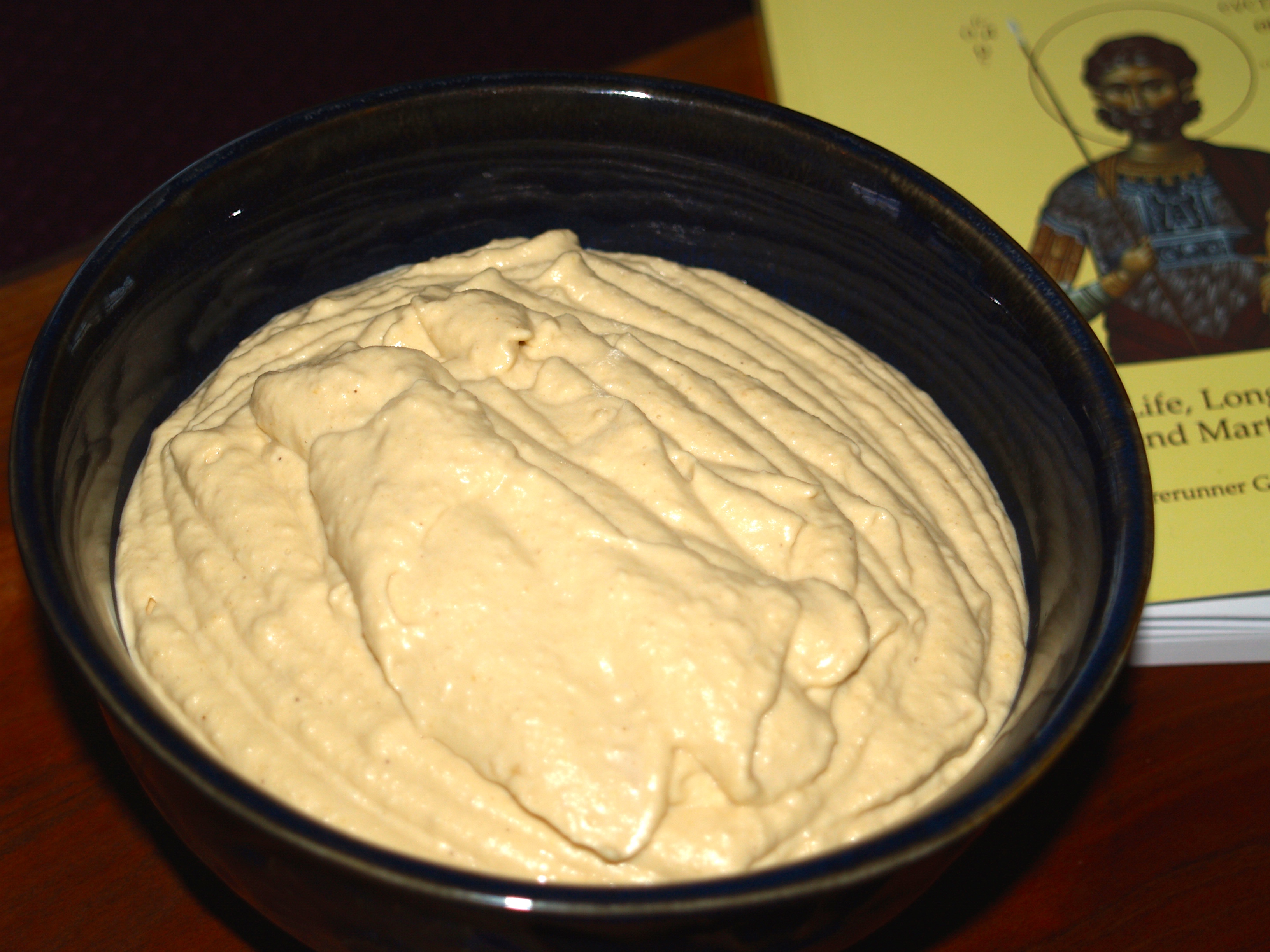
No matter how many different varieties of hummus there are on the market, your own will taste better than all of them.  People always ask for this hummus recipe, so it’s written down here for all.   This is a basic recipe, and you can make it your own by adding roasted red peppers, ground olives, roasted eggplant or caramelized onions.  This is a garlicky recipe.  You can reduce the amount of garlic to your taste.

[box]

Ingredients

2 cups cooked chickpeas.  Preferred are chickpeas that have been soaked over night and cooked, but canned are fine too.  Put some of the cooking water aside, in case you need to thin out your hummus.

3 garlic cloves

1/4 cup fresh lemon juice

1/4 cup tahini (this is a sesame paste )

salt to taste

Optional : extra virgin olive oil

Preparation

Add chickpeas, peeled garlic, salt,  tahini, lemon juice to food processor or very heavy duty blender.  Turn on for about 1 minute.  Scrape down sides if necessary.  Check consistency of the hummus.  You can add some of the water that you used to cook the chickpeas to get to desired texture.  If you do not have any of that water, use tap water.

Taste for saltiness.  Our experience is that the hummus requires a fair amount of salt.

[/box]

Enjoy with whole wheat pita or naan bread.  Hummus is also great dip for veggies, like carrots and red peppers.

When I was younger and in college, I spent a fair amount of time in the home of my Jordanian Palestinian very good friend.  Her mom made (and still does) the best hummus.  She would drizzle a very good amount of olive oil atop of the hummus and scoop it up in fresh pita.  This a fond memory for me, and despite how great this hummus tastes… hers tastes fantastically better.

And of course that could have everything to do with their great company and friendship.


minestrone soup

minestrone soup

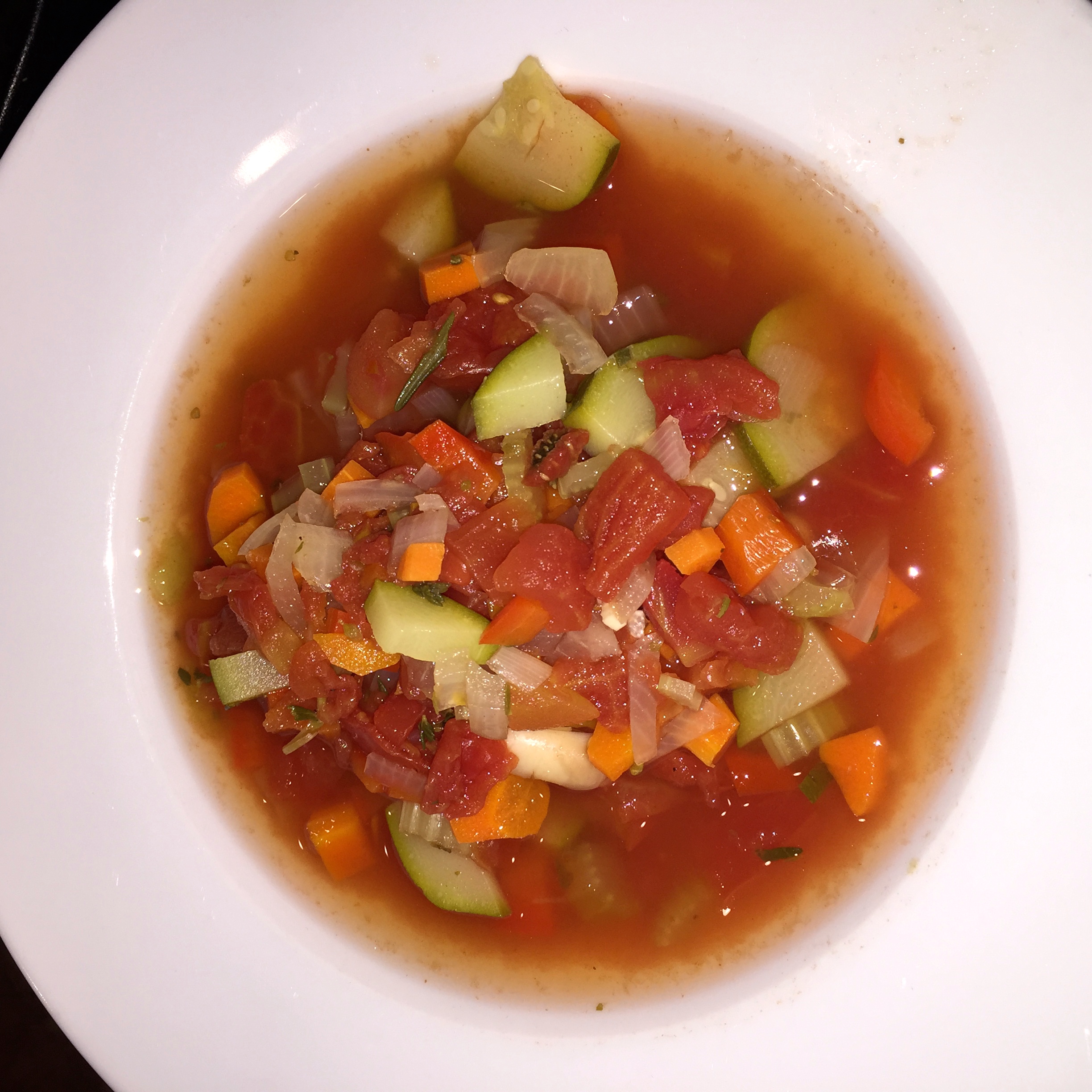
This is another great Lenten recipe, relatively simple and easy to prepare.  Everyone likes it, and in a family of five, that’s a good thing!  This is such a simple soup, most of it’s flavors derived from the spices.  Usually we make a big batch of northern beans ahead of time and take out what we need during the week.

[box]

Vegetable Minestrone Soup

Ingredients

  • 3 carrots, chopped
  • 1 onion, chopped
  • 3 cloves garlic, minced
  • 2 zucchini squash, cut small
  • 1 tablespoon fresh thyme
  • 1 tablespoon fresh rosemary
  • 1 tablespoon fresh basil
  • 1 cup cooked great northern beans
  • 1 red pepper seeded and chopped
  • 2 stalks celery, chopped
  • 6-1/2 cups water or vegetable broth
  • salt and pepper to taste

Preparation

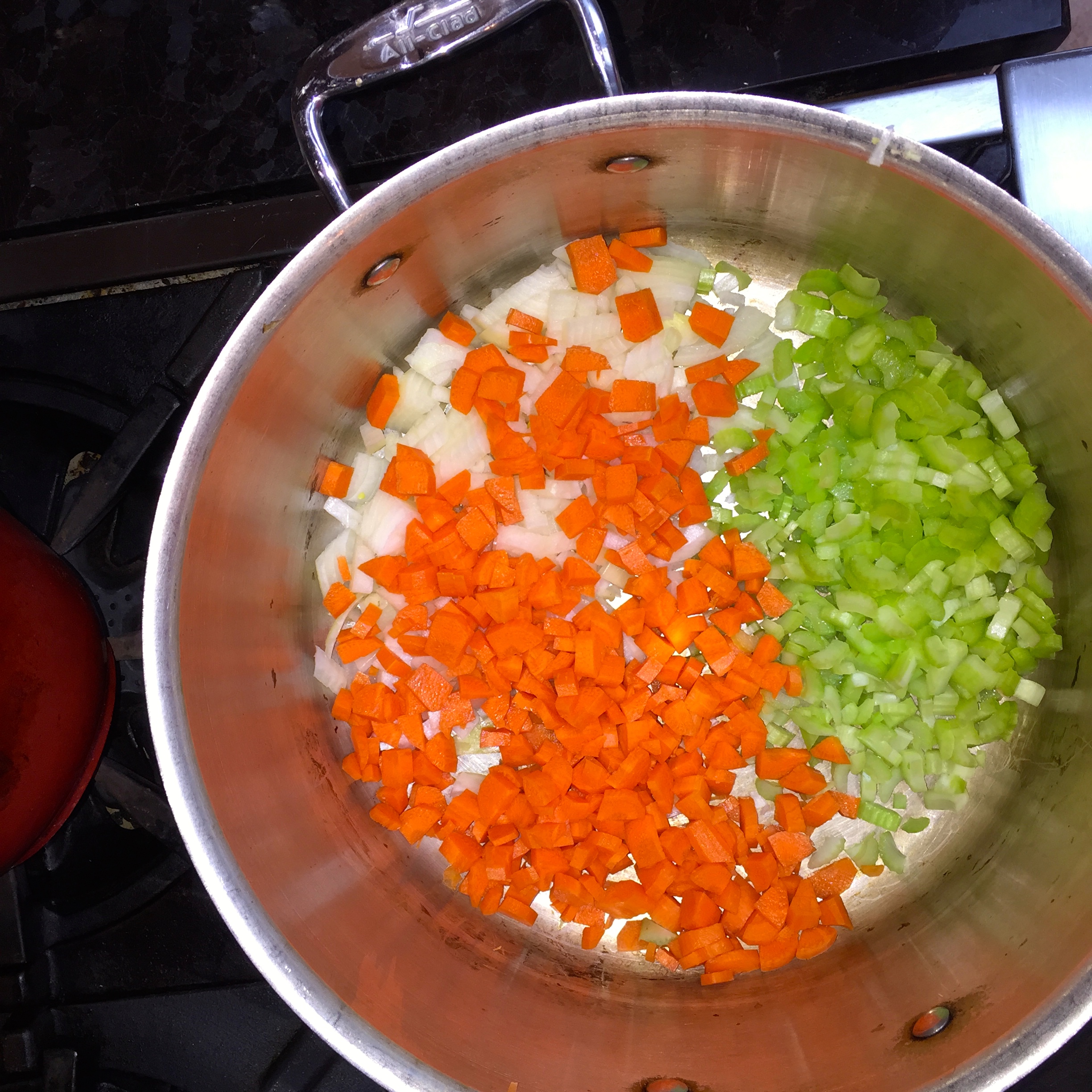
Place onion in large stewpot and sautee until translucent – about 10 minutes over low heat.  Add carrots, red pepper, celery and let simmer until  soft.


celery onion and carrot


Add water, tomatoes and water, salt and pepper.  Let simmer for about 30 – 45 minutes.  If you have a pot with a light loose fitting lid, this will be more on the 30 minute range, because steam will escape.  With a heavier dutch oven, you can let it cook a little longer.

Plate.  Serve. Enjoy.

[/box]

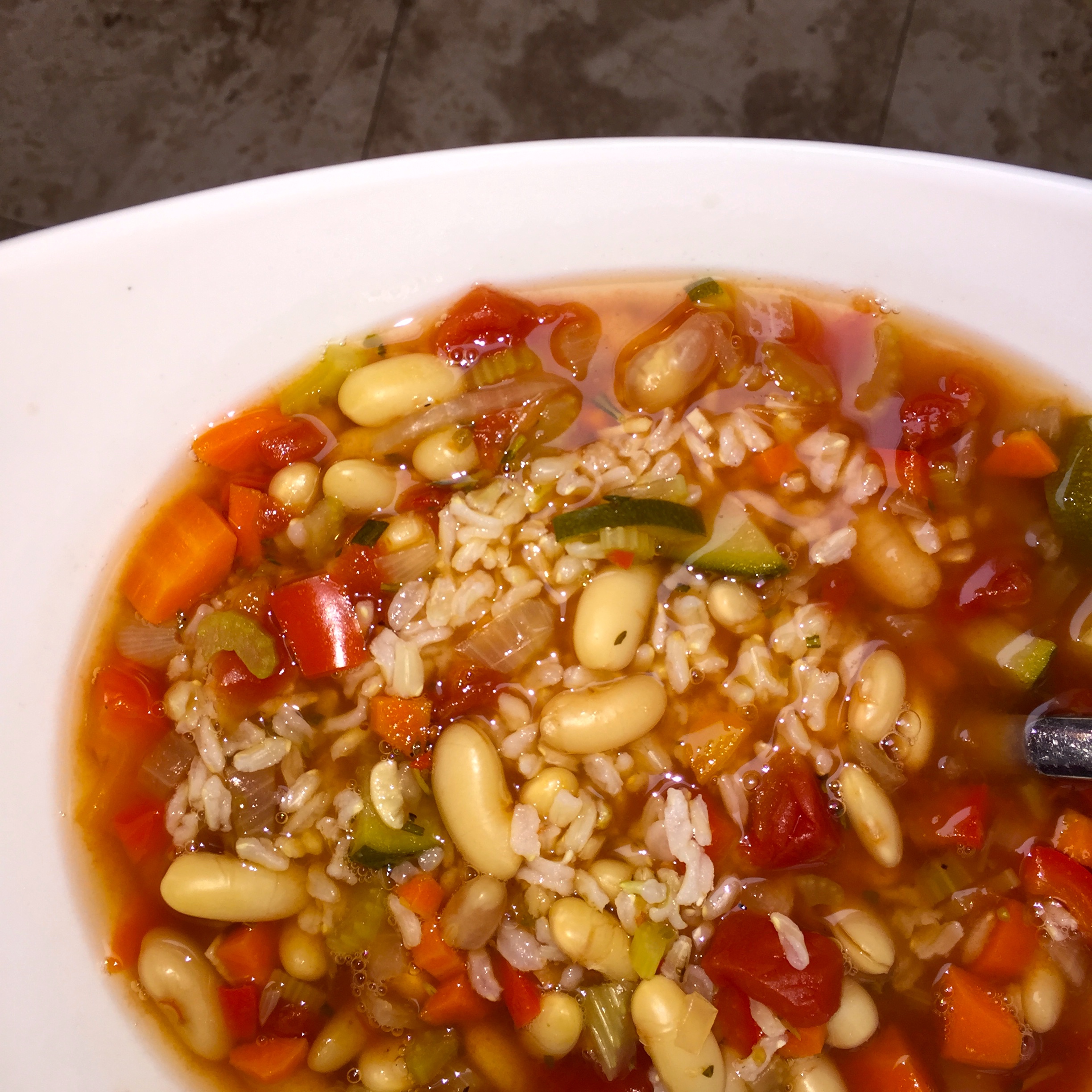
The picture below is the leftover version of our soup.  We added some brown rice to it, and made it a heartier stew.

As usual, ample sirachi sauce is on hand at all times.


Minestrone Leftovers


mushroom leek soup

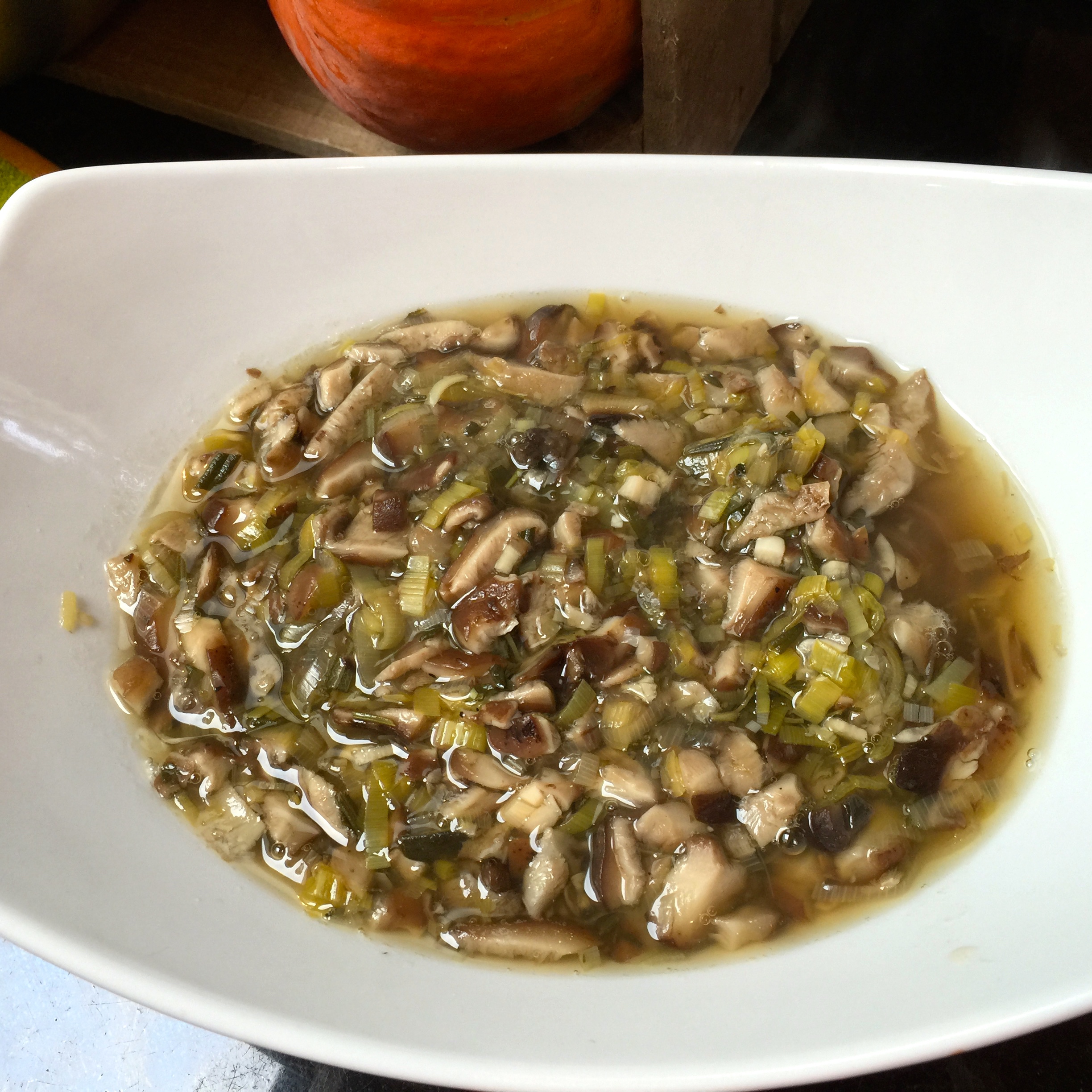
bowl of mushroom leek soup

During Great Lent we eat almost 40 days of soup.  Mostly, this is because it’s simpler to prepare our foods in this way.

This mushroom leek soup is one of my favorites – a hearty mushroom soup, made with just a few ingredients.  This is easy and nourishing and has many variations.

[box]

Mushroom Leek Soup

serves two as a main course, with a nice big salad!

Ingredients

10 ounces of your favorite mushrooms (we just get the assorted pack with shiitake, cremini and portabello

2 leeks sliced thin, green and white parts

4 cloves garlic, minced

6-1/2 cups water

1 tablespoon chopped fresh thyme

1 tablespoon chopped fresh rosemary

1 teaspoon sea salt

1/2 teaspoon pepper

Optional items:

1 strip kombu / seaweed

brown rice noodles

dash of toasted sesame oil

soy sauce or sirachi hot sauce to taste

you can use any combination of herbs that you prefer, like sage, bay leaf, oregano

[/box]

mushroom leek soup prep


[box]

Preparation :

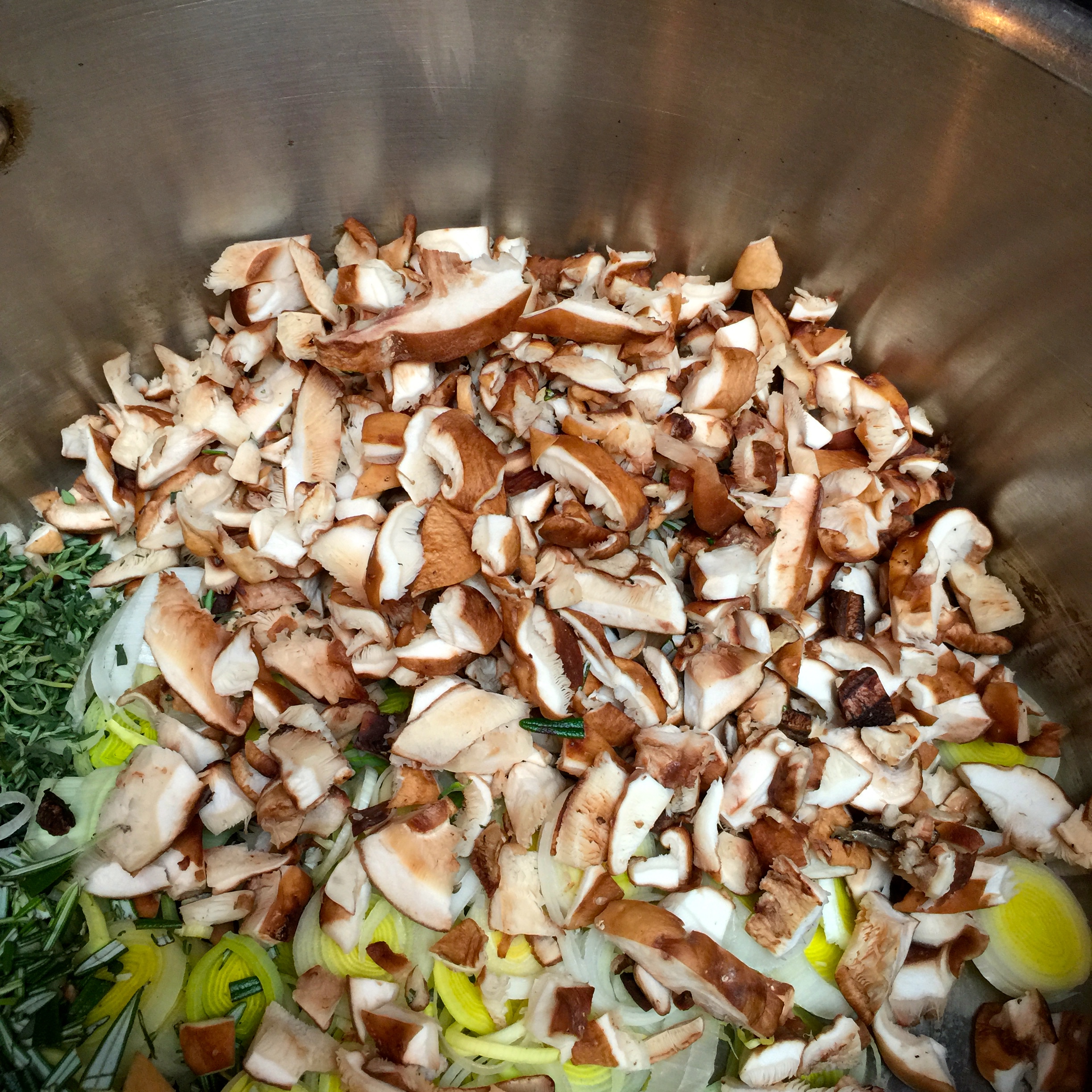
In a pot over medium low heat, add sliced leeks, salt, pepper,  rosemary and thyme.  Chop mushrooms and place in soup pot.   Let the leeks and  mushrooms sweat for about 10 minutes.   This will draw the water and flavors out of them.

[/box]


ready to cook mushroom leek soup


[box]

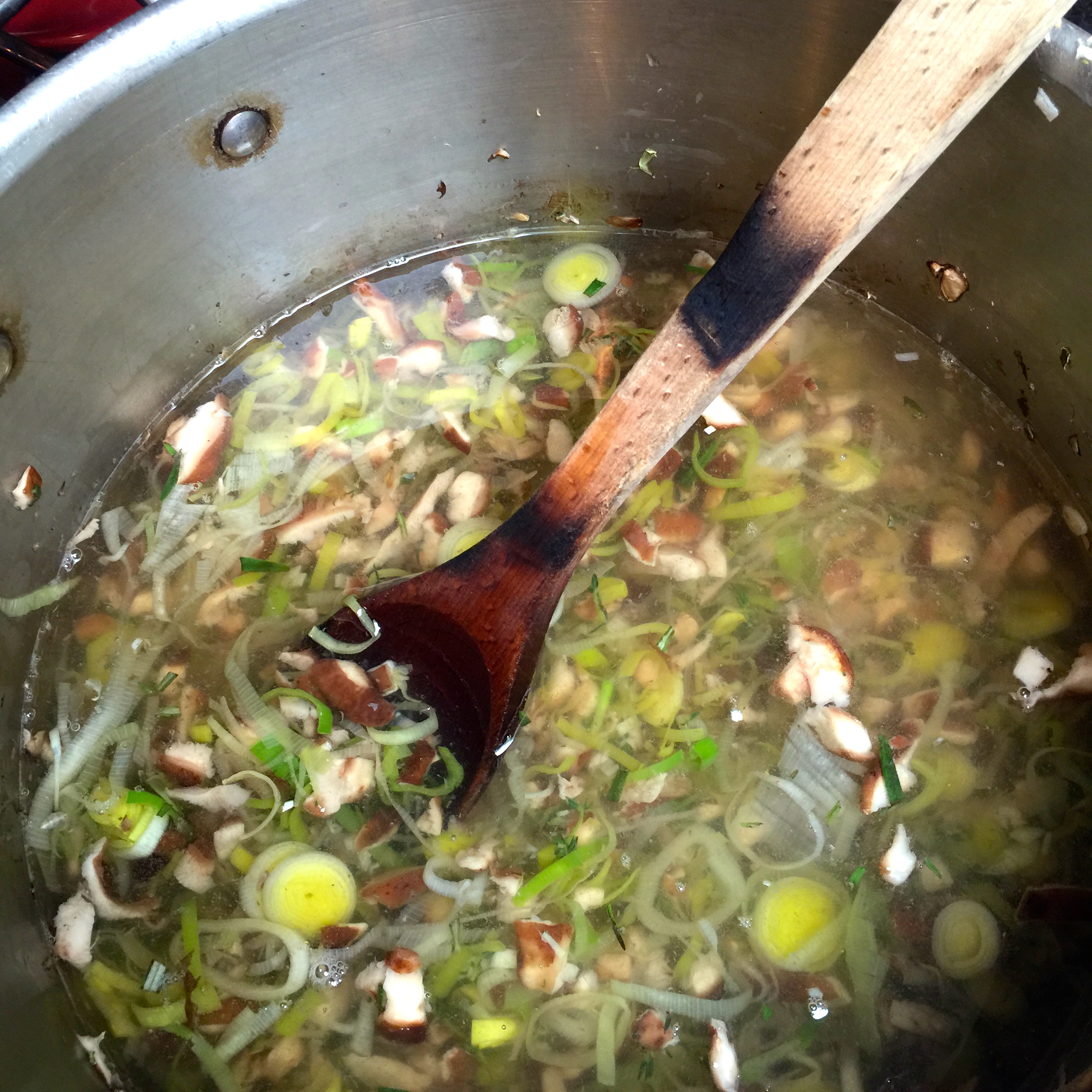
Add garlic and water.  Place lid on pot and let simmer for 30-45 minutes.  This really depends on how tight the lid on your pot fits and whether a lot of steam escapes.

5 minutes before ready to eat, add two nests (they come bunched together and it looks like nests) of rice noodles to the mushroom leek soup.  You can take it off the heat and place the lid on, or continue to simmer.  They will cook either way.

[/box]


The final consistency I like is more on the stew side.

You can add any of the optional items or enjoy it as is.

Enjoy.


bowl of mushroom leek soup


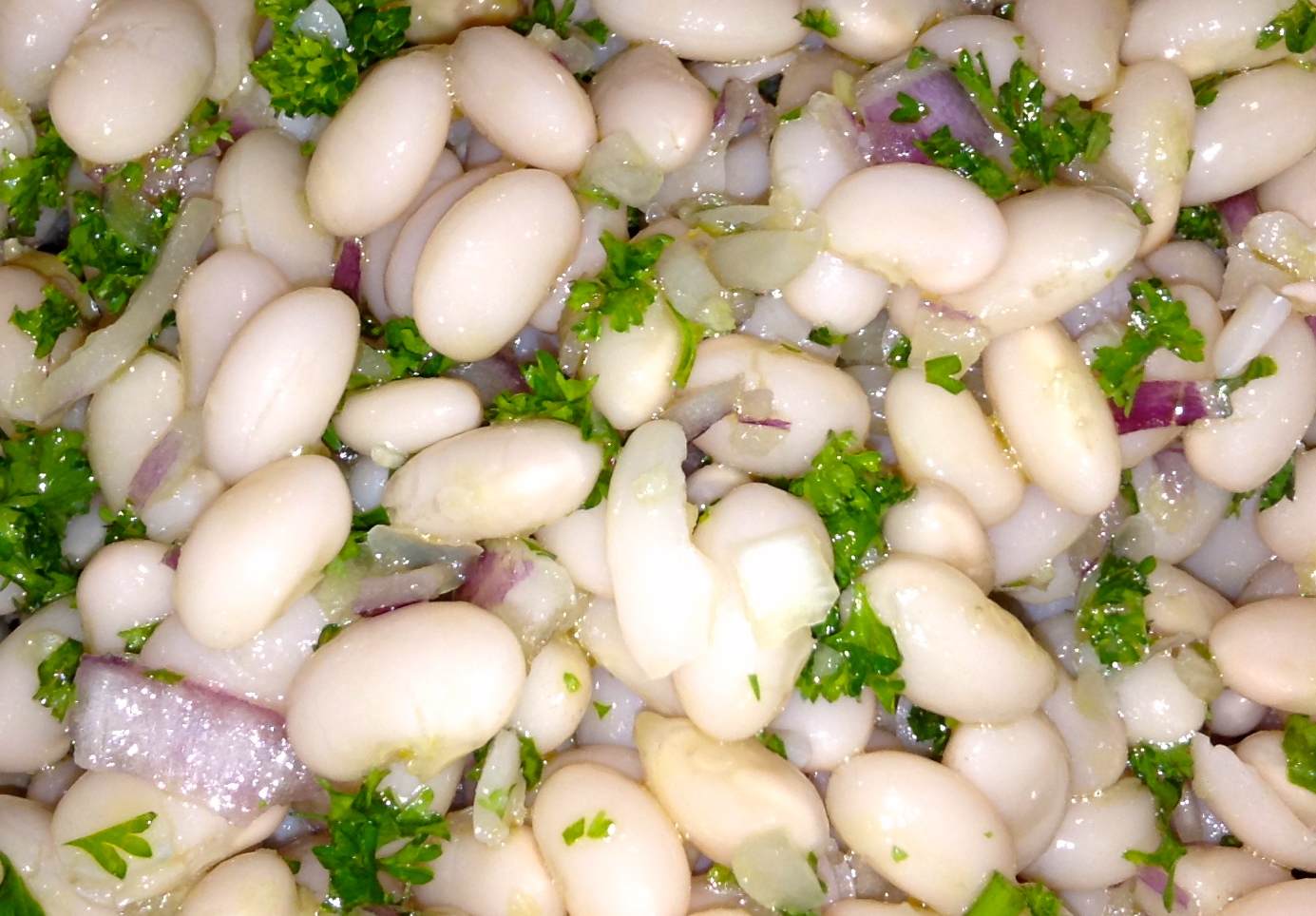
Lenten Greek Bean Salad – Fassolia Salata

IMG_0313

“But unless humility, simplicity, and goodness adorn our lives, and are associated with prayer, the mere formality of prayer will avail us nothing. And this I say, not of prayer only, but of every other outward exercise or labor undertaken with a notion of virtue.” —Saint Macarius


Lenten menus tend to feature beans…. lots and lots of beans.

We have two favorite local Greek restaurants, The Plaka and Nostos.  For any locals, this dish is inspired by our local Greek Restaurant in Tyson’s…. Nostos which has a wonderful menu with some very traditional dishes, way beyond gyros and souvlaki.   The recipe below is modified from the one found in Foods of the Greek Islands, by Aglaia Kremezi, which is more of a salad with a dijon mayonnaise base than this version.

In every recipe in which you use dried beans, take the time to soak them- either in plain water or even better, with a tablespoon of apple cider vinegar added to the the beans and water.  That this is similar to the traditional methods your grandmother or great-grandmother might have done.  They knew a thing or two about cooking and those traditions, well…they lend to maximum digestibility and nutrition.

Traditional peoples whose cuisines were based on legumes prepared them with great care.  Beans are soaked for long periods before they are cooked – some varieties in acidic water and some in neutral or slightly alkaline water.  The soaking water is poured off, the beans are rinsed.  As the beans cook, all foam that rises to the top of the water is skimmed off.  Such care and preparation in cooking ensures that the beans will be thoroughly digestible and all the nutrients they provide well assimilated, because such careful preparation neutralizes phytic acid and enzyme inhibitors and breaks down complex-sugars. (Nourishing Traditions)

How did they know this without nutrition fact panels?  One reason might be that at that time their food supply had not become so laden with toxic and artificial chemical ingredients and sugars – so our ancestors actually knew how foods made them feel on a more subtle level than do we.  They had a cleaner more pure food supply, so their bodies – not having the daily nutritional noise and non or even anti-nutrition -coursing through them -knew when something didn’t sit right.  We, on the other hand, are fairly used to not feeling nourished, so it just goes unnoticed.

Soaking also allows the beans to be more agreeable in other ways (if you get my drift!) because it helps break down some of the more complex sugars which are gas causing.

Especially for those larger kidney, northern whites, chickpeas and black eyed peas, a good soak is in order.  Soaking your beans does the beans and yourself a favor.  First of all, dried beans are a fraction of the price of those canned, so in big families this is a budgetary boon.  Further – the soaking neutralizes phytates and enzyme inhibitors that bind the nutrition of the bean, such that we can not absorb it… in some cases, large amounts of phytates can bind to the minerals in the rest of our meal and making them unavailable.

One other note- canned beans do not offer the same benefits as soaking.  Canned beans are high in sodium are canned under very high pressures.  This does not neutralize phytates and the danger is that such processing denatures proteins and other nutrients at the same time.  We do use canned beans in a pinch, but sparingly.


Ingredients:

2 cups dried white beans (great northern work well), soaked over night and drained

1/2 cup finely diced shallots, red onion or spring onions

1/3 cup chopped flat leaf parsely

1 garlic clove minced

3-4 tablespoons lemon juice

salt and pepper to taste

optional: 1/4 cup olive oil


Preparation:

Place beans in large pot with cold water covering them by 2-3 inches.  Bring to a boil, reduce heat to low and simmer for about one hour or until tender.

Combine the beans and remaining ingredients in a large bowl.  Stir well and let sit for the flavors to combine (about 1 hour).


Serve as a side dish to your favorite meal.


Fasting : nourishment for the hungry soul

“Let Thy food be Thy medicine and let Thy medicine be Thy food.”  Hippocrates

This is a quote used widely within the circles of holistic nutrition… indeed in our quest for health nutrition has practically become a religion unto itself.  Many will change their diets and fast for outward physical health to an extreme, but what about spiritual health?

For Orthodox Christians, the Great Fast of the Church is upon us.

Already, these last weeks in Church we have been preparing for Lent, slowly giving up meat and this week we partake of our last bits of dairy.  These weeks of preparation culminate this Sunday, when Orthodox Christians around the world will voluntarily deprive themselves of meat, eggs and dairy for the next forty days as we make the Lenten journey.

Despite what might seem to be fairly strict dietary guidelines, the Fast is not aimed at physical deprivation, but spiritual health and sobriety.

In fact, the very first act of the Fast and the ushering of Great Lent is the Sunday of Forgiveness – a time where we genuinely seek mutual reconciliation with our brothers and sisters.  “For He then who hates his brother is separated from God, since God is Love.”  (Saint John of Karpathos)

You see, without love for neighbor, there is no Fast.

Great Lent is a struggle and also a holistic journey of healing and rejuvenation.  Each fasts to the best of their ability, age, physical health and medical circumstance in accordance with their Priest or Spiritual Father.  We struggle in abstinence from foods, but perhaps the greater struggle is to forgive or find humility or to reconcile, to love and to pray.

It’s counterintuitive, but the Lenten dietary restrictions actually take the focus off of what we’re eating so that we might flesh out what’s eating us – and our relationships – with God and one another.

Orthodox Fasting is medicine and nourishment for the hungry soul.

The Fast is not about eating perfectly but is rather the salt of devotion and the quest for closeness to God.  There are some who would say that this seasonal deprivation of certain foods is mindless or ritual, but to them the question, where is the ritual in the heart seeking God?

Others call Fasting a tool and that is true.   It’s the anaphoric lever – lifting our hearts to God, Who is Love.

We eat less but are enriched and fortified with the spiritual nourishment of greater alms giving – love for our neighbor through charity and goodness; prayer; watchfulness and greater attendance at the services of the Fast.  All of that is not to be taken lightly.

Fasting is joy, dependence on God, who is Life ~ and our thankfulness to Him, for all things.  It is eating to live rather than living to eat.
OLYMPUS DIGITAL CAMERA

Great Lent is about Love…

…because He first loved us.  Lent is a spiritual movement.  An interior progression – becoming closer, rekindling and renewing our relationship with God or perhaps even discovering it for the first time.  This kinetic cooperation, our movement in Christ, spans the whole of our lives and is about the heart.

In that sense, the Fast is about the Greatest Commandment – to love God above all and love our neighbor as ourselves.

We fast for the Resurrection and the Life of the age to come!

Wishing us all a joyous and profitable Lent.

hagia-sophia.deisis

Nourishment for the Fast:


† The Lenten Prayer of Saint Ephraim the Syrian †

“Lord and Master of my life,take away from me the spirit of idleness, of despondency, of ambition and of unprofitable words.  But give to me, Thy servant, the spirit of chastity, humility, of patience and of love.  Teach me O Lord, to see mine own faults, and not to judge my brother.  For Thou art blessed unto ages and ages.  Amen”


† Saint Silouan – Wisdom from Mount Athos ~ On Love †

The man who knows the delight and love of God – when warmed by grace, loves both God and her brother – knows in part that ‘the kingdom of God is within us.’  Blessed is the soul that loves her brother, for our brother is our life.”


† Prayer of the Optina Elders †

Grant unto me, my Lord, that with peace of mind I may face all that this new day is to bring.  Grant unto me Grace to surrender myself completely to Thy Holy Will.  For every hour of this day instruct and prepare me in all things.  Whatsoever tidings I may receive during the day, do Thou teach me to accept tranquilly, in the firm conviction that all eventualities fulfill Thy Holy Will.  Govern Thou my feelings and thoughts in all I do and say.  When unforeseen things occur, let me not forget that all cometh from Thee.  Teach me to behave sincerely and reasonably toward every member of my family, that I may bring them no confusion or sorrow.  Bestow upon me, my Lord, strength to endure the fatigue of the day, and to bear my part in all it’s passing events.  Guide Thou my will and teach me to pray, to believe, to hope, to suffer and to love.  Amen.

Papou’s Lentils ~  Soup for the Soul

This is a Lenten Staple…

Ingredients

  • 1/2 pound dried lentils – soaked over night in water
  • 1 onion chopped fine
  • 2 cloves garlic chopped fine
  • 1 small can tomato sauce, or 3 tsp tomato paste
  • salt and pepper to taste
  • 4 tablespoons apple cider vinegar
  • 2 tablespoons flour
  • 7 cups water

The night before, place lentils in a bowl and fill with water three inches above the lentils.  Let stand overnight. (You know, just like our grandmothers did… this breaks down some of the less digestible starches in the lentils and therefore provides greater nutrient availability at mealtime.  It also reduces gas!)

Place lentils and all ingredients (except vinegar and flour) in large stock pot.  Cover and bring to slow boil over medium heat.  Reduce heat and simmer for 1 and a half hours.  In small bowl mix flour and vinegar until no chunks of flour remain.    Stir into soup and cook for 10 more minutes.  Salt and pepper to taste.

Serve with toasted bread and a green side salad – with lemon or orange juice dressing!

Resources:

The Lenten Triodion, Introduction

Manley, J. (1990). The Bible and the Holy Fathers for Orthodox: daily scripture readings and commentary for Orthodox Christians. Menlo Park, Calif.: Monastery Books. (pages 680 and 690)


fish broth

OLYMPUS DIGITAL CAMERA

“The proof of love is in the works. Where love exists, it does great things. But where it ceases to act, it ceases to exist.” —Saint Gregory the Great


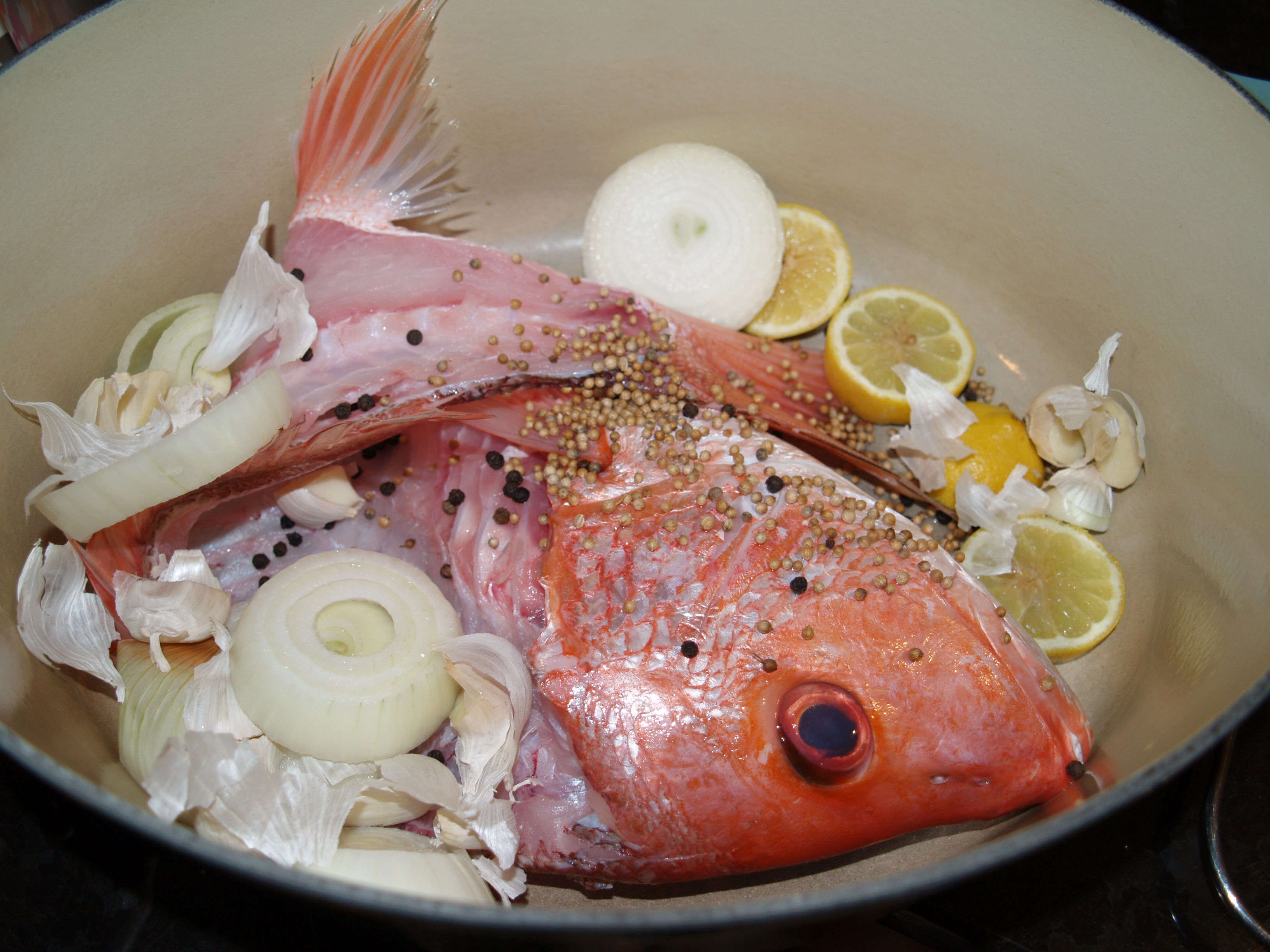
This is a simple fish broth and it’s also a very inexpensive one too.   In fact, fish broth can be the least expensive for you to make.  Just make a call to your local fish monger or supermarket and ask them to put aside any carcasses for you from the day.  Chances are they’ll charge you 50 cents to a dollar for it, or just let you have them for free!  For vegetarians, this is a great way to add the benefits of bone broth in to your diet.

Fish broth has a delicate flavor but strong smell when it is cooking.

It’s a good idea to avoid the larger fish when making broth – this is due to the probable build up of mercury in the larger varieties like tuna.


Ingredients:

  • 2 medium fish carcasses or several fish heads – such as  rockfish, snapper, or turbot
  • 1 small head celery
  • 1 medium onion cut into fourths
  • 2 carrots
  • 1 small head garlic, washed, not peeled but cut in half
  • 1 teaspoon black pepper corns
  • 3 quarts cold water
  • juice of one lemon

Place all ingredients except lemon in stock pot.  Bring to boil and skim.  Simmer covered for 3 hours.  Remove from heat, strain add the juice of the lemon and use or store.  It is important not too cook with the lemon, but add it at the end as if you cook with the lemon that will impart a bitter flavor to the soup.


vegetable . mineral . broth

Vegetable Mineral Broth

“Solitude, prayer, love and abstinence are the four wheels of the vehicle that carries our spirit heavenward.”  

Saint Seraphim of Sarov

Vegetarian cooking, for both health and spiritual reasons, has been rediscovered and has attained wide prominence.  In the cooking at monasteries, this goes a long way toward sustaining and encouraging the positive trend we see today.  Besides, a vegetarian meal— when well prepared and attractively presented at the monastic table— has a charm all its own.  I am sure the same can be said of other vegetarian tables around the country and around the world.”  (Brother Victor-Antione d’Avila Latrourette)

This broth is a fasting staple in our home, and when the seasons of the Fasts approach we double and triple this recipe into mason jars in order to have ample stock on hand.  It simplifies our Lenten meal preparation, and as you can imagine, that is a great blessing!

In this age of take out and hurried cooking making your own stock may seem like a bother, but your meals will have greater flavor and nourishment if you do!

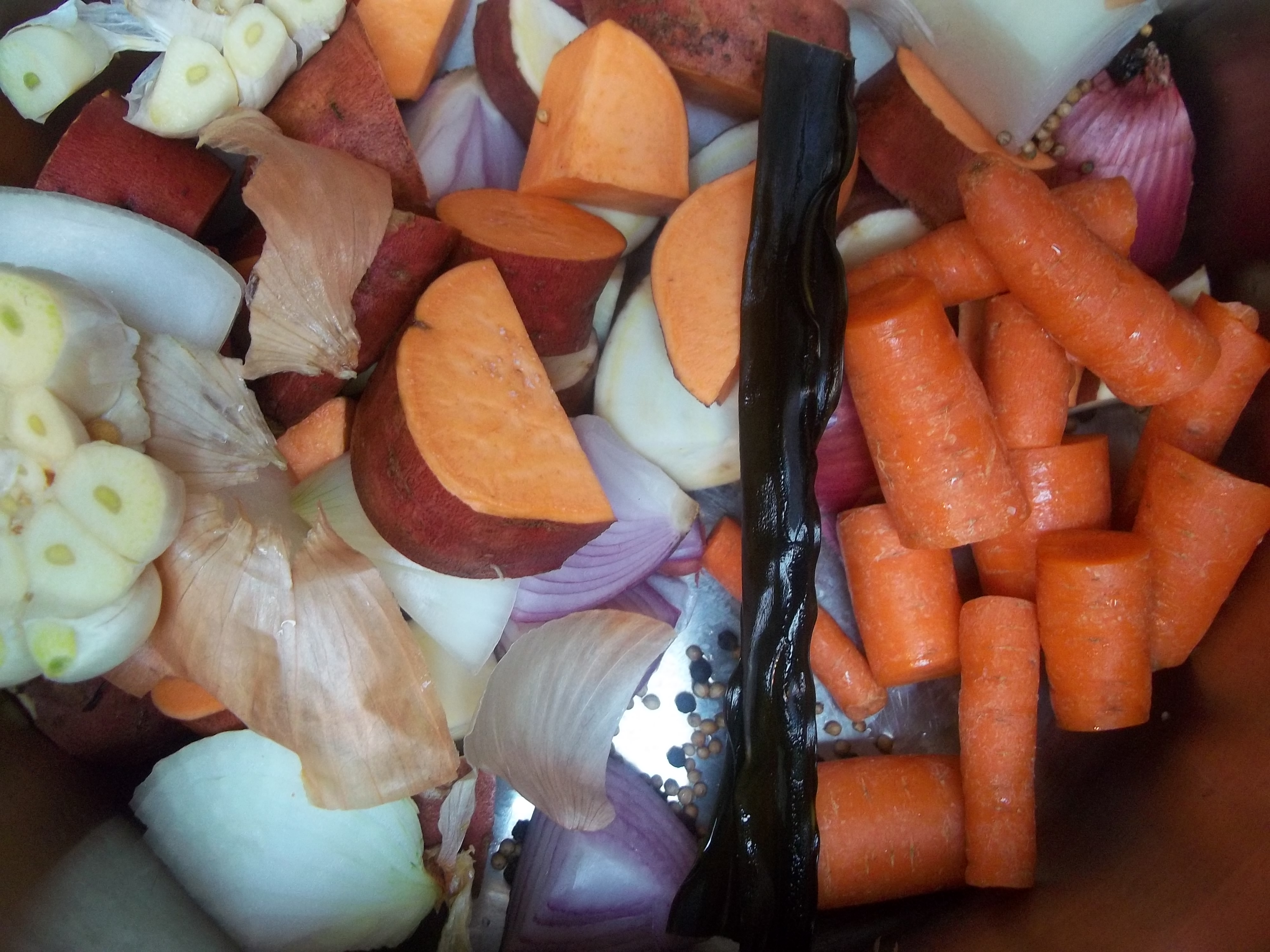
The preparation of this nourishing mineral rich broth requires no fancy equipment or culinary skills.  It is a recipe we appreciate for it’s ease of simplicity, wholesome monkish frugality and great flavor.  All the ingredients are very rough chopped into large chunks, and allowed to simmer for a few hours.  The result is a sweet tasting, aromatic broth.  It’s just that easy.

Vegetable stocks tend to have less body and texture due to the lack of gelatin and fat, but with the combination of sweet potatoes, garlic and leeks, this broth is unapologetic fresh, nourishing and delicious.  The addition of the kombu adds valuable trace minerals to this exceptional vegetable broth.  (Kombu is available in the asian section of most grocery stores.)

We load our pantry with this mineral broth during fasting seasons and it is the base for almost everything we cook from rice, to lentil soup to minestrone.

This recipe is inspired and adapted from The Cancer Fighting Kitchen : Nourishing Big-Flavor Recipes for Cancer Treatment and Recovery by Rebecca Katz who says, “This rejuvenating liquid, chock-full of magnesium, potassium, and sodium, allows the body to refresh and restore itself.”


Vegetable . Mineral . Broth

Ingredients

As always, source the best ingredients available and affordable to you.  Organic is the best option since this recipe calls for the peels of the vegetables – since that is where many minerals reside, but it is also where pesticide residues can be found.

  • 1 pound unpeeled carrots, cut into thirds
  • 1 unpeeled yellow onion, cut into chunks
  • 1 unpeeled red onion, cut into chunks
  • 2 leeks, white and green parts, cut into thirds
  • 1 bunch celery, including the heart, cut into thirds
  • 4 unpeeled red potatoes, quartered
  • 3 unpeeled sweet potatoes, quartered
  • 1 unpeeled garnet yam, quartered
  • 1 head garlic, halved
  • 1 bunch fresh flat-leaf parsley
  • 1 8-inch strip of kombu or Nori
  • 10 black peppercorns
  • 4 whole allspice or juniper berries
  • 1 bay leaf
  • 8 quarts cold, unfiltered water 1 teaspoon sea salt (to taste)

 Preparation

Rinse all of the vegetables well, including the kombu. In a 12-quart or larger stockpot, combine all of the ingredients with the water (2 inches below the rim), cover, and bring to a boil.

Decrease the heat to low, and simmer, for about least 2 hours. As the broth simmers, some of the water will evaporate; add more if the vegetables begin to peek out. Simmer until the full richness of the vegetables can be tasted. Strain the broth through a large, coarse-mesh sieve add salt to taste. The strained solids can be composted.

Let cool to room temperature before refrigerating or freezing.

You can drink this warm from a cup like tea or use it as the base for soups and rice.