But if at the center of the Church’s life there is this self-giving Eucharistic love, then where are the Church’s boundaries, where is the periphery of this center? Here it is possible to speak of the whole of Christianity as an eternal offering of a Divine Liturgy beyond church walls … It means that we must offer the bloodless sacrifice, the sacrifice of self-surrendering love not only in a specific place, upon the altar of a particular temple; the whole world becomes the single altar of a single temple, and for this universal liturgy we must offer our hearts, like bread and wine, in order that they may be transformed into Christ’s love, that he may be born in them, that they may become “God-manly” hearts, and that He may give these hearts of ours as food for the world…”
Saint Maria Skobtsova: Essential Writings
It is customary in Orthodox Liturgies for parishioners to commemorate their loved ones, friends and even enemies during the Liturgy. This is particularly true if you have prepared the Prosphora. Recipe here.
Each week I find myself scribbling down the names of our commemorations and finally decided to print up a sheet to make it less of a mess. Maybe you could use one too? I’ve made it available here and on my sidebar.
O Lord, wishing to see the tomb of Lazarus—for Thou wast soon to dwell by Thine own choice within a tomb—Thou hast asked: ‘Where have ye laid him?’ And, learning that which was already known to Thee, Thou hast cried to him whom Thou hast loved: ‘Lazarus, come forth.’ And he who was without breath obeyed the One who gave him breath, even Thee, the Saviour of our souls
Stichera for Saint Lazarus : vespers of Lazarus Saturday
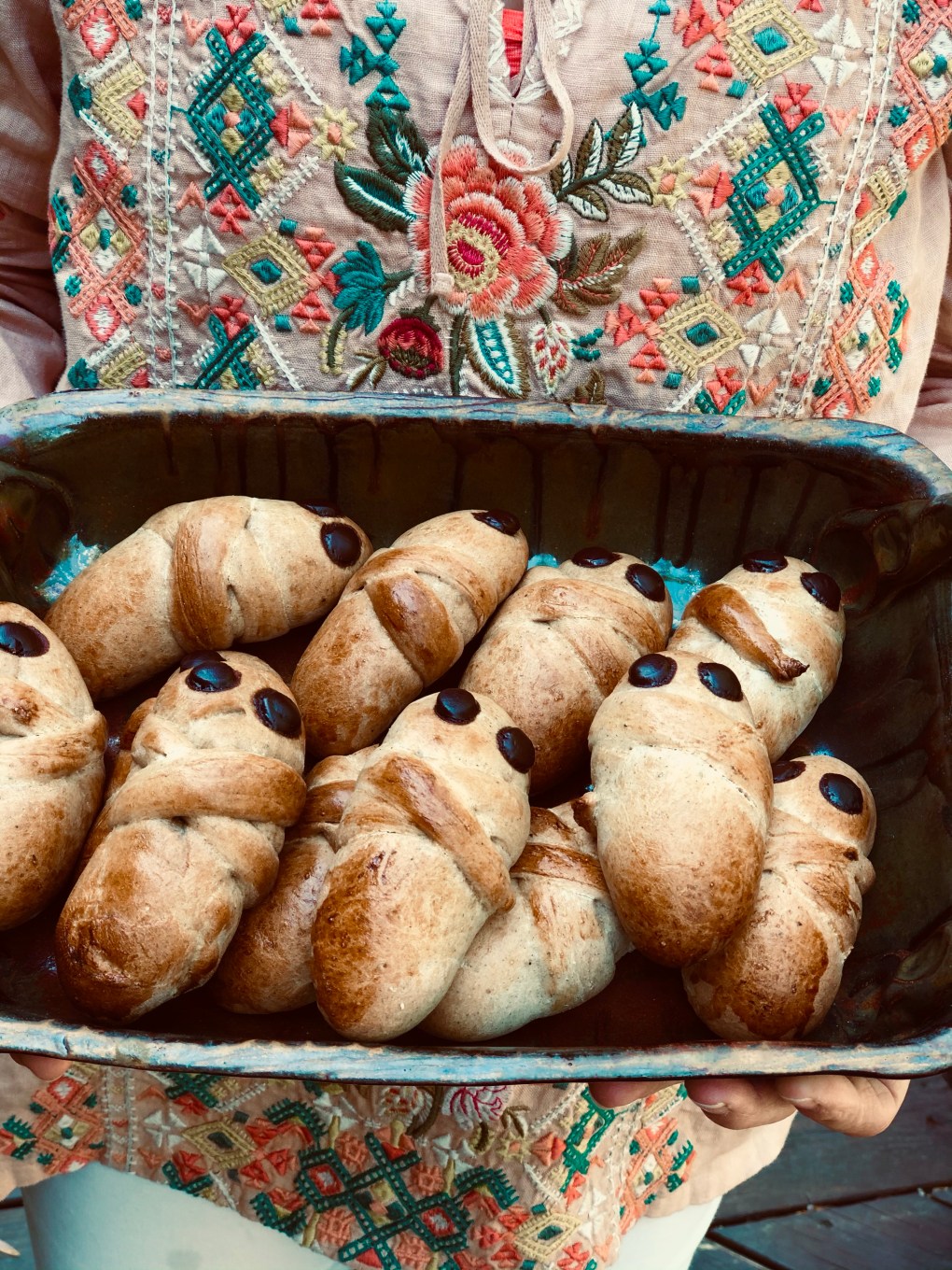
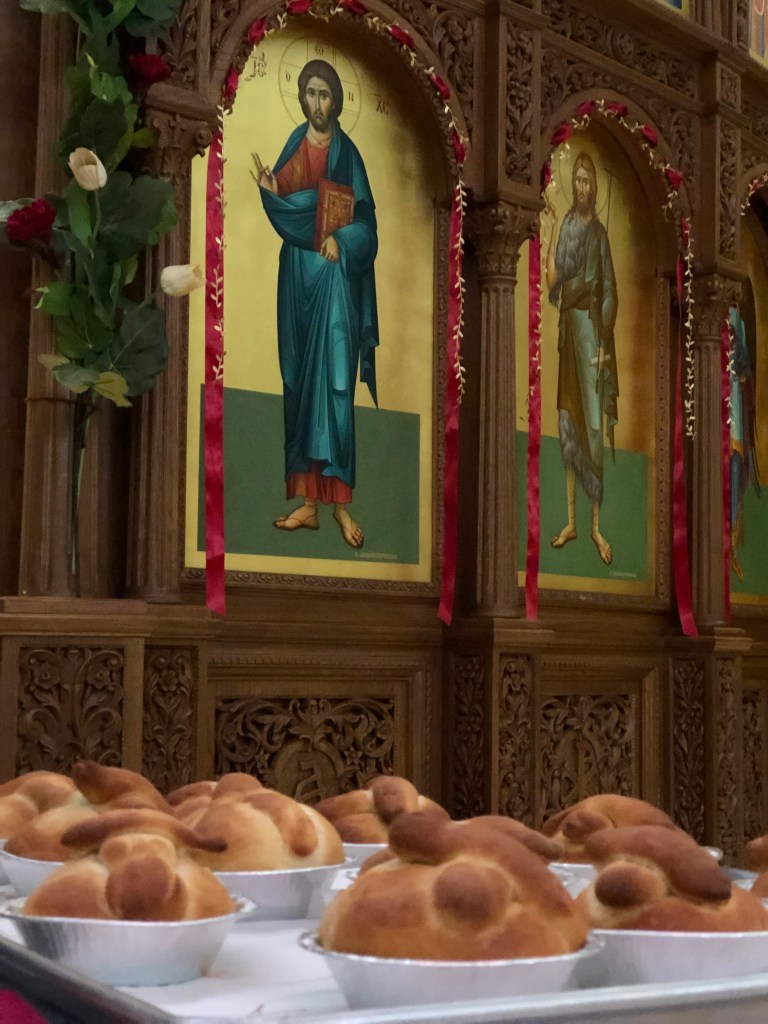
The tradition of baking these little sweet spice breads hails from Greece and Cyprus and go back such a long way. In Greek they are called Λαζαράκια which means Little Lazaruses. They are prepared and enjoyed to celebrate the miracle of Jesus raising his dear friend Lazarus from the dead and are shaped like a man wrapped in a burial shroud. They are a fast friendly treat in that they have no eggs, or dairy.
“Thus on Easter we celebrate Christ’s Resurrection as something that happened and still happens to us. For each one of us received the gift of that new life and the power to accept it and to live by it. It is a gift which radically alters our attitude toward everything in this world, including death. It makes it possible for us joyfully to affirm: “Death is no more!” Oh, death is still there, to be sure and we still face it and someday it will come and take us. But it is our whole faith that by His own death Christ changed the very nature of death, made it a passage—a “passover,” a “Pascha”—into the Kingdom of God, transforming the tragedy of tragedies into the ultimate victory. “Trampling down death by death,” He made us partakes of His Resurrection. This is why at the end of the Paschal Matins we say: “Christ is risen and life reigneth! Christ is risen and not one dead remains in the grave!”
Father Alexander Schmemann
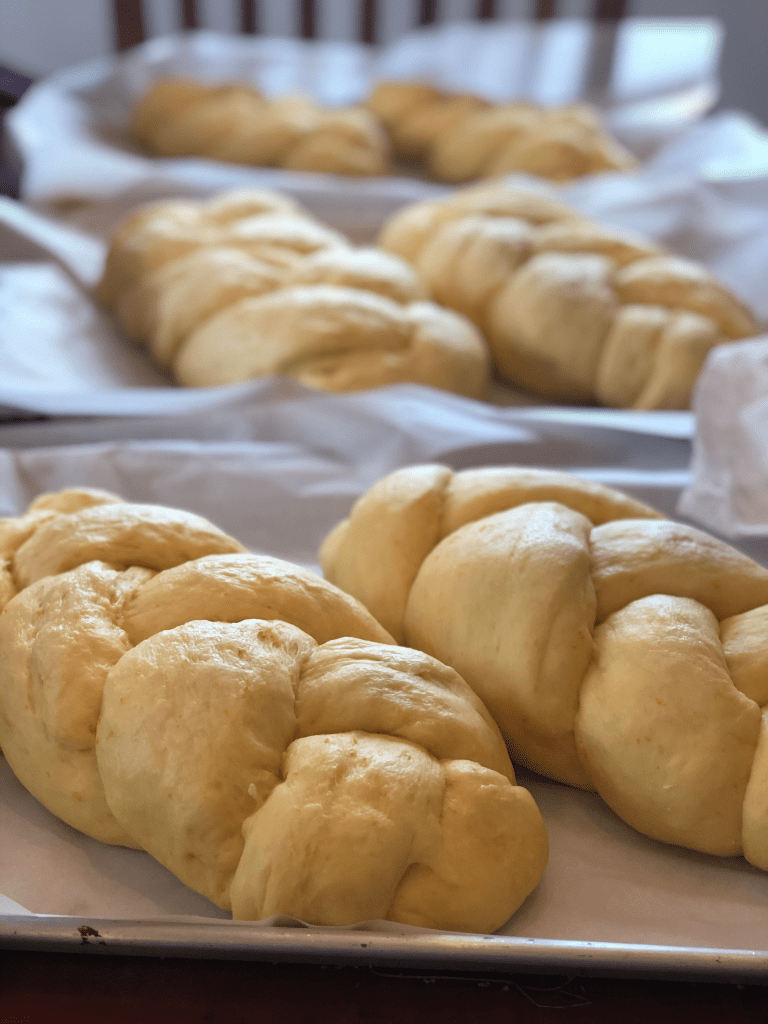
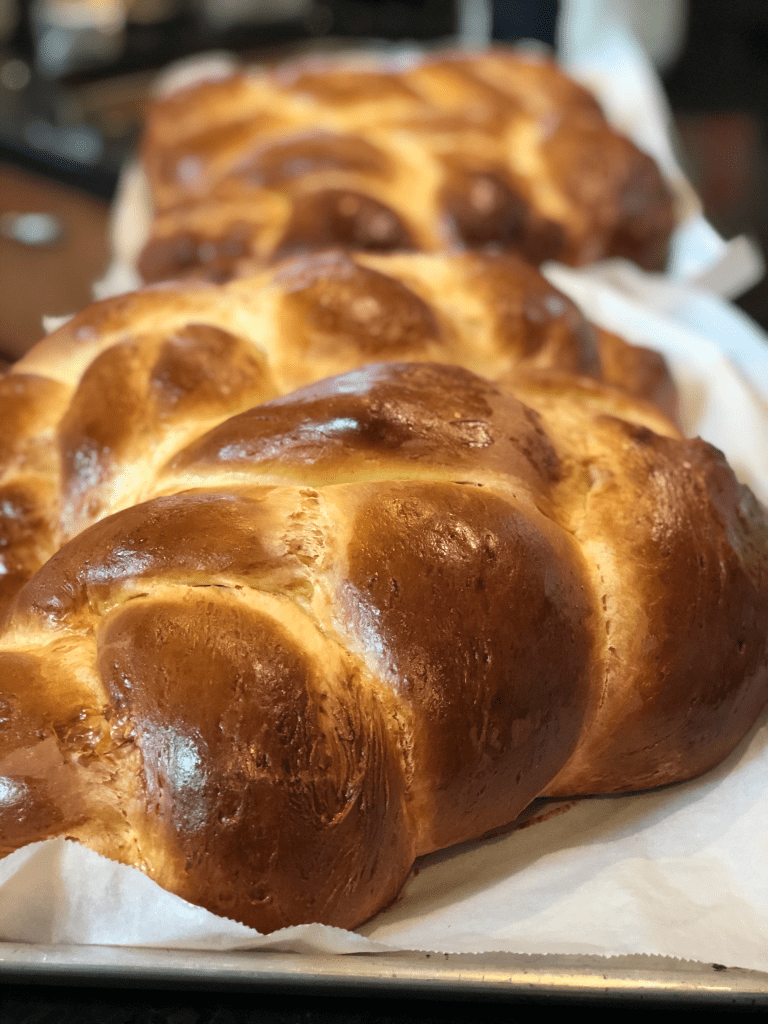
This year the lenten quarantine left our store supermarket with absolutely no flour. Not only ours, but every supermarket in our area for days has had no flour. We were all so disappointed that we might not be able to bake Tsoureki, a traditional sweet bread that we eat only once a year on Pascha. It’s kind of a big deal in my family, especially the french toast it becomes the day after Pascha!
Luckily my sweet friends who own a local farm to table brewery / restaurant heard of my poverty! Every year I have invited them to our Pascha dinner. They are neither Orthodox, nor Christian, just good friends. They brought me 10 pounds of flour early this morning.
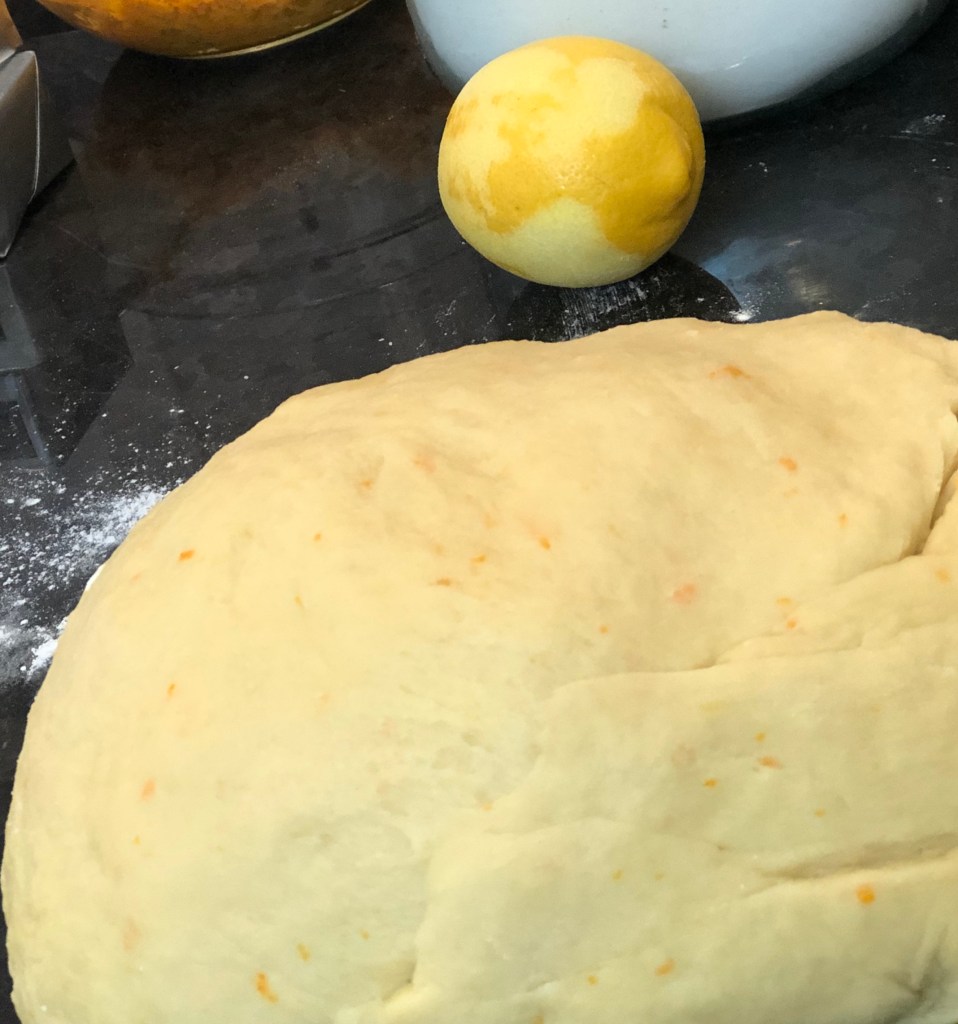
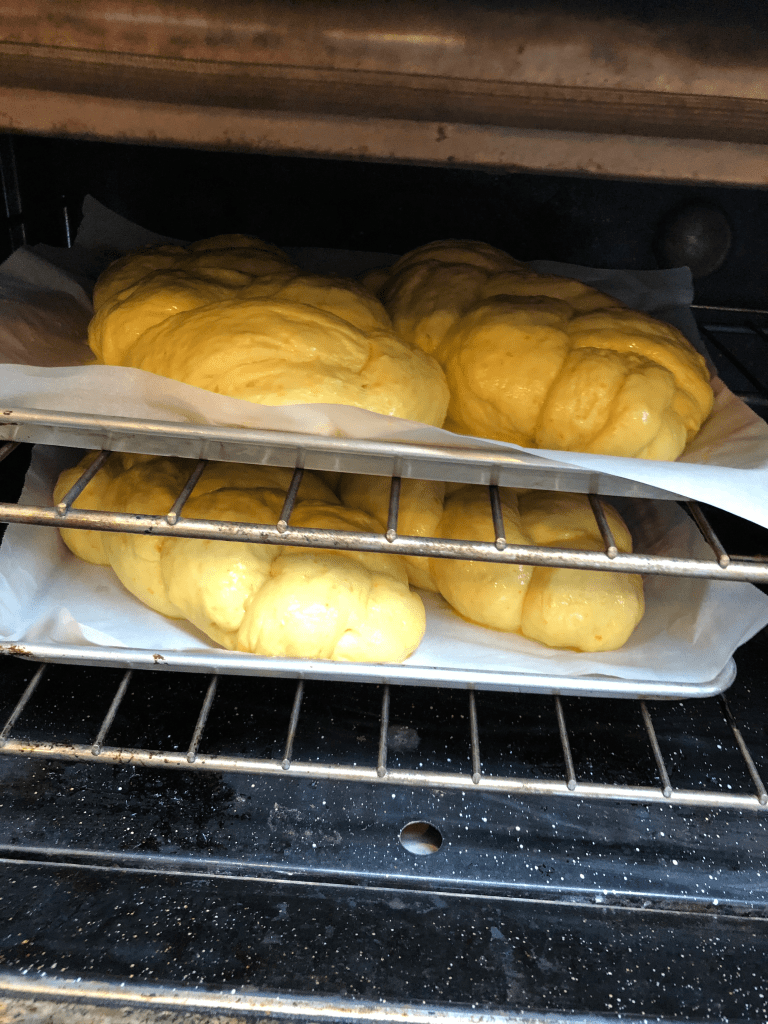
I got right to baking. My arms are sore from all the zesting and kneading 8 loaves of bread… but my house smells delicious!
“Thus on Easter we celebrate Christ’s Resurrection as something that happened and still happens to us. For each one of us received the gift of that new life and the power to accept it and to live by it. It is a gift which radically alters our attitude toward everything in this world, including death. It makes it possible for us joyfully to affirm: “Death is no more!” Oh, death is still there, to be sure and we still face it and someday it will come and take us. But it is our whole faith that by His own death Christ changed the very nature of death, made it a passage—a “passover,” a “Pascha”—into the Kingdom of God, transforming the tragedy of tragedies into the ultimate victory. “Trampling down death by death,” He made us partakes of His Resurrection. This is why at the end of the Paschal Matins we say: “Christ is risen and life reigneth! Christ is risen and not one dead remains in the grave!”
Father Alexander Schmemann
This year the lenten quarantine left our store supermarket with absolutely no flour. Not only ours, but every supermarket in our area for days has had no flour. We were all so disappointed that we might not be able to bake Tsoureki, a traditional sweet bread that we eat only once a year on Pascha. It’s kind of a big deal in my family, especially the french toast it becomes the day after Pascha!
Luckily my sweet friends who own a local farm to table brewery / restaurant heard of my poverty! Every year I have invited them to our Pascha dinner. They are neither Orthodox, nor Christian, just good friends. They brought me 10 pounds of flour early this morning.
I got right to baking. My arms are sore from all the zesting and kneading 8 loaves of bread… but my house smells delicious!
I am sharing the original recipe. I’ve changed a couple things to make it more my own. But this is by far one of the best Tsoureki recipes around! I love the citrus sweetness of it. You can find it over at Saveur I’ve been baking since I found it in 2007 and I look forward to it all year long.
As soon as the first batch cooled, I sent my daughter down the street to drop off a loaf for my friends, who made the bread possible. I will miss them and all my extended family and friends sitting around our table and throughout the house and yard tomorrow. Και του χρόνου’ – may we celebrate Pascha next year in our churches!
Greek Easter Bread from Saveur Magazine
Makes 2 loaves
2 7-gram packets active dry yeast
2 cups warm milk
9-10 cups flour
1-1/2 cups sugar
2 tsp mahlepi (optional but worth it)
8 tbsp butter melted
6 eggs, 1 lightly beaten
Salt
1 tbsp each of grated lemon and orange zest
How to prepare and bake
Dissolve yeast in milk in a large bowl. Stir in 1 cup of the flour and 1⁄2 cup of the sugar, cover bowl with plastic wrap, and set aside for 1 hour. If using – steep makhlépi, if using, in 1⁄2 cup simmering water for about 5 minutes. Strain, discard makhlépi, and set aside liquid to cool.
If using, stir 1⁄2 cup water or makhlépi-scented liquid into yeast mixture. Add butter and 5 of the eggs and mix thoroughly. Sift 8 cups of the flour, salt, and remaining 1 cup sugar into mixture. Add orange and lemon zest, and mix thoroughly with a wooden spoon. Turn out dough onto a floured surface. Knead (adding more flour if necessary) until smooth, about 10 minutes, then form into a ball and place in a lightly greased bowl. Cover with a clean dish towel and set aside to rise for 2 hours.
Add flour and knead until the dough just no longer sticks to your hands when kneading.
Return dough to floured surface. Divide into 6 parts, rolling into ropes about 15″ long. For each loaf, tightly braid 3 ropes, then press 1 dyed egg (if using) near the end of each braid. Set bread aside to rise again for 1 hour on a lightly greased cookie sheet.
Preheat oven to 350˚.
Brush bread with beaten egg, sprinkle with cumin seeds, and bake until golden, 40–50 minutes.
Baking the Vasilopita – or sweet bread of Saint Basil – is a wonderful tradition to usher in the New Year. It is a tradition all Orthodox Christians should weave into living liturgically. Though almost all Greek Orthodox Churches will bless and cut the Vasilopita in the parish after the New Years Liturgy of Saint Basil, it really is a tradition of the Little Church of the home. It is a wonderful way to bless the new year and like all Orthodox little “t” traditions, it orients the heart to Christ, remembrance of God and also reminds us that man shall not live by bread alone.
Especially in modern times – much of our lives involve planning and calendars. And we ask God to bless time and to bless our lives. We invite Father Son and Holy Spirit to live in our hearts as we re-commit ourselves to life in Christ through the Church. As we march through the marking of time of one year to the next, we seek to redeem the time – in this New Year of Grace. “και του χρόνου”
In baking and blessing the sweet bread of Basil, we seek the company of the communion of Saints. As each piece of the Vasilopita is cut and distributed we commemorate Christ, the Theotokos and Saint Basil (or your family or patron Saint) : in this small way we ask them to remember us in their prayers and we invite them to walk beside us in this New Year. And, lastly but not least-ly, the poor are remembered in the cutting of the last piece :: and the irony of a piece of cake on our plates in contrast to the empty plate of the poor is not lost on those gathering for the vasilopita.
It is possible that some Orthodox Christians even bake extra vasilopita with coins to distribute to the growing homeless population asking for change at all the stop lights in their town.
Gluten Free Vasilopita
Many people have a sensitivity to wheat. It is a real symptom of the stress of the times, industrial foods and over use of antibiotics etc. If you have a gluten intolerance, you know how it feels to be left out of a meal situtation and watch while everyone eats something delicious.
It is why I have taken to transform our recipes, especially the cultural and liturgical traditions, to be just as delicious gluten free as the regular. This particular recipe is almost exactly the same as the original one posted last year, just that it replaces all purpose flour with a gluten free blend. Honestly, King Arthur Gluten Free Measure for Measure Flour has become my favorite because it really is a cup for cup substitution.
Do you know the history of Vasilopita?
It dates all the way back to the fourth century. It’s namesake is a humble holy bishop Saint Basil the Great whose heart compelled him during a time of famine to help the poor. It was a time of merciless and unfair taxation. The Bishop confronted the emperor who had levied the tax, calling him to repentance for the harsh burden he placed upon the people.
Amazingly, the emperor did repent and he returned the gold and jewelry that had been taken from the townspeople. Basil and the villagers offered thanksgiving prayers after which the Holy Bishop commissioned women to bake and place the gold coins into a sweet bread which were then distributed. Miraculously each family found in their bread, their own valuables which had been collected as part of the taxation.
Today, the vasilopita is baked in memory of that miracle forged by God and Saint Basil’s faith, love and shepherding of his people. Each year on January 1st– the date on which St. Basil reposed in the Lord , Orthodox Christians observe the tradition of the Vasilopita. The recipient of the coin is considered especially blessed. There are many regional variations to the bread, yet a taster will find that all of the recipes are sweet and authentic!
Gluten Free VASILOPITA
Ingredients
4 large eggs, separated
1 cup sugar
12 tablespoons melted butter (1-1/2 sticks)
1-1/2 cups orange juice
1/2 cup brandy
4 cups King Arthur Measure for Measure Gluten Free Flour Mix
4 teaspoons baking powder
1/4 teaspoons baking soda
grated zest of two oranges and two lemons
whole blanched almonds and /or powdered sugar to decorate
Gluten Free Vasilopita Recipe
Preheat oven to 375F.
Grease a 10 – 12 inch springform pan
In a large bowl beat egg yolks, zest and sugar (this releases the essential oils from the zest) for about three minutes.
Add butter and beat for an additional minute
Add orange juice and brandy, beat until it is incorporated.
Whisk the flour, baking powder and baking soda in a separate bowl. This makes sure that you will not have any clumps of the baking powder and baking soda but that it will be totally distributed.
Add to the liquid mixture and stir until incorporated.
In separate bowl (I actually use a mason jar with a hand held electric stick mixer so that it does not splatter everywhere) whip the egg whites until soft peaks form.
Fold the egg whites into the batter. Pour batter into the greased springform pan.
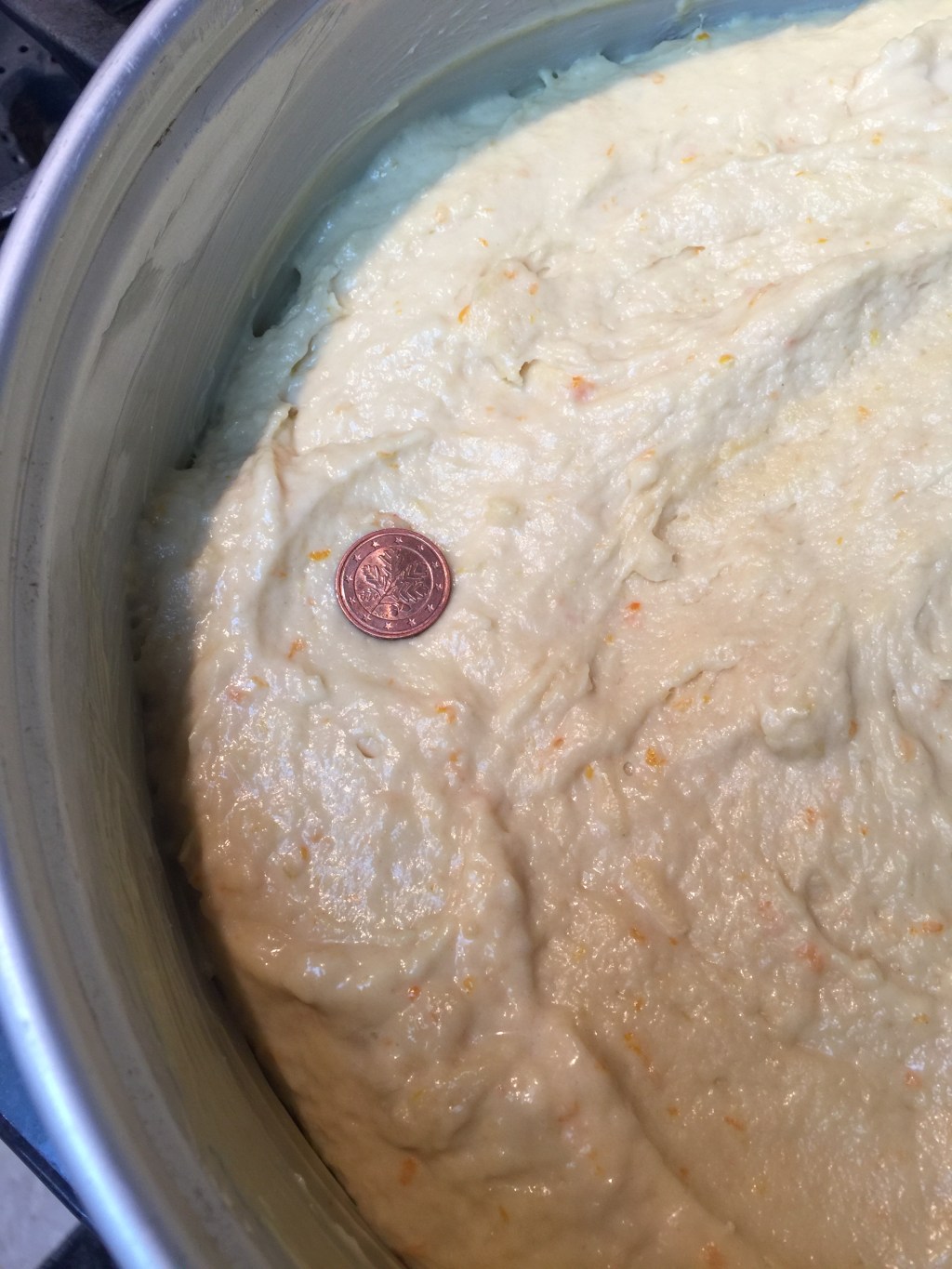
Don’t forget to place a clean coin (my daughter found a euro coin for one and a dime for another) in the batter before it’s cooked
Bake for 45 minutes to an hour until gold brown.
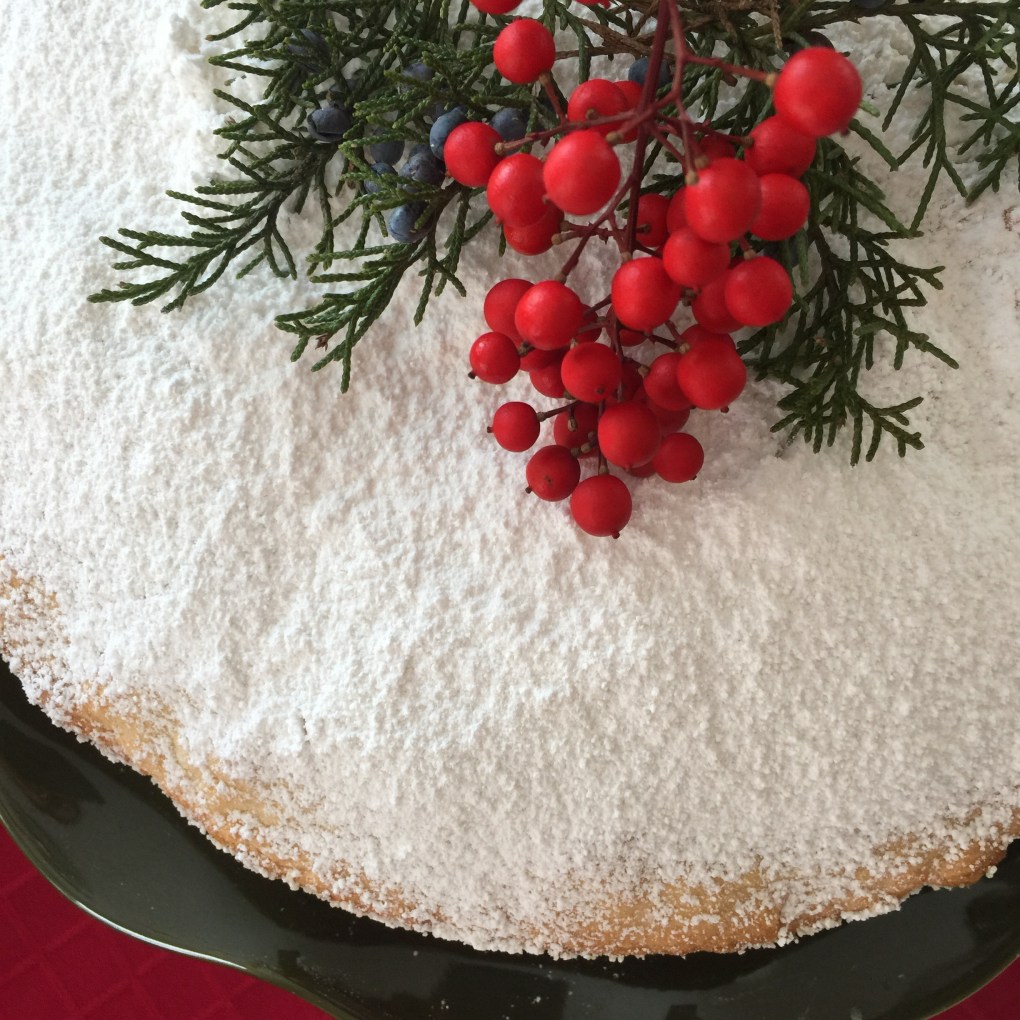
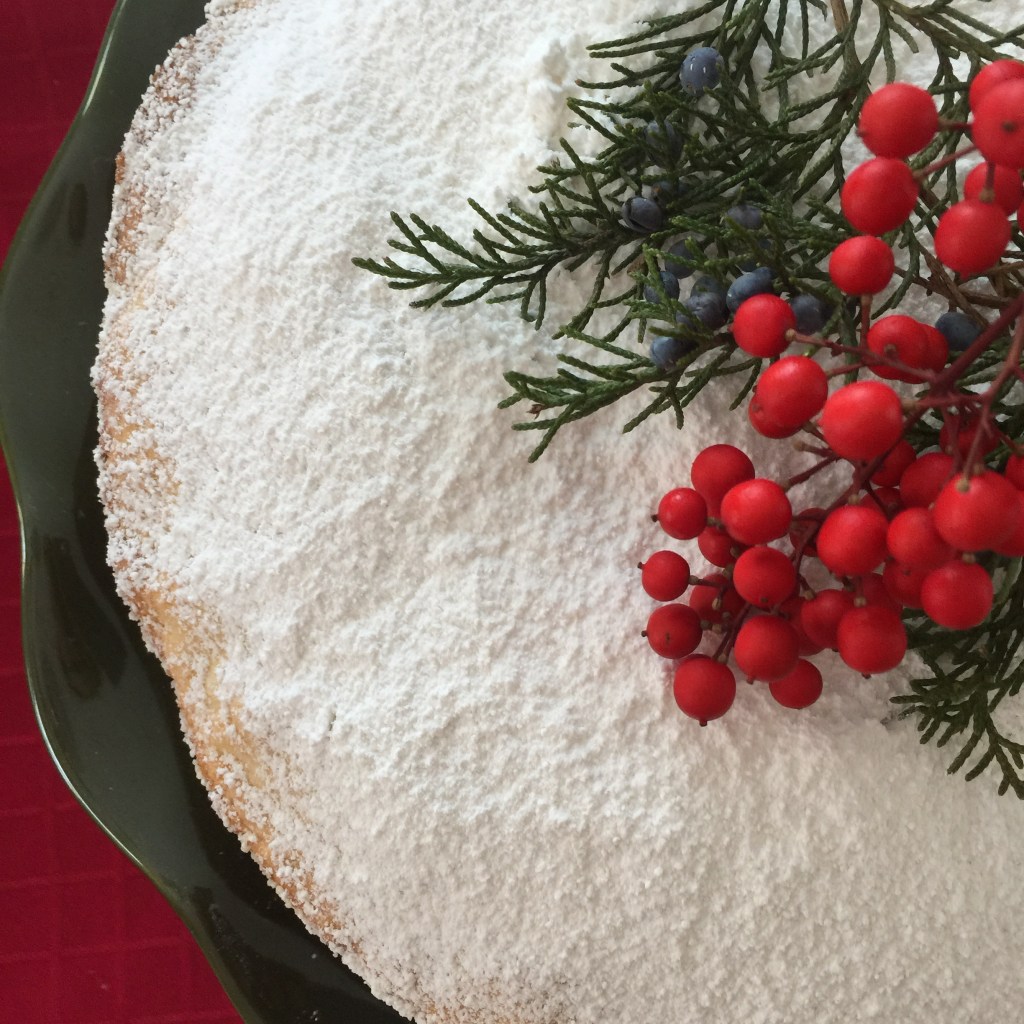
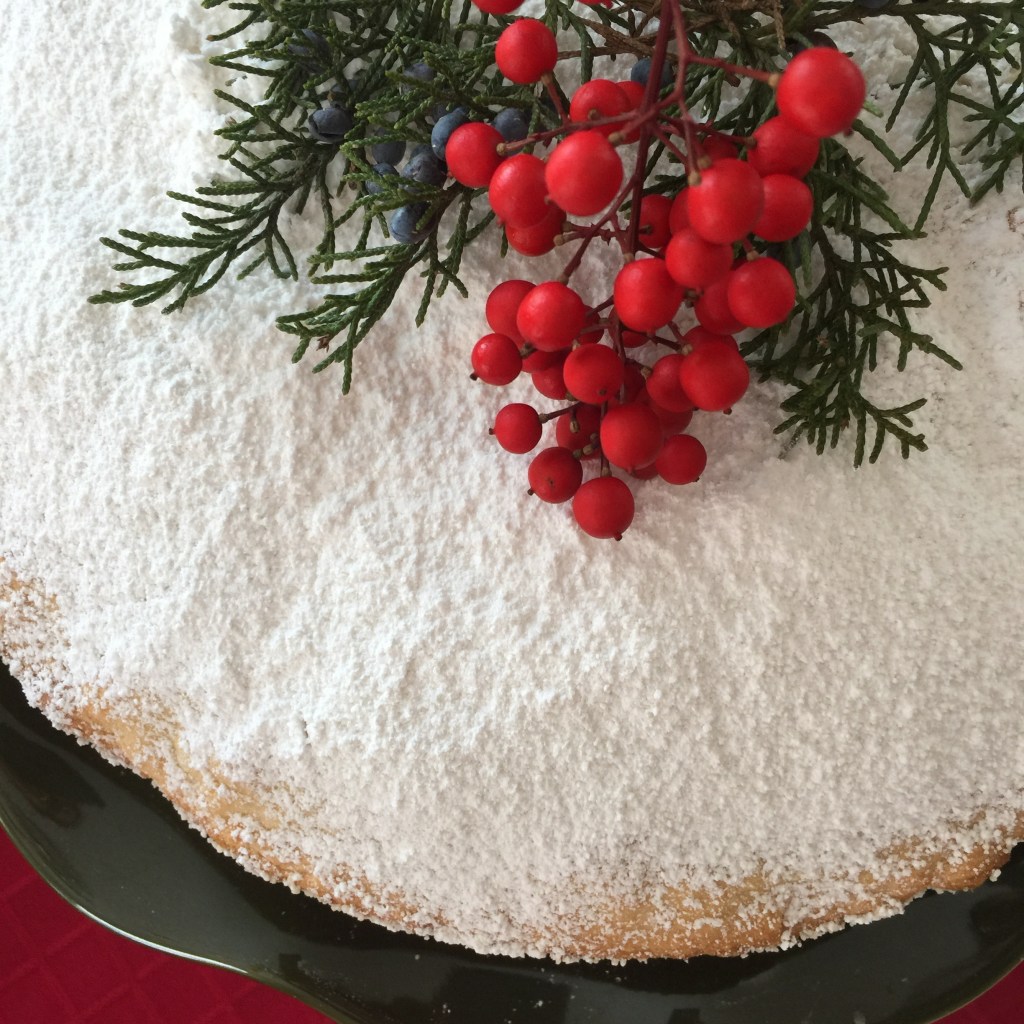
Decorate with almonds and/ or powdered sugar.
Blessing the New Year with Saint Basil
As with all customs Orthodox Christian : we bless and we pray. The following prayer is often recited when serving the Vasilopita in the home by whomever is going to serve the cake.
“Let us pray unto the Lord, have mercy. O Creator of all things, Lord and King of the ages, plenteous in mercy and bountiful in goodness, who didst accept the Magi’s gifts in Bethlehem, who art the Bread of Life that came down from heaven, who by Thine authority didst establish the seasons and the years and dost hold our life in Thy hands. Hear us who pray to Thee on this holy day upon our entrance into the new year of Thy Goodness and bless (+) this loaf/bread, which has been offered to Thy glory and in honor of our Father among the Saints Basil the Great, Archbishop of Caesarea in Cappadocia. Do Thou who art Benevolent, look down from Thy Holy Heaven and send down upon us, upon those who have offered these gifts and upon them that partake thereof, Thine heavenly gifts, for our hope is in Thee, the Living God, unto the ages. Bless this parish (home, school, foundation, etc.) and our entrances and exits; replenish our life with all good things and direct our footsteps that we may keep Thy Divine Commandments, for man shall not live by bread alone; Though the intercessions of Thy Most Pure Mother, of our Father among the Saints Basil the Great and of all Thy Saints who from all ages have been well pleasing to Thee. Amen.”
The sign of the Cross is then made over the Vasilopita with a knife while saying, “In the Name of the Father and of the Son and of the Holy Spirit. Amen.” Then pieces of the Vasilopita are cut in the following order:
The First piece is set aside for Christ,
the Second piece for our Theotokos,
the Third piece for Saint Basil,
and the Fourth piece for the poor.
Then pieces are given to all present, beginning with the eldest and ending with youngest. He or she who receives the piece containing the coin is traditionally considered to be especially blessed for the New Year.
Wishing you a Blessed New Year filled with joy, thanksgiving and Grace!!
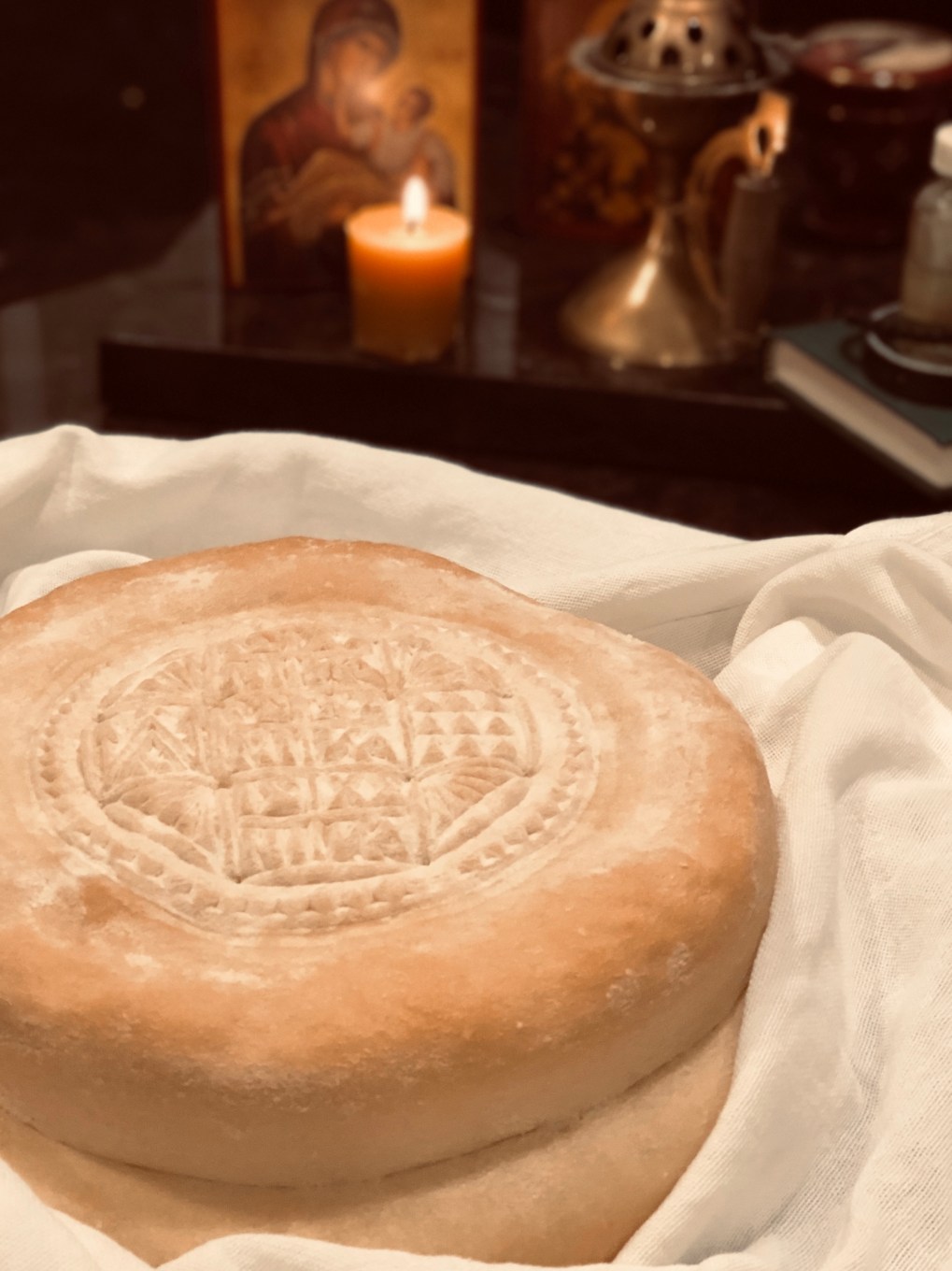
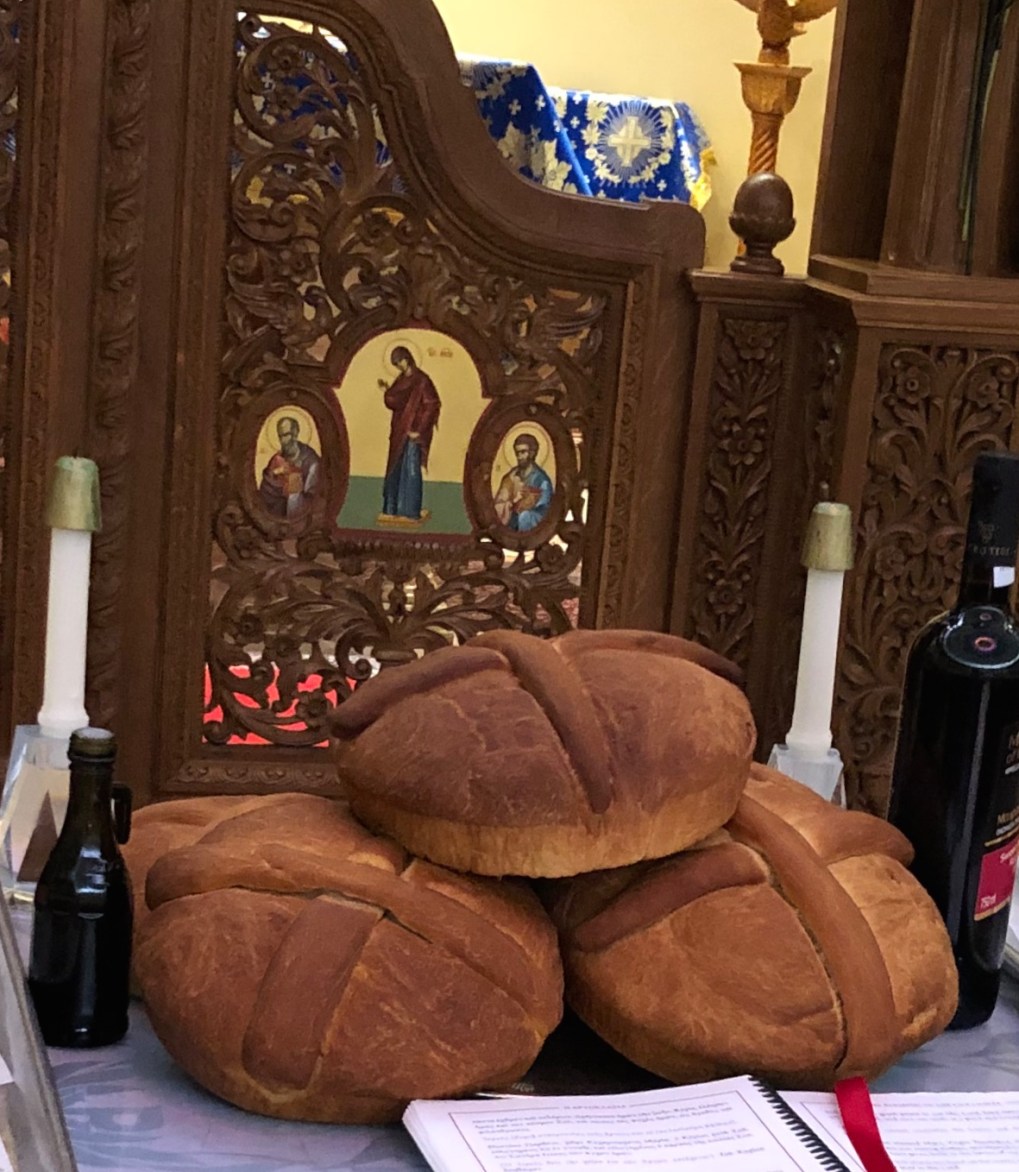
Traditional Prosphora is made using a natural leaven. It is not with a commercial yeast but a slower rising sourdough starter. Traditionally, Greek Orthodox women make their sourdough starter around the Feast of the Elevation of the Cross, celebrated on September 14. The starter is called prozymi. In many Orthodox Churches, fresh basil is used to sprinkle Holy Water, a sprig of which is taken home and placed in the prozymi. If the prozymi is started around Pascha (Easter) then the mixture contains a handful of the flowers used to decorate the Epitaphios. This sourdough starter is then used for baking Prosphora – an offering – the bread we make for Communion.
“Concepts create idols, only wonder grasps anything.”
Saint Gregory of Nyssa
It’s been said that the elderly Orthodox women in Greece, if asked, will tell you that the transformation of the flour, water and basil or flowers into the prozymi occurs by Gods Grace alone, and well, that is entirely true… for that is our belief ~ that all life is a gift and sustained from a loving God.
This is a slower rhythm of life that sets time aside. When I read about these women – I am struck how are grounded are they in Christ – living within the seasonal rhythm of the Church, anchored but always anticipating the upcoming feasts and living and incorporating the faith into daily life.
Give us this day our daily bread. Laboring a sourdough, this wild yeast fermentation of the prozymi becomes an endeavor of trust and of creation – fashioned through a relationship with God. This becomes our offering- the prosphora – A simple, humbling endeavor, to place God above all, offering up our whole lives to Him.
It’s a wonderful rhythm to incorprate prozymi into your family traditions. It’s also a nice practice to bake the phosphora offering for the Divine Liturgy. If you have never done it, there are likely older ladies in your parish that would be more than willing to teach you. That is how I learned… the old ladies taught me.
Happy Feast of the Elevation of the Cross!
Basic Sourdough / Prozymi Starter
There are slight variations in every sourdough recipe, some call for rye flour, some call for adding a piece of fruit, like a plum or grape which has a little hint of white film -which is yeast and called the bloom, and others – like the Orthodox tradition call for adding our blessings from Church.
Timeframe about 1 week : There are some recipes that do an overnight prozymi, I found this way to produce a very active starter. I’ve had inconsistent results just starting my leaven the night before.
Prozymi Ingredients
1.Flour (any kind) water – non chlorinated
2.fresh basil, fresh organic plum or grapes (optional)
In a jar or bowl mix 2 cups of water and flour. Stir mixture vigorously. Add basil or fruit if using. Cover the mixture with a cheesecloth or any other porous material that lets the air circulate.
Store batter in a warm place in the 70-80 degree range. Visit the batter daily and stir it to distribute the yeast. After a few days you will notice some bubbles on the surface of the batter. The yeast is letting you know it is active.
Remember, your home is it’s own ecosystem. Every ecosystem has its own unique micro-organism communities – the ecosystem in your home plays a role in how slowly or quickly your batter will germinate. Once yeast activity is evident, strain out the fruit.
Add 1 or 2 tablespoons of flour to the mixture each day for three days. The batter will begin to thicken and rise. Add more water when necessary. By about day five your starter should be bubbly. With a clean spoon, remove about half the sourdough starter, if you compost you can throw it in your bin.
Stir in 1/2 cup flour and about 1/4 cup water. You now should have an active starter – cover it and leave it at room temperature until it has almost doubled. You can now expand the starter for baking bread or refrigerate it overnight and start expanding the next day.
Other Prozymi Resources and Phosphora Recipes
If you would like a recipe using the Prozymi the following links are just lovely
Tavola Mediterranea : I love this recipe and article because it is the authors first time baking the prosphora and her photographs are stunning
Prosphora Byzantine Style This is a video that also has a recipe link. It’s nice to have the visual especially if one has never made the phosphora.
Prosphora Recipes that use commercial yeast are here…
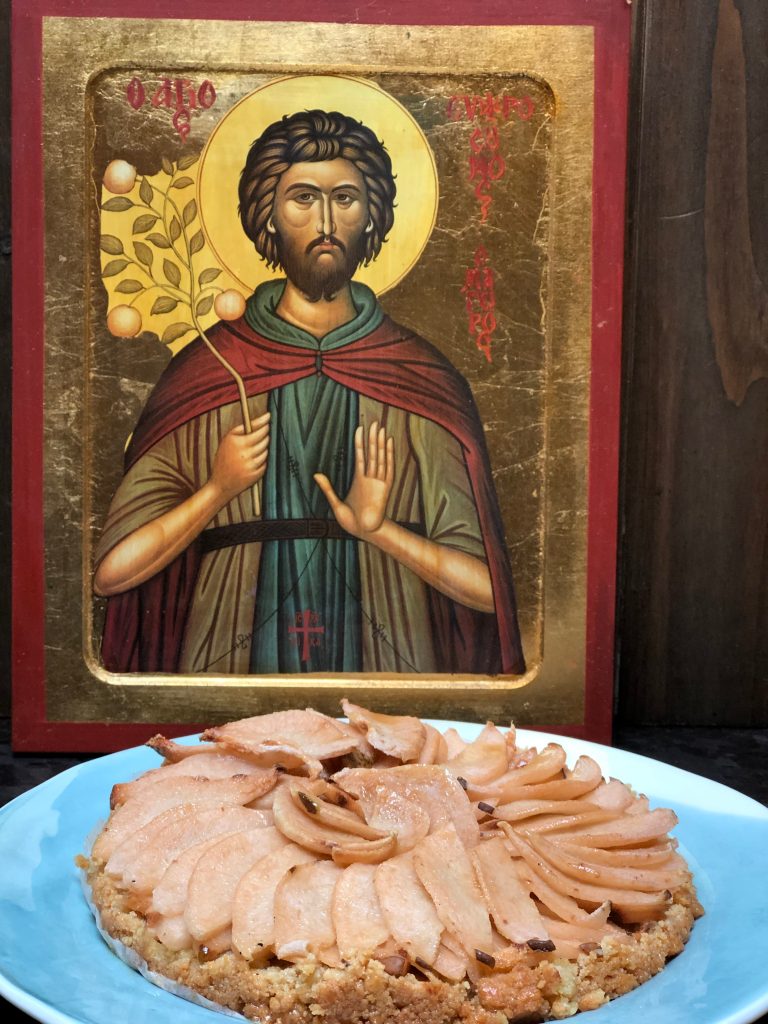
Euphrosynus was a simple man, but a man of God. He served as the cook in a monastery in the 9th century. One night, the spiritual father of this monastery saw himself in Paradise and saw Euphrosynus there as well. Euphrosynus picked and gave him three apples from Paradise. When the spiritual father awoke, he saw three unusually beautiful and fragrant apples by his pillow. He quickly found Euphrosynus and asked him “Where were you last night, brother?” ” I was where you were, father,” the blessed God-pleaser replied. The spiritual father then revealed the entire incident to the monks and all recognized the sanctity and godliness of Euphrosynus. But Euphrosynus, fearing the praise of men, immediately fled the monastery and hid in the wilderness, where he spend the remainder of his life.
The Prologue of Ohrid : September 11/24
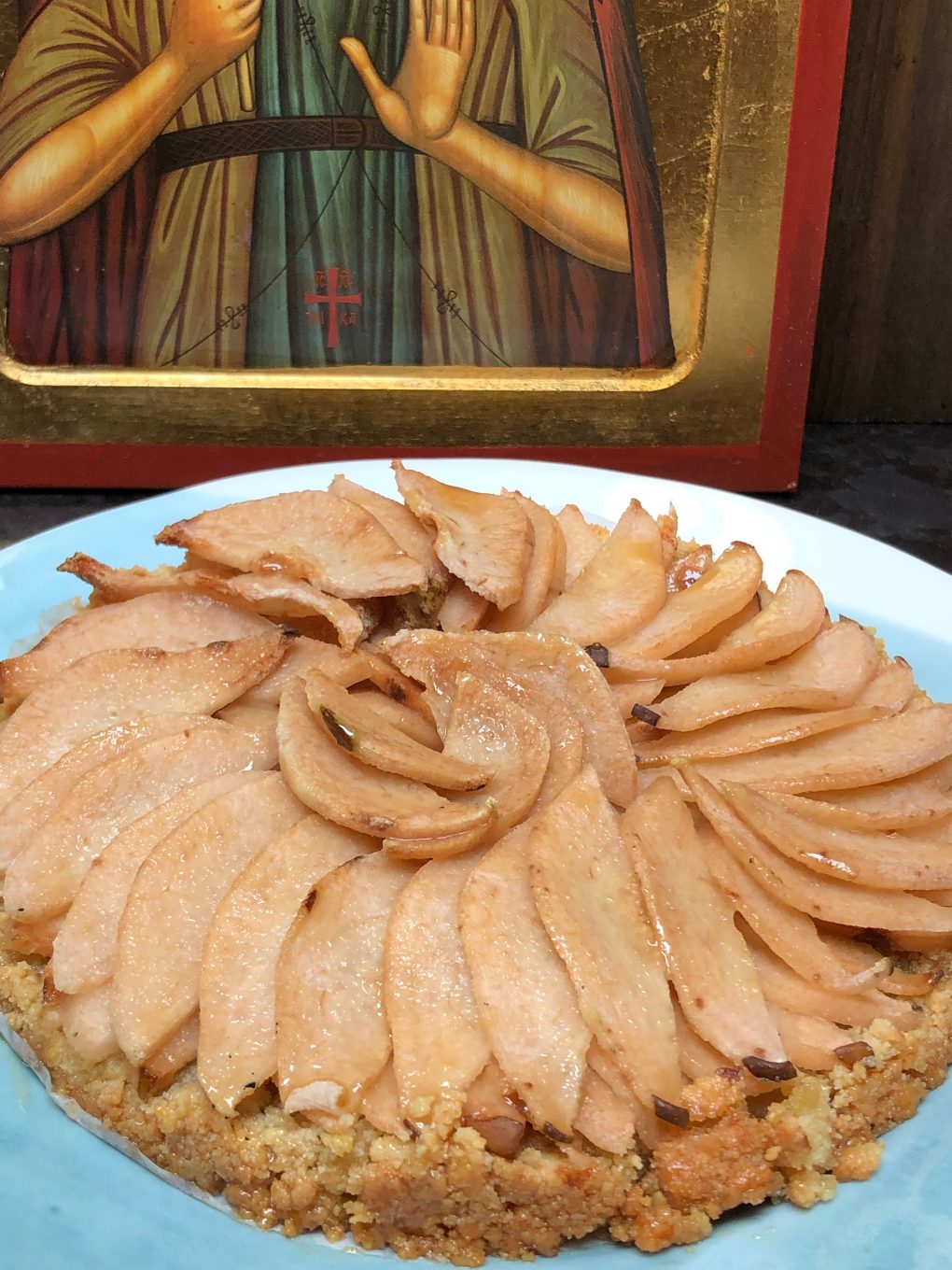
Almost everyone I know has an icon of Saint Euphrosynus in their kitchen… It’s become a tradition in some Orthodox circles – and most especially for anyone with kids, to pick apples, or make an apple treat on this day. Usually we bake a pie, but this year, I wanted to share this delicious apple tart with you – because we are almost totally gluten free now. The amazing thing to me is that the crust is actually simpler than making pie crust and it’s gluten free. It’s the favorite pie crust of my family these days.
Saint Euphrosynus is the Patron Saint of Cooks… and its a blessing to remember when we read about the lives of such humble Saints, that the food which sustains our very being is the Bread of Life. There is a quote by Father Schmemman that I love, and always made me feel good about being in the kitchen so much…
“Food is still treated with reverence. A meal is still a rite—the last “natural sacrament” of family and friendship, of life that is more than “eating” and “drinking.” To eat is still something more than to maintain bodily functions. People may not understand what that “something more” is, but they nonetheless desire to celebrate it. They are still hungry and thirsty for sacramental life.”
Father Alexander Schmemman
No matter how overflowing our plate or filled is our belly, the instatiable hunger of the soul is far greater than the hunger of the body. Fall is a great season for apples and apple pie is a major comfort food. As we eat with the Saints, we can remember that our ultimate comfort food is heavenly nourishment – the Eucharist – the Bread of Life – Living Water – the Sacraments – from which we will never hunger.
And when we make any food honoring the remembrance of a Saint, the true expression of that commemoration is when we gather with our family and talk about the Lord, about the Saint, about our Faith – or even to distribute it to the poor in your area, because where two or three are gathered, He is with us.
This is a tart that I really love. It is naturally sweetened, which by now most everyone knows that I try to reduce the sugar as much as possible in my recipes. If you would like a sweeter tart, feel free to sprinkle brown sugar on top, or you can make the caramel sauce to drizzle atop the tart before you eat.
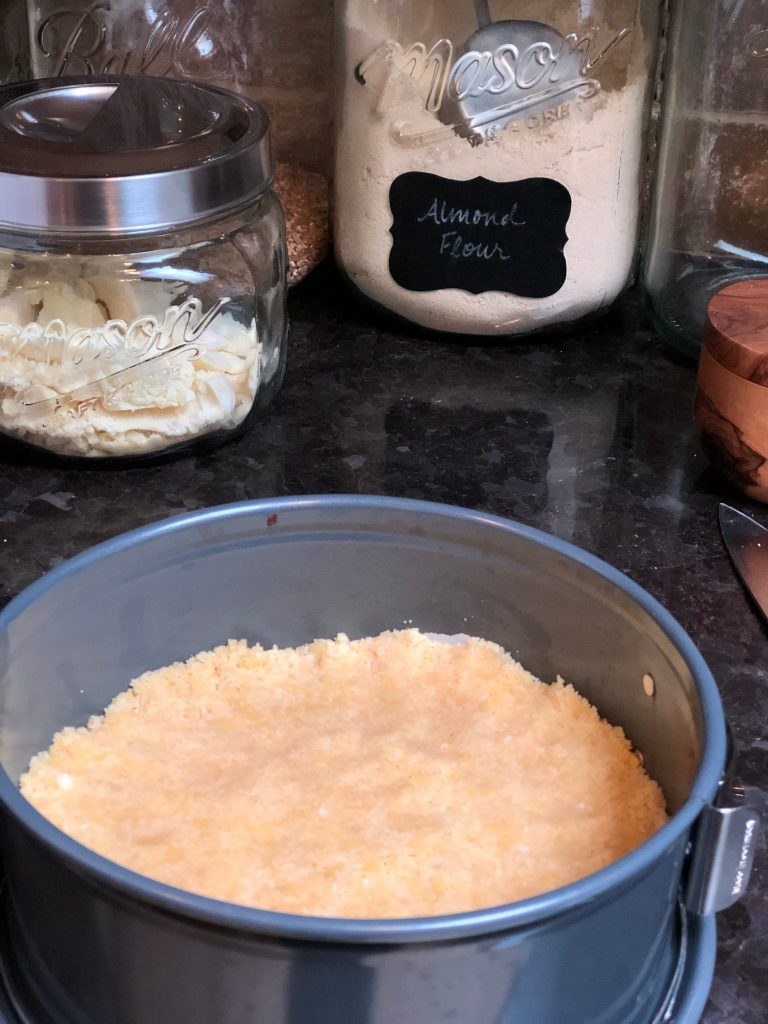
Place almond flour and salt in food processor and pulse briefly to incoporate
Add coconut oil and egg and pulse. The dough will form into a ball.
Press dough into a 9 inch tart pan. I use a pan with a removable bottom.
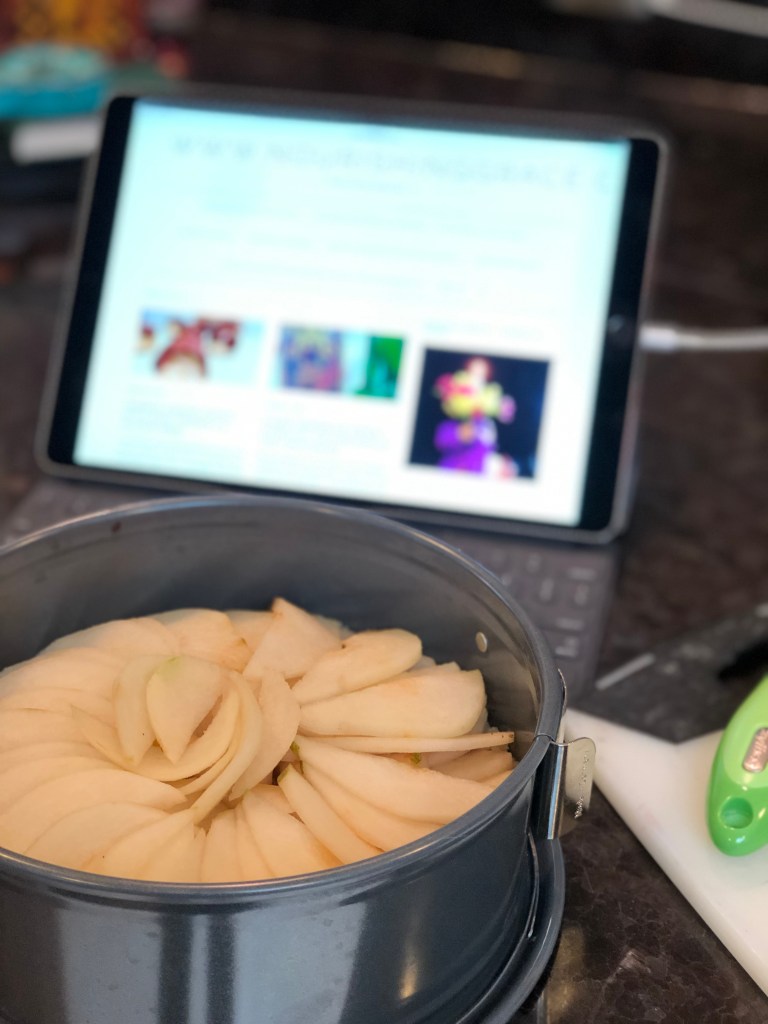
Peel and slice apple thinly.
Arrange apples and fan them out onto pie crust.
Sprinkle with brown sugar (optional).
Bake at 350 for 40 minutes. If you are using the brown sugar it will caramelize.
Notes: I can not take credit for recipes that are not my own. The crust is inspired by Elena’s Pantry and the caramel sauce is a Pioneer Woman favorite of mine, plus it is insanely easy and beyond delicious!!!!
If you would like to learn more about Saint Euphrosynus the Cook here are some amazing resources:
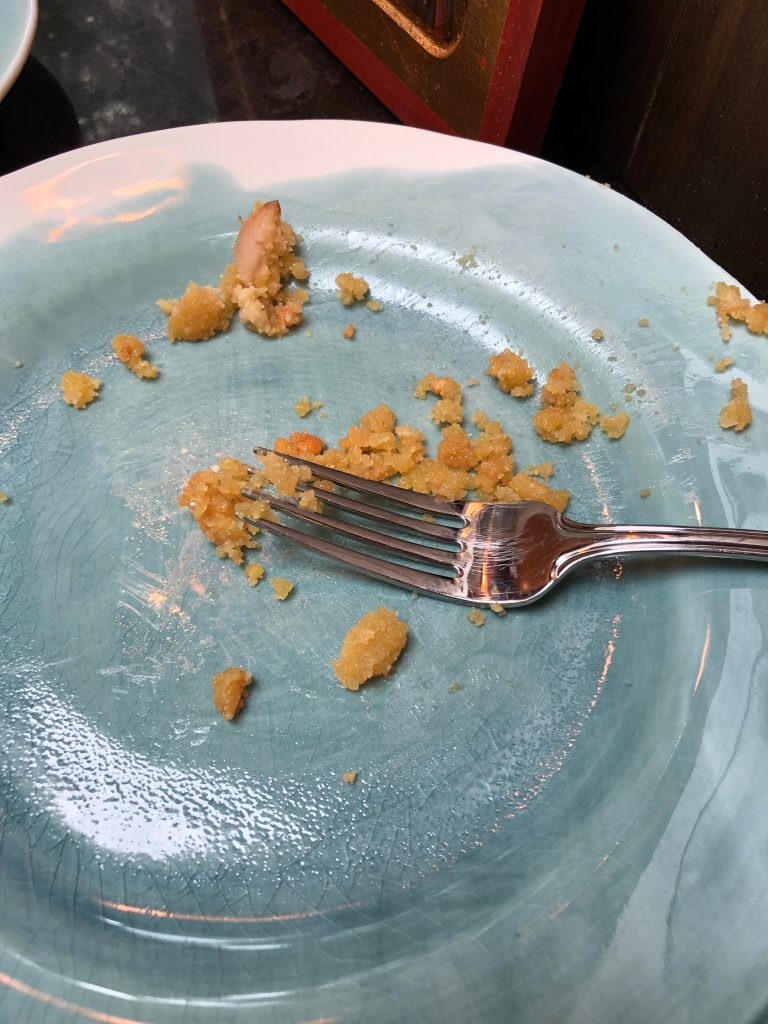
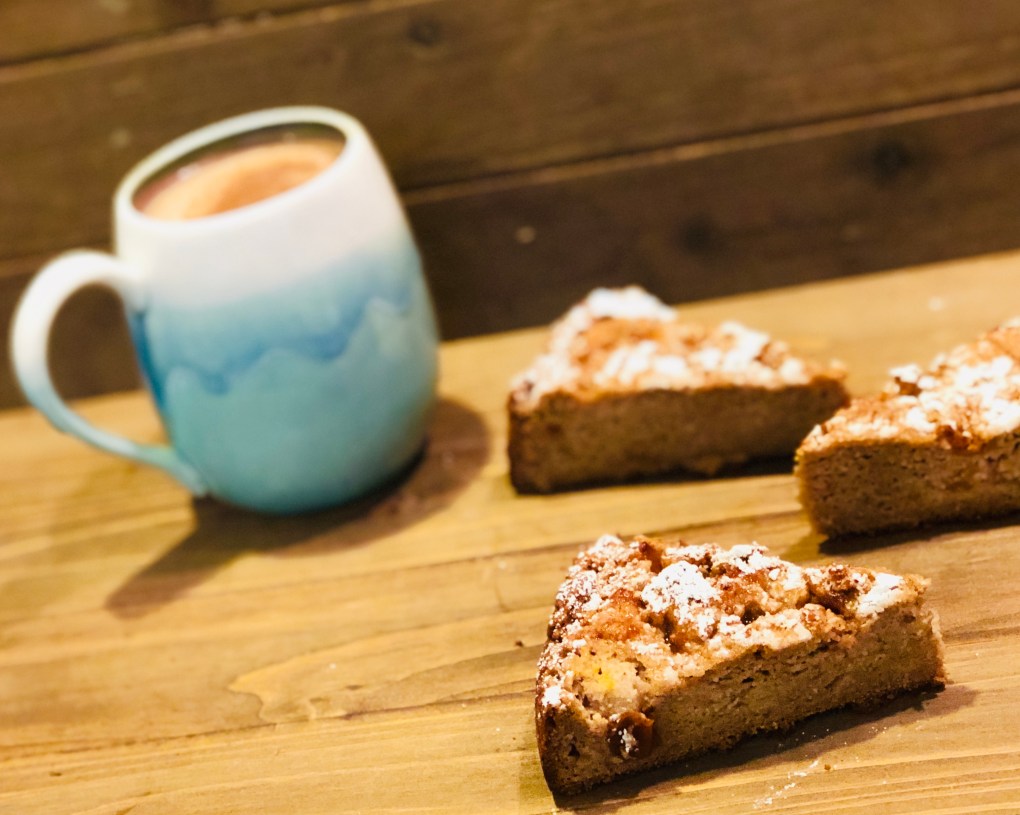
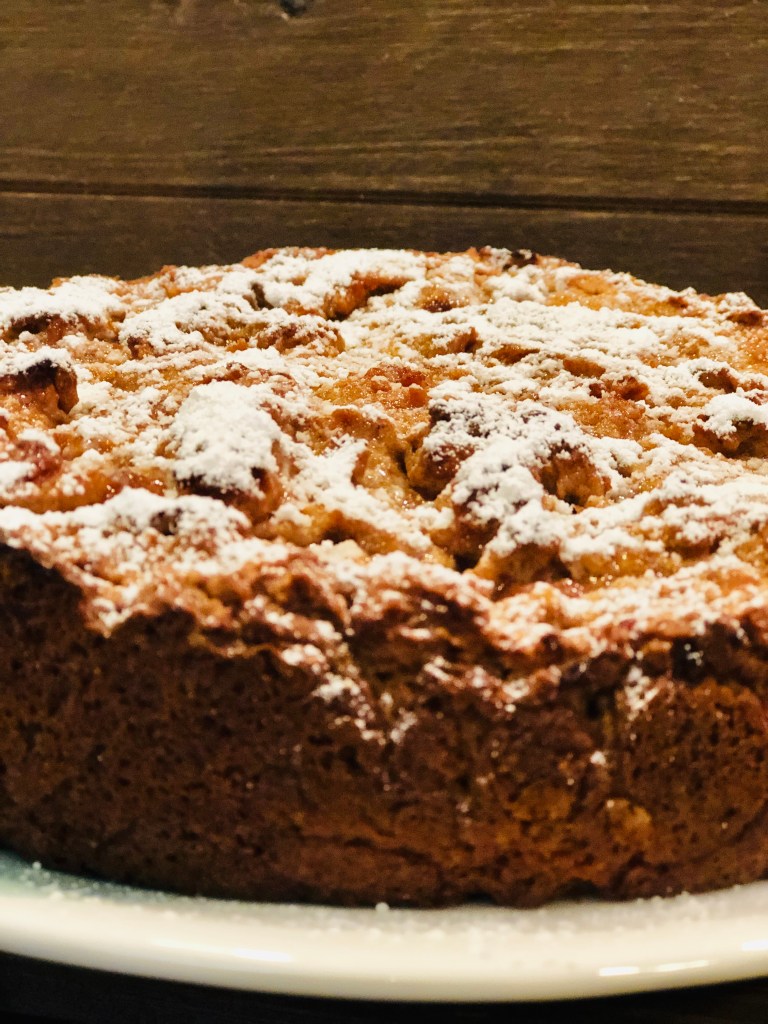
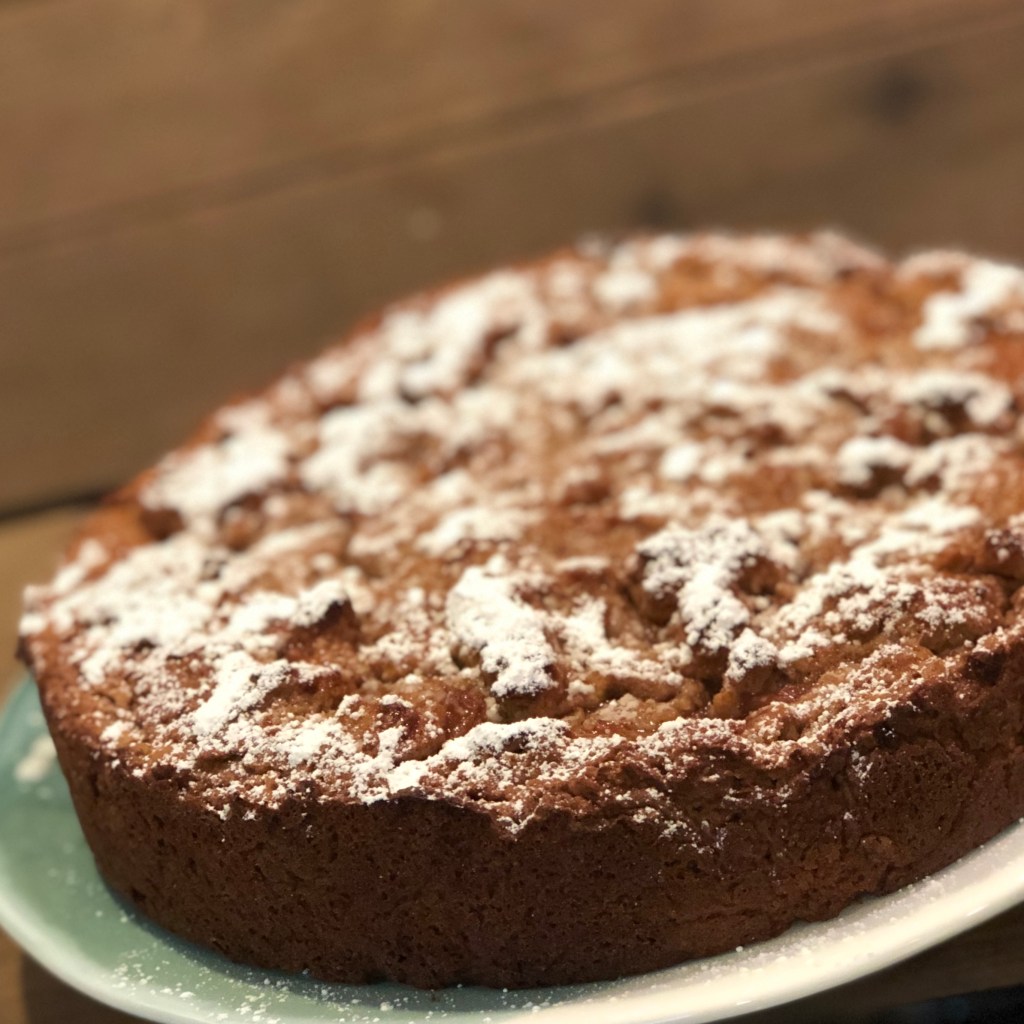
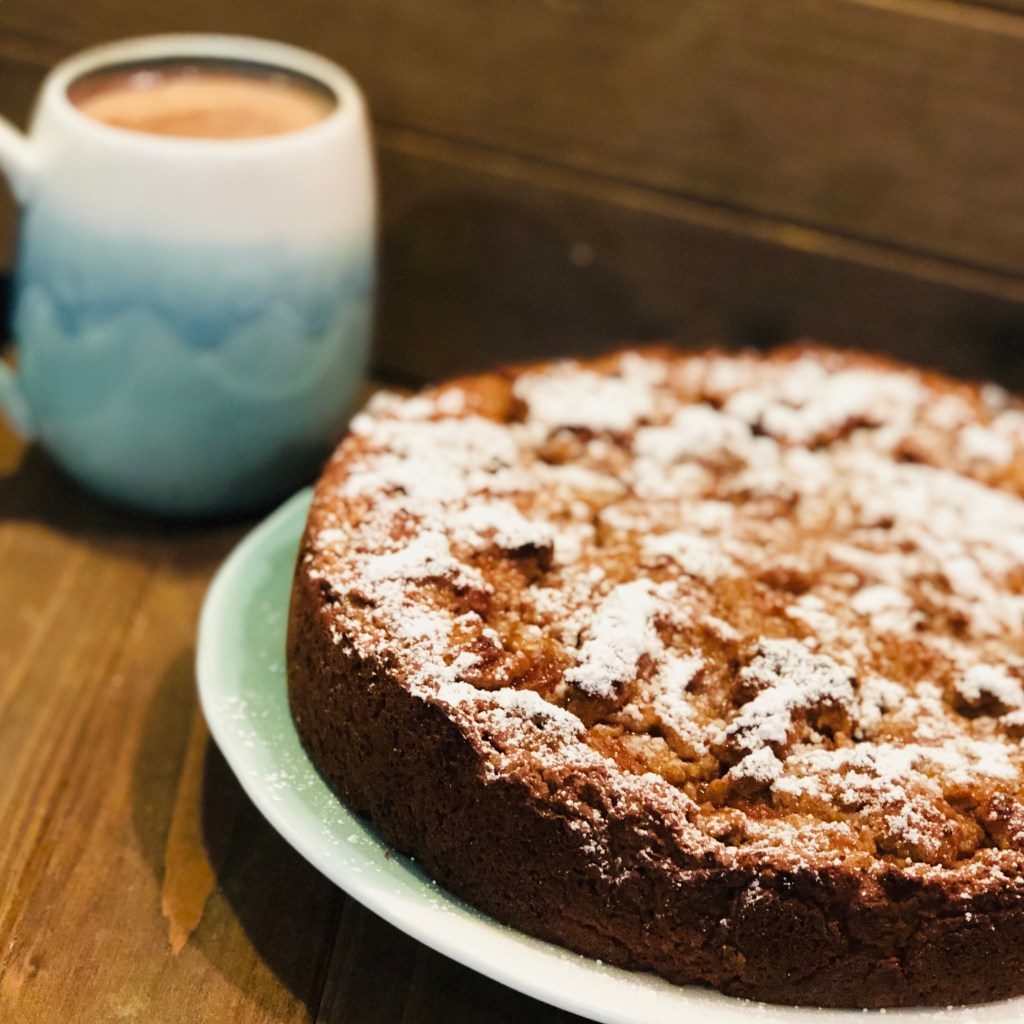
On August 27th we commemorated Saint Phanourious and it is customary in many parishes to bake a special cake to bring to Church for a blessing. Some traditions hold that we bake the Phanouropita and distribute it to the poor. Any time we ask his intercession and receive it is also an occasion to bake the bread and bring it for a blessing.
The name Phanrourios means “I reveal”. Through the centuries he has become an intercessor for lost and found things… and so some refer to him as the Saint of lost and found. So if the faithful ask for his intercession and their lost item appears, then it is custom to bake the sweet bread, bring it to Church for a blessing and distribute it to the poor.
Tradition holds that Saint Phanourios mother lived a terrible life and was not a Christian. When Saint Phanourios was martyred he also prayed for his mother. That it why, the faithful also pray for the mother of this beloved Saint… centuries after his repose and hers. And so we co-labor with this Saint in asking intercession for his mother, a woman whose name we do not know – “the mother of Phanourios”.
Several of us in this family have a gluten intolerance, and so I have begun the process of converting many of my traditional recipes, like this one, to a gluten free version. If you have a gluten sensitivity, then you know how bad you can feel after eating it. You also know how challenging it can be when you are in community settings and there is no option for you. Food forms community and social bonds – to break bread with one another binds us together. Having said that, I will say that my non-gluten endeavors do not apply to Prosphora – which I truly believe does not believe needs to be gluten free. The Eucharist is truly the Body and Blood of Christ. Alcoholics part-take without issue, and I have never heard of anyone partaking who has a gluten allergy that has an issue either…
1 scant cup arrowroot flour (Bob’s Red Mill is a good brand)
1 1/2 tsp baking powder
1 1/2 tsp baking soda
1/2 tsp salt (optional)
2 teaspoons cinnamon
1 teaspoon cloves
zest of two oranges
Instructions
Preheat oven to 350 degrees F (176 C) and lightly grease one standard 8-inch round cake pan, with butter or coconut oil and dust with gluten-free flour. Shake out excess and set aside.
In a small bowl combine coconut milk and vinegar. Let set a few minutes. Then add applesauce and vanilla and honey. Whisk/stir to combine.
Add dry ingredients to a large mixing bowl and whisk to combine and get out any lumps. Add wet ingredients to the dry ingredients and mix until well incorporated and no large lumps remain. The batter should be thick but pourable. Add more almond flour if too wet or dairy-free milk if too thick.
Pour batter into the prepared pan and place in the oven for approximately 35-40 minutes or until a toothpick inserted into the center comes out clean and the edges and surface appear golden brown.
Let cool 15 -20 minutes so the sides pull away from the pan. To remove, run a dull knive around the edges toloosen the cakes. Then place a plate or cooling rack on top and quickly invert.
Let cool completely and dust with powdered sugar.
Additional reading about this beloved Saint may be found at the links below.
Artoklasia is a Liturgical Bread offered in the Orthodox Church. It is reminiscent of the Feeding of the Five Thousand and is a festive bread of blessing. Below is a recipe and brief description for Artoklasia to share.
Everyone as he is able, should try to heal (with kindness) anyone who has something against him.
Saint Basil the Great
The Fathers Speak (p. 55)
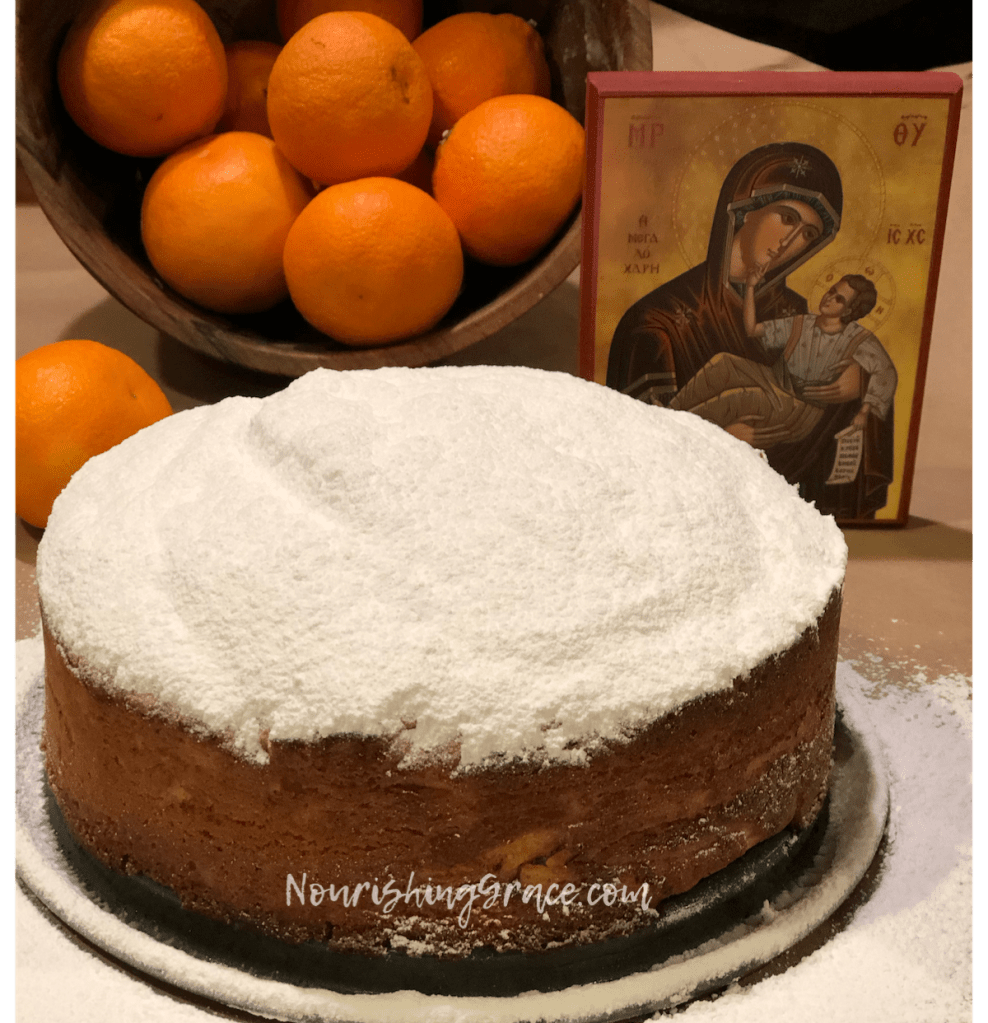
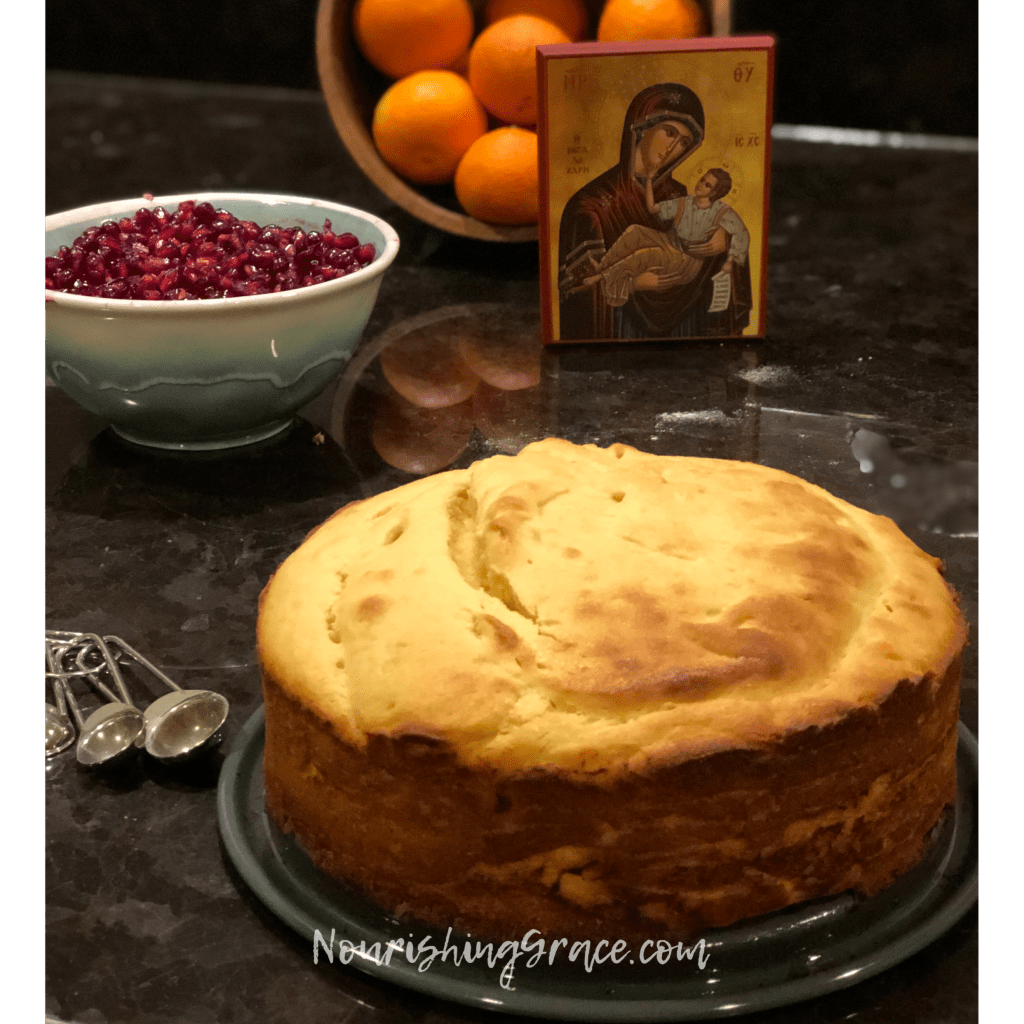
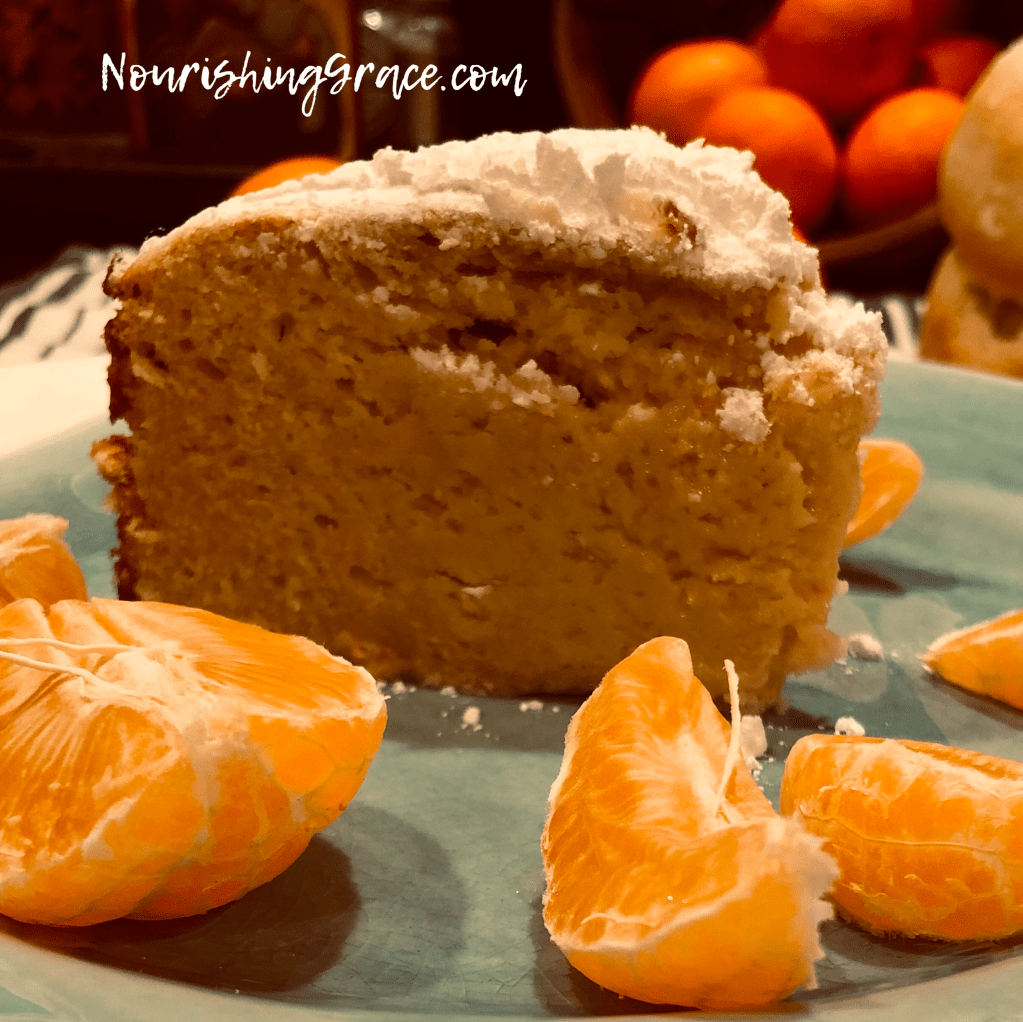
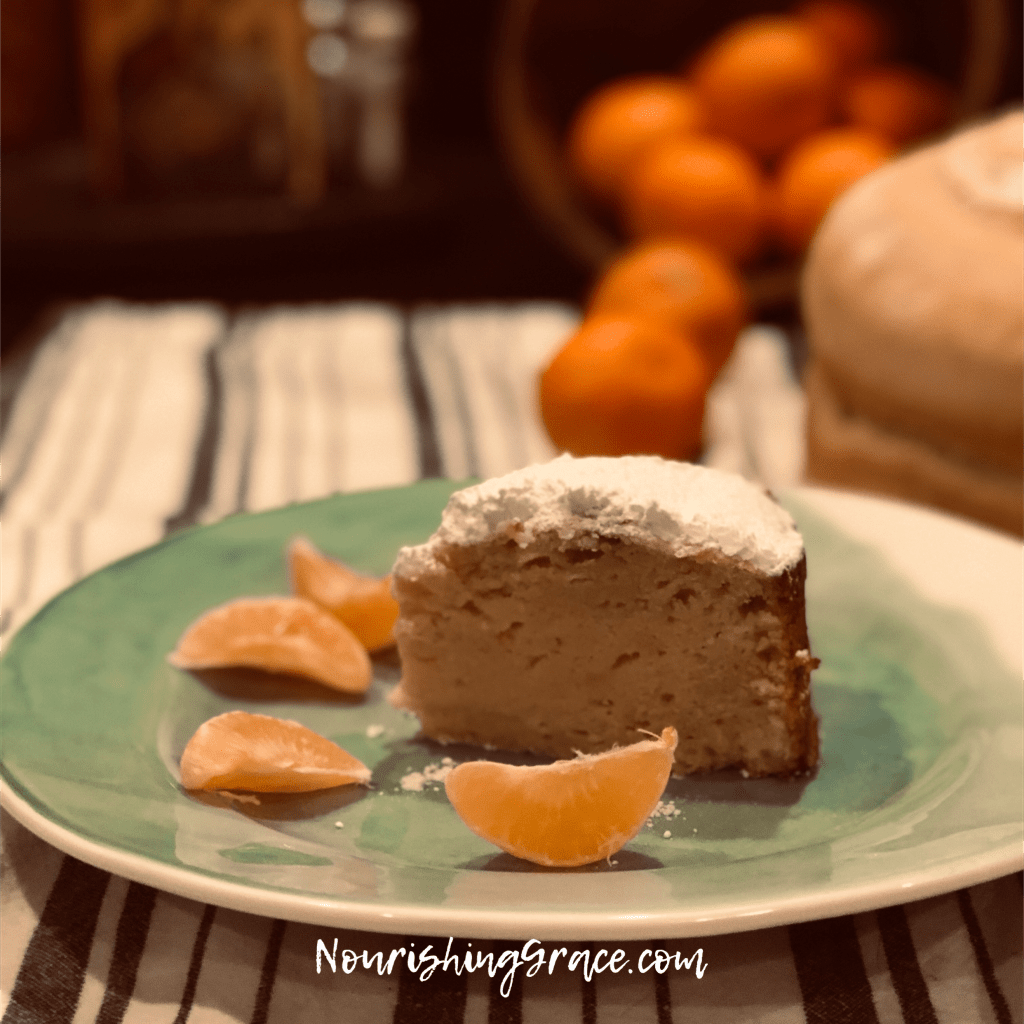
It is a cherished tradition bearing the leaven of hope toward the coming year and the further redemption of our time here, in Christ, that Orthodox Christians bake this sweet bread of orange and lemon to ring in the new year.
The bread is called vasilopita which means the sweet bread of basil. It’s namesake is a humble holy bishop Saint Basil the Great whose heart compelled him during a time of famine to help the poor. It was a time of merciless and unfair taxation. The Bishop confronted the emperor who had levied the tax, calling him to repentance for the harsh burden he placed upon the people.
Amazingly, the emperor did repent and he returned the gold and jewelry that had been taken from the townspeople. Basil and the villagers offered thanksgiving prayers after which the Holy Bishop commissioned women to bake and place the gold coins into a sweet bread which were then distributed. Miraculously each family found in their bread, their own valuables which had been collected as part of the taxation.
Today, the vasilopita is baked in memory of that miracle forged by God and Saint Basil’s faith, love and shepherding of his people. Each year on January 1st– the date on which St. Basil reposed in the Lord , Orthodox Christians observe the tradition of the Vasilopita. The recipient of the coin is considered especially blessed.
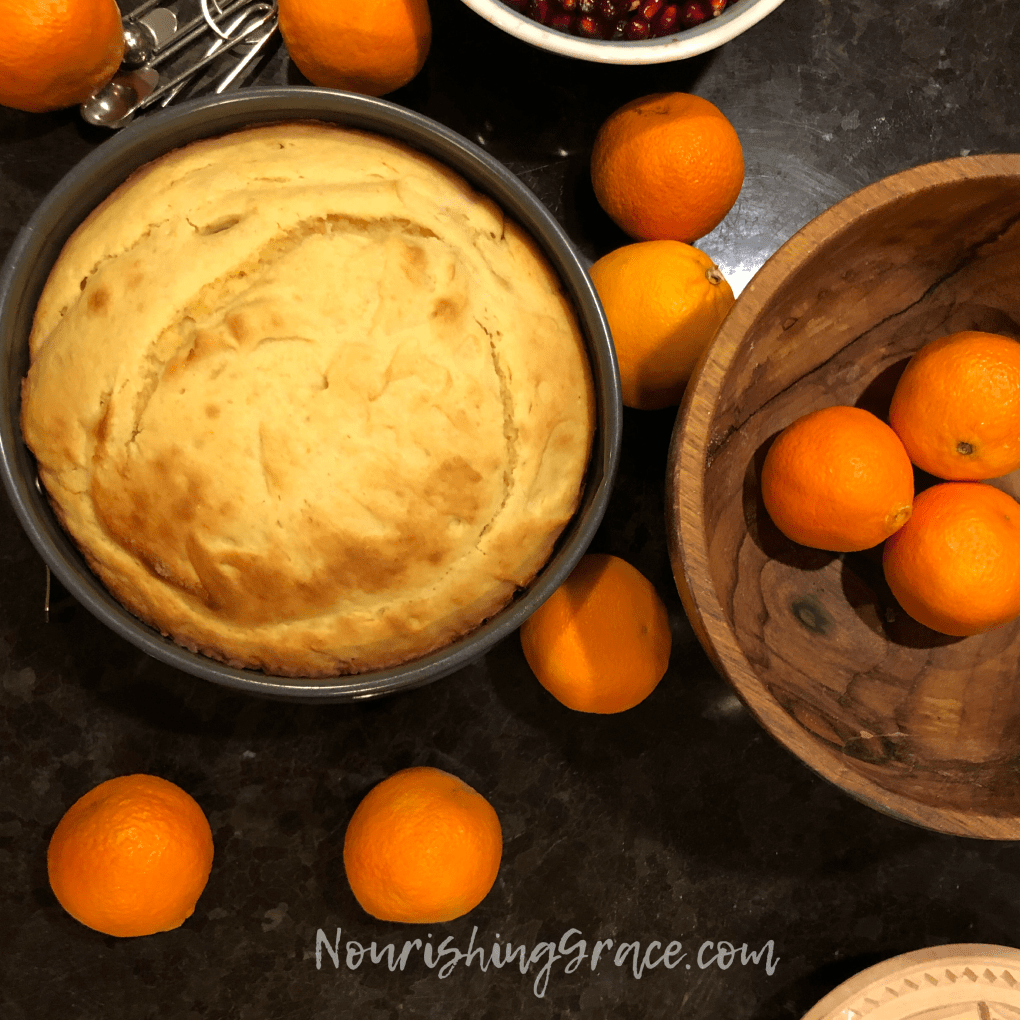
This is the first year our family has ever made the vasilopita. There are many regional variations to the bread, yet a taster will find that all of the recipes are sweet and authentic!
This particular recipe is adapted from my “go to” Greek Cookbook by Aglaia KremeziThe Foods of the Greek Islands. She gives a rich history of her recipes and I appreciate her anecdote that butter and eggs were luxuries in Greece during times past. What I love about the old way of Greek cooking is that by using the brandy the texture of the flour totally changes into a nice bread texture. There is no yeast in this bread, instead the brandy adds to the leaven quality of the dough.
Vassilopita
Ingredients
4 large eggs, separated
1 cup sugar
12 tablespoons melted butter (1-1/2 sticks)
1-1/2 cups orange juice
1/2 cup brandy
4 cups all purpose flour
4 teaspoons baking powder
1/4 teaspoons baking soda
grated zest of two oranges and two lemons
whole blanched almonds and /or powdered sugar to decorate
Recipe
Preheat oven to 375F.
Grease a 10 – 12 inch springform pan
In a large bowl beat egg yolks, zest and sugar (this releases the essential oils from the zest) for about three minutes.
Add butter and beat for an additional minute
Add orange juice and brandy, beat until it is incorporated.
Whisk the flour, baking powder and baking soda in a separate bowl. This makes sure that you will not have any clumps of the baking powder and baking soda but that it will be totally distributed.
Add to the liquid mixture and stir until incorporated.
In separate bowl (I actually use a mason jar with a hand held electric stick mixer so that it does not splatter everywhere) whip the egg whites until soft peaks form.
Fold the egg whites into the batter. Pour batter into the greased springform pan.
Place clean coin (my daughter found a euro coin for one and a dime for another)
Bake for 45 minutes to an hour until gold brown.
Decorate with almonds and/ or powdered sugar.
May we all be especially blessed in the coming New Year!







 gladsomelife.com