
Apples and Paradise :: Saint Euphrosynus the Cook {gluten-free apple tart}

The Life of the Venerable Euphrosynus the Cook

Euphrosynus was a simple man, but a man of God. He served as the cook in a monastery in the 9th century. One night, the spiritual father of this monastery saw himself in Paradise and saw Euphrosynus there as well. Euphrosynus picked and gave him three apples from Paradise. When the spiritual father awoke, he saw three unusually beautiful and fragrant apples by his pillow. He quickly found Euphrosynus and asked him “Where were you last night, brother?” ” I was where you were, father,” the blessed God-pleaser replied. The spiritual father then revealed the entire incident to the monks and all recognized the sanctity and godliness of Euphrosynus. But Euphrosynus, fearing the praise of men, immediately fled the monastery and hid in the wilderness, where he spend the remainder of his life.

The Prologue of Ohrid : September 11/24

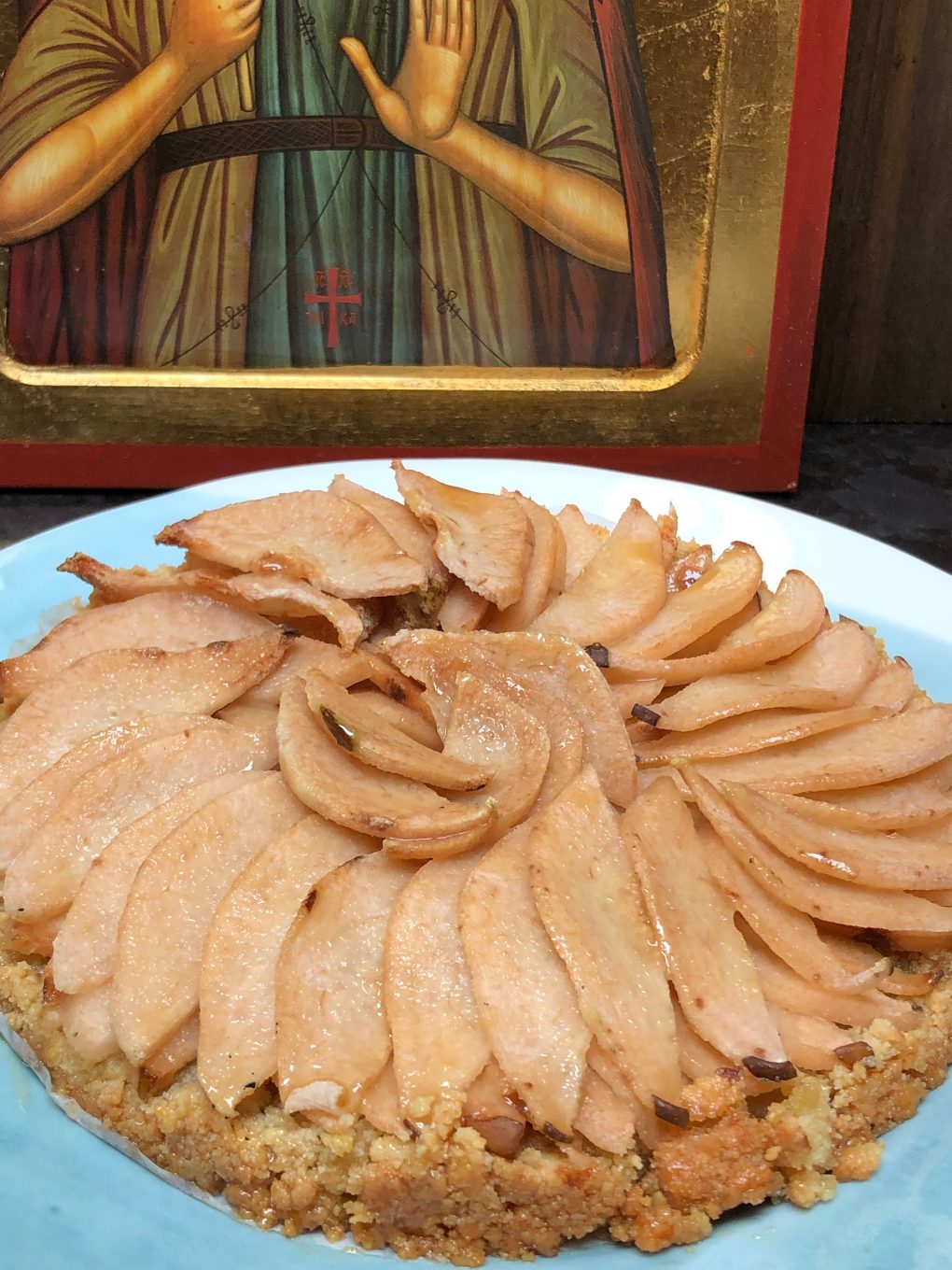
Almost everyone I know has an icon of Saint Euphrosynus in their kitchen… It’s become a tradition in some Orthodox circles – and most especially for anyone with kids, to pick apples, or make an apple treat on this day. Usually we bake a pie, but this year, I wanted to share this delicious apple tart with you – because we are almost totally gluten free now. The amazing thing to me is that the crust is actually simpler than making pie crust and it’s gluten free. It’s the favorite pie crust of my family these days.

Saint Euphrosynus is the Patron Saint of Cooks… and its a blessing to remember when we read about the lives of such humble Saints, that the food which sustains our very being is the Bread of Life. There is a quote by Father Schmemman that I love, and always made me feel good about being in the kitchen so much…

“Food is still treated with reverence. A meal is still a rite—the last “natural sacrament” of family and friendship, of life that is more than “eating” and “drinking.” To eat is still something more than to maintain bodily functions. People may not understand what that “something more” is, but they nonetheless desire to celebrate it.
They are still hungry and thirsty for sacramental life.”

Father Alexander Schmemman

No matter how overflowing our plate or filled is our belly, the instatiable hunger of the soul is far greater than the hunger of the body. Fall is a great season for apples and apple pie is a major comfort food. As we eat with the Saints, we can remember that our ultimate comfort food is heavenly nourishment – the Eucharist – the Bread of Life – Living Water – the Sacraments – from which we will never hunger.

And when we make any food honoring the remembrance of a Saint, the true expression of that commemoration is when we gather with our family and talk about the Lord, about the Saint, about our Faith – or even to distribute it to the poor in your area, because where two or three are gathered, He is with us.

This is a tart that I really love. It is naturally sweetened, which by now most everyone knows that I try to reduce the sugar as much as possible in my recipes. If you would like a sweeter tart, feel free to sprinkle brown sugar on top, or you can make the caramel sauce to drizzle atop the tart before you eat.


Gluten Free Apple Tart

Ingredients

  • 2 Cups Almond Flour
  • ½ teaspoon celtic sea salt
  • 2 tablespoons melted coconut oil
  • 1 large egg
  • 1 teaspoon pure vanilla extract
  • 3 apples peeled and sliced thin

Preparation of Gluten Free Apple Tart

  • Place almond flour and salt in food processor and pulse briefly to incoporate
  • Add coconut oil and egg and pulse. The dough will form into a ball.
  • Press dough into a 9 inch tart pan. I use a pan with a removable bottom.
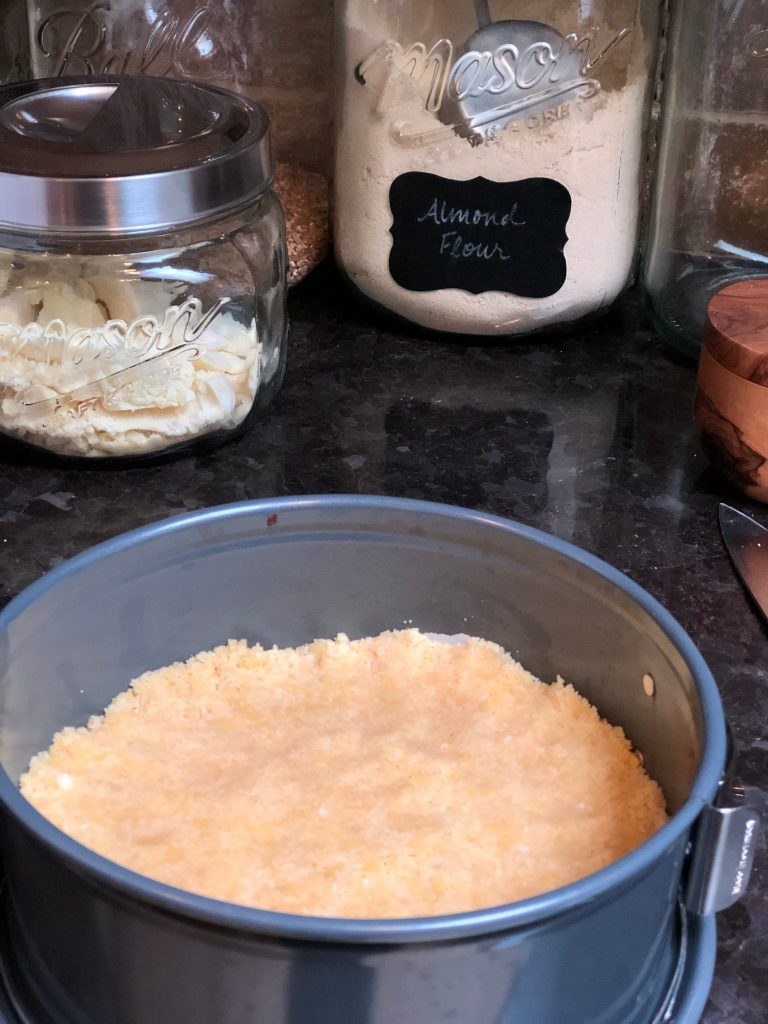
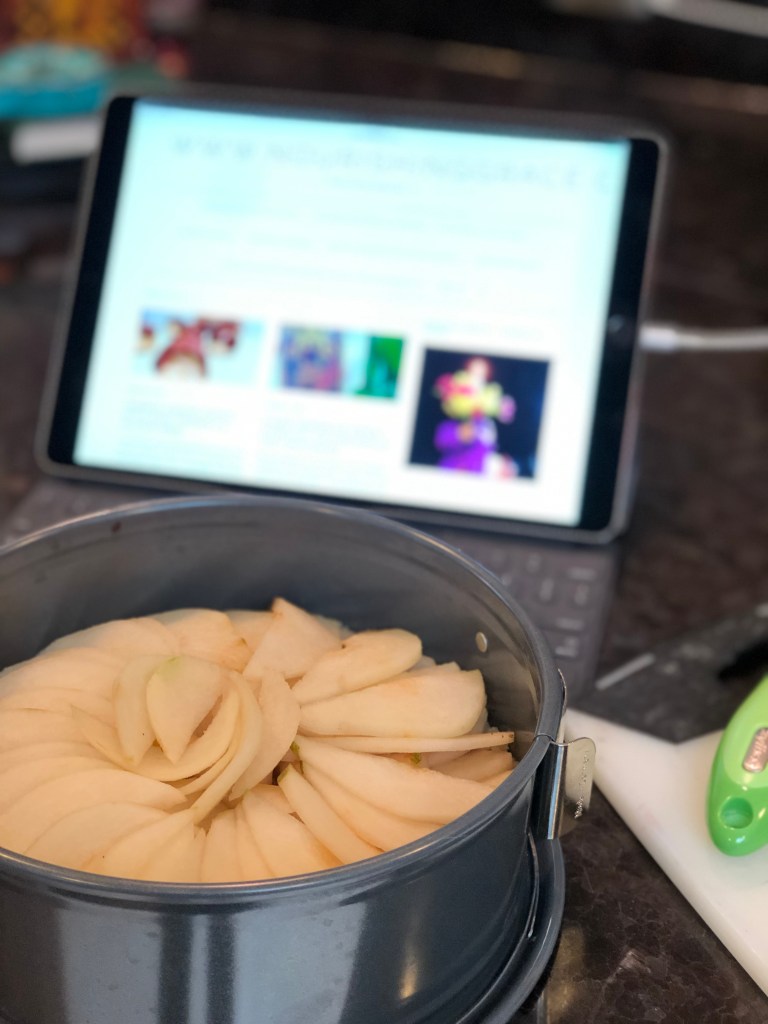
  • Peel and slice apple thinly.
  • Arrange apples and fan them out onto pie crust.
  • Sprinkle with brown sugar (optional).
  • Bake at 350 for 40 minutes. If you are using the brown sugar it will caramelize.
Notes: I can not take credit for recipes that are not my own. The crust is inspired by Elena’s Pantry and the caramel sauce is a Pioneer Woman favorite of mine, plus it is insanely easy and beyond delicious!!!!
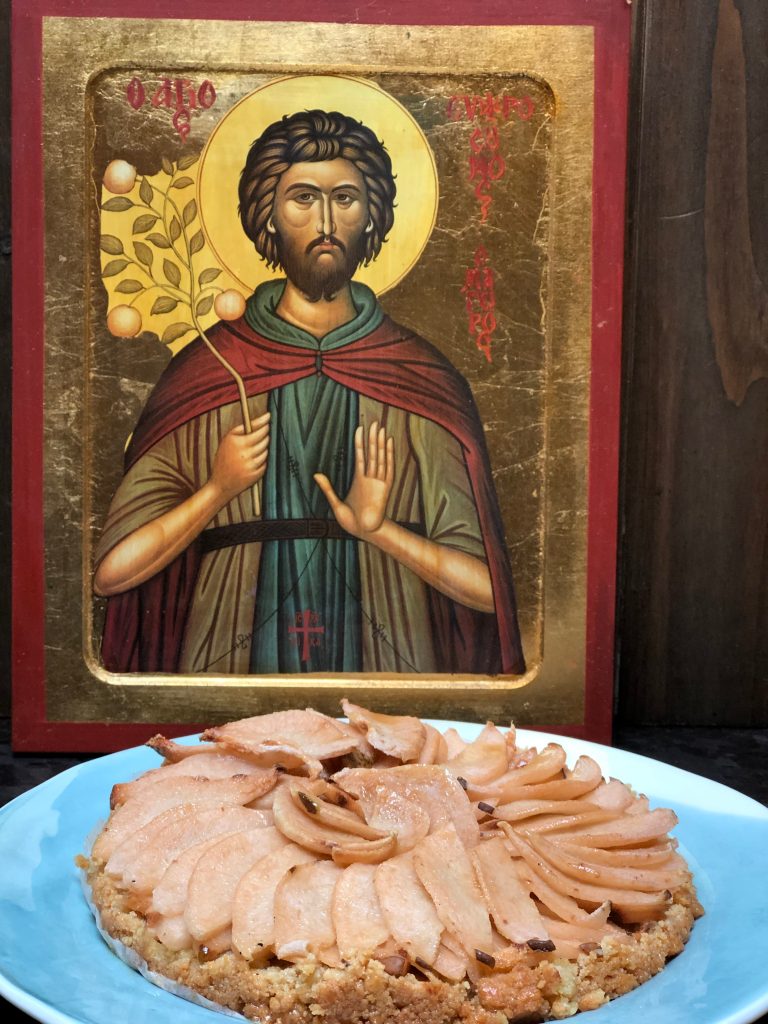
If you would like to learn more about Saint Euphrosynus the Cook here are some amazing resources:

Saint Euphrosynus the Cook and Apples from Heaven

Saint Euphrosynus : An Ordinary Cook in Paradise

Saint Euphrosynus the Cook of Alexandria

Eating Apples with Saint Euphrosynus

Lemons and Olives : Saint Euphrosynus the Cook

leaven and life

leaven and life

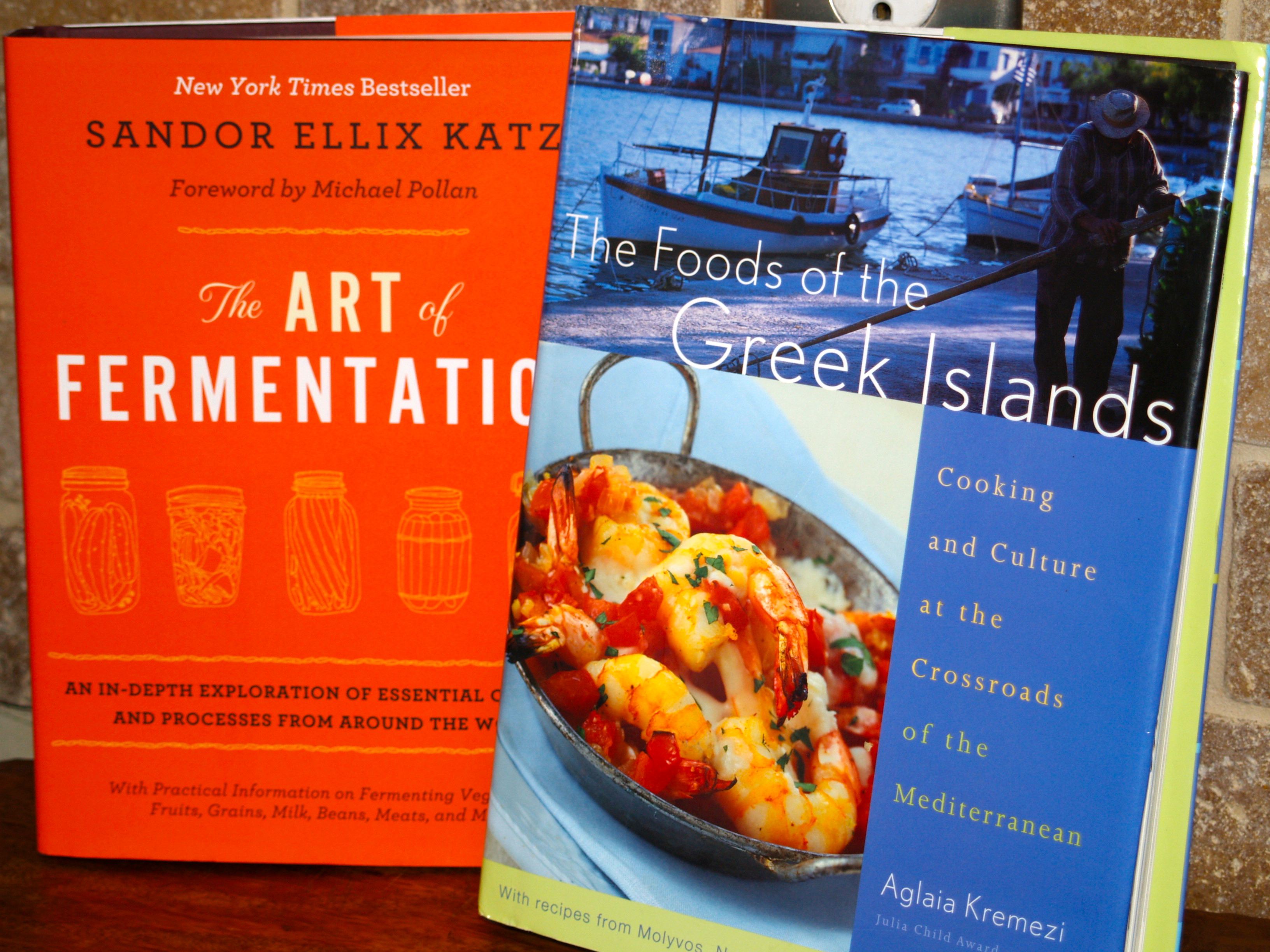
The inspiration of this post is the intersection 

of two books currently actively used in our kitchen : 

The Foods of the Greek Islands – Algaia Kremezi 

and The Art of Fermentation – Sandor Ellix Katz

sour·dough – (noun) leaven for making bread, consisting of sour fermented dough, typically that left over from a previous batch

“The hunger for love is much more difficult to remove than the hunger for bread.” – Mother Teresa

In the beginning, all risen breads were sourdough.  Bread was a great mystery but the women knew that if they blended warm water, flour and time, then nurtured the mixture through regular feeding, that eventually the dough would become alive, bubbles would form mysteriously in the mixture and when it was baked the texture would be lighter with an intriguing taste.  Commercial “fast acting” strains of yeast were unavailable and so the only leaven was the natural product of the fermentation of wild yeast and bacteria, which transformed into a sourdough.  The Latin fermentāre means to rise.

As often happens, the first fermentation of sourdough likely occurred by chance.  How many of you would think to bake (or brew into beer) the accidental fermentation of grain, left unattended, souring on your kitchen counter?  In this day and age, probably not many of us, including me – especially considering how germophobic we are… we’d rather not deal with the naturally present bacteria on any surface!

But fermentation is an age old method of preservation, that involves cooperation with a community of microbes we can not even see.  And that cooperation enhances the nutritional quality of the foods fermented.  It was a surprise for us to learn that a natural sourdough will not mold, instead, due to the lactic acid (this wonderful preservative produced in the sourdough)  it keeps longer than commercial bread.  Sourdough breads are also what is known as predigested, and therefore easier on our digestive systems, reducing gluten content and allowing absorption of more nutrients.

The organisms necessary for fermentation are usually always present on the surfaces of grain and flour.  Unlike commerical strains of yeast, which are similar or the same,  sourdoughs cultivated by people in different places can be very distinctive, such as San Francisco sourdoughs.

Our planet was created with great diversity and that’s the beauty of a sourdough – that you can’t pick and choose your naturally present wild yeast.  Although all healthy sourdoughs contain lactobacilli and the lactic acid produced by it,  each sourdough starter is essentially very unique.  Natural sourdoughs are not static microbial communities  Instead they are very dynamic.  More than that….they become their environment and so, if you begin a sourdough starter it it will develop unique flavor characteristic to whatever yeasts are present in your air and your flour.

Patience is a virtue.  A sourdough starter takes days if not a week to mature to the point that it may be used in baking… and there is no such thing as fast acting or fast rising prozymi or starter  A sourdough bread rises anywhere from 8 to 24 hours, depending on your recipe and the conditions.

prozymi - sourdough starter

Traditionally, Greek Orthodox women make their sourdough starter around the Feast of the Elevation of the Cross, celebrated on September 14.   The starter is called prozymi.  In many  Orthodox Churches, fresh basil is used to sprinkle Holy Water, a sprig of which is taken home and placed in the prozymi.  If the prozymi is started around Pascha (Easter) then the mixture contains a handful of the flowers used to decorate the Epitaphios.  This sourdough starter is then used for baking Prosphora – an offering – the bread we make for Communion.

Concepts create idols, only wonder grasps anything.”  Saint Gregory of Nyssa

It’s been said that the elderly Orthodox women in Greece, if asked, will tell you that the transformation of the flour, water and basil or flowers into the prozymi occurs by Gods Grace alone, and well, that is entirely true… for that is our belief  ~  that all life is a gift and sustained from a loving God.

These women are grounded in Christ – living within the seasonal rhythm of the Church, anchored but always anticipating the upcoming feasts and living and incorporating the faith into daily life.

Give us this day our daily bread.  Laboring a sourdough, this wild yeast fermentation of the prozymi becomes an endeavor of trust and of creation – fashioned through a relationship with God.  This becomes our offering- the prosphora –  A simple, humbling endeavor, to place God above all, offering up our whole  lives to Him.

And all that inspired us to incorporate prozymi into our family traditions too and so we’ve coincided our sour dough starter with the Elevation of the Cross.

Happy Feast!

Below is is a Basic Sourdough / Prozymi Starter

There are slight variations in every sourdough recipe, some call for rye flour, some call for adding a piece of fruit, like a plum or grape which has a little hint of white film -which is yeast and called the bloom, and others – like the Orthodox tradition call for adding our blessings from Church.

Timeframe about 1 week Ingredients

 [box] Flour (any kind) water – non chlorinated

fresh basil, fresh organic plum or grapes (optional)

In a jar or bowl mix 2 cups of water and flour. Stir mixture vigorously. Add basil or fruit if using. Cover the mixture with a cheesecloth or any other porous material that lets the air circulate.

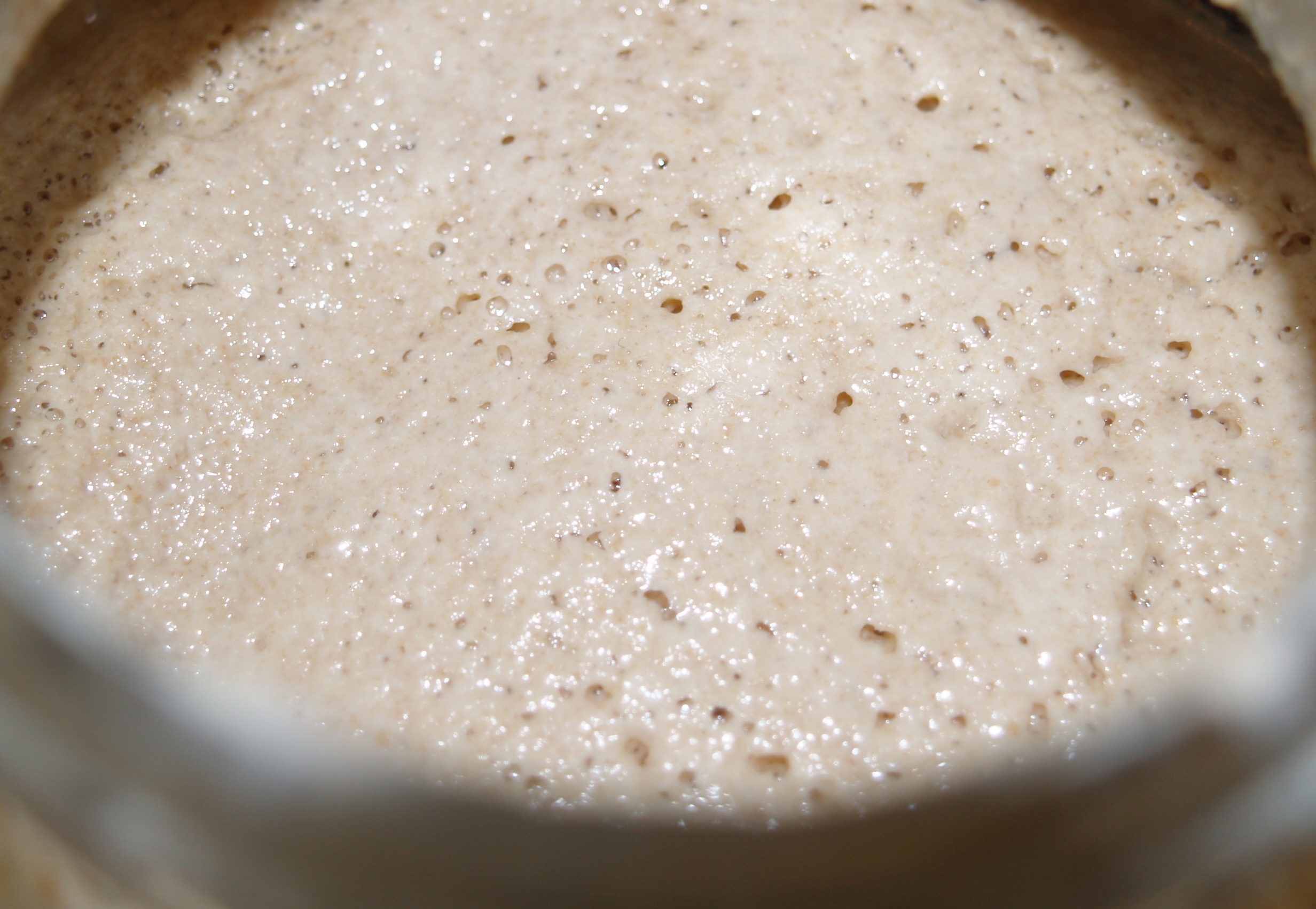
Store batter in a warm place in the 70-80 degree range. Visit the batter daily and stir it to distribute the yeast. After a few days you will notice some bubbles on the surface of the batter. The yeast is letting you know it is active.

Remember, your home is it’s own ecosystem. Every ecosystem has its own unique micro-organism communities – the ecosystem in your home plays a role in how slowly or quickly your batter will germinate. Once yeast activity is evident, strain out the fruit.

Add 1 or 2 tablespoons of flour to the mixture each day for three days. The batter will begin to thicken and rise. Add more water when necessary. By about day five your starter should be bubbly. With a clean spoon, remove about half the sourdough starter, if you compost you can throw it in your bin.

Stir in 1/2 cup flour and about 1/4 cup water. You now should have an active starter – cover it and leave it at room temperature until it has almost doubled. You can now expand the starter for baking bread or refrigerate it overnight and start expanding the next day. [/box]

If your are looking for some recipes to use with your starter, this is a great resource.  And, if you are thinking to bake phosphoro for Church a very well detailed recipe can be found here, on OrthodoxMom.com .  What a beautiful post!