The life of the faithful should be filled with joy and gladness, which are among the fruits of the Holy Spirit. The Holy Spirit Himself gives these fruits both to our souls and to our community. At the same time, our life must be something that transcends the world, informed by theological thought and feeling, manifesting the experience of eternity the place and time in which we live. We are obliged truly to be people of eternity….
We are obliged to learn, to think, and to live, to rejoice and to weep, to experience God, and to be raised to the heavens, exactly as did the Saints of the Church. This follows from the unity of the Church, which is something that God grants to us when we gather together.
Prayer then, since it is communion with God, is gladdening. Certainly we shall have our struggle against our sins, and our passions. But not even this should depress us, once we have put our life into Jesus Christ’s hands. The struggle is necessary, however, for our life to be blessed.
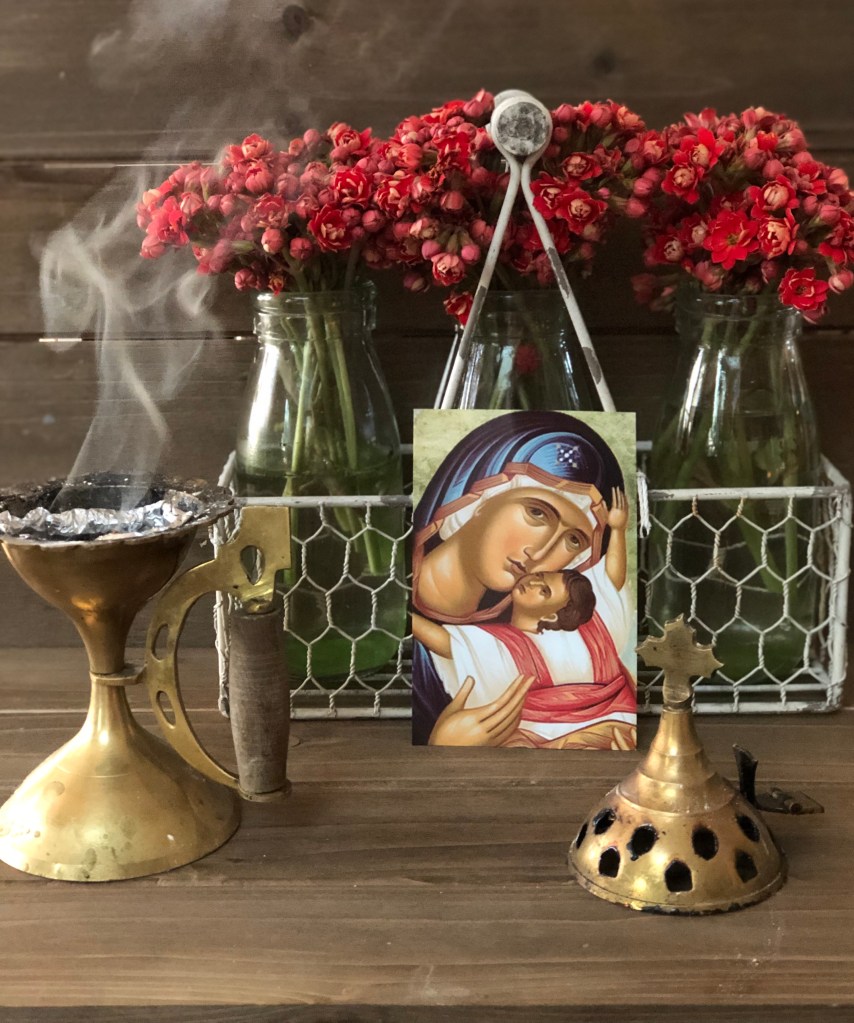
The name of Jesus, prayer of the heart, is called a vessel of myrrh by the Holy Fathers. ⠀⠀
You open it, you turn it upside down and the myrrh flows out, the place is filled with fragrance. … for each one of us is a temple of God, and when we pray we become celebrants of a great mystery.⠀⠀
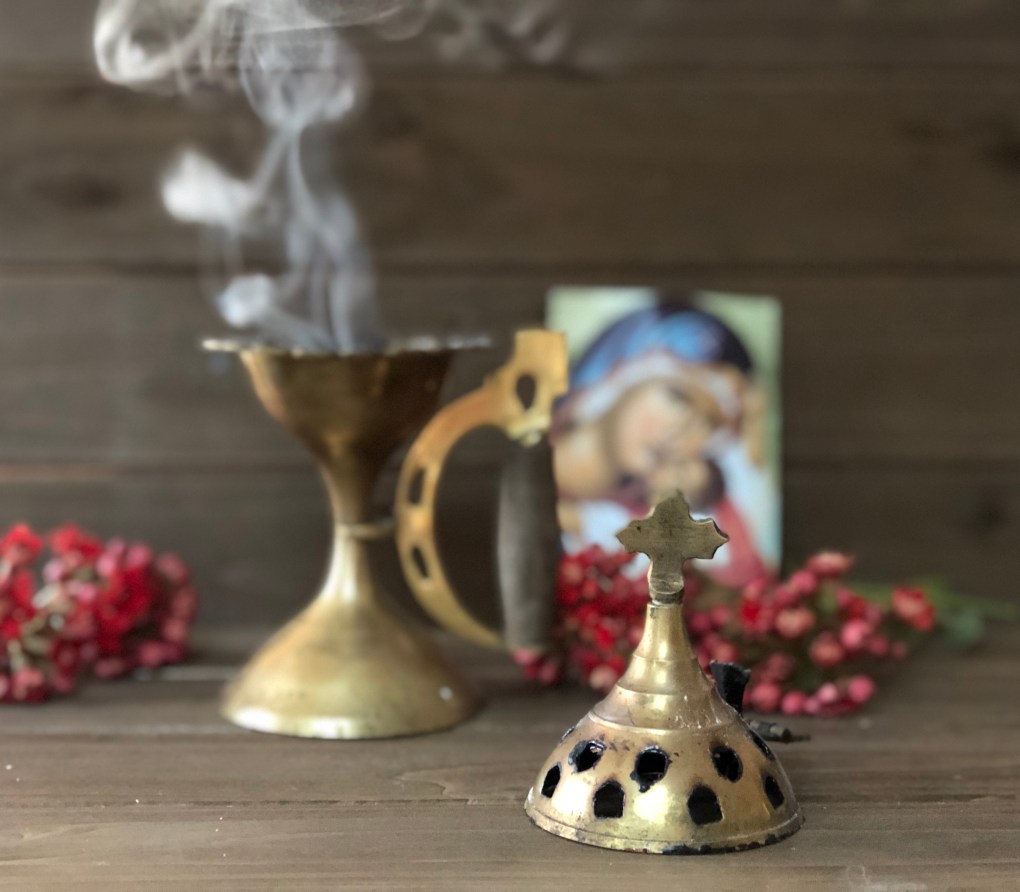
This is why one of the Fathers of the Church says, very beautifully “ take a censer and cense, because Christ is in your heart from which rises the cry, “Lord Jesus Christ” and elsewhere he says, ⠀
⠀
“when we hear the swing of the censer, let us remember that we are a temple and let us feel in our minds that we are censing Christ., Who is in each of us, and thus let us venerate this tabernacle of the Holy Spirit”⠀
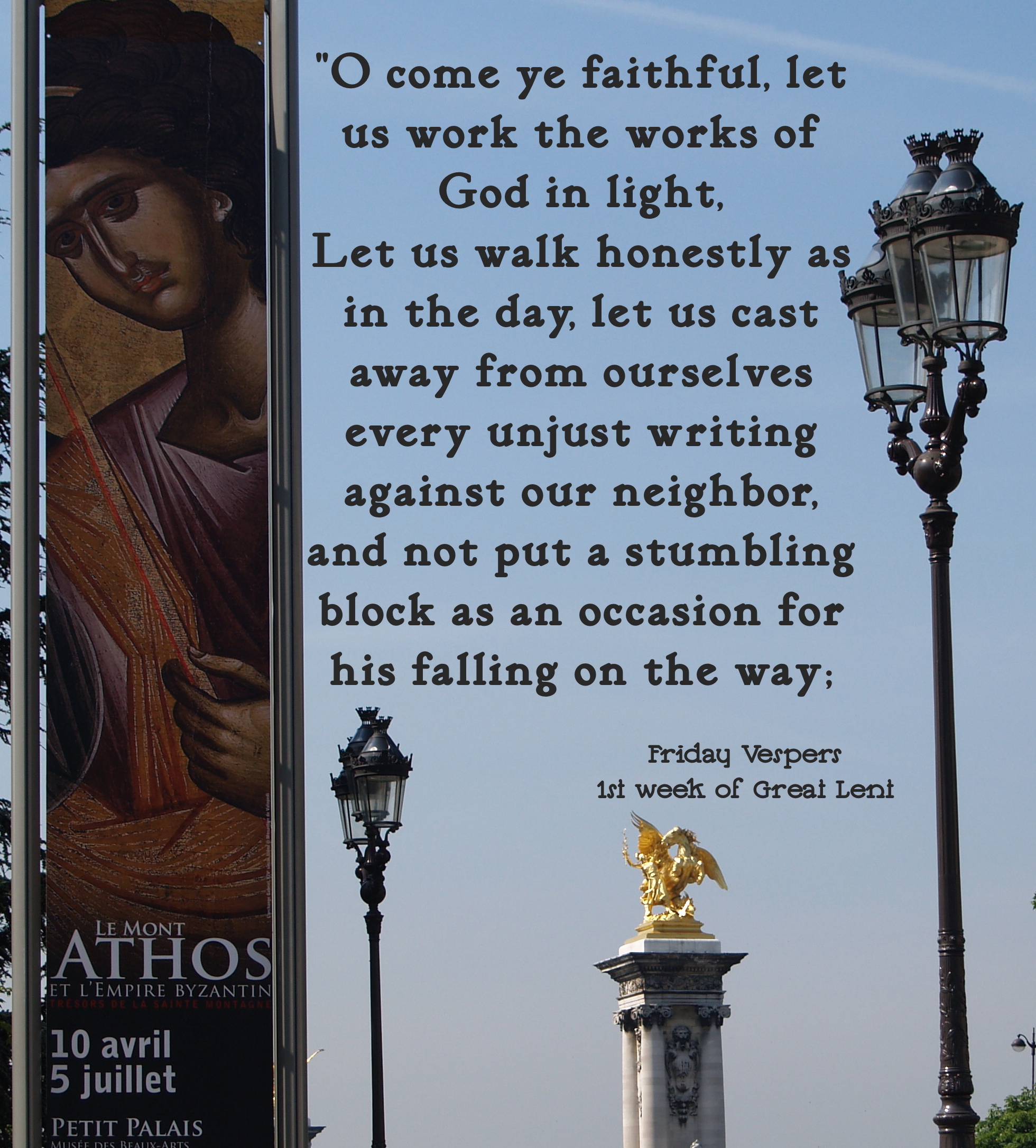
O come ye faithful, let us work the words of God in light. Let us walk honestly as in the day, let us cast away from ourselves every unjust writing against our neighbor and not put a stumbling block as an occasion for his falling on the way.
A clear rule handed down by the Fathers is this: stop eating while still hungry and do not continue until you are satisfied.
Saint John Cassian, Philokalia, Vol. 1 Faber & Faber, 1986, p.74
This fasting is in regard to food. Living in an age in which man much too easily lives for the sake of exterior effects, we can be fooled into thinking that fasting from food should be sufficient for spiritual growth. But in the holy Gospel, our Lord Jesus Christ says, “For from within, out of the heart of man, come….all these evil things,… and they defile a man.” (Mark 7:21-23) Here the Savior teaches us that most important is the purification from within of our heart and soul. Fasting of soul is the defeat of egotism, the renunciation sins and the abstention from passions. It is a a humble realization within ourselves emulating the example of Saint John the Baptist, the greatest man born frogwoman and the greatest faster. He says, He [Christ] must increase, but I must decrease” (John 3:30) In order to receive Christ in our hearts… we must work to destroy all that separates us from Him. We have the means close at hand to accomplish this”
repentance and sincere Confession, which are the hyssop which makes our souls whiter than snow (Psalm 50:7)
love of God and fellow creatures who are made in the image of God” this is the great commandment of God, making us like Him Who is true Love
charity, which covers a multitude of sins and changes the vanity of this world into eternal glory
spiritual hymns and pure prayer, which is the center from which all good deeds draw their power and strength
and above all, participation at Holy Liturgy and receiving of Holy Communion
When we join these efforts to bodily fasting, then our fast truly becomes a knitting together of ascetically effort in both body and soul. All these things we must accomplish with joy of heart as the Lord teaches us when He says: “but when you fast, anent your head and wash your face that your fasting may not be seen by men but by your Father who is in secret and your Father who sees in secret will reward you.” (Matthew 6:17-18)
Cover a man who stumbles, so long as your receive no harm from him, and give him encouragement; then your Master’s lovingkindness will bear you up. Support with a word the infirm, and those who are grieved at heart, in so far as this lies within your hands, then the Right Hand that sustains all will also sustain you. Through the toil of prayer and the anguish of your heart commune with those who are grieved of heart, and the Source of mercy will be opened to your petitions.
The Ascetical Homilies of Saint Isaac the Syrian
Homily Two : On Thankfulness to God, In Which There Are Also Essential Elementary Lessons
The Thanksgiving of the receiver incites the Giver to give gifts greater than the first. He that returns no thanks in small matters is a dissembler and dishonest in greater ones also. If a man is ill and he recognizes his ailment, his healing will be easy. If he confesses his pain, he draws nigh its cure. There are many pangs for the unyielding heart, and the patient who resists his physician amplifies his torment. There is no unpardonable sin, save the unrepented one. Nor does any gift remain without addition, save that whites received without thanksgiving.
The Ascetical Homilies of Saint Isaac the Syrian
Homily Two : On Thankfulness to God, In Which There Are Also Essential Elementary Lessons
“What we can do in our everyday life is something very simple. First, we should be careful not to disturb or upset our relations with others, even a little. We should not allow ourselves to be swayed by how much we like or dislike a person, which indicates the degree to which our stance is dependent on that person. For example someone might might speak to me rudely and I ignore him. Or someone else might speak to me kindly and I embrace him. In both cases my responses are determined by the other person, which means that at any moment I can be troubled, become angry, lose my inner peace, or otherwise be thrown off balance, because I have no control over what people say or do to me.
The life of repentance is a constant embracing of Christ’s Pascha. It is a giving of ourselves to what has been given to us. It is the rejection of every pretense that would erect a life on some other basis (as though there were another basis).
Father Stephen Freeman
Glory to God for All Things Blog
from the article “Faith, Doubt, Theology and Suspicion”









 gladsomelife.com