a new year of grace

IMG_4651

The mystery of liturgical time… In God, there is but one moment, in which everything is included.  The fullness of the liturgical year does not consist of the commemorative cycle of Christ’s life being resolved or completed, for the completion of a series implies that there is a series, a succession of disjointed elements.  The fullness of the liturgical year has to be thought of qualitatively and not quantitatively:  it is achieved if, on any day whatsoever of the liturgical year, whichever it might be, we are capable of grasping :: through the particular event which is commemorated :: Christ as a whole, the whole of His life, the whole of His work, the whole of His word.  Each feast and even each day of the year thus becomes the fullness of the whole liturgical cycle.  This cycle never repeats itself :: each one of its aspects reflects the inexhaustible depth and fullness of Christ, and as a result, becomes new for us to the extent that we understand it better.  The liturgical year is a prism which receives the white light of Christ and splits it into different colors.  Christ is the year.

~

a monk of the eastern orthodox church

The Treasure of Tradition    Despite being united to Christ in the Orthodox Church some twenty years ago, there are still many of those little “t” traditions of which I do not know.  When I joined the Orthodox Church the first thing I realized is that I don’t know anything, and not in a bad way at all, but a very very good way…. a way that allows me to incorporate the faith morsel by morsel so that I can digest it.

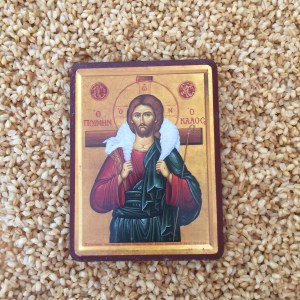
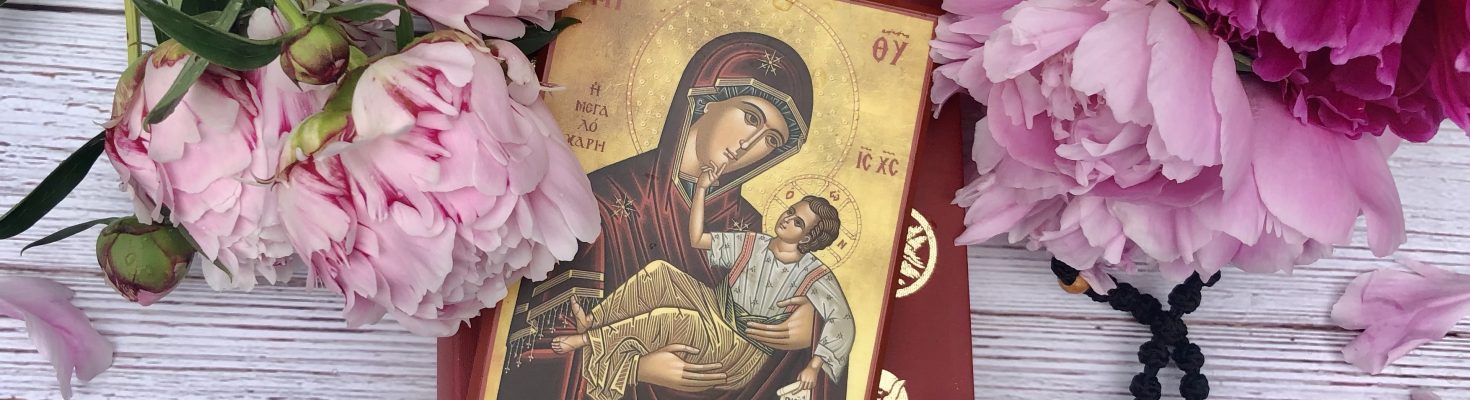
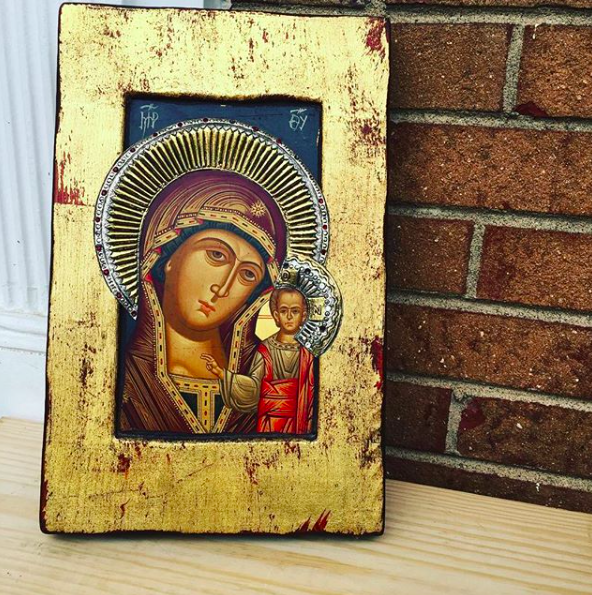
This year (just last night in fact!) I learned of the tradition to place an icon of the Most Holy Theotokos at the threshold of the door to our home as we usher in the new Liturgical (Ecclesial) Year of Grace.

In many conversations with non-Orthodox over the years, I have been struck by their idea that our little “t” and big “T” traditions are merely rote action.  Yet, as one who seeks (and quite imperfectly, too)  to live and raise a family in the faith, I find most beautifully that these “traditions” of ours are not rote or meaningless at all ::  but rather beckon and re-orient our hearts to that which is needful.

Just as we pray corporately the Anaphora during the Divine Liturgy, these little “t” traditions are our “little a” anaphoras :: a lifting up and offering of ourselves.  A simple, humbling endeavor, to place God above all, offering up our whole  lives to Him.

It is Eucharisteo : Grace,  Joy and Thanksgiving throughout the seasons of our lives.

These are just another way in which we lift up our hearts in this great litany of our lives.  Little children in Greece make the sign of the cross when riding their bikes past a Church :: mothers entering Church remind their little ones to make the sign of the cross before they enter :: we light candles :: burn sweet smelling incense :: we trace the sign of the cross on our children when tucking them into bed :: prayers and prostrations dovetail together :: we kiss the icons and we greet one another with a kiss of peace :: we dye our Pascha eggs the reddest of red, but we don’t dye them on Holy Friday ::  fresh basil is brought home from Church on the Elevation of the Cross and placed in the sourdough starters that will leaven phosphora :: and of course, we pray facing the east – our souls waiting for the Lord, like the watchman waiting for the dawn.

Again and again, in so many ways, we are called to this life in Christ.  To live our lives through the years and seasons and rhythm of the Church.  It is our great priority :: this great Liturgy of Life :: it is more needful  than schoolwork, profession, sports and hobby :: and yet with life in Christ as our priority our ability to fulfill our schoolwork, professions, sports or hobby is in no way diminished.  Traditions bring to light blessings :: even on the threshold of our very home.

Placing an icon of the Most Holy Theotokos at our doorstep – what a wonderful tradition to usher in the new Ecclesial Year :: just as the Ecclesia means “called out” :: the new Ecclesial year “calls us out” again, “to lay aside our earthly cares” and enter into the timeless rhythms and seasons of the Liturgical life of the Church.

The Orthodox Christian lives Ecclesial Year to Ecclesial Year :: Feast to Feast :: Fast to Fast :: Confession to Confession :: Liturgy to Liturgy :: Eucharist to Eucharist.  Just as we have New Year’s resolutions to usher in a new calendar year, now is a great moment to pause, reflect and begin again.

Does my family have regular prayer time?  If not, this is a time to begin.  Are we attending Church weekly?  That’s alright :: start this weeks Vespers and Liturgy.  Has it been forever since my last Confession :: make an inventory, call your priest.  Go.

And so today, on the dawn of a new ecclesial year, the faithful are hopeful standing on this threshold of Grace of a new year, with an invitation to redeem the time.

Blessed art thou O Lord, teach me Thy statutes.

Real life is Eucharist, a movement of love and adoration toward God, the movement in which alone the meaning and the value of all that exists can be revealed and fulfilled

~

Alexander Schmemman

holy ordinary {gifts from God}

IMG_3731


blessings in the holy ordinary

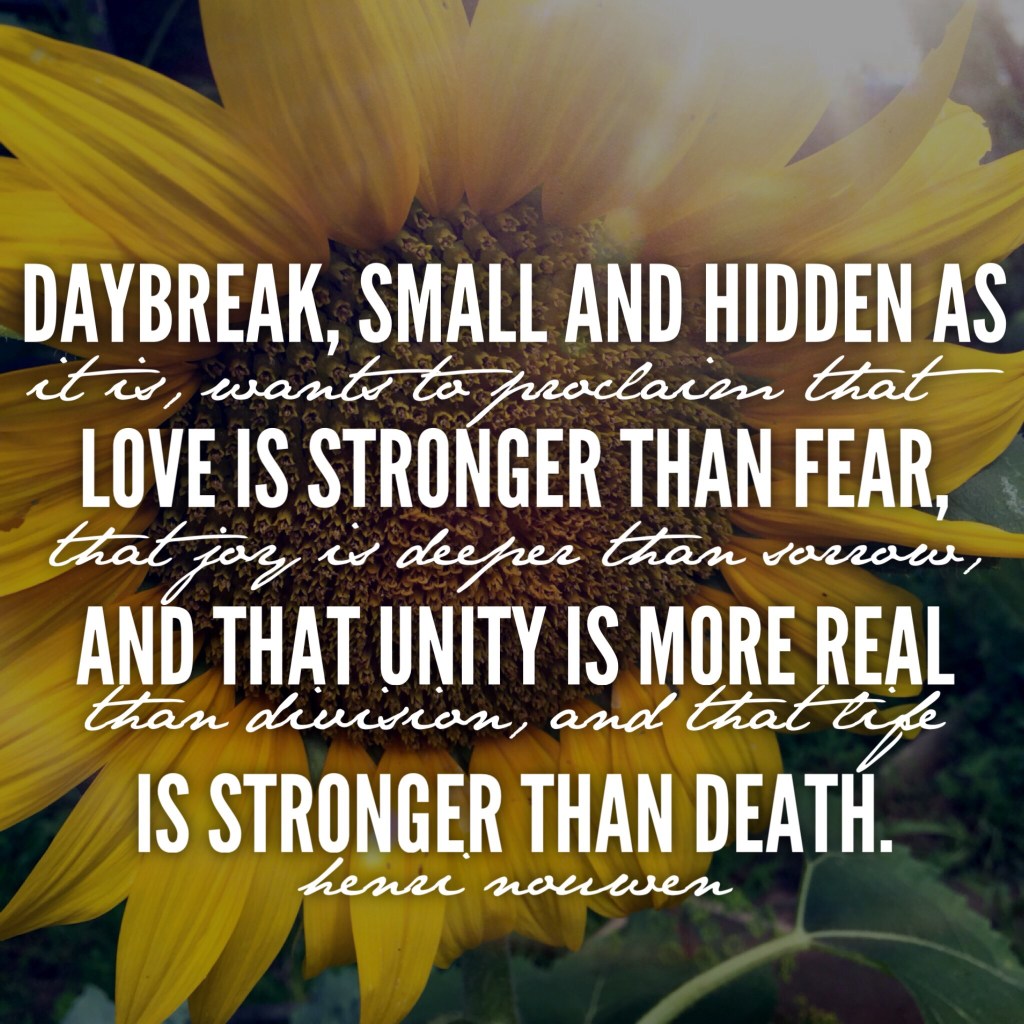
Daybreak, small and hidden as it is, wants to proclaim that love is stronger than fear, that joy is deeper than sorrow, and that unity is more real than division, and that LIFE is stronger than death.

Henri Nouwen

IMG_3721


blessing from all eternity

image

The truth is that God loved us before we were born and will love us still after we have died. God molded us in the depths of the earth. God knitted us together in our mothers’ wombs. God has inscribed us on the palm of his hand. Every hair on our heads is numbered and counted by God. We are held by God in an everlasting embrace. We belong to God from eternity to eternity. Indeed, we are God’s daughters and sons. As beloved children, our core identity is secure in the memory of God. Whether we do anything worthwhile, prove anything important, or give anything of value, God still loves us unconditionally. It is a strong, vital, and active fatherly and motherly kind of love that holds us safe and affirms our worth, wherever we go and whatever we do.

Henri Nouwen


Blessed Feast of the Ascension

Ascension

O Christ God, You have ascended in Glory,

Granting joy to Your disciples by the promise of the Holy Spirit.

Through the blessing they were assured

That You are the Son of God,

The Redeemer of the world!

(Troparion of the Ascension of Our Lord)

holy myrrh streaming hawaii iveron icon of the most holy theotolos

holy myrrh streaming hawaii iveron icon of the most holy Theotokos


Holy Week 2016 – journey to Pascha

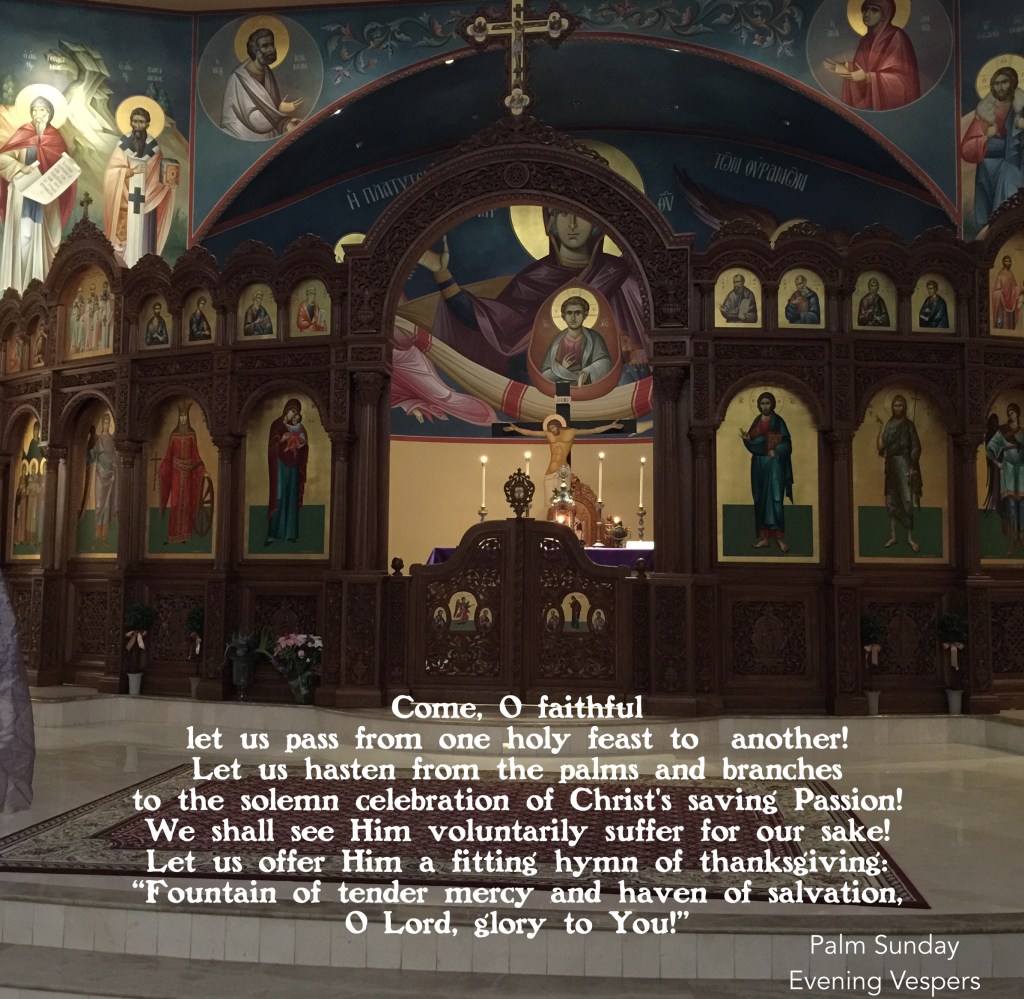
Holy Week 2016 Palm Sunday evening Vespers


Come, O faithful let us pass from one holy feast to another!  Let s hasten from the palms and branches to the solemn celebration of Christ’s saving Passion!  We shall see Him voluntarily suffer for our sake!  Let us offer Him a fitting hymn of thanksgiving:

“Fountain of tender mercy and haven of salvation,

O Lord, glory to You!”

Palm Sunday – evening Vespers


the fast : detoxification for the soul

OLYMPUS DIGITAL CAMERA

“Showing joyfulness of soul in the Fast, let us not be of sad countenance, for the change in our “manner of living” during these blessed days will help us to gain holiness.”


The Greek word for diet means “our manner of living” and in all respects, that extends beyond the staples of our pantries, cupboards and recipe books.  No, our “manner of living” embodies the very core of our being.  In it’s truest sense, a manner of living is the nourishment not only of our physical bodies but also our soul.

In this way,  food is not merely comprised of what is on our plates – but also what we read, and watch and hear.  It is probably for this very reason that, back in the day,  many Orthodox countries, like Greece, would have closed movie theaters and the tavernas would have actually had Lenten menus for their patrons to adhere to the Fast.  The whole country participated in this normal manner of living.   Fasting is certainly simplified when everyone does it.

Fasting is an enduring part of our world, and most religions practice it in one form or other.  Beyond that, there are medical fasts, detoxifying fasts and physical fasts.  And isn’t it funny, how comfortable one is knowing that a friend is fasting for health -perhaps they are vegan or paleo or gluten free – but turn the fast from health or beauty endeavors toward that which renders wellness of soul, and understanding may dwindle.

As a student of nutrition, eating healthy for vitality, fitness and beauty are very good aspirations.  I counsel people on how to eat for their own unique physical situation to improve health, manage disease, detoxify and enhance digestion.    Paleo eating has been incredible for our family, with one who is gluten sensitive and another who became incredibly ill last year, struggling to overcome Lyme disease.  Foods that enhance the immune system and promote excellent digestion are paramount for physical health.  Developing plant based healthy paleo recipes for the fast has been a fun challenge.

The difference between the Orthodox Fast of Great Lent and other ways of eating however, is that a diet to lose weight or improve health has no meaning outside of “self” whereas the Great Fast of Lent is, in the words of Saint Isaac the Syrian, “to chose God”.  It involves entire communities committed to Christ, and as His body, our relationships with one another.

Fasting cleanses the soul.  It reinvigorates our spiritual lymph so that we may detoxify our heart, mind and soul.  Almsgiving, spiritual reading, attendance of the services and prayer provide nourishment and open the pathways of  spiritual detoxification.

Cleansing our hearts through Confession, the acceptance of mercy, forgiveness of others, greater attendance (and attention) at the services – are all on the Lenten menu.

In so doing, however feeble our attempts, the Orthodox Christian strives to love God with all our heart and with all our mind and all of our soul, and love our neighbor as ourself.

These are blessed days of fasting!


we are God’s children

We are God's Children


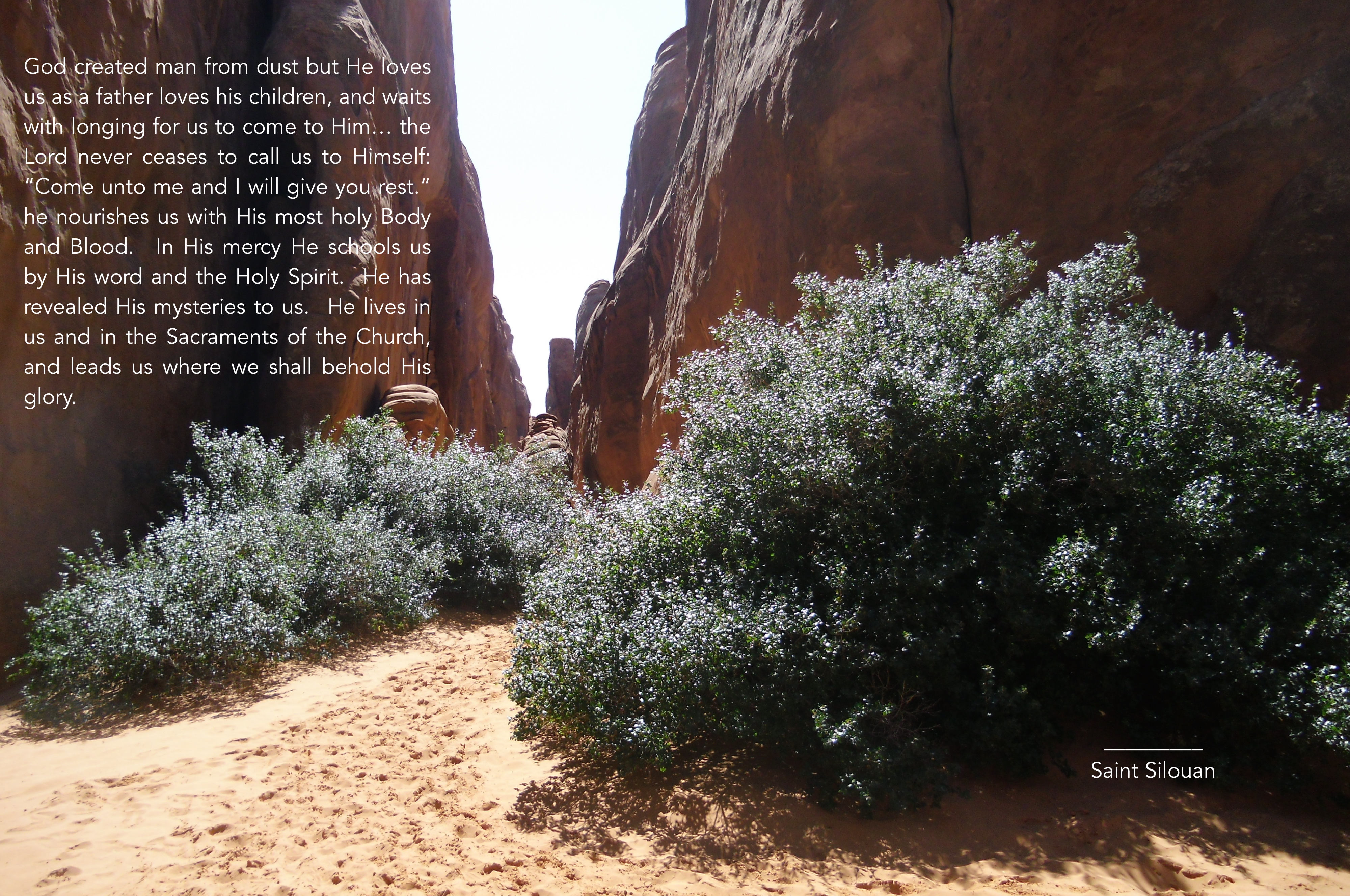
“God created man from dust but He loves us as a father loves his children, and waits with longing for us to come to Him… the Lord never ceases to call us to Himself: “Come unto me and I will give you rest.”  he nourishes us with His most holy Body and Blood.  In His mercy He schools us by His word and the Holy Spirit.  He has revealed His mysteries to us.  He lives in us and in the Sacraments of the Church, and leads us where we shall behold His glory.”

Saint Silouan the Athonite


a peaceful fast

OLYMPUS DIGITAL CAMERA

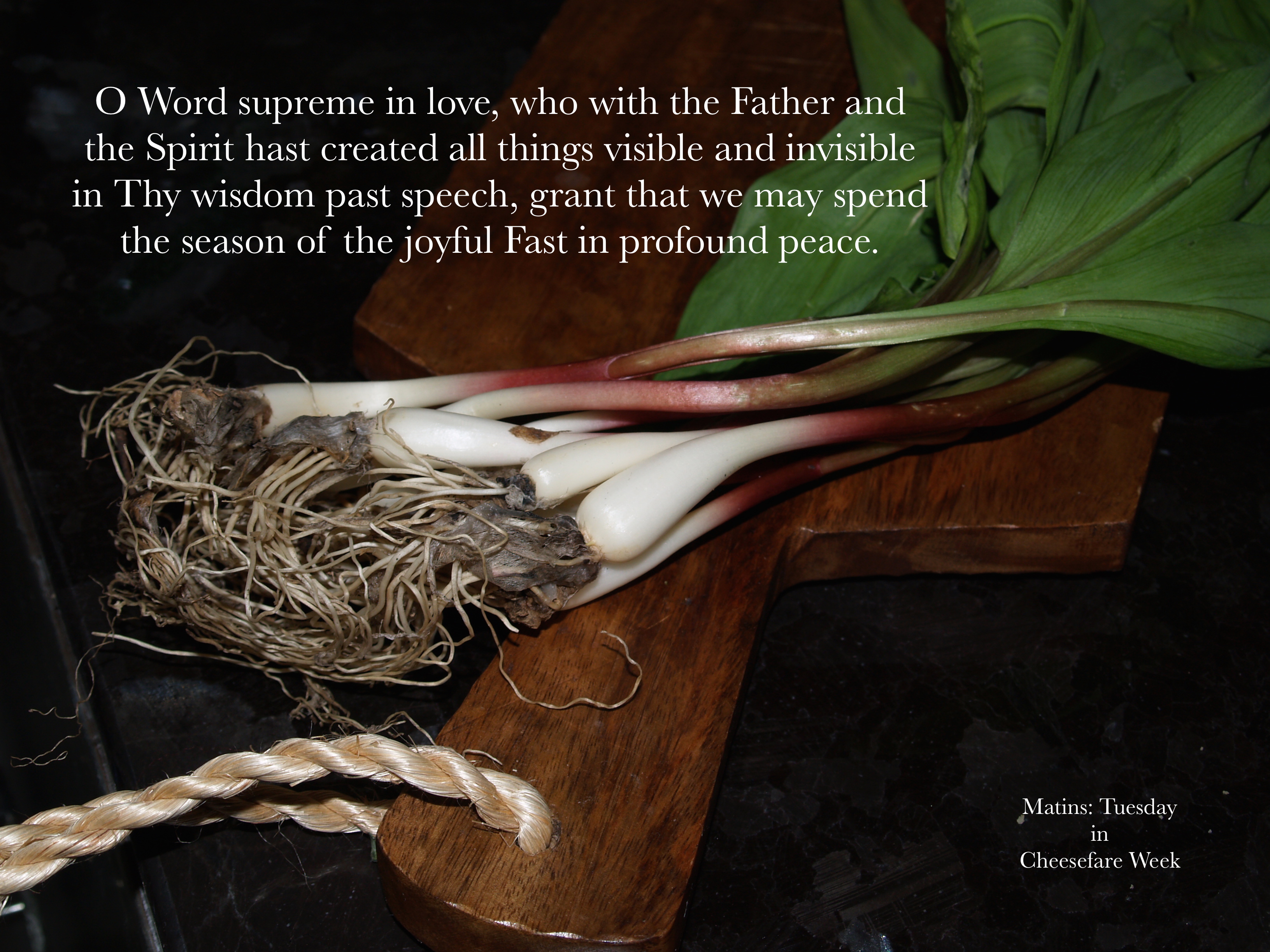
O Word supreme in love, who with the Father and the Spirit hast created all things visible and invisible in Thy wisdom past speech, grant that we may spend the season of the joyful Fast in profound peace.

Matins: Tuesday in Cheesefare Week

This past week of Meatfare and this present week of Cheesefare offers Orthodox Christians a wonderful occasion to clean our pantries of leftover meat, dairy and eggs as we ease into the strictness of the Fast – when, through the effort of Lent, we also clean the pantry of our hearts.  During the forty day fast we forgo heavy and clogging meals, seeking instead our nourishment from lighter and more cleansing plant-based sustenance.  All of this fasting fare is, of course, fortified with the Lenten services and soul-restorative calories found as the faithful graze within the beautiful spiritual pastures Lent.

Throughout these past weeks, our Mother the Church, has shepherded, taught and nudged the faithful closer and closer to the bounds of the Great Lent.  It is through these weeks of preparation that the aspiration of this Great Fast has been made clear once again – that it is not the rigidity of dietary restrictions (to which we are certainly called to adhere), but rather the grace of an inner change of heart.

Genuine fasting has as an essential  ingredient the relationships of family and community.  Isn’t it pleasant when brothers dwell in unity… we are not saved alone.   A wise retired priest told me once that being in family and community can be likened to a satchel of sharp jagged rocks.  Through the jostling of life we rub each other, sometimes the wrong way, with our sharp edges.  Friction happens – but through time and forgiveness, those rocky edges become smooth and mellowed.  Forgiveness Vespers seeks to erode those jagged edges of relationship.

And so it is, that this Sunday, the Orthodox Christian Lenten journey is ushered in with love and forgiveness.

How appropriate that the first flavor of this awesome labor of fasting is found in a feast… the blessed taste of forgiveness – that given and received – during the Vespers of Forgiveness this very weekend.   These past weeks of the humility of the Publican, the faithful perseverance of the woman at the well, the coming to his senses of the Prodigal – a return to the Father – these intend to soften hearts.

Great Lent is a walk of  joy, an annual journey of the faithful body of Christ.

Does it really come as any great surprise that the faithful rejoice in this Fast with gladness?  For truly, to savor even a crumb off of Lenten tables laden with abstinence, reminds us that we are blessed, we are blessed, we are so very richly blessed!