


“Thus on Easter we celebrate Christ’s Resurrection as something that happened and still happens to us. For each one of us received the gift of that new life and the power to accept it and to live by it. It is a gift which radically alters our attitude toward everything in this world, including death. It makes it possible for us joyfully to affirm: “Death is no more!” Oh, death is still there, to be sure and we still face it and someday it will come and take us. But it is our whole faith that by His own death Christ changed the very nature of death, made it a passage—a “passover,” a “Pascha”—into the Kingdom of God, transforming the tragedy of tragedies into the ultimate victory. “Trampling down death by death,” He made us partakes of His Resurrection. This is why at the end of the Paschal Matins we say: “Christ is risen and life reigneth! Christ is risen and not one dead remains in the grave!”
Father Alexander Schmemann
This year the lenten quarantine left our store supermarket with absolutely no flour. Not only ours, but every supermarket in our area for days has had no flour. We were all so disappointed that we might not be able to bake Tsoureki, a traditional sweet bread that we eat only once a year on Pascha. It’s kind of a big deal in my family, especially the french toast it becomes the day after Pascha!
Luckily my sweet friends who own a local farm to table brewery / restaurant heard of my poverty! Every year I have invited them to our Pascha dinner. They are neither Orthodox, nor Christian, just good friends. They brought me 10 pounds of flour early this morning.
I got right to baking. My arms are sore from all the zesting and kneading 8 loaves of bread… but my house smells delicious!
I am sharing the original recipe. I’ve changed a couple things to make it more my own. But this is by far one of the best Tsoureki recipes around! I love the citrus sweetness of it. You can find it over at Saveur I’ve been baking since I found it in 2007 and I look forward to it all year long.
As soon as the first batch cooled, I sent my daughter down the street to drop off a loaf for my friends, who made the bread possible. I will miss them and all my extended family and friends sitting around our table and throughout the house and yard tomorrow. Και του χρόνου’ – may we celebrate Pascha next year in our churches!
Greek Easter Bread from Saveur Magazine
Makes 2 loaves
- 2 7-gram packets active dry yeast
- 2 cups warm milk
- 9-10 cups flour
- 1-1/2 cups sugar
- 2 tsp mahlepi (optional but worth it)
- 8 tbsp butter melted
- 6 eggs, 1 lightly beaten
- Salt
- 1 tbsp each of grated lemon and orange zest
How to prepare and bake
Dissolve yeast in milk in a large bowl. Stir in 1 cup of the flour and 1⁄2 cup of the sugar, cover bowl with plastic wrap, and set aside for 1 hour. If using – steep makhlépi, if using, in 1⁄2 cup simmering water for about 5 minutes. Strain, discard makhlépi, and set aside liquid to cool.

If using, stir 1⁄2 cup water or makhlépi-scented liquid into yeast mixture. Add butter and 5 of the eggs and mix thoroughly. Sift 8 cups of the flour, salt, and remaining 1 cup sugar into mixture. Add orange and lemon zest, and mix thoroughly with a wooden spoon. Turn out dough onto a floured surface. Knead (adding more flour if necessary) until smooth, about 10 minutes, then form into a ball and place in a lightly greased bowl. Cover with a clean dish towel and set aside to rise for 2 hours.

Add flour and knead until the dough just no longer sticks to your hands when kneading.
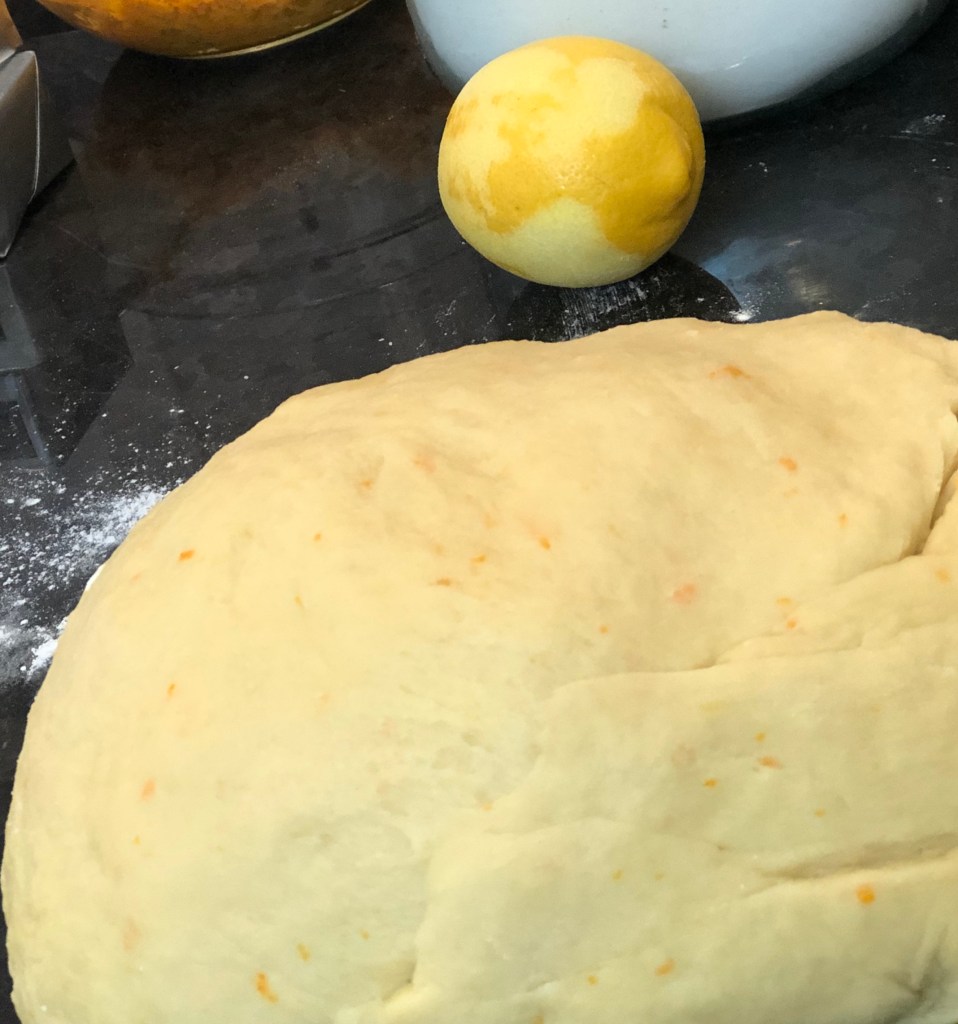
Return dough to floured surface. Divide into 6 parts, rolling into ropes about 15″ long. For each loaf, tightly braid 3 ropes, then press 1 dyed egg (if using) near the end of each braid. Set bread aside to rise again for 1 hour on a lightly greased cookie sheet.
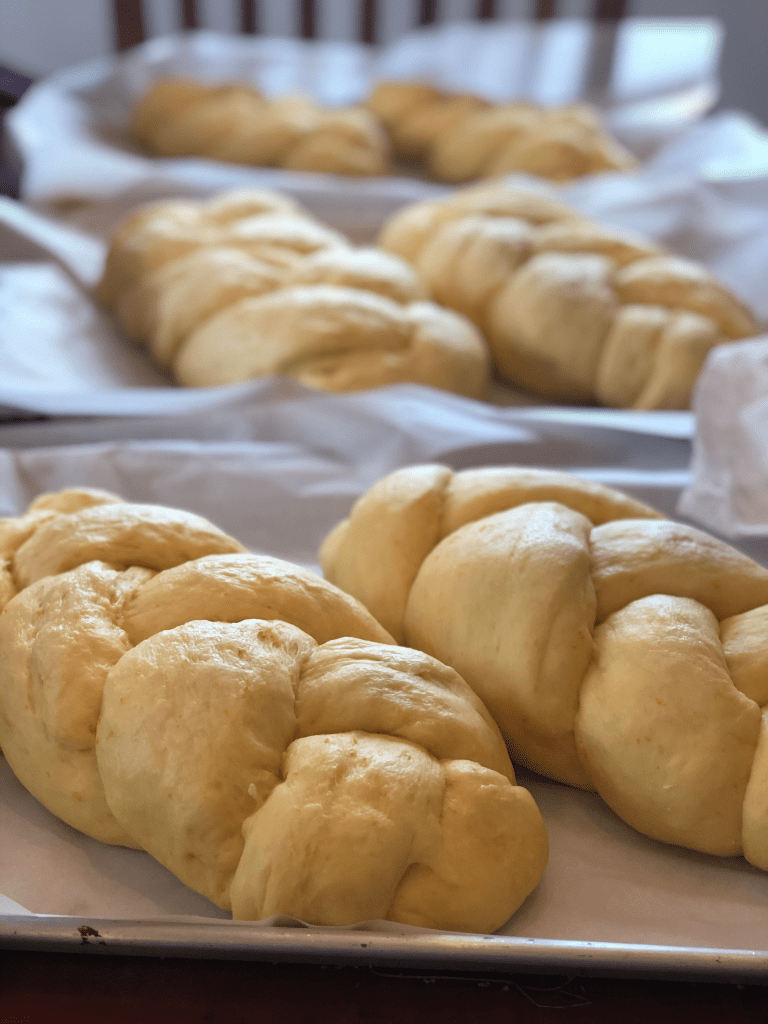
Preheat oven to 350˚.
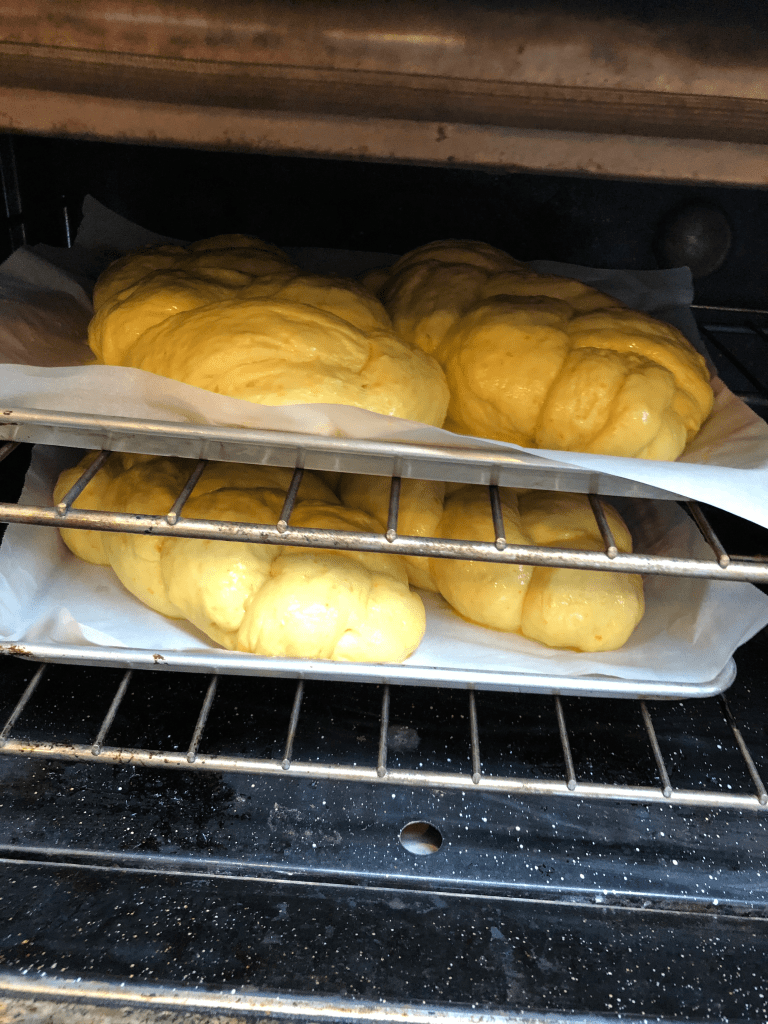
Brush bread with beaten egg, sprinkle with cumin seeds, and bake until golden, 40–50 minutes.
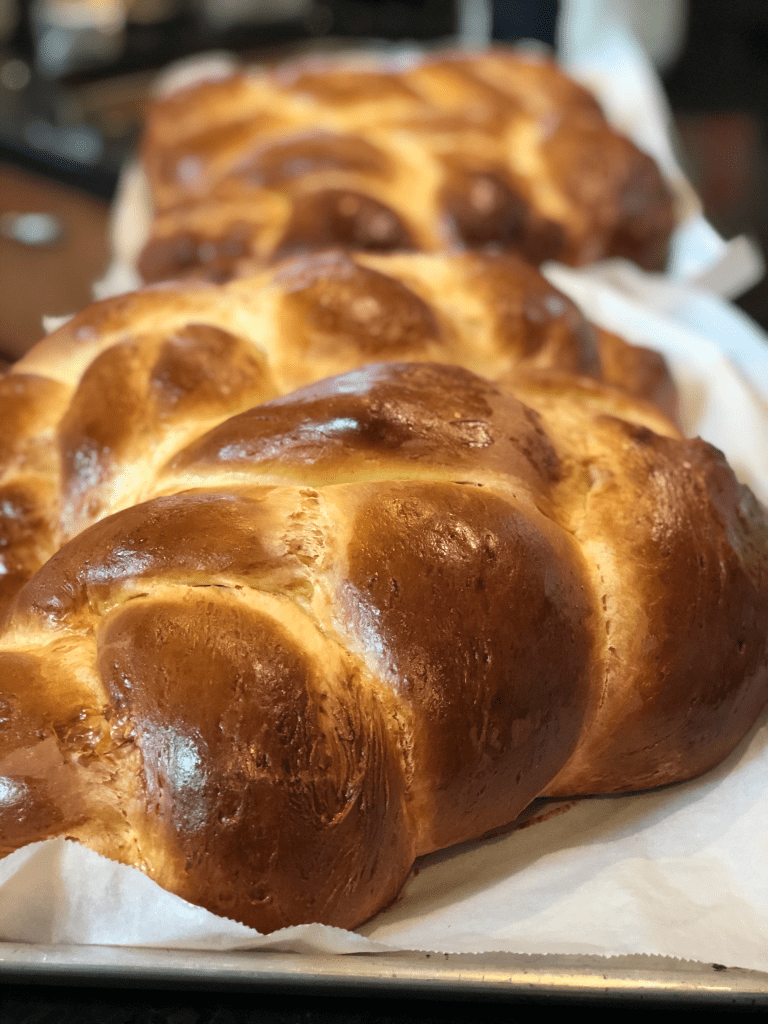
Christ is Risen friends! Truly He is Risen!!
 gladsomelife.com
Pingback: Preparing our Pascha Table {baking Greek Easter bread video }
Pingback: Tsoureki French Toast {the many uses of tsoureki}
Pingback: Tsoureki Bread Pudding {the many uses of tsoureki}
Pingback: tsoureki & nutella {the many uses of tsoureki} |