a new year of Grace {repost}

As a convert to the Faith, I think a lot of the treasure of tradition that has been handed down for thousands of years… and often I am deeply drawn to the “little t” ways practiced in the “Little Church” of the home traditions most of all.

They are ways passed onto us from a deeply simple time of old… a time without hashtags and constant noise. They are little ways that perhaps one person in one village began, and others like bees drawn to a flower filled themselves of that nectar and made a harvest of honey out of it in the hive of their own lives.
Many times the “little-t” traditions are very local, such that the average convert doesn’t know what to make of it all. And we are the melting pot of every Orthodox tradition from every jurisdiction in this country.

The non-Orthodox routinely call them rote and meaningless gestures of Faith… and so over the years I have sat with each tradition that I know (and I am always learning more) and pondered why would I do this? I’ve come to the conclusion that none of it is meaningless and I sought a possibility of why it was done in the first place… my answers are my own, hopefully inspired by some Grace – not about me, but Christ. They may not resonate with you, or they might.

In the end they are deeply meaningful to me. I offer them to anyone wondering or struggling how to incorporate them into their life on a deeper level, rather than just to do them. Every tradition I know, I have learned about from others – family, friends – both in person and on social media.

A rote action is to live on the surface, to involve the body but not the soul. To those non-Orthodox who wonder about the little “t” tradition, even dismising them, I thank you. Your skepticism brought me beneath the surface of the veneer and into the deep woody grain of the cross. Partly to give non-Orthodox friends an answer but mostly to live and incorporate these expressions of Faith in my life in a real way, not a rote one. Every year I come back to those reflections with a fresh new look.

The Liturgical cycle of the Faith, both little “t” and big “T” is the same each year – teaching me and inviting me deeper into the Faith. And as we approach the new liturgical cycle, like the moon orbiting the Sun, or the rings of a tree showing the signs of feasting and famine, drought or floods… we are in a different season of life each year. We learn something new; we are reborn through repentance, through Grace, through Liturgical Living and this is a deep steadfast blessing to the faithful.

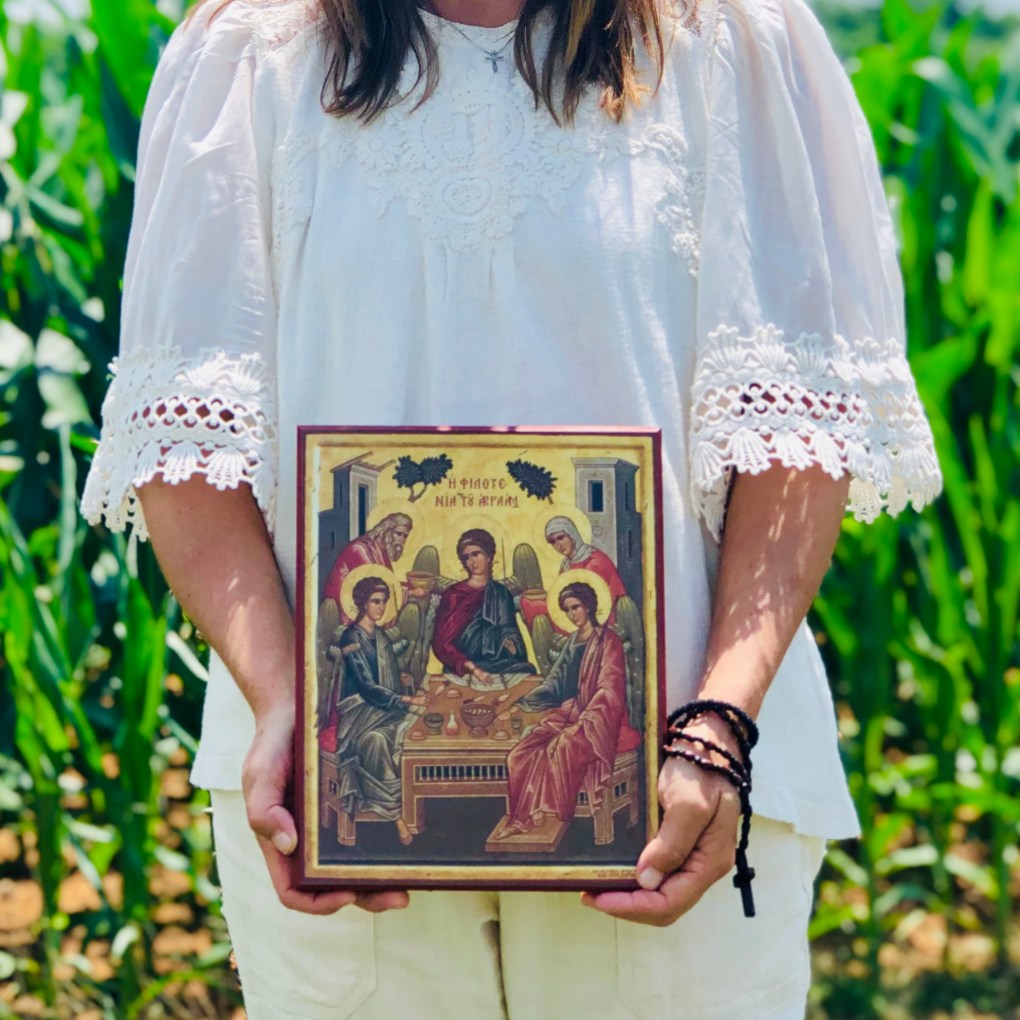
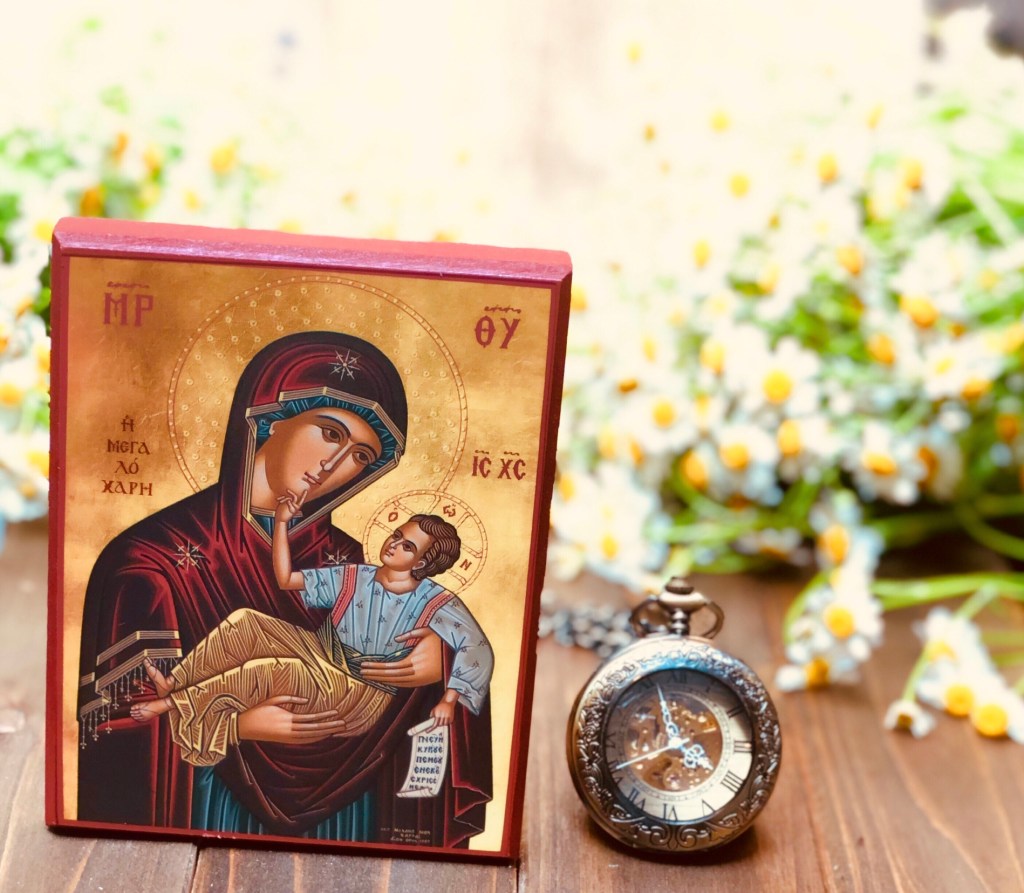
The following is a reflection of the practice of ushering in the Ecclesial New Year by placing an icon on our doorstep from a few years ago…
A New Year of Grace {Repost}

The Treasure of Tradition    Despite being united to Christ in the Orthodox Church some twenty years ago, there are still many of those little “t” traditions of which I do not know.  When I joined the Orthodox Church the first thing I realized is that I don’t know anything, and not in a bad way at all, but a very very good way…. a way that allows me to incorporate the faith morsel by morsel so that I can digest it.

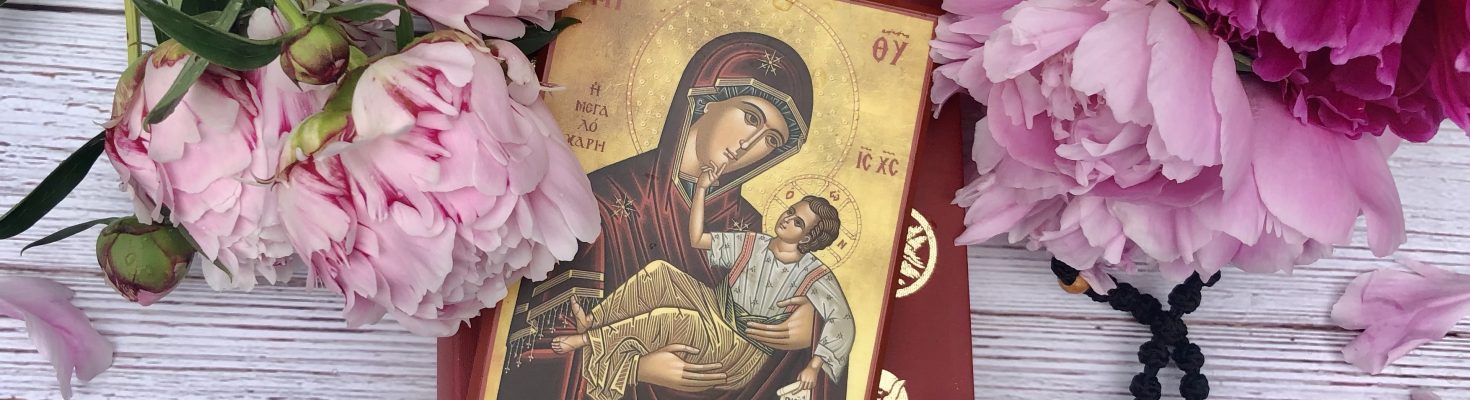
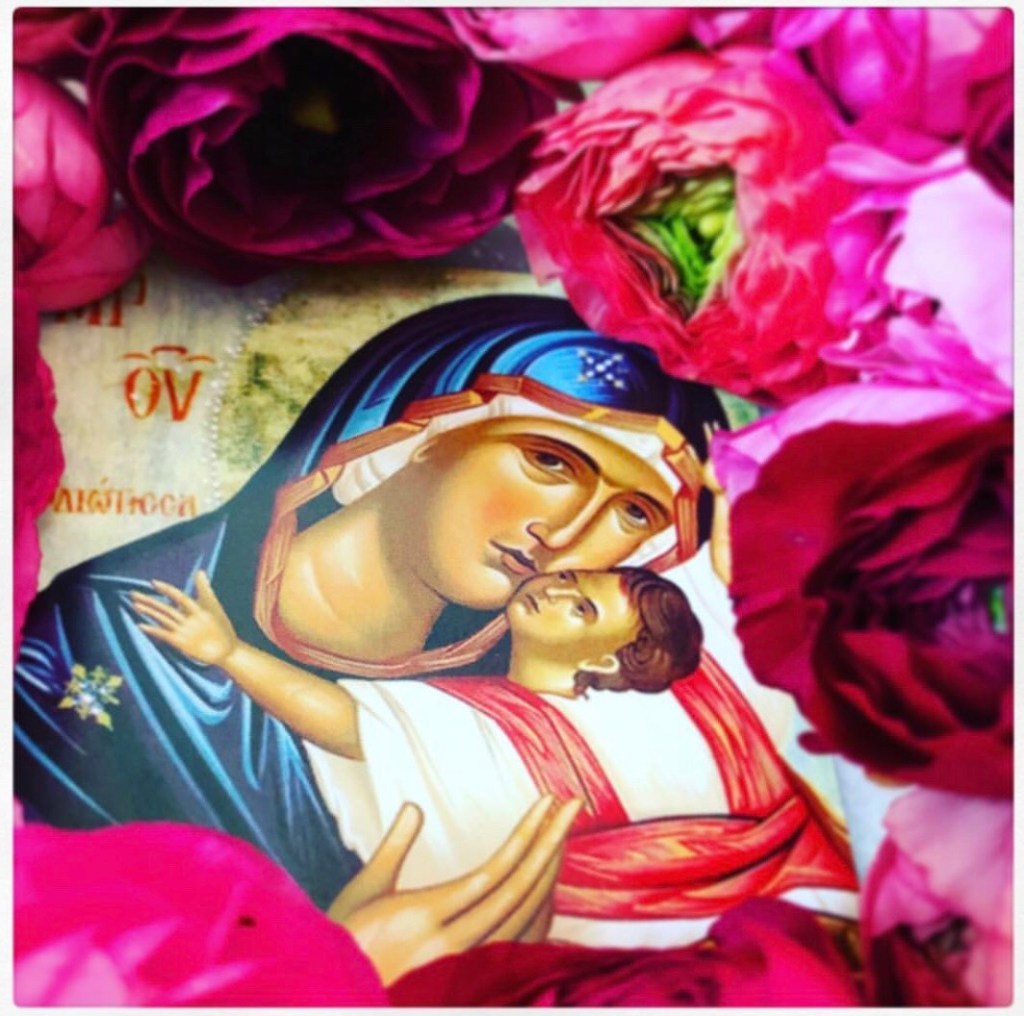
This year (just last night in fact!) I learned of the tradition to place an icon of the Most Holy Theotokos at the threshold of the door to our home as we usher in the new Liturgical (Ecclesial) Year of Grace.

In many conversations with non-Orthodox over the years, I have been struck by their idea that our little “t” and big “T” traditions are merely rote action.  Yet, as one who seeks (and quite imperfectly, too)  to live and raise a family in the faith, I find most beautifully that these “traditions” of ours are not rote or meaningless at all ::  but rather beckon and re-orient our hearts to that which is needful.

Just as we pray corporately the Anaphora during the Divine Liturgy, these little “t” traditions are our “little a” anaphoras :: a lifting up and offering of ourselves.  A simple, humbling endeavor, to place God above all, offering up our whole  lives to Him.

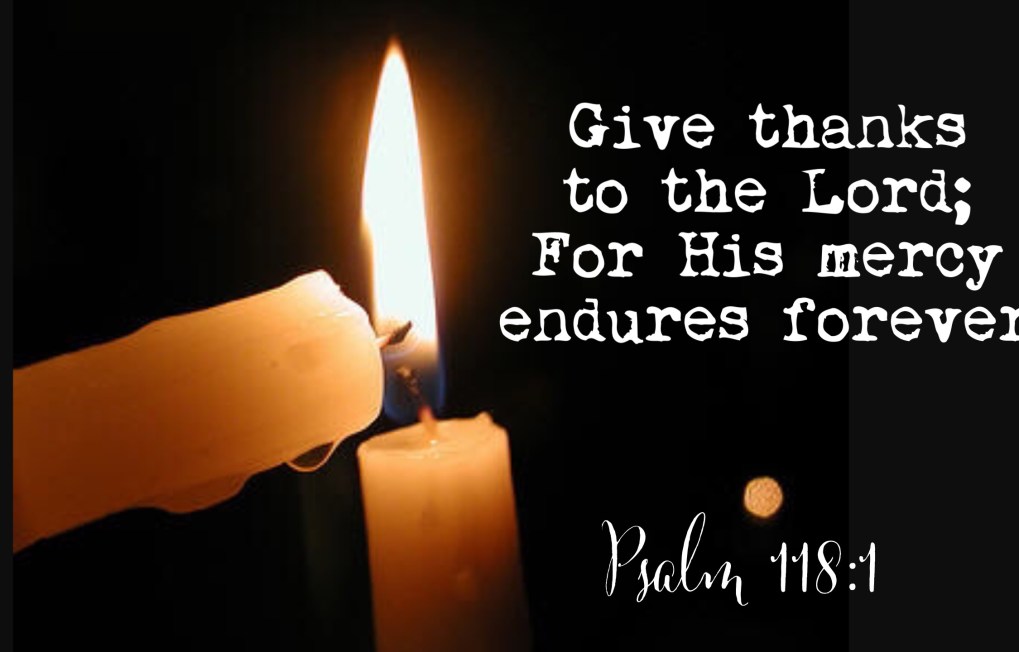
It is Eucharisteo : Grace,  Joy and Thanksgiving throughout the seasons of our lives.

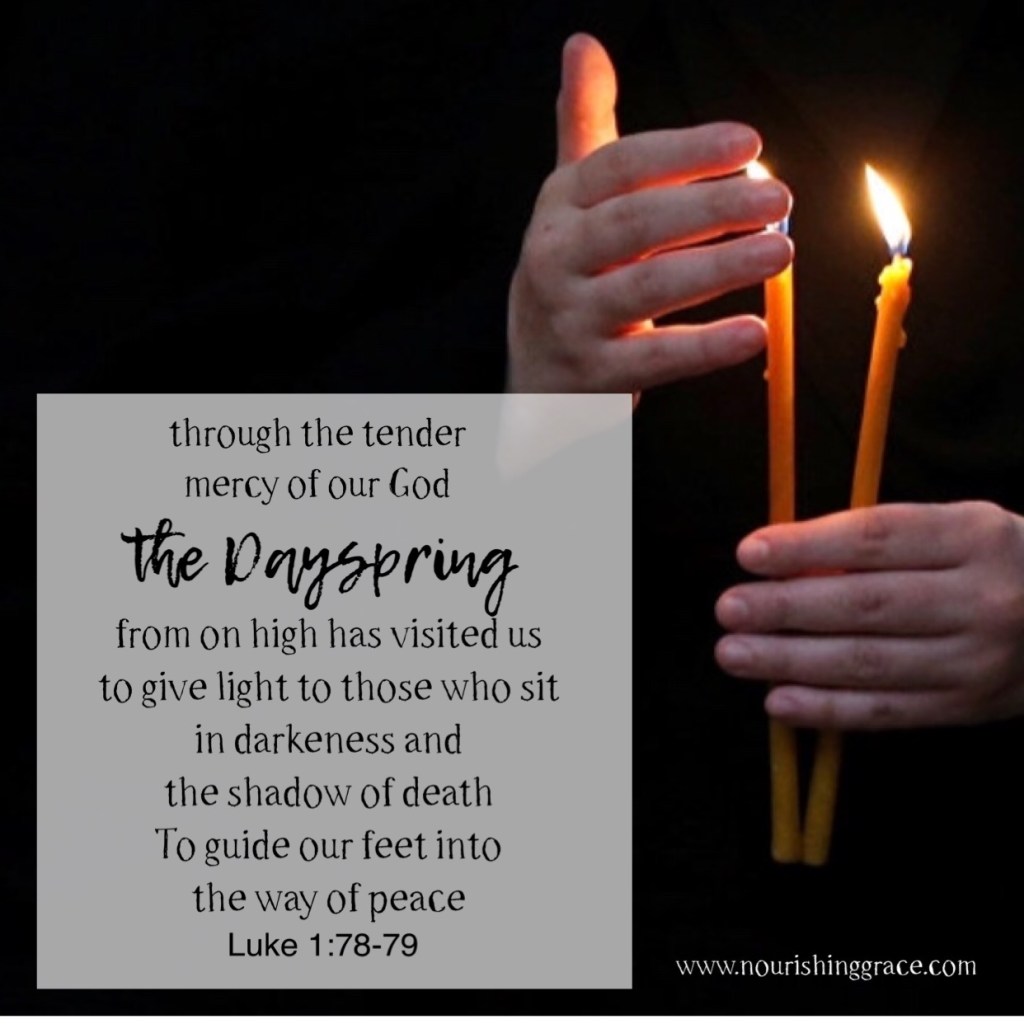
These are just another way in which we lift up our hearts in this great litany of our lives.  Little children in Greece make the sign of the cross when riding their bikes past a Church :: mothers entering Church remind their little ones to make the sign of the cross before they enter :: we light candles :: burn sweet smelling incense :: we trace the sign of the cross on our children when tucking them into bed :: prayers and prostrations dovetail together :: we kiss the icons and we greet one another with a kiss of peace :: we dye our Pascha eggs the reddest of red, but we don’t dye them on Holy Friday ::  fresh basil is brought home from Church on the Elevation of the Cross and placed in the sourdough starters that will leaven phosphora :: and of course, we pray facing the east – our souls waiting for the Lord, like the watchman waiting for the dawn.

Again and again, in so many ways, we are called to this life in Christ.  To live our lives through the years and seasons and rhythm of the Church.  It is our great priority :: this great Liturgy of Life :: it is more needful  than schoolwork, profession, sports and hobby :: and yet with life in Christ as our priority our ability to fulfill our schoolwork, professions, sports or hobby is in no way diminished.  Traditions bring to light blessings :: even on the threshold of our very home.

Placing an icon of the Most Holy Theotokos at our doorstep – what a wonderful tradition to usher in the new Ecclesial Year :: just as the Ecclesia means “called out” :: the new Ecclesial year “calls us out” again, “to lay aside our earthly cares” and enter into the timeless rhythms and seasons of the Liturgical life of the Church.

The Orthodox Christian lives Ecclesial Year to Ecclesial Year ::Feast to Feast :: Fast to Fast ::Confession to Confession :: Liturgy to Liturgy :: Eucharist to Eucharist.  Just as we have New Year’s resolutions to usher in a new calendar year, now is a great moment to pause, reflect and begin again.

Does my family have regular prayer time?  If not, this is a time to begin.  Are we attending Church weekly?  That’s alright :: start this weeks Vespers and Liturgy.  Has it been forever since my last Confession :: make an inventory, call your priest.  Go.

And so today, on the dawn of a new ecclesial year, the faithful are hopeful standing on this threshold of Grace of a new year, with an invitation to redeem the time.

Blessed art thou O Lord, teach me Thy statutes.

Real life is Eucharist, a movement of love and adoration toward God, the movement in which alone the meaning and the value of all that exists can be revealed and fulfilled

~

Alexander Schmemman
Phanouropita {gluten-free}

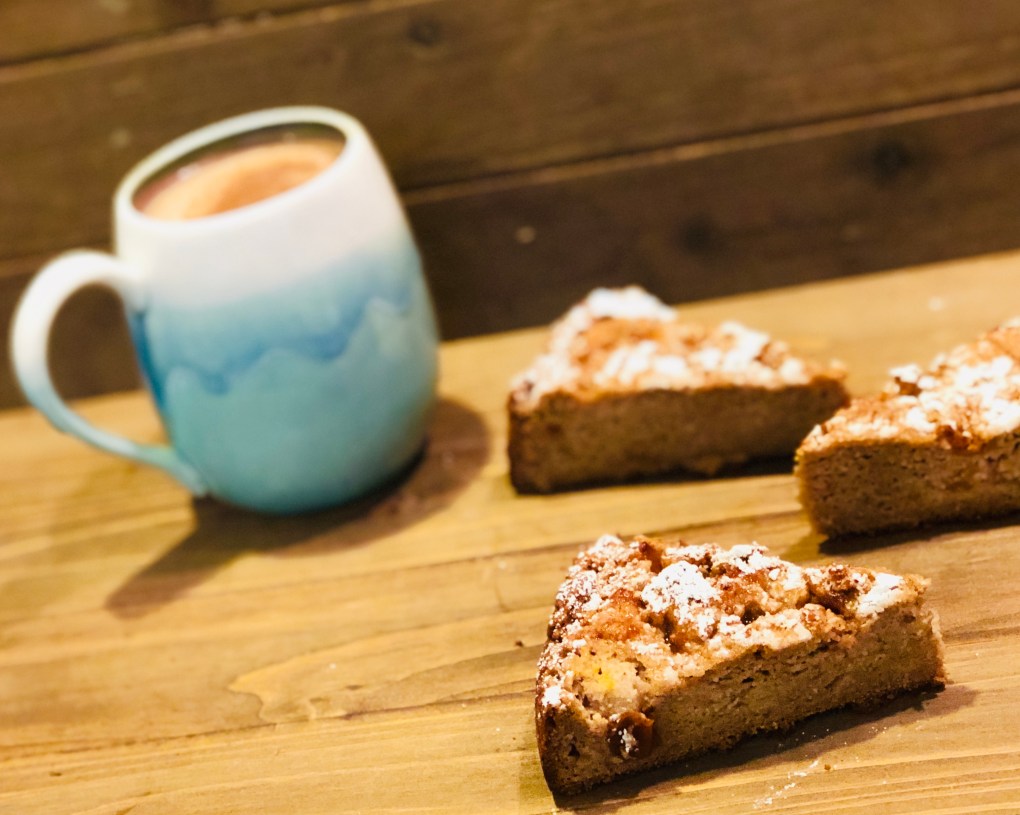
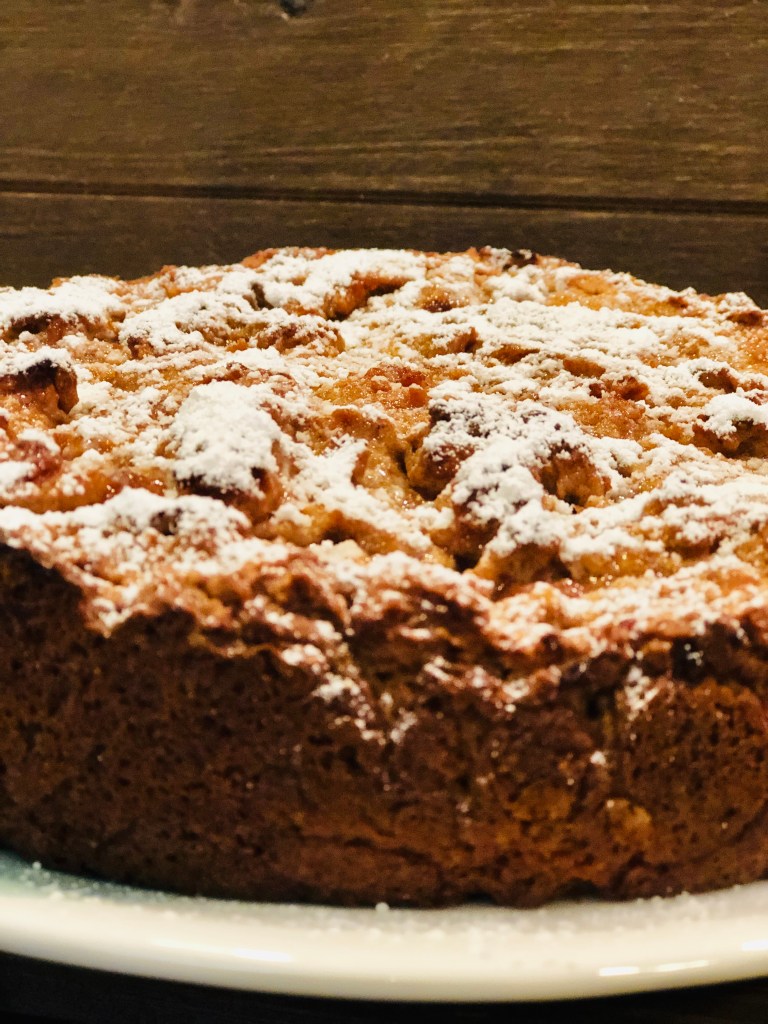
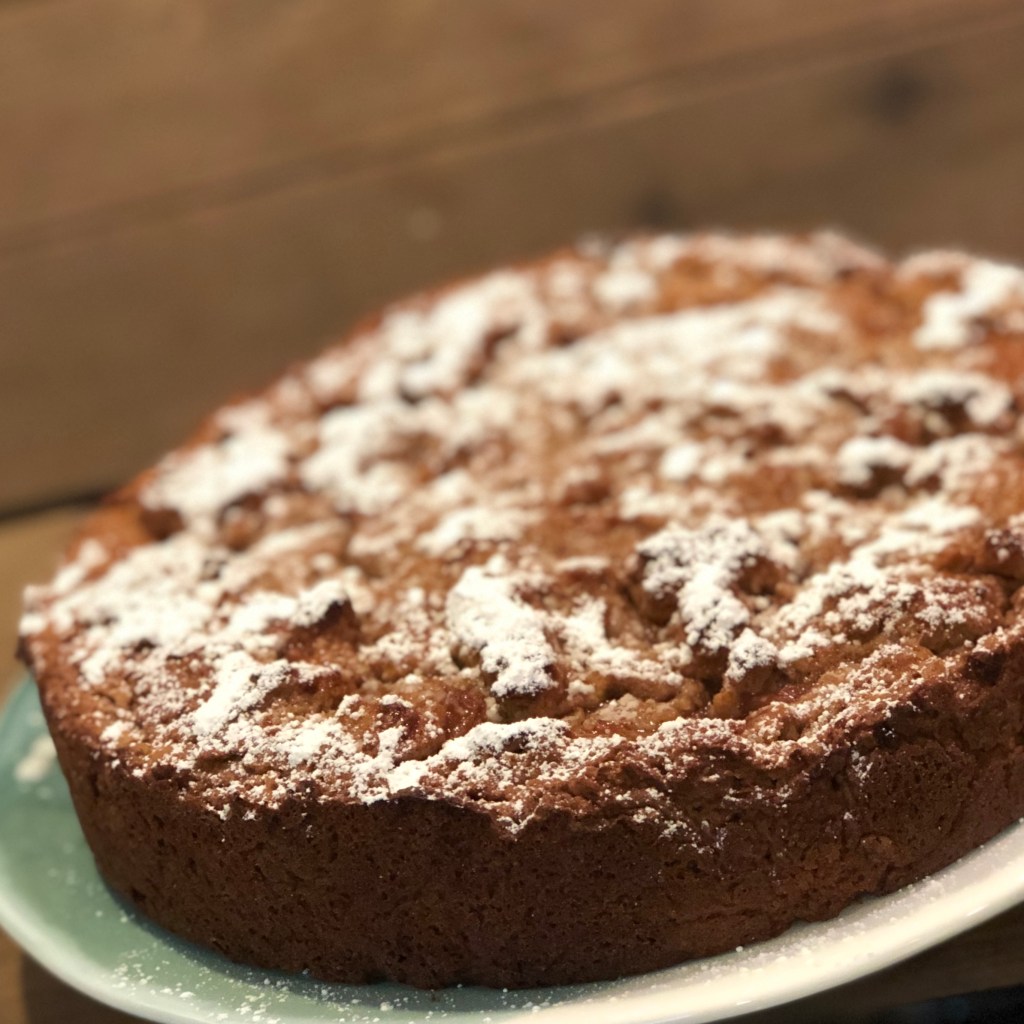
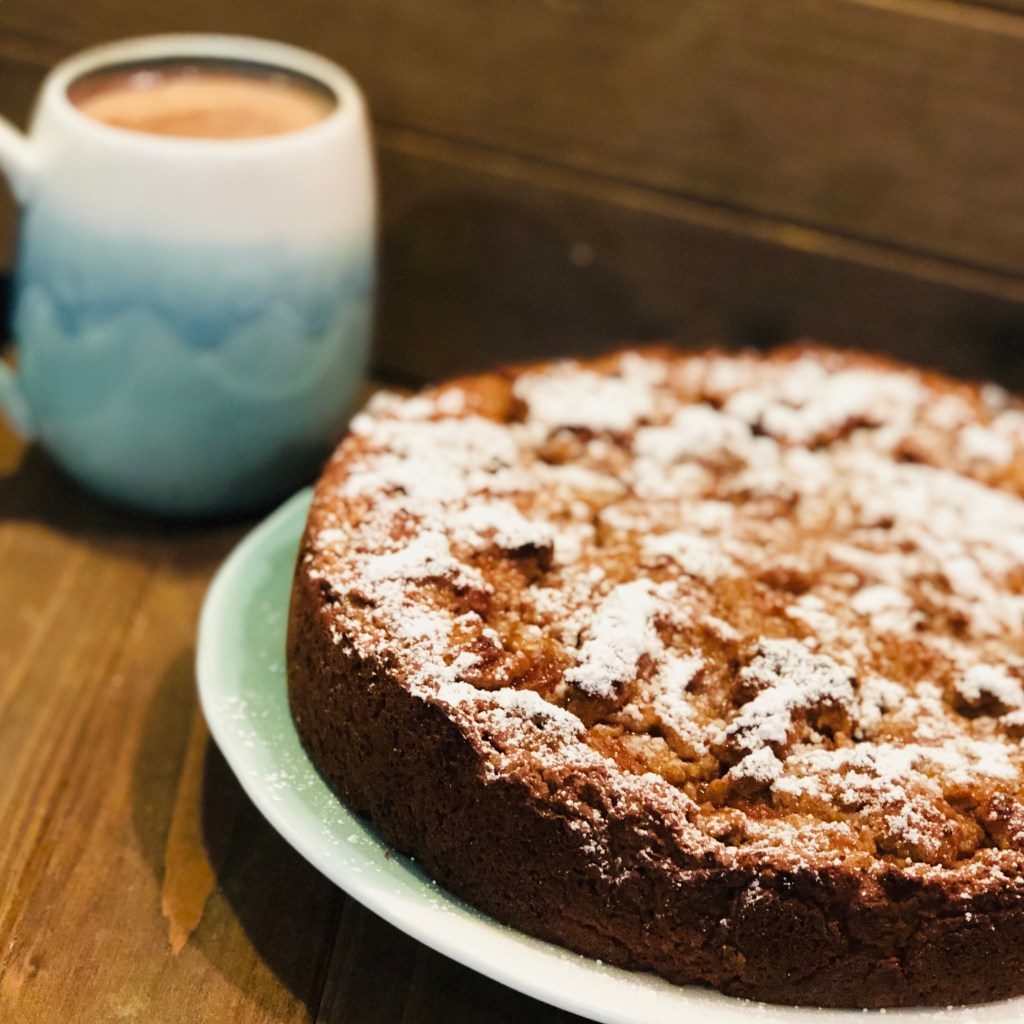
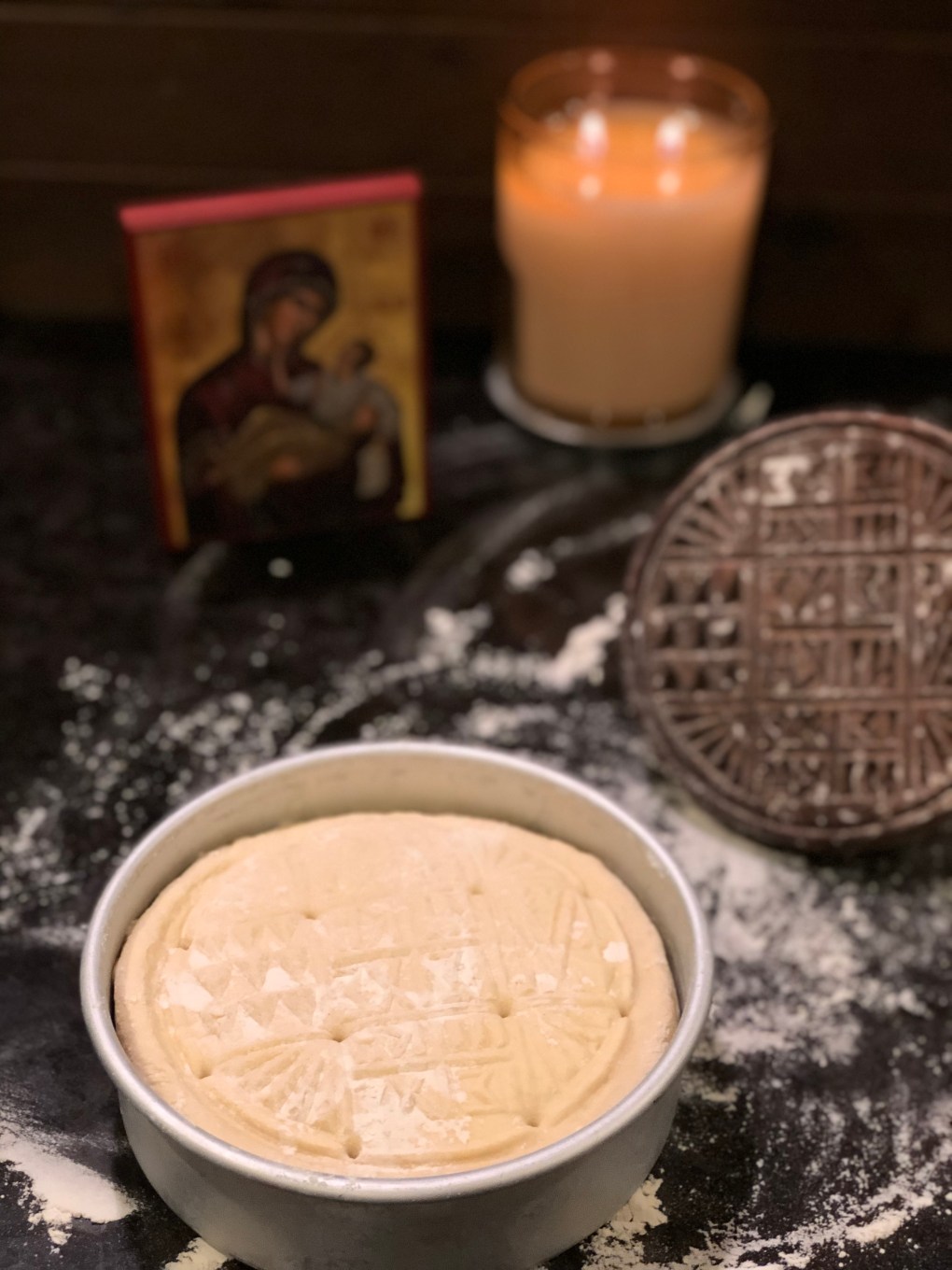
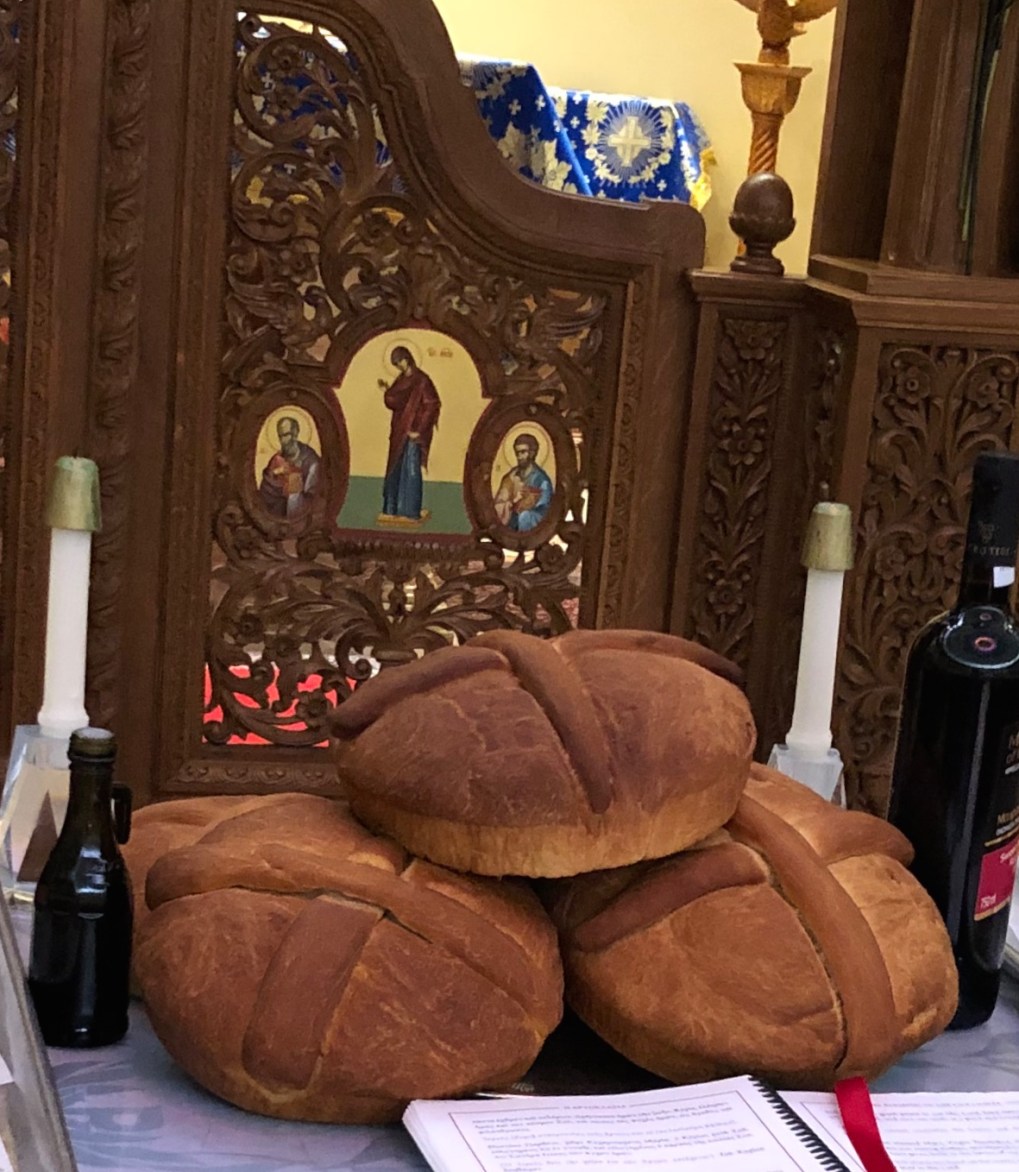
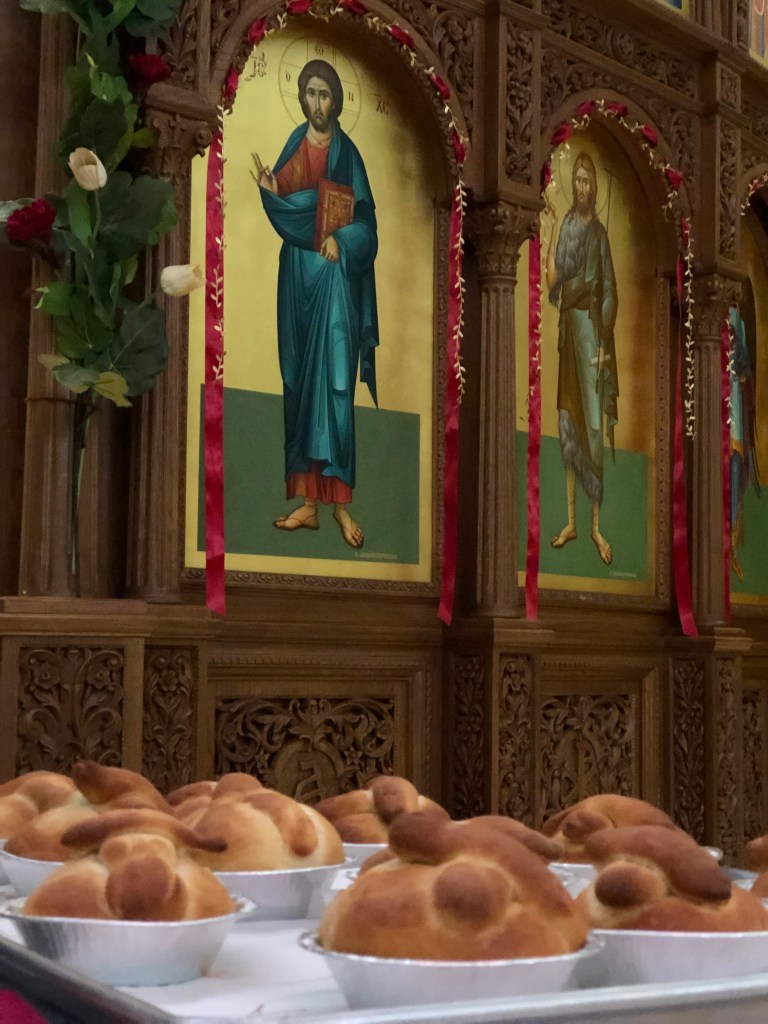
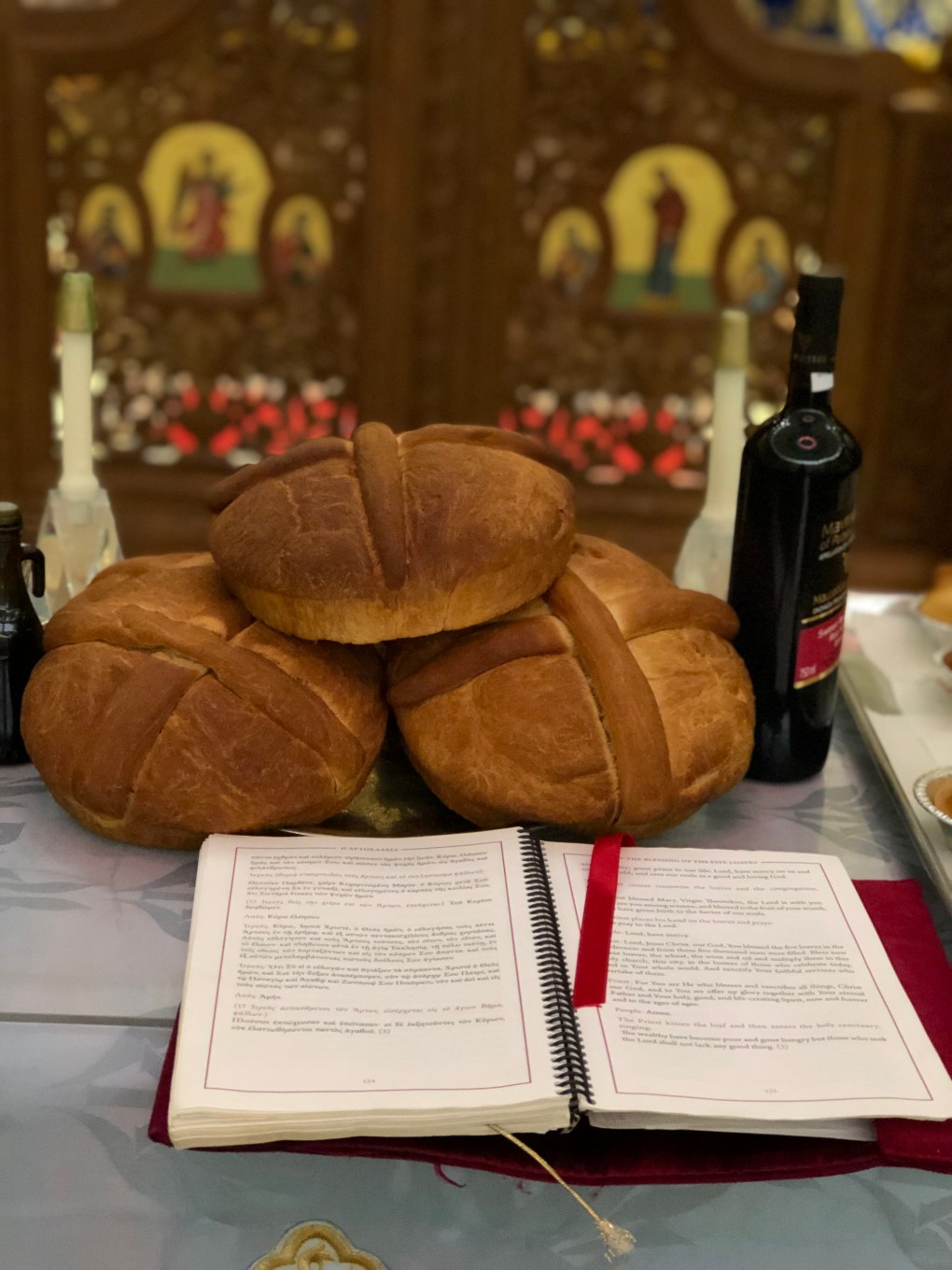
On August 27th we commemorated Saint Phanourious and it is customary in many parishes to bake a special cake to bring to Church for a blessing. Some traditions hold that we bake the Phanouropita and distribute it to the poor. Any time we ask his intercession and receive it is also an occasion to bake the bread and bring it for a blessing.

The name Phanrourios means “I reveal”. Through the centuries he has become an intercessor for lost and found things… and so some refer to him as the Saint of lost and found. So if the faithful ask for his intercession and their lost item appears, then it is custom to bake the sweet bread, bring it to Church for a blessing and distribute it to the poor.

Tradition holds that Saint Phanourios mother lived a terrible life and was not a Christian. When Saint Phanourios was martyred he also prayed for his mother. That it why, the faithful also pray for the mother of this beloved Saint… centuries after his repose and hers. And so we co-labor with this Saint in asking intercession for his mother, a woman whose name we do not know – “the mother of Phanourios”.

Several of us in this family have a gluten intolerance, and so I have begun the process of converting many of my traditional recipes, like this one, to a gluten free version. If you have a gluten sensitivity, then you know how bad you can feel after eating it. You also know how challenging it can be when you are in community settings and there is no option for you. Food forms community and social bonds – to break bread with one another binds us together. Having said that, I will say that my non-gluten endeavors do not apply to Prosphora – which I truly believe does not believe needs to be gluten free. The Eucharist is truly the Body and Blood of Christ. Alcoholics part-take without issue, and I have never heard of anyone partaking who has a gluten allergy that has an issue either…

So, here is the recipe….

Recipe for Phanouropita

WET INGREDIENTS

  1. 1 can coconut milk (not cream of coconut)
  2. 1 1/2 tsp apple cider vinegar (or lemon juice)
  3. 1/2 cup unsweetened applesauce
  4. 1 tsp pure vanilla extract
  5. 1/4 cup honey

DRY INGREDIENTS

  1. 2-1/2 cups almond flour (I prefer Bob’s Red Mill)
  2. 1 cup gluten free flour : I prefer King Arthur or Bob’s Red Mill
  3. 1 scant cup arrowroot flour (Bob’s Red Mill is a good brand)
  4. 1 1/2 tsp baking powder
  5. 1 1/2 tsp baking soda
  6. 1/2 tsp salt (optional)
  7. 2 teaspoons cinnamon
  8. 1 teaspoon cloves
  9. zest of two oranges

Instructions

  1. Preheat oven to 350 degrees F (176 C) and lightly grease one standard 8-inch round cake pan, with butter or coconut oil and dust with gluten-free flour. Shake out excess and set aside.
  2. In a small bowl combine coconut milk and vinegar. Let set a few minutes. Then add applesauce and vanilla and honey. Whisk/stir to combine.
  3. Add dry ingredients to a large mixing bowl and whisk to combine and get out any lumps. Add wet ingredients to the dry ingredients and mix until well incorporated and no large lumps remain. The batter should be thick but pourable. Add more almond flour if too wet or dairy-free milk if too thick.
  4. Pour batter into the prepared pan and place in the oven for approximately 35-40 minutes or until a toothpick inserted into the center comes out clean and the edges and surface appear golden brown.
  5. Let cool 15 -20 minutes so the sides pull away from the pan. To remove, run a dull knive around the edges toloosen the cakes. Then place a plate or cooling rack on top and quickly invert.
  6. Let cool completely and dust with powdered sugar.

Additional reading about this beloved Saint may be found at the links below.

Homily by Father Josiah Trenham about Saint Phonorious and the Richman

The Life of Saint Phanrourios

Orthodox Church of America

Traditional Recipes for Phanouropita can be found in these links:

John Sanidopoulos

Saint Nicholas Russian Orthodox Church

Serious Eats


pure prayer :: most fitting

Pure prayer is not the personal property of monks or a small group of individuals. It is for everyone, it is the one activity that is the most fitting to the human person. Every human being is called to the wedding feast of the Lord, and thus every human being lives in order to practice pure prayer. It is the most simple practice or activity that a person can undertake. Of course, it is another matter entirely if a person has become accustomed to allowing his mind to wander about and be tyrannized by thoughts, so that when he turns to prayer, he does so with a head filled with distractions and thus can not engage in pure prayer.

Elder Aimilianos of Simonopetra Monastery

The Mystical Marriage : Spiritual Life According to Saint Maximos the Confessor


keeping watch

For us in the world living ordinary lives….. we too must discover stillness and watchfulness in the cave of the heart and learn to attend to what is heard in silence while living ordinary lives in the world as she did. Deep interior prayer is not something only for the monastics or for a hermit far off in the desert.

Stephen Muse

Treasure in Earthen Vessels


carry out their words

A few brothers who had lay  persons approached Abba Felix and begged him to say a word to them.  But the old man kept silent.  After they had asked for a long time he said to them “you wish to hear a word,” they said “yes Abba”. Then the old man said to them “there are no such words nowadays.   When the brothers used to consult their elders, and when they did what was asked of them, God would show them how to speak.  However now, because they ask without doing that which they hear , God has withdrawn the grace of His Word from the elders, and they do not find anything to say, because there is no longer anyone who carries out their words.”   Hearing this the brothers groaned, saying “Pray for us Abba”

Metropolitan Nafpaktos Hierotheos

A Night in the Desert of the Holy Mountain

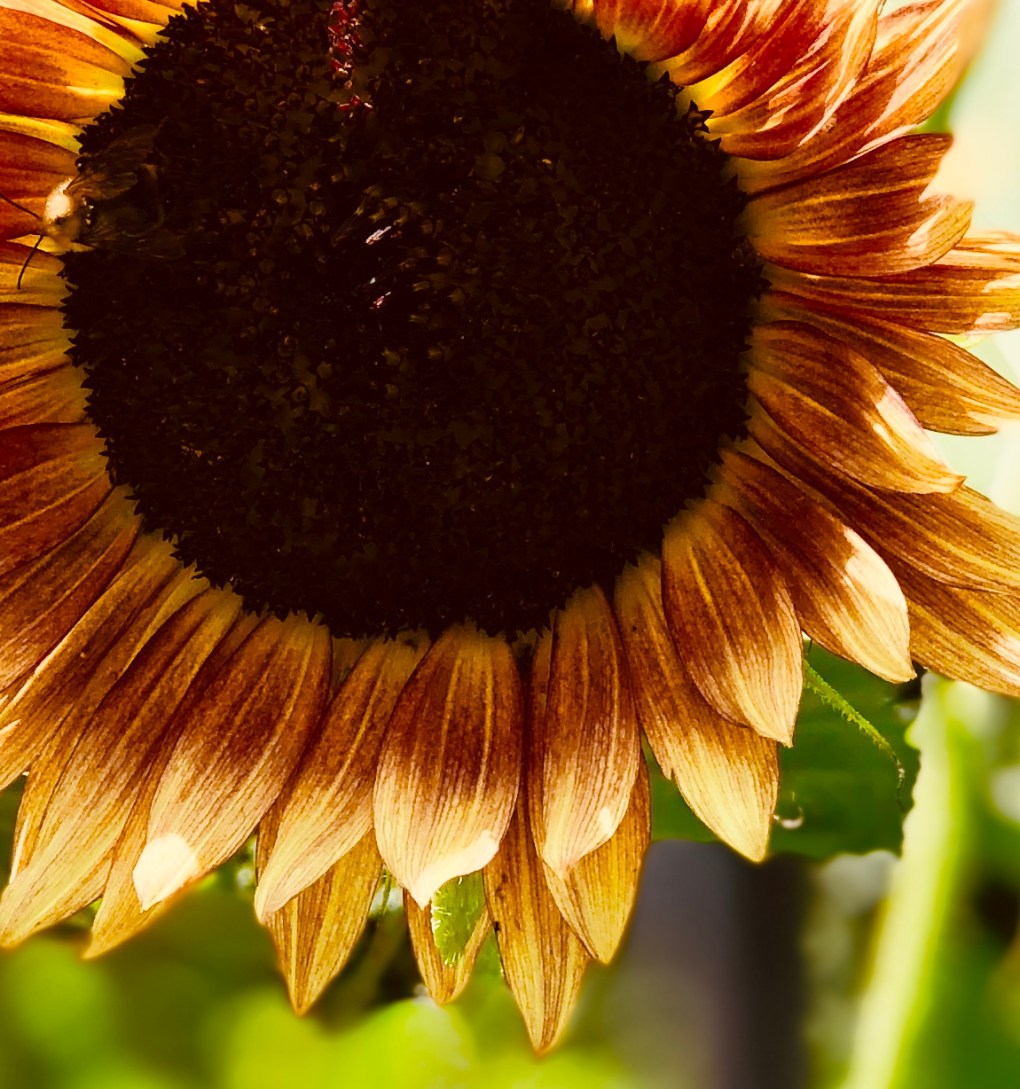
sunflower garden 2019

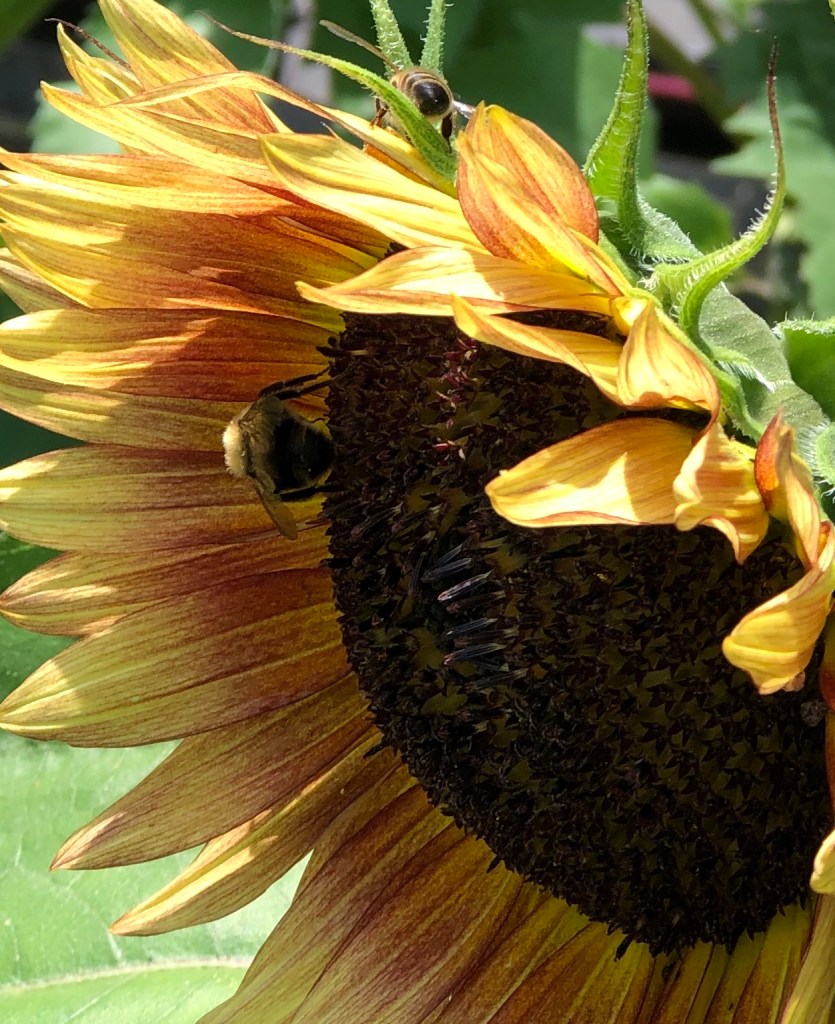
bumblebee on sunflower resting

tell me a word


A word spoken from the heart of the hermit as from the Holy Spirit, in the language of the desert, is considered real and authentic; and the one who requests it, receives it as the fruit of Grace without elaborating on it in his mind. This “word” from the spiritual father is absolutely necessary for the one who asks. The “word” comes from a soul which is the friend of God, Wounded by the love of God, and is spoken in accordance with the measure of the “thirst” of the one who asks.

Metropolitan Nafpaktos Hierotheos

A Night in the Desert of the Holy Mountain


the altar of the heart {anaphora}

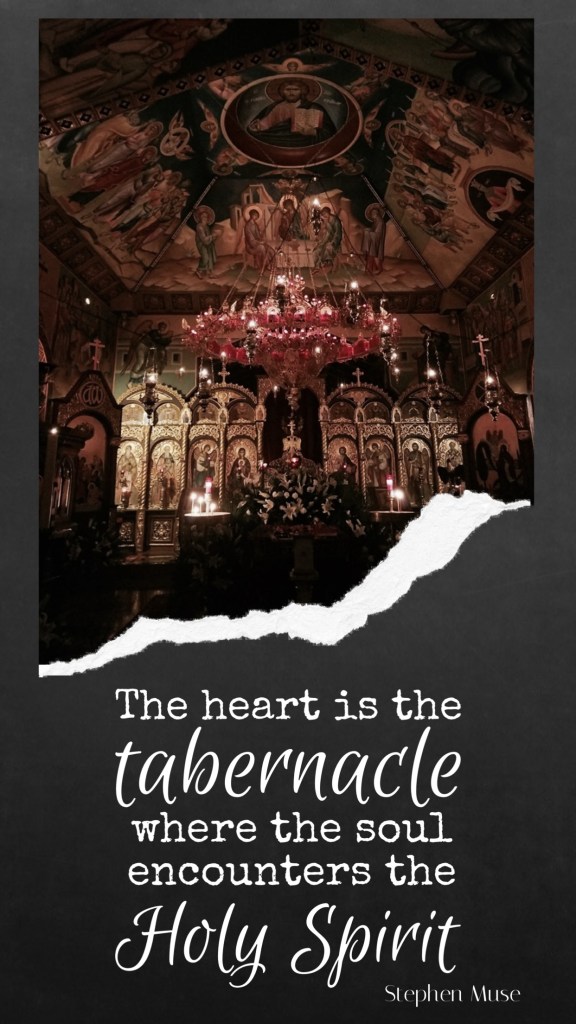
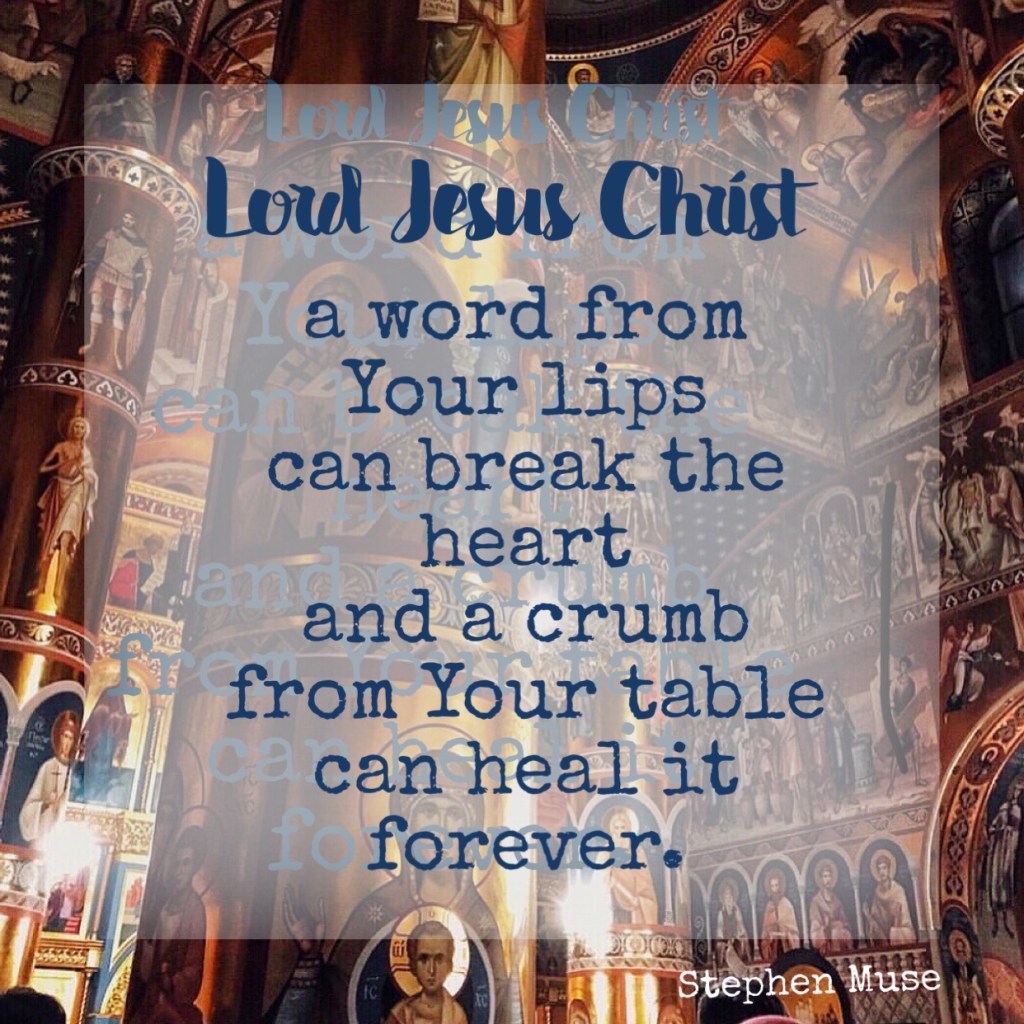
The heart is the tabernacle where the soul encounters the Holy Spirit. Jesus said, Where your treasure is, there will your heart be also.” The greatest potential of every human being is to fulfill our calling to be the royal priesthood, who become the meeting place of the created and uncreated worlds, lifting up the gifts of creation each moment from the later of the heart as the priest does in the anaphora of the Divine Liturgy.

Stephen Muse : Treasure in Earthen Vessels

“Thine own of Thine own, we offer unto Thee, on behalf of all and for all.”


the need to experience God

When you live a contemplative spiritual life, when your spirit is in a state of continual contemplation, your mind is never disturbed by distractions. But when you are living in the midst of the world, you struggle to find a few minutes to contemplate God, and afterwards, you quickly fall back into the patterns and routines of everyday life. The same thing can happen to a monk in a monastery: he too can become caught up in mundane activities and daily routines, just like people living in the world. Such a life is not necessarily sinful; it is simply the way life in the world is.

This is why I have to have a succession of spiritual contemplations in my life. We all h ave a great need for inner spiriutal experiences of God, of revelations given to us directly from God, in such a way that these revelations become something uniquely my own; something that I understand, and which I recognize, and which I wholly possess and “love”. This is what it means for something to be “mine” And in this case, what I live, and possess and understand and feel, is obviously God Himself. In this way, my life becomes bound up with the life of God.

Elder Aimilianos of Simonopetra Monastery